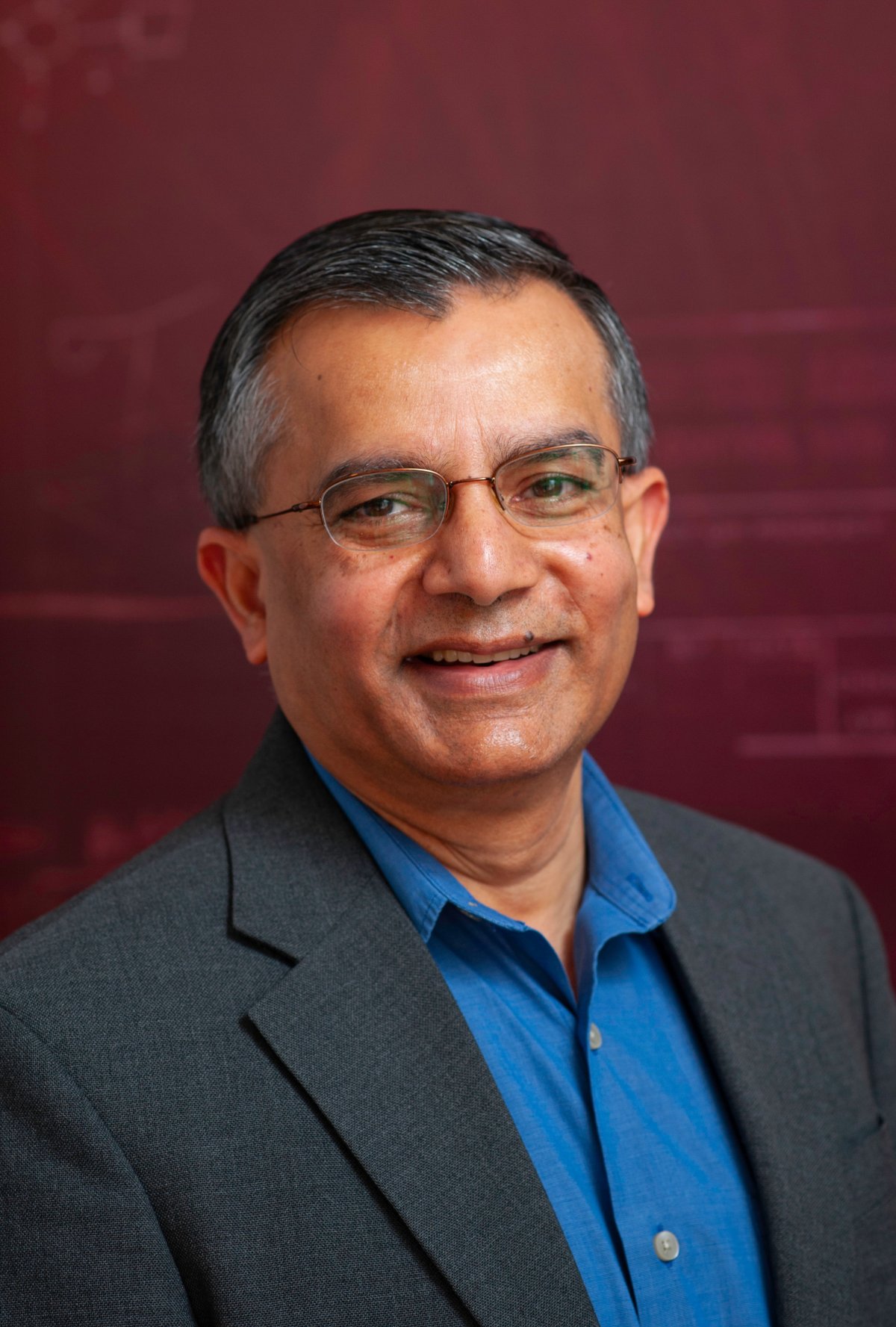
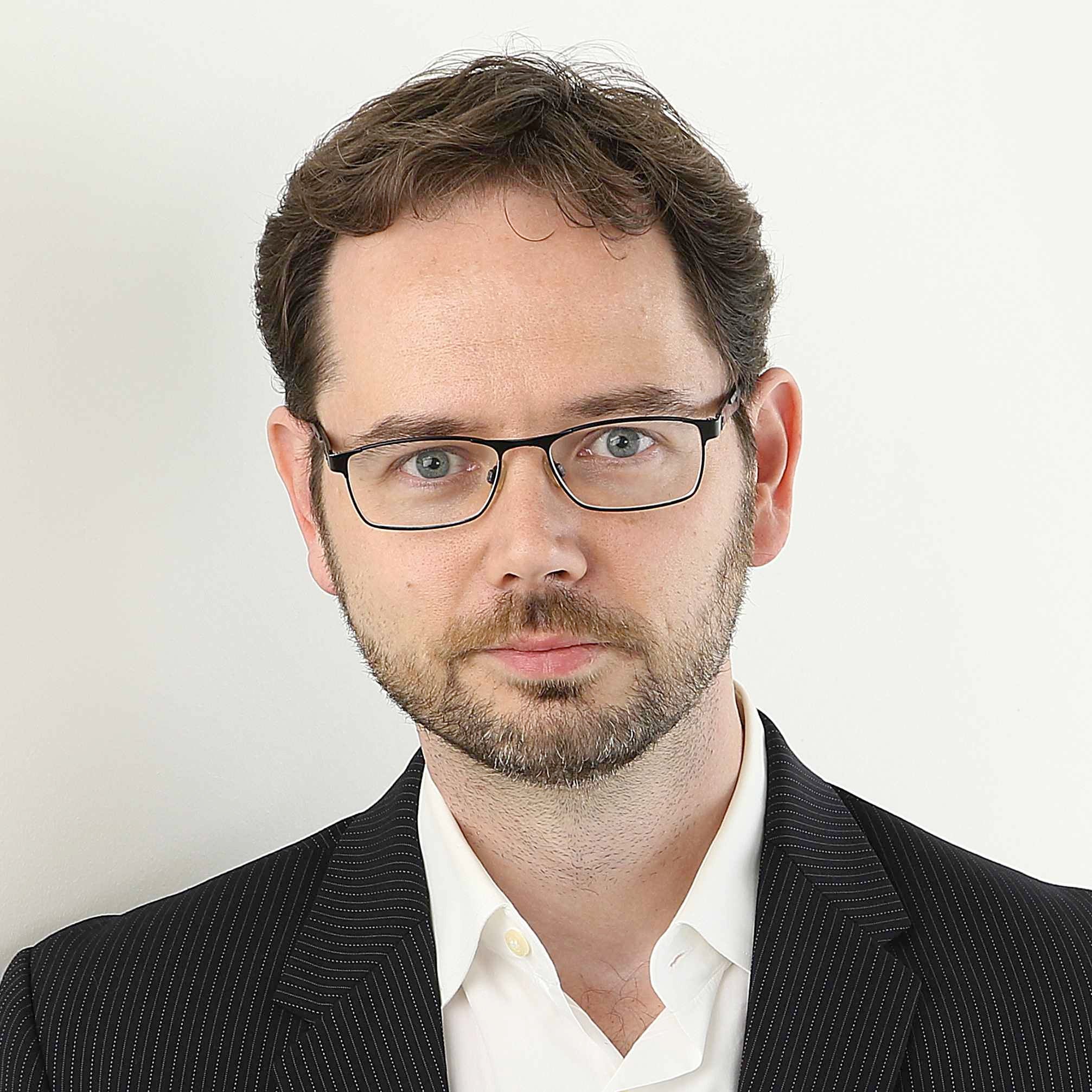
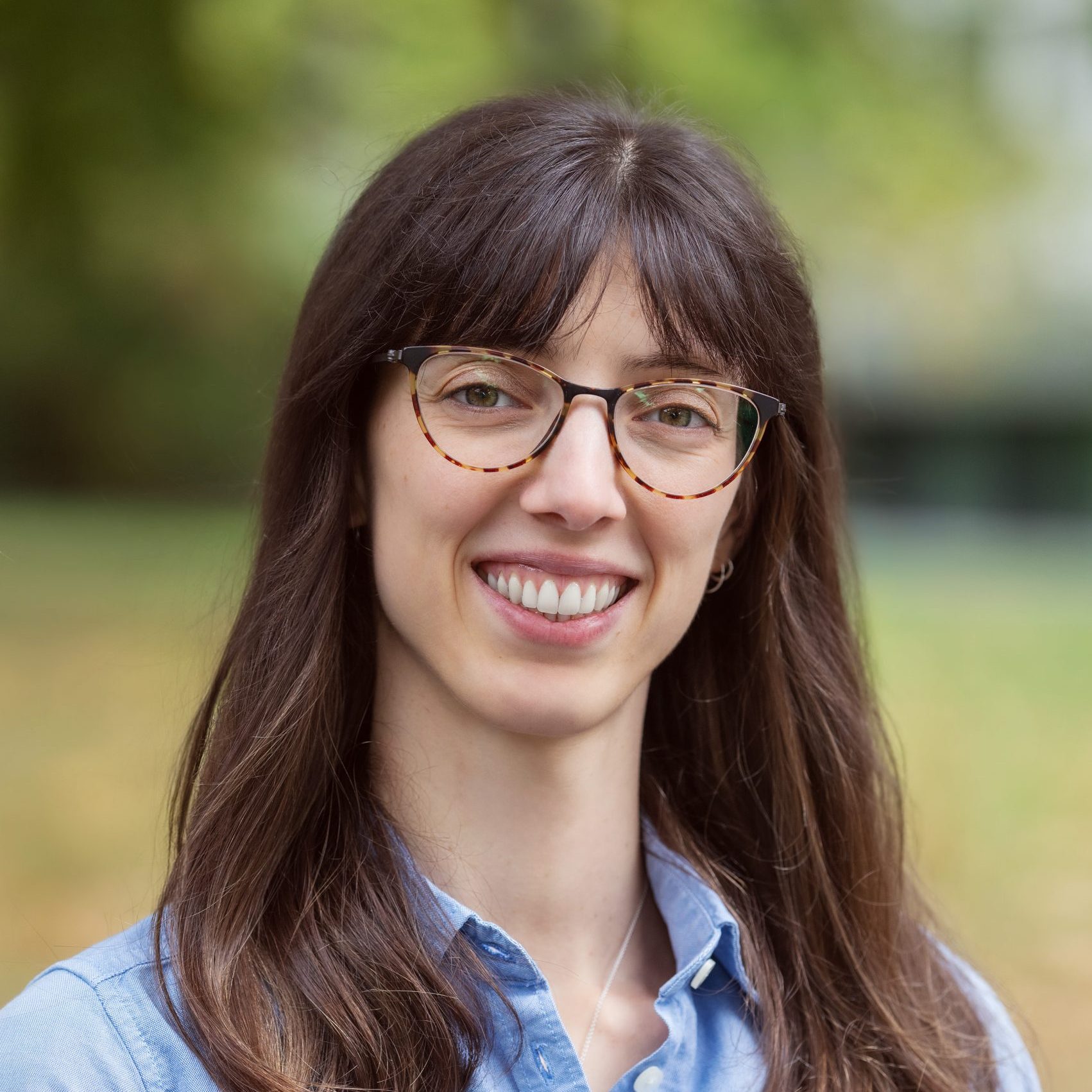
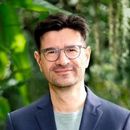
Yin Bao is an Assistant Professor in Plant and Soil Sciences and Mechanical Engineering at the University of Delaware since 2023, previously holding the same position at Auburn University's Department of Biosystems Engineering (2019-2023). He holds a BE in Mechanical Engineering from China Agricultural University (2012) and a PhD in Agricultural and Biosystems Engineering from Iowa State University (2018), followed by postdoctoral research there until 2019. His research focuses on automation technology for agriculture and forestry, leveraging robotics, machine learning, and sensing systems to develop tools for precision farming and plant phenotyping. Key areas include unmanned systems (UGVs/UAVs), spectral imaging, and AI-driven predictive models for crop and livestock management. Recent work emphasizes automated inventory systems for forest nurseries, UAV-based vegetation assessment, and machine learning applications in crop yield prediction. His publications span robotic guidance systems, root segmentation in X-ray CT scans, and equine gait analysis using deep learning. Notable projects include the Robotic Assay for Drought (RoAD) system and the 'smart canopy' sorghum initiative. Collaborative efforts involve integrating multifrequency microwave sensing and electronic nose technologies for crop quality analysis.
Jens Behley is a Lecturer (Privatdozent) and postdoctoral researcher at the Department of Photogrammetry, University of Bonn. He completed his habilitation in 2023 with a thesis on LiDAR-based spatio-temporal scene understanding for autonomous vehicles and earned his PhD in 2014 under Prof. Armin Cremers. His research focuses on LiDAR perception, agricultural robotics, and 3D scene understanding. Behley is an Associate Editor at IEEE Robotics and Automation Letters (RA-L) and has authored influential datasets like SemanticKITTI and BonnBeetClouds3D. Education: PhD in Computer Science, University of Bonn, 2014 Habilitation in Photogrammetry, University of Bonn, 2023 Research Interests: LiDAR-based perception in urban and agricultural environments, machine learning for robotics, semantic mapping, SLAM algorithms, and 3D reconstruction. His work bridges computer vision and robotics, with applications in autonomous vehicles and precision agriculture. Awards: Best Agri-Robotics Paper Award (IROS 2024) Outstanding Reviewer Awards (ECCV, CVPR, ICRA) Faculty Award for Geodesy (2021) Advisees & Grants: Behley collaborates extensively with the PRBonn lab and researchers like Cyrill Stachniss, focusing on projects funded by EU Horizon and industry partners. His team develops open-source tools for LiDAR processing (e.g., KISS-ICP, VDBFusion). Labs/Teams: Part of the Photogrammetry and Robotics Institute (IGG) at the University of Bonn, contributing to the PRBonn research group.
Shashi Shekhar is a Professor at the University of Minnesota, holding the distinguished titles of McKnight Distinguished University Professor and Distinguished University Teaching Professor. He serves as the ADC/CSE Chair and Director of the AI-LEAF Institute within the Department of Computer Science at the College of Science and Engineering. His research interests span multiple areas of spatial computing including spatial data science, spatial data mining, spatial databases, Geo-AI, and Geographic Information Systems (GIS). His work has focused on developing scalable algorithms for eco-routing, evacuation route planning, and spatial pattern mining. He has made significant contributions to the field through his Spatial Databases textbook, the Encyclopedia of GIS which has seen over 192,918 downloads in 2017, and a spatial computing book for professionals. His research group has produced numerous PhD graduates dating back to 1993 through 2023. Analysis of his recent publications reveals a strong focus on applying spatial computing to critical societal challenges including climate change mitigation through the AI-LEAF Institute, pandemic response through mobility data analysis, and sustainable transportation through eco-routing algorithms. His work bridges theoretical advances in spatial data science with practical applications in urban planning, emergency management, and environmental sustainability. Distinguished McKnight University Professor Distinguished University Teaching Professor UCGIS Education Award (2015) Graduate Education Award (2015) President of University Consortium for GIS (2017-2018) Computing Research Association Board Member (2016-2019) Professor Shekhar has advised over 30 PhD students since 1993, with his most recent graduate in 2023. He has secured significant research funding including a $20 million AI Institute grant focused on climate-smart agriculture and forestry. His Spatial Computing Research Group maintains active collaborations with government agencies and industry partners. The group has developed practical applications featured in media outlets including FoxTV coverage of evacuation route planning algorithms. Current research directions include applying AI techniques to address climate challenges through the AI-LEAF Institute and advancing spatial data science for polar regions through NSF-funded initiatives.
Prof. Dr.-Ing. Werner Lang serves as Vice President for Sustainable Transformation and holds the Chair of Energy Efficient and Sustainable Design and Building (ENPB) at the Technical University of Munich (TUM), within the TUM School of Engineering and Design. Previously, he was Professor of Sustainable Building and Director of the Center for Sustainable Development at the University of Texas School of Architecture in Austin (2008-2010). Lang also directs the Oskar von Miller Forum and is a partner at Lang Hugger Rampp GmbH Architekten in Munich. Lang's research focuses on developing strategies for buildings with positive environmental footprints through regenerative energy systems, renewable materials, and closed material cycles. His work emphasizes comprehensive life cycle analysis considering ecological, economic, and social aspects. Current research areas include climate-resilient urban neighborhoods, circular economy in construction, and sustainable building materials. The ENPB institute conducts numerous research projects such as Building Climate-Municipal, CircularFTmehrRAUM, and Urban Green Infrastructure. Lang's publications reveal a strong trend toward life cycle assessment, multi-criteria decision-making, and computational approaches for sustainable building design. His recent work integrates machine learning with building performance analysis and focuses on practical implementation of circular economy principles in urban contexts, with increasing emphasis on quantifying environmental benefits of urban green infrastructure. TUM Sustainability Award 2022 Doce et Delecta (Second Prize for Best Teaching), 2019 Bayerischer Energiepreis 2014 International Building Skin Tech Award (2008) Promotionspreis der TUM (2000) Lang leads the Institute of Energy-Efficient and Sustainable Design and Building with numerous research grants including projects like Building.Lab+, NAWAREUM, and ECO+. His team includes researchers working on topics ranging from urban mining to life cycle assessment tools. The institute maintains several products and startups including MoMeBo, Bilanzlabor, and EnergyML that translate research into practical applications for the building industry.
Prof. Dr. Fabian Gieseke is a Professor and Chair of Machine Learning and Data Engineering at the University of Münster. He holds a PhD in Computer Science from Carl von Ossietzky University of Oldenburg and a dual degree in Mathematics and Computer Science from the University of Münster. His research focuses on Machine Learning, High-Performance Computing, and their applications in Geosciences, Smart Cities, and Astrophysics. Education: PhD in Computer Science (2012), Carl von Ossietzky University of Oldenburg University studies in Mathematics and Computer Science (2006–2011), University of Münster Research Interests: Data Mining and Machine Learning High-Performance Computing & Distributed Systems Deep Learning Applications in Environmental Science and Astrophysics Geospatial Data Analysis using Satellite Imagery Publications Trends: His recent work emphasizes large-scale environmental monitoring via deep learning, including canopy height estimation, forest biomass prediction, and national-scale tree counting. He also explores interactive systems for geospatial data retrieval and optimization of machine learning models for resource-constrained environments. Advising & Grants: Supervised over 30 theses on topics like satellite image analysis, deep learning on microcontrollers, and data marketplaces for smart grids. Active in securing grants for interdisciplinary projects combining AI with Earth observation. Labs/Teams: Leads the Machine Learning and Data Engineering group at the University of Münster, focusing on scalable AI solutions for real-world challenges in science and industry.
Mark Crowley is an Associate Professor in the Department of Electrical and Computer Engineering at the University of Waterloo , with a cross-appointment in the Cheriton School of Computer Science . He is actively involved in the Waterloo Artificial Intelligence Institute (WAII) , the Waterloo Institute for Complexity and Innovation (WICI) , and serves as National Secretary for the Canadian Artificial Intelligence Association (CAIAC) , coordinating the Canadian Conference on AI . Research interests span the theoretical and applied aspects of Reinforcement Learning , Deep Learning , Manifold Learning , and Ensemble Methods . His work addresses challenges in domains with spatial dynamics, multi-agent systems, and uncertainty, particularly in Computational Sustainability (forest fire management, sustainable forestry), Autonomous Driving , Medical Imaging , and Material Design . Recent research focuses on integrating causal modeling with generative representation learning to improve out-of-distribution robustness in motion forecasting applications. Key publications include foundational work on ChemGymRL environments for safe chemical process reinforcement learning, Generative Causal Representation Learning for robust forecasting, and collaborative work on multi-advisor reinforcement learning in multi-agent settings. He co-authored a textbook Elements of Dimensionality Reduction and Manifold Learning (Springer, 2023) with Prof. Ali Ghodsi and Prof. Fakhri Karray. Teaching includes graduate and undergraduate courses in Algorithm Design , Computational Intelligence , Reinforcement Learning , and Data Modeling at the University of Waterloo since 2018. His research group has produced several notable graduates including Benyamin Ghojogh (2021), who continued as a postdoc until 2022.
Joséphine Gantois is an Assistant Professor in Human Dimensions of Biodiversity Conservation at the University of British Columbia, jointly appointed in the Institute for Resources, Environment and Sustainability (IRES) and the Food and Resource Economics Program within the Faculty of Land and Food Systems. Her work bridges economics, ecology, and data science to address ecological footprints in agricultural and natural landscapes. She holds a Ph.D. in Sustainable Development from Columbia University, an M.P.A. in International Development from the London School of Economics, and advanced degrees in economics and the sciences from École Polytechnique. Research Focus: Dr. Gantois investigates practical solutions for reconciling land use incentives with conservation goals, particularly in agricultural areas. Her research emphasizes causal inference methods, integrating remote sensing, machine learning, and qualitative tools like interviews. Key areas include biodiversity monitoring, policy impact assessment, and ecosystem function analysis. She has explored habitat restoration in Ontario grain farms during her postdoctoral work under Dr. Claire Kremen at UBC. Teaching & Engagement: She teaches in the Master of Food and Resource Economics (MFRE) program, focusing on interdisciplinary approaches to sustainability challenges. Her work highlights the intersection of human behavior, policy design, and ecological outcomes, aiming to inform actionable conservation strategies.
Christian Igel is a Professor at the Department of Computer Science, University of Copenhagen, and serves as director of the SCIENCE AI Centre . He is also a co-lead of the Pioneer Centre for Artificial Intelligence in Denmark. His academic journey includes a Doctoral degree from Bielefeld University (2002) and a Habilitation degree from Ruhr-University Bochum (2010). Igel is a Juniorprofessor (2002–2010) and has held editorial roles at journals like KI - Künstliche Intelligenz and Artificial Intelligence Journal . Doctoral degree: Faculty of Technology, Bielefeld University, Germany (2002) Habilitation degree: Department of Electrical Engineering and Information Sciences, Ruhr-University Bochum, Germany (2010) His research spans Machine Learning , focusing on Support Vector Machines , Evolution Strategies , Reinforcement Learning , Deep Neural Networks , and PAC-Bayesian Analysis . He applies these methods to Environmental Monitoring , Medical Diagnostics , and Climate Research . Recent publications highlight work on adversarial machine learning , environmentally sustainable AI , and tree resource mapping using deep learning. His scientific awards include being a ELLIS Fellow . Igel’s software tools like Shark , woody , and Multi-Planar UNet are widely used in research and industry. Notable grants and collaborations involve projects with European Lab for Learning and Intelligent Systems (ELLIS) , SCIENCE AI Centre , and international teams in Denmark , Germany , and France . His lab leadership emphasizes open-source frameworks and reproducible research. Editorial Roles: German Journal on Artificial Intelligence , Evolutionary Computation Journal , Artificial Intelligence Journal Software Projects: Shark , woody , Multi-Planar UNet , U-Time Collaborations: SCIENCE AI Centre , Pioneer Centre for Artificial Intelligence , European Lab for Learning and Intelligent Systems
Julian Adamek is a computational cosmologist and lead developer of gevolution , a general-relativistic N-body code for cosmological simulations. His work focuses on modeling relativistic effects in cosmic structure formation to better understand gravity’s role on large scales and dark energy. Research Interests: Computational Cosmology, Theoretical Cosmology, Large-scale structure of the Universe, Relativistic N-body simulations. Technical Leadership: Lead developer of gevolution , a public cosmological simulation code available via GitHub. Recent publications span diverse applications of deep learning in geospatial analytics, environmental monitoring, and computer vision, including phenology modeling, biomass mapping, conflict assessment, and 3D reconstruction from point clouds. Key Trends: Integration of AI/ML for environmental tasks, cross-domain applications (cosmology, ecology, forestry), and satellite data processing. Technical Focus: Transformer networks, diffusion models, super-resolution imaging, and ensemble learning for uncertainty quantification. Julian collaborates with researchers in cosmology and geospatial science, though specific students or awards are not mentioned in the provided texts.
Thierry Badard is an Associate Professor at the Department of Geomatics Sciences , Université Laval, where he also serves as Director of the Center for Research in Geospatial Data and Intelligence (CRDIG) . With over 28 years of experience in geospatial science, he leads research initiatives at the intersection of GeoAI , LiDAR processing , and smart city technologies . Director, CRDIG (2016-2022) Steering Committee Member, Big Data Research Centre (CRDM) Researcher, Institute for Intelligence and Data (IID) Research Expertise spans geospatial big data, GeoNLP, and IoT applications for digital twins. His work addresses flood risk modeling , 3D urban analytics , and environmental monitoring through AI-driven solutions. Recent publications focus on contrastive learning for LiDAR segmentation and geospatial ontologies for early warning systems. Grant Leadership includes collaborative projects on smart insurance analytics (2018-2025), Arctic bioaerosol research (2019-2025), and Quebec-Morocco digital twin partnerships (2022-2023). He has advised 15+ graduate students in geomatics and related fields.
Nuno Miguel Fonseca Ferreira is a Full Professor at the Instituto Superior de Engenharia de Coimbra (ISEC), part of the Polytechnic of Coimbra, where he currently serves as President of the Scientific Council. His academic career spans over 25 years at ISEC, progressing from Assistant to Professor Coordenador Principal. He has held significant leadership positions including Vice-President of ISEC (2001-2005), Pro-President of the Polytechnic of Coimbra (2009-2010), President of ISEC (2010-2013), and Vice-President of the Polytechnic of Coimbra (2013-2017), where he was responsible for internationalization initiatives. His educational background includes a degree in Electrical Engineering from the University of Porto (1996), a Doctorate in Electrical Engineering from the University of Trás-os-Montes and Alto Douro (2006), and a Habilitation Title (Aggregation) from the same institution (2020). His research focuses on Robotic Systems, with specialization in cooperative robotic systems as evidenced by his Habilitation work. Professor Ferreira's research spans multiple domains of robotics and intelligent systems, with particular emphasis on multi-robot coordination, environmental applications, and medical robotics. His work bridges theoretical control systems with practical applications across diverse fields including forestry, healthcare, manufacturing, and education. He has developed innovative approaches to robotic manipulation, sensor integration, and human-robot interaction, often incorporating advanced techniques from artificial intelligence and machine learning. His recent publications demonstrate a strong trend toward practical applications of robotics in real-world environments, particularly in forestry maintenance, industrial automation, and medical applications. The research shows progression from theoretical control systems to applied robotics in challenging environments, with increasing integration of computer vision, deep learning, and collaborative systems. His work spans both fundamental robotics research and immediate industrial applications, reflecting a balance between academic inquiry and practical implementation. Professor Ferreira has supervised two doctoral theses and participated in numerous research projects with substantial funding. His leadership extends to coordinating 15 of the 33 national and international R&D projects he has participated in, demonstrating significant grant acquisition and management capabilities. His international collaborations through Erasmus+ and other European programs highlight his role in fostering global research partnerships. He is an integrated member of GECAD (Research Group in Engineering and Intelligent Computing for Innovation and Advanced Development), a Portuguese R&D unit classified as Excellent by the Portuguese Science and Technology Foundation. Additionally, he is a member of LASI (Associated Laboratory for Intelligent Systems), the Portuguese laboratory associated with Artificial Intelligence, connecting him to a broader national research ecosystem.
Camilla Sandström is a Professor at Umeå University's Department of Political Science, Faculty of Social Sciences. Her research focuses on environmental policy, conservation, and governance, with a particular emphasis on human-wildlife conflict, forest governance, and adaptive management. She leads projects exploring biosphere reserves, climate policy equity, and the application of machine learning in environmental analysis. Research Interests: Conservation biology, sustainable development, political ecology, and the governance of socio-ecological systems. Key Projects: Contested Spaces: Bridging Protection and Development in a Globalizing World (VR-funded). GOVFORBIO: Governance Pathways for Sustainable Forest Use (Formas-funded). Her work bridges theory and practice, contributing to international guidelines like the IUCN's Human-Wildlife Conflict & Coexistence Framework. She collaborates with interdisciplinary teams to address challenges in multi-use landscapes, such as lion conservation in Tanzania and forest conflicts in Sweden. Publications highlight innovative methodologies, including machine learning for media analysis and spatial ecology for wildlife connectivity. She emphasizes participatory approaches to ensure equitable policy outcomes in climate and biodiversity crises.
Andreas Holzinger is a Professor at Graz University of Technology, with additional affiliations at Medical University Graz and University of Natural Resources and Life Sciences Vienna in Austria. He is recognized as an IFIP Fellow (2021) for his significant contributions to information processing and computer science. His work spans multiple institutions across Europe, with notable collaborations extending to the University of Alberta in Canada. Professor Holzinger's research focuses on Human-Centered AI, Explainable AI (XAI), and their practical applications across diverse domains. His work bridges theoretical AI advancements with real-world implementations in healthcare, forestry, and human-robot interaction. He has pioneered approaches in counterfactual explanations, graph neural networks, and human-in-the-loop systems that emphasize transparency and trustworthiness in AI decision-making processes. His recent publications demonstrate a strong trend toward integrating large language models with traditional AI systems while maintaining explainability. Holzinger's work consistently emphasizes the human element in AI systems, ensuring that technological advancements serve human needs rather than obscuring decision processes. His research in medical AI, smart forestry, and agricultural applications shows a commitment to solving practical problems with human-centered technological solutions. Scientific Awards: IFIP Fellow (2021) Professor Holzinger has been instrumental in establishing design guidelines for explainable AI systems, particularly through his work on post-hoc versus ante-hoc explanations. His research on Kandinsky Patterns has provided valuable experimental frameworks for pattern analysis and machine intelligence. He has secured significant research funding for projects bridging AI with practical applications in healthcare and environmental monitoring. His leadership extends to the organization of major conferences and workshops, including the CD-MAKE conference series, where he has fostered interdisciplinary collaboration between AI researchers and domain experts. His work on the CLARUS platform demonstrates practical implementations of interactive explainable AI for medical applications.
François Pomerleau is a full-time Professor at the Department of Computer Science and Software Engineering at Université Laval since 2017. His research focuses on 3D environment reconstruction , autonomous navigation , search-and-rescue robotics , and scientific methodology in robotics . He has held postdoctoral fellowships at the University of Toronto and Université Laval, with technology transfer experience at Alstom Inspection Robotics and Robotiq. Ph.D. in Mechanical Engineering (2013) from ETH Zurich M.Sc. in Electrical Engineering (2009) and B.Ing. in Computer Engineering (2006) from Université de Sherbrooke His research integrates robotics , computer science , and environmental monitoring , with a focus on point cloud registration , Lidar-based SLAM , and trajectory planning for unstructured environments. Recent work includes UAV-assisted terrain awareness , exposure time emulation for vision algorithms , and multi-season datasets for autonomous navigation . François’s recent publications emphasize 3D mapping , SLAM robustness , and environmental adaptation across forestry, subarctic, and alpine domains. His team develops tools for autonomous vehicles , search-and-rescue , and industry 4.0 . Scientific awards include Best Robotic Vision Paper Awards at CRV 2016 and 2020, a Best Paper Award at the ICRA 2024 Workshop, and recognition as a Distal Fellow of the NSERC Canadian Robotics Network (NCRN). He collaborates with industry partners like Robotiq and serves as Associate Editor for IEEE Robotics and Automation Letters , Frontiers in Robotics and AI , and IROS , while contributing to international program committees for robotics conferences.
Miguel Mahecha is Professor of Environmental Data Science and Remote Sensing at the University of Leipzig, where he serves as Institute Head of the Institute for Earth System Science and Remote Sensing. He is also affiliated with the Remote Sensing Centre for Earth System Research, a collaboration between Leipzig University and the Helmholtz Centre for Environmental Research (UFZ). Mahecha is a member of the German Centre for Integrative Biodiversity Research (iDiv) and serves as Principal Investigator in the Centre for Scalable Data Analytics and Artificial Intelligence. Additionally, he is a Fellow of the European Laboratory for Learning and Intelligent Systems and co-spokesperson for the National Research Data Infrastructure for Earth System Sciences (NFDI4Earth). Full Professor for Modelling Approaches in Remote Sensing, University of Leipzig (since 03/2020) Research Group Leader: Empirical Inference in the Earth System, Max Planck Institute for Biogeochemistry, Jena (12/2012 - 03/2020) PostDoc, Max Planck Institute for Biogeochemistry, Jena (10/2009 - 11/2012) PhD in Environmental Sciences, ETH Zürich (06/2006 - 09/2009) Diploma in Geoecology, Bayreuth University (10/2000 - 04/2006) Mahecha's research focuses on understanding ecosystem responses to climate extremes and human-environment relationships during these events. He investigates macro-ecological dynamics and ecosystem functioning using data-driven methods and high-dimensional Earth observations. A key contribution is his co-development of the Earth System Data Cube concept, which integrates empirical methods with theoretical understanding to analyze complex Earth system interactions. His work spans biogeography, ecosystem functioning, and advanced data science methodologies for environmental monitoring. His recent publications demonstrate a strong emphasis on analyzing compound climate extremes, particularly heatwaves and droughts, and their impacts on ecosystems. Mahecha has pioneered methods using Earth System Data Cubes to integrate diverse environmental datasets, enabling novel insights into biosphere-atmosphere interactions. His research increasingly incorporates artificial intelligence and machine learning approaches to understand spatiotemporal patterns in ecological systems, with applications in real-time forest monitoring and biodiversity assessment. Fellow of the European Laboratory for Learning and Intelligent Systems Co-spokesperson for NFDI4Earth (National Research Data Infrastructure for Earth System Sciences) Mahecha leads multiple significant research projects including Digital Forest (real-time forest monitoring), NFDI4BioDiversity, and XAIDA (extreme events: AI for Detection and Attribution). His work receives funding from diverse sources including EU, DFG, and Stiftungen Inland. He collaborates extensively with the German Centre for Integrative Biodiversity Research (iDiv) and the Centre for Scalable Data Analytics and Artificial Intelligence. His research group, Earth System Data Science (ESDS), focuses on developing methods to extract valuable information from long-term environmental observations to understand coupled Earth system dynamics. At the Remote Sensing Centre for Earth System Research, Mahecha's ESDS group investigates how ecosystem functions respond to climate extremes, societal vulnerability to environmental hazards, and nonlinear interactions in coupled Earth systems. The group leverages citizen science data, remote sensing observations, and advanced computational methods to address pressing environmental questions.