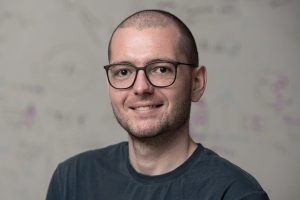
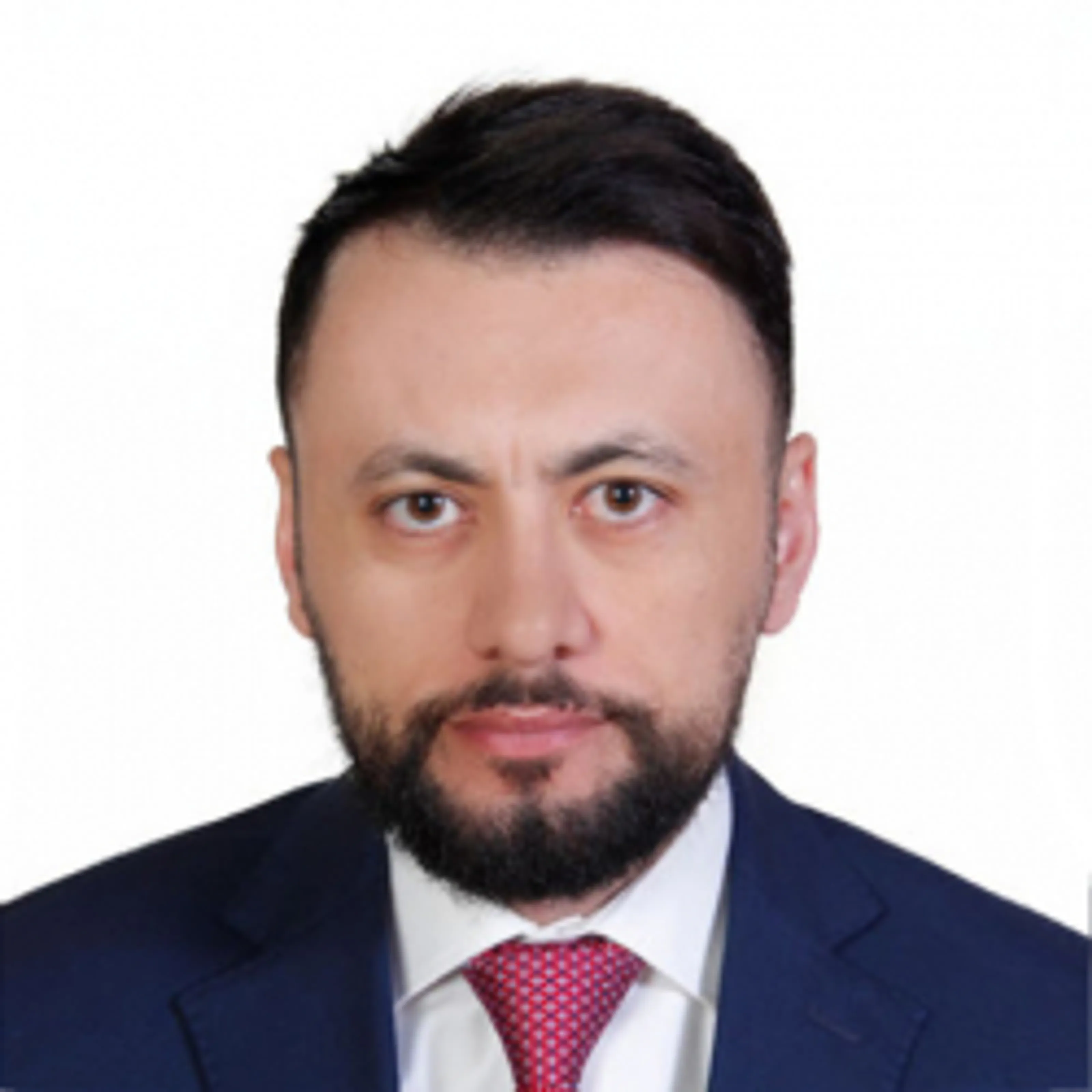
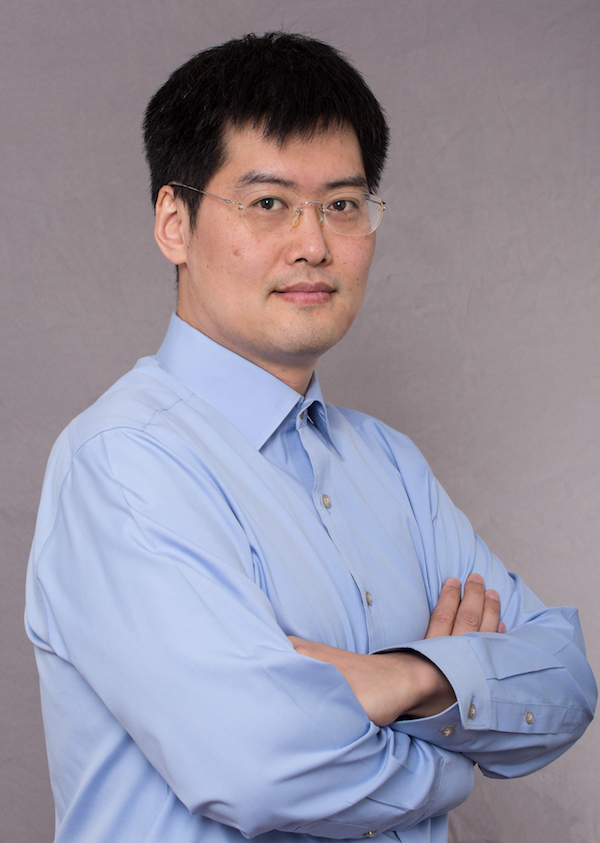
Luis Merino Cabañas is a Professor at the Universidad Pablo de Olavide , affiliated with the Deporte e Informática department and leading the SRL Service Robotics Laboratory . His research focuses on robotics, systems engineering, and automation, with a specialization in human-robot interaction and path planning. Education : PhD in Systems Engineering from the Universidad de Sevilla (2007), where his thesis explored cooperative perception techniques for multiple unmanned aerial vehicles in forest fire detection. Research Trends : Recent work (2023–2025) emphasizes 3D path planning, sensor fusion (LiDAR, radar, inertial systems), neural distance fields for safe navigation, and socially aware robotics. His studies integrate AI, genetic programming, and multi-modal perception for applications in construction, healthcare, and GNSS-denied environments. Labs & Teams : He leads the SRL Service Robotics Laboratory , contributing to projects like the Skyeye team and BIM2ROS integration for construction robotics.
Md. Zoheb Hassan serves as an Assistant Professor in the Department of Electrical Engineering and Computer Engineering at Laval University, where he leads cutting-edge research in wireless communications and spectrum management. His academic role includes graduate recruitment and active participation in the university's research ecosystem, particularly through the Establishment of the Next Generation of Professors program funded by FRQNT. Dr. Hassan's research centers on spectrum sharing and management, wireless communication systems, and communications network control systems. He pioneers the integration of digital twin technology and machine learning to solve critical challenges in next-generation networks, including interference management in 5G/6G aerial corridors, Internet of Vehicles, and satellite-terrestrial integration. His work emphasizes practical implementations such as proof-of-concept demonstrations for tactical networks and proactive resource allocation in dynamic environments. Analysis of his 2024-2025 publications reveals a dominant trend toward AI-driven wireless resource optimization, with 12 of 15 recent papers featuring digital twins for interference management, spectrum sharing, and energy efficiency. Key thematic clusters include vehicular communications (4 papers), underwater IoT networks (2 papers), and hardware-impairment resilient designs (3 papers), demonstrating his focus on bridging theoretical advances with real-world deployment challenges across diverse network topologies. Dr. Hassan has secured significant competitive funding for his research initiatives: Digital Twin-Enhanced Interference Management for Next-Generation Radio Access Networks in the FR3 Band (FRQNT, 2025-2027) Center for Radio Frequency and Communications Systems, Technologies and Applications (FRQNT, 2024-2030) Context-Aware Spectrum Sharing and Management for Next Generation Wireless Networks (NSERC, 2024-2029) Development of innovative technologies for modeling predictive systems in urban mobility (MITACS, 2022-2026) Springboard to Discovery supplement for Context-Aware Spectrum Sharing (NSERC, 2024-2025) He actively mentors doctoral candidates, currently supervising Mahima Karim (PhD in Electrical Engineering, expected 2025) and Mohammadamin Parhizgar (PhD in Electrical Engineering, expected 2024). His supervisory approach combines theoretical rigor with practical problem-solving, focusing on spectrum management algorithms and digital twin implementations for next-generation networks. While specific laboratory affiliations aren't detailed in the source material, his projects indicate strong alignment with Laval University's wireless research infrastructure and the Center for Radio Frequency and Communications Systems.
François Pomerleau is a full-time Professor at the Department of Computer Science and Software Engineering at Université Laval since 2017. His research focuses on 3D environment reconstruction , autonomous navigation , search-and-rescue robotics , and scientific methodology in robotics . He has held postdoctoral fellowships at the University of Toronto and Université Laval, with technology transfer experience at Alstom Inspection Robotics and Robotiq. Ph.D. in Mechanical Engineering (2013) from ETH Zurich M.Sc. in Electrical Engineering (2009) and B.Ing. in Computer Engineering (2006) from Université de Sherbrooke His research integrates robotics , computer science , and environmental monitoring , with a focus on point cloud registration , Lidar-based SLAM , and trajectory planning for unstructured environments. Recent work includes UAV-assisted terrain awareness , exposure time emulation for vision algorithms , and multi-season datasets for autonomous navigation . François’s recent publications emphasize 3D mapping , SLAM robustness , and environmental adaptation across forestry, subarctic, and alpine domains. His team develops tools for autonomous vehicles , search-and-rescue , and industry 4.0 . Scientific awards include Best Robotic Vision Paper Awards at CRV 2016 and 2020, a Best Paper Award at the ICRA 2024 Workshop, and recognition as a Distal Fellow of the NSERC Canadian Robotics Network (NCRN). He collaborates with industry partners like Robotiq and serves as Associate Editor for IEEE Robotics and Automation Letters , Frontiers in Robotics and AI , and IROS , while contributing to international program committees for robotics conferences.
Ralf Peeters is a Full Professor in Mathematics of Knowledge Engineering at Maastricht University's Faculty of Science and Engineering , Department of Advanced Computing Sciences. He serves as Vice-Dean of Research and Director of the STEM Graduate School, while leading the university's team at the inter-university research school DISC and co-chairing the Mathematics Centre Maastricht. Education: PhD in Mathematics (Free University, Amsterdam, 1994) Technical Mathematics (Delft University of Technology, 1988) Research Interests span applied mathematics, systems and control theory, signal/image processing, artificial intelligence, and biomedical engineering applications. His work bridges mathematical techniques with real-world challenges in healthcare and industrial systems. Recent Publications highlight advancements in deep learning for cardiac signal reconstruction, tensor-based signal decomposition, and recurrence plot analysis. These works integrate machine learning with clinical diagnostics, particularly in electrocardiographic imaging and arrhythmia characterization. Key Collaborations: Mathematics Centre Maastricht Dutch Mathematics Platform Dutch Institute of Systems and Control Leadership Roles: Vice-Dean of Research (FSE), Director of STEM Graduate School, Head of DISC-affiliated team, and Co-Chair of Mathematics Centre Maastricht. He has supervised over 25 PhD projects, emphasizing applied research across health and industrial domains.
Seongjin Choi is an Assistant Professor in the Department of Civil, Environmental, and Geo-Engineering at the University of Minnesota, Twin Cities , where he began his role in January 2024. His research bridges Urban Mobility Data Analytics , Spatiotemporal Modeling , and Deep Learning to advance transportation systems. Affiliated with the Center for Transportation Studies , Minnesota Robotics Institute , and Data Science Initiative , he leads the Choi Research Group . Education: Ph.D., Civil and Environmental Engineering, Korea Advanced Institute of Science and Technology (KAIST), 2021 M.S., Civil and Environmental Engineering, KAIST, 2017 B.S., Civil and Environmental Engineering, KAIST, 2015 His research focuses on Urban Mobility Data Analytics and Deep Learning to optimize transportation systems. Key areas include: Spatiotemporal Data Modeling for forecasting and imputation Generative AI applications in transportation data Reinforcement Learning for Connected Automated Vehicles (CAV) Cooperative Intelligent Transport Systems (C-ITS) Recent publications in Transportation Science and Transportation Research Part C highlight his work on probabilistic traffic forecasting , deep generative models , and vision-language-action frameworks for autonomous systems. His methodologies often combine AI-driven analytics with real-time mobility optimization . Dr. Choi serves as: Associate Editor of The Journal of the Korean Society of Transportation (JKST) , 2023–Present Guest Editor for Journal of Advanced Transportation special issue on "Advanced Data Intelligence Theory and Practice in Transport 2023", 2023–2024 He actively seeks PhD students/postdocs for 2025 cohorts focused on machine learning for transportation challenges. Current projects include AI-enhanced traffic forecasting, CAV control, and urban air mobility (UAM) integration studies.
Dr. Yanjie Fu is an Associate Professor in the School of Computing and AI at Arizona State University, part of the Ira A. Fulton Schools of Engineering. He maintains his office in BYENG 506 at the Tempe campus and can be reached at yanjie.fu@asu.edu. Dr. Fu received his Ph.D. from Rutgers University in 2016, the B.E. degree from the University of Science and Technology of China, and the M.E. degree from the Chinese Academy of Sciences. His industry research experience includes positions at Microsoft Research Asia and IBM Thomas J. Watson Research Center. His research focuses on developing disruption-robust machine intelligence that can handle imperfect and complex data. Dr. Fu's work spans two major efforts: Data for AI (D4AI), exploring how structure knowledge of data can guide AI, and AI for Data (AI4D), investigating how AI can augment, reprogram, and knowledgeize data. His current research interests include space-time intelligence, data-centric AI, sim2decision, multimodal reasoning, and LLM with agentic AI. His lab has contributed projects including D4AI-spatial, D4AI-timeseries, D4AI-causal outliers, AI4D-RL, AI4D-Gen, and AI4D-LLM. Dr. Fu's recent publications reveal a strong trend toward integrating causal reasoning with deep learning for robust anomaly detection, advancing time series forecasting with novel normalization techniques, and applying generative AI to urban planning. His work increasingly bridges traditional machine learning with large language models, particularly focusing on data-centric approaches for tabular data transformation and feature engineering. US NAE FOE early career engineer (2023) US NSF CAREER (2021) NSF CRII (2018) ACM KDD18 Best Student Paper Finalist IEEE ICDM Best Paper Finalist (2014, 2021, 2022) ACM SIGSpatial Best Paper Runner-up (2020) 2022 Baidu Scholar global top Chinese young scholars in AI 2021 Aminer.org AI 2000 Most Influential Scholar Award Honorable Mention Dr. Fu has successfully mentored multiple Ph.D. students who have secured tenure-track faculty positions at prestigious institutions including University of Kansas, Chinese Academy of Sciences, Great Bay University, Portland State University, and University of Macau. His research has been supported by significant grants including the NSF CAREER award, and he currently serves as Associate Editor of ACM Transactions on Knowledge Discovery from Data. He is also a senior member of both ACM and IEEE. Dr. Fu leads a research group focused on developing trusted and safe machine intelligence. The lab connects computing issues across representation learning, self-supervised learning, interactive learning, adaptive learning, and stream learning to build disruption-robust frameworks. The group executes two key steps: data representation construct (integrating structure knowledge, self-optimization, explainability) and learning strategy construct (integrating robust representations with adaptive and interactive learning).
Cihan Tepedelenlioglu is an Associate Professor at Arizona State University's School of Electrical, Computer and Energy Engineering. His work bridges wireless communications, statistical signal processing, and renewable energy systems, with a focus on photovoltaic array monitoring, fault detection, and optimization. PhD, MS, and BS in Electrical Engineering from University of Minnesota, University of Virginia, and Florida Institute of Technology 2001 NSF CAREER Award recipient Research interests span wireless communications , graph signal processing , stochastic optimization , and machine learning applications to solar energy systems . Key projects include quantum machine learning for PV topology optimization, consensus algorithms for distributed networks, and real-time fault detection using neural networks. Recent articles emphasize machine learning in energy systems (2023-2025), with 12 publications on photovoltaic monitoring and 3 on consensus algorithms. Earlier work focused on channel estimation in OFDM systems and fading models in wireless communications. Scientific awards : NSF CAREER Award (2001) Major grants include NSF funding for networked solar array management (2013-2016), nonlinear distributed consensus (2013-2016), and statistical processing of solar data (2009-2012). Teaching roles include EEE 350 Random Signal Analysis and graduate research supervision in signal processing and wireless communications. Collaborates extensively with Andreas Spanias, Mahesh Banavar, and other researchers on cyber-physical systems for energy applications.
Dr. Yongkai Wu is an Assistant Professor in the Department of Electrical and Computer Engineering at Clemson University, where he focuses on advancing Responsible AI , Causal Inference , and Machine Learning . His research addresses fairness, trustworthiness, and transparency in AI systems through causal modeling and has been published in top-tier venues like AAAI, NeurIPS, and KDD. Education: Ph.D. in Computer Science (2020) and M.S. in Computer Science (2018) from the University of Arkansas; B.Eng. in Electronic Engineering (2014) from Tsinghua University. Dr. Wu’s research spans Responsible AI and Causal Inference , with applications in healthcare, computer vision, and cybersecurity. He explores Causal Fairness in non-IID settings, Responsible LLMs , and Robust Learning via hyperspectral data. His work integrates ethics into AI/ML systems, ensuring equitable outcomes in dynamic environments. His recent articles highlight trends in Fairness through causal inference, Explainable AI in healthcare, and Efficient LLMs . Collaborations with institutions like the University of Maryland and Prisma Health underscore real-world impact. Scientific Awards: Best Paper Award (SIGKDD'25), travel awards from SBP-BRiMS, IJCAI, KDD, and NeurIPS. Dr. Wu’s grants include NSF , SC EPSCoR , Prisma Health , and United States Army CCDC funding for projects on Responsible AI in Healthcare , Hyperspectral AI , and Robust Learning . He mentors students through summer programs and directed research, emphasizing hands-on experience with Python, PyTorch, and ethical AI frameworks.
Johanna Sommer is a researcher at the Technical University of Munich , affiliated with the Department of Informatics under the TUM School of Computation, Information and Technology. She contributes to research and teaching in advanced machine learning domains. Education : M.Sc. Computer Science (TUM, passed with distinction), B.Sc. Applied Computer Science (Baden-Württemberg Cooperative State University). Research Interests : Her work spans Robust Machine Learning , machine learning for graphs and sequential data, Bayesian learning with uncertainty quantification, and efficiency improvements in training algorithms. She applies these to tasks like molecular generation and continuous-time modeling. Teaching : Johanna leads seminars and courses on topics including Advanced Machine Learning: Deep Generative Models , Machine Learning for Graphs and Sequential Data , and Large-Scale Machine Learning , often in collaboration with industry partners. Publications highlight her contributions to robustness analysis of combinatorial solvers, molecule generation from 3D shapes, and efficient alternatives to neural ODEs. These works appear at top venues like ICLR and NeurIPS .
Mathias Unberath is the John C. Malone Associate Professor in the Department of Computer Science at Johns Hopkins University, with secondary appointments in Ophthalmology and Otolaryngology—Head and Neck Surgery at the School of Medicine. He is a core faculty member of the Laboratory for Computational Sensing and Robotics (LCSR) and the Malone Center for Engineering in Healthcare, and affiliate faculty at the Institute for Assured Autonomy and Data Science and AI Institute. Education: PhD in Computer Science from Friedrich-Alexander University of Erlangen-Nürnberg (2017), MSc in Optical Technologies (2014), BSc in Physics (2012) His research focuses on computer-assisted medicine, integrating computer vision, machine learning, and medical robotics to develop human-centered solutions through mixed reality and embodied technologies. His work addresses surgical phase recognition, explainable AI, and digital twin representations for clinical workflows. Unberath's 15 most recent publications demonstrate expertise in surgical AI (7/15), medical imaging (12/15), and mixed reality (8/15), with specific subfields including segmentation frameworks (3 papers), cognitive load estimation (4 papers), and surgical robotics (5 papers). NSF CAREER Award NIH NIBIB Trailblazer R21 Google Research Scholar Award Inaugural DSAI Junior Faculty Award IPCAI 2025 Best Paper Award He teaches graduate courses in machine learning, AI system design, and interpretable machine learning. His group, the ARCADE Lab, develops technologies for computer-assisted interventions, emphasizing robustness, explainability, and human-AI collaboration in clinical settings.
Yazan Otoum is a Part-Time Professor in the School of Electrical Engineering and Computer Science at the University of Ottawa and concurrently an Assistant Professor in the School of Computer Science and Technology at Algoma University . A licensed Professional Engineer in Ontario, he is internationally recognized for his interdisciplinary work at the intersection of cybersecurity, artificial intelligence, and the Internet of Things . Education Ph.D. in Electrical and Computer Engineering, University of Ottawa (September 2022) M.Sc. in Network Engineering and Management, DePaul University (December 2009) Research Interests Dr. Otoum’s research program is dedicated to securing the rapidly expanding IoT ecosystem. His core themes include: Scalable meta-learning models that adapt to evolving threats in resource-constrained IoT devices. Federated and transfer learning to enable privacy-preserving, collaborative intrusion detection across heterogeneous networks. Healthcare IoT (IoMT) security, ensuring safe and trustworthy medical devices and data streams. Smart-city infrastructures , where AI-driven security safeguards critical urban services. His recent work leverages large language models (LLMs) , blockchain , and differential privacy to push the boundaries of next-generation cyber-defence mechanisms. Publication Trends Across 23 peer-reviewed works (2017-2025), a clear evolution is evident: early studies established foundational deep-learning intrusion detection frameworks (DL-IDS), followed by federated and transfer-learning paradigms tailored for IoT and IoMT. The latest 2024-2025 publications integrate cutting-edge generative AI and blockchain techniques, highlighting a shift toward holistic, scalable, and privacy-preserving security ecosystems for IoT, Internet of Vehicles, and healthcare domains. Professional Recognition & Service Licensed Professional Engineer (P.Eng), Ontario Certifications: CEH, CCNA, CHFI, ISO 27001 Lead Implementer Peer reviewer for IEEE, ACM, and Elsevier journals Invited speaker and mentor in cybersecurity education initiatives Teaching & Mentorship Dr. Otoum currently teaches Data Science and Data Structures and Algorithms at the University of Ottawa. His office hours are held Mondays 11:30 AM–1:30 PM in SITE room 4075. While specific student advisees are not listed, he is actively engaged in mentoring emerging researchers and practitioners in secure AI and IoT systems. Labs & Teams Operating at the intersection of academia and industry, Dr. Otoum collaborates with multidisciplinary teams spanning embedded systems, AI laboratories, and healthcare technology partners, fostering innovation that transitions seamlessly from theory to real-world deployment.
Michihiro Yasunaga is an Assistant Professor in the Department of Computer Science at Stanford University's School of Engineering. He received his PhD in Computer Science from Stanford, advised by Percy Liang, Jure Leskovec, and Chris Manning. Prior to his faculty position, he worked as a researcher at Google DeepMind and Meta. His research focuses on building LLMs and agents that assist humans in diverse tasks, with particular expertise in post-training techniques (RL, reward models, and evaluation), reasoning systems (AnalogicalReasoner), retrieval and tool use for LLMs (LinkBERT, QAGNN, DRAGON, REPLUG, HippoRAG), and multimodality (RA-CM3, Med-Flamingo, Transfusion). His work spans both theoretical foundations and practical applications of large language models. Yasunaga's publication record demonstrates significant contributions to the field of AI, with 15 recent articles (2023-2025) covering diverse aspects of language model development, evaluation, and application. His research shows a clear trajectory toward building more capable, efficient, and reliable multimodal AI systems, with particular emphasis on knowledge integration and robust evaluation frameworks. Among his notable achievements is the Best Paper Award at AAAI 2023 Deep Learning on Graphs Workshop for the DRAGON paper. He has also been deeply involved in major benchmarking efforts including HELM and HEIM, which provide comprehensive evaluation frameworks for language and vision-language models. Yasunaga actively contributes to the research community through service roles including Organizing Committee for the Workshop on Knowledge-Augmented Methods for NLP (ACL 2024), Workshop on Structured and Unstructured Knowledge Integration (NAACL 2022), and the Workshop on Scientific Document Summarization (SIGIR 2017-2020). He has also served on program committees for top conferences including NeurIPS, ICML, ICLR, ACL, EMNLP, CVPR, and ICCV from 2020-2025.
Xuming He is an Associate Professor at the School of Information Science and Technology (SIST), ShanghaiTech University, where he leads the PLUS Lab. His research spans computer vision and machine learning with a focus on developing algorithms that operate effectively under limited supervision and evolving data conditions. His core research interests include weakly-supervised and few-shot learning for scenarios with sparse annotations, continual learning frameworks for knowledge retention during sequential task acquisition, semantic segmentation techniques for scene understanding, and multimodal vision-language representations. He emphasizes interpretable machine learning to build transparent AI systems capable of human-understandable reasoning, addressing critical challenges in model trustworthiness and deployment reliability. Recent publications reveal strong trends toward novel class discovery in long-tailed recognition scenarios, physics-informed generative modeling for scientific applications, and robust segmentation under distribution shifts. His work increasingly integrates large language models for multimodal reasoning while maintaining focus on efficiency in resource-constrained environments like robotic grasping and medical imaging analysis. He actively mentors students, having supervised Qian He to PhD completion and Chuanyang Hu to Master's degree in 2023. He welcomes prospective graduate students through ShanghaiTech's Computer Science & Technology program and offers undergraduate research projects requiring minimum six-month commitments. The PLUS Lab under his direction drives innovation in learning under supervision constraints, with recent work spanning medical tumor analysis, cross-view geolocation, photonic computing, and semiconductor design verification. The lab's research bridges theoretical advances with practical applications across healthcare, robotics, and scientific discovery domains.
Fabrizio Falchi is a researcher at the Artificial Intelligence for Media and Humanities (AIMH) Lab of the Institute of Information Science and Technologies (ISTI) within Italy's National Research Council (CNR). He also maintains an associate position at the Biorobotics Institute of Scuola Superiore Sant'Anna. His work focuses on developing advanced multimedia retrieval systems, with the VISIONE platform being his most notable contribution, which has won international competitions including the Video Browser Showdown in 2024 and placed second in 2023. Falchi's educational background includes: Ph.D. in Information Engineering from University of Pisa (Italy) Ph.D. in Informatics from Faculty of Informatics of Masaryk University of Brno (Czech Republic) M.B.A. from Scuola Superiore Sant'Anna in Pisa His research spans deep learning, convolutional neural networks, deep features extraction, similarity search algorithms, distributed indexing systems, multimedia information retrieval, computer vision applications, and peer-to-peer systems. Falchi has made significant contributions to fine-grained visual understanding, cross-modal retrieval (particularly image-text matching), and robustness of deep learning systems against adversarial attacks. His work demonstrates a strong focus on practical applications of these technologies, particularly in video retrieval systems and safety monitoring solutions. Analysis of Falchi's recent publications reveals a strong focus on video and image retrieval systems, with the VISIONE platform being central to his work. His research shows increasing emphasis on fine-grained understanding in computer vision, cross-modal retrieval, and addressing practical challenges like cross-resolution face recognition. Recent work demonstrates innovation in making these systems more efficient through techniques like knowledge distillation (ALADIN) and leveraging virtual worlds for training data. His publications consistently bridge theoretical advances with practical applications in surveillance, safety monitoring, and multimedia search. Falchi's work has received significant recognition: Best paper award at CBMI 2024 for 'Is ClLIP the main roadblock for fine-grained open-world perception?' VISIONE 2024 won the Video Browser Showdown competition in Amsterdam VISIONE obtained second place at Video Browser Showdown 2023 in Bergen Best Paper Award for 'Learning Safety Equipment Detection using Virtual Worlds' at CBMI 2019 Falchi collaborates extensively with researchers at ISTI-CNR, particularly within the AIMH Lab. His work on VISIONE involves collaboration with Giuseppe Amato, Paolo Bolettieri, Fabio Carrara, Claudio Gennaro, Nicola Messina, Lucia Vadicamo, and Claudio Vairo. As co-chair of Ital-IA 2023, the 3rd National Conference on Artificial Intelligence, he plays an active role in the academic community. He is a member of ACM (since 2012), the Computer Vision Foundation, the Italian Association for Computer Vision Pattern Recognition and Machine Learning (CVPL), and the CINI Lab on Artificial Intelligence and Intelligent Systems. Falchi is a key member of the Artificial Intelligence for Media and Humanities (AIMH) Lab at ISTI-CNR, where he leads research on video retrieval systems. The lab has developed the award-winning VISIONE platform, which combines multiple scientific results in content-based video retrieval. His team focuses on developing systems that enable users to search for target videos using textual prompts, drawing objects and colors, or images as query examples. The lab's work demonstrates strong interdisciplinary collaboration, bridging computer science with practical applications in media, safety monitoring, and urban environments.
Sara Magliacane is an Assistant Professor at the University of Amsterdam and a Research Scientist at the MIT-IBM Watson AI Lab . She leads research at the intersection of causality and machine learning , focusing on improving AI robustness, generalization, and safety through causal reasoning. Her work spans causal representation learning , causal discovery , and causality-inspired ML in domains like reinforcement learning and dynamical systems. PhD in Artificial Intelligence (2017), VU Amsterdam MSc in Computer Engineering (2011), Politecnico di Milano/Torino BSc in Computer Engineering (2008), Università degli Studi di Trieste Her research explores causal variable identification from high-dimensional data (e.g., images, sequences) and causal graph discovery for domain adaptation. Methods include CITRIS , FANS-RL , and SNAP , with applications in embodied AI and biomedical data. The group emphasizes theoretical guarantees and scalable algorithms for real-world systems. Recent work trends include temporal causal modeling , intervention-efficient learning , and nonstationary reinforcement learning . Publications cover topics like causal discovery in partially observed settings , causal graph pruning , and sample-efficient concept learning , often combining neurosymbolic approaches with deep learning. Scientific Awards : ELLIS Scholar Sara supervises PhD students across universities (UvA, University of Pisa) and collaborates with institutions like TU Delft , Harvard , and IBM Research . She co-organizes workshops at premier conferences (NeurIPS, ICML, AISTATS) and teaches causality courses at the University of Amsterdam and Harvard Data Science Initiative. Her lab, Amsterdam Machine Learning Lab (AMLab) , investigates causal structure in embodied agents , safe reinforcement learning , and hybrid dynamical system modeling . The group maintains active partnerships with institutions such as MIT-IBM Watson AI Lab , Qualcomm , and Adyen .