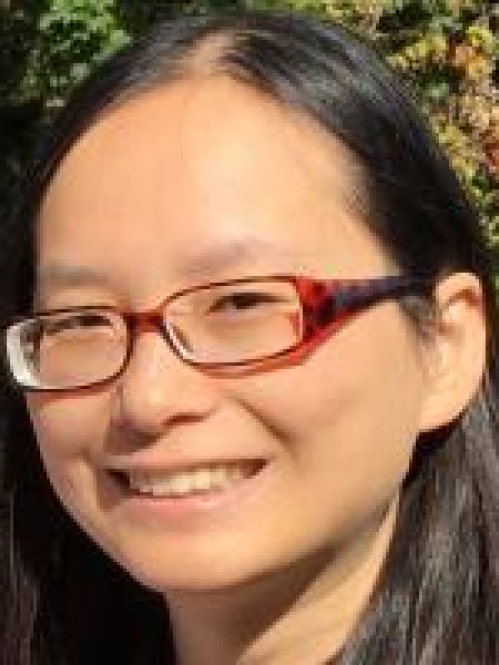
Dr. Yao Liu is an Assistant Professor in the Department of Electrical and Computer Engineering at Rutgers University, New Brunswick, since Fall 2021. Previously, she held an Associate Professor (tenured) position at Binghamton University, SUNY. Her research focuses on immersive streaming technologies, including 360-degree and volumetric video delivery, edge/cloud computing, and distributed systems. She has led projects such as SGSS for 6-DoF navigation in 3DGS scenes and EVASR for edge-based video enhancement. Her work has been recognized with awards like the NSF CAREER Award and Best Paper Awards at MMSys (2017, 2020). Research interests include immersive video streaming, virtual/augmented reality, mobile systems, and network optimization. Notable contributions include the 👁️NavGS dataset for VR navigation and the Dynamic 6-DoF Volumetric Video toolkit. She advises PhD students like Mufeng Zhu and Na Li, with past advisees receiving accolades such as the Binghamton Distinguished Dissertation Award. Publications span conferences like ACM Multimedia Systems (MMSys), IEEE ICME, and AAAI. Her work emphasizes practical solutions for bandwidth efficiency, real-time streaming, and energy optimization in immersive media. Grants include NSF CAREER funding for immersive streaming research. Labs and collaborations involve open-source projects hosted on GitHub (e.g., symmru repositories), emphasizing reproducibility and accessibility.
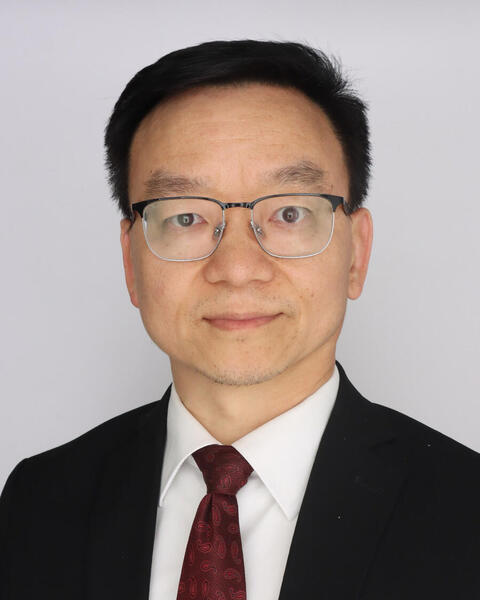
Lifeng Yu is a Professor of Medical Physics at Mayo Clinic, holding a primary appointment as Consultant in the Department of Radiology. He specializes in CT physics, radiation dose optimization, and AI-driven imaging techniques. Dr. Yu earned his PhD in Medical Physics from the University of Chicago (2006), following degrees from Beijing University (BS, 1997; MEng, 2000). His research focuses on improving CT imaging through advanced reconstruction algorithms, photon-counting detectors, and quantitative image quality metrics. He chairs key committees such as the Radiological Society of North America's Physics Committee and SPIE's Medical Imaging Conference. Awards include Fellowships from AAPM (2018) and SPIE (2023), alongside the Reese-Hartman Award (2012). His work bridges clinical translation of technologies like multi-energy CT and AI-based denoising, aiming to enhance diagnostic accuracy while reducing radiation exposure. Dr. Yu's expertise spans CT system optimization, virtual clinical trials, and standards development. He has contributed over 300 peer-reviewed publications and holds patents for innovations in CT dose management and image reconstruction.
Jeremy P. Bos is an Assistant Professor in the Department of Electrical and Computer Engineering at Michigan Technological University. He serves as a Faculty Advisor for the Robotic Systems Enterprise and is affiliated with professional societies including SPIE (since 2011), OSA (since 2003), and IEEE. His work bridges engineering and optical sciences, with a focus on imaging through turbulent environments. PhD, Electrical Engineering (2012), Michigan Technological University MS, Electrical Engineering (2003), Villanova University BS, Electrical Engineering (2000), Michigan Technological University Dr. Bos’s research spans atmospheric optics , statistical optics , and quantum optics , with applications in image and signal processing , autonomous vehicles , and industrial automation . His work addresses challenges in imaging through atmospheric turbulence, including speckle noise mitigation, phase compensation, and adaptive optics. He also investigates machine intelligence for optimizing reconstruction algorithms. Recent publications highlight trends in non-Kolmogorov turbulence modeling , multiframe blind deconvolution (MFBD) , and hybrid adaptive optics systems . His studies focus on long horizontal-path imaging, anisoplanatic conditions, and performance metrics for turbulence correction. Scientific recognition includes: NRC Research Associateship Program Award CLEO 2012 Maiman Student Paper sEMI-Finalist Dr. Bos previously led the Paulding Lights Activity and contributed to SPIE student leadership committees. His expertise extends to electromagnetic compatibility (EMC) and RF system design , informed by industrial roles at General Motors, Johnson Controls, and Lockheed Martin.
Ajit Jha is an Associate Professor at the Department of Engineering Sciences , University of Agder , Norway, with research expertise in photonic sensing, robotics, machine learning, and sensor fusion. His work bridges theoretical advancements with real-world applications in autonomous systems, industrial automation, and biomedical imaging. Research Areas: Photonic sensing, Robotics, Machine Learning, Computer Vision, Sensor Fusion, Mechatronics Recent Publications demonstrate innovative applications of deep learning to thermal imaging (gesture recognition), reinforcement learning for drone landing, and sensor fusion techniques for autonomous navigation. His interdisciplinary approach combines photonics, radar systems, and AI to solve complex engineering problems.
Sophie S. Berkman is an Assistant Professor in the Department of Physics & Astronomy at Michigan State University. Her research focuses on experimental particle physics, particularly neutrino interactions and the development of liquid argon time projection chamber (LArTPC) detectors. Her work involves precision measurements of neutrino-argon cross sections critical for the Deep Underground Neutrino Experiment (DUNE). She contributes to Fermilab's MicroBooNE and ICARUS detectors within the Short-Baseline Neutrino program, analyzing data to understand neutrino properties and detector performance. Her research spans charged-current and neutral-current interactions, pion production mechanisms, and searches for physics beyond the Standard Model through sterile neutrino and dark sector investigations. Recent publications demonstrate leadership in neutrino interaction vertex reconstruction using deep learning, liquid argon purity monitoring, and supernova neutrino detection capabilities. Her work on trigger systems and software development directly supports DUNE's operational readiness and scientific objectives in neutrino oscillation physics. She actively participates in international collaborations including DUNE, MicroBooNE, and ICARUS, contributing to detector calibration, event reconstruction algorithms, and cross-section measurements essential for next-generation neutrino experiments.
Mathieu Fontaine is an Associate Professor in Machine Listening at Télécom Paris , affiliated with the LTCI Lab within the IDS Department (Information, Data, Signal). His research focuses on machine listening for speech and audio signal processing. PhD in Informatics (2019), Lorraine University Master in Applied and Fundamental Mathematics (2015), Poitiers University BSc in Fundamental Mathematics (2013), Rennes University Fontaine's research spans speech enhancement , speaker separation , source localization , and music source separation using heavy-tailed probabilistic models and deep Bayesian networks , with applications in augmented reality . He has expertise in Python , signal processing , and machine learning (80% proficiency). His recent publications (2024) include work on diffusion models for speech synthesis , room acoustics estimation from 3D meshes , robust audio scene analysis , and direction-aware speech processing . Earlier publications (2022-2023) explore flow-based NMF , alpha-stable representations , and adaptive beamforming in multiparty environments. Fontaine collaborates with the S2A team and ADASP group at LTCI Lab. His work integrates probabilistic modeling with deep learning to address challenges in real-world audio processing, including reverberation, noise, and complex acoustic environments.
Bert de Vries is a Professor at the Signal Processing Systems Group at Eindhoven University of Technology (TU/e), where he has been employed since January 2012. He maintains a dual career, also working at GN Hearing in the hearing aids industry since April 1999, where he holds both research and managerial roles. His academic journey began at TU/e, where he earned his MSc in Electrical Engineering in 1986, followed by a PhD from the University of Florida in 1991. Between 1992 and 1999, he worked at Sarnoff Research Center in Princeton, NJ, contributing to diverse signal and image processing projects. Professor de Vries's research centers on Bayesian Machine Learning, with particular focus on the Free Energy Principle and its applications to engineering problems. His work bridges theoretical neuroscience with practical signal processing systems, especially in biomedical applications. He directs the BIASlab research team at TU/e, which develops probabilistic programming tools including RxInfer.jl, ForneyLab.jl, GraphPPL.jl, ReactiveMP.jl, and Rocket.jl. His research spans active inference, variational message passing, probabilistic programming, and Bayesian neural networks, with applications ranging from hearing aids to multi-agent systems. Analysis of his recent publications reveals a strong trend toward practical implementations of Bayesian inference frameworks, particularly through Julia-based probabilistic programming tools. His work shows increasing focus on active inference applications, message passing algorithms, and the intersection of Riemannian geometry with probabilistic modeling. The research demonstrates consistent progression from theoretical foundations toward real-world engineering applications, particularly in biomedical signal processing and autonomous systems. Professor de Vries teaches a graduate-level course on Bayesian Machine Learning at TU/e and actively contributes to open-source software development through his GitHub profile (bertdv), with recent activity as recent as August 2025. His research team has developed several influential probabilistic programming libraries that have gained significant attention in the machine learning community. The BIASlab research group continues to advance the state of the art in Bayesian inference methods with applications in hearing technology, robotics, and signal processing.
Dr. Sharib Ali is a Lecturer (Assistant Professor) in the School of Computer Science at the University of Leeds, Faculty of Engineering and Physical Sciences. He is affiliated with the Leeds Cancer Research Centre and actively contributes to research in biomedical image analysis and computer vision. His work bridges cutting-edge AI with clinical applications, particularly in endoscopy and surgical technologies. PhD in Medical Image Analysis, University of Lorraine, France MSc in Computer Vision (by research), University of Burgundy, France Dr. Ali's research focuses on biomedical image analysis , computer vision , and machine learning , with applications in early cancer detection , computational endoscopy , and 3D reconstruction . He develops robust algorithms for segmentation, registration, depth estimation, and mosaicking, using both classical mathematical models and deep learning. His work emphasizes translational research and generalisability in real-world clinical settings. The recent publications highlight a strong trend in generalisability assessment , multi-modal data fusion , and AI benchmarking in endoscopy. His work spans from foundational algorithm development to clinical deployment, including federated learning , mixed reality in surgery , and multi-centre datasets , addressing key challenges like bias, data imbalance, and privacy. Dr. Ali has co-supervised multiple DPhil/PhD students and currently supervises several PhD candidates at the University of Leeds, University of Oxford, and Tec de Monterrey. He is actively involved in securing research funding and leading projects such as Leveraging multi-modality data for targeted biopsy and Federated learning in healthcare . He is a founding member of NAAMII, Nepal, where he volunteers to train students from LMICs. He also organizes international research initiatives including the EndoCV and P2ILF challenges at MICCAI, and serves on program committees and as a reviewer for journals like Nature Communications and Medical Image Analysis . His research is conducted within interdisciplinary teams, collaborating with clinicians from Oxford NHS University Hospitals, neuroscientists at Forschungszentrum Jülich, and engineers across Europe. He leads the development of open tools and datasets to advance the field of endoscopic computer vision.
Stuart Shieber is the James O. Welch, Jr. and Virginia B. Welch Professor of Computer Science in the School of Engineering and Applied Sciences at Harvard University. He is a prominent researcher in computational linguistics and natural language processing, with significant contributions across multiple related fields including theoretical linguistics, computer-human interaction, automated graphic design, and the philosophy of artificial intelligence. Professor Shieber's research interests focus primarily on computational linguistics, examining natural language from the perspective of computer science. His work spans scientific and engineering goals, utilizing foundational formal and mathematical tools. He has made significant contributions to grammar formalisms, psycholinguistics, semantics, and synchronous grammars with applications in machine translation and sentence compression. Beyond computational linguistics, his research extends to automatic layout of charts and maps, novel interaction techniques for document reading and diagram layout, online auction mechanisms, library book access prediction, biological evolution tree reconstruction, and the philosophical basis for Turing's test for machine intelligence. His recent publications demonstrate a continued focus on neural language models, syntactic agreement mechanisms, readability assessment, conversational understanding, and bias detection in language models. His research has evolved from traditional grammar formalisms to incorporate modern neural network approaches while maintaining a strong theoretical foundation. The trend shows increasing attention to ethical considerations in NLP, particularly around bias detection and mitigation, alongside continued theoretical work on language structure. Presidential Young Investigator award (1991) Presidential Faculty Fellow (1993) John L. Loeb Associate Professorship in Natural Sciences (1993) Harvard College Professorship (2001) Fellow of the American Association for Artificial Intelligence (2004) Fellow of the Association for Computing Machinery (2014) Fellow of the Association for Computational Linguistics (2017) Professor Shieber has advised numerous PhD students who have gone on to successful careers at institutions including UCSD, Cornell University, Microsoft Research, Google, and various academic institutions. His work on open access and scholarly communication policy, particularly his development of Harvard's open-access policies, led to his appointment as the first director of the university's Office for Scholarly Communication. He is also the founding director of the Center for Research on Computation and Society and a faculty co-director of the Berkman Center for Internet and Society. His laboratory work has focused on advancing computational linguistics through both theoretical and applied research, with numerous patents and co-founding of Cartesian Products, Inc., a high-technology research and development company. His future work appears to be focusing on the intersection of neural network approaches with traditional linguistic theory, particularly in understanding and mitigating bias in language models, while continuing his long-standing interest in the theoretical foundations of language processing.
Rune Sundset is an Associate Professor at UiT The Arctic University of Norway, affiliated with the Nuclear Medicine and Radiation Biology research group. His work focuses on radiopharmaceutical development, molecular imaging, and liposomal drug delivery systems. Research themes: Radioligand design, PET/SPECT imaging optimization, and nanoparticle-biology interactions Key collaborations: European Journal of Nuclear Medicine and Molecular Imaging, BMC Research Notes, and Acta Physiologica Recent publications highlight his contributions to: Development of Cu-67 and Ga-68 radiotracers for tumor imaging Liposomal formulations for arginase inhibition in cancer therapy Machine learning applications in dynamic PET imaging Sphingolipid effects on liposome uptake by human phagocytes In the SECURE project, he investigates radioligand therapy and imaging biomarkers. His research group (NMRB) spans nuclear medicine, radiation biology, and biomedical engineering, with applications in glioblastoma, prostate cancer, and neurodegenerative diseases.
Professor Jody Webster is a leading marine geoscientist and Co-Coordinator of the Geocoastal Research Group at the University of Sydney's School of Geosciences. His multidisciplinary research integrates sedimentology, stratigraphy, marine geology, geophysics, paleoecology, and numerical modeling to study coral reef systems and carbonate platforms as critical archives of climate and sea-level change. Research Interests: Jody focuses on Carbonate sedimentology Climate change impacts on reef systems Tectonic influences on sedimentary evolution International Ocean Discovery Program (IODP) core analysis Great Barrier Reef and Hawaii as model systems Sea-level and environmental change during glacial-interglacial transitions . Publications: His recent work examines reef responses to meltwater pulses (MWP-1A/B), Holocene nutrient dynamics in the Great Barrier Reef, and carbonate platform drowning mechanisms. He contributes to databases like RADReef (global reef accretion rates) and numerical tools for reef growth modeling. Awards: Recognized with the 2021 Vice-Chancellor’s Award for Excellence in Research Multiple ARC Discovery grants International research ship time awards . Teaching: Coordinates courses in marine geoscience (GEOS2115, GEOS3009, MARS5007) and mentors students in reef sedimentology, stratigraphy, and climate modeling. Collaborations: Partnerships with institutions like Monterey Bay Aquarium Research Institute (MBARI) Universities of Tokyo, Granada, and Wisconsin-Madison International societies (ISRS, AGU, IAS) .
Professor Georg Gottwald is a distinguished academic in the School of Mathematics and Statistics at the University of Sydney, where he has been a faculty member since 2002, progressing from Lecturer to his current position as Professor since 2013. He also holds a Visiting Professor position at the University of Surrey in the UK since 2013. His extensive research career spans dynamical systems theory, geophysical fluid dynamics, and the intersection of machine learning with complex systems. Professor Gottwald's research focuses on dynamical systems theory as an abstract formalism for studying systems evolving in time and space. His work has significant applications across diverse fields including climate modeling, biological systems, and complex networks. He is particularly known for developing methods for model reduction of complex dynamical systems, stochastic modeling approaches, and the application of machine learning techniques to dynamical systems. His research aligns with the Faculty of Science Research Strengths in Understanding the Universe, Fundamental Laws of Nature, Complex Systems, Climate and Environmental Change, Data and Decisions, and National Security. His most recent publications demonstrate a strong trajectory toward integrating machine learning with dynamical systems theory, particularly in developing stable generative models, learning dynamical systems with random feature maps, and combining data assimilation with machine learning for forecasting. His work spans pure mathematical theory to practical applications in climate science, finance, and biological systems, showing remarkable breadth while maintaining deep mathematical rigor. Future Fellowship, 'Stochastic methods in mathematical geophysical fluid dynamics', Australian Research Council, 2010-2014 Australian Research Fellowship, 'Stochastic methods in mathematical geophysical fluid dynamics', Australian Research Council, 2010-2015 (declined) Australian Research Fellowship, 'Geometric methods in geophysical fluid dynamics', Australian Research Council, 2004-2009 Professor Gottwald has successfully supervised numerous PhD and Master's students who have gone on to academic and industry positions worldwide. His current research group includes postdocs and PhD students working on machine learning for dynamical systems, stochastic model reduction, physics-informed machine intelligence, and tensor methods for scientific machine learning. He has secured multiple ARC Discovery Project grants and has been involved in significant international collaborative research projects. He is actively involved with the Sydney Dynamics Group, which he co-founded in 2007, fostering collaboration between the University of Sydney and UNSW. Professor Gottwald maintains strong editorial commitments as Associate Editor for Geophysical and Astrophysical Fluid Dynamics, SIAM Journal of Applied Dynamical Systems, and Journal of Computational Dynamics, and serves on the Editorial Advisory Board for Chaos and the Editorial Board for Physical Review E. His professional activities demonstrate leadership in the dynamical systems community through organizing workshops, seminars, and special journal issues.
Denny Yu is an Associate Professor at the Edwardson School of Industrial Engineering, Purdue University. His work bridges human factors, neuroergonomics, and healthcare safety through advanced sensor systems and AI. Primary Affiliation : Edwardson School of Industrial Engineering, Purdue University Research Themes : Surgical ergonomics, autonomous vehicle human factors, cognitive workload assessment, multimodal physiological sensing Dr. Yu's research focuses on neuroergonomics and human-robot interaction , particularly in surgical and transportation contexts. His team develops sensor-based systems for workload monitoring, including: EEG-eye tracking fusion for situation awareness Wearable exoskeletons for surgical posture support Computer vision tools for lifting task risk analysis Smart infusion pump usability frameworks AI-driven surgical coaching systems Recent publications emphasize deep learning applications in soft tissue deformation estimation and real-time adaptive systems for robotic surgery augmentation. His work spans both occupational health (veterinary surgeons, airport workers) and medical device innovation domains.
Ravinder R. Regatte, PhD is a Professor at NYU Grossman School of Medicine , affiliated with both the Department of Radiology and the Department of Orthopedic Surgery . His academic work focuses on advanced MRI techniques for musculoskeletal and metabolic imaging. Key Research Interests: Musculoskeletal MRI Quantitative Imaging Biomarkers Deep Learning for Image Reconstruction MR Fingerprinting Metabolic Profiling in Diabetes Email: Ravinder.Regatte@nyulangone.org
Jon Heiselman is a Research Assistant Professor in the Department of Biomedical Engineering at Vanderbilt University School of Engineering. He serves as Associate Director of the Master of Engineering in Surgery and Intervention Program and leads research in image-guided surgical technologies. His work focuses on soft tissue deformation modeling, augmented reality applications, and computational frameworks for precision surgery. Education: PhD in Biomedical Engineering (Vanderbilt University, 2020) Advisor: Michael Miga, Harvie Branscomb Professor Research interests span image-guided surgical navigation, deformable registration algorithms, and digital twin modeling for therapeutic forecasting. Articles highlight advancements in soft tissue deformation correction, augmented reality integration, and machine learning approaches for real-time surgical guidance. Current affiliations include Vanderbilt's Biomedical Modeling Laboratory (BML) and the VISE Steering Committee. He contributes to NIH-funded training programs and has received recognition for his work in surgical data science and computational oncology.