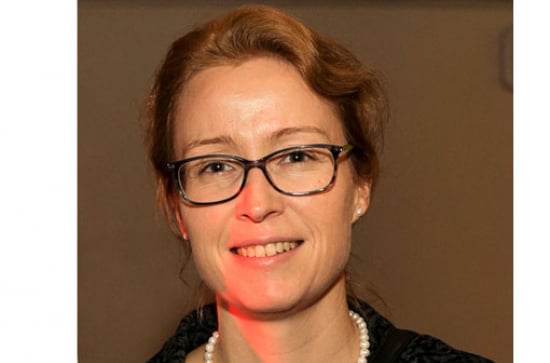
Rozenn Dahyot is a Professor of Computer Science at Maynooth University within the Faculty of Science & Engineering. She previously held roles as Assistant and Associate Professor in Statistics at Trinity College Dublin (2008-2021) and Lecturer in Computer Science (2005-2008). Her research interests bridge Digital Signal Processing, Computer Vision, Machine Learning, and Statistical Analysis. She organized the European Signal Processing Conference (EUSIPCO2021) in Dublin and served as President of the Irish Pattern Recognition and Classification Society (IPRCS) from 2014-2020. Her work spans topics like semantic scene understanding, CNN compression, and medical image segmentation. Key contributions include advancements in graph-based image analysis, reinforcement learning optimization, and AI-driven systems for disaster management. Dahyot is a member of IEEE, ACM, and EURASIP, contributing to both academic and industrial collaborations.
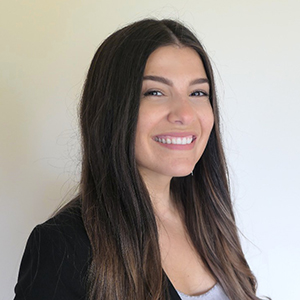
Dr. Sheila Castilho is an Assistant Professor at the School of Applied Language & Intercultural Studies, Dublin City University (DCU). She holds a PhD from DCU (2016) and a Master's from the University of Wolverhampton and University of Algarve. Her expertise lies in machine translation (MT), post-editing, and translation technology evaluation. She co-leads the New Trends in Translation Technology (NeTTT’22) conference and chairs DCU's Master in Translation Studies and Master in Translation Technology programs. Education: Licenciatura em Letras Inglês/Português (UNIOESTE University, Brazil) Master in Natural Language Processing (University of Wolverhampton & University of Algarve) PhD in Translation Technologies (Dublin City University) Research: Focuses on document-level MT evaluation, post-editing strategies, and user-centric MT assessment. Leads the DELA project and contributed to TraMOOC/iADAATPA initiatives. Published over 40 articles and co-edited 'Translation Quality Assessment: From Principles to Practice' (Springer, 2018). Grants & Projects: DCU PI for DELA (Document-level Evaluation) PRINCIPLE project (EU Low-resource MT) ELE (European Language Equality) initiative Labs/Teams: Active in ADAPT Centre (DCU) and collaborates with international NLP/MT communities (ACL, EMNLP, WMT).
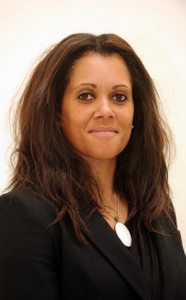
Catherine Mooney is a Professor in the School of Computer Science at University College Dublin (UCD), leading the Life Science Data Analytics Group (LiSDA). Her research focuses on applying machine learning to healthcare challenges, including biomarker development, clinical decision support systems, and addressing ethical and technical barriers in healthcare AI. Education: BSc in [field unspecified] from Trinity College Dublin PhD in Computer Science from UCD Prof Dip University Teaching & Learning from UCD Research Interests: Machine Learning applications in healthcare Biomarker discovery for neurological and metabolic conditions Explainable AI for clinical decision support Promoting diversity and inclusion in STEM education Her work bridges computational methods with medical challenges, emphasizing ethical AI and translational research. Notable Awards: Best Paper Award in Applied Biosciences (2023) UCD Long-Service Award (2022) Best Poster Award at ITiCSE ’20 (2020) Her research has led to impactful tools like LiSDA’s clinical decision support systems for epilepsy and pregnancy care. She also advocates for gender diversity in computing, serving in leadership roles like Vice Principal for EDI in UCD’s College of Science (2022–2024).
Aideen Quilty is Associate Professor of Gender Studies and Social Justice at University College Dublin (UCD), where she also serves as Head of School for the School of Social Policy, Social Work and Social Justice and as Associate Dean of Social Sciences. With academic responsibility for all social science undergraduate degrees and programs at UCD, she plays a significant leadership role in one of the university's largest academic units. Her educational background includes a BEd, M Equality Studies, and PhD from Maynooth University, along with a Diploma in Public Relations from the Public Relations Institute of Ireland. Her academic journey reflects a deep commitment to social justice, equality, and community engagement. Professor Quilty's research is profoundly interdisciplinary, weaving together gender studies, queer theory, human geography, and adult education. Her work centers on two major strands: LGBTQI+ experiences in higher education and society, and widening participation in higher education through spatial theory and critical pedagogies. She approaches her scholarship as a form of critical civic practice, seeking to challenge normative structures and promote social change through education. Her research consistently addresses issues of intersectionality, particularly how gender, sexuality, and spatial positioning affect educational access and outcomes. Her publication record demonstrates a consistent focus on LGBTQI+ issues, particularly youth homelessness and educational inclusion. The most recent articles show an increasing emphasis on spatial justice and the intersections of gender, sexuality, and place. Her work consistently applies queer and feminist theoretical frameworks to practical educational and social contexts, with a strong focus on Irish society while maintaining a European perspective through transnational collaborations. Professor Quilty has received numerous prestigious awards recognizing her excellence in teaching and commitment to student learning: University teaching excellence award (2022) Research Fellowship in teaching and learning from UCD (2019-2021) University Award for Outstanding Contribution to Student Learning (2017) College Teaching and Learning excellence award (2017) UCD Values in Action (VIA) award for her work on the Active Bystander Programme As an advisor, Professor Quilty supervises PhD students working in LGBQI+ and transgender scholarship and EDI in higher education. Her grant activity includes significant projects such as the first nationally funded qualitative research investigation into LGBTQI+ Youth Homelessness in Ireland (2018-2020) and a transnational ERASMUS+ research project developing an LGBTQI+ Inclusion Index for Higher Education Institutions in Europe (2020-2023), which she leads as Principal Investigator. She was also Co-PI on the EU-funded DAPHNE programme (2013-15) exploring LGBTQ youth empowerment. Professor Quilty co-directs the innovative research centre for Gender, Feminisms and Sexualities (CGFS) and works closely with community outreach partners, particularly the Women's Collective Ireland (WCI), as a trusted 'critical friend.' Her work bridges academic research with practical community engagement, creating meaningful connections between university resources and social justice initiatives. She is currently conducting a cross-university impact evaluation research project on the Bystander Programme (2021-22) and serves on the Royal Irish Academy's interdisciplinary committee of social sciences.
Usman Ali is an Assistant Professor and Adjunct Lecturer at the School of Mechanical and Materials Engineering, University College Dublin. He holds a Ph.D. in 'A data-driven GIS-based approach for multi-scale residential building energy modeling' (2020) from UCD and an M.Sc. in Computer Science from Lahore University of Management Science (2013). His research focuses on machine learning, GIS modeling, urban building energy systems, and energy performance certification. He has contributed to projects like the U.S.-Ireland R&D initiative on building stock classification and energy prediction, and collaborated with the Sustainable Energy Authority of Ireland (SEAI) on energy policy research. His work emphasizes data-driven solutions for energy efficiency, urban sustainability, and policy decision-making. Education: Ph.D., University College Dublin (2020) M.Sc., Lahore University of Management Science (2013) B.Sc., International Islamic University Islamabad (2008) Research emphasizes machine learning applications in energy modeling, GIS integration for urban planning, and energy policy frameworks. His recent work includes synthetic building datasets, occupancy-based energy analysis, and uncertainty quantification in energy systems.
Assoc. Prof. Nhien An Le Khac is an Associate Professor at the School of Computer Science, University College Dublin. He serves as Programme Director for the MSc in Forensic Computing & Cybercrime Investigation, which has trained over 1,500 law enforcement officers globally. His research focuses on cybersecurity, digital forensics, AI security, and secure healthcare IT systems. He holds a PhD from Institut National Polytechnique de Grenoble (France) and has supervised 9 PhD students. His work includes pioneering contributions to electromagnetic side-channel analysis (EM-SCA) for IoT forensics, blockchain forensics, and AI-based fraud detection. Education: BSc/MSc: Vietnam National University, Ho Chi Minh City PhD: Institut National Polytechnique de Grenoble, France Professional Certificate in University Teaching & Learning: UCD Research Interests: Cybersecurity, Digital Forensics, AI Security, Machine Learning, Cloud Computing, Big Data Analytics, Healthcare IT Security. Recent Article Trends: Focus on EM-SCA for IoT device forensics, illicit Bitcoin transaction tracking, and cross-device ML portability. His work bridges theoretical AI advancements with practical forensic applications, emphasizing privacy preservation and explainable AI. Awards & Recognition: World’s Top 2% Scientists (2024) UCD Teaching Excellence Awards (2022, 2018) Best Paper Awards at Elsevier, AI-2022, and DFRWS conferences Grants & Advising: Principal Investigator on grants like Cloud Atlas, CERBERUS, and Urban ARK. Advised 9 PhD students who now work in academia/research globally. Active in funding initiatives like ML-Labs (SFI-funded). Labs & Teams: Leads ASEADOS Lab and maintains datasets like EM-SCA and InSDN. Collaborates globally on forensic frameworks and cybersecurity tools.
Simon Colreavy Donnelly is an Associate Professor in the Department of Computer Science & Information Systems at the University of Limerick. He is a member of the Interaction Design Centre and focuses on interdisciplinary research at the intersection of artificial intelligence, educational technology, and healthcare informatics. His work spans machine learning applications in medical data analysis, virtual reality (VR) and extended reality (XR) for inclusive education, and deep learning techniques in chemical analysis and spectroscopy. Research Interests: His primary areas of investigation include generative AI for education equity, semisupervised learning algorithms, virtual learning environments design, and the ethical deployment of immersive technologies in healthcare and palliative care. He also explores NMR spectroscopy analysis using deep learning and develops tools for nutritional content estimation through image processing. Collaborations: His recent collaborations span international teams addressing challenges in toxicity-free online discourse (PAN 2024), semisupervised learning distribution mismatches, and VR applications for post-pandemic blended learning. His work integrates computational methods with real-world applications in education, healthcare, and chemical analysis. Labs/Teams: Active within the Interaction Design Centre at UL, his research group develops practical solutions for accessibility in digital education and healthcare systems, emphasizing user-centered design principles for extended reality applications.
Professor Annette Byrne is a leading academic at RCSI University of Medicine and Health Sciences , where she serves as Professor of Physiology and Head of the Precision Cancer Medicine (PCM) Group. She has held this position since 2019 after progressing through roles as Lecturer (2008), Senior Lecturer (2013), and Associate Professor (2017). Her research focuses on precision medicine approaches for colorectal and brain cancers , integrating multi-modality molecular imaging , Next Generation Sequencing , and patient-derived xenograft models . PhD in Cell Biology (University of York, 1999) John Kerner Fellowship in Gynaecologic Oncology (UCSF, 1999-2001) Scientist at Pharmacyclics Inc. (2001-2003) Senior Scientist at Angion Biomedica Corp. (2003-2005) Principal Investigator at UCD Conway Institute (2005-2008) Her research interest lies in precision cancer medicine , particularly elucidating predictive biomarkers (genomic, transcriptomic, proteomic) and identifying novel therapeutic targets . Key methodologies include radiomics , fluorescence-guided surgery , and systems modeling of apoptosis pathways. She has pioneered Ireland's first Tumour Xenograft Facility and Translational In Vivo Imaging Centre . Recent publications highlight her work on cross-species radiomics , cell-free DNA analysis , and glioblastoma microenvironment subtyping . Her Marie Curie networks (Gliotrain, Glioresolve) and COLOSSUS project have trained 25+ PhD researchers in brain cancer therapeutics. Over €45M in national/international grants Member of Royal Irish Academy (2025) Highly cited in Cancer Discovery , Annals of Oncology , and Nature journals She supervises multiple PhD candidates and leads the RCSI Precision Cancer Medicine Group , which utilizes computational approaches and molecular imaging to improve cancer treatment outcomes. Her GLIORESOLVE and EDIReX projects focus on tumor microenvironment manipulation and distributed PDX infrastructure.
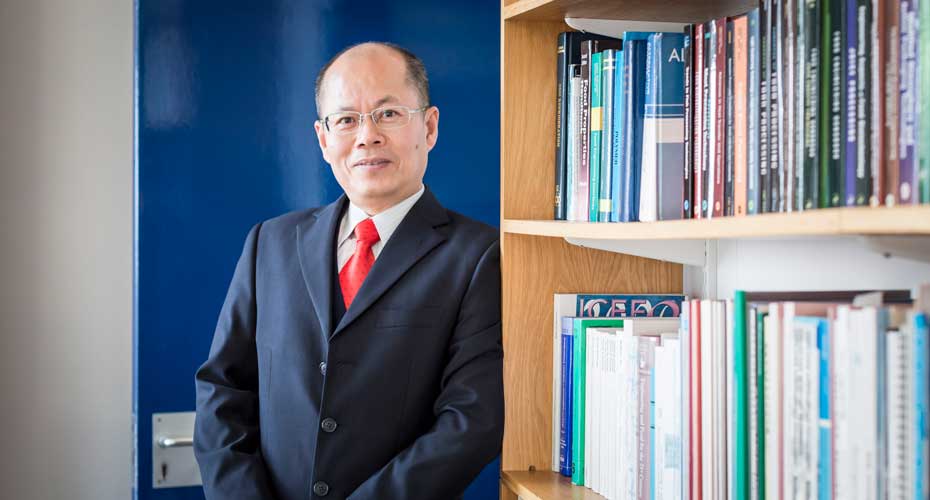
Professor Da-Wen Sun is a globally recognized authority in food and biosystems engineering at the UCD School of Biosystems & Food Engineering , University College Dublin. His research focuses on enhancing food preservation through innovative technologies like ultrasound-assisted freezing to minimize nutrient loss and structural damage in frozen foods. Key contributions: Developed ultrasound freezing methods to reduce ice crystal damage Editor of seminal texts including Handbook of Frozen Food Processing Founded the journal Food and Bioprocess Technology His work bridges computational modeling (e.g., CFD simulations , machine learning ) with industrial applications, particularly in freezing, drying, and vacuum cooling. Recent studies explore terahertz imaging for pest detection, deep eutectic solvents for moisture control, and cold plasma for allergen reduction. Scientific awards include: Frozen Food Foundation Freezing Research Award (2013) - First non-US recipient CIGR Honorary President title (2016) for leadership in agricultural engineering He leads the UCD Food Refrigeration & Computerised Food Technology group , collaborating internationally on technologies like nanosensors and green cryoprotectants to advance sustainable food systems.
Dr. Georgiana Ifrim is an Associate Professor at the School of Computer Science, University College Dublin , where she serves as Director of Graduate Research and Co-Lead of the SFI Centre for Research Training in Machine Learning (ML-Labs). She holds concurrent appointments as an SFI Funded Investigator at the Insight Centre for Data Analytics and VistaMilk SFI Research Centre . Her academic journey includes postdoctoral research at Insight Centre, Cork Constraint Computation Centre (4C), and Aarhus University's Bioinformatics Research Centre (BiRC). Education: BSc in Computer Science, University of Bucharest, Romania MSc and PhD in Informatics, Max-Planck Institute for Informatics, Germany Dr. Ifrim specializes in scalable predictive modeling for diverse applications including: Sequence learning (DNA analysis, time series) Real-time prediction for streaming data (news/social media, energy) Interpretable machine learning models Knowledge graph exploitation (WordNet/Yago, Naga) Wearable sensor data analysis (sports science, health monitoring) Energy price forecasting for sustainable systems Her recent publications focus on time series explainability (TSHAP, tsCaptum), multivariate analysis (scalable channel selection), and healthcare applications (fall detection, walking speed estimation). Key contributions include open-source tools like SEQL (sequence learner) and Twitter-Topics (event detection). Scientific Awards: Winner of SNOW@WWW14 Data Challenge As Director of Graduate Research, she oversees advanced academic training while leading funded projects at the intersection of machine learning , real-time analytics , and domain-specific applications in agriculture, healthcare, and digital journalism. Her research group maintains active GitHub repositories with open-source implementations.
Prof Noel O'Connor is a Full Professor at Dublin City University's School of Electronic Engineering, specializing in cutting-edge research at the intersection of artificial intelligence (AI), medical imaging, robotics, and smart city technologies. His work spans applications such as cardiac MRI reconstruction, robotic manipulation using reinforcement learning, and the development of the Smart DCU Digital Twin for autism-friendly university environments. Research interests include AI-driven medical diagnostics, multimodal data fusion, and adaptive systems. His contributions to cardiac MRI reconstruction and transformer-based medical imaging analysis reflect a strong focus on healthcare innovation. He also explores ethical AI practices to reduce social bias in foundation models. Recent work emphasizes smart infrastructure projects, such as optimizing parking recommendations for electric vehicles and enhancing accessibility through digital twin frameworks. His research often integrates real-time sensor data and multi-agent systems to address complex urban challenges. No scientific awards are listed. Collaborations include the ASU-DCU International Research Program on Sensors and Machine Learning. Advising details and grant information are not explicitly provided.
Dr. Salem S. Gharbia is the Head of the Department of Environmental Science and a Principal Investigator at Atlantic Technological University (ATU). He leads the Centre for Environmental Research Innovation and Sustainability (CERIS) and co-founded the Centre for Mathematical Modelling and Intelligent Systems for Health and Environment (MISHE). His research focuses on climate resilience, environmental monitoring, and modeling, with expertise in Geographic Information Systems (GIS), wireless sensor networks, and climate change impacts. Dr. Gharbia coordinates major EU projects like Horizon 2020 SCORE and has secured over €14M in research funding. He holds a PhD in Environmental Engineering from Trinity College Dublin, where he received the prestigious Ussher Award. His work spans collaborations with the Irish EPA, Horizon Europe, and the Marine Institute, addressing coastal flooding, microplastic detection, and sustainable agriculture. Education: PhD in Environmental Engineering, Trinity College Dublin. Research interests include climate adaptation strategies, urban resilience, and innovative sensor technologies for environmental monitoring. His projects emphasize interdisciplinary approaches to address global challenges such as rising sea levels, extreme rainfall, and coastal erosion. Awards: Trinity College Ussher Award. Grants: Over €14M secured over five years for projects like EmpowerUS, Pro-climate, and WaterFutures. Advising: Accepting PhD students in environmental science and engineering. Labs: CERIS and MISHE, focusing on climate modeling and environmental systems.
Fabiano Pallonetto is a Professor at Maynooth University's School of Business, with affiliations to the Hamilton Institute and Innovation Value Institute (IVI). He combines academic research with industry experience in energy, IT, and transport sectors. Role: Professor Location: Room 314, Maynooth University Contact: Fabiano.Pallonetto@mu.ie His research focuses on smart grid integration, energy system optimization, and sustainable development. Key projects include: NexSys (Funded Investigator): Developing net-zero energy pathways FLOW (Principal Investigator): Flexible EV-grid integration RES4CITY (Coordinator): Workforce upskilling for renewables Recent publications analyze energy flexibility software, deep learning optimization models, phase change materials for thermal storage, and blockchain security frameworks. His work spans smart cities , renewable integration , and AI-driven energy systems . Student Supervision: Currently advising MR B. Mohseni-Gharyehsafa (PhD research).
Dr. Anna Kimberley serves as a Senior Lecturer at Haaga-Helia University of Applied Sciences in Helsinki, Finland, teaching Business Communication, Human Resource Management, Diversity Management, Organizational Behaviour, Academic Writing, and Research Methods at both Bachelor's and Master's levels. She actively mentors students through thesis development, assesses academic work, and designs curriculum components using innovative pedagogical approaches that foster critical thinking and deep conceptual understanding in business education. Her research specializes in Interpretative Phenomenological Analysis (IPA) and Narrative Analysis applied to organizational contexts, with core interests spanning multicultural teamwork dynamics, reflexivity in learning processes, mentoring relationships, AI integration in education, and cultural identity formation. She investigates how individuals construct meaning in cross-cultural workplaces through identity work and sensemaking, particularly examining expatriate experiences and narrative-based identity transformation in globalized business environments. Analysis of her 2017-2020 publications reveals consistent exploration of narrative identity in multicultural organizational life, connecting expatriate adjustment, team communication across cultural boundaries, and reflective educational practices. Her methodological approach combines IPA with narrative techniques to uncover subjective experiences, positioning her work at the intersection of organizational behavior, cross-cultural psychology, and educational innovation with strong emphasis on qualitative depth over quantitative measurement. Scientific Awards and Honors: No awards, fellowships, or medals were documented in the provided materials Dr. Kimberley provides comprehensive thesis supervision for business students from topic selection through final assessment, integrating research methods with practical business applications while emphasizing critical reflection and self-efficacy development. Her curriculum design work focuses on creating student-centered learning experiences that bridge theoretical knowledge and real-world business challenges, though specific grant funding details remain unmentioned in available sources.
Gianluca Pollastri is an Associate Professor in the School of Computer Science at University College Dublin (UCD). He leads a research group focused on machine learning applications in bioinformatics, particularly protein structure prediction and analysis. His academic roles include Associate Professor since 2016, Senior Lecturer from 2008, and Lecturer from 2003. He earned an MSc from the University of Florence and a PhD from the University of California, Irvine. His research integrates deep learning and neural networks to address challenges in protein subcellular localization, secondary structure prediction, and intrinsically disordered regions. Key tools developed include SCLpred, PaleAle, Porter, and PUNCH2. He has secured grants from Science Foundation Ireland, the Health Research Board, and UCD. Pollastri’s work emphasizes rigorous validation of machine learning methods in biology, as outlined in the DOME framework. His lab has produced over 100 peer-reviewed articles, with recent focus on leveraging pre-trained language models (PLMs) for protein analysis. Education: MSc, University of Florence PhD, University of California, Irvine Awards: Best M.Sc. Thesis in Artificial Intelligence (1999) Best Student Project in Artificial Intelligence (1997) His teaching includes modules on Bioinformatics, Connectionist Computing, and Programming. He coordinates research collaborations and maintains a lab with postdoctoral fellows and graduate students.