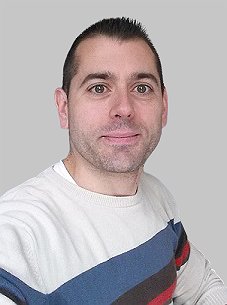
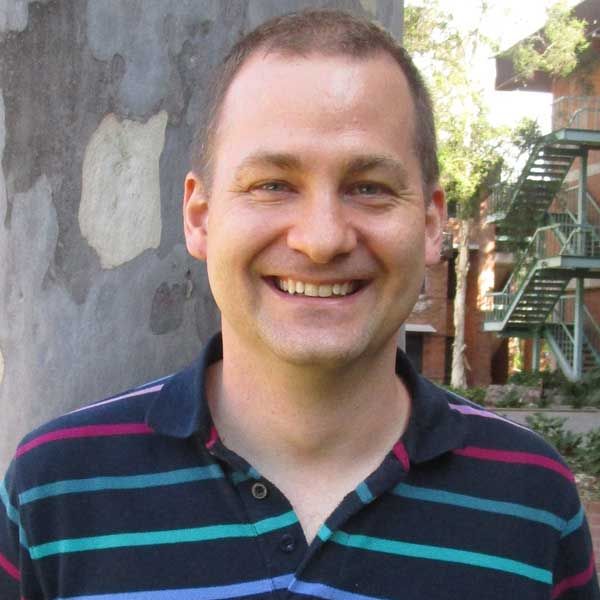
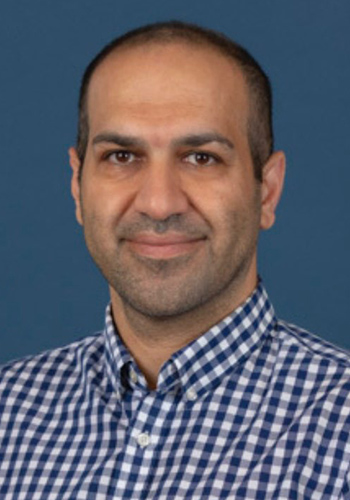
Yuan Huang is an Assistant Professor in the Department of Biostatistics at the Yale School of Public Health . Her research focuses on statistical methods for high-dimensional data, motivated by challenges in cancer genomics and neurodegenerative diseases. She develops approaches for biomarker identification, network structure estimation, and gene-environment interaction analysis, with applications in Alzheimer’s, Huntington’s, and Parkinson’s diseases. Key Affiliations: Yale Cancer Center, Center for Brain & Mind Health, Yale Center for Analytical Sciences (YCAS) Her methodological work emphasizes integrative analysis across multiple datasets to improve reproducibility and discovery. Recent collaborations span clinical trials, genetics, and epidemiology, with a focus on addressing heterogeneity and nonlinearity in complex biomedical data. Her publications include Bayesian finite mixture models, precision matrix estimation, and advanced techniques for high-dimensional causal mediation analysis. She actively engages in translational research, linking statistical innovation to clinical and public health challenges.
Paulo Jorge Freitas de Oliveira Novais is a Full Professor of Computer Science at the Department of Informatics, School of Engineering, Universidade do Minho, where he also holds a Habilitation in Computer Science. He leads the Synthetic Intelligence Lab at ALGORITMI Centre and coordinates the research line on Ambient Intelligence for Well-Being and Health Applications. His research spans Intelligent Systems, Machine Learning, Multi-Agent Systems, and their applications in Smart Cities, Health Informatics, and AI Ethics. PhD in Computer Science, Universidade do Minho, 2003 Habilitation in Computer Science, Universidade do Minho, 2011 Research interests include Ambient Intelligence, Ambient Assisted Living, Intelligent Environments, AI and Law, Conflict Resolution, and Explainable AI. His work focuses on enhancing system intelligence and reliability through novel architectures and ethical frameworks. Recent publications highlight applications in wastewater energy prediction, violence detection, student risk modeling, and urban logistics. Awards include multiple Best Paper and IBM Excellence recognitions across 2015–2023, plus a 2022 Career Recognition Award from the Ibero-American Society of Artificial Intelligence. Senior IEEE Member Chair of IEEE Computational Intelligence Chapter, Portugal IFIP TC 12 Artificial Intelligence Working Group Leadership He has supervised 132 PhD and Master’s students and contributed to editorial boards of journals like JAISE and ComSIS . His leadership roles include coordinating LASI – Intelligent Systems Associate Laboratory and serving as former president of APPIA.
Joakim Lindblad is a Professor at the Department of Information Technology, Uppsala University , and holds affiliated roles as Senior Research Associate at the Mathematical Institute of the Serbian Academy of Sciences and Arts, and Head of Research at Topgolf Sweden AB. With over two decades of expertise in image analysis and machine learning , his work bridges computational methods with biomedical applications. Key affiliations: Uppsala University, Serbian Academy of Sciences, Topgolf Sweden Specializations: Deep Learning, Multimodal Image Registration, Quantitative Microscopy His research focuses on reliable image processing frameworks that integrate intensity and spatial information , particularly for biomedical applications . Recent publications highlight innovations in autofluorescence-based cancer detection , self-supervised one-class learning for sparse instance identification, and rotation-equivariant CNNs for robust analysis of cytology images. Recent article trends demonstrate expertise in multimodal image analysis (2024: 3 papers), oral cancer detection (2025: 2 papers), and multiscale biomedical imaging . His 2025 work on the Uppsala Storytelling Dataset introduces novel frameworks for multimodal dataset creation in AI research. While no scientific awards are explicitly mentioned, his extensive publication record (2000-2025) across top venues like Pattern Recognition , PLOS ONE , and IEEE Transactions indicates significant academic impact. His methodological contributions span stochastic distance transforms , fuzzy set defuzzification , and multimodal image registration techniques. Collaborative work with researchers like Nataša Sladoje and interdisciplinary teams has produced innovations in automated cytology analysis , TEM image enhancement , and AI-driven medical diagnostics . His 2021-2022 projects introduced contrastive learning approaches for multimodal image registration and explainable AI frameworks for infant engagement analysis.
Anders Haug serves as Associate Professor at the Department of Business and Sustainability (DBS) within the University of Southern Denmark's Kolding campus. Having joined the university in 2008 as Assistant Professor in the Department of Entrepreneurship and Relationship Management before transitioning to his current role in 2010, his academic career spans over 15 years of research and teaching in operations, supply chain, and digital transformation contexts. His work bridges theoretical rigor with practical industry applications, particularly in engineer-to-order manufacturing and logistics sectors. Education: PhD in communication, representation and automation of design knowledge (2005-2007) Haug's research centers on information and knowledge management systems, with deep expertise in data quality frameworks, knowledge-based configuration, and digitalization of business processes. His fingerprint reveals distinctive contributions to product configuration systems, digital twin applications, and supply chain resilience—particularly examining how configurators transform warehouse services, manufacturing processes, and product-service ecosystems. Recent work increasingly addresses sustainability through green dynamic capabilities frameworks and life cycle assessment tools, maintaining strong empirical grounding via case studies in Danish manufacturing. Analysis of his 2024-2025 publications shows converging trends: digital technologies (configurators, digital twins) are examined through operational performance lenses while addressing sustainability imperatives. These works span operations management, information systems, and strategic management disciplines but consistently prioritize practical implementation frameworks for manufacturing SMEs. The research demonstrates methodological diversity—from conceptual modeling to empirical case studies—with strong industry relevance in logistics, engineering-to-order contexts, and manufacturing digitization. Scientific Awards: Top read paper in Business 2017/18 (Wiley) (2019) Haug has supervised 34 teaching courses between 2018-2024 covering business information systems, digitalization projects, and supply chain management. His academic service includes extensive peer reviewing for conferences like NOFOMA and DRS, plus organizational roles in Nordic business research networks. While specific grant details aren't provided, his 175+ research outputs and industry collaborations (evidenced by consultant work since 2006) indicate substantial research funding engagement. Media contributions on 3D printing and business process efficiency demonstrate effective knowledge transfer to practitioners. Though no dedicated research lab is specified, Haug's extensive co-authorship network—including collaborations on projects like digital twin implementation and configurator development—reveals embeddedness in multiple research collectives. His industry-facing approach manifests through case studies with logistics providers, manufacturer partnerships, and practical frameworks for warehouse service design and supply chain resilience.
Hironori Washizaki is a Professor at Waseda University's School of Fundamental Science and Engineering, Department of Information and Computer Science, and serves as Director of the Global Software Engineering Laboratory. He also holds a visiting professorship at the National Institute of Informatics and serves as outside director at SYSTEM INFORMATION CO.,LTD. and eXmotion Co., Ltd. With a Doctorate in Information and Computer Science from Waseda University (2003), he has established himself as a leading researcher with 384 publications and an h-index of 36 according to Google Scholar. His research spans multiple domains including software engineering methodologies, security patterns, programming education, and the application of machine learning to software development. His work has significantly contributed to the fields of software patterns, quality assurance, and educational tools for programming. With over 20 years of academic experience, his career progressed from Research Associate (2002-2004) to Assistant Professor (2004-2008), Associate Professor (2008-2016), and Professor (2016-present). Washizaki's recent publications demonstrate a strong focus on applying AI and machine learning techniques to software engineering challenges, including prompt engineering patterns, program repair methods, and vulnerability assessment. His work bridges theoretical research with practical applications in both educational and industrial contexts, particularly in B2B software development and programming education for diverse age groups. KDDI Foundation Award (2022) Spirit of the Computer Society Award (2022) Distinguished Contributor, IEEE Computer Society (2022) IEEE Computer Society Golden Core Member (2022) Fellow, International Academy, Research, and Industry Association (2022) Computer Research Contribution Award, APSCIT (2016) Washizaki has served as chair of the IEEE CS Japan Chapter and SEMAT Japan Chapter, director of ACM-ICPC 2014 Asia Regional Tokyo Contest, and Convenor of ISO/IEC/JTC1/SC7/WG20. His editorial work includes positions at IEICE Transactions on Information and Systems and International Journal of Software Engineering and Knowledge Engineering. His leadership extends to programming education initiatives like SamurAI Coding, demonstrating his commitment to developing the next generation of software engineers.
José Cano Reyes serves as a Reader (Associate Professor) in the School of Computing Science at the University of Glasgow, where he leads the Glasgow Intelligent Computing (GIC) Lab. His academic profile spans multiple premier conferences including ASE, CGO, ICSME, and EASE through 2025, demonstrating active engagement in computer systems research. His research focuses on the critical intersection of hardware and software systems for AI workloads, with core interests in Computer Architecture, Compilers, and Machine Learning. Recent investigations examine deep learning framework conversions, hardware accelerator robustness, and security implications of computational environments. This work addresses fundamental challenges in deploying efficient and reliable AI systems across diverse hardware platforms. Analysis of his 2023-2025 publications reveals a concentrated research trajectory toward optimizing deep learning deployment: 80% of recent work targets framework conversion errors and hardware compatibility issues, with strong emphasis on image recognition systems. Key methodologies include automatic fault localization (40% of publications), performance parameter analysis (30%), and domain-specific compiler techniques (30%). Leads Glasgow Intelligent Computing (GIC) Lab focusing on AI-system co-design Active contributor to ASE, CGO, and ICSME conference committees Maintains research presence through GitHub (jcanore) and Twitter (@jcanore)
Mauro Barni serves as a Full Professor in the Department of Information Engineering and Mathematical Sciences at the University of Siena, where he teaches Cybersecurity, Information Theory, and Mathematical Statistics. His office hours are held Fridays from 3:00 PM to 5:00 PM via online appointment, reflecting his active engagement with students. Professor Barni's research spans multimedia security and digital forensics, with emphasis on deep learning applications for digital watermarking, deepfake detection, and synthetic image attribution. His work addresses critical challenges in adversarial machine learning, steganography, and image manipulation detection, contributing significantly to cybersecurity and intellectual property protection frameworks. Analysis of his 2021-2025 publications reveals dominant trends in neural network watermarking robustness, synthetic media detection, and defenses against backdoor attacks. His research consistently bridges theoretical foundations with practical implementations, focusing on real-world applications like printer source attribution and physical-domain adversarial scenarios. He leads the VIPP (Vision, Image Processing, and Pattern Recognition) research group, which maintains dedicated virtual classrooms for collaborative projects in computer vision and multimedia security. The group actively develops methodologies for image forensics, synthetic media analysis, and security countermeasures against emerging threats.
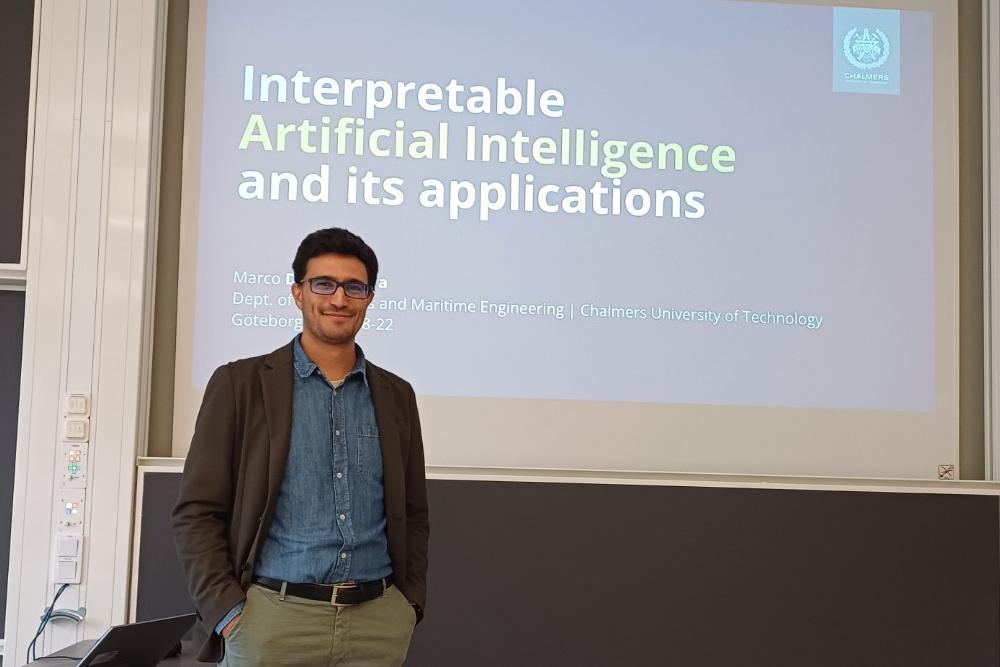
Marco L. Della Vedova is a Senior Lecturer in Applied Artificial Intelligence at Chalmers University of Technology, Sweden. He works in the Vehicle Engineering and Autonomous Systems division within the Department of Mechanics and Maritime Sciences, as part of Prof. Mattias Wahde's research group. Since 2025, he has served as Director of the Data Science and AI master's programme (MPDSC) at Chalmers, where he teaches courses including Introduction to Artificial Intelligence and Digitalization in Sports. Dr. Della Vedova earned his academic foundation at the University of Pavia, Italy, where he completed his BSc (2006), MSc (2009), and PhD (2013) in Computer Engineering. His doctoral research focused on "Real-Time Physical Systems and Electric Load Scheduling" under Prof. Tullio Facchinetti. During his PhD studies, he spent a year at U.C. Berkeley hosted by Prof. Francesco Borrelli at the Model Based Predictive and Distributed Control Lab. His research spans multiple AI domains with a strong emphasis on interpretability. Dr. Della Vedova develops interpretable methods for conversational AI, naturalness evaluation of forests using canopy height models, and geospatial applications. His work bridges theoretical AI with practical societal benefits, particularly in environmental monitoring, transportation systems, and orienteering. He has previously contributed to cloud computing, hate speech detection, and cyber-physical energy systems, demonstrating his interdisciplinary approach to AI research. Dr. Della Vedova's publication record reveals a consistent trajectory of impactful research across multiple domains of artificial intelligence. His recent work shows a strong focus on interpretability in AI systems, with significant contributions to natural language processing, geospatial analysis, and causal inference. The research demonstrates both theoretical depth and practical applications, particularly in environmental monitoring and social media analysis. His methodology often combines traditional machine learning approaches with novel interpretability techniques, creating bridges between complex AI systems and human understanding. Dr. Della Vedova has received several prestigious recognitions for his work: Best PhD thesis award from the Order of the Engineers of Bergamo (2013) Italian champion of Il Cervellone (2012) Top Italian performer in IEEEXtreme 6.0 programming competition (148th overall globally, 2012) Premio Arturo Schena award from Fondazione Credito Valtellinese (2010) With over 50 students supervised through bachelor's and master's theses, Dr. Della Vedova has established himself as a dedicated mentor in the AI community. His current PhD students include Minerva Suvanto working on interpretable NLP and Vivien Lacorre developing AI for railway infrastructure inspection. His supervision spans diverse topics from forest naturalness evaluation to hate speech detection and transportation optimization. Beyond formal supervision, he actively contributes to educational initiatives including serving as Director of Chalmers' Data Science and AI master's program and developing innovative teaching methods that connect theoretical concepts with real-world applications. Dr. Della Vedova is deeply embedded in both academic and professional communities. He leads the Applied Artificial Intelligence research group at Chalmers while maintaining strong connections with European research networks through projects like the ERASMUS+ EUrienteering initiative. His interdisciplinary approach is reflected in collaborations across computer science, environmental science, and social sciences. Notably, he applies his AI expertise to orienteering both as a researcher developing localization methods and as a licensed Event Advisor for the International Orienteering Federation, demonstrating how his professional and personal interests converge in innovative ways.
Simone Paolo Ponzetto is an Assistant Professor (Juniorprofessor) at the University of Mannheim since 2013, affiliated with the Research Group Data and Web Science. His research focuses on Semantic Web technologies, Natural Language Processing (NLP), and knowledge acquisition, particularly leveraging collaboratively built resources like Wikipedia. Prior to Mannheim, he held postdoctoral roles at Sapienza University of Rome and research positions at the University of Heidelberg and Stuttgart. His work includes pioneering projects like BabelNet, a multilingual semantic network. Ponzetto earned his PhD in Computational Linguistics from the University of Stuttgart, with interdisciplinary contributions to coreference resolution, semantic relatedness, and ontology learning. Research Interests: Unsupervised/weakly-supervised knowledge extraction Multilingual ontology learning and semantic networks Lexical semantics (word sense disambiguation, semantic similarity) Discourse semantics (coreference resolution, coherence modeling) Professional Contributions: Guest editor for a Artificial Intelligence Journal special issue on AI and Wikipedia Area chair for EMNLP-CoNLL 2012 and EACL 2014 Program committee member for ACL, AAAI, and other top conferences Lab/Team: Active in the Research Group Data and Web Science at Mannheim, advancing AI and NLP applications in collaborative knowledge systems.
Reuven Firestone serves as the Regenstein Professor in Medieval Judaism and Islam at the Hebrew Union College-Jewish Institute of Religion. He holds dual academic and religious credentials, having earned his M.A. and rabbinic ordination from Hebrew Union College alongside a Ph.D. in Arabic and Islamic studies from New York University. Firestone's research focuses on the intersection of Jewish and Islamic traditions, with particular expertise in medieval religious texts, interfaith relations, and Abrahamic narratives. His scholarly work examines how Jewish and Islamic traditions interpret shared biblical figures and concepts, with special attention to the Abraham-Ishmael stories that connect both faiths. His publications reveal a consistent scholarly trajectory exploring comparative religious concepts across the Abrahamic traditions, particularly examining how Judaism and Islam understand holy war, chosenness, and interreligious dialogue. Firestone has developed practical resources for interfaith communication while conducting deep historical analyses of religious concepts. Learned Ignorance: Intellectual Humility among Jews, Christians and Muslims Holy War in Judaism: The Fall and Rise of a Controversial Idea Who Are the Real Chosen People?: The Meaning of Chosenness in Judaism, Christianity and Islam Firestone's academic contributions bridge scholarly research with practical interfaith applications, creating resources that serve both academic and religious communities seeking to understand the connections and distinctions between Jewish and Islamic traditions.
Despina Kontos, PhD is the Herbert and Florence Irving Professor of Radiological Sciences at Columbia University Irving Medical Center (CUIMC), with appointments in the Department of Radiology and the Herbert Irving Comprehensive Cancer Center. She serves as the Chief Research Information Officer for CUIMC, Vice Chair of Artificial Intelligence and Data Science Research in the Department of Radiology, and Director of Biomarker Imaging at NewYork-Presbyterian Hospital. Additionally, she holds appointments in the Departments of Biomedical Informatics and Biomedical Engineering. Dr. Kontos received her educational training from prestigious institutions: BS in Engineering from the University of Patras, Greece MSc and PhD in Computer and Information Sciences from Temple University Postdoctoral training in Radiology at the University of Pennsylvania Certificates in Biostatistics and Epidemiology from UPenn, Cancer Biology from Harvard, and AI for Decision Making from Wharton As a computer scientist with expertise in artificial intelligence and machine learning, Dr. Kontos focuses on developing computational methodologies to leverage imaging as quantitative biomarkers for personalized disease prediction, particularly in cancer. Her research program investigates how imaging data can be mined to extract sophisticated phenotypic signatures with diagnostic, prognostic, and predictive value. While her primary focus has been on breast cancer, her lab also pursues related research in lung cancers, evaluating the integration of CT radiomic features with liquid biopsy data to characterize tumor heterogeneity. Dr. Kontos founded and directs Columbia University's Center for Innovation in Imaging Biomarkers and Integrated Diagnostics (CIMBID), a multidisciplinary center dedicated to developing and integrating quantitative imaging and non-imaging biomarkers for personalized disease prediction. Through CIMBID, she has built a vibrant scientific ecosystem that brings together expertise across Columbia's campuses, linking basic science, engineering, clinical medicine, public health, and health services research. Analysis of Dr. Kontos's publication record reveals a strong focus on applying AI and machine learning to biomedical imaging, particularly for cancer risk prediction and personalized treatment. Her work demonstrates a progression from foundational methodological development to clinical translation, with increasing emphasis on multi-modal biomarker integration. Recent publications show expansion into new disease areas including Alzheimer's disease prediction, while maintaining her strong focus on breast and lung cancer applications. Dr. Kontos has received significant recognition for her contributions to the field: Academy for Radiology and Biomedical Imaging Research Distinguished Investigator Award (2020) Eastern Cooperative Oncology Group - American College of Radiology Imaging Network ECOG-ACRIN Young Investigator Award of Distinction for Translational Research (2014) Dr. Kontos has been highly successful in securing research funding, with numerous grants from federal agencies including the National Institutes of Health (NIH) and the Department of Defense (DOD), as well as private foundations such as the American Cancer Society (ACS) and the Radiological Society of North America (RSNA). Her leadership extends to mentoring students and postdoctoral researchers through her roles at CIMBID and the Department of Radiology. As the founding director of CIMBID, Dr. Kontos leads a multidisciplinary team that includes the Computational Imaging Biomarker Group (CBIG), the Laboratory of AI and Biomedical Science (LABS), and several other affiliated research labs. The center leverages Columbia's institutional strengths in engineering, data science, and clinical medicine to advance personalized healthcare through AI and imaging technologies.
Labros Bisdounis is a Professor at the Department of Electrical and Computer Engineering, University of the Peloponnese, Greece. He previously held positions at the Technological Educational Institute of Western Greece, including Associate Professor, Full Professor, and Dean of the School of Technological Applications (2016–2018). He has extensive industry experience as a senior research engineer and project manager at Intracom S.A. (2000–2008), focusing on VLSI circuits and telecom applications. His research interests include CMOS circuit timing/power modeling, low-power/high-speed design, MOSFET modeling, and sensor applications. He has authored over 30 papers with 740+ citations and is an IEEE member. Education: Diploma in Electrical Engineering (1992), University of Patras Ph.D. in Electrical Engineering (1999), University of Patras Research Interests: CMOS circuit timing and power dissipation modeling Deep-submicron/nano-CMOS circuit design MOSFET device modeling Low-power embedded systems and SoC Sensor applications and organic electronics Leadership Roles: Dean of the School of Engineering, University of the Peloponnese (2023–present) Director of Training & Lifelong Learning Centre (2019–2019) Board Member, Hellenic NARIC (2016–2019) Collaborations: Active at the Hellenic Open University as a tutor in Computer Architecture and Digital Systems modules. Co-developed the AETHER framework for pervasive computing and contributed to energy-aware SoC designs for 5 GHz WLANs.
Dr. Ian Renner is a Senior Lecturer in the School of Information and Physical Sciences at the University of Newcastle, specializing in Data Science and Statistics. He holds a PhD in Statistics from the University of New South Wales, complemented by a Master of Statistics from the University of Utah and a Bachelor of Science in Mathematics from Valparaiso University. His research focuses on species distribution models (SDMs), particularly leveraging presence-only data and point process models. He developed the PPM-LASSO approach and maintains the R package 'ppmlasso' for model implementation. Education: PhD (Statistics), University of New South Wales Master of Statistics, University of Utah Bachelor of Science (Mathematics), Valparaiso University Research Interests: Dr. Renner's work bridges statistics and ecology, emphasizing the development of robust SDMs. Key areas include: Unifying MAXENT and Poisson point process models Observer bias correction in ecological data Integration of regularization techniques (e.g., LASSO) for predictive accuracy Application of citizen science data in conservation His methodologies address challenges like taxonomy changes and sampling biases in species distribution studies. Publications: His recent work highlights advancements in SDM stability, citizen science applications, and regularization methods. Key themes include improving model reliability through penalized likelihoods and addressing ecological data complexities. Awards: JB Douglas Award (2011) Runner-up for Best Student Talk (2011) EJG Pitman Prize (2010) Grants & Supervision: He has secured $12,838 in internal grants, including a visiting fellowship at CNRS (France) and conference funding. He currently co-supervises a PhD on deep learning for speech depression recognition and has guided two other students in statistical ecology and methodology. Labs/Teams: Leads the development of the 'ppmlasso' R package, collaborating with researchers like Olivier Gimenez and Eric Beh to advance ecological statistics.
Jinghui Cheng is an Associate Professor at the Department of Computer Engineering and Software Engineering at Polytechnique Montréal . He holds a PhD in Computer Science from DePaul University (2017), preceded by an MSE and BSE from Xi’an Jiaotong University, China. His research uniquely bridges Human-Computer Interaction (HCI) with Software Engineering , focusing on technologies that support domain experts with specialized information needs. Awards : Canada Research Chair Tier 2 in User Experience Design of Data-Driven Systems His recent work examines playful AI interactions (e.g., ChatGPT), designer-developer collaboration , and privacy motivation in UI/UX. He actively supervises PhD and Master’s students in the HCD Lab , with over 20 completed theses. Collaborations span institutions like the École Polytechnique and partnerships with researchers such as Jin L. C. Guo and Bram Adams . Cheng’s 15 most recent publications (2023-2025) reflect trends in AI-assisted design , usability in open-source communities , and ethical technology development . His grants include the AUDACE grant (2020) co-led with Dr. Gabrielle Pagé, focusing on healthcare applications.
Dr. Ali Yousefi is an Associate Professor in the Department of Biomedical Engineering at the University of Houston's Cullen College of Engineering. His research focuses on developing statistical and computational methods for analyzing neuroscience data, particularly in linking neural activity to biological/behavioral signals. Key areas include model identification, Bayesian analysis, and real-time neural decoding for applications like brain-computer interfaces and closed-loop stimulation systems. Education: B.S. (Electrical Engineering, Iran University of Science & Technology, 1998), M.S. (Electrical Engineering, Sharif University of Technology, 2000), Ph.D. (Electrical Engineering, University of Southern California, 2014). Postdoctoral training at Harvard Medical School (2019) and Boston University (2019). Research Interests: Neural data analysis frameworks Dynamic neural ensemble modeling Closed-loop brain stimulation systems Bayesian statistical inference High-dimensional data decoding Labs/Teams: Principal Investigator of Yousefilab, focused on neurotechnology and BCI development. Active in interdisciplinary collaborations combining engineering, neuroscience, and machine learning. Key Contributions: Developed methodologies for neural signal decoding, including Bayesian Gaussian process models and latent variable techniques. Pioneered real-time cognitive state prediction and closed-loop systems for enhancing cognitive control in humans.