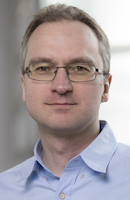
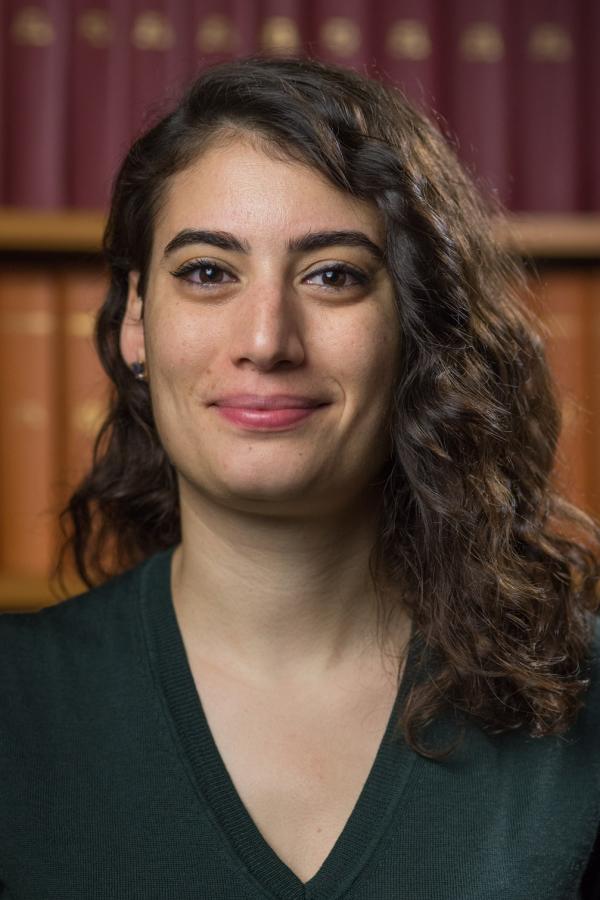
Sebastian Riedel is a Professor at University College London (UCL) and a Researcher at DeepMind, leading the UCL NLP Lab. His work focuses on teaching machines to read, reason, and write, integrating Natural Language Processing (NLP) with Machine Learning. He holds an Allen Distinguished Investigator award and has held roles at FAIR, UMass Amherst, Tokyo University, and the University of Edinburgh. Education: PhD in Computer Science from the University of Edinburgh (advisor: Ewan Klein), postdoctoral research at UMass Amherst (advisor: Andrew McCallum), and research at Tokyo University (advisor: Tsujii Junichi). Research Interests: NLP, machine learning, information extraction, and multimodal models like Gemini. He develops tools such as UCLEED (BioNLP event extractor), frontlets (Scala map wrappers), and thebibbrag (BibTeX to HTML converter). Awards: Allen Distinguished Investigator. Software contributions include GitHub repositories for NLP, machine learning, and data tools. Contact: s.riedel@ucl.ac.uk | Office: 1st Floor, 90 High Holborn, London WC1V 6LJ | Office Hours: Mondays 11 AM–12 PM.
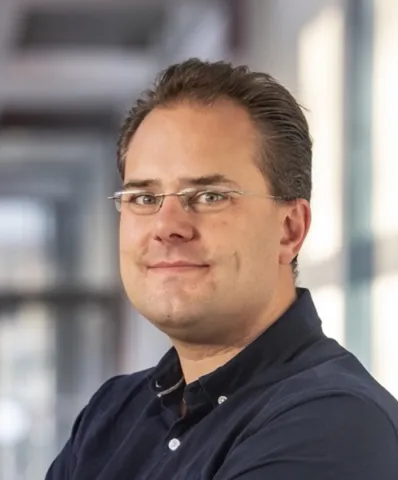
Professor Haijiang Li is a Chair in BIM for Smart Engineering at Cardiff University's School of Engineering. His roles include leading the Computational Mechanics and Engineering AI Research Group, directing the BIM for Smart Engineering Centre, and overseeing the BIM MSc programme. He holds editorial roles for journals like Construction Innovation and Automation in Construction , and chairs the European Group of Intelligent Computing in Engineering (EG-ICE). Research focuses on smart computational engineering platforms integrating BIM, AI, and big data for sustainable infrastructure. Key areas include digital twins, disaster management, and resilient urban systems. He has secured £40M in research funding, including £9M as PI, and led over 70 research staff and students. Prof. Li is a Standards Committee Technical Executive at buildingSMART, driving international BIM standards. His work includes co-authoring a book on BIM standards across China, the US, and the UK. Awards include Fellowships from the British Computer Society (FBCS) and the Higher Education Academy (FHEA). His research outputs span over 250 publications, covering topics like AI-driven bridge maintenance, ontology-based decision-making, and energy-efficient urban systems. Collaborations with industry and global partners emphasize practical applications of BIM and smart technologies.
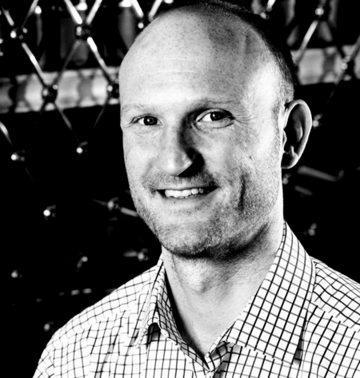
Professor Emily So serves as Deputy Head of the School of Arts and Humanities at the University of Cambridge and directs the Cambridge University Centre for Risk in the Built Environment (CURBE). A chartered civil engineer with extensive field experience, she holds leadership roles in the Open-Oxford-Cambridge AHRC Doctoral Training Partnership and chairs the Faculty EDI Committee. Her research focuses on urban risk and resilience , particularly in earthquake-prone regions. Combining structural engineering with epidemiological approaches, she develops innovative casualty estimation models and engages directly with affected communities worldwide. Her work spans seismic safety, disaster epidemiology, and remote sensing applications for rapid damage assessment. Professor So's publication trends reveal strong emphasis on machine learning for disaster risk modeling , with recent work featuring graph neural networks, deep clustering for urban morphology, and LSTM-based population forecasting. Her research bridges engineering, social sciences, and data science to address resilience in developing nations. 2010 Shah Family Innovation Prize (Earthquake Engineering Research Institute) Fellow of the Institution of Civil Engineers (FICE) Scientific Advisory Group for Emergencies (SAGE) member advising UK government As Director of CURBE, she leads interdisciplinary collaborations with EEFIT, Global Earthquake Model (GEM), World Bank, and USGS. Her field investigations following major earthquakes inform practical solutions for vulnerable communities, notably contributing to the 2017 World Building of the Year design in China. Current work includes sabbatical research for 2025-2026 focused on decolonizing architectural approaches to disaster resilience. Professor So maintains active roles in professional organizations and international disaster response frameworks, with her CURBE team developing methodologies now implemented globally for seismic safety improvements.
Professor Daniel Rueckert is a leading academic in Artificial Intelligence and Medical Imaging, holding dual positions at Imperial College London (as Professor of Visual Information Processing) and Technical University of Munich (Alexander von Humboldt Professor for AI in Medicine and Healthcare). He obtained his MSc from Technical University Berlin (1993) and PhD from Imperial College London (1997), followed by postdoctoral work at King’s College London. At Imperial, he led the Department of Computing (2016–2020) and founded the Biomedical Image Analysis group. His research focuses on AI-driven medical image analysis, including algorithms for image reconstruction, registration, and clinical decision support. His research interests span AI applications in healthcare, machine learning for medical imaging, and computational methods for clinical diagnostics. Notable contributions include over 500 publications and 60+ PhD graduates, with key works in federated learning, cardiac motion analysis, and biomarker development. Awards include the Leibniz Prize (2025), Royal Academy of Engineering Fellowship (2015), and multiple ERC grants. He leads the BioMedIA research group and is an editorial board member of Medical Image Analysis . Recent publications highlight advancements in AI-driven medical imaging, such as secure federated learning frameworks and deep learning models for disease prediction. His work bridges academic and industrial sectors through initiatives like IXICO, an Imperial spin-out. Current affiliations include roles at both Imperial and TUM, emphasizing interdisciplinary collaboration in healthcare technology. Advising and grants: Supervised over 60 PhD students and 40 post-docs. Secured grants including ERC Synergy (2013) and ERC Advanced (2020). Active in labs focused on biomedical image computing and AI in healthcare systems. Collaborative efforts include the BioMedIA group and TUM’s AI initiatives. Labs/teams: Leads the Biomedical Image Analysis group at Imperial and the TUM AI in Medicine team. Collaborates extensively on projects like cardiac imaging analysis and federated learning for healthcare.
Peter Pietzuch is a Professor in the Department of Computing at Imperial College London, where he leads the Large-Scale Data & Systems (LSDS) group. He also serves as the Director of Research and is a Visiting Researcher at Microsoft Research Cambridge. Pietzuch holds a Ph.D. from the University of Cambridge and a B.A. from Girton College. His research spans distributed systems, cloud computing, big data processing, and systems security. Key interests include: Scalable architectures for cloud-native applications Efficient stream processing and machine learning systems Trusted execution environments and secure cloud infrastructure Optimization of serverless computing and distributed databases His recent publications focus on adaptive machine learning frameworks, secure cloud resource management, and high-performance stream processing systems. Trends show strong emphasis on hardware-software co-design, confidential computing, and fault-tolerant architectures. Awards include: Best Paper Award at Middleware'03 He actively advises PhD students and secures grants for projects like Faasm (serverless computing) and Teechain (blockchain security). His LSDS group collaborates with industry partners including Microsoft Research. Pietzuch teaches undergraduate and graduate courses including Scalable Systems for the Cloud and Operating Systems . He co-founded the ACM DEBS conference and serves on steering committees for EuroSys and Middleware.
Professor Thomas Blumensath is a Professor of Signal and Image Processing at the University of Southampton and a Fellow at the Alan Turing Institute. He is the Academic Lead in Image Processing and Reconstruction at the University's μ-VIS X-ray Imaging Centre and Director of Research at the Institute of Sound and Vibration Research (ISVR). His research focuses on advanced algorithms for solving inverse problems in tomographic imaging, combining machine learning, optimization, and statistical methods. Key areas include X-ray tomography strategies, GPU-accelerated reconstruction, and multimodal imaging applications. Education: B.Sc. (Hons) Music Technology and Audio System Design, University of Derby (2002) PhD in Electronic Engineering (Bayesian Signal Processing), University of London (2006) Research Interests: Professor Blumensath's work spans theoretical and applied signal/image processing, with emphasis on tomographic imaging techniques. His current projects address efficient reconstruction methods, spectral X-ray CT, and applications in manufacturing and plant science. He collaborates with advanced imaging facilities like Diamond Light Source and ISIS neutron imaging beamline. Key Contributions: His research bridges computational methods (e.g., compressed sensing) with practical imaging challenges, including limited-angle tomography and stereo imaging strategies. He leads the National Research Facility for Lab X-ray CT and has developed the TIGRE reconstruction toolbox. Grants & Projects: Active funding includes EPSRC projects on tomographic sensitivity monitoring and CT-based manufacturing inspections. Completed projects cover constrained reconstruction, AM process verification, and industrial CT metrology. Awards: Alan Turing Institute Fellowship Teaching & Leadership: He teaches modules on machine learning, biomedical image processing, and robotics. Leads the BEng Control Engineering program at the Joint Education Institute with Harbin Engineering University. Labs/Teams: Active in the Signal Processing, Audio and Hearing research group (SPAH) and the Institute for Life Sciences. Oversees the μ-VIS X-ray Imaging Centre's research initiatives.
Joemon M Jose is Professor of Information Retrieval at the University of Glasgow's School of Computing Science. His research develops adaptive information retrieval systems, multimodal interaction techniques, and machine learning approaches for recommender systems and social media analysis. Current work explores reinforcement learning frameworks combined with large language models for recommendation, neural approaches to multimodal representation learning, and affective computing for engagement prediction. Recent innovations include LLM-driven policy optimization and transformer-based sequential recommendations. Contributions span personalized search, diversity-aware retrieval, and evaluation methodologies. Collaborative projects investigate cross-modal alignment, temporal query modeling, and fairness in information access systems.
Andrew Markham is a Professor of Computer Science at the University of Oxford , affiliated with Kellogg College . He leads a research group focusing on Cyber Physical Systems (CPS) , specializing in sensors, signal processing, and machine learning to enable machines to better perceive the physical world. His work emphasizes cross-disciplinary collaboration, notably in wildlife tracking and indoor positioning systems. He has held roles as a Postdoctoral Fellow (2008-2012), Associate Professor (2013), and Full Professor (2021). Education : PhD in Electrical Engineering (University of Cape Town, 2008), BSc (Hons) in Electrical Engineering (2004). Research Interests : Tracking and localization in GPS-denied environments (e.g., underground, indoors), magneto-inductive systems, physics-informed machine learning, and data-driven approaches for noisy sensor data. His projects include wildlife monitoring via wireless sensor networks and mmWave radar for human motion capture. Key Projects : CARACAL acoustic monitoring system, mmPoint dense human tracking, and RandLA-Net for large-scale point cloud segmentation. His work spans robotics, environmental sensing, and biomedical applications. Advising & Grants : Supervises over 30 students and collaborates with industrial partners. Research teams include Cyber Physical Systems, Autonomous Ubiquitous Sensing, and Wildlife Monitoring initiatives. Labs/Teams : Leads the CPS research group, focusing on sensor networks, inertial navigation, and multimodal fusion systems. Collaborates with zoology and earth science disciplines on applied projects.
Michael U. Gutmann is a Senior Lecturer in Machine Learning at the School of Informatics, University of Edinburgh, and a member of the Institute for Adaptive and Neural Computation. His research lies at the intersection of machine learning, statistics, and scientific applications, with a focus on developing inference methods for complex and implicit models. Education: PhD in Computational Neuroscience, University of Tokyo MSc in Engineering and Applied Mathematics, Swiss Federal Institute of Technology (ETH) Zurich MSc, Ecole Centrale Paris His primary research interests include Bayesian inference, likelihood-free inference, optimal experimental design, unsupervised learning, and applications in computational biology and neuroscience. He is best known for introducing Noise-Contrastive Estimation (NCE), a foundational technique for training unnormalized statistical models. His recent work spans variational inference, density ratio estimation, flow models for missing data, and AI-driven experimental design in behavioral and biological sciences. His publications, including in NeurIPS , ICML , JMLR , and eLife , demonstrate a strong emphasis on methodological innovation for scientific discovery. He has contributed to open-source tools such as ELFI (Engine for Likelihood-Free Inference) and developed practical implementations of robust inference algorithms. Scientific Awards: No specific awards listed in the provided texts. Michael Gutmann actively supervises students and collaborates with leading researchers in machine learning and computational biology. He has secured research funding from EPSRC and BBSRC for projects in generative modeling and infectious disease epidemiology. He teaches advanced courses such as Probabilistic Modelling and Reasoning and Data Mining, reflecting his deep engagement with both theoretical and applied aspects of machine learning. Labs and Research Groups: Institute for Adaptive and Neural Computation (ANC), University of Edinburgh Former affiliations with Department of Mathematics and Statistics and Department of Computer Science at the University of Helsinki and Aalto University
Professor Wayne Luk is a Professor of Computer Engineering at the Department of Computing, Faculty of Engineering, Imperial College London. He leads the Programming Languages and Systems Section and the Custom Computing Research Group, and directs the EPSRC Centre for Doctoral Training in High-performance Embedded and Distributed Systems and the Centre for Advanced Financial Engineering. He previously served as a Visiting Professor at Stanford University from 2006 to 2009. His research spans FPGA acceleration, quantum computing, deep learning optimization, and algorithm-hardware co-design, with affiliations to the CRUK Convergence Science Centre and the Engineering Secure Software Systems group. His research interests include computational modeling for particle physics, causal discovery in agent-based systems, and high-throughput digital electronics. Notable contributions include FPGA-accelerated algorithms for neural networks, quantum circuit simulation, and Bayesian optimization frameworks. His work emphasizes practical applications of reconfigurable hardware in fields like medical imaging, high-energy physics, and financial systems. Professor Luk is a Fellow of the Royal Academy of Engineering, IEEE, and BCS. His publications focus on advancing hardware-aware machine learning, FPGA-based acceleration techniques, and scalable design methodologies. His research bridges theoretical computer science with applied engineering, addressing challenges in real-time systems, embedded computing, and next-generation computing architectures. His academic leadership includes directing interdisciplinary centers and training programs, fostering collaboration across computing, engineering, and physics. Current projects explore quantum computing tools, causal inference systems, and high-performance graph neural networks for particle physics applications.
Professor Guy Williams is a leading academic at the University of Cambridge with a focus on imaging science and clinical neurosciences, affiliated with Downing College and the Wolfson Brain Imaging Centre . Holding a PhD in Physics from his initial Natural Sciences degree, he specializes in nuclear magnetic resonance (NMR) and MRI techniques for brain imaging. Education: BA, PhD in Physics His research centers on non-invasive imaging of brain structure and function, particularly in traumatic brain injury (TBI) and dementia. His work involves developing novel MRI pulse sequences and advanced data analysis algorithms, including AI-based diagnostic tools. He leads studies on white matter integrity post-trauma, longitudinal dementia assessment, and applications of MRI in disorders of consciousness and addiction. Recent publications highlight collaborations in traumatic brain injury outcomes, AI-guided dementia prediction, and neuroimaging of post-COVID cognitive deficits. His team's work on ultra-high field laminar fMRI and distortion correction methods has advanced clinical neuroscience applications. Key techniques include diffusion tensor imaging (DTI), 7 Tesla MRI, and positron emission tomography (PET/MR). His research spans from basic NMR physics to clinical translation, with a strong emphasis on multi-site studies and real-world diagnostic implementation.
Rama Cont is Statutory Professor of Mathematics at the University of Oxford and Head of the Oxford Mathematical and Computational Finance Group. He holds additional positions as Senior Research Fellow at the Institute for New Economic Thinking and Director of the Oxford Martin Programme on Systemic Resilience. Cont's research focuses on stochastic analysis and mathematical finance, particularly modeling extreme market risks, systemic risk, and developing pathwise approaches in stochastic analysis. His recent work explores causal functional calculus, fractional Ito calculus, and analysis of deep neural networks. His publications demonstrate consistent development of mathematical frameworks for financial risk analysis, including recent advances in causal transport theory and market microstructure modeling. Cont received the Louis Bachelier Prize in 2010 and was elected SIAM Fellow in 2017 for contributions to stochastic analysis and financial modeling.
David Steinsaltz is an Associate Professor of Statistics at the University of Oxford, affiliated with Worcester College. His research focuses on stochastic processes, biodemography, survival analysis, and Bayesian methods, with applications to aging, mortality, and population dynamics. He holds a PhD in probability theory from Harvard University, followed by postdoctoral work at UC Berkeley. His work bridges theoretical probability and applied statistics, addressing questions in demography, ecology, and epidemiology. Education: PhD in Mathematics (Probability Theory), Harvard University (1996); Postdoctoral Research, UC Berkeley (Departments of Demography and Statistics). Research interests include stochastic flows, Markov processes, and statistical methods for longitudinal data. He contributes to interdisciplinary projects, such as earthquake impact modeling and vaccine efficacy analysis. His collaborations span fields like biostatistics, ecology, and machine learning. He advises students on topics including survival analysis and demographic modeling.
Anil Madhavapeddy serves as Professor of Planetary Computing at the University of Cambridge's Department of Computer Science and Technology and directs the Cambridge Centre for Carbon Credits (4C). A Fellow of Pembroke College, he integrates systems research with environmental conservation through the Computer Laboratory's Environment and Energy Group. His career spans industry leadership (NetApp, Citrix, Intel), academic appointments (Cambridge, Imperial, UCLA), and entrepreneurial ventures (XenSource, Unikernel Systems, Docker). Madhavapeddy earned his PhD at Cambridge's Computer Laboratory in 2006. His research bridges computational systems and planetary-scale environmental challenges, with deep expertise in open-source development (OCaml, Xen, Docker, OpenBSD) and technology strategy advising for organizations including Zededa, Tezos Foundation, and Tarides. His work centers on environmental computing and climate informatics, leveraging distributed systems and functional programming to develop sensing infrastructure for conservation. Recent projects focus on carbon credit systems, AI-driven biodiversity monitoring, and sustainable computing architectures that minimize ecological footprints while maximizing analytical capability. Analysis of his 2025 publications reveals a concentrated effort on AI-integrated conservation tools, privacy-preserving carbon accounting, and energy-efficient computing. Key themes include spatial networking for ecological data, LLM-enhanced evidence retrieval in conservation science, and novel metrics for extinction risk assessment—demonstrating computational innovation applied to urgent planetary boundaries. No scientific awards were documented in the source material. Madhavapeddy advises multiple technology firms on strategic development while leading the Cambridge Centre for Carbon Credits, though specific grant funding details remain unreported. He actively contributes to the Environment and Energy Group at Cambridge's Computer Laboratory and directs the interdisciplinary Cambridge Centre for Carbon Credits (4C). His open-source leadership spans critical infrastructure projects including OCaml, Xen, and Docker, fostering collaborative development communities that underpin modern cloud and container technologies.
Dr. Hayriye Cagnan is a Senior Lecturer (equivalent to Associate Professor) at Imperial College London and Associate Unit Member at the MRC Brain Network Dynamics Unit. She holds a PhD in Neuroscience from the University of Amsterdam and Philips Research Laboratories (2010), an MSc in Engineering and Physical Science in Medicine from Imperial College London, and a BS in Electrical and Electronics Engineering from Cornell University as a Fulbright Scholar. Her research develops theory-driven strategies for selective modulation of brain rhythms using: Theoretical disease models and stimulation paradigms Dynamic neuromodulation approaches Wearable devices for remote therapy optimization Advanced signal processing techniques Her recent publications (2015-2025) demonstrate consistent focus on tremor pathophysiology, neural oscillations in Parkinson's disease, and advanced brain stimulation technologies. Research employs computational modeling, EEG, magnetoencephalography, and both invasive/non-invasive stimulation techniques. Awards & Fellowships: Fulbright Scholarship (2000-2004) British Chevening Scholarship (2004) MRC Skills Development Fellowship (2015) MRC Career Development Award (2018) Dr. Cagnan leads an independent research group originally established at the MRC Brain Network Dynamics Unit in 2018, maintaining close collaborations with clinical neuroscientists and engineers to translate basic research into therapeutic applications.