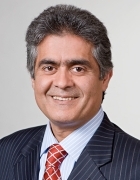
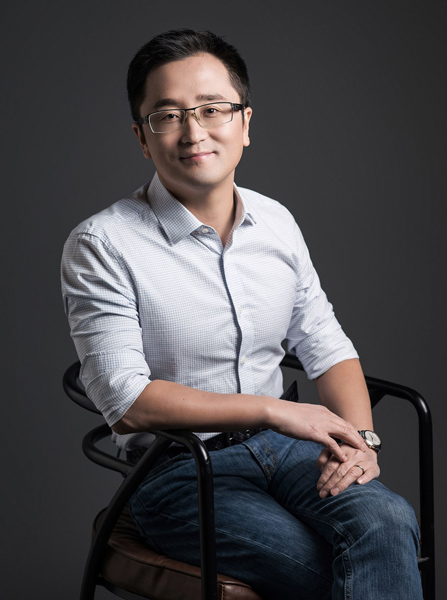
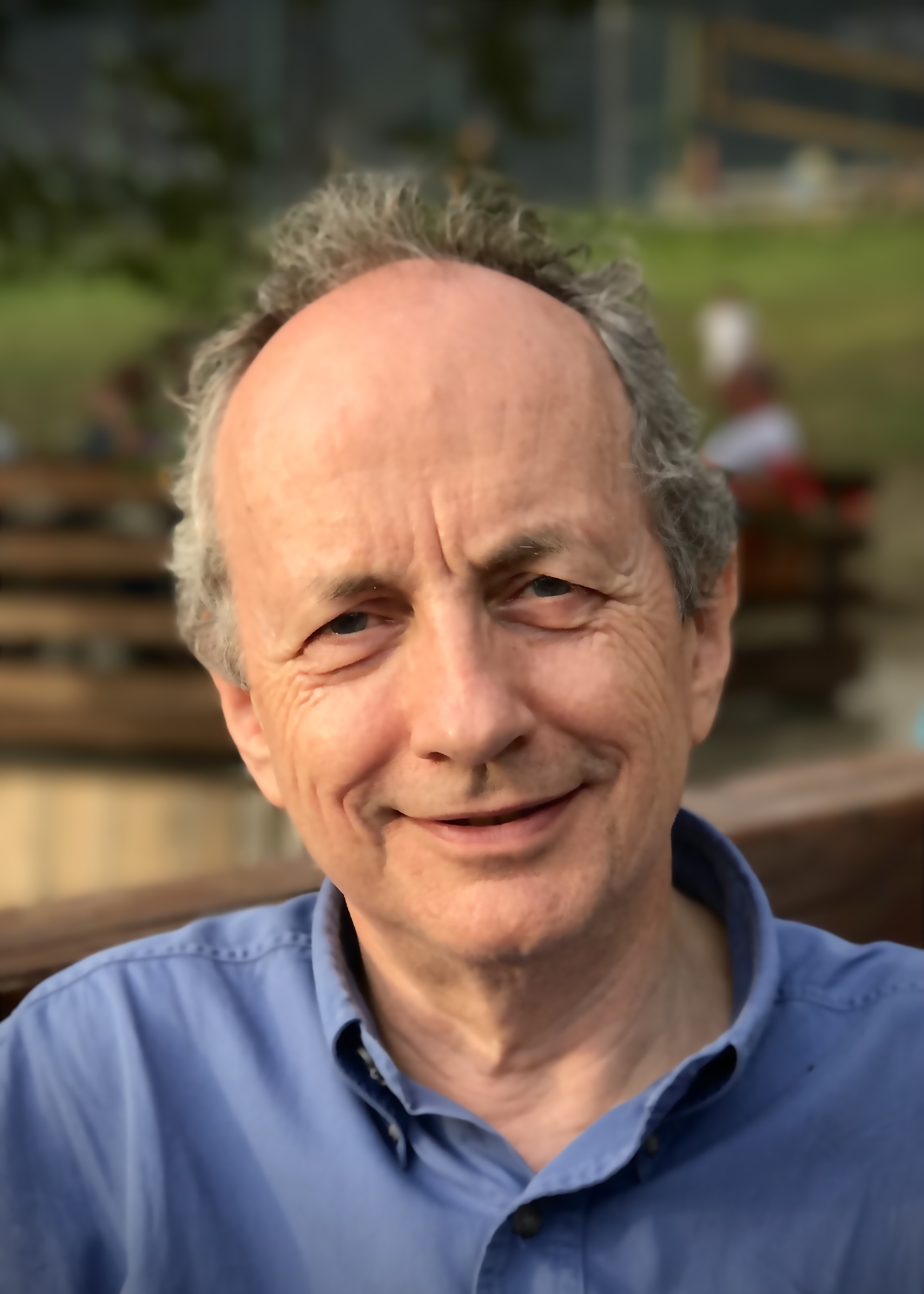
Schahram Dustdar is a Full Professor and Head of the Distributed Systems Research Unit at TU Wien's Faculty of Informatics. His research focuses on Cloud Computing, IoT, Edge Computing, and Federated Learning. He leads projects funded by the European Commission and industry partners, including the TEADAL and INTEND initiatives. Dustdar has over 300 publications and actively contributes to conferences like IEEE Services and ACM SenSys. His work emphasizes distributed intelligence, active inference, and secure edge systems. He teaches courses on distributed systems and advanced internet computing. Notable contributions include frameworks like QEdgeProxy and PolarisProfiler for optimizing edge-cloud resource management.
Radu Grosu is a Full Professor and Head of the Cyber-Physical Systems Research Unit at TU Wien. His research focuses on modeling, analysis, and control of cyber-physical and biological systems, with applications in robotics, autonomous systems, medical imaging, and formal verification. He leads the Scuderia Segfault team for autonomous F1TENTH racing and has extensive collaborations with industry partners like TTTech Auto AG and FFG. His work integrates machine learning, control theory, and formal methods to address challenges in safety-critical systems and autonomous decision-making. Roles: Full Professor, Head of Research Unit, Faculty Council Substitute Member Affiliations: TU Wien, Scuderia Segfault, Austrian Science Fund (FWF) projects Research interests span cyber-physical systems (CPS), cardiac-cell networks, genetic regulatory networks, and AI-driven solutions for healthcare and manufacturing. He has pioneered methods in neural circuit policies, flocking control, and real-time reinforcement learning. His projects include EdgeAI for embedded systems, radiation treatment optimization in glioblastoma, and autonomous vehicle testing frameworks. Key contributions include: Developing Lagrangian reachability analysis for safety verification Advancing neuromorphic IoT architectures and sensor networks Creating tools like DeepSTL for translating requirements into specifications Grants include FFG-funded projects on autonomous driving examiners and energy-efficient neuromorphic systems. His work bridges theoretical foundations with practical implementations in CPS resilience, medical diagnostics, and industrial automation.
Renata Georgia Raidou is an Associate Professor in Biomedical Visualization and Visual Analytics at TU Wien's Institute of Visual Computing & Human-Centered Technology. She leads the Research Unit of Computer Graphics and serves as Curriculum Coordinator for the Bachelor in Informatics (Specialization Digital Health) and Master in Medical Informatics programs. She holds prestigious awards including the EuroVis Young Researcher Award (2022), Best PhD Award (2018), and Dirk Bartz Prize (2017). Her research focuses on medical applications of Visual Analytics, with emphasis on uncertainty visualization, comparative visualization, and anatomical edutainment through physicalizations. She explores how visual tools can enhance decision-making in precision medicine, particularly in radiotherapy and cancer treatment. Her work bridges visualization, machine learning, and image processing to address clinical challenges. Raidou's recent projects include developing predictive visual analytics systems for radiotherapy planning and creating tactile physicalizations for anatomy education. She actively contributes to the field through editorial roles (Associate Editor of Computer & Graphics ) and policy advising via EASAC's 'AI in Healthcare' initiatives. Key Projects: Health Virtual Twins for Stroke Management, PREVIS for Radiotherapy Decision Support, Pelvis Runner for Anatomical Variability Analysis Teaching: Courses on Medical Visualization, Data Analytics in Health Sciences, and Visual Computing Grants: European Commission-funded projects (2024–2028) Her lab develops interdisciplinary tools for clinicians, researchers, and educators, emphasizing both technical innovation and real-world impact.
Fotios Lygerakis is a doctoral student and university assistant at the Department of Cyber-Physical Systems (CPS) at Montanuniversität Leoben, Austria. His research focuses on advancing machine learning and robotics, particularly in representation learning, visuotactile fusion, and reinforcement learning for robotic manipulation. He holds a Diploma in Electrical and Computer Engineering from the Technical University of Crete (2019) and has held roles including teaching assistant at the University of Texas at Arlington, research assistant at Demokritos (Athens), and research intern at Toshiba Research Europe. His research interests span representation learning, multimodal fusion, reinforcement learning, and healthcare robotics. Notable contributions include work on CR-VAE and M2CURL, earning a Best Student Paper Award at the 2024 Ubiquitous Robotics Conference. Lygerakis actively supervises theses in areas like human-robot interaction and self-supervised learning, and teaches courses on machine learning and deep learning. Lygerakis maintains active engagement in the scientific community through reviewing for journals/conferences (e.g., IROS, IJRR), organizing workshops, and leading the Neural Coffee Reading Group. He has presented invited talks at institutions like New York University and Technical University of Crete, and his work has been featured in outlets like Computer Vision News.
Irene Ballester Campos is a Researcher at TU Wien's Faculty of Informatics, affiliated with the Department of Computer Graphics and Algorithms. Her work focuses on applying computer vision and AI to develop assistive technologies for healthcare contexts, particularly in dementia care and clinical applications. She is involved in the visuAAL project (2020–2026) and previously contributed to the DIANA project (2020–2023). Her research emphasizes privacy-sensitive systems, 3D sensor technologies, and human-centered design for assistive applications. Key areas include dementia behavior monitoring through depth sensors, action recognition in privacy-sensitive scenarios, and ethical implications of assistive systems. She also explores clinical applications such as Parkinson's disease severity estimation through motion analysis. Publications highlight contributions to 3D human pose estimation, dynamic object tracking in robotics, and vision-based solutions for toileting assistance. Her work bridges computer science with healthcare, emphasizing practical deployment in real-life clinical settings.
Adam Celarek is a PreDoc Researcher and University Assistant at the Computer Graphics department (E193-02) within the Faculty of Informatics at Vienna University of Technology. He holds the position of Scientist in the Rendering and Modeling workgroup and serves as a PhD student. Celarek teaches courses including Computer Graphics, Fundamentals of Computer Graphics, Seminar in Visual Computing, and Rendering. His research interests span Physically Based Rendering, Deep Learning for 3D data, Point Clouds, Gaussian Mixture Models, and Terrain Rendering. Celarek's work focuses on the intersection of computer graphics and machine learning, particularly in processing unstructured 3D data. He is currently working on deep learning applications for Gaussian mixture models and developing AlpineMaps, a navigation aid for alpinists in collaboration with Manuela Waldner. His publication record shows a consistent focus on rendering techniques and 3D data processing, with recent work emphasizing the application of deep learning to Gaussian mixture models and terrain visualization. The research demonstrates progression from foundational work on light transport algorithms to more recent applications in geospatial visualization and deep learning for 3D data. OCG-FÖRDERPREIS 2018 (with Christoph Weinzierl-Heigl) Celarek has supervised multiple student projects including Johannes Eschner's work on real-time avalanche risk visualization and Stefan Fraiss's research on Gaussian mixture models from point clouds. He is involved in the EVOCATION training network as a former Marie Skłodowska-Curie fellow and currently leads the High-performance triangle-mesh streaming for unbounded datasets project funded by netidee Projektförderung. As a member of the Rendering and Modeling workgroup, Celarek contributes to the department's research in physically based rendering, 3D data processing, and visualization techniques, with particular expertise in light transport algorithms and Gaussian mixture models.
Patrick Indri is a PreDoc Researcher at the Department of Informatics, Technische Universität Wien , specializing in machine learning and its intersections with formal methods and data privacy. His work focuses on graph neural networks, robustness verification, and temporal logic applications. Education : MSc degree holder Research Interests : Expressive Graph Neural Network architectures for specialized graph types Differential Privacy integration in graph-based learning systems Robustness Certification with probabilistic guarantees Temporal logic applications in Cyber-Physical Systems anomaly detection Key Projects include the StruDL (2023–2027) initiative exploring structured deep learning. His publications demonstrate expertise in both foundational machine learning and applied formal verification techniques.
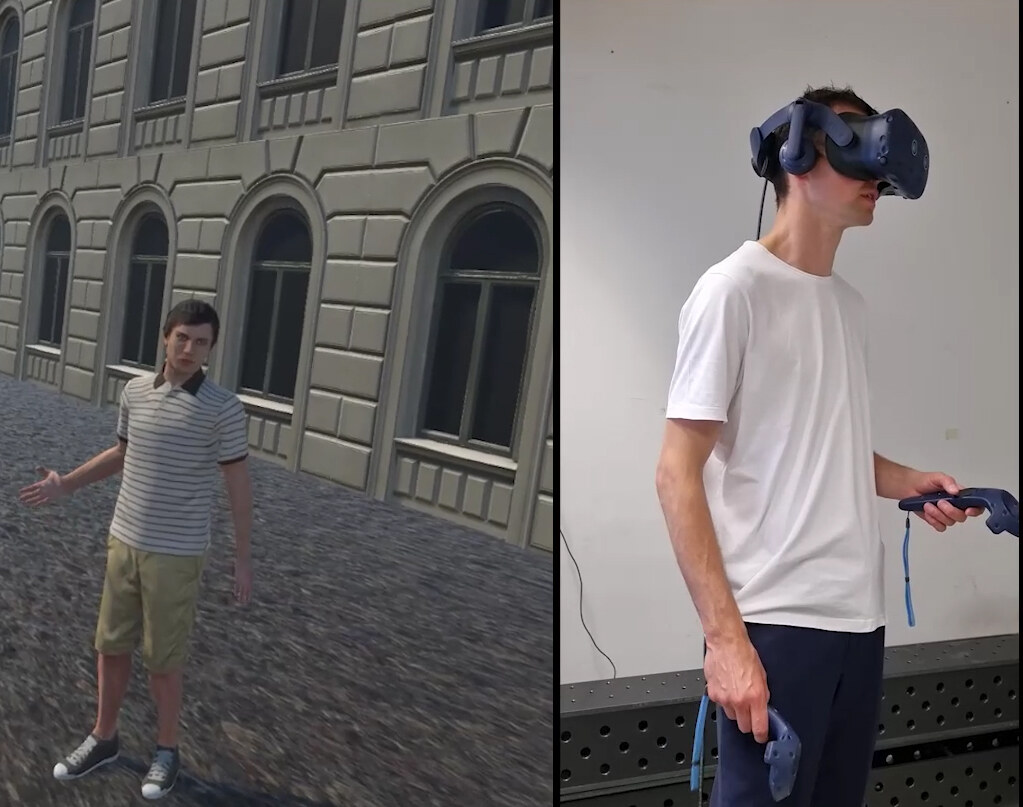
Peter Kán serves as a Senior Scientist at TU Wien's Faculty of Informatics, Institute of Visual Computing and Human-Centered Technology. He manages the Mixed Reality Laboratory and teaches multiple courses including Mixed Reality Lab (193.169), PhD Seminar (193.083), and various Project courses in Computer Science and Visual Computing. PhD in Computer Science from TU Wien Research on High-Quality Real-Time Global Illumination in Augmented Reality His research spans photorealistic rendering, augmented and virtual reality systems, automatic 3D content generation, and embodied conversational agents. Current projects include RE:STOCK INDUSTRY (2024–2027), Circular Twin (2022–2025), and VR Tennis Trainer (2020–2022), funded by FFG and WWTF. His work integrates deep learning with real-time rendering for applications in industrial design, sports training, and accessibility solutions for deaf and hard-of-hearing users. Recent publications demonstrate strong focus on procedural building design, motion analysis, and accessibility interfaces. Key trends include embodied conversational agents with situation awareness, multi-objective optimization for industrial buildings, and haptic feedback systems. His research bridges computer graphics, human-computer interaction, and practical applications in architecture and healthcare. Peter Kán has received research funding from Austrian Research Promotion Agency (FFG) and Vienna Science and Technology Fund (WWTF) for projects including Conversational Agents (2023–2024) and Realistic Indoor Path Visualization (2016–2018). Supervised 10 theses including Tennis Motion Learning in VR (Sebernegg, 2025) and Embodied Conversational Agents (Rumpelnik, 2023) Manages Mixed Reality Laboratory focusing on photorealistic AR/VR systems Leads research teams on projects like Circular Twin and RE:STOCK INDUSTRY
Univ.-Prof. Dr. Rainer Böhme is a Professor for Security and Privacy in the Department of Computer Science at the University of Innsbruck, Austria. He also held visiting positions, including at MIT (2023) and the University of Münster (2010–2015). His research focuses on digital forensics, privacy-enhancing technologies, cryptocurrency analysis, and the economic aspects of cybersecurity. Böhme has contributed to foundational work on Central Bank Digital Currencies (CBDCs), steganography, and cybercrime. He is a BIS Research Fellow and has advised institutions like the Austrian National Bank. His work bridges technical security, economic incentives, and policy implications. Notable projects include the BITCRIME initiative and studies on Bitcoin's regulatory challenges. He leads the Security and Privacy Lab, fostering interdisciplinary research in information security and privacy. Education: Ph.D. (Dr.-Ing.) in Computer Science from Technische Universität Dresden (2008), M.A. in Communications, Economics, and Computer Science from the same university (2003). Notable grants include BIS-supported research on CBDC design. His teaching includes courses on security management and blockchain systems. Research interests span steganography, digital currencies, and the societal impact of cybercrime. Recent work explores neural compression's forensic implications and privacy in digital payments. Awards include recognition for contributions to CBDC policy and steganalysis techniques.
Thomas Graf is a Research Professor at the Centre for Genomic Regulation (CRG) in Barcelona, Spain, and an ICREA Research Professor since 2006. His academic career spans multiple prestigious institutions including Albert Einstein College of Medicine, European Molecular Biology Laboratory, and Max Planck Institute. Research focus: Cancer biology, Reprogramming, Genetic engineering, Molecular biology Key contributions: Hematopoietic stem cells, Transdifferentiation, Computational biology His recent publications demonstrate expertise in inverse imaging problems, diffusion models, and biomedical applications spanning cardiology and protein structure analysis. Scientific accolades include the Paul Ehrlich Prize and membership in Academia Europaea. 1989: Paul Ehrlich and Ludwig Darmstaedter Prize 1983: Wilhelm Warner Foundation Prize Other: Leukemia Research Award, German Society for Microbiology and Hygiene Prize, Academia Europaea membership
Pietro Lio is a Professor of Computational Biology at the University of Cambridge , Department of Computer Science and Technology, since 2018. Previously, he held roles as a Reader (2013-2018), Senior Lecturer (2007-2017), and Lecturer (2003-2007) in Bioinformatics Algorithms at the University of Cambridge. He has also served as an Associate Professor of Genetics at the University of Teramo (2003) and held research positions at the European Bioinformatics Institute (2002) and University of Cambridge (1998-2001). Education : BSc in Electronic Engineering and Biology (University of Firenze, 1989) PhD in Theoretical Genetics (University of Pavia, 1995) PhD in Engineering (Non-linear Dynamics and Complex Systems) (University of Firenze, 2007) Research interests span computational biology, bioinformatics, machine learning, deep learning, and complex networks. His work integrates mathematical modeling of biological systems, including sequence evolution, protein structure prediction, and ecological dynamics. Scientific awards include the 2018 BITS Award, 2017 Visiting Professorship at Padova, 2016 BYRA and MCE awards for ecological modeling, Lagrange Fellowship (2013-2015), and the 2011 ERCIM award for complex systems research.
Prof. Luo Kai Hong is a Professor and Chair of Energy Systems at University College London (UCL) within the Faculty of Engineering Sciences. He leads the Energy and Environment Research Division and directs the UK Consortium on Mesoscale Engineering Sciences (UKCOMES). His career spans roles at the University of Southampton and Queen Mary University of London, where he advanced computational fluid dynamics (CFD) and energy systems research. Key leadership roles include heading the Energy Technology Research Group and serving on the National Engineering Policy Centre Committee of the Royal Academy of Engineering. He earned his PhD from the University of Cambridge in 1991 under Prof. Ken Bray FRS, followed by postdoctoral research at Imperial College London and Queen Mary University of London. His research focuses on fluid mechanics, multiscale modeling, and energy technologies, with notable contributions to DNS/LES simulations and mesoscale engineering systems. Prof. Luo’s work bridges fundamental science and industrial applications, emphasizing decarbonization and renewable energy innovation. His research interests include fluid turbulence, combustion science, and multiphase flows. He has pioneered lattice Boltzmann methods and neural network-driven computational techniques for complex fluid systems. Recent work emphasizes CO2 sequestration mechanisms and hydrogen energy systems. Key Projects: UKCOMES, National Engineering Policy Contributions, Mesoscale Modeling Consortia Education: PhD (University of Cambridge, 1991), Postdoctoral Training (Imperial College London/Queen Mary University of London) Prof. Luo has been honored with the ASME James Harry Potter Gold Medal, AIAA Energy Systems Award, and fellowships from the Royal Academy of Engineering. His 500+ publications include highly cited works in computational physics and energy systems.
Prof. Dr. Nassir Navab is a full professor and director of the Chair for Computer Aided Medical Procedures (CAMP) at the Technical University of Munich (TUM), Germany. He also serves as an adjunct professor of computer science at Johns Hopkins University (USA) and holds secondary appointments at TUM’s Medical School. He is internationally recognized for his pioneering work in computer-assisted interventions, augmented reality, medical imaging, computer vision, and machine learning. Education: PhD from INRIA and University of Paris XI, France Postdoctoral Fellowship at MIT Media Laboratory Research Interests: Prof. Navab's research bridges the gap between computer science and medicine. His core interests include: Robotic Imaging Systems : Developing robotic platforms for intraoperative imaging Augmented Reality in Surgery : Creating AR systems for surgical navigation Medical Image Computing : Advanced algorithms for medical image analysis Machine Learning in Healthcare : Deep learning applications in medical imaging Computer Vision : 3D reconstruction and scene understanding Research Trends: His recent publications demonstrate a strong focus on deep learning applications in medical imaging, particularly in 3D volumetric analysis, real-time surgical guidance systems, and automated diagnostic tools. The work spans from fundamental algorithm development to clinical translation, with significant contributions in areas like neural network architectures for medical image segmentation, pose estimation for robotic surgery, and augmented reality systems for intraoperative navigation. Scientific Awards: IEEE Fellow (2022) MICCAI Society Enduring Impact Award (2021) IEEE ISMAR 10 Year Lasting Impact Award (2015) Fellow of MICCAI Society (2012) SMIT Technology Award (2010) Siemens Inventor of the Year (2001) Over 50 best paper awards at international conferences Leadership & Service: General Chair: MICCAI 2015, ISMAR 2001/2005/2014 Founding Board Member: IPCAI (2010-2021) Editorial Board Member: IEEE TMI, MedIA Steering Committee Member: IEEE ISMAR (since 2001) Board of Directors: MICCAI Society (2007-2012, 2014-2017) Laboratories & Teams: Prof. Navab leads the Laboratories for Computer Aided Medical Procedures (CAMP) at TUM, a world-renowned research group focused on developing cutting-edge technologies for computer-assisted surgery and medical interventions. The lab has produced numerous award-winning PhD students who have gone on to become leaders in the field. He also directs the biannual Medical Augmented Reality school series at Balgrist Hospital in Zurich, Switzerland, which has become a premier educational event in the field.
Shen Heng Tao is a Distinguished Professor and Dean of the School of Computer Science and Engineering at the University of Electronic Science and Technology of China (UESTC). He is also the Executive Dean of the AI Research Institute and Chief Scientist of Vision Intelligence at the Peng Cheng Laboratory. His academic journey includes a BSc (First Class Honours) and PhD from the National University of Singapore (2000 and 2004), followed by roles at the University of Queensland, where he became a Professor in 2011. His research focuses on artificial intelligence, multimedia computing, and computer vision, with notable contributions to cross-media intelligent analysis and real-time video retrieval systems. He has published over 400 peer-reviewed papers, including 160+ IEEE/ACM Transactions, and holds an H-index of 78. His work has been recognized with awards such as the IEEE Fellow, ACM Fellow, OSA Fellow, and Clarivate Highly Cited Researcher. He has led 15 major research grants, including projects from the Ministry of Science and Technology of China and National Natural Science Foundation. His service includes roles as Associate Editor for journals like ACM Transactions of Data Science and IEEE Transactions on Multimedia, and conference chairs like ACM Multimedia 2021. His lab, the Center for Future Media, explores advanced topics like multimodal learning, trustworthy AI, and human-robot interaction. Current research emphasizes cross-modal reasoning and real-world applications in metaverse, autonomous systems, and smart cities.
Robert J. C. Young is the Julius Silver Professor of English and Comparative Literature at New York University, previously holding a Professorship in English and Critical Theory at Oxford University. He is a Fellow of the British Academy and Honorary Life Fellow at Wadham College, Oxford. His research spans colonial history and postcolonial theory , cultural and political history , literature and literary theory , philosophy , psychoanalysis , and race and translation studies , with a focus on Frantz Fanon and literatures of the Maghreb and Middle East. He has edited Fanon's works, including Alienation and Freedom (2018). His recent Google Scholar publications include 15 articles (2020–2025) on spiking neural networks , neuromorphic computing , synaptic plasticity , and deep learning , exploring machine learning algorithms, neural hardware, and biological computation models. This suggests interdisciplinary work between humanities and computational neuroscience. Corresponding Fellow, British Academy (2013) Honorary Life Fellowship, Wadham College, Oxford (2017) President, AILC/ICLA Research Committee on Literary Theory