Alberto Ferrante is a Lecturer and Researcher at the Faculty of Informatics of the Università della Svizzera italiana (USI), affiliated with the IDSIA (Dalle Molle Institute for Artificial Intelligence) USI/SUPSI. His work bridges cybersecurity, embedded systems, and AI applications, particularly in IoT and pest control. He holds a PhD from Università degli Studi di Milano (2006) and an MSc from Politecnico di Milano (2002). Research Interests: Ferrante focuses on Secure communication protocols and embedded systems security Malware detection and resource-optimized hardware solutions Machine learning applications for IoT, including agricultural pest monitoring and healthcare diagnostics Cyber-physical systems design and security-enhanced embedded systems His publications emphasize practical implementations, such as AI-driven UAVs for pest control and low-power drone systems for environmental monitoring. He actively contributes to tech transfer projects with industry partners and participates in major conferences like ICC and Globecom as a TPC member. He teaches the Master’s course Edge Computing in the IoT and collaborates on hardware-software co-design for security-critical systems. His work often integrates real-world constraints like energy efficiency and computational resource limitations. Key contributions include frameworks for dynamic security adaptation in wireless sensor networks and hardware-accelerated security for embedded systems.
Dr. Julian Tachella is a CNRS Research Scientist at the Sisyph Laboratory of École Normale Supérieure de Lyon, with co-founder/CSO roles at Blur Labs. His career spans signal processing, machine learning, and computational imaging, focusing on inverse problems and self-supervised learning. Affiliation: CNRS (French National Centre for Scientific Research), Sisyph Laboratory, École Normale Supérieure de Lyon Co-founder & CSO: Blur Labs (AI/Imaging startup) Research Interests: At the intersection of signal processing and deep learning , his work addresses imaging inverse problems through self-supervised methodologies (e.g., UNSURE, Generalized R2R) that eliminate ground-truth requirements. Key contributions include equivariant imaging frameworks for stability, spline sketches for photon-counting lidar compression, and uncertainty quantification techniques with equivariant bootstrapping. Recent Trends: 2025 publications emphasize lightweight architectures for multi-domain reconstruction (CT, super-resolution) and noise-agnostic SURE methods. 2024 works focus on audio declipping , compressed lidar , and nonlinear algorithm unrolling with applications in autonomous vehicles and medical imaging. Scientific Awards: Best Student Paper Award at ICASSP’22 Collaborations & Leadership: He leads the DeepInverse open-source project and develops algorithms for real-time 3D lidar reconstruction. His team includes researchers from University of Edinburgh and Grenoble INP, with applications in automotive lidar and underwater imaging.
Saleh Ashkboos is a Ph.D. student in the Computer Science Department at ETH Zurich, advised by Professors Torsten Hoefler and Dan Alistarh. He is also a Research Assistant at the Scalable Parallel Computing Lab and an affiliated doctoral student of the ETH AI Center. His research focuses on accelerating deep neural network training and developing systems for large-scale graph processing. Prior to ETH Zurich, he earned his Master's degree in Computer Science from Sharif University of Technology, advised by Professor Amir Daneshgar. His work has led to notable contributions, including the best paper award at SC22 for 'ProbGraph.' Recent research emphasizes efficient LLM training and quantization techniques, with publications on topics like 4-bit inference, quantization-aware training frameworks, and scalable meteorological modeling. He has interned at Apple and Microsoft, and his work is accessible via Google Scholar and GitHub. Key projects include GPTQ (post-training quantization for transformers), SliceGPT (LLM compression), and ProbGraph (high-performance graph mining). His technical contributions span distributed systems, neural network optimization, and climate-related machine learning.
Anastasios Vassilopoulos serves as Head of the Composite Mechanics Group (GR-MeC) and Adjunct Professor at École Polytechnique Fédérale de Lausanne (EPFL), within the School of Architecture, Civil and Environmental Engineering. He directs the Doctoral Program in Civil and Environmental Engineering while maintaining active roles in the Structural Engineering Group and School Council. His research focuses on composite materials for renewable energy infrastructure , particularly wind turbine rotor blades. Key areas include fatigue analysis of adhesively bonded joints, experimental methods for FRP composites under complex loading, and design methodologies for composite structures. His work bridges fundamental mechanics with industrial applications through extensive collaboration with wind energy stakeholders. Analysis of his 15 most recent publications reveals dominant themes in thick adhesive joint mechanics (73% of articles), fatigue/fracture characterization (67%), and machine learning applications (40%). The research consistently targets wind turbine blade challenges, with 87% of articles addressing specific aspects of renewable energy infrastructure. Methodological trends show increasing integration of computational-experimental approaches and AI-driven predictive modeling. Dr. Vassilopoulos has secured 18 major research projects since 2000, primarily funded by Swiss National Science Foundation and international collaborations. Current projects include NSF-funded work on wind turbine blade adhesive joints (2020-2024) and fire-resistant composite bridge decks. His teaching portfolio includes advanced courses on composites design, structural mechanics, and floating offshore renewables. As Doctoral Program Director, he oversees PhD training while personally supervising 17 doctoral students to completion.
Tao Lin is a Tenure-Track Assistant Professor and Principal Investigator of LINs Lab at Westlake University, School of Engineering. He leads cutting-edge research in deep learning optimization, generalization, and robustness, particularly in distributed and federated settings. Prior to this, he was a Ph.D. student at École Polytechnique Fédérale de Lausanne (EPFL), Switzerland, under the supervision of Prof. Martin Jaggi and Prof. Babak Falsafi. Doctor of Science, School of Computer and Communication Sciences, EPFL, Switzerland (2017–2022) Master of Science, School of Computer and Communication Sciences, EPFL, Switzerland (2014–2017) Bachelor of Engineering (with honors), College of Electrical Engineering, Zhejiang University, China (2010–2014) His research focuses on the intersection of optimization and generalization in deep learning, leveraging theoretical and empirical insights into loss landscapes and training dynamics to design efficient and robust learning and inference methods. This includes work on decentralized and federated learning under noisy, heterogeneous, and hardware-constrained environments. His work spans algorithmic innovation, theoretical analysis, and practical system integration. The recent publications from his lab demonstrate a strong trend in advancing federated learning, efficient inference for large language models, multimodal foundation models in pathology, and robust training under distribution shifts. Key themes include communication efficiency, model personalization, gradient tracking, and hardware-aware learning. His group has published at top venues including NeurIPS, ICML, ICLR, CVPR, and ECCV, with several papers receiving oral or spotlight presentations. ECCV Best Paper Candidate, 2024 Top 2% Scientists Worldwide 2024 (Stanford University) Doctoral Program Thesis Distinction Award, EPFL, 2022 Outstanding Performance Bonus, EPFL, 2021–2022 Top Reviewer: NeurIPS, ICML, AISTATS He advises multiple Ph.D. and master’s students, including Yongxin Guo, Futing Wang, Peng Sun, and Yuxuan Sun, whose work has been accepted at premier conferences. He has secured competitive grants as PI and participant, including the National Natural Science Foundation of China for Excellent Young Scientists Fund (Overseas) and the Science and Technology Innovation 2030 – Major Project. He also contributes to the community through service as an area chair (NeurIPS, ICML), reviewer for top journals and conferences, and organizer of workshops and academic events. His open-source contributions, such as Post-local SGD, have been integrated into PyTorch. Tao Lin teaches graduate courses such as Research Methodology of Computer Science and Technology and Deep Learning at Westlake University. He is actively involved in academic governance, serving on committees for student seminars, academic exchange, doctoral studies, and teaching leadership. The LINs Lab runs a regular research seminar on Deep Learning and Optimization, fostering a collaborative and dynamic research environment.
Francesco Regazzoni is a Senior Researcher at the Faculty of Informatics, Università della Svizzera italiana (USI), and affiliated with the Dalle Molle Institute for Artificial Intelligence (IDSIA USI-SUPSI). His work bridges embedded systems, cybersecurity, and artificial intelligence, with a focus on securing hardware and cyber-physical systems. Research Interests: His expertise spans embedded and cyber-physical systems security, side-channel attacks, post-quantum cryptography, hardware trojans, random number generators, and the security of AI and approximate computing. He also contributes to hardware/software co-design and operating systems security. The analysis of his recent publications reveals a consistent focus on hardware and system-level security , particularly in resource-constrained environments like IoT and embedded devices. His work integrates machine learning for attack detection and applies formal methods to ensure trust in hardware. A growing emphasis is placed on securing AI systems from physical and adversarial threats. Scientific Contributions: Over 100 peer-reviewed publications One book and one patent Extensive international collaboration (Belgium, Netherlands, USA, Switzerland, Singapore) Advising and Grants: While specific advisees and grants are not listed, his leadership in funded research projects and involvement with ALaRI and IDSIA suggest active mentorship and project coordination. His work has been supported by industry (e.g., ST Microelectronics, HP), the Swiss National Foundation, and the European Union. Labs and Teams: He is part of the Graph Machine Learning Group (GMLG) at IDSIA, which evolved from the Advanced Learning and Research Institute (ALaRI). This group focuses on graph machine learning, reinforcement learning, and dynamical systems, particularly in non-stationary environments.
Zapater Sancho Marina is an Associate Professor at the ReDS Institute (Institute of Reconfigurable and Embedded Digital Systems) within the School of Engineering and Management Vaud (HEIG-VD), part of the University of Applied Sciences and Arts Western Switzerland (HES-SO). She holds dual master's degrees in Electronic and Telecommunication Engineering from Universitat Politècnica de Catalunya (2010) and a PhD in Computer Science from Universidad Politécnica de Madrid (2015). Her career includes postdoctoral work at EPFL (2016-2020) and assistant professorship at Universidad Complutense de Madrid (2015-2016). Education BSc & MSc in Electronic Engineering (UPC 2010) PhD in Computer Science (UPM 2015) Research Focus spans cross-layer optimization of heterogeneous architectures for performance and energy efficiency, with emphasis on: Embedded systems (IoT/edge computing) High-performance compute architectures Analog in-memory computing for AI Thermal/power management in 3D chips Cloud-edge AI workload orchestration Publication Trends show expertise in RISC-V simulation frameworks, analog computing tiles for CNNs, virtual memory redesign, and AI-driven cloud performance prediction. Her recent work explores thermal-aware 3D chip management, hybrid-cache reliability optimization, and open-source teaching platforms for radio theory. Awards include a Spanish government PhD fellowship. She has led 4 European H2020 projects since 2016 and currently serves as PI for 4 industrial collaborations (Facebook/Intel/Huawei), Innosuisse projects, and HES-SO initiatives. Labs & Teams include the ReDS Institute, EPFL's Embedded Systems Laboratory, and collaborations with Yale/Edinburgh. She co-developed the ALPINE simulation framework and SO3 operating system modifications for Midgard project validation.
Demetri Psaltis is a **Professor honoraire** at the École Polytechnique Fédérale de Lausanne (EPFL), affiliated with the School of Basic Sciences (STI) and the Department of Physics (PH-STI). He holds roles as **Chargé de cours** (Lecturer) across multiple departments including Microengineering (SMT-ENS), Electrical and Electronics Engineering (SEL-ENS), and serves as **Professeur hôte** (Host Professor) at the Laboratoire d'hémodynamique et de technologie cardiovasculaire (LHTC). His research focuses on advanced optical systems, biomedical imaging, nonlinear optics, and the integration of machine learning with optical technologies. Key affiliations include the Institute of Bioengineering (IBI-STI) and administrative roles in the IBI-STI-GE management unit. He has advised over 20 PhD students at EPFL, contributing significantly to their thesis work. His laboratories develop cutting-edge tools for applications in medical diagnostics, energy systems, and optical computing. Research interests span computational optical imaging, optical computing architectures, 3D printing with light, and AI-driven wavefront shaping. Recent publications emphasize innovations in hybrid neural networks, optical diffusion models, and scalable optical circuit switching. His work bridges fundamental physics with practical applications in healthcare and renewable energy sectors. Labs: Laboratoire d'hémodynamique et de technologie cardiovasculaire (LHTC), IBI-STI Institute Teaching:** Courses include Computational Optical Imaging, Optical Computing, and 3D Printing with Light.
Prof. Dr. Renato Pajarola is the Head of the Visualization and MultiMedia Lab at the Department of Informatics, University of Zurich. His research focuses on computer graphics, scientific visualization, and geometric processing, with applications in 3D scanning, point cloud analysis, and real-time rendering. He leads a team developing advanced visualization techniques for high-dimensional data, parallel rendering frameworks, and interactive systems for complex datasets. Key research areas include: 3D reconstruction of indoor environments Tensor approximation for volume visualization Interactive ray tracing and point cloud processing Parallel rendering frameworks (e.g., Equalizer) Scientific computing and sensitivity analysis His recent publications emphasize: High-dimensional data exploration using tensor methods Efficient rendering techniques for large-scale point clouds Integration of citizen-reported weather data for environmental analysis Prof. Pajarola’s lab collaborates on projects like VIAN (visual annotation tool for film analysis) and Terrender (web-based terrain visualization). His Erdős number is 3, reflecting interdisciplinary research connections in mathematics and computer science.
Lijing Xin is an Assistant Professor at the Department of Physics and a research staff scientist at the Center for Biomedical Imaging (CIBM) at Ecole polytechnique fédérale de Lausanne (EPFL), Switzerland. She teaches courses on Biomedical Imaging and Translational MR Neuroimaging, while also contributing to academic administration. PhD in Physics (2010, EPFL) Master's Project (2002-2005) on MRI instrumentation Her research focuses on high-field magnetic resonance spectroscopy (MRS) and MRI for studying brain function and neurological diseases. She develops novel acquisition and quantification methods for 1 H, 13 C, and 31 P nuclei, particularly on 7T clinical platforms . Her work bridges preclinical and clinical research , with collaborations in psychiatry to explore pathophysiology and biomarkers for disorders like schizophrenia and mood disorders. Recent publications include studies on epilepsy , Alzheimer's disease , brain energy metabolism , and neurochemical profiling using advanced MRS and deep learning for psychosis classification. She has contributed to RF coil design , macromolecule suppression , and metabolic pathway analysis across multiple disciplines. She advises PhD students and collaborates on interdisciplinary projects involving neuroimaging hardware , metabolic disease research , and psychiatric biomarker identification . Her lab at EPFL CIBM-AIT develops cutting-edge techniques for high-resolution brain metabolism analysis and clinical translation .
Dr. Luka Malenica is a dedicated researcher at ETH Zurich's Professorship for Durability of Engineering Materials, focusing on computational modeling of material degradation processes in civil infrastructure. His work bridges theoretical numerical methods with practical engineering applications through direct involvement in the department's research operations. His research program centers on multiphase flow in porous media , corrosion mechanisms in reinforced concrete , and advanced numerical techniques . He employs pore-scale direct numerical simulations to investigate steel-concrete interface phenomena, developing predictive models for infrastructure durability. His methodological innovations include control volume isogeometric analysis, adaptive multiresolution modeling, and deep learning applications for adaptive meshing—addressing challenges in heterogeneous media flow and transport phenomena. Analysis of his 15 most recent publications reveals a consistent research trajectory since 2015, with accelerating output in corrosion science (5 papers in 2024-2025) and computational methods (7 papers 2019-2022). Key interdisciplinary connections span civil engineering (corrosion in reinforced concrete), chemical engineering (bubble column reactors), and hydrology (karst aquifer modeling), unified by his expertise in numerical simulation of transport phenomena. Recent work demonstrates increasing sophistication in modeling macrovoid formation at steel-concrete interfaces and capillary-driven multiphase systems.
Jürgen Wassner is a Professor of Edge Computing and Co-Head of the Competence Center for Intelligent Sensors and Networks at the Lucerne School of Engineering and Architecture (HSLU T&A). He holds a master's degree from Technical University of Dresden and a PhD from ETH Zurich. His career spans industry roles in Silicon Valley Group Inc. and telecommunication R&D before joining academia in 2007. His research focuses on embedded systems, AI at the edge, FPGA/VHDL design, real-time systems, and powerline communication . He leads projects such as 'Visual-Servoing Testbed with AI-Hardware in the Loop' and 'Low-Cost High-Performance Intelligent Camera for Space Debris Mitigation,' collaborating with companies like Diehl Aerospace. Recent publications emphasize wire fault detection using powerline communication, AI-based odor classification systems, and hardware acceleration for CNNs. His work bridges theoretical research with practical applications in avionics, rail freight, and space debris mitigation. Wassner advises Master of Science in Engineering students and has been recognized for his media engagement including a feature in the Luzerner Zeitung. He teaches Digital Design (FPGA, VHDL) and Digital Signal Processing , emphasizing hands-on implementation of cutting-edge systems.
Fangjinhua Wang is a Researcher affiliated with the Department of Computer Science at ETH Zurich, working within the Professorship for Computer Science. Their role involves contributing to cutting-edge research in fields such as 3D reconstruction, computer vision, and neural networks. The research focuses on advancing methodologies like scene graph manipulation, multi-view stereo techniques, and holistic human-scene reconstruction. Collaborations and projects emphasize practical applications in robotics, computer graphics, and AI-driven systems. While no explicit education details are provided, the research trajectory reflects a deep engagement with computational methods for 3D modeling and vision-based systems. The work bridges theoretical advancements with real-world applications, addressing challenges in scene understanding, object interaction, and human-robot collaboration. Research interests are centered on interdisciplinary topics including neural representation learning, robust visual localization, and the integration of geometric priors for high-fidelity reconstructions. The output demonstrates a commitment to both foundational research and applied solutions in computer science and robotics.
Andrea Cini is a postdoc researcher affiliated with the Graph Machine Learning Group and the Dalle Molle Institute for Artificial Intelligence (IDSIA USI-SUPSI) at the University of Lugano (USI). He also holds a position as a SNSF postdoc fellow at the University of Oxford under Prof. Michael Bronstein, focusing on machine learning for time series forecasting and graph processing. His research integrates graph deep learning methodologies with spatiotemporal dynamics, emphasizing applications in healthcare, energy systems, and intelligent systems. Education: PhD in Computer Science and Engineering (USI, 2020), supervised by Prof. Cesare Alippi MSc and BSc in Computer Science and Engineering (Politecnico di Milano) Visiting researcher at Imperial College London (Prof. Danilo Mandic) Research interests span graph neural networks , time series forecasting , and spatiotemporal data processing . His work has introduced influential methods such as the Torch Spatiotemporal library, and has been recognized with a best paper award. Recent publications emphasize applications in relational conformal prediction, hierarchical forecasting, and energy grid optimization. Awards include the Best Paper Award for contributions to graph-based forecasting methodologies. Current projects are funded by the Swiss National Science Foundation, exploring graph-based reinforcement learning and spatiotemporal modeling at the University of Oxford. Collaborations include affiliations with the Northernmost Graph Machine Learning group at UiT the Arctic University of Norway. His research bridges theoretical advancements and industrial applications in fields like healthcare dynamics prediction and smart grid optimization.
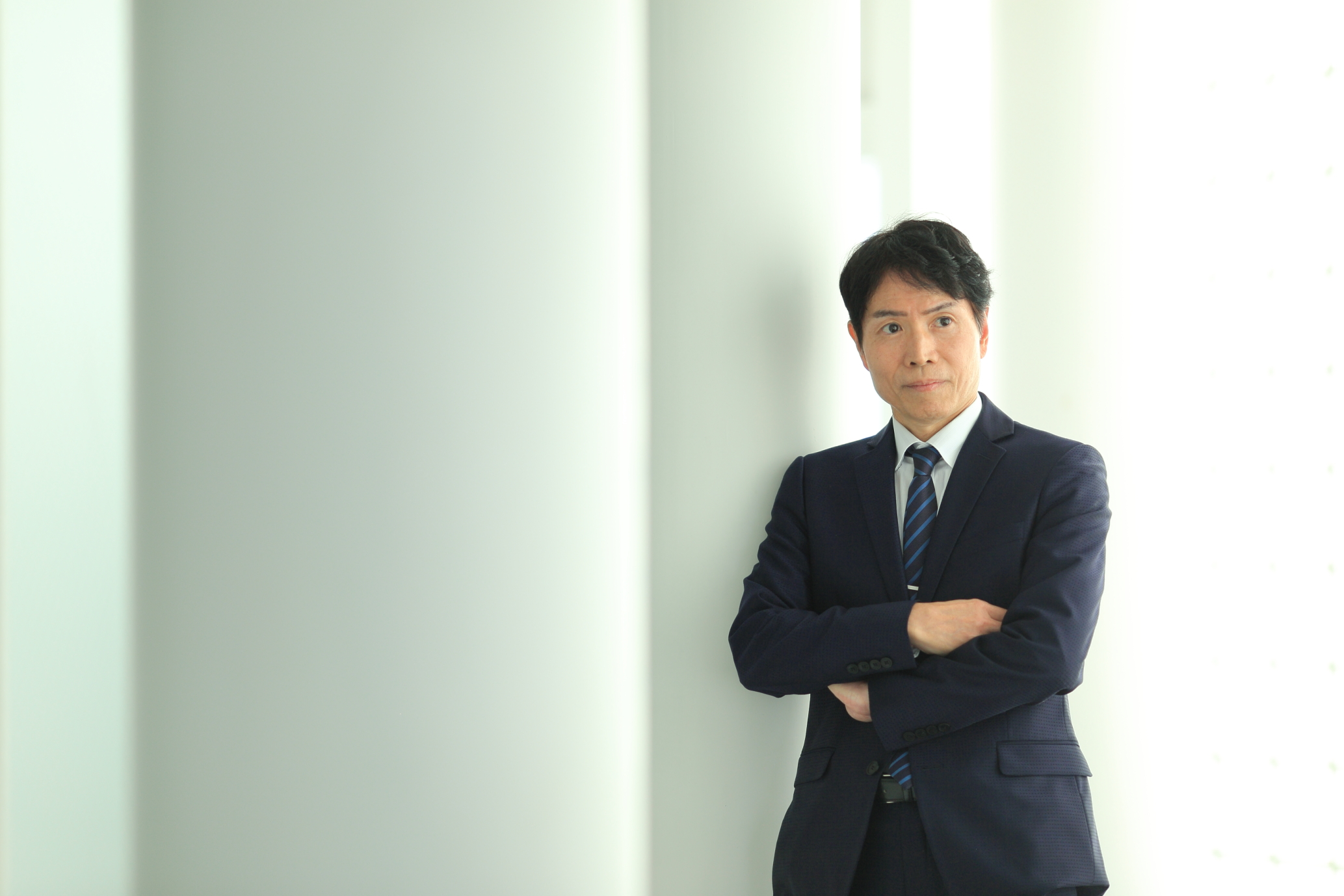
Naonori Ueda is a Research Professor and Deputy Director at RIKEN Center for Advanced Intelligence Project. He also serves as a Visiting Fellow at NTT Communication Science Laboratories, Research Supervisor for Mathematical Information Platform at Japan Science and Technology Agency (JST), and Visiting Professor at Kobe University's Graduate School of System Informatics. His distinguished career spans academia, government research institutions, and industry collaboration, with significant contributions to advancing artificial intelligence and machine learning applications across multiple scientific domains. Dr. Ueda's research interests focus on the intersection of machine learning, artificial intelligence, and physical sciences. He specializes in physics-informed deep learning approaches that integrate governing physical equations with neural network architectures. His work spans geophysical data analysis, remote sensing applications, computational seismology, and environmental monitoring systems. He has pioneered methods for crustal deformation modeling, earthquake prediction, tsunami inundation forecasting, and satellite imagery analysis using advanced machine learning techniques. His research demonstrates how AI can solve complex scientific problems by bridging the gap between data-driven approaches and physical domain knowledge. His publication record reveals a strong trend toward applying machine learning to solve real-world geophysical and environmental challenges. His recent work shows increasing sophistication in physics-informed neural networks that incorporate domain-specific knowledge into deep learning architectures. The publications span high-impact journals like Nature Communications, demonstrating the interdisciplinary significance of his work. His research consistently focuses on practical applications of AI for disaster prevention, environmental monitoring, and scientific discovery. Fellow of IEICE (Institute of Electronics Information and Communication Engineers) Member of Japan Prize field review committee Selection Committee Member for Brilliant Female Research Award (The Jun Ashida Award) Member of Kyoto Prize Selection Committee Dr. Ueda has secured substantial research funding through multiple government-sponsored projects including RIKEN Pioneering Project 'Prediction Science,' JST AIP Acceleration Research projects on weather prediction and drug discovery, and AMED-funded medical research initiatives. His leadership extends to serving as Sub-project Director for Japan's Moonshot R&D Project. He actively mentors researchers through his roles at RIKEN, NTT, and various academic institutions, fostering the next generation of AI scientists. As Deputy Director of RIKEN Center for Advanced Intelligence Project, Dr. Ueda leads one of Japan's premier AI research initiatives. He also serves on the Advisory Board of Kobe University's Mathematical and Data Science Center and Kyoto University's Graduate School of Informatics. His leadership extends to coordinating the AI Seminar at Osaka Industrial Association and supervising the Keihanna 'Edison Society' at the International Institute for Advanced Studies, demonstrating his commitment to bridging academic research with industrial applications.