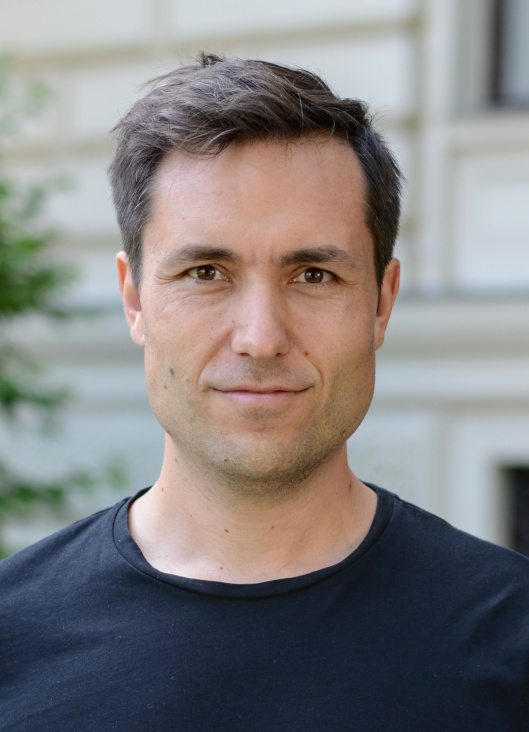
Anders Karlström is a Professor at KTH Royal Institute of Technology, specializing in Transport Modelling and Economics. His research focuses on sustainable transportation systems, emissions reduction, and energy efficiency. Key interests include activity-based modelling, dynamic discrete choice frameworks, and policy analysis for urban mobility. He has contributed to studies on travel behavior, infrastructure planning, and environmental impacts of transport systems across multiple international cities. His work integrates advanced methodologies such as recursive logit models, spatial regression, and machine learning for predictive analytics. Notable research areas involve evaluating weather variability effects on travel patterns, optimizing traffic state estimation with sensor data, and developing scenario-based models for future employment growth. Karlström collaborates with industries to enhance the competitiveness of sustainable transport solutions globally.
Konstantinos Spiliopoulos is a Professor and Director of Statistics at Boston University's Department of Mathematics and Statistics, part of the College of Arts & Sciences. He leads research in Applied Mathematics and Probability and Statistics groups, focusing on stochastic processes, machine learning, and mathematical finance. His research interests include stochastic analysis of complex systems, multiscale phenomena, and their applications to neural networks, PDEs, and financial modeling. Notable areas of study involve mean-field limits, rare event simulation, and asymptotic methods in stochastic differential equations. He has received grants such as DMS-EPSRC funding for analyzing online training algorithms in recurrent and deep neural networks. His work bridges theoretical advancements with practical applications in data science and computational methods. Spiliopoulos maintains an active presence in interdisciplinary research, addressing challenges in systemic risk, network dynamics, and optimization. His contributions span from fundamental probability theory to applied problems in engineering and finance.
Professor Tony Shardlow is affiliated with the Department of Mathematical Sciences at the University of Bath , UK. His research spans Stochastic Differential Equations , Bayesian Inverse Problems , Statistical Shape Modelling , and Numerical Analysis , with applications in data science, medical imaging, and computational physics. Labs/Teams : IMI (Institute for Mathematical Innovation), Prob-L@b (Probability Laboratory at Bath), SAMBa (EPSRC Centre for Doctoral Training in Statistical Applied Mathematics). Recent Research Trends : Focus on geometric shape analysis using flow fields, stochastic PDEs for particle dynamics, and Bayesian inference techniques in industrial and medical contexts. Collaborative work bridges computational mathematics with applications in hip dysplasia assessment and pesticide delivery systems. Advising : Supervised Fengpei Wang's PhD thesis on dimension reduction and Sinkhorn algorithms. Collaborates with researchers like N. D. F. Campbell and C. Poon. Teaching : Offers MA30170 - Numerical Solution of Elliptic PDEs.
Jacob Gardner is an Assistant Professor in the Department of Computer & Information Science at the School of Engineering and Applied Science, University of Pennsylvania. His research bridges machine learning and scientific discovery with emphasis on computational biology and molecular design. His primary research interests include: Machine Learning Bayesian Optimization Computational Biology Molecular Design Artificial Intelligence Gaussian Processes Analysis of his 2024-2025 publications reveals a dominant focus on Bayesian optimization techniques integrated with large language models for biological applications. Key trends include therapeutic design using knowledge distillation from scientific literature, RNA splicing prediction, antibiotic development, and scalable Gaussian process methods. His work consistently addresses dimensionality challenges in molecular modeling while improving computational efficiency for high-dimensional biological data. No scientific awards were mentioned in the provided text. No information regarding student advising or research grants was provided in the source material. His research appears supported by institutional initiatives including Penn AI, Innovation in Data Engineering and Science (IDEAS), and the Data Driven Discovery Initiative (DDDI).
Anup Basu is a Professor in the Department of Computing Science at the University of Alberta. His research focuses on computer graphics, computer vision, and multimedia communications. He holds an B.S. in Math & Statistics from the Indian Statistical Institute (1980), an M.E. in Computer Science from the Indian Statistical Institute (1983), and a Ph.D. in Computing Science from the University of Maryland (1990). His work emphasizes Quality of Service (QoS) in multimedia delivery for e-commerce and telelearning, adaptive bandwidth monitoring, and 3D visualization tools. He pioneered foveated image compression and stereo visualization techniques, contributing to MPEG-4 coding standards. He leads major initiatives like the ASRA/TelePhotogenics/IBM 3D Medical Imaging project ($2M+ funding) and developed patented SHR Stereo/3D scanning technologies. Awards include the American Neurological Association Fellowship. He has held leadership roles as General Chair for IEEE International Conferences on SMC (2017), Multimedia & Expo (2013), and SMC (2014). His research integrates interdisciplinary collaborations across universities and industry partners, leveraging advanced equipment like the CAVE system for immersive visualization.
Hassan Z. Ashtiani is an Associate Professor in the Department of Computing and Software within the Faculty of Engineering at McMaster University. His academic profile shows consistent engagement in both teaching and research activities, with evidence of active participation in major machine learning conferences and journals through 2025. Dr. Ashtiani's research focuses on the theoretical foundations of machine learning, with particular expertise in privacy-preserving algorithms, Gaussian mixture models, and adversarial robustness. His work bridges statistical learning theory with practical algorithm design, often addressing fundamental questions about sample complexity and computational efficiency in learning systems. A significant portion of his recent work explores the intersection of differential privacy with statistical learning, developing methods for private density estimation and distribution learning. Analysis of his publication record reveals a strong trend toward increasingly sophisticated theoretical frameworks for private and robust learning. His work consistently appears in top-tier venues including NeurIPS, ICML, COLT, and ALT, with recent contributions extending into agnostic private density estimation and robust learning with tolerance. The research demonstrates progression from foundational work on nearest neighbor search and clustering algorithms toward more complex problems in private learning of high-dimensional distributions. Dr. Ashtiani teaches across multiple levels of computer science education, including undergraduate courses in Automata and Computability (COMPSCI 2AC3) and Principles of Programming (COMPSCI 2S03), as well as graduate-level courses such as Fundamentals of Machine Learning (COMPSCI 4ML3) and Theoretical Foundations of Unsupervised Learning (CAS 775). His teaching portfolio shows consistent involvement in machine learning education since at least 2019, with evidence of teaching multiple sections each academic year. His scholarly impact is reflected in mentions across 3 news outlets, reference in 1 policy source, engagement from 7 X users, and 90 readers on Mendeley, suggesting growing recognition of his contributions to theoretical machine learning.
Dr. Zhibao Mian is a Lecturer in the School of Computer Science at the University of Hull, UK, and previously held an Associate Professor position at Northwest Normal University. He specializes in trustworthy AI, machine learning, and intelligent maintenance systems. His research integrates AI with IoT, blockchain, and digital twins in Industry 4.0/5.0 contexts. He leads projects on predictive maintenance for offshore wind turbines and AI-driven sustainable energy solutions. Dr. Mian holds a PhD from the University of Hull and an MSc from the University of Nottingham. Research interests include AI ethics, model-based safety analysis, and RCM. He has secured grants such as the CPHC-funded study on AI in software education and oversees multiple PhD scholarships. Notable roles include Editorial Board member of the American Journal of Artificial Intelligence and Reviewer for high-impact journals/conferences like JSS and IEEE. He is a Senior Fellow of the Higher Education Academy and received the Royal Academy of Engineering's 2024 Exceptional Talent designation. Recent publications (2023-2025) focus on ordinal networks, outlier detection, Belt and Road trade analysis, and carbon emissions modeling. He actively advises PhD students on topics like UAV-based anomaly detection and predictive maintenance frameworks.
Long Nguyen is a Professor of Statistics at the University of Michigan, Ann Arbor, with a courtesy appointment in Electrical Engineering and Computer Science. He is affiliated with the Michigan Institute for Data Science (MIDAS) and the Vietnam Institute for Advanced Study in Mathematics (VIASM). His research focuses on Bayesian nonparametrics, optimal transport, machine learning, and spatiotemporal data analysis. Nguyen holds a PhD in Computer Science from UC Berkeley and has held postdoctoral positions at Duke University and the Statistical and Applied Mathematical Institute. Education: B.Sc. in Computer Science from Pohang University of Science and Technology; M.Sc. in Mathematics from Arizona State University; Ph.D. in Computer Science from UC Berkeley (2007). Research Interests: Bayesian nonparametric methods, optimal transport theory, statistical inference for complex models, and applications in spatiotemporal data, functional data analysis, and hierarchical modeling. He emphasizes developing scalable algorithms and geometric approaches for statistical learning. Editorial Roles : Annals of Statistics Journal of Machine Learning Research SIAM Journal on Mathematics of Data Science Bayesian Analysis Awards : IMS Fellow, ASA Fellow NSF CAREER Award IEEE Signal Processing Young Author Award L. J. Savage Dissertation Award (via student Aritra Guha) Advising & Collaborations : Guided over 20 PhD students and postdocs, many now in academia and industry. Collaborates on projects in AI ethics, music theory, and environmental data science. Active in organizing summer schools in Vietnam on Bayesian statistics and machine learning. Labs & Teams : Co-leads the Statistical Machine Learning reading group at U-M and collaborates with the VIASM on advanced mathematical research in Hanoi.
Danilo Bzdok is an Associate Professor in the Department of Biomedical Engineering at McGill University’s Faculty of Medicine and a Canada CIFAR AI Chair at Mila – Quebec Artificial Intelligence Institute. He holds dual expertise in systems neuroscience and machine learning, with two doctoral degrees: one in neuroscience from Forschungszentrum Jülich (Germany) and another in computer science (machine learning statistics) from INRIA–Saclay and Neurospin (France). His research bridges computational neuroscience and AI, focusing on understanding human intelligence through neuroimaging and biomedical data. Education: PhDs in Neuroscience (Jülich) and Computer Science (INRIA/Neurospin). Postdoctoral training at Harvard Medical School. Current affiliations include McGill University and Mila. Research interests span computational biology, deep learning, LLMs, and their applications in neuroimaging, precision medicine, and neurodegenerative diseases. Over 150+ peer-reviewed publications, with recent work on LLMs in autism diagnostics, brain network modeling, and social neuroscience. Key Awards: Canada CIFAR AI Chair. Lab focuses on interdisciplinary projects like AI4Science, neuroimaging analysis, and AI ethics. Supervises a dynamic team of PhD/Master’s students and postdocs. Collaborations include clinical institutions and industry partners through Mila’s Applied Research programs.
Dr. Roy Lederman is an Assistant Professor at the Department of Statistics and Data Science , Yale University. He is affiliated with the Quantitative Biology Institute (QBio) , the Applied Math Program , the Institute for Foundations of Data Science (FDS) , and the Wu Tsai Institute (WTI) . He was awarded the Sloan Research Fellowship (2023) . He previously held a Gibbs Assistant Professorship at Yale (2014-2015) and a postdoc at Princeton University (2015-2018) . Education: PhD in Applied Mathematics, Yale University (2014); dual BSc in Physics and Electrical Engineering, Tel-Aviv University. Teaching: Courses include Computational Tools for Data Science, Signal Processing, and Mathematical Machine Learning. Research Areas: Dr. Lederman works at the intersection of computational biology , structural biology , Bayesian inference , numerical analysis , and machine learning . His recent work focuses on cryo-EM and hyper-molecules for studying molecular heterogeneity, alternating diffusion for common variable recovery, and Zernike polynomials for 3D imaging. He also develops Hamiltonian Monte Carlo methods and randomized DNA sequencing algorithms . Publications Trends: His publications (15 most recent) emphasize structural biology and cryo-EM applications, machine learning (Bayesian deep learning, diffusion maps), numerical analysis (Fourier/Laplace transforms), and computational biology (DNA sequencing algorithms). Key sub-fields include heterogeneity analysis , manifold learning , Hamiltonian Monte Carlo , and Zernike polynomials . Scientific Awards: Sloan Research Fellow (2023) Dr. Lederman actively mentors graduate students and postdocs at Yale, and co-organizes the One World Cryo-EM seminar series . His lab develops open-source software (e.g., prolate function implementation ) and explores theoretical bounds on transforms and common variable recovery in multi-sensor experiments.
Germain Gauthier is an Assistant Professor at the Department of Social and Political Sciences, Bocconi University. His work bridges economics and political science with a focus on political economy, public economics, and machine learning methods. He develops AI tools for social scientists, particularly for analyzing unstructured data like texts and images. Ph.D. in Economics, Ecole Polytechnique (2018–2023) Postdoctoral Researcher, ETH Zürich (2023) M.Sc. in Analysis and Policy in Economics, Paris School of Economics (2017–2018) M.Sc. in Quantitative Economics, HEC Paris (2013–2017) His research spans two main areas: applied studies on digital technologies' societal consequences (e.g., X's algorithms, #MeToo's impact) and methodological innovations in machine learning for social science data. Recent publications include work on protest dynamics, inequality, and narrative extraction from texts. Key trends in his publications include: Machine learning applications to political and economic analysis Text mining for social science narratives Empirical studies on protest movements and digital governance Algorithmic bias in labor markets Economic policy evaluation using big data He has received significant funding: Swiss National Sciences Foundation Grant (300K CHF, 2023–2026) Swiss National Sciences Foundation Grant (100K CHF, 2020) Laboratoire d’Excellence Ph.D. Grant (2018–2023) He teaches courses on Public Finance (Bocconi) and Text as Data for Social Sciences (LMU München), and has developed open-source software packages like relatio and DeepLatent for text analysis and latent variable modeling.
Martin Holler is a Professor at the Institute of Mathematics and Scientific Computing at the University of Graz, Austria, where he leads the research group Applied Mathematics and Machine Learning . His work bridges theoretical mathematics with practical applications in imaging and machine learning. Research Focus: His primary research areas include the mathematics of data science, variational methods in imaging, dynamic and multi-modality inverse problems, and biomedical imaging. He has made significant contributions to model-based regularization techniques, particularly with Total Generalized Variation (TGV) approaches for image and video reconstruction. Publication Trends: Over the past decade, Holler's research has evolved from traditional variational methods for image reconstruction toward increasingly sophisticated machine learning approaches. His recent work (2021-2023) focuses on integrating deep learning with variational methods, particularly for motion separation in medical imaging and learning-informed parameter identification in partial differential equations. His publications demonstrate a consistent thread of applying rigorous mathematical frameworks to solve practical problems in medical imaging and computer vision. Mathematics of data science and machine learning Generative models in machine learning Variational methods in imaging Dynamic and multi-modality inverse problems Model-based regularization Biomedical imaging Image and video decompression Technical Leadership: Holler has developed several open-source software packages implementing advanced reconstruction algorithms, particularly for multi-modal imaging problems. His GitHub repositories show active maintenance and development of these tools, which have been cited in the medical imaging community.
Christopher John Rozell is the Julian T. Hightower Chaired Professor in the School of Electrical and Computer Engineering at the Georgia Institute of Technology's College of Engineering. He serves as Executive Director of the Institute for Neuroscience, Neurotechnology & Society (INNS) and directs the Sensory Information Processing Lab (SIPLab). His research bridges computational neuroscience, machine learning, and neurotechnology, with clinical applications in treatment-resistant depression and neuromodulation therapies. Education: B.S.E. in Computer Engineering & B.F.A. in Music, University of Michigan (2000) M.S. and Ph.D. in Electrical Engineering, Rice University (2002, 2007) Postdoctoral Scholar, Redwood Center for Theoretical Neuroscience, UC Berkeley Research Focus: Dr. Rozell's interdisciplinary work spans computational neuroengineering, theoretical neuroscience, and artificial intelligence. He develops data analysis tools inspired by neural processing and creates therapeutic neurotechnologies. Key areas include: computational psychiatry (developing DBS therapies for depression), neural dynamics modeling, brain-computer interfaces, and societal impacts of neurotechnology. His lab focuses on high-dimensional data analysis, neural coding principles, and scalable neuromodulation approaches. Publication Trends (2023-2025): Recent works concentrate on deep brain stimulation mechanisms for depression, computational modeling of neural/autonomic dynamics, and machine learning applications in neuroscience. Dominant themes include biomarker discovery for treatment response, neural interoception modulation, probabilistic modeling of latent states, and brain-computer interface taxonomy. Clinical translation of neurotechnology is a consistent focus across publications. Awards & Honors: Elected AIMBE Fellow (2025) NIH BRAIN Initiative Photo/Video Award (2024) Congressional Panelist for BRAIN Initiative 10th Anniversary (2024) Sigma Xi Best Faculty Paper (2024) Neuro Open Science International Prize (2022) W. Howard Ector Outstanding Teacher Award (2019) McDonnell Foundation 21st Century Science Award (2014) NSF CAREER Award (2014) Leadership & Training: Dr. Rozell co-founded Neuromatch, Inc. to build global computational neuroscience communities. He advises Motif Neurotech and the Institute of Neuroethics. His mentees have received prestigious fellowships (Schmidt, Fulbright, NIH K99/R00) and hold leadership positions across academia and industry. Research is supported by NIH BRAIN Initiative, NSF, and private foundations. Labs & Initiatives: Directs the Sensory Information Processing Lab (theoretical neuroscience/neuroengineering) and the Institute for Neuroscience, Neurotechnology & Society (addressing ethical/societal implications). Neuromatch promotes open, accessible computational neuroscience training globally.
Scott W. Linderman is an Assistant Professor of Statistics at Stanford University and a Faculty Scholar at the Wu Tsai Neurosciences Institute. He holds courtesy appointments in Computer Science and is affiliated with Stanford Bio-X and the Stanford AI Lab. His research focuses on developing probabilistic models and statistical methods to analyze neural data, bridging computational neuroscience and machine learning. Linderman earned his PhD in Computer Science from Harvard University, with postdoctoral training at Columbia University under Liam Paninski and David Blei. He previously worked as a software engineer at Microsoft and holds an undergraduate degree in Electrical and Computer Engineering from Cornell University. Research Interests : Machine learning, computational neuroscience, state space models, neural data analysis, and probabilistic modeling. His lab develops tools like the SSM and Dynamax packages, applying methods to problems such as neural decoding, behavioral tracking, and understanding latent neural dynamics. Awards : 2023 McKnight Scholar Award, 2022 Sloan Research Fellowship, Leonard J. Savage Award (2016). Linderman has advised over 20 PhD students and postdocs, contributing to breakthroughs in neuroscience and machine learning. His work includes collaborations with experimental neuroscientists like David Anderson and Sebastian Seung. Labs & Teams : Linderman Lab focuses on advancing statistical methods for neuroscience. Key projects include state space models (e.g., rSLDS, Gaussian Process SLDS) and behavioral analysis tools like Keypoint MoSeq. The lab emphasizes open-source software and interdisciplinary collaboration.
Ruben Loaiza-Maya is an Associate Professor (Research) in the Department of Econometrics and Business Statistics at Monash University. He holds a PhD in Econometrics from the University of Melbourne and an undergraduate degree in Economics from Universidad Nacional de Colombia (Medellin). His research focuses on Copula Modelling, Bayesian Estimation Methods, Time Series Analysis, and Macroeconomic/Financial Forecasting. Key contributions include advancements in variational inference, state space models, and robust forecasting techniques under model misspecification. He leads the active project 'Variational Inference for Intractable and Misspecified State Space Models' (2023–2026), funded as a Primary Chief Investigator. His work contributes to UN Sustainable Development Goals through methodological advancements in economic and financial analysis. Recent research emphasizes scalable Bayesian methods, hybrid variational approaches, and efficient computational techniques for high-dimensional models. Publications span prestigious journals like the International Journal of Forecasting, Journal of Econometrics, and Journal of Business and Economic Statistics. Notable collaborations include studies on copula-based time series forecasting and robust approximate Bayesian computation. His work bridges theoretical econometrics with practical applications in risk management and macroeconomic policy.