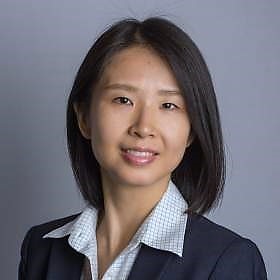
Fabio Semperlotti is a Professor of Mechanical Engineering at Purdue University's School of Mechanical Engineering. His research focuses on advanced materials, structural health monitoring, wave propagation, and vibration control. He holds M.S. degrees in Aerospace and Astronautic Engineering from the University of Rome 'La Sapienza' (2000, 2002) and a Ph.D. from The Pennsylvania State University (2009). His work spans topics such as acoustic metamaterials, topological elastic systems, fractional-order elasticity, and machine learning applications in engineering. Recent contributions include studies on non-Abelian topological behavior in elastic waveguides and reinforcement learning frameworks for microelectronic component design. Semperlotti’s research also explores vibration attenuation via metastructures and deep learning-based inverse scattering solutions. Selected recent projects involve developing physics-informed neural networks for acoustic scattering, multimesh finite element methods for nonlocal elasticity, and geometric phase analysis in elastic systems. His work frequently bridges fundamental theory with practical applications in smart materials, structural optimization, and energy harvesting.
Shenglong Wang is an Assistant Professor in the Department of Computer Science at the University of Illinois Urbana-Champaign (UIUC), affiliated with the Computer Vision @ UIUC, Illinois Robotics Group, and Center for Immersive Computing. He holds a PhD from the University of Toronto and previously worked at Uber ATG. His research focuses on 3D computer vision and robotics, particularly in 3D perception for navigation, digital scene replication, and simulation techniques for autonomy and climate change applications. Education: PhD, Computer Science, University of Toronto Research Scientist, Uber Advanced Technologies Group (ATG) Research Interests: 3D Perception and Reconstruction Generative Models for Simulation Autonomous Systems and Robotics Immersive Computing Applications Recent Article Trends: His work emphasizes realistic 3D modeling, physics-informed simulation, and cross-domain applications like agriculture and climate change. Key topics include generative models (e.g., PhysGen3D), LiDAR simulation (LidarDM), and interactive systems (Video2Game). Scientific Awards: Dean's Award for Excellence in Research (2025) NSF CAREER Award (2024) Amazon Research Award (2022) Advising & Grants: Supervises ~20 graduate and undergraduate researchers. Recent grants include Meta-sponsored research on generative models for immersive computing (2024) and Airbrush funding (2025). Labs & Teams: Leads the 3D Vision and Robotics group, collaborating with industry (Intel, Waabi) and academia (UPenn, Tsinghua University).
Prof. Sandjai Bhulai is a Full Professor at Vrije Universiteit Amsterdam's Faculty of Science (Department of Mathematics) and holds affiliations with the Network Institute. He specializes in machine learning, operations research, and their applications in telecommunications, healthcare, and optimization. His research addresses real-world challenges such as suicide prevention through AI-driven systems, signal processing in underwater acoustics, and dynamic dispatch algorithms for logistics. Key research interests include machine learning algorithms for classification and prediction, reinforcement learning for optimization problems, and data-driven decision-making in healthcare and transportation. He has pioneered methods like the 'Dutch Draw' baseline for binary classification and contributed to ambulance dispatch systems and power grid topology optimization. Prof. Bhulai has published over 137 research outputs, including high-impact articles in International Journal of Medical Informatics , Ocean Engineering , and Transportation Science . He received the Best Paper Award (2018) and led projects such as the AI-BIPTO initiative for integrated production optimization. He advises on technical and ethical committees, including roles at NWO and the Mondriaanfonds. His teaching spans advanced courses in machine learning, algebraic geometry, and linear programming.
Benjamin Ruppik is a researcher at the Chair of Algebraic Geometry within the Faculty of Mathematics and Natural Sciences at Heinrich-Heine-Universität Düsseldorf. His work bridges pure mathematics and applied machine learning, focusing on topology-driven approaches to computational problems. He holds a PhD (2022) and a Master's in Mathematics (2018), with expertise in low-dimensional topology and its intersections with natural language processing and dialogue systems. Research Interests Algebraic Geometry 4-Manifold Topology and Homotopy Classification Applications of Topology in Machine Learning Dialogue Systems and Emotion Recognition Active Learning and Label Correction Recent Research Trends Ruppik's recent articles emphasize integrating topological methods into machine learning frameworks, particularly in analyzing latent spaces of language models and enhancing dialogue systems with emotion-aware components. His work on 4-manifold classification demonstrates foundational contributions to geometric topology. Awards and Grants No specific awards or grants mentioned in the provided text. Labs and Collaborations Part of the Chair of Algebraic Geometry at HHU, collaborating on projects merging pure mathematics with computational applications.
Prof. Dr. Zorah Lähner is a Professor at the University of Siegen, leading research in the Department of Computer Vision. She will be transitioning to an Assistant Professor position at the University of Bonn starting January 2025. Her work bridges computer vision, machine learning, and quantum computing, focusing on fundamental geometric and algorithmic challenges in 3D shape analysis. Research interests span: Advanced shape matching methodologies Neural field representations on manifolds Quantum annealing applications in computer vision Scale-invariant correspondence frameworks Latent space alignment techniques Her publications demonstrate consistent innovation in geometric deep learning, with recent works exploring quantum-hybrid approaches for shape matching and neural fields for manifold learning. Publications predominantly appear in top-tier venues like CVPR, ICCV, and NeurIPS. While no specific awards are listed in the provided text, she maintains active collaborations across European institutions and supervises research in computer graphics and vision through her Lehrstuhl position.
Matt Maschmann is an Associate Professor and Director of Graduate Studies in the Department of Mechanical and Aerospace Engineering at the University of Missouri (MU). He is also Co-Director of the MU Materials Science & Engineering Institute (MUMSEI) and former Acting Director of the MU Center for Nano/Micro Systems. His research focuses on nanoscale materials, thermal transport, and advanced manufacturing techniques, supported by grants from NSF, ARO, AFOSR, ERDC, and DOE. He has authored over 50 publications and received the NSF CAREER Award and Ralph E. Powe Junior Faculty Enhancement Award. Education: PhD from Purdue University, MS and BS from the University of Missouri. His technical expertise includes nanomaterial synthesis, electron microscopy, and AI-driven materials discovery. Current projects involve in-situ TEM experimentation, semiconductor design via electron beam functionalization, and AI/ML-accelerated materials development. Research interests span carbon nanotube forests, nanoenergetic materials, and functionalized nanomaterials for applications in electronics, energy, and environmental systems. He leads interdisciplinary teams advancing microfabrication tools like the Nanoscribe Quantum X 3D printer and collaborates on Army-funded projects to optimize materials discovery workflows. His work bridges fundamental materials science with practical engineering solutions.
Riccardo Renzulli is a Researcher at the Department of Computer Science, University of Turin, focusing on object-centric representation learning, medical image analysis, and AI-based computer vision applications. His research emphasizes capsule networks, deep learning models for hierarchical relationships, and applications in healthcare and aerial/satellite imagery. Education: MSc and BSc in Computer Science from University of Turin (2018 and 2015). Previous research with Prof. Valentina Gliozzi explored description logics and non-monotonic reasoning. Professional experience includes a 2022 post at Aalto University (supervised by Prof. Ville Kyrki and Francesco Verdoja) and roles at Addfor and Machine Learning Reply as a deep learning scientist. Research interests span concept learning, few-shot learning, interpretability, and medical imaging. Notable work includes visual localization systems for UAVs, AI-assisted diagnosis for COVID-19 via CXR analysis, and lung nodule segmentation using DeepHealth Toolkit. He contributed to the UniToChest dataset for cancerous nodule detection. His recent publications (2022-2025) address efficient neural architectures, medical imaging applications, and 3D scene modeling. Collaborations include EIDOSLAB, with research emphasizing scalable compression, entropy-based pruning, and ensemble methods for neural networks.
Erik Bollt is the W. Jon Harrington Professor of Mathematics and Professor of Electrical & Computer Engineering at Clarkson University. He directs the Clarkson Center for Complex Systems Science (C3S2). His research focuses on chaos theory, dynamical systems, machine learning, and network science, with applications in neuroscience, oceanography, and engineering. Bollt holds appointments in multiple departments and has led numerous grants totaling millions in funding. He has advised over 30 graduate students and postdoctoral researchers. Education: PhD in Applied Mathematics (University of Colorado Boulder, 1995), with a focus on Controlling Chaos. Academic career spans roles at Clarkson since 2002, including tenure as Associate Professor (2002-2006) and Professor (2006-present). Research Interests: Data-driven analysis of complex systems, transfer operators, information theory, and causal inference. Recent work includes reservoir computing, neural network dynamics, and climate modeling. Notable Awards: NSF Graduate Traineeship, Project Next Fellow, Davies Research Fellow, and Superior Civilian Service Medal (DoD). Over 200 peer-reviewed publications and multiple patents. Grants: Major funding from ARO, ONR, DARPA, NIH, and NSF. Recent projects include 'Reduced Models for Complex Systems' (ARO, $479K) and 'Functional Brain Networks' (NSF-NIH CRCNS, $1.29M). Labs/Teams: Leads the C3S2 lab, collaborating on interdisciplinary projects. Engages in global conferences and editorial roles for journals like Chaos and Entropy .
Kai Fong Ernest Chong is an Assistant Professor in the Information Systems Technology and Design (ISTD) pillar at Singapore University of Technology and Design (SUTD). He also served as an adjunct assistant professor at Nanyang Technological University's Division of Mathematical Sciences. His research focuses on combinatorics, commutative algebra, and artificial intelligence, particularly in algebraic machine reasoning and robust AI systems. He leads SUTD's thrust on the fundamentals of AI systems and has secured over SGD 8.3 million in research grants as principal investigator (PI) or co-investigator (Co-I). Ernest holds a PhD in Mathematics from Cornell University (2015) under Edward Swartz. He has extensive teaching experience, including courses on algorithms, discrete mathematics, and probability. His work includes pioneering algebraic machine reasoning, connecting commutative algebra to AI, and developing frameworks for federated learning and robustness against data noise. Notable achievements include a 2023 breakthrough in algebraic machine reasoning surpassing human performance in IQ test tasks and a 2003 National Science Talent Search Grand Prize for his work on twin primes. He supervises numerous PhD, master’s, and postdoctoral researchers and actively collaborates with industry partners through projects like ASTRALIS and Alpha-DRACONIS.
Axel Flinth is an Assistant Professor in the Department of Mathematics and Mathematical Statistics at Umeå University, focusing on mathematical foundations of machine learning for pattern recognition in large datasets. Education: PhD in Mathematics from Technische Universität Berlin (2018) His research centers on compressed sensing—reconstructing signals from incomplete data using structural assumptions—and equivariance in deep neural networks, investigating how data symmetries can be leveraged to enhance model performance. He actively contributes to geometric deep learning and statistical inference for spatio-temporal data through membership in specialized research groups. Recent publications (2022-2025) reveal a cohesive trajectory in mathematical optimization and symmetry-aware deep learning, with applications spanning computer vision (e.g., rotation-equivariant architectures for point clouds), wireless communication security, and signal reconstruction. His work consistently bridges theoretical mathematics with practical machine learning implementations. Scientific Awards: No awards documented in available sources Grants and Projects: Lead Researcher: Trade-offs in Nonconvex Learning (April 2022 - March 2027) Research Affiliations: Geometric Deep Learning Group Statistical Learning and Inference for Spatio-Temporal Data
Prof. Dr. Tobias Glasmachers is a Full Professor at the Institut für Neuroinformatik , Ruhr-Universität Bochum, Germany, specializing in the Theory of Machine Learning . He leads the Optimization of Adaptive Systems group and holds appointments in both Computer Science and Interdisciplinary AI research. Key Research Areas : Optimization algorithms, evolutionary computation, reinforcement learning, supervised learning, and neural networks Technical Focus : Gradient-based methods, support vector machines, and adaptive coordinate descent Applications : Robotics, waste sorting facilities, 3D game environments (e.g., Doom/Minecraft), and human-centered AI design Notable Contributions : Development of LM-MA-ES evolution strategy, Hessian Estimation Evolution Strategy, and tachAId tool for ethical AI design. His work bridges theoretical analysis with practical implementations across diverse domains. Teaching : Offers courses in Informatik 1 - Programmieren, Machine Learning: Supervised Methods, and Evolutionary Algorithms. Supervises numerous Bachelor's and Master's theses on AI/ML applications.
Barbara Solenthaler is a Lecturer at the Department of Computer Science, ETH Zurich. Her research focuses on physics-based simulations, facial animation, and machine learning applications in computer graphics.
Benjamin Berkels is an apl. Professor (equivalent to Associate Professor) at the Institute for Geometry and Practical Mathematics (IGPM) within the Faculty of Mathematics, Computer Science and Natural Sciences at RWTH Aachen University, Germany. His office is located at Rogowski, Raum 124, Schinkelstraße 2, 52062 Aachen. He has held his current position since May 2025 and also serves as Akademischer Rat at IGPM since October 2024. Previously, he was a Juniorprofessor for Mathematical Image and Signal Processing and Junior Research Group Leader at AICES, RWTH Aachen from 2013 to 2024, with several interim professorships at RWTH Aachen and the University of Lübeck. Dr. Berkels received his educational foundation with a Dipl.-Math. from the University of Duisburg-Essen in 2005, followed by a Dr. rer. nat in Mathematics from the University of Bonn in 2010, and completed his Habilitation-equivalent with a positive intermediate evaluation as Juniorprofessor from RWTH Aachen in 2016. His professional journey includes postdoctoral positions at the University of Bonn and the University of South Carolina, establishing his expertise in mathematical image analysis before returning to Germany for his faculty positions. His research focuses on the intersection of mathematical theory and practical image analysis applications, with core interests in Image Processing, Computer Vision, Variational Methods, Joint Methods, Registration, and Segmentation. Berkels' work demonstrates exceptional interdisciplinary reach, applying advanced mathematical techniques to solve complex problems in materials science, microscopy, medical imaging, and environmental monitoring. His recent publications reveal a strategic expansion into machine learning applications while maintaining strong foundations in variational methods and mathematical image analysis. Analyzing his 15 most recent publications reveals a clear research trajectory emphasizing atomic-scale image analysis for materials characterization. Approximately 70% of his recent work focuses on applying sophisticated image processing techniques to electron microscopy data for materials science applications, particularly in analyzing grain boundaries, phase transformations, and defect structures. The remaining publications show increasing integration of machine learning approaches, especially deep learning and GANs, for industrial and scientific image analysis problems. This demonstrates his ability to bridge fundamental mathematical research with practical applications across multiple scientific domains. Dr. Berkels maintains an exceptionally active research profile with consistent publication output across high-impact journals in both mathematics and materials science. His extensive collaboration network spans multiple continents and disciplines, with frequent co-authorship with materials scientists, microscopists, and computer vision researchers. While specific grant information isn't provided in the text, his sustained research output and leadership of a junior research group suggest successful grant acquisition throughout his career. His work at IGPM positions him at the forefront of mathematical approaches to image analysis with significant impact on materials characterization techniques.
Jingjing Meng is a Senior Scientist affiliated with the Computer Science and Engineering Department at the University at Buffalo, SUNY, and Amazon. She holds a Ph.D. from Nanyang Technological University (NTU, Singapore), advised by Prof. Yap-Peng Tan, along with an M.S. from Vanderbilt University and a B.E. from Huazhong University of Science & Technology, China. Her research focuses on multimedia, large multimodal models, product recommendation/search, and computer vision applications. Notable contributions include work on surgical triplet recognition, 3D object representation, and video summarization. She has received the 2016 IEEE Transactions on Multimedia Best Paper Award. Service Roles: Technical Program Co-Chair (ICME 2024), Tutorial Co-Chair (ACM MM 2024), Area Chair (AAAI 2021-2025), and Associate Editor for IEEE TMM, Signal Processing: Image Communication, and others. Leadership: Member of IEEE IVMSP TC, VSPC TC, and MSA TC committees, and a Senior Member of IEEE. Teaching includes courses like Multimedia Systems (CSE 534), Computer Graphics (CSE 410/580), and Discrete Structures (CSE 191). Her work bridges theoretical advancements and practical applications in multimedia and AI.
Scott Findlay is an Associate Professor in the School of Physics and Astronomy at Monash University. He holds an ARC Future Fellowship (2020–present) and has expertise in theoretical physics and advanced electron microscopy techniques. His research focuses on atomic resolution imaging via scanning transmission electron microscopy (STEM), including novel detector geometries, compositional analysis of nanostructures, and quantitative structure determination. He has led multiple ARC-funded projects, including 'UltraTEM' and 'Nanoscale field mapping in functional materials.' Education: PhD in Physics (Theoretical Aspects of Scanning Transmission Electron Microscopy), The University of Melbourne (2005) BSc (Hons) in Physics, The University of Melbourne (2001) Research Interests: Developing theoretical models and numerical simulations to enhance STEM capabilities, particularly in dynamic scattering analysis. Current projects include optimizing segmented/pixel detectors for imaging, quantifying material composition at the nanoscale, and analyzing thick nanostructures. Articles Trends: Recent work emphasizes 4D-STEM advancements, including denoising algorithms, scattering matrix reconstruction, and atom-counting techniques. His research bridges theory and experiment, addressing challenges in dynamical scattering and phase retrieval. Awards: AMMS Microscopy and Microanalysis Award (2018) Exceptional Educational Service Award (2021) Outstanding Reviewer for Microscopy and Microanalysis (2017) Advising & Grants: Supervises PhD students and has secured over AUD 10 million in ARC grants. Coordinates Monash's Level 2 Physics curriculum and chairs the School's Education Committee. Labs/Teams: Collaborates with institutions like the University of Tokyo and the University of Melbourne on projects such as magnetic field mapping and electron ptychography.