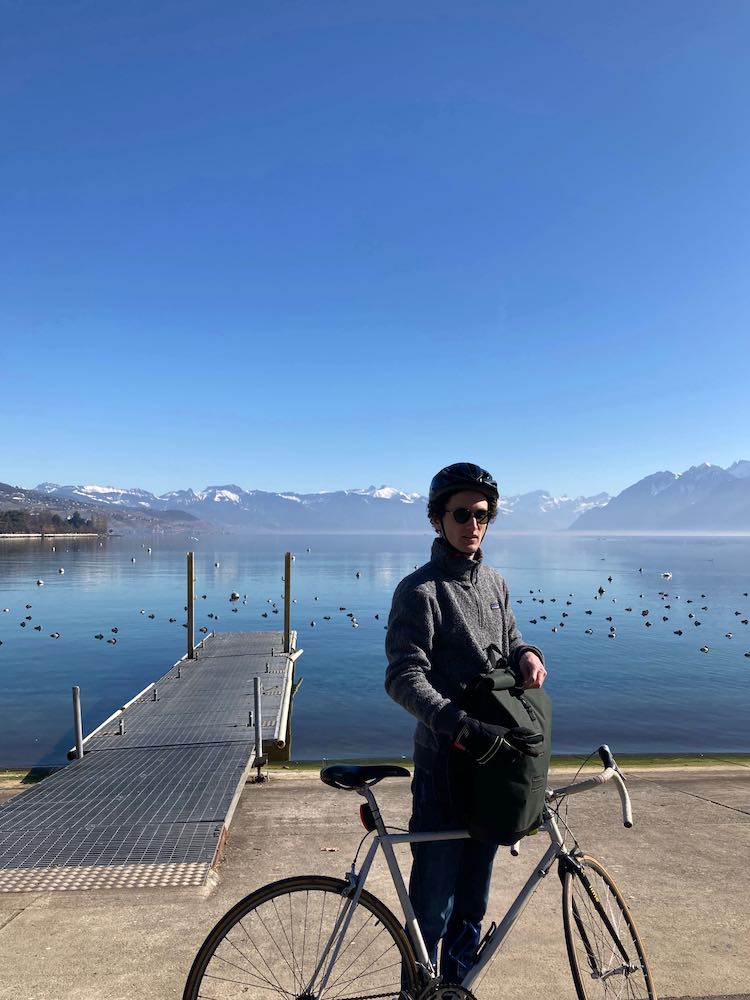
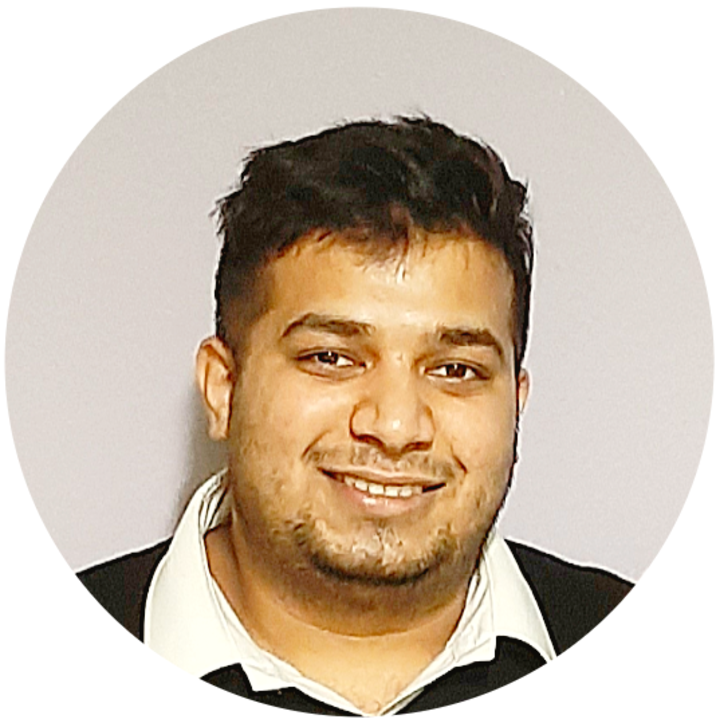
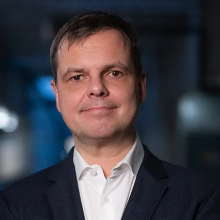
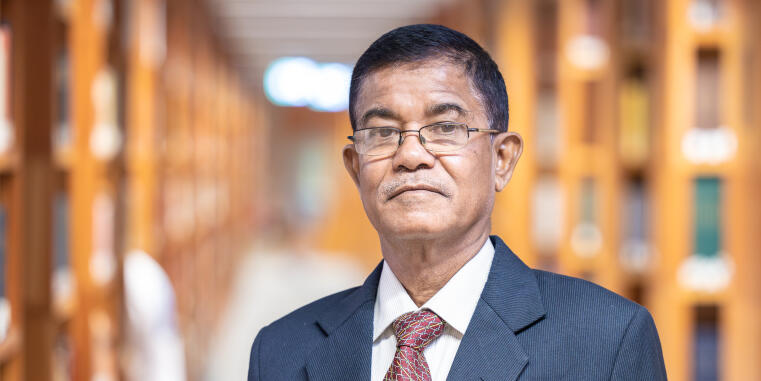
Benoit Guillard is a researcher specializing in 3D surface reconstruction and neural network applications. He earned his PhD in 2023 from EPFL’s Computer Vision Lab (CVLAB), focusing on representation learning for 3D geometry. His work bridges computer vision, machine learning, and computer graphics through innovative solutions for garment modeling, LiDAR simulation, and implicit surface processing. Notable contributions include: MeshUDF (ECCV 2022): Differentiable meshing for unsigned distance fields DrapeNet (CVPR 2023): Self-supervised garment draping technique UCLID-Net (NeurIPS 2020): Single-view 3D reconstruction with hybrid architectures His research has garnered recognition through CVPR 2022 Best Reviewer and NeurIPS 2022 Top Reviewer awards. He has served as a reviewer for top-tier conferences including CVPR, ICCV, and SIGGRAPH.
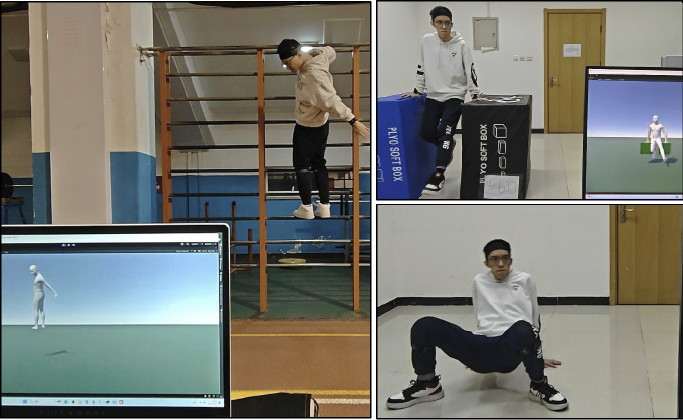
Feng Xu is an Associate Professor at the School of Software, Tsinghua University, Beijing, China. His research bridges computer science , medicine , and neuroscience , focusing on interdisciplinary applications in 3D vision, digital health, and human motion capture. Education : Ph.D. in Automation (2007-2012) and B.S. in Physics (2003-2007), both from Tsinghua University. Research Interests : 3D Vision, Computer Graphics, Digital Health, Physics-based Modeling, and Real-time Human Motion Tracking. His work explores 3D vision and graphics through applications like IMU-based motion capture , NeRF editing , and facial geometry reconstruction . Recent publications emphasize integrating physics-aware models with deep learning for real-time performance, particularly in healthcare contexts such as mediastinal neoplasm diagnosis and radiology report generation . Notable contributions include the EditableNeRF framework for topology editing and Transformer IMU Calibrator for dynamic sensor calibration. His work has received the Best Student Paper Award at IEEE ICME 2019 . Contact : Email: xufeng2003@gmail.com Email: feng-xu@tsinghua.edu.cn
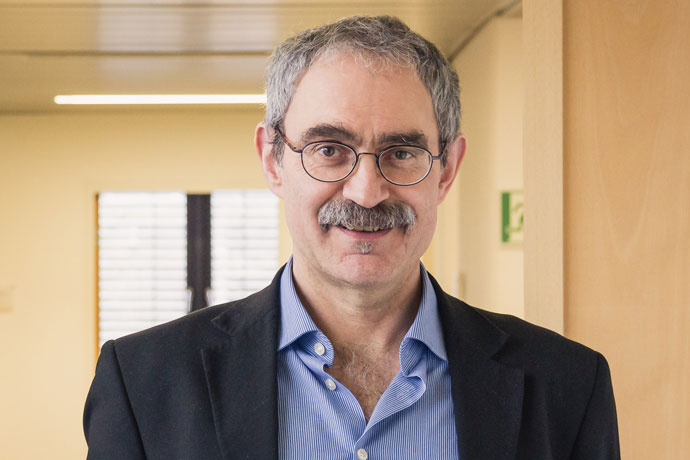
Josef van Genabith is a Scientific Director at the German Research Center for Artificial Intelligence (DFKI) and holds the Chair for Translation-Oriented Language Technology at Saarland University . His work focuses on multilingual technologies, machine translation, and natural language processing. Director of Multilingual Technologies at DFKI (2014–present) Full Professor at Saarland University (2014–present) Advisory roles: LINDAT-CLARIN (2010–present), CTYI (2012), NSF Hindi-Urdu Treebank Project (2009) Research Interests include: Development of integrative language processing systems for cross-lingual applications Deep learning for end-to-end language technology (DEEPLEE project) Quality translation frameworks (QT21 project) EU Council Presidency Translator (EUC PT) initiatives Sign language data acquisition via vision-language models His recent projects address challenges in machine translation evaluation, educational technology enhancements, and multilingual data curation.
Ajay Kumar is a prominent researcher and academic with extensive contributions across multiple domains including Operations Research, Artificial Intelligence, Blockchain, and Biometric Recognition. His work spans a wide range of topics, from digital transformation in supply chains to machine learning applications in healthcare and software engineering. He has collaborated with numerous scholars and published extensively in high-impact journals and conferences. Research Interests: Operations Research, AI in Healthcare, Blockchain Applications, Biometric Recognition, Software Reliability, Digital Transformation Publications: Kumar has authored numerous publications in journals like Annals of Operations Research , IEEE Transactions on Engineering Management , and SN Computer Science , as well as conferences such as CVPR and IC3I. Collaborations: Kumar has worked with leading experts like Kim Hua Tan, Shivam Gupta, Seema Bawa, and others, contributing to interdisciplinary research in supply chain, data science, and IoT. Key Contributions: His research includes innovative frameworks such as blockchain-enabled supply chains, hybrid AI models for diabetes prediction, and scalable tools for genomic data analysis. Emerging Trends: Kumar’s recent work focuses on explainable AI, fake news detection, and integrating IoT with blockchain for secure and efficient systems across health, logistics, and UAV communication.
Christian Rathgeb is a professor at Darmstadt University of Applied Sciences , affiliated with the da/sec Biometrics and Internet Security Research Group . His work focuses on biometric security, template protection, face recognition, and synthetic data applications. Research interests include Privacy-Enhancing Technologies 3D-Aware Face Image Quality Assessment Morphing Attack Detection Demographic Bias Mitigation Contactless Biometric Modalities His recent publications emphasize synthetic data generation, multi-biometric fusion, and forensic applications. Collaborations span institutions like TU Darmstadt, École Polytechnique Fédérale de Lausanne, and University of Vigo. Key projects involve FRCSyn (Face Recognition with Synthetic Data) and MCLFIQ (Mobile Contactless Fingerprint Quality). No explicit awards or student advisement details are provided in available data.
Rabab K. Ward is a Professor in the Department of Electrical and Computer Engineering at the University of British Columbia, Faculty of Applied Science, Vancouver, Canada. She is a leading figure in signal processing with extensive contributions to biomedical engineering, image reconstruction, and machine learning. She served as President of the IEEE Signal Processing Society (2016–2017) and continues to be actively involved in research and leadership. Her research focuses on signal processing , biomedical signal analysis , compressed sensing , medical image fusion and reconstruction , and deep learning for healthcare applications . She has pioneered methods in EEG and CT image processing, epileptic seizure detection, and 3D human pose estimation. The recent publications highlight her work in 3D face and human modeling , GAN-based forensics , brain-computer interfaces , and medical video analysis . Her research integrates advanced machine learning with practical engineering solutions for clinical and robotic systems. Her scientific awards include being an IEEE Fellow , Distinguished Lecturer of the IEEE Signal Processing Society , and serving as President of the IEEE Signal Processing Society . She has advised numerous students and researchers in areas such as compressed sensing , EEG signal processing , image reconstruction , and deep learning . Her collaborative work includes significant grants and projects in biomedical engineering , neurotechnology , and autonomous systems . Dr. Ward is associated with research labs and teams focused on signal processing for healthcare , medical imaging , and intelligent systems at UBC, fostering interdisciplinary collaboration in engineering and medicine.
Dr. Lars Czeschel is a Research Scientist in Theoretical Oceanography at the University of Hamburg's Institute of Oceanography (IfM). He holds a Dr. rer. nat. from the University of Kiel (2005) and a Diplom in Physical Oceanography (2001). His career includes postdoctoral roles at the University of Oxford (2007–2008) and University of Reading (2005–2007), as well as research scientist positions at IfM-GEOMAR (Kiel) and IfM Hamburg since 2010. His research focuses on theoretical oceanography, including ocean modeling, climate dynamics, and processes such as turbulent entrainment, internal waves, and energetically consistent models. Key contributions address symmetric instability in surface mixed layers, Labrador Sea deep-water formation, and Gulf Stream transport mechanisms. He has been awarded the Georg Wüst medal (2015). Dr. Czeschel's work integrates numerical modeling with observational data, emphasizing energetic consistency in ocean models. His recent publications (2023–2025) explore surface mixed layer dynamics and secondary instabilities. He has authored over 30 peer-reviewed articles since 2000, spanning topics from anthropogenic trace gas transport to decadal North Atlantic circulation variability.
Jovita Lukasik is a Research Fellow in the Institute for Vision and Graphics at the University of Siegen. Her research focuses on neural architecture search (NAS), model robustness, and efficient deep learning methods, with applications in computer vision and performance prediction. Key Research Areas: Developing zero-cost proxies for efficient neural architecture evaluation Improving CNN robustness via frequency-based regularization Creating benchmark datasets for architecture design and robustness analysis Exploring generative approaches for efficient NAS Her work has been published in TMLR, GCPR, ECCV, and ICLR. She contributed to the organization of the NAS workshop at ICLR 2021 and co-leads the AutoML seminar series. Recent work investigates transferable surrogates for expressive search spaces and texture/shape biases in vision-language models.
Prashant Srivastava is a Researcher at the Department of Systems Biology and Bioinformatics under the Faculty of Computer Science and Electrical Engineering at the University of Rostock, Germany. His work bridges machine learning with bioinformatics and financial risk modeling. Education: MSc Data Science and Analytics (2018-2020) from Royal Holloway, University of London Integrated B.S.-M.S. in Physics (2013-2018) from Indian Institute of Science Education and Research, Kolkata Master's Thesis in Computer Science (2020) on statistical risk methods in financial markets Master's Thesis in Physics (2017-2020) on extraordinary transmission in silicon-based micro-meter wire grid polarizers Research Focus: Prashant specializes in machine learning and deep learning applications. His work spans bioinformatics (bitter peptide prediction), data science (ConvGeN algorithm for imbalanced datasets), and financial risk modeling using VaR and Expected Shortfall frameworks. Recent Publications: His research trends include graph neural networks for peptide analysis, convex space learning for generative oversampling, and self-attention mechanisms for molecular interaction extraction from biological texts. Technical Expertise: Proficient in Python (numpy, scipy, tensorflow), R, C++, MATLAB, cloud computing (Azure), and database systems (SQL, NoSQL). He develops libraries like mgarch for GARCH modeling and applies advanced ML techniques (CNN, RNN, GAN, NLP) across domains. Labs & Teams: Active member of the Systems Biology and Bioinformatics group at the University of Rostock, contributing to interdisciplinary research at the intersection of computer science and life sciences.
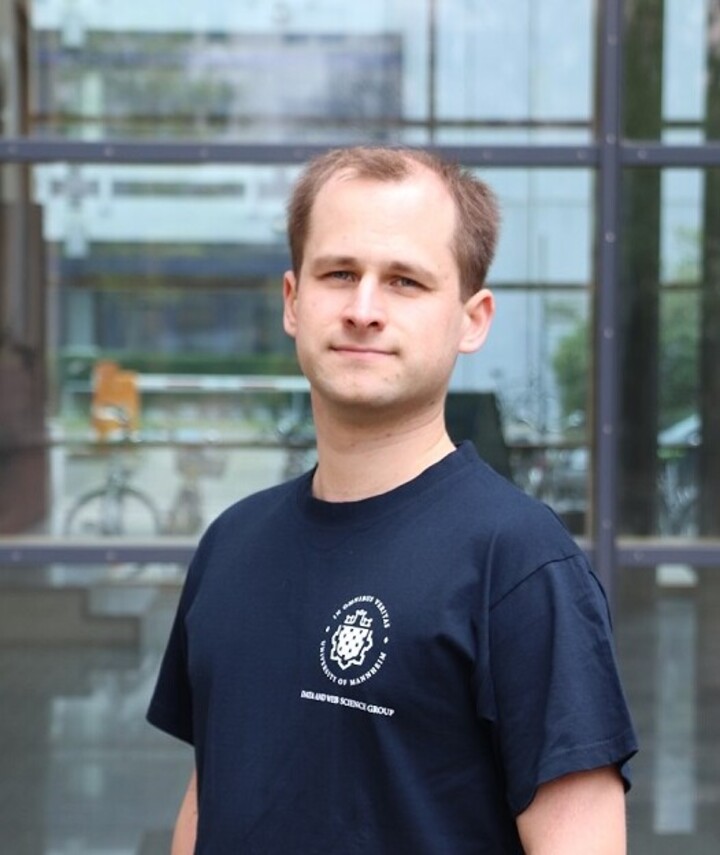
Shashank Agnihotri is a Researcher & PhD Candidate at the Chair for Machine Learning within the Data and Web Science Group at the University of Mannheim. He is affiliated with the School of Business Informatics and Mathematics . His research focuses on adversarial and OOD robustness of vision models, pixel-wise prediction tasks, and neural architecture search. He has contributed to projects like CosPGD (an efficient adversarial attack for pixel-wise tasks) and Improving Feature Stability during Upsampling . Education: PhD Candidate in Computer Science, University of Mannheim (2023–Present) PhD Candidate in Computer Science, University of Siegen (2022–2023) MSc. Computer Science, Albert-Ludwigs Universität Freiburg (2018–2021) B.E. Computer Engineering, VESIT, University of Mumbai (2014–2018) Research Interests: Adversarial and OOD robustness of deep learning models Sensor layout optimization and task-specific camera parameters Signal processing impact on model reliability Neural architecture search (NAS) methodologies Publications & Awards: Published at ICML, ECCV, ICCV, NeurIPS, and ICCP Outstanding Reviewer (CVPR 2025) and Notable Reviewer (ICLR 2025) Organized the 45th DAGM German Conference on Pattern Recognition (GCPR 2023) Labs & Collaborations: Part of the Machine Learning Group at Mannheim and previously at the Machine Learning Group in Freiburg under Prof. Frank Hutter and Prof. Thomas Brox.
Dirk Pflüger is a Professor at the University of Stuttgart's Institute of Parallel and Distributed Systems, within the Faculty of Computer Science, Electrical Engineering and Information Technology. His research focuses on high-performance computing (HPC), parallel and distributed systems, and sparse grids. He has led projects in astrophysical simulations, machine learning applications, and uncertainty quantification. Notable contributions include developing scalable algorithms for exascale computing using HPX, Kokkos, and SYCL frameworks. His expertise spans distributed computing architectures, task-based parallel programming, and interdisciplinary applications in astrophysics and medical AI. Recent work includes optimizing hyperparameter tuning, simulating stellar mergers, and enhancing blood glucose prediction models using deep reinforcement learning. Pflüger's research emphasizes performance portability, fault tolerance, and cross-platform collaboration. He has contributed to open-source tools like PLSSVM and hws, which address hardware monitoring and GPU acceleration challenges. His work bridges theoretical advancements with practical implementations for real-world computational problems.
Dieter Schmalstieg is the Alexander von Humboldt Professor of Visual Computing at the University of Stuttgart's Faculty 5: Computer Science, Electrical Engineering and Information Technology, leading the Institute for Visualization and Interactive Systems (VIS). He also holds an adjunct professorship at Graz University of Technology's Institute of Computer Graphics and Vision. His research focuses on augmented reality (AR), virtual reality (VR), computer graphics, visualization, and human-computer interaction. He earned his Dipl.-Ing. (1993), Dr. techn. (1997), and Habilitation (2001) from Vienna University of Technology. He has authored/co-authored over 400 peer-reviewed publications, with over 29,000 citations and numerous awards, including the IEEE ISMAR Career Impact Award (2020) and the IEEE Virtual Reality Technical Achievement Award (2012). His professional roles include editorial leadership in top journals like IEEE Transactions on Visualization and Computer Graphics, and steering committee memberships in major conferences like IEEE ISMAR. Research interests span AR/VR applications, situated visualization, coherent rendering, spatial interaction, and medical visualization. Notable projects include the Christian Doppler Laboratory for Handheld Augmented Reality (2008–2015), and collaborations with industry partners like Qualcomm and VRVis. He has advised over 50 PhD students, many now professors or researchers globally. Grants include the Alexander von Humboldt Professorship (2023), SNAP Mixed Reality Lab funding, and EU projects like MiReBooks (mining education). His work bridges theory and application, with impactful contributions to AR/VR systems, medical visualization tools, and GPU techniques for real-time rendering.
Prof. Mervin Kumara Weerasinghe serves as Professor and Head of the Department of Library and Information Science at the University of Kelaniya, Sri Lanka, while holding a Senior Fellowship at the Centre for Advanced Study since 2024 for the subproject “Digital Access to Library Content – Legal Frameworks in Germany and Sri Lanka”. His career spans over three decades at the University of Kelaniya, beginning in 1985. His educational background includes a B.A. in Library and Information Science from the University of Kelaniya (1985), M.Lib.I.Sc. from Punjab University (1993), and Ph.D. from the University of Kelaniya. Prior to his professorship, he served as Director General of Sri Lanka's National Library and Documentation Board (1999–2008). His research centers on National Libraries , Library Technical Services , Library Management , E-Information Services , and Reader Services , with significant contributions to national library restructuring, Buddhist literature preservation, and cultural heritage access. His publications reveal a consistent focus on improving Sri Lanka's library infrastructure through collaborative models and strategic planning. His scholarly output shows evolving expertise from foundational library operations (1990s) to national policy frameworks (2000s) and contemporary digital access challenges (2010s), demonstrating deep engagement with both practical service delivery and systemic institutional reform in library science. Prof. Weerasinghe has received professional development support through the Indian Council for Cultural Relations (1991–1993), British Council grants for IGSS (1999) and e-books (2003), and a President's Fund Scholarship for Ph.D. studies (2005). As an educator, he has supervised numerous research projects including “Usage of Encyclopaedia, Usage of Libraries & Provision of Library Books for Schools in Difficult Areas” under the Second General Education Project (2003). His leadership extends to editorial roles for Library Science and Library News journals, and advisory positions for national bibliography compilation initiatives.
Dr. Sven Hertling is a Substitute Professor for Data Science at the University of Mannheim, affiliated with the Data and Web Science Group. His research focuses on Knowledge Graph Generation, Ontology Matching, and Knowledge Graph Fusion. He teaches courses such as Knowledge Graphs, Data Mining, and Database Technologies. Notable awards include the Best Demo at ESWC 2021 and Best Paper at the Knowledge Graphs and Semantic Web Conference (KGSWC) 2022. Education: PhD in Computer Science (implied by role). His research interests span ontology alignment, large language model integration, and scalable knowledge graph systems. Recent work includes frameworks like KGrEaT for knowledge graph evaluation and tools like MELT for ontology matching analysis. He has contributed to over 50 publications, with a focus on ontology alignment evaluation (OAEI) and semantic web technologies. Key projects include the Software Campus initiative's GUI search engine and DBkWik, integrating knowledge from thousands of Wikis. Grants: €100,000 from Software Campus for the SuGraBo project. Advising: Coordinates OAEI challenges and chairs ESWC 2023. He actively serves on program committees for ISWC, ESWC, and other conferences, emphasizing community engagement in semantic web research.
Johannes Lederer is a Professor at the University of Hamburg, leading the LedererLab. His research focuses on advancing data science, statistics, and machine learning, with particular emphasis on deep learning theory, anomaly detection, and interdisciplinary collaboration. He has advised students such as Mahsa, Pegah, and Benedikt Lüdtke Schwienhorst, and collaborates with institutions like VolkswagenStiftung and TU Dortmund. His work bridges academic and industrial innovation, exemplified by organizing events like 'Bridging Minds: Industry Meets Academia in Data Science & AI'. Lederer also contributes to education through courses on high-dimensional statistics and statistical learning. Recent research highlights include exploring the sample complexity of deep neural networks and advancing anomaly detection techniques using DINOv2. Lederer actively engages in public discourse through the 'Data Science Talks' podcast, discussing topics like nanomedicine, Japanese work culture, and the future of AI. His lab’s efforts reflect a commitment to both theoretical rigor and real-world applications, positioning him as a key figure in modern data science.