Anna Levina is an Assistant Professor for Computational Neuroscience at the University of Tübingen , affiliated with the Department of Computer Science under the Faculty of Science. Her research focuses on the self-organization of neuronal activity, critical dynamics in neural networks, and the excitation/inhibition balance in cortical circuits. Current positions: Assistant Professor (since 2018), Group Leader (2017-2018), Equality Officer (Computer Science) Previous roles: IST Fellow (2015-2017), Associated Researcher (2011-2015), Postdoc/PI (2011-2015), Postdoc (2008-2011) Her research integrates mathematical modeling , statistical physics , and computational neuroscience to study criticality phenomena, neural avalanches, and adaptive network dynamics. Key interests include: Self-organized criticality in neural systems Excitation/Inhibition balance mechanisms Network topology and dynamics Timescale analysis in neural processing Stochastic modeling of neural activity Recent publications reveal trends in understanding critical dynamics across biological and artificial networks, with applications to memory systems, sensorimotor integration, and disease modeling. She has received recognition as an IST Fellow .
Jishen Zhao is an Assistant Professor in the Department of Computer Science and Engineering at the University of California, San Diego (Jacobs School of Engineering). His research focuses on computer architecture, non-volatile memory systems, and deep learning acceleration. Dr. Zhao has published extensively in top venues including ISCA, MICRO, ASPLOS, and IEEE Transactions. He collaborates with researchers at UCSD and beyond to advance systems for emerging applications in AI and autonomous vehicles. Dr. Zhao's primary research areas include persistent memory systems, hardware/software co-design for deep learning, and safety-critical computing. He develops techniques for crash consistency, memory disaggregation, and efficient neural network deployment. His work on autonomous vehicles addresses scenario generation and perception-aware system design. Recent projects explore LLM applications for software engineering and hardware verification. Analysis of Dr. Zhao's 2024-2025 publications reveals a strong shift toward AI-integrated systems research. He applies large language models to tasks like RTL verification and software issue localization while continuing to innovate in memory systems for serverless computing. There is growing emphasis on safety-critical systems for autonomous vehicles and energy-efficient neural network training using novel hardware architectures. Information about Dr. Zhao's scientific awards, advising activities, grants, and laboratory facilities was not available in the provided documentation.
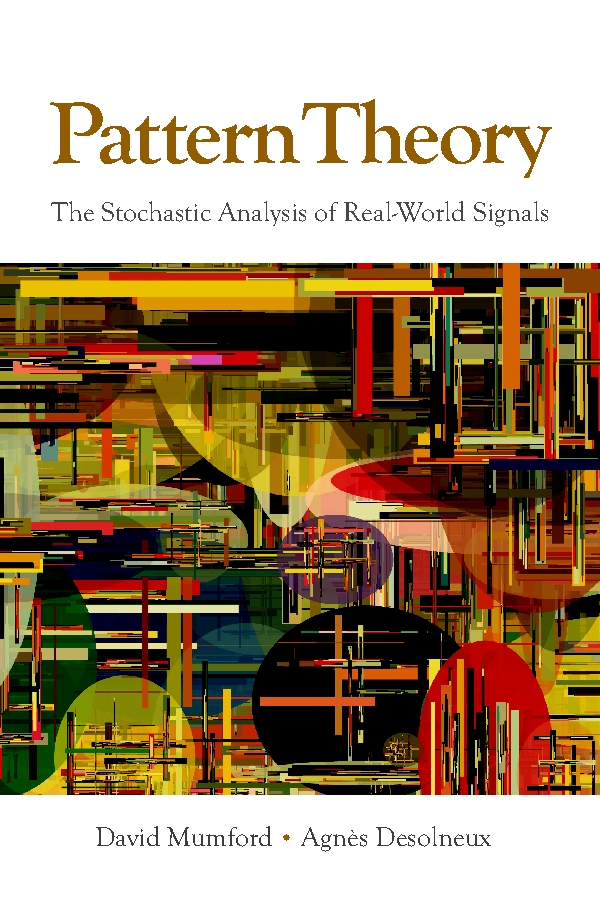
Agnes Desolneux is a CNRS Research Director at the Borelli Centre (formerly CMLA) and a Professor attached to the Mathematics Department at ENS Paris-Saclay. Education: PhD in Applied Mathematics (2000) from ENS Cachan Habilitation in Applied Mathematics (2010) from Université Paris Descartes Her research focuses on image analysis via statistical methods , particularly a contrario approaches, image restoration, texture synthesis, Determinantal Point Processes (DPP), optimal transport, Gaussian mixtures, geometry of random field excursions, shot-noise models, and mathematical modeling of visual perception through Gestalt theory. The articles extracted reflect her expertise in applied mathematics and computer vision , with recent works (2025-2020) on optimal transport algorithms, DPP applications, multiscale texture analysis, and stochastic modeling in medical imaging. Keywords span machine learning, probability theory, medical imaging, and computer vision . She has no listed scientific awards but has authored influential works including the book From Gestalt Theory to Image Analysis: A Probabilistic Approach (Springer, 2008) and Pattern Theory: the stochastic analysis of real-world signals (AK Peters, 2010).
Nasir M. Rajpoot is a Professor in the Department of Computer Science at the University of Warwick, UK. His research focuses on computational pathology, medical image analysis, and deep learning applications in histology. He leads interdisciplinary projects integrating artificial intelligence with healthcare, particularly in cancer diagnostics and pathology workflows. Rajpoot’s work emphasizes developing robust algorithms for histology image analysis, including nuclear segmentation, tumor classification, and domain generalization in computational pathology. His contributions include the TIAToolbox, an open-source framework for tissue image analytics, and the CoNIC Challenge to advance nuclear detection and counting in histology images. He collaborates with clinicians and biologists to translate AI models into clinical practice, addressing challenges like tumor heterogeneity and staining variability. Rajpoot’s research spans colorectal, lung, and oral cancers, with a focus on predicting clinical outcomes via histological features and genomic data integration. Notable projects include the development of Handcrafted Histological Transformer (H2T) for unsupervised representations of whole slide images and the SAFRON framework for histology image synthesis. His work addresses domain adaptation, robustness evaluation, and explainability in AI-driven pathology systems.
Prof. Dr. Tobias Gemmeke is a University Professor at RWTH Aachen University's Faculty of Electrical Engineering and Information Technology, leading the Chair of Integrated Digital Systems and Circuit Design. His work focuses on neuromorphic computing, hardware accelerators, and energy-efficient electronics. He has pioneered advancements in FPGA-based computational neuroscience simulators, neuromorphic processor architectures, and sensor integration for industrial and medical applications. Research interests include time-domain computing, ReRAM reliability, and co-optimization of neural networks with hardware. Notable contributions include the neuroAIx framework for accelerated neuroscience simulations and energy-efficient ASIC designs for post-quantum cryptography. He actively explores memristive devices and domain generalization techniques for edge computing. Recent publications highlight innovations in spiking neural networks, sensor systems for plain bearings, and time-domain compute-in-memory engines. His work bridges theoretical neuroscience with practical hardware implementations, emphasizing scalability and real-time performance.
Prof. Dr. Michael Klasen is a leading theoretical physicist at the Institute of Theoretical Physics at the University of Münster, where he heads his eponymous research group. His work bridges nuclear and particle physics, with significant contributions to quantum chromodynamics and physics beyond the Standard Model. His research focuses on Particle Physics , Quantum Chromodynamics , and Physics beyond the Standard Model , with particular emphasis on understanding the quark-gluon structure of atomic nuclei and dark matter phenomena. His innovative approach connects microscopic quark-gluon dynamics with nuclear binding phenomena, creating a crucial bridge between nuclear and particle physics. Prof. Klasen's recent work analyzing nucleon binding at the quark-gluon level was recognized as a "Breakthrough of the Year 2024" by Physics World. His research group's publication in Physical Review Letters demonstrated how quarks and gluons behave differently in nucleon pairs than in free nucleons, fundamentally advancing our understanding of nuclear binding. Breakthrough of the Year 2024 from Physics World Leadership of Research Training Group 2149 "Strong and weak interactions - from hadrons to dark matter" Supervision of award-winning doctoral research including the Infineon Dissertation Prize 2025 Prof. Klasen has successfully mentored numerous PhD students, with 20 of his group's graduates continuing their academic careers at prestigious institutions including CERN and Stanford University. His research has been supported by major funding bodies including the German Research Foundation (DFG), the Helmholtz Alliance for Astroparticle Physics, and BMBF collaborative research programs. The Klasen working group maintains active collaborations with international research networks including CTEQ, DM@NLO, and RESUMMINO.
Dr. Hilde Kuehne is a Professor at the University of Tuebingen and a key researcher at the Tuebingen AI Center. She holds affiliations with MIT-IBM Watson AI Lab and Goethe University Frankfurt, with a focus on computer vision, multimodal learning, and explainable AI. Her work bridges vision-language models, audio-visual alignment, and self-supervised methods. Co-organizer of the New Frontiers in Associative Memories workshop @ ICLR 2025 Member of the Scientific Advisory Board of the Carl-Zeiss-Foundation Contributor to CVPR 2025's UTD dataset for unbiased video benchmarks Her research addresses critical challenges in: Explainability for Vision Transformers (LeGrad) Fine-grained audio-visual alignment (CAV-MAE Sync) Zero-shot visual recognition automation (Meta-Prompting) Spatio-temporal grounding without annotations Recent collaborative work spans 15+ publications across CVPR, NeurIPS, ICCV, and ICLR, with emphasis on multimodal foundation models, dataset bias mitigation, and differentiable logic networks. She actively contributes to workshop organization and peer review as evidenced by her involvement in CVPR 2025 and ICLR 2025 program committees.
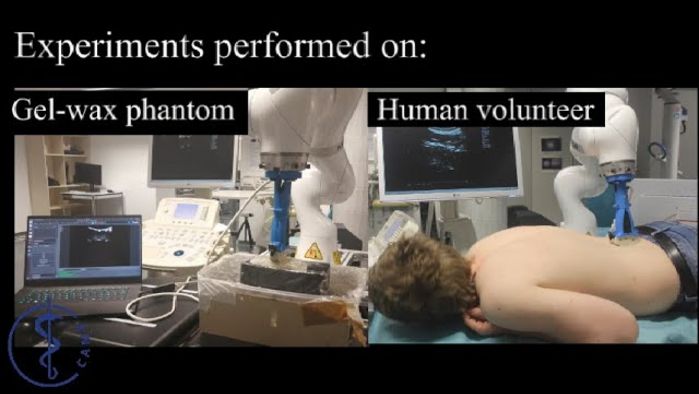
Dr. Zhongliang Jiang is a senior research scientist and leader of the Robotics and Ultrasound team (RobUSt) at the Chair of Computer Aided Medical Procedures (CAMP) at Technische Universität München. He holds a Ph.D. in computer sciences (summa cum laude) and has authored/co-authored over 40 top-tier publications in robotics and medical imaging. His research focuses on robotic ultrasound systems, medical image processing, and robotic learning. Education: Ph.D. in Computer Sciences, TUM (2022, summa cum laude) M.Eng. in Harbin Institute of Technology (2017) Research Assistant at SIAT (2017-2018) Research Interests: Medical Robotics: autonomous robotic ultrasound systems Image Processing: RGB-D/ultrasound segmentation, registration Robotic Learning: reinforcement/imitation learning Robotic Control: MPC, shared control, human-robot interaction Professional Contributions: Associate Editor for ICRA 2024/2025 Guest Editor for IEEE TRO special issue on Robot-Assisted Medical Imaging Main organizer of RAMI workshops at ICRA (2023-2025) Awards: MICCAI 2023 Best Paper Runner-up Gold Medal for Master's Thesis (2017) Lab & Teaching: Leading the RobUSt team developing advanced robotic ultrasound solutions Teaching courses like Computer Aided Medical Procedures and Medical Augmented Reality Supervised over 15 Master/PhD projects in robotic ultrasound and medical imaging
Chantal Pellegrini is a Lecturer and PhD student at the Chair of Computer Aided Medical Procedures (Prof. Navab) at Technical University of Munich (TUM). Her research focuses on Deep Learning applications in medical imaging, including explainable AI for radiology report generation and Vision-Language Models for clinical decision support. She actively contributes to the DHM, NARVIS Lab, and RobUSt research groups. Teaching responsibilities include courses such as 'Computer Aided Medical Procedures', 'Medical Augmented Reality', and 'Surgical Robotics'. She supervises student projects in medical AI and healthcare innovation, with recent projects involving multimodal report generation and graph pretraining for medical applications. Education: BSc/MSc Computer Science (TUM), current PhD student since 2022 Labs: DHM (German Heart Center), NARVIS Lab, RobUSt Robotics & Ultrasound Research Keywords: Medical Image Understanding, Radiology Reports, LLMs in Healthcare Her publications span surgical OR dataset development, reinforcement learning for clinical decisions, and explainable X-ray diagnosis systems. She mentors MA/BA students in medical AI and project management for healthcare applications.
Mathias Niepert is a Professor at the Institute for Artificial Intelligence within the Faculty of Computer Science, Electrical Engineering and Information Technology at the University of Stuttgart. His research focuses on advancing machine learning techniques with applications in scientific computing, graph neural networks, and medical imaging. He is particularly known for contributions to physics-informed neural networks, equivariant models, and graph learning frameworks. Key research areas include: Scientific Machine Learning for PDEs and molecular modeling Graph neural networks and their theoretical limitations Medical vision-language models and multimodal learning Efficient neural network architectures (transformers, FNOs) Domain knowledge integration in deep learning His work often bridges theoretical foundations with practical applications, as evidenced by extensive publications (2018–2025) on topics like adaptive message passing, equivariant networks, and medical imaging systems. He has contributed to benchmark development through initiatives like PDEBench and pioneered methods for equivariant diffusion models and molecular representation learning. His current projects emphasize: Improving generalization in Fourier Neural Operators Addressing oversmoothing in graph networks Combining physics principles with neural architectures Medical AI applications through multimodal fusion
Prof. Margret Keuper is a Professor of Machine Learning at the University of Mannheim's School of Business Informatics and Mathematics, leading the Data and Web Science Group. She is also affiliated with the Max-Planck-Institute for Informatics and ELLIS (fellow since 2024). Her research focuses on robust deep learning, neural architecture search, and computer vision tasks like motion segmentation and adversarial defense. She holds a PhD from the University of Freiburg and previously held positions at the University of Siegen and the University of Mannheim. Her work spans projects funded by DFG and BMBF, including Climate Visions for social media analysis and TrackOpt for motion tracking. She teaches courses on computer vision, generative models, and reinforcement learning. She actively serves on program committees for top conferences like CVPR, ECCV, and NeurIPS, and is an associate editor for IEEE TPAMI and JAIR. Education: PhD in Computer Science from University of Freiburg (advisor: Thomas Brox) Research Projects: Learning to Sense (DFG), Climate Visions (BMBF), TrackOpt (BMBF) Key Roles: Head of Mannheim Master in Data Science Examination Board, Member of MSc Business Informatics Board Her research emphasizes robustness in AI systems, with contributions to adversarial attacks, domain generalization, and efficient solvers for large-scale problems. She advises over 15 PhD students across academic and industry partnerships.
Dominik Schnaus is a PhD Student at the Computer Vision Group within the School of Computation, Information and Technology at the Technical University of Munich. His research focuses on computer vision and deep learning, particularly in vision-language correspondence and uncertainty estimation in neural networks. Research Interests: 3D/4D reconstruction, vision-language models, neural network uncertainty, robotics Contact: dominik.schnaus@tum.de
Alexey Bufetov is a Professor at Leipzig University, holding an ERC Starting Grant for his research in Integrable Probability (2022-2027). Previously, he served as a W2-Professor ("Bonn Junior Fellow") at the Hausdorff Center for Mathematics (2018-2021) and as a CLE Moore Instructor at Massachusetts Institute of Technology (2015-2018). His research centers on Probability Theory , with deep connections to Mathematical Physics and Combinatorics . Key areas include integrable probability, stochastic particle systems (ASEP/TASEP), random tilings, Schur generating functions, and representation-theoretic aspects of probability. His work often bridges abstract mathematical structures with physical models from statistical mechanics. Bufetov's recent publications reveal a strong focus on integrable systems and asymptotic analysis , particularly exploring connections between Mallows measures, vertex models, and random matrix theory. His 2025 work on Aztec diamond domino tilings exemplifies his signature approach combining combinatorial structures with probabilistic methods. His primary recognition is the ERC Starting Grant "Integrable Probability" (2022-2027), supporting his cutting-edge research program. Bufetov has maintained a prolific collaborative network, frequently publishing with leading researchers including Alexei Borodin, Vadim Gorin, Leonid Petrov, and Kailun Chen. His work appears in top journals such as Advances in Mathematics , Duke Mathematical Journal , and Communications in Mathematical Physics .
Chanchal K. Roy is Professor of Software Engineering/Computer Science at the University of Saskatchewan and Co-Director of the Software Research Lab. He leads an NSERC CREATE graduate program on Software Analytics Research and co-leads the Data Management group for an NSERC CFREF project on Food Security, with over 170 publications cited 6,000+ times. His research centers on software clone detection using the widely adopted NICAD system, software evolution, empirical studies, and AI-driven software analytics. Recent work integrates large language models for code generation, clone detection in the AI era, and developer interactions with tools like ChatGPT, emphasizing practical applications in maintenance and analytics. Analysis of his 15 most recent publications reveals a strong trend toward AI/ML integration in software engineering: 12 of 15 articles (2025) explore LLMs, quantum computing, or deep learning for tasks like bug localization, code snippet generation, and feature-toggle analysis. Key themes include empirical validation of AI tools, Stack Overflow data mining, and cross-domain frameworks for Society 5.0. His scientific awards include: Most Influential Paper Awards (SANER 2018, ICPC 2018) Outstanding Young Computer Science Researcher Award (CS-Can/Info-Can, 2018) New Researcher Award (University of Saskatchewan, 2019) New Scientist Research Award (College of Arts and Science, 2019) As lead of the NSERC CREATE program and CFREF data group, he mentors graduate students in software analytics while securing major grants. He actively serves on program committees for ASE, ICSE, and FSE, reviewing journals and organizing workshops on clone detection and empirical methods. His lab focuses on real-world applications in food security data management and software evolution. The Software Research Lab, co-directed by Roy, drives projects like NICAD and the NSERC CREATE initiative, emphasizing open-source contributions and industry collaboration. Current efforts include quantum-SE integration and AI-augmented maintenance tools under the CFREF food security mandate.
Professor Katrin Tent is a distinguished mathematician specializing in mathematical logic at the University of Münster, where she holds a professorship in the Faculty of Mathematics and Computer Science within the Institute for Mathematical Logic and Foundations Research. She is an active researcher in Mathematics Münster, an investigator in CRC 1442 Geometry: Deformations and Rigidity, and contributes to multiple research projects including Topics in Mathematics Münster T3: Models and universes, T4: Groups and actions, and T8: Random discrete structures and their limits. PhD in Linguistics, Christian-Albrechts-Universität zu Kiel (1988) Diplom in Mathematics, Christian-Albrechts-Universität zu Kiel (1989) PhD in Mathematics, University of Notre Dame (1994) Habilitation, "Model theory of groups and BN-pairs" (2000) Professor Tent's research bridges model theory, group theory, and geometry, with particular focus on finite Morley rank structures, BN-pairs, and sharply multiply transitive groups. Her work often combines methods from these areas to prove unexpected results, either constructing groups or incidence geometries with surprising model theoretic properties or using model theory to construct new and interesting geometries or groups. Her recent publications reveal a consistent trajectory connecting model theory with group-theoretic structures. She has made significant contributions to understanding sharply 2- and 3-transitive groups, finite Morley rank geometries, and the model theory of generalized polygons. Her work demonstrates how model-theoretic techniques can solve deep problems in group theory and geometry, particularly through the study of BN-pairs and incidence structures. DFG Research Fellowship (1996-1998) Bayerischer Habilitationsförderpreis (1998-2001) Heisenberg-Stipendium (2001-2004) ERC Consolidator Grants expert panel (2016, 2018) Elected to DFG Senate (2019) Professor Tent leads an active research group with current members including Marco Amelio, Dr. Benjamin Brück, Anna Cascioli, Lukas Jonuska, Silke Meissner, Zahra Mohammadi Khangheshlaghi, and Dr. Sam Shepherd. Her former research group members include Dr. Simon Andre, Dr. Isabel Müller, and Dr. Tim Clausen, among others. Her supervisory work spans both theoretical foundations and specific applications in geometric group theory and model theory. Her research group operates within the Institute for Mathematical Logic and Foundations Research at the University of Münster, collaborating closely with other researchers in the Mathematics Münster cluster. The group participates in various projects including CRC 1442 - C04: Group theoretic aspects of negative curvature, contributing to the vibrant mathematical research environment at one of Germany's leading mathematics institutions.