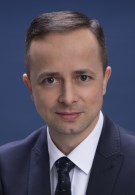
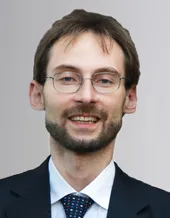
Indranil Bose is a Distinguished Professor and Head of the Area of Excellence in AI, Data Science, and Business at NEOMA Business School, with a Ph.D. in Management from Purdue University. He specializes in business analytics, big data, and digital transformation, leveraging expertise from prior roles at IIM Calcutta, University of Hong Kong, University of Florida, and UT Arlington. Education: Ph.D. in Management (Purdue University, 1997) M.S. (Purdue University) M.S. (University of Iowa) B.Tech (IIT Kharagpur) Research Focus: His work spans predictive analytics, social media impact on business, innovation management, cybersecurity, fintech, and AI ethics. Key themes include consumer behavior in digital ecosystems, AI-driven decision systems, and ethical implications of emerging technologies. Publication Trends: Recent articles emphasize AI ethics, digital misinformation, and predictive modeling in finance/healthcare, reflecting a focus on societal impacts of technology. Methodologies include deep learning, sentiment analysis, and causal inference. Awards & Recognition: Winner, EFMD 2017 Case Competition Ranked 29th globally for Information Systems research productivity (2005–2014) Editorial Leadership: Senior Editor for Decision Support Systems and Pacific Asia Journal of the AIS ; Associate Editor for Information & Management , Journal of the AIS , and Communications of the AIS .
Gias Uddin is an Associate Professor at York University's Lassonde School of Engineering and an Adjunct Professor at the University of Calgary . His research bridges Software Engineering (SE) and Artificial Intelligence (AI) , focusing on AI Trustworthiness Assessment (SE4AI) and AI-Driven Productivity Tools (AI4SE) . PhD in Software Engineering & AI, McGill University (2018) MSc in Software Engineering, Queen’s University (2008) BSc in Computer Science & Engineering, Bangladesh University of Engineering and Technology (2004) His research explores: Metamorphic Relations for LLM Hallucination Detection AI-Enhanced Software Documentation Foundational Models for Runtime System Modernization Developer-Centric AI Tooling Recent article trends show expertise in LLM Trustworthiness , Low-Code Platforms , and IoT Developer Communities . Awards include Distinguished Paper at FSE 2025 , multiple IBM Champion recognitions, and York Research Award . He leads the Data Intensive Software Analytics (DISA) Lab and mentors PhD students in SE-AI Intersections .
Armin Kirchknopf serves as a Junior Researcher at the Media Computing Research Group within the Institute of Creative Media/Technologies, Department of Media and Digital Technologies at the University of Applied Sciences St. Pölten. His interdisciplinary work bridges artificial intelligence, computer vision, and social media analysis, with significant contributions to misinformation detection and disaster response systems. Based at Campus-Platz 1 in St. Pölten, Austria, he actively collaborates on EU-funded projects and publishes in top-tier AI venues. His educational journey spans humanities and technology: a Bachelor of Arts in Egyptology and Master of Arts in Classical Archaeology from the University of Vienna (including fieldwork at excavation sites across Austria, Germany, and Egypt), followed by a Bachelor of Science in Media Technology from FH St. Pölten. This unique background informs his human-centered AI research approach. Kirchknopf's research centers on explainable multimodal AI systems for real-world challenges. His recent work demonstrates expertise in transformer-based architectures for cross-lingual fake news detection, sexism identification, and flood monitoring through social media imagery. He pioneers techniques like Grad-CAM for object detection explainability and develops visualization tools for complex data interpretation, emphasizing transparency and social impact in AI deployment. Analysis of his 13 publications (2017-2022) reveals a strategic shift toward applied AI in societal contexts , particularly using social media data for disaster management and combating online toxicity. His projects consistently integrate computer vision with natural language processing, showing increasing sophistication in multilingual capabilities and model interpretability frameworks. His scientific recognition includes: Creative Business Award for co-developing the Tenjin learning quiz application No documented student advisement or grant leadership appears in current records, though he actively mentors through project-based collaborations. His work with the Media Computing Research Group drives innovation in educational technology and public safety applications. Kirchknopf contributes to the Media Computing Research Group's portfolio including Fake News Detection, SAiEX (Safe AI with explainable integrity), InfraBase (building footprint segmentation), and Ressel Center music therapy projects. His cross-disciplinary collaborations span computer scientists, archaeologists, and social scientists, reflecting the group's commitment to human-centric technological solutions .
Nikos Aletras is a Professor of Natural Language Processing at the University of Sheffield's School of Computer Science, where he serves as Head of the Natural Language Processing research group and is co-affiliated with the Machine Learning group. His academic journey began with a Bachelor's degree in Computer Science from the University of Crete, followed by a PhD in Natural Language Processing at the University of Sheffield. Prior to his current position, he worked as a research scientist at Amazon (Core ML and Alexa) and as a research associate at UCL's Department of Computer Science. Aletras' research spans multiple domains within AI, with particular emphasis on Natural Language Processing applications across social science, legal contexts, and data science. His work demonstrates a consistent focus on practical implementations of NLP techniques to solve real-world problems, especially in computational social science and legal technology. He has developed innovative text analysis methods that bridge traditional disciplinary boundaries, creating tools applicable across multiple scientific domains. His recent publications reveal a strong trend toward efficient and responsible AI, with significant work on model compression, hallucination mitigation in language models, and ethical considerations in computational social science research. The publications also show deep engagement with multilingual NLP challenges, explainable AI, and applications of NLP to social media analysis and legal contexts. Area Chair Award: Society and NLP (2023) Aletras has secured substantial research funding as both Principal Investigator and Co-Principal Investigator, including grants from EPSRC, ESRC, Leverhulme, EC Horizon 2020, and industrial partners like Amazon. His current projects focus on efficient deployment of large language models, addressing socio-technical limitations of LLMs for medical and social computing, and developing speech and language technologies. He actively supervises PhD students and collaborates with researchers across multiple disciplines. He leads the Natural Language Processing research group at Sheffield, which focuses on advancing NLP methodologies while applying them to diverse domains including computational social science, legal informatics, and healthcare technologies. The group maintains strong industry connections, particularly with technology companies working on language technologies, and collaborates with legal scholars and social scientists on interdisciplinary projects.
Dr hab. Krzysztof Węcel serves as Professor and current Head of the Department of Economic Informatics at Poznan University of Economics and Business (UEP), appointed on October 4, 2024. His primary affiliation spans over 25 years with UEP's Department of Economic Informatics, which maintains one of Poland's longest-running academic websites since 1998. He holds dual recognition through habilitation from University of Potsdam (2020) and professorship conferred by UEP (June 24, 2020). His academic milestones: Habilitation degree in Economic Informatics, University of Potsdam (2020) Professor title, Poznan University of Economics and Business (2020) Węcel's research centers on Semantic Technologies and data quality assessment across multilingual Wikipedia, with emphasis on company information verification, citation analysis, and open data applications. His work bridges Big Data analytics with practical business solutions, particularly in maritime logistics where he pioneered evolutionary algorithm-based AIS data processing. Current investigations focus on generative AI's dual role in creating and combating disinformation, including ChatGPT's impact on academic writing and fake news propagation. Recent publications (2022-2025) reveal three dominant trends: First, systematic analysis of Wikipedia's reliability across languages during crises like the pandemic and Ukraine war. Second, development of AI-driven fact-checking frameworks (e.g., OpenFact project's CLEF 2023 victory). Third, exploration of generative AI's societal impact ranging from student creativity to disinformation campaigns. Scientific awards received: Best Paper Award at ICIST 2017 Conference Award for most innovative article at NATCON 2018 conference Microsoft Azure for Research Award (2016) As academic advisor, he leads the 'Semantic Technologies' diploma seminar attracting high-achieving students, with participants winning the 29th UEP Foundation Competition (2025) and Eurostat's Web Intelligence Challenge (2024). His grant portfolio includes the 'Maritime Big Brother' project (2017) for ship voyage prediction using AIS data and Microsoft Azure funding for Wikipedia quality enhancement. Ongoing initiatives include OpenFact (fake news detection) and GOBLIN projects. He actively collaborates with SKN Data Science student circle (evidenced by 2024/2025 inaugural meeting) and international consortia like CLEF and QOD workshops. Departmental leadership involves managing the OpenFact research team that achieved top results in CheckThat! Lab competitions, alongside maritime data analytics groups applying evolutionary algorithms to shipping networks.
Michael Bronstein is a Professor at Università della Svizzera italiana (USI Lugano) in Switzerland and Imperial College London in the UK, where he holds the Chair in Machine Learning and Pattern Recognition. He serves as Head of Graph Learning Research at Twitter following the acquisition of his startup Fabula AI, and maintains a principal engineer position at Intel Perceptual Computing. His research focuses on the interplay between geometry, machine learning, and computer vision, with particular emphasis on non-Euclidean structured data. Professor Bronstein received his Ph.D. with distinction in Computer Science from the Technion in 2007. He has held visiting appointments at Stanford University, MIT, Harvard University (as a Radcliffe Fellow), and Tel Aviv University, and has been affiliated with multiple Institutes for Advanced Study including TUM-IAS where he was a Rudolf Diesel Industry Fellow (2017). He is a Fellow of IAPR, Senior Member of the IEEE, and a member of the Young Academy of Europe. His research program centers on theoretical and computational methods in spectral and metric geometry applied to computer vision, pattern recognition, and machine learning. He pioneered the field of geometric deep learning, developing novel neural network architectures that process non-Euclidean data structures like graphs and manifolds. His work spans from theoretical foundations to practical applications, with over 100 publications in top scientific journals and conferences, and has been featured in international media including CNN. Analysis of his recent publications reveals a strong trajectory in geometric deep learning with applications spanning computer vision, 3D shape analysis, social network analysis, and bioinformatics. His research consistently bridges theoretical innovation with real-world applications, developing novel neural architectures for processing complex data structures. The work demonstrates increasing interdisciplinary reach, connecting machine learning with fields from particle physics to molecular biology. Dalle Molle Prize (2018) Royal Society Wolfson Research Merit Award (2018) ERC Proof of Concept Grant (2018) Amazon AWS Machine Learning Research Award (2018) Fellow, International Association for Pattern Recognition (IAPR) Google Faculty Research Award (2017) Radcliffe fellowship, Harvard University (2017) Rudolf Diesel industrial fellowship, TU Munich (2017) ERC Consolidator Grant (2016) World Economic Forum Young Scientist (2014) Professor Bronstein has secured multiple ERC grants (Starting Grant 2012, Proof of Concept Grants 2016 and 2018, Consolidator Grant 2016) and has mentored numerous students who have contributed to over 30 granted patents. He has chaired more than a dozen conferences and workshops in his field and served as area chair at major computer vision conferences including ECCV 2016 and ICCV 2017. His research group at USI Lugano collaborates extensively with industry partners including Intel and Twitter. As a serial entrepreneur, Professor Bronstein co-founded Novafora (2005-2009) developing large-scale video analysis, Invision (2009-2012) which created low-cost 3D sensors and was acquired by Intel, and Fabula AI (2018-2019) focused on fake news detection which was acquired by Twitter. His work bridges theoretical research with commercial applications, with his technology contributing to Intel RealSense and Twitter's graph learning infrastructure.
Dr. Irfan Ahmad serves as an Associate Professor in the Department of Information and Computer Science at King Fahd University of Petroleum and Minerals (KFUPM), Dhahran, Saudi Arabia, where he teaches undergraduate and graduate courses in Computer Science and Software Engineering while conducting research and advising graduate students. His academic service includes committee roles on graduate studies, program development, and competitions. His research expertise centers on Pattern Recognition with specialized focus on Document Image Analysis , Handwriting Recognition , and Machine-Printed Text Recognition . He actively explores Machine Learning applications including Deep Learning and Natural Language Processing , with significant contributions across Artificial Intelligence, Computer Vision, Data Mining, Neural Networks, and Computational Linguistics as evidenced by his PeerJ subject area specializations. Recent publications reveal a strategic emphasis on adaptive deep learning architectures for document analysis, particularly generative methods for handwritten text recognition and knowledge distillation techniques. His editorial work on feature extraction and multilingual fake news detection further demonstrates applied research bridging theoretical machine learning with real-world language processing challenges. As an active Academic Editor for PeerJ Computer Science with 1,205 contribution points, Dr. Ahmad provides substantial service to the scholarly community through manuscript evaluation and editorial oversight across emerging technologies in data science and artificial intelligence.
Kaize Ding is an Assistant Professor in Statistics and Data Science at Northwestern University, leading the REAL Lab and affiliated with the IDEAL Institute. He holds a Ph.D. in Computer Science from Arizona State University (2023) under Prof. Huan Liu, with prior degrees from Beijing University of Posts and Telecommunications. His research focuses on reliable AI systems for autonomous decision-making, knowledge-guided algorithms using GNNs/LLMs, and applications in healthcare, environmental science, and cybersecurity. Collaborations include Google Brain, Microsoft Research, and Amazon Alexa AI. Education: Ph.D. in Computer Science, Arizona State University (2023) M.S. and B.S., Beijing University of Posts and Telecommunications Research Interests: Developing robust AI for decision-making under uncertainty Graph-based machine learning for anomaly detection and network analysis Large language models (LLMs) integrated with domain-specific knowledge Cross-domain applications in healthcare diagnostics, environmental monitoring, and cybersecurity Recent Activities: Received Amazon Research Award and Google Research Grant NeurIPS 2025 Area Chair and ARR Area Chair Postdoc opening in AI4Health for swallowing disorder research Recent publications at AAAI, NeurIPS, EMNLP, and KDD Lab & Team: The REAL Lab focuses on advancing AI through interdisciplinary projects. Current students include Ruiyao Xu (PhD), Qingcheng Zeng (co-advised), and over 10 master's/undergraduate researchers. Alumni have moved to top PhD programs at UVa, UIC, and JHU.
Dr. Jiaojiao Jiang is a Senior Lecturer in the School of Computer Science and Engineering at the University of New South Wales (UNSW). She holds a Ph.D. from Deakin University (Melbourne, Australia) and has published over 45 articles with 1,100+ citations. Her research focuses on AI-driven cybersecurity solutions, particularly misinformation detection and modeling information propagation dynamics. She is affiliated with UNSW's Sydney campus and can be contacted at jiaojiao.jiang@unsw.edu.au . Education: Ph.D., Deakin University, 2010s Research Interests: Artificial Intelligence applications in cybersecurity Misinformation detection and network analysis Machine learning for network security Data privacy in IoT systems Publications span topics like fake news detection via graph neural networks, multiplex network robustness, and cyber threat intelligence frameworks. Her work bridges theoretical network science with practical cybersecurity challenges.
Dr. Jia Wu is an Associate Professor and Research Director of the Centre for Applied Artificial Intelligence at Macquarie University. He holds a PhD in Computer Science from the University of Technology Sydney (2009) and is an IEEE Senior Member. His research focuses on artificial intelligence, data mining, graph neural networks, and anomaly detection, with over 200 publications in top-tier journals/conferences like IEEE TPAMI, TKDE, and conferences like KDD, IJCAI, and NeurIPS. He has received awards including the Heidelberg Laureate Forum Fellowship (2019) and multiple best paper awards. Education: PhD in Computer Science (UTS, 2009). Current roles include Director of HDR (Higher Degree Research) and Associate Editor for IEEE TNNLS and ACM TKDD. He leads projects in AI-driven cybersecurity, personalized banking solutions, and disaster response systems. Research interests emphasize graph-based learning, fake news detection, and deep learning applications. His recent work explores hypergraph neural networks for fraud detection and brain graph analysis for neurological disorders. He has pioneered scalable semi-supervised clustering techniques and transformer-based hypergraph models for anomaly detection. Awards include CIKM'22 Best Paper Runner-Up, ICDM'21 Best Student Paper, and the 2023 Faculty of Science and Engineering Collaboration Award. His work spans 13 active research projects, including mitigating AI deepfakes in identity systems and enhancing disaster response networks through graph-based simulations. Labs/Teams: Leads teams in the Data Horizons Research Centre, Future Communications Research Centre, and Hearing Research Centre. Collaborates internationally in AI, data mining, and social network analysis.
Nicola Dragoni is a Professor in Cybersecurity Engineering at the Department of Applied Mathematics and Computer Science, Technical University of Denmark (DTU). As Deputy Director and Head of Section, he leads research initiatives focused on securing emerging technologies. Key Research Areas : Internet of Things (IoT) security, machine learning for intrusion detection, cyber-deception techniques, fog computing, malware analysis, blockchain applications, and wireless sensor network security. Supervision : Actively supervising multiple PhD students in projects related to cyber-deception, moving target defense, and bio-inspired security mechanisms. Recent Publications : Contributions to IoT honeypots, drone identification via RF signals, passkey adoption challenges, and cyber range taxonomies.
Marina Milovanović is a Professor at the University of Singidunum, Faculty of Informatics and Computing, Department of Mathematics. She holds dual doctoral degrees from the Faculty of Science, University of Kragujevac (Department of Mathematics, 2014) and Faculty of Entrepreneurial Business, Union University (2008), along with Master's and Bachelor's degrees from the Faculty of Mathematics, University of Belgrade (2000-2005 and 1995-2000 respectively). Faculty of Science, University of Kragujevac, Department of Mathematics (PhD, 2014) Faculty of Entrepreneurial Business, Union University (PhD, 2008) Faculty of Mathematics, University of Belgrade (Master's, 2000-2005) Faculty of Mathematics, University of Belgrade (Bachelor's, 1995-2000) Svetozar Marković High School, science and mathematics major (1991-1995) Professor Milovanović specializes in Mathematics Education and Educational Technology, with particular expertise in interactive multimedia applications for teaching mathematics. Her research consistently bridges theoretical mathematics with practical educational technology solutions, evolving from traditional multimedia approaches to incorporating cutting-edge AI and machine learning techniques. She has authored multiple books including 'Interactive multimedia in mathematics teaching' (2015) and collections of solved mathematics problems for entrance exams. Her recent publication record through 2025 demonstrates active engagement in interdisciplinary research, particularly at the intersection of educational technology, artificial intelligence, and practical applications in fields ranging from software engineering to medical diagnostics. Her work shows a clear trajectory from foundational educational technology research toward more sophisticated AI-enhanced learning systems. Professor Milovanović has made significant contributions to semantic web applications in education, particularly through Moodle LMS enhancements, and has explored SCADA applications in industrial contexts. Her collaborative research spans multiple countries and institutions, reflecting an international scholarly network. She has extensive experience developing computer tools for engineering education and has published on diverse topics including petroleum industry processes, environmental management, and financial mathematics. Her work demonstrates consistent application of computational approaches to solve domain-specific problems across multiple disciplines.
Julian Fierrez is a Full Professor at the School of Engineering, Universidad Autonoma de Madrid. With an h-index of 74 and over 20,000 citations, his work spans biometrics, signal/image processing, artificial intelligence, and human-computer interaction. Key research areas include: Biometric anti-spoofing and DeepFakes detection Mobile and behavioral biometrics Bias/fairness in AI systems Biometric applications in e-health and education Security in multimodal biometric systems His recent publications show strong focus on deep learning applications for biometric security, with specific subfields including fake detection, keystroke authentication, facial analysis for Parkinson detection, and privacy-preserving AI. He serves as Associate Editor for multiple IEEE and Elsevier journals. Scientific distinctions include: IAPR Young Biometrics Investigator Award (2017) Miguel Catalan Award to Best Researcher under 40 (2017) EURASIP Best PhD Award (2012) EBF European Biometric Industry Award (2006) Prof. Fierrez leads the BiDA Lab and supervises students like Ruben Tolosana and Aythami Morales. Current projects include BBforTAI (Biometrics and Behavior for Unbiased & Trustworthy AI) and PRIMA (Privacy Matters). He also contributes to standardization efforts in biometric evaluation.
Ales Popovic is a Full Professor of Information Systems at NEOMA Business School, France. He holds a PhD in Management and Information Systems. His research focuses on the value of information systems (IS) in organizations, digitalization, AI, behavioral and organizational issues in IS, and IT in inter-organizational relationships. He has published widely in journals like Journal of the Association for Information Systems and Technological Forecasting and Social Change . Dr. Popovic’s research explores topics such as fake news engagement on social media, blockchain adoption in real estate, and the impact of digital platforms on traditional media. He serves on editorial boards for journals including International Journal of Information Management and Industrial Management & Data Systems . His work bridges theoretical and practical aspects of IS, emphasizing business value creation and ethical considerations in AI. Key contributions include studies on digital transformation, crisis management technologies, and the role of privacy in technology adoption. His research frequently addresses contemporary challenges like misinformation dynamics, gig worker burnout, and healthcare AI applications.
Özlem Özgöbek is an Associate Professor at the Department of Computer Technology and Informatics, Norwegian University of Science and Technology (NTNU). Her research spans artificial intelligence, machine learning, and recommender systems with a focus on privacy, fake news detection, and educational technology. NTNU - Department of Computer Technology and Informatics Her work explores multimodal fake news detection, privacy implications in recommender systems, and technology-enhanced classroom interaction. Recent publications analyze digital education trends and classroom tools. Özgöbek collaborates with international researchers and contributes to news recommendation workshops. Her projects address ethical AI, environmental sustainability, and real-time information processing.