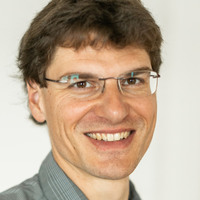
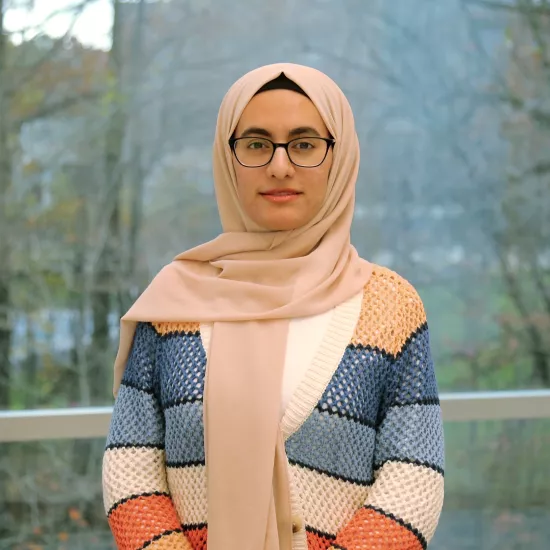
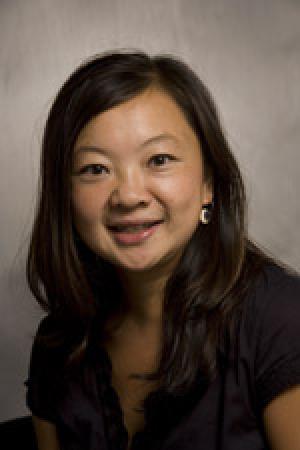
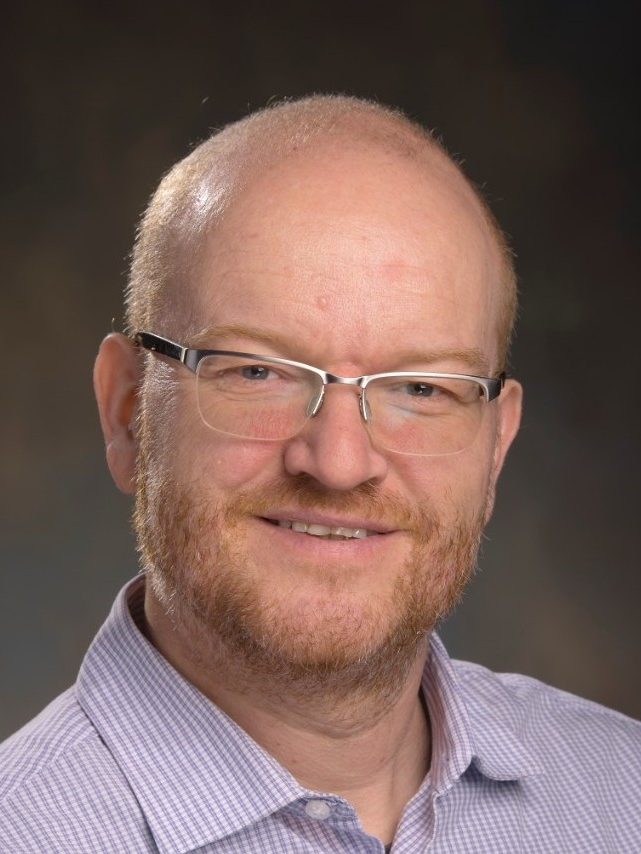
Georg Martius is a Senior Research Scientist at the Max Planck Institute for Intelligent Systems in Tübingen and a full Professor at the University of Tübingen since 2023. His work focuses on autonomous learning in embodied agents, drawing inspiration from child development to create self-motivated robotic systems. Research Areas: Model-based reinforcement learning, intrinsic motivation, deep learning, haptic sensor development, and integration of combinatorial algorithms into neural networks. Affiliations: Former postdoc at IST Austria (Christoph Lampert and Gašper Tkačik groups) and Max Planck Institute for Mathematics in the Sciences (Leipzig). Contact: georg.martius@tuebingen.mpg.de Education: PhD in 2009 (Göttingen), Computer Science studies in Leipzig and Edinburgh.
Maneesh Agrawala is the Forest Baskett Professor of Computer Science at Stanford University and Director of the Brown Institute for Media Innovation. His research spans computer graphics, human-computer interaction, and information visualization. Agrawala's lab develops computational tools for visual communication, investigating how design principles improve media effectiveness. Current projects include diffusion models for image and video generation, sketch-based interfaces, and visualization tools for scriptwriting. His team creates systems that enable new forms of content creation and analysis. His publications demonstrate consistent innovation in visual computing, with recent advances in controllable generative models, video understanding, and visualization design. Agrawala has received numerous honors including the MacArthur Fellowship and ACM Fellowship for his contributions to visual computing.
Samar Sabie is an Assistant Professor at the Institute of Communication, Culture, Information and Technology (ICCIT) at the University of Toronto, where she also serves as Program Director for the Technology, Coding, and Society (TCS) program. She holds a graduate appointment at the Daniels Faculty of Architecture, Design, and Landscape, reflecting her interdisciplinary work bridging technology, design, and social justice. She leads the Open Design Collaboratory, a research space focused on critical and community-centered design practices. Education: Doctor of Philosophy, Department of Information Science, Cornell University/Cornell Tech, 2022 Master of Science, Department of Computer Science, University of Toronto, 2017 Master of Architecture, John H. Daniels Faculty of Architecture, Landscape, and Design, University of Toronto, 2015 Honors Bachelor of Science (Architecture and Computer Science), University of Toronto, 2011 Her research investigates design as a socio-material practice that fosters community adaptive capacity toward sustainable change. Drawing from architecture, software engineering, ethnography, and philosophy, she explores participatory design , unmaking , and design for social justice . Her work critically engages with how communities resist, adapt, and reimagine technology in contexts of displacement, scarcity, and inequality. Her recent publications, appearing in top venues like CHI , CSCW , and DIS , reveal a strong thematic focus on unmaking as a design strategy for emancipation and agonism, mobility justice , e-waste practices , and cultural memory through design. These works collectively emphasize community agency, ethical ambiguity, and the political dimensions of design. Scientific Contributions: Director, Open Design Collaboratory Program Director, Technology, Coding, and Society (TCS) Graduate Faculty, Daniels Faculty of Architecture, Design, and Landscape Current Courses: CCT204 Design Thinking I, CCT477 Understanding Users Samar Sabie actively mentors students and collaborates on research focused on humanitarian technology, critical making, and design education. Her projects often involve community engagement, participatory methods, and interdisciplinary teams. She has collaborated with and advised early-career researchers such as Dina Sabie, Awais Hameed Khan, and Taneea Agrawal on topics ranging from IDP shelter dynamics to mobility justice advocacy. Her research is supported by her deep engagement with socio-technical challenges in marginalized contexts, and she continues to push the boundaries of how design can serve as a tool for equity, care, and resistance. Future work appears to be evolving toward deeper philosophical inquiries into destruction, care, and the limits of technology.
Bic Ngo is a Professor and Director of Graduate Studies in the Department of Curriculum and Instruction at the University of Minnesota . She is also the Rodney S. Wallace Professor for the Advancement of Teaching and Learning . Her research and leadership center on culturally relevant pedagogy, urban and multicultural education, and immigrant education, with a deep focus on Hmong American and Lao American communities in the Twin Cities. Education: PhD, University of Wisconsin-Madison Research Interests: Bic Ngo’s scholarship critically examines how culture, race, class, and gender shape the educational experiences of immigrant students. Her work explores how schools and educators can adopt anti-oppressive and culturally responsive practices to mitigate inequality. She draws on critical, cultural, and feminist theories, engaging with scholars like Homi Bhabha, Michel Foucault, and Judith Butler. Her ethnographic studies with Hmong and Lao American youth reveal the complexities of identity, cultural difference, and the impact of schooling on community and family life. Research Projects & Grants: Project Thrive (2020–2026): $1.5 million AANAPISI grant from the U.S. Department of Education Asian American College Excellence (AACE) Project (2016–2021): $1.75 million AANAPISI grant from the U.S. Department of Education Editorial & Leadership Roles: Co-Editor-in-Chief, Educational Studies Associate Editor, American Educational Research Journal Associate Editor, Anthropology & Education Quarterly Courses Taught: CI 8146 – Critical Ethnography in Education CI 8156 – Asian American Education CI 8155 – Immigrant Families and U.S. Schools CI 8154 – Culturally Relevant Pedagogy CI 8148 – Conducting Qualitative Studies in Educational Contexts CI 8131 – Critical Examination of Curriculum in Context
Dr. Matthias Nnadi serves as a Senior Lecturer in Accounting at Cranfield School of Management, Cranfield University, within the Department of Economics, Finance and Business Data Analytics. His academic career spans both theoretical research and practical industry applications in accounting and finance. His educational background includes a Bachelor's degree in Accounting (BSc), Master in Business Education (MEd), MBA, and PhD, complemented by Postgraduate certificates in Academic Practice and Business Enterprise. Professional memberships span multiple accounting bodies, reflecting his deep engagement with the field. Dr. Nnadi's research focuses on accounting in emerging economies, particularly examining the relevance of International Financial Reporting Standards (IFRS) in developing contexts, corporate mergers and acquisitions, and earnings management practices. His work bridges academic theory and practical application through extensive industry engagement. His scholarly output demonstrates consistent contributions to top accounting journals, with recent publications examining IFRS implementation effects, corporate sustainability impacts, and M&A performance metrics. The research shows particular strength in African and Asian emerging markets contexts. Chartered Institute of Taxation research grant recipient Seedcorn funding awardee for academic research Editorial Board member of Journal of Bonds and Derivatives As an educator, Dr. Nnadi developed the Individualised Accounting Technique (IAQ), a teaching and assessment model widely adopted in business schools for large accounting classes. His industry contributions include executive training programs on IFRS and IPSAS for both private and public sector organizations, drawing on his practical experience as former budget manager at a telecommunications company and stock accountant at a multinational corporation.
Elisabet Langmann serves as Associate Professor and Department Head at Södertörn University, Sweden, specializing in Teacher Training with research bridging educational philosophy and classroom practice. Her work critically examines ethical dimensions of schooling and democratic values implementation. Langmann holds a PhD in Educational Philosophy from Örebro University (2013), where her dissertation explored pedagogical approaches to teaching tolerance while avoiding student marginalization. Her academic journey reflects deep engagement with continental philosophy and didactic theory. Her research centers on ambiguities in democratic values (tolerance, justice, responsibility) and their classroom implications, investigating how value conflicts manifest and how supportive teaching climates emerge. Methodologically, she integrates empirical classroom observations with philosophical analysis, drawing from phenomenology and critical theory to examine sensory, affective, and ethical dimensions of learning environments. Analysis of her 2021-2025 publications reveals three evolving trajectories: sustainability education exploring climate change pedagogy; sensory-phenomenological approaches to classroom climate; and continued refinement of tolerance education frameworks. These strands converge in examining how affective dissonance and bodily experiences shape ethical learning. Langmann actively secures research funding including two Swedish Research Council projects (2020-2023): as project leader for "Forms of Upbringing" investigating bodily dimensions in value conflict resolution, and as co-investigator in "How can schools reduce unequal educational opportunities?" examining school culture in disadvantaged areas. She mentors junior researchers through international networks rather than formal student supervision. She contributes significantly to academic infrastructure as board member of the Nordic Society of Philosophy of Education, co-convenor for NERA/EERA educational philosophy networks, and peer reviewer for 12+ journals including Studies in Philosophy and Education. Her leadership extends to international research collectives like PEDST and SCAPE, focusing on democratic sustainability transitions and cultural conflicts in education.
Markus König is a Professor of Informatics in Civil Engineering at Ruhr University Bochum, where he has been researching and teaching since October 2009. His work focuses on Building Information Modeling (BIM), digital construction technologies, and civil engineering informatics, with significant contributions to the development and implementation of digital methods in German construction industry. Dr. König earned his degree in civil engineering with a focus on applied computer science at Leibniz University Hannover, where he also completed his doctorate on cooperative building planning at the Institute for Building Informatics. He subsequently held a junior professorship for Theoretical Methods of Project Management at Bauhaus University Weimar before joining Ruhr University Bochum. His research spans multiple cutting-edge areas including Building Information Modeling (BIM), construction process simulation, tunneling informatics, infrastructure asset management, and the application of artificial intelligence and computer vision in civil engineering. As chair of the Building Informatics Working Group from 2012-2016, he played a key role in developing the first national BIM curriculum for German universities and serves as editor of the book 'Building Information Modeling: Technological Foundations and Industrial Practice.' Analysis of his recent publications reveals a strong trend toward semantic technologies, digital twins, automated compliance checking, and the integration of AI in construction processes. His work increasingly focuses on information containers, ontology development, and the application of large language models to infrastructure data, reflecting the evolving landscape of digital construction. Dr. König's significant contributions to digital construction have been recognized with prestigious awards: Lower Saxony-Bremen Construction Industry Award (2017) for 'services in the development and introduction of digital construction in Germany' Konrad Zuse Medal (2020) While specific details about his advising and grant activities aren't explicitly mentioned in the provided text, his extensive publication record with numerous co-authors suggests active supervision of doctoral students and research staff. His involvement in multiple collaborative research projects is evident from his publication history. At Ruhr University Bochum, Professor König leads a research group focused on civil engineering informatics, with particular emphasis on BIM, digital construction technologies, and their application across the building lifecycle. His team appears to work at the intersection of computer science and civil engineering, developing innovative solutions for construction process optimization, infrastructure management, and digital transformation of the AEC industry.
Grethe Winther is a Professor and Head of Section in the Department of Civil and Mechanical Engineering at the Technical University of Denmark (DTU), specializing in Materials and Surface Engineering. Her research is centered on the analysis and modeling of microstructure and mechanical properties of metals, with a strong emphasis on dislocation structures, deformation textures, and recrystallization processes. Her research interests include: Dislocation structures and boundary analysis in deformed metals Crystal plasticity modeling using synchrotron data (3DXRD) Orientation relationships in recrystallization Prediction of mechanical properties in industrial metal forming Multiscale modeling of plastic deformation and surface roughening The recent articles (2025) highlight a consistent focus on advanced characterization techniques like dark-field X-ray microscopy and discrete dislocation dynamics simulations. These works explore the formation of geometrically necessary boundaries, dislocation cell evolution, and multiscale surface deformation, reflecting a strong integration of experimental and computational methods in materials science. Key themes include plastic deformation mechanisms, microstructure evolution, and predictive modeling in metallic systems. Grethe Winther actively supervises multiple PhD projects, including those on dislocation dynamics, X-ray microscopy, and ductile failure simulations. She collaborates extensively with researchers such as H.F. Poulsen and C.V. Nielsen. Her work is supported by ongoing research projects at DTU, focusing on fundamental and applied aspects of metal deformation and microstructure. She is affiliated with the Materials and Surface Engineering section at DTU, where she leads research efforts combining advanced experimental techniques with theoretical modeling to understand and predict metal behavior under deformation.
Kay C. Wiese is a Professor and Software Systems Chair at the School of Computing Science, Simon Fraser University. His research focuses on computational intelligence and bioinformatics, particularly RNA secondary structure prediction and visualization. He leads the Bioinformatics Research Lab and has contributed to RNA design and gene finding. Wiese holds a PhD in Computer Science from the University of Regina (1999) and degrees in Computer Science and Mathematics from the Universität des Saarlandes (Germany). He has extensive editorial roles, including Associate Editor for the IEEE/ACM Transactions on Computational Biology and Bioinformatics, and has organized major conferences like the IEEE Symposium on Computational Intelligence in Bioinformatics. His teaching interests include Bioinformatics, Computational Biology, and Discrete Mathematics. Wiese has supervised numerous graduate students, including Boris Shabash, Wenbo Jiang, and Andrew Hendriks. His research group developed tools like jViz.RNA for RNA visualization and SARNA-Predict for structure prediction. His work bridges computational methods with biological applications, emphasizing algorithmic innovation and practical software solutions.
Maneesh Agrawala is the Forest Baskett Professor of Computer Science and Director of the Brown Institute for Media Innovation at Stanford University. He is also a consulting AI Scientist at Roblox. His research lies at the intersection of computer graphics, human-computer interaction (HCI), and visualization, with a focus on cognitive design principles for improving audio/visual media. He leads a vibrant research group and has advised numerous PhD students and postdocs. His research interests include: Computer Graphics Human-Computer Interaction Visualization and Visual Communication Cognitive Design Principles Generative AI and Diffusion Models Interactive Video and Sketch-based Interfaces Data and Information Visualization His recent publications (2023–2025) reflect a strong trend toward leveraging generative models—particularly diffusion models—for video and image synthesis, editing, and personalization. Key themes include controllable generation (e.g., SparseCtrl, ControlNet), sketch-to-image translation, relightable texturing, and tools that enhance visual storytelling and data communication. His work integrates cognitive science with computational tools to build systems that support human creativity and understanding. His scientific honors include: MacArthur Foundation Fellowship (2009) Alfred P. Sloan Foundation Fellowship (2007) NSF CAREER Award (2007) SIGGRAPH Significant New Researcher Award (2008) Allen Distinguished Investigator Award (2014) Induction into the SIGCHI Academy (2021) ACM Fellow (2022) Okawa Foundation Research Grant (2006) A dedicated mentor, Agrawala has advised a large cohort of students and postdocs, many of whom have gone on to influential positions in academia and industry. His lab develops tools for video editing (e.g., AnimateDiff, ControlNet), sketch-based design, and visualization (e.g., EmphasisChecker), often bridging theory with practical applications in media and education. He continues to be a leading figure in visual computing and interactive systems.
Ida Zilio-Grandi is an Associate Professor in the Department of Asian and North African Studies at Ca' Foscari University of Venice, where she specializes in Arabic Language and Literature (SSD L/OR-12). She also holds teaching responsibilities in Islamic Thought and Theology (SSD L/OR-10) and has been actively involved in multiple interdisciplinary programs, including Master’s degrees in Interfaith Dialogue, Islamic Philosophy, and Mediterranean Studies. From 2019 to 2023, she served as Director of the Italian Cultural Institute in Abu Dhabi under the Ministry of Foreign Affairs, reflecting her deep engagement with cultural diplomacy. Education Graduated in Oriental Languages and Literatures (Arabic) from Ca' Foscari University of Venice. PhD in “Studies on the Middle East and the Maghreb from the founding of Islam to the Present day” at the University of Naples “L’Orientale”. Research Interests Her scholarly work centers on Quranic studies, Islamic ethics, and Arabic literature. She investigates religious figures in the Quran (e.g., Mary, Cain, Pharaoh, Jonah), Islamic moral concepts such as gratitude (šukr), patience (ṣabr), tolerance, and mercy, and the ethical dimensions of employment, speech, and hospitality. Her research draws on classical exegesis, adab literature, and contemporary Islamic thought, bridging historical analysis with modern applications. She also explores interfaith dialogue, particularly between Islam, Christianity, and Judaism, and cultural relations between the Islamic world and the West. Publication Trends Her recent publications (2020–2025) reflect a sustained focus on Islamic virtues, ethics, and Quranic interpretation. These include monographs on the moral life of Muslims, studies on Sufism in the UAE, Abraham’s legacy, and environmental ethics in Islam. Her work combines rigorous philological analysis with philosophical insight, often published in high-impact journals and academic volumes. Scientific Service and Recognition Member of the “Committee for Islam in Italy” at the Ministry of Interior (since 2015). Member of the Scientific Committee of the “Dialogue méditerranéen sur la modernité et le religieux” at Collège des Bernardins, Paris. Sits on the editorial boards of Annali di Ca’ Foscari , Islamo-Christiana , and L’opera Comune . Invited Researcher at the Pontificio Istituto di Studi Arabi e d’Islamistica (PISAI), Rome (since 2017). Advising, Grants, and Leadership She has coordinated several Master’s programs at Ca' Foscari, including the LM “Languages, Economies and Societies of Asia and Mediterranean Africa (LEISAAM)” and the international LM “MIM – Crossing the Mediterranean.” She is the Erasmus+ Coordinator for partnerships with the University of Jordan and Mohammed V University in Rabat. She led the research project The Languages of the Absolute (2011–2015), funded by Ca' Foscari University. Though no formal students are listed, her mentorship is evident through her academic leadership and editorial roles. Labs and Research Groups She is affiliated with several research centers, including the Ca' Foscari Center for Studies on Human Rights (CESTUDIR), the Center for Contemporary Middle East Studies (CEM), and the Religion, Law and Economy in the Mediterranean Area Center (REDESM). She is also a member of the Arab-Christian Research Group (GRAC) and the Lay Association for Biblical Culture “Biblia.”
Liu Ye is a Professor at The University of Queensland (UQ) within the School of Chemical Engineering. She leads the Greenhouse Gas (GHG) research program at UQ Urban Water Engineering and has secured over AU$10M in competitive research funding. Her work focuses on achieving net-zero emissions through innovations in urban wastewater systems, with collaborations spanning 15+ water utilities, governments, and technology firms like Suez and Veolia. Research Areas: Greenhouse gas mitigation, sludge minimization, biogas production, advanced biological nutrient removal, online process control, and resource recovery from wastes. Key Awards: Research Innovation Award (Australia Water Association), UQ Foundation Research Excellence Award, EAIT Faculty Teaching Excellence Award, and Fellow of the Royal Society of Chemistry (RSC). Teaching: Courses include CHEE2020 (Process Equipment and Control), CHEE2501 (Environmental Systems Engineering I), CHEE4012 (Industrial Wastewater Management), and thesis supervision. Leadership: Associate Editor for Environmental Science: Water Research and Technology , member of IWA Strategic Council, and contributor to industry peak bodies like WSAA and WaterRA. Recent Articles: Her 2025 publications highlight strategies for balancing energy recovery with GHG emissions, systematic frameworks for N2O quantification, and advancements in phosphorus removal. Earlier works (2024–2022) explore electrochemical iron applications, ferric salt enhancements, and hybrid modeling techniques combining mechanistic and deep learning approaches. Scientific Impact: Her research has driven a 35% reduction in N2O emissions at an Adelaide treatment plant, saving $50M annually, and pioneered free nitrous acid (FNA) technology for biofilm control and sludge reduction.
Ed Chien is an Assistant Professor at Boston University's Department of Computer Science within the College of Arts & Sciences. He specializes in applying differential geometry and topology to graphics, computational engineering, and machine learning. Previously, he was a postdoctoral researcher at MIT's CSAIL and Bar-Ilan University. His work focuses on mathematically rigorous solutions to problems in geometric data processing and optimal transport. Education PhD in Mathematics, Rutgers University (2015) A.B. in Mathematics & Physics, Dartmouth College (2009) Research Highlights Dr. Chien's research includes fundamental studies on hexahedral mesh topology for Finite Element Modeling, optimal transport applications in machine learning, and singularity-free geometric algorithms. His work bridges theoretical mathematics with computational tools for engineering and graphics. Publications span top venues like NeurIPS, Eurographics, and SIGGRAPH, reflecting contributions to geometry processing and machine learning intersections. Program committee roles include Eurographics SGP (2019) and AAAI (2020). Awards & Recognition No specific awards listed, but notable service includes program committee memberships and peer-reviewed contributions to leading conferences. Grants & Advising Active in mentoring through academic positions but no explicit grant details provided. Research focuses on advancing geometric algorithms and optimal transport methodologies.
Jacob R. Hall is an Assistant Professor in the Salmon P. Chase Center for Civics, Culture, and Society at The Ohio State University. His research lies at the intersection of Political Economy, Law & Economics, and Economic History, with a particular focus on long-term economic growth and institutional development. He employs spatial and network data extensively in his empirical work, drawing on both European and American historical contexts. His research interests center on understanding the deep historical roots of economic and political institutions. He investigates questions related to the emergence of the state, the evolution of legal systems, the impact of social orders on violence, and the economic consequences of major historical transformations such as the Neolithic Revolution, the Commercial Revolution, and the Industrial Revolution. His methodological toolkit includes quantitative analysis of historical datasets, particularly those involving geography and social networks. While no specific publications are listed, his research trajectory is evident from his teaching materials and the datasets he references, which include resources like the English Medieval Crop Yields Database, the Gazetteer of English Markets and Fairs, and the Domesday Book. His work bridges economics, history, and data science, aiming to provide rigorous empirical answers to fundamental questions in social science. Hall has developed comprehensive lecture notes for undergraduate courses, including Global Economic History , which covers topics from the Malthusian economy to the 20th century, and The Economics of the Law , which applies economic principles to property, contracts, torts, and legal systems. He has also given talks on the Great Depression and the relationship between institutions and economic growth. His academic background includes a PhD in Economics from George Mason University (2023) and a postdoctoral fellowship at the University of Pennsylvania and the Penn Initiative for the Study of Markets. He maintains an active online presence through a personal website and GitHub, where he shares teaching materials and code, indicating a commitment to open scholarship and educational resource development. He is affiliated with professional organizations and resources in economic history, such as the Economic History Association and the Economic History Society, and engages with tools for GIS, network analysis (e.g., igraph), and web scraping. Although no formal advising relationships, grants, or scientific awards are mentioned in the provided text, his position and research program suggest active involvement in the academic community.
Shuangping Li is an Assistant Professor in the Department of Statistics and Data Science at Yale University. She was previously a Stein Fellow in the Department of Statistics at Stanford University (2022–2025). Her research lies at the intersection of probability theory, high-dimensional statistics, theoretical machine learning, and the theory of algorithms. Ph.D. in Applied and Computational Mathematics, Princeton University (2022) B.Sc. in Mathematics, University of Hong Kong Her research interests include probability theory , high-dimensional statistics , theoretical machine learning , and theory of algorithms . She investigates foundational aspects of random constraint satisfaction problems, neural networks, spectral methods, and phase transitions in high-dimensional models. Her work often draws from statistical physics and combinatorics to explain algorithmic behavior. The recent articles highlight a strong focus on binary perceptrons , clustering in network models , and algorithmic phase transitions . Keywords across publications include probability, theoretical computer science, machine learning, and statistical inference. Subfields reveal deep engagement with spin glass theory, discrepancy minimization, spectral embedding, and information-computation gaps. Scientific awards include: Stein Fellow, Department of Statistics, Stanford University (2022–2025) She has advised and taught at both Stanford and Yale, including courses such as Advanced Probability , Theory of Probability , and Stochastic Processes . She has organized seminars at Stanford and has delivered invited talks at institutions including Cornell, Duke, UC Berkeley, and Princeton. Her collaborative research involves prominent scholars such as Allan Sly, Emmanuel Abbe, and Tselil Schramm. There is no mention of external grants, but her postdoctoral fellowship suggests research funding support. She is involved in academic service through organizing the Stanford Statistics and Probability Seminars. She maintains an active research presence with publications in top venues like STOC, FOCS, COLT, ICLR, and journals such as Annals of Probability and Annals of Statistics .