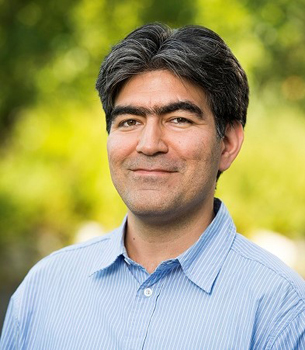
Drew A. Torigian is a Professor of Radiology at the Perelman School of Medicine, University of Pennsylvania, with extensive contributions to medical imaging research. His work focuses on developing advanced methodologies for PET/CT image analysis, disease quantification, and anatomical segmentation through innovative applications of deep learning and computer vision techniques. Dr. Torigian's research interests span multiple critical areas in medical imaging including quantitative image analysis, PET/CT applications, deep learning in medicine, radiation therapy planning, and anatomical segmentation. His work has significantly advanced the field of medical image analysis through the development of novel algorithms for disease quantification without explicit object delineation, standardized anatomic space frameworks, and attention-based neural networks for medical image interpretation. His recent publications demonstrate a strong trend toward integrating artificial intelligence with medical imaging, particularly in developing gaze-guided neural networks, geographical attention mechanisms, and hybrid transformer-convolutional architectures for improved medical image analysis. These works consistently address critical challenges in radiology including disease quantification, anatomical segmentation, and the development of clinically interpretable AI models. Dr. Torigian has received recognition through his substantial publication record in top-tier medical imaging venues including Medical Image Analysis, IEEE Transactions on Biomedical Engineering, and leading medical imaging conferences. His research has been consistently funded through various mechanisms supporting innovation in medical imaging technology. Through his mentorship and collaborative research, Dr. Torigian has contributed to advancing the field of medical imaging with practical applications in radiation therapy planning, disease quantification, and the development of standardized methodologies for image analysis. His work bridges the gap between computer science innovation and clinical radiology applications.