
Dr. Jiayan Qiu is a Lecturer (Assistant Professor) at the University of Leicester's College of Computing and Mathematical Science. Previously, he was a postdoctoral research fellow collaborating with Prof. Zhou Wang at the University of Waterloo's Department of Electrical & Computer Engineering. He holds a Ph.D. from the University of Sydney (USYD), advised by Prof. Dacheng Tao, and completed his MPhil and Honorable B.S. at the Australian National University (ANU). His research focuses on computer vision, machine learning, and artificial intelligence, with notable contributions to visual relationship modeling, image outpainting, depth estimation, and generative models. His work has been published in top-tier venues like IEEE TPAMI, CVPR, ECCV, and ACM KDD. Professional service activities include serving as a reviewer for prestigious journals (e.g., IEEE T-PAMI, T-IP) and conferences (CVPR, ICCV, NeurIPS), as well as a member of program committees for leading AI conferences. He also contributes to academic leadership as a Guest Editor for Frontiers in Signal Processing and MDPI-Electronics .
جستوجوی استاد و پژوهشگر
استاد راهنما، استاد دانشگاه یا پژوهشگر مناسب برای مسیر پژوهشیتان را پیدا کنید و با او ارتباط بگیرید.
نمایش ۶۶۱-۶۷۵ از ۳٬۳۱۱ استاد راهنما
اطلاعات این پروفایلها از صفحات عمومی دانشگاهها جمعآوری شده و ممکن است بهروز نباشد.
MARIA JESUS GOMEZ GARCIA is an Associate Professor and Secretary of the Department of Mechanical Engineering at the University Carlos III of Madrid. Her research focuses on railway axle diagnostics, multibody system dynamics, and machine learning applications in mechanical systems. She has published extensively on vibration analysis, wavelet transforms, and condition monitoring. Research Trends: Recent articles emphasize railway safety (fatigue crack detection, driveshaft diagnostics), computational techniques (wavelet packet transform, neural networks), and biomedical engineering intersections (tumor microenvironment analysis, oral allergy studies). Contact: Email - mariajesus.gomez@uc3m.es | Phone: 916248380 | Office: 1.1.H22 Agustin de Betancourt, Leganés Campus.
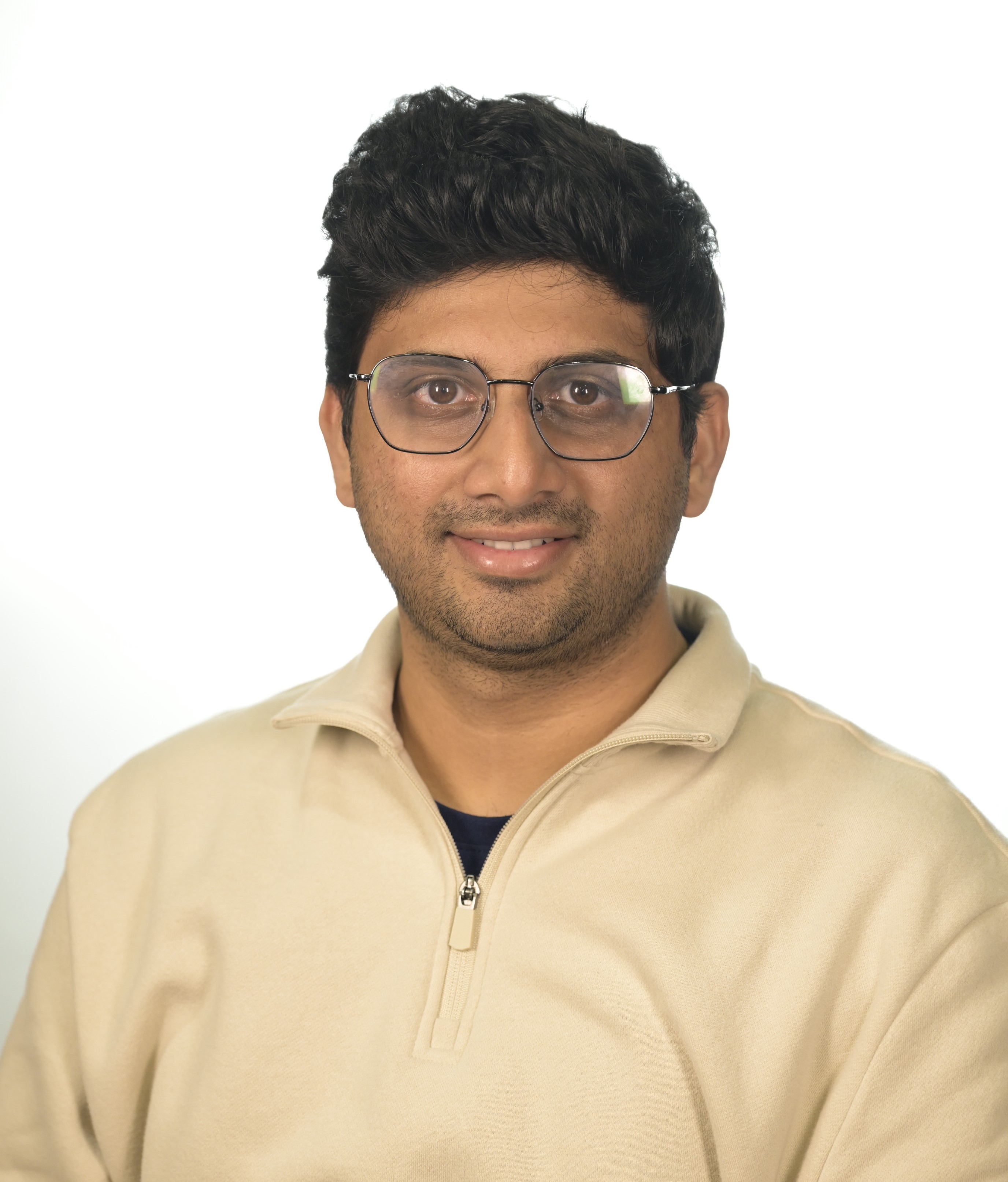
Krishna Teja Chitty-Venkata is a Postdoctoral Researcher at the Argonne Leadership Computing Facility (ALCF), Argonne National Laboratory, USA, where he works in the AI/ML team (formerly Data Science group). His research lies at the intersection of systems and machine learning, focusing on optimizing neural network training, finetuning, and inference on general-purpose and AI-specific hardware platforms. He is actively involved in AI for science applications and high-performance computing for AI (HPC for AI). Education: PhD in Computer Engineering, Iowa State University, 2017–2023 Bachelor of Engineering in Electronics and Communication Engineering, University College of Engineering, Osmania University, Hyderabad, India, 2013–2017 Research Interests: Krishna's research spans hardware-aware inference optimization of deep neural networks, enhancing training and finetuning of large language models (LLMs) and vision-language models (VLMs), neural architecture search (AutoML), pruning and quantization techniques, performance modeling, and AI for science. He is particularly interested in efficient adaptation methods such as LoRA-NAS integration, structured pruning (e.g., WActiGrad), and KV cache optimization (e.g., Paged Compression). Publication Trends: His recent work emphasizes benchmarking and optimization of LLMs on diverse AI accelerators (e.g., LLM-Inference-Bench), developing scalable frameworks for CNN and ViT evaluation (ConVision Benchmark), and advancing structured pruning and mixed-precision search methods. His publications span high-impact journals and conferences in computer science, AI, and systems, reflecting a strong focus on practical, hardware-aware solutions for deep learning efficiency. Scientific Contributions: Developed LLM-Inference-Bench for evaluating LLM performance across hardware and frameworks. Created ConVision Benchmark for standardized evaluation of CNNs and Vision Transformers. Proposed WActiGrad, a structured pruning method for efficient LLM finetuning and inference. Introduced Paged Compression for efficient KV cache management in vLLM. Designed LangVision-LoRA-NAS for optimizing VLMs via NAS-integrated adapters. Professional Experience and Advising: Krishna has been mentored by Prof. Arun K. Somani (Iowa State) and supervisors Murali Emani and Venkatram Vishwanath at Argonne. He has interned at AMD, Intel, and Argonne, contributing to deep learning optimization projects. While no formal students are listed, he has co-authored multiple papers with researchers and students, indicating collaborative advising. He has no publicly listed grants, but his work at Argonne is likely supported by institutional and DOE funding. Labs and Teams: He is part of the AI/ML team within the Argonne Leadership Computing Facility, a premier HPC and AI research division. His work involves close collaboration with teams developing AI accelerators and scientific applications, positioning him at the forefront of AI for science initiatives.
Hilda Deborahمشاهده پروفایل
عضو هیئت علمی
Hilda Deborah is a Senior Researcher at the Department of Computer Science (IDI Gjøvik), Norwegian University of Science and Technology (NTNU). Her research focuses on spectral imaging, mathematical morphology, and soft metrology for image processing, with current interests in texture perception, digital humanities, and public dissemination of imaging research through interaction design. Education: She holds a double PhD in Computer Science from NTNU (2016) and a PhD in Signal and Image Processing from Université de Poitiers (2016). Professional History: Marie Curie Postdoctoral Fellow (2018-2020) under the FRIPRO Mobility program, funded by the Research Council of Norway. She is currently part of NTNU's Outstanding Academic Fellow Programme 4.0 (2022-2026). Research Interests: Her work spans spectral imaging applications in cultural heritage, including pigment analysis, hyperspectral dataset development, and museum visitor experience studies using imaging data. She also explores interdisciplinary methods for digital humanities and public engagement. Awards: Marie Curie Postdoctoral Fellowship, FRIPRO Mobility Grant (2018-2022), and participation in the FRIPRO Toppforsk project (2019-2024). Grants: FRIPRO Mobility (2018-2022) and Toppforsk (2019-2024) grants from Norway's Research Council. Projects include metrological texture analysis and collaborations on Dead Sea Scrolls research. Labs/Teams: Member of the Colourlab at NTNU, focusing on imaging science and cultural heritage applications. Leads initiatives like the Hyperspectral Pigment Dataset and interactive visualization tools for cultural heritage data.

Yuye Lingمشاهده پروفایل
دانشیار
- Optical coherence tomography
- Computational imaging
- Biomedical image processing and analysis
- +۲ مورد دیگر
Dr. Yuye Ling is an Associate Professor in the School of Electrical and Computer Engineering at the University of Oklahoma (OU), part of the Gallogly College of Engineering. He previously held academic positions at Columbia University (postdoc) and Shanghai Jiao Tong University (Assistant/Associate Professor). His research focuses on computational optical imaging, particularly optical coherence tomography (OCT) and holography, with applications in biomedical imaging and 3D display technologies. He holds a Ph.D. in Electrical Engineering from Columbia University (2018), an M.S. from UCLA (2013), and a B.E. from Shanghai Jiao Tong University (2011). His research interests include developing advanced optical systems and algorithms for medical diagnostics, leveraging machine learning and optimization techniques. Dr. Ling has been recognized with awards such as the Optica Women Scholar and Best Paper Awards at SPIE conferences. He advises multiple students, including Jiaxuan, Mengyuan, Zhenxing, and others, and serves on the editorial boards of journals like Optica and Biomedical Optics Express . Key contributions include Motion Hologram (Science Advances, 2024) and Monte Carlo-based OCT simulations . His work bridges computational imaging with medical applications, emphasizing real-time processing and photorealistic visualization. Dr. Ling actively engages in academic outreach, including a recent talk at OU’s Data Institute for Societal Challenges.
Kehan Gao serves as a Professor in the Department of Computer Science at Eastern Connecticut State University, teaching Software Engineering, Databases and Information Management, and Data Structures and Algorithms courses. Her research focuses on: Software Engineering and Reliability Software Quality Engineering Data Mining & Machine Learning Computational Intelligence Software Metrics With over 80 refereed publications, she specializes in software defect prediction using feature selection and data sampling techniques to address class imbalance. Recent work (2014-2025) extends these methodologies to Mars image classification and COVID-19 severity assessment, demonstrating cross-domain applicability of her ensemble learning approaches. No scientific awards were documented in available materials. Information regarding student advising, research grants, and laboratory affiliations was not provided in the source text.
Riccardo Cantoro is an Associate Professor in the Department of Control and Computer Science (DAUIN) at Politecnico di Torino, where he is a member of the College of Computer, Film and Mechatronics Engineering and the College of Mechanical, Aerospace and Automotive Engineering. He is affiliated with the CAD - Electronic CAD & Reliability Group and the CARS@PoliTO Interdepartmental Center for Automotive Research and Sustainable Mobility. His work bridges academic research and industrial applications through multiple commercially funded projects. Scientific Disciplinary Sector: IINF-05/A - Information Processing Systems ERC Sectors: PE7_4, PE6_2, PE6_11, PE6_12 His research focuses on functional safety, functional testing, and microprocessor testing, with a strong emphasis on embedded systems and reliability. He applies machine learning and formal methods to enhance test efficiency and system robustness, particularly in automotive and safety-critical domains. His work integrates computer-aided design, fault modeling, and resilience assessment in both hardware and AI systems. The recent publications highlight a trend toward data-efficient and intelligent testing methodologies, combining machine learning (e.g., TabPFN, active learning) with traditional electronic design automation. Topics include microcontroller performance screening, CNN resiliency, FeFET device testing, and system-level test optimization, reflecting a cohesive research agenda in trustworthy computing and hardware reliability. Scientific Awards: No awards explicitly mentioned in the provided texts. Advising and Grants: Dr. Cantoro supervises numerous PhD students in Computer and Systems Engineering, focusing on functional safety, test methodologies, and AI for CAD. He leads multiple industry-funded research projects, including collaborations with Infineon Technologies and Dana-TM4 Italia, on topics such as ATPG tools, speed monitor modeling, and power module reliability. His role as Scientific Manager/Head underscores his leadership in applied research and technology transfer. Labs and Teams: He is a core member of the CAD - Electronic CAD & Reliability Group (DAUIN) and contributes to the CARS@PoliTO center, fostering interdisciplinary research in automotive systems and sustainable mobility.
- Computer Vision
- Artificial Intelligence
- Robotics
- +۷ مورد دیگر
Christopher McCarthy is an Associate Professor in the Department of Computing Technologies within the School of Science, Computing and Emerging Technologies at Swinburne University of Technology. His research focuses on computer vision algorithms applied to robotics, intelligent transport systems, and assistive technologies, particularly for people with low vision. He serves as Stream Leader in Swinburne’s Innovative Planet Research Institute, leading the Intelligent Transport stream, and is a Chief Investigator in the Australian Cobotics Centre funded by the ARC. He has held research roles at CSIRO Data61, the Bionics Institute, and the University of Melbourne, contributing to bionic eye technology under the Bionic Vision Australia consortium. His research interests include: Computer Vision and AI for real-time systems Robot perception and navigation Assistive technologies for low-vision and blind users Intelligent transport systems and video analytics Human-machine interaction and cyber-human teams His recent publications reflect strong trends in deep learning, continual learning, and real-world deployment of vision systems in transport and healthcare. He has led numerous field trials and evaluations to assess system performance in real-world contexts. His work is highly interdisciplinary, combining computer science with engineering, medicine, and urban planning. Christopher McCarthy has received multiple awards, including: FSET Research Collaboration Award Excellence in Industry Engagement Special Commendation – VC Research Impact Finalist – National Disability Award in Technology Best Paper Award (IEEE) Excellence in Teaching (University of Melbourne) He has supervised over 20 HDR students in areas including robotics, AI, assistive tech, and transport analytics. He has led major research grants from ARC, Defence, SmartCrete CRC, iMOVE, and city councils. He also served as Academic Director for Work-Integrated Learning (2016–2023) and coordinated professional placements. His teaching includes core computer science units such as Computer Systems and Object-Oriented Programming. He maintains ongoing affiliations with: Bionics Institute (Honorary Member) Bionic Vision Australia (Affiliate) Data61 (Honorary Member) Royal Children's Hospital, Melbourne International Task Force for Vision Restoration Outcomes (Chair)
Neslihan Bayramogluمشاهده پروفایل
عضو هیئت علمی
Neslihan Bayramoglu is a Senior Research Fellow at the Research Unit of Health Sciences and Technology (HST), Faculty of Medicine, University of Oulu, Finland. She was awarded the title of Docent in Medical Imaging in 2022. Her research spans artificial intelligence, machine learning, and computer vision, with a focus on medical imaging and musculoskeletal diseases. Key areas include deep learning for histopathology image analysis, computer-assisted diagnosis, image processing, shape analysis, segmentation, classification, and 3D image retrieval. She has pioneered early applications of deep learning in breast cancer histopathology and is currently advancing machine learning approaches for osteoarthritis (OA) analysis using imaging and clinical data. Her recent publications emphasize deep learning techniques for OA progression prediction, radiographic segmentation, and lightweight CNN architectures for diagnostic efficiency. She has contributed to transfer learning in histopathology and GAN-based virtual tissue staining. Scientific awards include the Docent title in Medical Imaging (2022). She teaches graduate-level machine learning courses and supervises M.Sc. and doctoral students. Her work aligns with the Diagnostics of Osteoarthritis (DIOS) research group and involves collaboration on musculoskeletal health projects.
Professor Stephan Chalup is a leading academic in Artificial Intelligence and Machine Learning at the University of Newcastle , affiliated with the School of Information and Physical Sciences and the Data Science and Statistics department. He leads the Interdisciplinary Machine Learning Research Group (IMLRG) and the Newcastle Robotics Lab , where his team has achieved global recognition, including two RoboCup world championships. PhD in Computing Science , Queensland University of Technology (2002) Diplom in Mathematics with Neuroscience , University of Heidelberg His research focuses on artificial neural networks , deep learning , and high-dimensional data analysis , with applications in robotics, computer vision, medical imaging, and architectural analysis. He investigates how biological neural systems inspire robust AI models, particularly in topological data analysis and 4D vision . The recent publications highlight a strong trend in topological and geometric machine learning , with a focus on 4D data analysis , multi-agent reinforcement learning , and robot perception . His work bridges theoretical AI with practical industry solutions in transport, healthcare, and robotics. RoboCup World Champion (2008, 2006) Leadership Excellence, CESE (2024) Supervision Research Excellence Award (2015) Multiple Best Student Paper Awards (2019, 2018, 2011) Chalup has supervised numerous students and led significant research projects, including the ARC Discovery Project on estimating topology of low-dimensional data. His lab fosters interdisciplinary collaboration and innovation, with alumni working in top global tech roles. He is an active keynote speaker and program committee member in major AI conferences. His labs, including the Newcastle Robotics Lab , are equipped with state-of-the-art robots and computing systems, supporting cutting-edge research in humanoid robotics, autonomous navigation, and AI-driven data analysis.

Manish Patelمشاهده پروفایل
پژوهشگر ارشد
- Machine Learning
- Computer Vision
- Remote Sensing
- +۴ مورد دیگر
Manish Patel is a Research Fellow at CSIRO's Ag & Food Division , where he integrates computer vision, machine learning, and artificial intelligence to develop high-throughput crop disease detection systems. Previously, he worked as a research assistant at the University of Melbourne on nutrient and leaf area index sensing for crop modeling. His research focuses on remote sensing of vegetation , canopy nitrogen concentration modeling , and AI-driven agricultural technologies , combining data mining , deep learning , and crop physiology to create cross-growth-stage and cross-crop-type models. His publications highlight advancements in multispectral/hyperspectral imaging and machine learning applications for crop health monitoring , with recent work on YOLO-v8-based disease phenotyping and waveband contribution analysis for nitrogen estimation. While no formal scientific awards are explicitly mentioned, his contributions span diverse subfields like precision agriculture , vegetation indices , and agricultural data science .
- Artificial Intelligence
- Biometrics
- Medical Imaging
- +۶ مورد دیگر
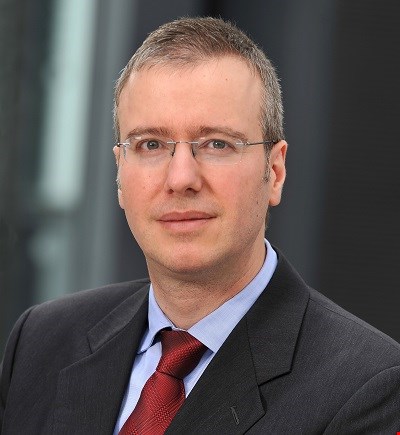
Dr. Nikolaos V. Boulgouris is an Associate Professor (Reader) in the Department of Electronic and Electrical Engineering at Brunel University of London , where he has been since 2010. Prior to this, he was an academic staff member at King's College London (2004–2010) and a researcher at the University of Toronto (before 2004). His research focuses on Artificial Intelligence , Biometrics , Signal/Image Processing , and Medical Imaging , with applications in Autonomous Systems , Security Surveillance , and Biomedical Engineering . Research Interests include: Explainable AI and Large Language Models Gait and Biometric Recognition EEG and Brain Signal Analysis Cochlear Implant Robotics Deep Learning in Medical Imaging Visual Interaction for Autonomous Vehicles Recent Publications highlight advancements in person re-identification (2022), gait analysis (2013, 2009), autonomous driving prediction (2019), and LLM hallucination assessment (2025). His work bridges computer vision , machine learning , and signal processing across diverse domains. Scientific Awards include the Best Associate Editor Award (2017) from IEEE Transactions on Circuits and Systems for Video Technology , Senior Member of IEEE , and Fellow of the Higher Education Academy . PhD Supervision opportunities are available through the Brunel-CSC Scholarship for Chinese students and other funding channels. He has supervised over 30 PhD examinations globally. Professional Activities encompass editorial roles (e.g., Senior Area Editor, IEEE Transactions on Image Processing ), leadership in IEEE Technical Committees , and organizing chairs in major conferences like IEEE ICIP and IEEE ICASSP .

ANDREA TIGRINIمشاهده پروفایل
پژوهشگر
Andrea Tigrini serves as a Researcher in the Department of Information Engineering at Marche Polytechnic University's School of Engineering in Ancona, Italy. His scientific sector is Bioengineering (IBIO-01/A), with research spanning biomedical signal processing and human motion analysis. Dr. Tigrini's research interests focus on the intersection of biomedical engineering and machine learning, particularly in developing innovative approaches for human motion analysis through electromyography (EMG) and inertial sensing. His work emphasizes creating minimal-sensor solutions for practical applications in rehabilitation technologies, gait analysis, and assistive devices. He investigates neuromuscular control mechanisms during various activities including walking, balance maintenance, and hand gestures. Analysis of his recent publications (2023-2025) reveals a strong trend toward developing accessible diagnostic and assistive technologies using machine learning approaches. His research consistently addresses real-world challenges in diabetic neuropathy detection, prosthetic control, and rehabilitation monitoring, with particular emphasis on creating solutions that require minimal sensor setups to enhance practicality and adoption in clinical settings. His work demonstrates significant contributions to understanding the relationship between neuromuscular signals and movement patterns, with applications spanning rehabilitation engineering, human-computer interaction, and clinical diagnostics. The interdisciplinary nature of his research bridges engineering principles with physiological understanding to create practical healthcare solutions.

Khandakar Ahmed is an Associate Professor of Information Technology at Victoria University's College of Arts, Business, Law, Education & IT (CoABLEIT) and Discipline Leader for Emerging Trends in Science, IT & Engineering at the Institute for Sustainable Industries and Liveable Cities (ISILC). His career spans roles at Victoria University (2017–present), RMIT University (2015–2017), and Shahjalal University of Science and Technology (2007–2015). Education: PhD in Electrical and Computer Engineering (RMIT University, 2014), MSc in Networking and e-Business Centered Computing (University of Reading, 2009), BSc in Computer Science and Engineering (Shahjalal University of Science and Technology, 2007) His research expertise includes Artificial Intelligence, Cyber Security, Digital Health, Federated Learning, Quantum Computing, and the Internet of Things . He has published over 100 refereed papers with 4,200+ citations (h-index 32) and secured $3.4 million+ in funding since 2018 from partners like Australia's Economic Accelerator and Western Health. His recent work focuses on AI-driven mental health analysis , blockchain security frameworks , and edge computing optimizations . He serves as lead supervisor for 6 PhD and 1 Master of Research student and has mentored over 100 students through industry-linked projects. Dr Ahmed actively contributes to editorial roles for leading journals such as Scientific Reports , IEEE Transactions , and ACM Computing Surveys . His research aligns with UN Sustainable Development Goals 3 (Good Health), 9 (Industry Innovation), and 11 (Sustainable Cities).

- Hydrology
- Remote Sensing
- Environmental Science
- +۵ مورد دیگر
Ardeshir Ebtehaj is an Associate Professor at the University of Minnesota's College of Science & Engineering, Department of Civil, Environmental and Geo-Engineering. He leads the Hydrologic Sciences and Remote Sensing (HydSens) Laboratory at the Saint Anthony Falls Laboratory (SAFL) and serves as Editor of the Journal of Hydrometeorology. His research integrates physical models with data science to address sustainable water, food, and energy systems. Education: Postdoctoral Research, Georgia Institute of Technology Ph.D., University of Minnesota, Water Resources and Hydrology M.Sc., University of Minnesota, Mathematics M.Sc., Iran University of Science and Technology, Environmental Engineering M.Sc., Iran University of Science and Technology, Structural Engineering B.Sc., Iran University of Science and Technology, Civil Engineering Research Interests: Electromagnetic hydrology, satellite hydrometeorology, microwave remote sensing, inverse problems, land-atmosphere interactions, climate intelligence, and machine learning applications for water and environmental monitoring. Awards & Grants: Recent funding from NASA (Arctic ecohydrology modeling, SMAP program) and USACE (Harmful Algal Blooms detection). Collaborations: HydSens team at SAFL, NASA Goddard Space Flight Center, University of Alaska.
فقط ۷۵۰ نتیجه اول نمایش داده میشود. برای رسیدن به نتایج دقیقتر، جستوجو را با فیلترها محدودتر کنید.