Sebastian Schemm is a Heisenberg Fellow at the Department of Applied Mathematics and Theoretical Physics (DAMTP), University of Cambridge, a position regarded as equivalent to a non-permanent Associate Professor. He leads research within the Atmosphere-Ocean Dynamics group and previously held an ERC Starting Grant-funded Assistant Professorship (without tenure track) at ETH Zurich. Education and Career Path PhD (2013) and MSc (2010), ETH Zurich, Switzerland Postdoctoral researcher, University of Bergen, Norway (2014–2017) Postdoctoral researcher, Laboratoire de Météorologie Dynamique, ENS Paris (2017–2018) Assistant Professor (ERC Starting Grant), ETH Zurich (2020–2024) Heisenberg Fellow, DAMTP, University of Cambridge (2025–present) Research Focus Schemm’s work centres on atmospheric and climate dynamics, spanning turbulence to planetary scales. Core themes include the physics of extratropical cyclone life cycles, jet-stream and storm-track dynamics, Rossby waves and teleconnection patterns, high-resolution atmospheric modelling, and the integration of machine-learning techniques for parameter estimation, data assimilation, and kilometre-scale global simulations. He also contributes to large-scale initiatives such as ECMWF’s WeatherGenerator. Scientific Awards and Editorial Service DFG Heisenberg Fellowship (2025) ERC Starting Grant (2020–2024) European Meteorological Society Young Researcher Medal (2019) Co-Editor, Weather and Climate Dynamics (EGU) Co-Editor, Quarterly Journal of the Royal Meteorological Society PhD Supervision & Funding He currently supervises PhD students at both Cambridge and ETH Zurich, with funding streams including the Cambridge CREATES Doctoral Training Partnership and Swiss/EU grants. Ongoing students explore reinforcement-learning parameterisations, jet-stream–storm-track relationships, mid-latitude eddy energetics, machine-learning ensemble forecasting, and Bayesian parameter estimation in LES. Active Projects EU Horizon project WeatherGenerator (led by ECMWF) PASC HiRAD-Gen : High-Resolution Atmospheric Downscaling Using Generative Models
David J. Stensrud is a Professor of Meteorology and Atmospheric Science at Pennsylvania State University, where he has been a faculty member in the Department of Meteorology and Atmospheric Science within the College of Earth and Mineral Sciences. His research focuses on advancing our understanding of severe weather phenomena and improving numerical weather prediction capabilities. Dr. Stensrud received his academic training at Penn State, earning his M.S. in Meteorology in 1985 and his Ph.D. in Meteorology in 1992. His educational background has provided the foundation for his extensive research career focused on atmospheric dynamics and prediction. Dr. Stensrud's research spans several critical areas in atmospheric science, with particular emphasis on mesoscale meteorology , numerical weather prediction , and synoptic meteorology . He is internationally recognized for his work on ensemble forecasting , where he explores how groups of numerical weather prediction models can provide probabilistic forecasts of severe weather events. His research on convective-scale data assimilation aims to improve how observations from radar and satellites are incorporated into high-resolution weather models. Additional research interests include the physical processes behind severe weather phenomena like derechos and heavy rainfall events, the predictability of convective-scale phenomena, and the dynamics of the North American monsoon system. He has made significant contributions to understanding how urban environments influence thunderstorms and how convective systems interact with their larger-scale environment. Analysis of Dr. Stensrud's recent publications reveals a consistent focus on improving severe weather prediction through advanced data assimilation techniques. His work primarily centers on integrating radar and satellite observations into convection-allowing models to enhance forecasting capabilities for thunderstorms and other severe weather phenomena. A notable trend in his research is the increasing sophistication of ensemble approaches to address uncertainties in both initial conditions and model physics. His publications demonstrate a progression from fundamental studies of mesoscale phenomena to increasingly operational applications with potential for real-world forecasting improvements. Dr. Stensrud has served in several important professional capacities that highlight his standing in the meteorological community: Chair, Storm-scale Radar Data Assimilation Workshop, Norman, Oklahoma, October 2011 Member, NOAA/NWS Functional Weather Radar Requirements Integrated Working Team, 2012-2013 Guest Editor, Advances in Meteorology, Special Issue on "Storm-scale data assimilation and NWP", 2013 Commissioner, Scientific and Technological Activities Commission, American Meteorological Society, 2016-2017 Dr. Stensrud has authored more than 150 peer-reviewed publications and a textbook entitled "Parameterization Schemes: Keys to Understanding Numerical Weather Models." He has been actively involved in mentoring graduate students, though specific names of advisees are not provided in the available information. In collaboration with colleagues at Penn State, he helped create a 20-station environmental monitoring network across Pennsylvania with plans to expand to 50+ stations. His research has been supported by various grants that have enabled field campaigns such as the Mesoscale Predictability Experiment (MPEX) in 2013, where his team intercepted severe thunderstorms to collect critical observational data. Dr. Stensrud is involved with several research teams and facilities at Penn State, including work with the Joel N. Myers Weather Center and the Bob and Charlotte Landis Broadcast Room. His research group focuses on analyzing data from dual-polarization radar systems and developing improved techniques for assimilating these observations into convection-allowing models. He collaborates extensively with other researchers at Penn State and beyond, particularly in studies involving the interactions between urban environments and thunderstorms, and the upscale effects of deep convection on larger-scale weather patterns.
Tom Beucler is a Conditional Pre-Tenure Assistant Professor in Geo-Environmental Data Science at the University of Lausanne’s Institute for Earth Surface Dynamics (IDYST). He holds a Master’s degree in Science and Mechanics from École Polytechnique (2014) and a PhD in Atmospheric Science from MIT (2019). Postdoctoral research at Columbia University and UC Irvine focused on machine learning applications in climate science under Professors Pierre Gentine and Michael Pritchard. Research Interests: Climate informatics, atmospheric physics, fluid dynamics, tropical meteorology, and integrating machine learning into climate models for extreme weather prediction and hydrological cycle modeling. Collaborations: Works with environmental scientists and computer engineers to improve climate models using neural networks and causal discovery methods. Initiatives: Organizes weekly brainstorming sessions to promote machine learning adoption in environmental sciences. Publications span climate-invariant machine learning, data-driven parameterizations, and hybrid AI-climate modeling frameworks like ClimSim. His work emphasizes causal consistency and generalizability across climate conditions.
Steven Greybush is an Associate Professor in the Department of Meteorology and Atmospheric Science at Pennsylvania State University, College of Earth and Mineral Sciences. He is based in University Park, PA, and his research bridges atmospheric science, climate modeling, and interdisciplinary applications. He leads and contributes to major research initiatives involving AI-enhanced weather forecasting, planetary meteorology, and climate impacts on water and health systems. His research interests include Atmospheric Science , Climate Modeling , Data Assimilation , Planetary Meteorology (especially Mars) , Lake-Effect Snowbands , Tropical Cyclones , and Climate-Health Interactions . His work applies advanced techniques such as the Ensemble Kalman Filter (EnKF), Local Ensemble Transform Kalman Filter (LETKF), and AI-driven models to improve predictions of weather and climate phenomena. His recent publications (2021–2025) reveal a strong trend in integrating satellite and radar data into numerical models, enhancing forecasts of convection, hurricanes, and snowstorms. He also explores Martian atmospheric dynamics and the impact of climate variability on public health in Africa. His work is supported by major grants from NASA and NSF, including a $1.23 million NASA grant to improve AI satellite weather forecasting and an NSF grant for AI-powered weather pattern understanding. $1.23 million NASA grant for AI satellite weather forecasting NSF grant for AI-powered weather pattern understanding Penn State part of $6.6M consortium to improve weather forecasting Reducing Uncertainty in River System Forecasts to Maximize Nuclear and Hydro Generation Greybush collaborates with interdisciplinary teams and participates in field campaigns such as IMPACTS (Investigation of Microphysics and Precipitation for Atlantic Coast-Threatening Snowstorms). He advises or co-advises graduate students and researchers, though specific advisees are not listed. His work is published in top journals including Journal of Geophysical Research , Monthly Weather Review , JAMA Network Open , and PNAS .
Professor Cathryn Birch is a leading academic in Meteorology and Climate at the University of Leeds' School of Earth and Environment. She holds a Professorship specializing in high-impact weather systems and climate modeling, with extensive collaborations across international meteorological services including the Indonesian Met Service (BMKG) and the UK Met Office. Her research focuses on tropical meteorology , particularly thunderstorm formation and extreme rainfall mechanisms in Southeast Asia. She employs convection-permitting models , satellite observations, and machine learning techniques to develop nowcasting systems that predict severe weather 2-3 hours in advance. Key research areas include: Weather and climate extremes in tropical regions Flood forecasting and early warning system development Climate impacts on health (particularly humid heat extremes) Machine learning applications for weather prediction Her recent publications demonstrate strong trends in applied meteorology with emphasis on real-world implementation - 60% of her 2023-2025 work involves operational forecasting systems, while 40% focuses on climate-health linkages. Notable methodological innovations include satellite-based humid heat early warning systems and deep learning frameworks for convection initiation. Major scientific recognition includes: 2024 Emerging Environmental Impact Award for flood early warning systems 2021 Queen's Anniversary Prize for tropical community resilience 2014 European Meteorological Society Young Scientist Award Professor Birch actively supervises 6 PhD students and 3 postdocs while leading multi-million pound projects including the £6M National Hub on Net Zero, Health and Extreme Heat (HEARTH). Her team develops practical forecasting tools currently being tested with African meteorological services and the Indonesian Met Service. She also serves on the European Meteorological Society Awards Committee and the Met Office K-scale project steering group.
Kristen L. Rasmussen is an Associate Professor in the Department of Atmospheric Science at Colorado State University (CSU), affiliated with the Walter Scott, Jr. College of Engineering. She holds a Ph.D. (2014) and M.S. (2011) in Atmospheric Sciences from the University of Washington, and dual B.S. (Meteorology and Mathematics) and B.A. (Music) from the University of Miami (2007). Before joining CSU in 2016, she was an Advanced Study Program Postdoctoral Fellow at NCAR (2015–2016). Her research focuses on convective storms, cloud-climate interactions, mesoscale meteorology, and hydrometeorology. Key interests include analyzing extreme rainfall, tropical convective systems, and the impacts of climate change on storm dynamics. She leads the Rasmussen Group, which investigates topics like the NASA INCUS satellite mission, subtropical storms in South America, and climate modeling. Received awards such as the 2015 AMS Mesoscale Processes Conference Very Early Career Award and the 2011 NASA Earth System Science Graduate Fellowship. Active in field campaigns like RELAMPAGO in Argentina and PRECIP in Taiwan/Japan. Teaches courses on synoptic and mesoscale meteorology, hydrometeorology, and mountain meteorology. Her group includes researchers and students studying topics ranging from convective storm environments to stratospheric aerosol injection impacts. Ongoing projects include the INCUS mission and climate projections for extreme precipitation in the U.S. Midwest.
Dr. Hannah Schunker is a Senior Lecturer in the School of Information and Physical Sciences at the University of Newcastle. She holds an ARC Future Fellowship (2022–2026) and is a Research Advantage Women in Research Fellow. Her expertise lies in solar and stellar physics, focusing on helioseismology and asteroseismology to study the solar dynamo and magnetic field dynamics. She previously worked at the Max Planck Institute for Solar System Research in Germany. Education: Doctor of Philosophy, Monash University Bachelor of Science, University of Adelaide Research Interests: Dr. Schunker investigates the Sun's magnetic field, solar dynamo mechanisms, and space weather impacts. Her work includes analyzing solar oscillations, magnetic flux emergence, and asteroseismology of Sun-like stars. She discovered the 'Schunker Effect,' where helioseismic waves are perturbed by sunspot magnetic fields. Key Contributions: Developed methods to predict space weather by analyzing active region emergence. Advanced understanding of subsurface flows and magnetic field interactions. Contributed to the PLATO mission for exoplanet and stellar asteroseismology studies. Awards & Grants: ARC Future Fellowship (2022) ABC Science collaborations (e.g., 'Solar Storms,' 'Fusion') Claire Corani Prize (1999) Teaching & Supervision: Lectures include Advanced Physics II , Introduction to Astronomy , and Photonics . She coordinates multidisciplinary laboratory research projects. Labs/Teams: Active in solar physics research groups within the University of Newcastle and collaborates internationally on helioseismology and asteroseismology projects.
Adam Houston is a Professor in the Department of Earth and Atmospheric Sciences at the University of Nebraska-Lincoln, where he has served since 2006 after joining as an assistant professor. His research centers on severe local storms and cloud/mesoscale atmospheric phenomena. Education: Ph.D. in Atmospheric Sciences, University of Illinois at Urbana-Champaign (2004) B.S. in Meteorology, Texas A&M University Dr. Houston's expertise spans atmospheric convection , severe weather , mesoscale processes , and climate diagnostics . He leads the Severe Storms Research Group (SSRG), investigating deep convective initiation, supercell dynamics, and airmass boundary influences using numerical modeling and observational techniques including UAS and Doppler radar. Analysis of recent publications (2023-2025) reveals dominant themes in deep convection initiation mechanisms , supercell thunderstorm dynamics , and UAS-based atmospheric profiling . His work increasingly addresses urban impacts on convection and data assimilation for severe storm forecasting through major field campaigns. Research Infrastructure: Severe Storms Research Group (SSRG) Principal investigator in TORUS, LAPSE-RATE, and SCALES field campaigns NSF-funded collaborative projects including AGS-FIRP Track 1 initiatives
Dr. Daniel T. Dawson II is an Associate Professor of Atmospheric Science at Purdue University's Department of Earth, Atmospheric, and Planetary Sciences (EAPS). He leads the STorMLab (Storm and Tornado Modeling Laboratory), focusing on severe convective storm dynamics, tornado physics, and improving numerical prediction of severe weather. He holds a Ph.D. from the University of Oklahoma (2009) and B.S. from Purdue University (2002). His research integrates observational data from field campaigns like VORTEX2 and VORTEX-SE with advanced numerical modeling, particularly using EnKF radar data assimilation techniques. Education: Ph.D., University of Oklahoma, School of Meteorology (2009) M.S., University of Oklahoma, School of Meteorology (2004) B.S., Purdue University, Earth and Atmospheric Sciences (2002) His research interests include storm-scale microphysics, radar observations, and the role of surface drag in tornadogenesis. He collaborates with the Weather Radar Research Laboratory led by his spouse, Dr. Robin Tanamachi, and co-teaches the EAPS 59100 Severe Storms Field Work course, emphasizing hands-on storm chasing and forecasting. Dawson has extensive experience with the National Severe Storms Laboratory (NSSL), the Cooperative Institute for Mesoscale Meteorological Studies (CIMMS), and the National Center for Atmospheric Research (NCAR). His work addresses challenges in Warn-on-Forecast systems and has contributed to understanding the geographic controls of severe storm environments. He leads Purdue's mobile disdrometer operations in field campaigns like PERiLS and VORTEX-SE, emphasizing real-time data collection for improving storm prediction models. Labs/Teams: STorMLab (Purdue), Weather Radar Research Laboratory (collaboration), and the Purdue TriPIPS and XTRRA radar initiatives.
Dr. John Allen is an Associate Professor of Meteorology in the Department of Earth and Atmospheric Sciences at Central Michigan University, where he also serves as Director of the Earth and Ecosystem Science Ph.D. Program and Associate Director of the NSF Artificial Intelligence Institute for Environmental Sciences (AI2ES). He is actively engaged in interdisciplinary research focusing on severe convective storms, their climatology, and responses to climate change. Education: Ph.D., Earth Sciences (Meteorology), The University of Melbourne, 2013 B.S., Research Honours (Meteorology), The University of Melbourne, 2008 B.S., Meteorology and Applied Mathematics, The University of Melbourne, 2007 Dr. Allen’s research centers on global severe weather, particularly tornadoes and hail, and their interactions with climate variability and change. He employs machine learning, statistical modeling, and environmental datasets to improve forecasting and risk assessment. His work spans climatology, atmospheric dynamics, and operational meteorology, with a strong emphasis on translating climate projections into actionable resilience strategies. His recent publications demonstrate a strong trend in applying artificial intelligence and deep learning to severe weather prediction, including hail nowcasting, frontal boundary detection, and hodograph analysis for hazard discrimination. These works reflect a focus on both theoretical understanding and practical forecasting applications. Scientific Awards: National Science Foundation CAREER Award (2020) Central Michigan University Provost’s Award for Outstanding Research (2019/2020) College of Science & Engineering Award for Outstanding Research (2019) AGU Editors' Citation for Excellence in Refereeing (2015) European Severe Storms Laboratory Heini Tooming Award (2015) AMS STAC Outstanding Early Career Award (2022) AMS Editor’s Award for Reviews (2022) Dr. Allen advises numerous Ph.D. students and postdoctoral researchers, and leads multiple funded projects with NSF and NIST. He has served as an editor for Weather and Forecasting and Artificial Intelligence for the Earth Systems . His research group, the Allen Research Group, conducts fieldwork and collaborates internationally on hail and tornado studies. Key Research Projects: NSF-funded ICECHIP hail field campaign (co-lead, summer 2025) Quantifying Risk of Wind and Hail Storms in a Warming Climate (NIST-funded) Geospatial Predictive Analysis of Hail and Wind (AON Inc.) Left-moving Supercell Storm Processes (NSF) Improving High-Impact Hail Forecasts (NSF PREEVENTS)
Stephen Saleeby is a Senior Research Associate at Colorado State University, working in the field of atmospheric science since July 2000. His research focuses on cloud microphysics, aerosol-cloud interactions, and numerical modeling using the RAMS mesoscale model. Education: B.S. in Physics (1997), M.S. in Atmospheric Science (2000) Affiliation: Colorado State University Research Interests: Cloud microphysics, aerosol effects on precipitation, numerical modeling His recent publications analyze aerosol impacts on deep convection, ice nucleation processes, and convective storm initiation mechanisms. He has contributed to model development (e.g., tobac v1.5) and validation studies using satellite and radar observations. Field experience includes the ISPA-2 and ISPA-3 projects at Storm Peak Lab, where he conducted aerosol and snowfall measurements. He also coaches the Kinard Middle School Science Olympiad Meteorology Team.
Mioara Mandea is a distinguished geophysicist currently serving as Solid Earth Programmes Manager at the French Space Center (CNES) in Paris since 2011. She maintains strong academic affiliations with Sorbonne University through her long-standing association with the Institut de Physique du Globe de Paris (IPGP), where she held multiple research positions from 1991-2011 including Head of the National Magnetic Observatory (1994-2004). Her career also includes leadership roles at the European Center for the Arctic at Versailles University and the Helmholtz Center in Potsdam. Her educational background includes dual PhDs in Geophysics (1993 from Bucharest University and 1996 from IPGP) followed by an HDR (Habilitation à diriger les recherches) in Physics of the Earth from Université Paris VII in 2001. This highest French academic qualification authorizes her to supervise doctoral candidates and apply for professorial positions. Mandea's research spans Earth observation from space, geopotential fields analysis, and geomagnetic field studies using historical archives, modern observatories, and satellite data. She specializes in adapting advanced mathematical tools to analyze magnetic and gravity data, with particular focus on Earth's deep interior, planetary magnetism (Moon, Mars, Mercury), and Arctic region geophysical changes. Her work bridges theoretical geophysics with practical space-based observation techniques. Analysis of her recent publications reveals a consistent focus on integrating satellite-derived gravity and magnetic data to understand Earth's interior dynamics. Her research shows increasing sophistication in mathematical modeling techniques, particularly wavelet analysis and multi-sensor data integration. The publications demonstrate strong international collaboration patterns, with frequent co-authorship across European institutions and the United States. Membre associé de l'Académie Royale de Belgique (2018) Medal 'Petrus Peregrinus' of European Geosciences Union (2018) Chevalier - Ordre National du Mérite (2016) Member of Academia Europaea (2015) Member of the Bureau des Longitudes (2014) International Award of American Geophysical Union (2014) Mandea has held significant leadership roles in the international geoscience community, including Secretary General of the International Association of Geomagnetism and Aeronomy since 2009, Chair of the Science Committee at the International Space Science Institute since 2016, and former Secretary General of the European Geosciences Union (2012-2016). She serves on multiple advisory boards for major research projects including EPOS and MED-SUV, and has chaired numerous award committees for the AGU and EGU. Her editorial work includes associate editor roles for Surveys in Geophysics and special issues for Physics of the Earth and Planetary Interior. Her research has been supported through leadership roles in major international space-based Earth observation initiatives, particularly through her position at CNES where she manages solid Earth science programs. She has contributed to numerous collaborative projects involving satellite missions for geomagnetic and gravity field measurements.
Dr. Edmund Spencer is an Associate Professor in the Department of Electrical and Computer Engineering at the University of South Alabama , with research focused on space plasma physics and space weather . He designs advanced instruments for space science, develops theoretical frameworks for plasma characterization, and applies stochastic optimization algorithms to complex systems. Ph.D. Electrical and Computer Engineering, University of Texas at Austin M.S. Electrical and Computer Engineering, University of Texas at Austin B.S. Electrical and Electronics Engineering, University of Leicester, UK His work bridges space instrumentation with nonlinear magnetospheric dynamics , particularly in geomagnetic substorms and solar wind-earth magnetosphere interactions . Current projects include onboard space weather modules for satellites and advanced antenna systems for CubeSats . Recent research trends from his 15 most recent publications (2019-2025) include: Development of time-domain impedance probes for ionospheric electron density measurements Applications of machine learning in substorm prediction Hybrid physics-black-box modeling for Dst index forecasting Advanced antenna designs for small satellites 3D Particle-in-Cell simulations for RF instruments Collisional effects in plasma probe measurements Scientific contributions include: NSF CAREER Award (2013) for RF impedance probe development Key role in NASA's USIP CubeSat missions (e.g., JAGSAT I) Leveraging WINDMI model for substorm dynamics analysis He teaches graduate and undergraduate courses in electromagnetics and stochastic processes , contributing to the department's space science integration in engineering education.
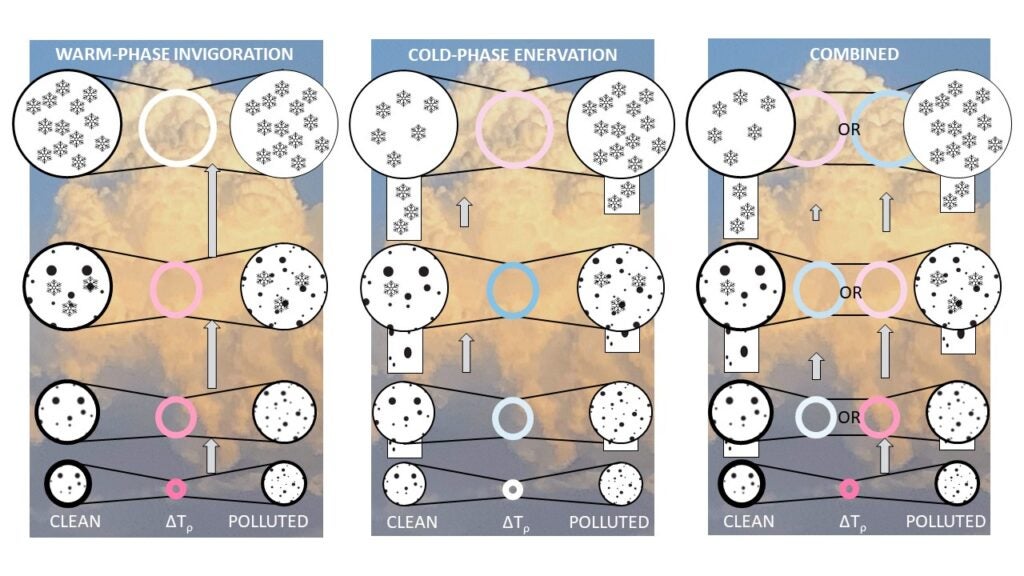
Adele Lichtenberger Igel is a Professor in the Department of Land, Air, and Water Resources at the University of California, Davis. She leads the Cloud Physics Group, focusing on cloud processes, aerosol-cloud interactions, and microphysics parameterization in atmospheric models. Her research integrates modeling, observations, and theory to understand cloud properties, precipitation formation, and climate feedbacks. Affiliations: Cloud Physics Group, UC Davis; Atmospheric Science Graduate Group. Teaching: Courses include ATM5 (Global Climate Change), ATM128 (Radiation and Satellite Meteorology), and ATM244 (Cloud and Precipitation Physics). Research interests span aerosol effects on cloud dynamics, bulk microphysics scheme development, Arctic mixed-phase clouds, and convective systems. Notable contributions include advancing unified liquid water category bulk schemes and investigating ice habit impacts on precipitation. Her work addresses model uncertainties through comparisons of bin and bulk schemes, and she leads field projects analyzing fog, marine aerosols, and orographic snowfall. Recent publications highlight aerosol-cloud interactions in stratocumulus systems, Arctic cloud sustenance via free-tropospheric aerosols, and limitations of traditional microphysics categorizations. Awards include runner-up recognition for opinion work on convective invigoration and student mentorship accolades. Key collaborations involve DOE ASR-funded projects on convective invigoration and Arctic cloud processes. Her group actively trains graduate students (e.g., Nathan Pope, Lucas Sterzinger) and undergraduates (e.g., Abbey Williams) in cloud physics and computational modeling, with outputs including over 50 peer-reviewed articles and modeling tools like the AMP scheme.
Sonia Lasher-Trapp is a Professor in the Department of Atmospheric Sciences at the University of Illinois at Urbana-Champaign. She previously held faculty positions at Purdue University from 2003 to 2014. Her research focuses on cloud and precipitation processes, numerical modeling, and the impacts of climate change on severe weather events. She leads a research group investigating entrainment effects in thunderstorms, hail dynamics, and microphysical parameterization. Education: Ph.D. in Meteorology, The University of Oklahoma, 1998 M.S. in Meteorology, The University of Oklahoma, 1993 B.S. in Meteorology (summa cum laude), Saint Louis University, 1990 Research Interests: Climate change impacts on precipitation, thunderstorm dynamics, cloud microphysics, aerosol-cloud interactions, and numerical weather modeling. Recent work emphasizes the role of entrainment, ice nucleation, and CCN/INP variability in storm systems. Recent Research Trends: Publications from 2020–2025 highlight investigations into hailfall changes under future climates, supercell entrainment mechanisms, and pseudo-global-warming climate attribution studies. Collaborations focus on Southern Ocean cloud processes and interdisciplinary field campaigns. Awards: American Meteorological Society Fellow (2023), Edward N. Lorenz Teaching Excellence Award (2021) Teaching: Teaches graduate courses in precipitation physics, microphysical parameterization, aerosol-cloud-climate interactions, and undergraduate courses in atmospheric thermodynamics and cloud physics. Labs/Teams: Leverages the Blue Waters supercomputer for high-resolution climate modeling projects. Collaborates with international teams on initiatives like CAPRICORN, MARCUS, and SOCRATES to study Southern Ocean cloud systems.