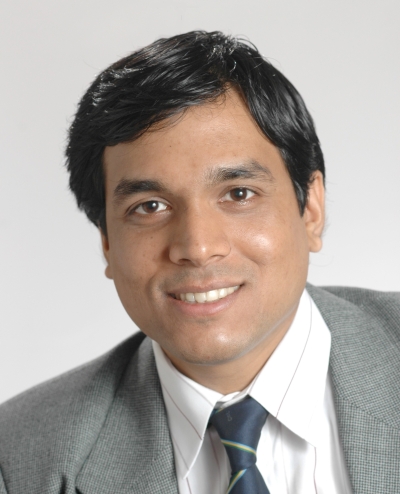
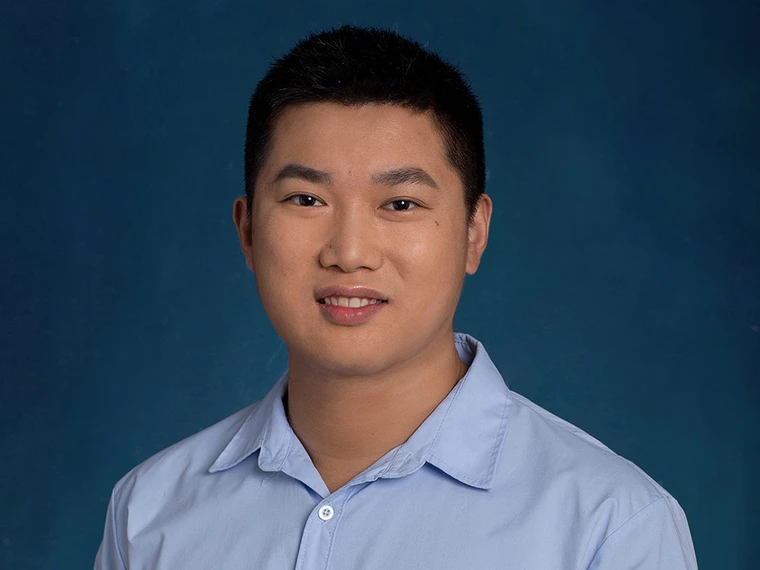
Sanjit A. Seshia is the Cadence Founders Chair Professor in the Department of Electrical Engineering and Computer Sciences at the University of California, Berkeley . He is affiliated with the Group in Logic and the Methodology of Science and participates in centers like the Industrial Cyber-Physical Systems Center , Berkeley AI Research , and the Simons Institute for the Theory of Computing . Research interests include formal methods for automated verification and synthesis of dependable systems, with applications to cyber-physical systems , AI-based autonomy , and computer security . His work spans SMT solving, model counting, syntax-guided synthesis, and algorithmic improvisation, with tools like UCLID5 , VerifAI , and Scenic for verifying autonomous systems and educational platforms like CPSGrader . Students and collaborators include notable researchers such as Dorsa Sadigh (Stanford), Daniel Fremont (UC Santa Cruz), and Hazem Torfah (Chalmers). He has co-founded startups like Decyphir and 20ⁿ Labs based on his research.
Josef Urban is a leading researcher at the Czech Institute of Informatics, Robotics and Cybernetics (CIIRC) , Czech Technical University in Prague, heading the ERC Consolidator project AI4REASON . Previously, he held positions as a postdoc at Radboud University Nijmegen and assistant professor at Charles University in Prague, where he co-founded the Prague Automated Reasoning Group. Education Ph.D. in Computer Science (2004), Charles University, Prague M.S. in Mathematics (1998), Charles University, Prague B.S. in Economics (1995), Charles University, Prague Research Interests Urban specializes in automated reasoning over large formalized knowledge bases, combining deductive theorem proving and inductive machine learning . His work aims to realize "strong AI" through formalized mathematics, particularly using systems like Mizar and the AI/TP Challenges . He advocates for computer-verifiable mathematics as a foundation for AI progress. Article Trends Urban's publications focus on integrating machine learning with automated theorem proving in systems like ENIGMA and BliStr . Key trends include semantic guidance for ATPs, premise selection in formal libraries, and automated proof compression via concept invention. Scientific Contributions Head of ERC Consolidator project AI4REASON Marie-Curie Fellow at University of Miami Co-founder of Prague Automated Reasoning Group Editor for Formalized Mathematics Advising and Grants Urban has advised numerous PhD and MSc students including Daniel Kuehlwein, Krystof Hoder, and Yutaka Nagashima. He has secured grants like the ERC Consolidator Grant and Marie-Curie Fellowship . Labs and Collaborations Urban leads the AI4REASON team at CIIRC and collaborates with the Foundations Group at Radboud University. He contributes to projects like Mizar TWiki and XML-based API for Mizar , aiming to create a semantic AI ecosystem for formal knowledge.
Dr. Chunyan Mu serves as a Senior Lecturer in the School of Natural and Computing Sciences at the University of Aberdeen, actively contributing to both academic instruction and cutting-edge research in computing science while currently accepting new PhD students. Her research program centers on Trustworthy AI and Safe Autonomy, with specialized expertise in formal verification of responsibility, accountability, and privacy mechanisms within multi-agent systems. She investigates resilience frameworks for autonomous intelligent systems and develops advanced methodologies for information flow security analysis, bridging theoretical computer science with practical security implementations. Analysis of her publication trajectory (2014-2025) reveals consistent innovation in applying formal methods to security-critical systems. Key thematic developments include probabilistic strategy logic for observability analysis, quantitative verification of opacity properties, and game-theoretic approaches to security verification, demonstrating increasing sophistication in handling multi-agent accountability and system resilience challenges. Dr. Mu currently supervises PhD candidates and offers a fully funded doctoral position focused on formal verification of safety properties in autonomous systems, providing comprehensive financial support including tuition coverage, £20,780 annual stipend, and dedicated research funding for candidates with strong backgrounds in formal methods and artificial intelligence.
Cezary Kaliszyk is a Professor in Theoretical Computer Science at the University of Melbourne, previously affiliated with the University of Innsbruck. He is actively involved in research and leadership in formal methods, automated reasoning, and machine learning for theorem proving. Research Interests: Automated Reasoning and Interactive Theorem Proving Formalized Mathematics and Proof Automation Machine Learning for Logic and Theorem Proving Integration of AI with Proof Assistants (Coq, Isabelle) Dependent Type Theory and Higher-Order Logic His recent publications (2023–2025) span topics in dependently-typed logic, learning for proof guidance, formalization of surreal numbers, and blockchain-based formal methods. The works consistently bridge formal logic with machine learning, emphasizing automation, explainability, and cross-system integration. Scientific Leadership and Projects: Principal Investigator, ERC project FormalWeb3 Lead Developer, CoqHammer , Tactician , ProofWeb WG5 Leader, COST Action EuroProofNet (until 2024) Contributor to HOL(y)Hammer , Isabelle Enigma He supervises multiple PhD students and has mentored several graduates in formal methods and AI. He teaches courses in theoretical computer science, logic, and machine learning. There are no listed awards in the provided data, but his extensive publication record and project leadership indicate significant recognition in the field. Labs and Research Groups: He leads a research group focused on formal methods and learning-based reasoning, collaborating internationally on projects involving proof automation, formal libraries, and semantic technologies.
Liangming Pan is an Assistant Professor at the University of Arizona's College of Information Science. His research focuses on building trustworthy large language models (LLMs) with an emphasis on logical reasoning, truthfulness, and safety. He holds a PhD in Computer Science from the National University of Singapore (2022), a Master's from Tsinghua University, and a Bachelor's from Beihang University. Education : PhD in Computer Science, National University of Singapore (2022) Master of Engineering in Computer Science, Tsinghua University (2017) Bachelor of Engineering in Computer Science, Beihang University (2014) Research Interests : Dr. Pan's work centers on enhancing LLMs' reliability through: Logical reasoning mechanisms to ensure faithful deductions Truthfulness verification to combat misinformation Safety protocols to mitigate societal harm Key Contributions : Developed TART, an open-source framework for explainable table-based reasoning Created benchmarks like SCITAB and FactCheck-Bench for evaluating LLMs Advanced techniques for knowledge editing and causal reasoning Awards : Best Paper Runner-Up at NeurIPS Table Representation Workshop (2024) Area Chair Award for Question Answering (IJCNLP-AACL 2023) Service & Outreach : He serves as an Area Chair for EMNLP (2024), COLING (2025), and ACL (2024). He has delivered invited talks at Tsinghua University, Peking University, and other institutions.
Alexander Summers is an Associate Professor at the Department of Computer Science , University of British Columbia . He joined UBC in March 2020 after serving as a Senior Researcher (Oberassistent) at ETH Zurich from 2014-2020. His research bridges Programming Languages , Formal Methods , and Software Engineering , with a focus on automated verification tools for heap-based and concurrent programs. MSc Joint Mathematics and Computer Science, Imperial College London (2004) PhD Computer Science, Imperial College London (2009) Postdoc, ETH Zurich (2009-2014) Summers leads the Prusti Project , developing deductive verification tools for Rust, and contributes to the Viper Project for intermediate verification languages. His work addresses challenges in: Memory safety and concurrency verification Ownership models and aliasing control Automated reasoning with SMT solvers Resource-oriented programming specifications Debugging verification condition quantifiers Formal validation of verification infrastructure His research has been recognized with a Amazon Research Award and ACM SIGPLAN Distinguished Paper Awards . He teaches courses like Advanced Software Engineering and Program Verifiers and Program Verification , and supervises graduate students in formal verification and Rust-related research.
Prof. Peter Müller is a Full Professor at the Department of Computer Science at ETH Zurich since 2008. Previously, he held positions as Assistant Professor at ETH Zurich (2003-2008), Researcher at Microsoft Research Redmond (2007-2008), and IT project manager at Deutsche Bank. He earned his Diploma in Computer Science from Technical University of Munich (1996) and his Dr. rer. nat. from University of Hagen (2001) with a dissertation on modular verification of object-oriented programs. His research focuses on enabling correct software development through programming languages, verification methods, and tools. Key areas include formal verification for Rust and Go programs (Prusti and Gobra projects), separation logic, security protocols, and distributed systems verification. Müller's work emphasizes practical verification techniques for real-world systems, including secure router implementations and smart contract verification. Recent research trends highlight advancements in hyperproperties, modular reasoning for iterators and closures in Rust, and formal validation of verification tools. His methodologies bridge theoretical foundations with industrial applications, addressing challenges in concurrency, memory safety, and security assurance. Notable contributions include the SCION internet architecture, the Prusti verifier for Rust, and formal verification frameworks for distributed systems. His work often integrates rigorous mathematical foundations with scalable software engineering practices.
Benjamin J. Delaware is an Assistant Professor of Computer Science at Purdue University. His research focuses on programming languages, formal verification, and tools for ensuring software correctness using mechanized theorem provers. He holds a Ph.D. from The University of Texas at Austin (2013), an MSc from Washington University in St. Louis (2007), and a B.S. from Truman State University (2005). His work emphasizes practical formal methods, including static enforcement of privacy policies, compiler design for oblivious computation, and automated verification techniques. Key contributions include tools like Taypsi, KestRel, and HACCLE. His research bridges theory and practice, addressing challenges in software security, correctness, and efficiency. Publications span top venues like POPL, PLDI, and OOPSLA, reflecting a strong focus on foundational programming language concepts. Collaborations with researchers like Suresh Jagannathan and Qianchuan Ye drive advancements in automated reasoning and secure computation.
LEE Mong Li is a Professor of Computer Science at the National University of Singapore (NUS) and serves as Director of the NUS Centre for Trusted Internet and Community. She holds a Ph.D., M.Sc., and B.Sc. (First Class Honours) in Computer Science from NUS, where she was awarded the IEEE Singapore Information Technology Gold Medal as the top Computer Science student in 1989. Her academic career includes a visiting fellowship at the University of Wisconsin-Madison (1999) and consultancy with QUIQ USA (2000). Her research spans Data Management, Spatio-temporal Databases, Biomedical Informatics, and Retinal Image Analysis . She has pioneered work in data cleaning, data fusion, and analysis of semistructured data, with applications in social media analytics and healthcare. Her recent publications demonstrate strong interdisciplinary focus, particularly in AI-driven medical diagnostics including diabetic retinopathy screening and chronic kidney disease detection from retinal images. She co-authored foundational books on 'Designing Semi-structured Database' and 'Temporal and Spatio-Temporal Data Mining'. Her 150+ publications in major database conferences and journals reflect leadership in both theoretical and applied research. Recent work shows significant emphasis on Medical AI applications (retinal analysis, kidney disease prediction) Temporal fact verification systems Misinformation detection in multimodal environments Privacy challenges in large language models Key honors include: Singapore's President Technology Award (2014) for co-inventing an AI system screening eye conditions IEEE Singapore Information Technology Gold Medal (1989) She actively contributes to government-funded multidisciplinary projects building practical deployable systems. Her leadership extends to program committees of prestigious database conferences and directing the NUS Centre for Trusted Internet and Community. She teaches BT5110 Data Management and Warehousing and has co-developed an AI system for diabetic retinopathy screening deployed in Singapore's national teleophthalmology program.
Carlo A. Furia is an Associate Professor at the Software Institute within the Faculty of Informatics at Università della Svizzera italiana (USI). He leads the ATOM research group and is actively involved in advancing formal methods in software engineering. His work bridges theoretical rigor with practical applicability, particularly in verification, automated repair, and empirical analysis of software systems. PhD in Computer Science, Politecnico di Milano Master of Science in Computer Science, University of Illinois at Chicago Laurea in Computer Science and Engineering, Politecnico di Milano His research focuses on making formal methods practical through automation, combining diverse techniques, and conducting thorough empirical evaluations. He is particularly interested in using Bayesian data analysis to assess software engineering data. His work spans program verification (e.g., AutoProof), contract inference, API usability, and multilingual program analysis. His recent publications highlight trends in automated program repair, JVM bytecode analysis, Android security, and empirical methodologies. These works reflect a consistent emphasis on correctness, reliability, and empirical validation in software development. Scientific service includes: Associate Editor, Empirical Software Engineering (EMSE) journal Program Committee member, FM 2026, FormaliSE 2026, ASE 2025, iFM 2025 He has advised students and leads the ATOM group, which develops tools for software analysis. He teaches courses such as Software Analysis, Programming Fundamentals, and Software Design & Modeling. Current research directions include improving empirical evaluation rigor and enhancing verification at lower code levels like bytecode.
Andreas Abel is a Senior Lecturer in the Division of Computing Science at the Department of Computer Science and Engineering, Chalmers University of Technology and the University of Gothenburg. He has previously served as an Assistant Professor at Ludwig-Maximilians-Universität (LMU) Munich and has been a visiting researcher at INRIA in Paris. His primary affiliations are with Chalmers and the University of Gothenburg, where he conducts research and teaches in programming languages and type theory. Chalmers University of Technology, Department of Computer Science and Engineering, Senior Lecturer University of Gothenburg, Division of Computing Science LMU Munich, Assistant Professor (former) INRIA Paris, Visiting Researcher Abel’s research lies at the intersection of type theory, functional programming, and formal verification. He is particularly known for his work on dependent types, normalization by evaluation, and the development of the Agda proof assistant. His interests include constructive logic, logical frameworks, modal and linear typing, program verification, and compiler construction. He leads the Modal Dependent Type Theory project funded by the Swedish Research Council (Vetenskapsrådet) and has contributed to several other major research initiatives in programming language theory. His recent publications reflect a strong focus on foundational aspects of type systems, including cubical type theory, decidability of conversion, and formalization of algebraic completeness. These works appear in top-tier venues such as ICFP, LICS, POPL, and TYPES, showcasing both theoretical depth and practical implementation in Agda. Distinguished Paper Award, ICFP 2019 Editor, Theoretical Pearls column, Journal of Functional Programming Member, IFIP WG 1.3 on Foundations of System Specification Abel actively supervises students and contributes to the research community through program committee memberships for major conferences including LICS, ICFP, and CPP. He is a senior developer of Agda and the maintainer of the BNFC (Backus-Naur Form Compiler) tool. His work bridges theoretical computer science with practical software development for formal methods. He is involved in several research groups and projects, including the Programming Logic Group at Chalmers and the international EUTYPES network. His role as principal investigator and core contributor in multiple funded projects highlights his leadership in the field of programming language foundations.
David A. Plaisted is a Research Professor in the Department of Computer Science at the University of North Carolina at Chapel Hill. He joined UNC-Chapel Hill as a full professor after serving on the faculty of the Computer Science Department at the University of Illinois at Urbana-Champaign until 1984. His academic career spans several decades with significant contributions to automated reasoning and computational logic. Bachelor's degree in Mathematics from the University of Chicago (1970) Ph.D. in Computer Science from Stanford University (1976) Professor Plaisted's research focuses on mechanical theorem proving, term rewriting systems, logic programming, and algorithms. His work in term-rewriting systems investigates methods of combining them with first-order theorem provers, including techniques for applying efficient permutation group algorithms to equational theorem proving. In mechanical theorem proving, he has developed a sequence of methods including clause linking with semantics and ordered semantic hyper-linking. His research in logic programming includes developing tests to eliminate the occurrence check in Prolog while maintaining semantics. His work spans theoretical foundations to practical applications in program verification and generation. His recent publications demonstrate continued innovation in automated reasoning, particularly in semantic guidance for theorem proving. His work shows a consistent focus on improving the efficiency and effectiveness of automated deduction systems, with recent contributions to SGGS (Semantically-Guided Goal-Sensitive) theorem proving and analysis of the relationship between semantics and unification in proof systems. Professor Plaisted has served on numerous program committees and editorial boards including the Journal of Symbolic Computation, Information Processing Letters, Mathematical Systems Theory, and Fundamenta Informaticae. He is currently on the editorial board of ACM Transactions on Computational Logic and the electronic Journal of Functional and Logic Programming. He has organized significant conferences including serving as co-chair of the Second International Conference on Rewriting Techniques and Applications in 1987. He has spent several sabbaticals at prestigious institutions including SRI in Menlo Park (1982-1983), the Max-Planck Institute and University of Kaiserslautern in Germany (1993-1994), and research visits to groups in Grenoble and Nancy, France (1998).
Prof. Christoph Benzmüller is a Full Professor at the University of Bamberg (Chair for AI Systems Engineering) and an adjunct professor at Freie Universität Berlin's Department of Mathematics and Computer Science. He is a leading researcher in automated reasoning, computational metaphysics, and formal logic systems. His work focuses on integrating higher-order logic into AI to achieve transparent and ethically grounded systems. Research Interests: His research spans automated theorem proving, formal ontologies, and normative reasoning in AI. Notably, he has formalized Gödel's ontological argument using computational methods and developed the Leo theorem provers for higher-order logic. He emphasizes the use of symbolic reasoning for ethical and legal AI frameworks. Grants & Projects: He leads projects like PetraKIP (AI portfolios for teacher education) and NFDIxCS (National Research Data Infrastructure). His work is funded by DFG, EPSRC, and the Volkswagen Foundation. He also collaborates with institutions globally, including Stanford and Cambridge. Awards: Recipient of the Central Teaching Award (FU Berlin) for his Computational Metaphysics course and a DFG Heisenberg Fellowship. His research on Gödel's argument gained international media attention. Education: Studied at Saarland University, where he earned his PhD (1999) and habilitation (2006).曾是专业长跑运动员,后转向学术研究。
David Naumann is Professor and Department Chair of Computer Science at Stevens Institute of Technology. His leadership in the department and active research program positions him as a key figure in programming languages and formal methods research. Naumann's research focuses on formal methods and software security, with particular emphasis on relational and hyperproperty verification , fine-grained confidentiality/integrity policies , and program analysis and verification . His work bridges theoretical foundations with practical applications in security-critical systems. He has developed novel program logics and verification techniques that enable precise reasoning about information flow and security properties. His recent publications (2022-2025) reveal a strong trend toward modular relational verification techniques with applications to pointer programs, distributed systems, and concurrent applications. The research spans theoretical foundations (algebraic structures for alignment) to practical tools (WhyRel prototype), demonstrating both depth and breadth in addressing verification challenges. Naumann has served as program committee co-chair for IEEE Computer Security Foundations Symposium (2021-2022) and has been active on committees for POPL, CCS, CSF, ECOOP, and other top venues. His editorial service includes ACM Transactions on Programming Languages and Systems, Formal Aspects of Computing, and Journal of Object Technology. He leads the Cypress research group at Stevens Institute of Technology and has secured significant funding from NSF, Microsoft Research, and Siemens. His mentoring extends to numerous PhD students who have gone on to successful careers in academia and industry.
Dr. Alexander Artikis is an Associate Professor of Artificial Intelligence at the University of Piraeus and a Research Associate at the National Centre for Scientific Research (NCSR) "Demokritos". He leads the Complex Event Recognition (CER) group , focusing on symbolic and probabilistic approaches to event recognition and forecasting. University of Piraeus (2025–present) NCSR Demokritos (2017–present) Complex Event Recognition Group (2017–present) His research spans Artificial Intelligence and Distributed Systems , with a focus on: Complex Event Recognition (CER) : Developing logic-based systems for detecting events in real-time data streams Event Calculus : Creating probabilistic and incremental versions for runtime reasoning Multi-Agent Systems : Modeling norm-governed interactions Maritime Informatics : Applying CER to vessel trajectory analysis and fleet management Key publications reveal trends in: Neuro-symbolic forecasting models combining deep learning and logic-based reasoning Symbolic automata with memory for pattern detection Online learning techniques for dynamic event rule generation Tensor-based formalizations for efficient temporal reasoning Handling uncertainty in real-time maritime data streams Optimizing memory usage for scalable stream processing He contributes to open-source tools like RTEC (Run-Time Event Calculus) and holds a European patent on complex event forecasting. His work addresses challenges in: Proactive decision-making systems Knowledge Graph consistency Hybrid human-machine discovery of movement patterns Big Data analytics for time-critical applications