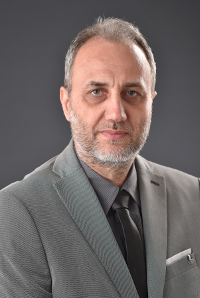
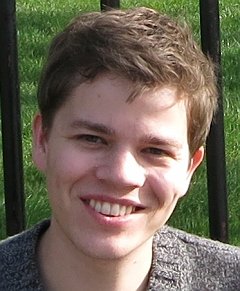
Eduard Kamburjan is a Researcher at the University of Oslo , affiliated with the Reliable Systems (PSY) and Data and Knowledge Systems (DKM) research groups. His work bridges formal methods , digital twin engineering , and knowledge graph applications . Research interests include: Formal verification of hybrid systems using deductive methods Digital twin architecture with compositional correctness guarantees Semantic lifting and ontology-driven modeling for complex systems Concurrency analysis and non-determinism in program verification Interactive visualization as serious games for formal methods His 2024-2023 publications demonstrate expertise in digital twin reconfiguration , semantic interoperability , and knowledge-based runtime enforcement . Key contributions include Crowbar for active object verification and ABS simulator toolchain for model-driven engineering. Collaborations span institutions like Springer , ACM , and IEEE , with work featured in Lecture Notes in Computer Science (LNCS) , Software and Systems Modeling (SoSyM) , and Science of Computer Programming . His research integrates RDF data management , behavioral contracts , and modular analysis for distributed systems.
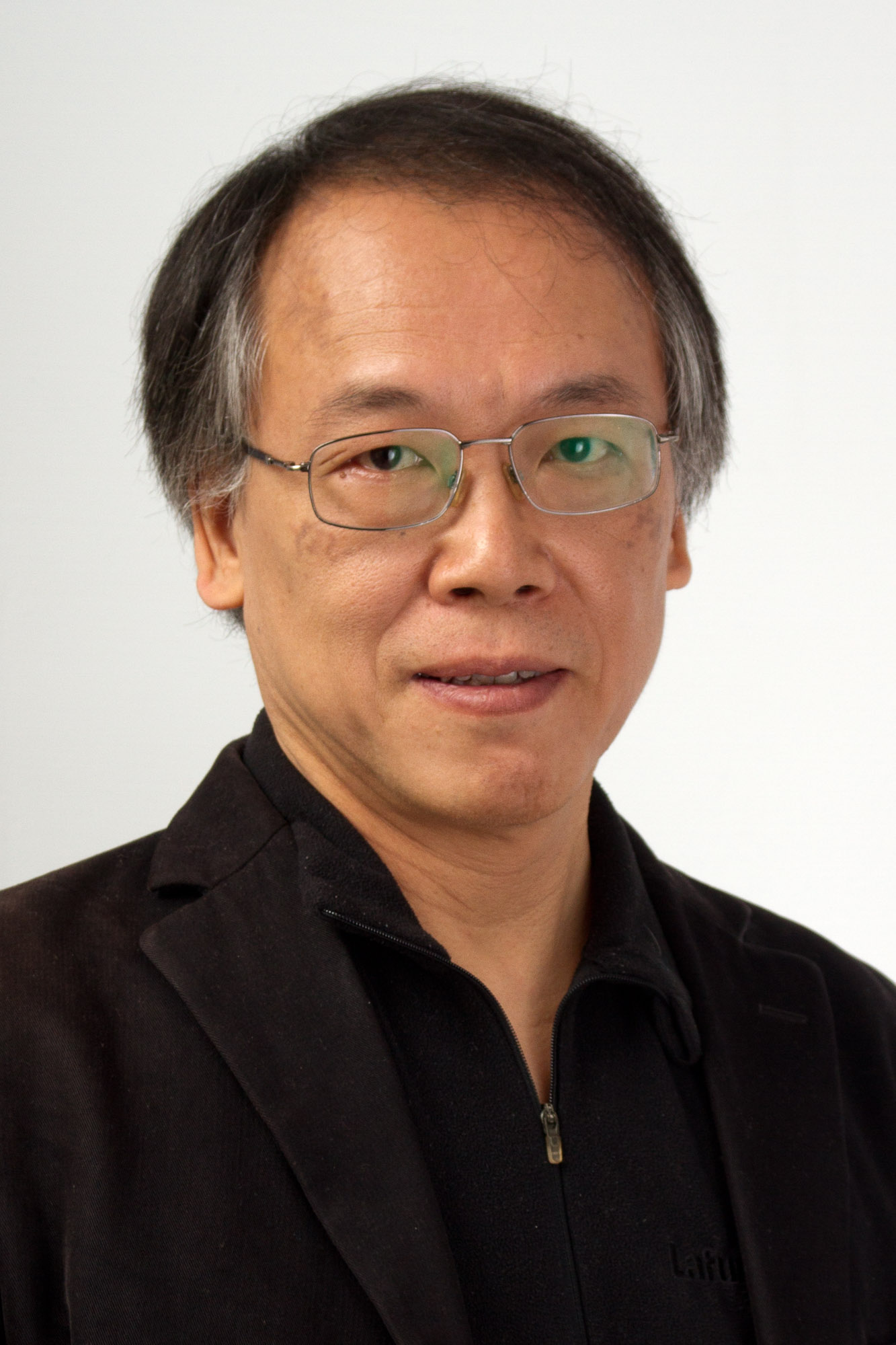
Jieh Hsiang is a Distinguished Professor at National Taiwan University , with affiliations in the Department of Computer Science and Information Engineering, the Digital Archives and Automatic Inference Laboratory, and the Digital Humanities Research Center. He holds concurrent roles at the Institute of Information Science, Academia Sinica, and the Higher Education Research & Development Office, National Taiwan University. Education PhD in Computer Science, University of Illinois at Urbana-Champaign (1979–1982) BS in Mathematics, National Taiwan University (1972–1976) Research Interests Hsiang's work spans automated reasoning , digital libraries , digital humanities , and information retrieval . His research focuses on integrating computational methods with cultural heritage preservation , particularly through tools like DocuSky and databases such as the Taiwan Historical Digital Library . He explores AI applications in patent analysis , historical text mining , and semantic relationships in legal documents . Recent Trends in Publications His recent articles highlight advancements in BERT and GPT-2 fine-tuning for patent classification , LARGE language models for legal automation , and GIS-based analysis of historical archives . Themes include digital preservation , AI-driven legal text analysis , and cross-disciplinary computational tools for humanities scholars. Scientific Awards 2019 Ministry of Science and Technology Distinguished Research Fellow 2009 National Taiwan University Outstanding In-House Service Award 2008 Chinese Library Association Special Contribution Award 2006 IEEE Test-of-Time Award 1997 & 1999 National Science Council Outstanding Research Award 1997 Ministry of Education Outstanding Industrial-Academic Collaboration Award 1998–2001 Founder and First Chair of IFIP WG1.6 Labs and Collaborations Hsiang leads the Digital Archive and Automatic Inference Laboratory , developing platforms like DocuSky for digital humanities, Taiwan Historical Digital Library , and QGIS Cloud Maps for spatial analysis. His team collaborates internationally on projects involving historical document digitization , patent automation , and cross-domain knowledge integration .
Théo Winterhalter is a researcher at INRIA Saclay and a member of the Laboratory of Mathematics and Computer Science (LMF) at ENS Paris-Saclay . He previously held a postdoctoral position at the Max Planck Institute for Security and Privacy (MPI-SP) and completed his PhD at the Gallinette research team in Nantes, supervised by Nicolas Tabareau and Matthieu Sozeau. Education PhD in Computer Science, 2017–2020, University of Nantes (Gallinette/Inria) MSc in Computer Science, École Normale Supérieure de Rennes Research interests include type theory , proof assistants , formal verification , and dependent types . He actively works on improving the safety and usability of proof assistants like Rocq (formerly Coq), focusing on rewrite rules, erasure, and cryptographic verification. His work often involves formalizing results within proof assistants and developing tools for verified programming. Contributions span conferences like POPL, ICFP, CPP, and TYPES. Recent projects include foundational verification of high-speed cryptography ( The Last Yard ), type-preserving rewrite rules ( The Rewster ), and modular cryptographic proofs ( SSProve ). His publications emphasize formal methods and computational assumptions in type theory. Teaching includes the Proof Assistants course at MPRI , a joint master’s program. He co-supervises PhD students like Yann Leray and has mentored interns on topics such as erased data implementation and Autosubst tooling. Labs and Teams : Deducteam (INRIA Saclay) – Developing deduction tools and formal verification LMF (ENS Paris-Saclay) – Laboratory for Mathematics and Computer Science Gallinette (former) – Team at INRIA Nantes MetaCoq Project – Collaborative effort on Coq verification
Pascal Hitzler is a University Distinguished Professor and holds the endowed Lloyd T. Smith Creativity in Engineering Chair at Kansas State University's Department of Computer Science, Carl R. Ice College of Engineering. He directs the Center for Artificial Intelligence and Data Science (CAIDS) and the Institute for Digital Agriculture and Advanced Analytics (ID3A). Previously, he held roles at Wright State University, Karlsruhe Institute of Technology, and TU Dresden. His research focuses on neuro-symbolic AI, semantic web technologies, knowledge graphs, and ontology engineering. Education: PhD in Mathematics (2001, University College Cork), Diplom in Mathematics (1998, University of Tübingen). Academic achievements include over 400 publications, founding editor roles for journals like Neurosymbolic Artificial Intelligence , and leadership in organizations like the Neural-Symbolic Learning and Reasoning Association. Research interests include AI explainability, knowledge representation, and interdisciplinary applications of semantic technologies. He leads the DaSe Lab for Data Semantics, advancing projects like the KnowWhereGraph and Enslaved.org Hub Knowledge Graph. His work bridges symbolic AI with neural networks, emphasizing practical applications in agriculture, environmental science, and historical data preservation. Grants and collaborations span academic, industrial, and international partners. He has advised numerous students and researchers, contributing to both theoretical advancements and real-world semantic systems deployments.
Roman Matuszewski is a retired Associate Professor at the University of Bialystok, affiliated with the Faculty of Philology's Department of Applied Linguistics. His research focuses on automated reasoning, formalized mathematics, and the Mizar Project, which he has been involved with since its inception in 1973. He holds a PhD in Computer Science from Shinshu University (2000) and has held academic positions at multiple institutions, including part-time roles at Bogdan Janski University. Education: PhD in Computer Science (2000), Master of Science in Mechanics (1975), Engineer (1973), all from Polish institutions. His work emphasizes formal proof systems, mathematical knowledge management, and education integration of automated reasoning tools. Research interests include automated deduction, formal proof verification, and the application of these methods to mathematics education. His contributions to the Mizar Mathematical Library and its 50-year history (celebrated in 2023) are foundational for interactive theorem proving. Key awards include the Silver Cross of Merit (2004) and multiple Rector’s prizes. He has organized major conferences like MKM2004 and served on program committees for events such as IJCAR and Tableaux. Grants include leadership roles in EU-funded projects like TYPES and CALCULEMUS. His work bridges computer science and mathematics through formalized systems, impacting both research and education.
Dilian Gurov is a Professor in Computer Science at KTH Royal Institute of Technology, associated with the Digital Futures Faculty and the Division of Theoretical Computer Science. He also coordinates the Doctoral Programme in Computer Science at the CSC school. Before joining KTH in 2002, he earned a Ph.D. from the University of Victoria, Canada (1998), and worked at the Swedish Institute of Computer Science (1997-2002). His research focuses on software specification and verification, including contracts, program models, logics, and tools, as well as multi-agent strategic planning involving knowledge-based strategies in imperfect information settings. Key contributions include the CAV Distinguished Paper Award 2023 for 'Automatic Program Instrumentation for Automatic Verification' and an EASST award for 'Checking Absence of Illicit Applet Interactions: A Case Study' (2004). He leads projects funded by VR (SEFROS, ContraST) and Vinnova (AVerT2) and collaborates with industries like Scania on formal verification of C programs. His service roles span over 30 conference committees and organization roles, including PC memberships for iFM, TAP, and ISoLA. Teaching responsibilities include courses such as 'Formal Methods,' 'Program Semantics and Analysis,' and 'Knowledge in Games with Imperfect Information.' His work emphasizes practical applications of formal methods, bridging academic research with industry needs through collaborations and tool development (e.g., CVPP, ProMoVer, TriCo).
Zhe Hou is a Senior Lecturer at the School of Information and Communication Technology , Griffith University, Australia. His academic journey includes a PhD in automated reasoning for separation logic from the Australian National University (2015) and prior research roles at Nanyang Technological University, Singapore (2015-2017). He joined Griffith University in 2017 and became permanent faculty in late 2019. Research Interests : Formal methods for software verification Automated reasoning with logical frameworks Blockchain technology and security Quantum computing verification Integration of LLMs with rigorous reasoning Sports analytics via model checking Recent Publications demonstrate expertise in neural-symbolic reasoning, blockchain security, quantum SAT solvers, and runtime verification frameworks. His work combines formal logic with machine learning for applications in cybersecurity and AI trustworthiness. Scientific Awards : ACM SIGSOFT Distinguished Paper Award (2025) Supervision Roles : Principal/Associate Supervisor for 6+ doctoral projects in blockchain security, AI verification, and network security. Professional Activities : Editor for Springer-Nature and Formal Aspects of Computing special issues, conference chair for ICFEM, ICECCS, and ISACE symposia.
Miloš Racković serves as a full Professor in the Department of Mathematics and Informatics at the University of Novi Sad, Serbia. He maintains active academic engagement through the Laboratory for the development of information systems, with his office located in the Information technologies and systems office (DMI&DF) on the second floor, room 49. Contact is available via telephone (485)-2868 or email rackovic@dmi.uns.ac.rs, and his personal website (http://www.is.pmf.uns.ac.rs/rackovicm/) provides additional resources. His research spans foundational and applied computer science, with seminal contributions in fuzzy database systems including PFSQL query language development and prioritized fuzzy logic for relational databases and XML. He has pioneered deep learning methodologies through innovative classification techniques using negative and missing features in convolutional neural networks. Additional expertise includes high-performance computing implementations of Lattice Boltzmann methods using OpenCL, robotics (symbolic modeling and trajectory planning), and blockchain applications for Industry 4.0 production processes. His sports analytics work applies neural networks to basketball player and referee movement analysis. Analysis of his 2012-2025 publications reveals a strategic evolution toward interdisciplinary applications, particularly in industrial transformation (blockchain-enabled traceability) and sports analytics. His work consistently bridges theoretical computer science with practical implementations, demonstrating increasing focus on real-world problem solving while maintaining strong foundations in database theory and computational methods. Professor Racković leads the Laboratory for the development of information systems, which focuses on advancing information system methodologies through formal modeling extensions (including Petri net innovations) and practical implementations for uncertainty management. The laboratory's work spans from foundational research in fuzzy logic systems to applied projects in high-performance computing and blockchain integration, fostering innovation in information technology development.
Dr. Hafizul Asad serves as a Lecturer in Dependability at City St George's, University of London, leveraging his PhD in Electrical Engineering (City University of London, 2016) and MS in Aerospace Engineering (University of Belgrade, 2008) to advance cybersecurity and formal verification research. His expertise bridges critical infrastructure protection and cyber-physical systems security, with significant contributions to IoT/IIoT security frameworks. His educational journey includes: PhD in Electrical Engineering, City, University of London (2012-2016) MS in Aerospace Engineering, University of Belgrade, Serbia (2007-2008) BSc in Electrical and Electronics Engineering, University of Engineering and Technology Peshawar, Pakistan (1999-2003) Asad's research centers on formal verification of hybrid systems and verifiable intrusion detection mechanisms for interconnected environments. He pioneers provably robust security architectures for IoT/IIoT systems, emphasizing mathematical verification to ensure system resilience against cyber threats. His work integrates diversity principles to create defense-in-depth strategies for critical infrastructure, with recent focus on wind turbine cyber-safety and industrial control system protection. Analysis of his 15 most recent publications (2014-2025) reveals an evolution from aerospace applications and analog circuit verification toward cutting-edge cybersecurity for cyber-physical systems. His 2023-2025 work demonstrates increasing specialization in IoT security and formal methods, while maintaining foundational contributions to diversity-based security architectures established in his 2015-2018 research. No scientific awards or prizes are documented in the provided materials, though he maintains professional standing as a British Computer Society member and Higher Education Academy Associate Fellow. Details regarding doctoral student supervision or specific research grants are not disclosed in the source text. His professional trajectory indicates significant project involvement, including the D3S security project at City University of London (2015-2018) and Rolls-Royce-funded Future Systems Simulator development at Cranfield University (2018-2019), though current laboratory affiliations remain unspecified.
Michael Sammler is an Assistant Professor leading the Programming Languages and Verification Group at the Institute of Science and Technology Austria (ISTA). He holds a PhD from the Max Planck Institute for Software Systems (MPI-SWS) and was a postdoctoral researcher at ETH Zürich. His research focuses on formal verification of low-level systems code, combining foundational proofs with automation. Key projects include RefinedC (C verification), Islaris (assembly code verification), and DimSum (multi-language interoperability). Education: PhD at MPI-SWS/Saarland Informatics Campus, postdoc at ETH Zürich. Research interests emphasize tool development for safety-critical systems, including Rust verification (RefinedRust), OCaml/C interoperability (Melocoton), and decentralized multi-language semantics (DimSum). Awards: Runner-Up for Informatics Europe 2024 Best Dissertation Award, Dr. Eduard Martin Prize, Distinguished Paper Awards at PLDI/POPL/USENIX, and Google PhD Fellowship. Labs/Teams: Programming Languages and Verification Group at ISTA, collaborations with MPI-SWS and international researchers. His work bridges foundational theory with practical tools for industry-relevant verification challenges.
Prof. Dr. Zeki Bayram is a full Professor and current Chairman of the Computer Engineering Department at Eastern Mediterranean University (EMU). He has served as the founding chairman of the Internet Technologies Research Center (2006) and chaired the departmental ABET committee from 2010 to 2023. His academic contributions span semantic web services, mobile payment systems, and XML-based technologies. Founded Cybersoft Bilişim Teknolojileri Limited, a dormant software company in North Cyprus Active in academic service, including thesis supervision and editorial roles Teaches courses on programming languages, automata theory, and software tools Research focuses on semantic web service composition, secure payment schemes, and declarative programming paradigms. His work integrates logic programming, constraint solving, and ontology engineering. Prof. Bayram has published extensively in journals and conferences since the 1990s, with notable contributions to formal methods in service-oriented architectures.
Sanjay Modgil is a Professor of Artificial Intelligence at King's College London's School of Informatics, specializing in argumentation theory, non-monotonic logic, and AI applications in medicine. He contributes to ethical AI research aligned with UN Sustainable Development Goals. Research Interests Argumentation Theory Non-monotonic Logic Normative Reasoning Agent Reasoning AI in Healthcare Human-AI Collaboration His recent publications focus on depth-bounded reasoning, ethical debates, and large language models. He leads EPSRC-funded projects like CONSULT and RESPECT, emphasizing responsible AI technologies and multimorbidity management systems.
Benjamin Lucien Kaminski is a Professor at Saarland University and a Lecturer at University College London . He specializes in quantitative aspects of formal program verification , with a focus on probabilistic and quantum programs , incorrectness logic , and non-classical computation models . His research includes semantics , probabilistic program verification , expected runtimes , and explainable verification . He leads the Examination Board for B.Sc. Computer Science (English) and actively mentors PhD, Master’s, and Bachelor’s students in logic and verification. 2025 : A Taxonomy of Hoare-Like Logics (POPL), Partial Incorrectness Logic (TPSA) 2024 : Quantitative Weakest Hyper Pre (OOPSLA), Caesar: A Verifier for Probabilistic Programs (Dafny), Hoare-Like Triples (Incorrectness-track) 2023 : A Deductive Verification Infrastructure (OOPSLA), Lower Bounds (OOPSLA), A Calculus for Amortized Expected Runtimes (POPL) He has received notable awards including the Ackermann Award (2020), Best Paper at LOPSTR 2020 , and EATCS Best Paper Award at ETAPS 2016 . He has also served on program committees for leading conferences like CAV , POPL , and LICS , and reviewed for prestigious journals such as Journal of the ACM and TOCL .
Jasmin Blanchette is a Professor of Theoretical Computer Science and Theorem Proving at the Institute for Informatics, Ludwig-Maximilians-Universität München (LMU), where he also serves as Dean of Studies for Computer Science since January 2024. He is additionally affiliated as a guest researcher with the VeriDis group at Loria in Nancy, France. His research lies at the intersection of automated and interactive theorem proving, with a focus on higher-order logic and proof automation. Key projects include the development of tools like Sledgehammer, Nitpick, and Zipperposition, and foundational work on (co)datatypes and higher-order superposition. His recent publications reflect a strong trend in formalizing and verifying automated reasoning techniques, especially in higher-order logic, with applications in proof automation, SMT solving, and logical verification. Articles frequently appear in top venues such as CADE, ITP, and the Journal of Automated Reasoning. CADE 2023 Best Paper Award for 'Verified given clause procedures' FroCoS 2023 Best Paper Award (with Visa Nummelin and Sander Dahmen) IPA Dissertation Award (awarded to his student Petar Vukmirović) Dutch 'cum laude' distinction (awarded to his student Anne Baanen) Dutch Prize for ICT Research 2022 Blanchette has advised numerous PhD and postdoctoral researchers, many of whom are now active contributors to the formal methods community. He has received significant research grants through projects like Matryoshka and Nekoka. He is also the editor-in-chief of the Journal of Automated Reasoning and plays a central role in organizing key conferences such as ITP, CADE, and CPP. He leads an active research group at LMU, consisting of postdocs and PhD students working on topics such as higher-order superposition, formalization of voting systems, categorical logic, and proof search heuristics. The team collaborates closely with international groups, including those at Inria and TU Wien.
Andrei Popescu is a Senior Lecturer in Computing Foundations at the School of Computer Science, University of Sheffield, where he also serves as School Programmes Lead (PGT). He is a member of both the Security of Advanced Systems research group and the Foundations of Computation research group. Prior to joining Sheffield in May 2020, he was a Lecturer at Middlesex University and a postdoctoral researcher at TU Munich. Dr. Popescu holds dual PhDs: one in computer science from the University of Illinois at Urbana-Champaign (advised by Elsa L. Gunter and Grigore Roșu) and another in mathematics from the University of Bucharest (advised by George Georgescu). His primary research interests include proof assistants, information flow security, inductive and coinductive datatypes, automated deduction, and syntax with bindings. His work often focuses on the formal verification of security properties in practical systems, as evidenced by projects like CoCon (a conference management system with verified confidentiality) and CoSMeDis (a social media platform with formally verified security guarantees). Analysis of his recent publications reveals a strong focus on foundational aspects of proof assistants, particularly Isabelle/HOL, with significant contributions to syntax with bindings, recursion principles, and the formalization of Gödel's incompleteness theorems. His work bridges theoretical computer science with practical applications in security verification. Scientific Awards: Distinguished paper award at POPL 2025 for 'Barendregt Convenes with Knaster and Tarski: Strong Rule Induction for Syntax with Bindings' Distinguished paper award at POPL 2024 for 'Nominal Recursors as Epi-Recursors' Distinguished paper award at POPL 2023 for 'Admissible Types-to-PERs Relativization in Higher-Order Logic' Dr. Popescu has successfully supervised PhD students, including Lorenzo Gheri whose thesis focused on syntax with bindings. He has secured significant research funding, including the COVERT project (EPSRC, £422,585), Security of Digital Twins in Manufacturing (EPSRC, £774,954), and Cyclic Reasoning Mechanisms for Interactive Theorem Proving (Royal Society, £12,000). He is actively involved in the research community, serving on program committees for major conferences including POPL, ITP, CSF, and IJCAR, and co-organizing the Midlands Graduate School. His work with the Security of Advanced Systems group continues to advance the field of formal verification for security-critical systems.