Jiaxin Pei is an incoming Assistant Professor at the School of Information, University of Texas at Austin (starting Fall 2026) and currently a Postdoctoral Fellow at Stanford Institute for Human-Centered Artificial Intelligence (HAI). He holds a PhD from the University of Michigan (2024) and a B.S. from Wuhan University (2019). Current Affiliation: Stanford HAI (Postdoctoral Fellow) Upcoming Affiliation: UT Austin School of Information (Assistant Professor) Alma Maters: University of Michigan (PhD), Wuhan University (B.S.) Research Interests: Human-AI Interaction (interfaces, collaborative agents, evaluation benchmarks) Digital Infrastructure for AI Agents (standards, protocols) Data Pipelines for LLMs (collection, annotation) Collective Intelligence Systems (collaboration, decision-making) Computational Social Science (AI's societal impact) Scientific Awards: Best Student Paper (EAAMO 2025) Best Demo Paper (HCOMP 2024) Honorable Mention (IC2S2 2023) Best Paper (Workshop on Social Influence in Conversations) Advising: Mentoring 12 students (6 current, 6 past) across Stanford, University of Toronto, and University of Michigan. Developing a new Human-Centered AI Systems lab at UT Austin. Key Contributions: Creator of POTATO annotation system. Led WORKBank database development for AI workforce impact analysis.
Ana Ozaki is an Associate Professor at the University of Oslo (full-time) and holds a part-time position at the University of Bergen. Her research focuses on Artificial Intelligence, particularly knowledge representation, machine learning theory, and algorithms for learning logical theories in description logic. Her primary research interests include the formalization of learning phenomena to investigate questions of learnability, complexity, and reducibility. Ozaki specializes in algorithms for learning logical theories using description logic and related formalisms. Her work bridges theoretical foundations with practical applications in knowledge representation. Ozaki's publications predominantly explore themes in computational logic, knowledge representation, and machine learning theory. Recent works focus on ethical AI applications, hybrid logic systems, and knowledge extraction techniques from language models, demonstrating consistent innovation at the intersection of formal methods and practical AI systems. She has led significant research projects including 'Learning Description Logic Ontologies' (funded by RCN) and 'Apprendimento PAC di Ontologie in Logica Descrittiva' (PACO), and has collaborated internationally on graph-based computation models. Ozaki serves the AI community through editorial roles at the Journal of Machine Learning Research and Journal of Web Semantics, and has chaired program committees for major conferences including the International Joint Conference on Rules and Reasoning and the International Description Logic Workshop.
Mantas Simkus is an Assistant Professor at TU Wien's Institute of Logic and Computation, affiliated with the Database and Artificial Intelligence Group. He previously held an Associate Professor position at Umeå University (Sweden) within the Wallenberg AI, Autonomous Systems and Software Program (WASP). He leads the FWF-funded project 'KtoAPP: Compiling Knowledge into Applications' and contributes to the Cluster of Excellence 'Bilateral Artificial Intelligence'. His research focuses on logic-based data management, knowledge representation, and nonmonotonic reasoning, with applications in semantic web technologies and ontology engineering. Education: Bachelor's in Computer Science from Vilnius University. Research interests include logic programming, computational complexity, description logics, and their integration with databases. He explores techniques for efficient query answering, schema validation (e.g., SHACL), and reasoning under incomplete information. His work bridges theoretical foundations (e.g., complexity analysis, formal semantics) with practical systems (e.g., ontology-mediated query processing). Key projects include 'KtoAPP' (2018–2025), investigating automated knowledge compilation, and contributions to the 'SemDat' and 'OMEGA' initiatives. He teaches courses on deductive databases and semi-structured data at TU Wien. He actively participates in academic service: co-chair of RuleML+RR 2024, editorial board member of the Artificial Intelligence journal, and former co-chair of DL 2019. His research group collaborates on topics like graph databases, answer set programming, and hybrid knowledge representation systems.
Dr. Jürgen Dix is affiliated with the Department of Knowledge-Based Systems at TU Wien. His research focuses on advanced computational logic, multi-agent systems, nonmonotonic reasoning, and knowledge representation. He holds a doctorate (Dr.) and is recognized as a university lecturer (Univ.Doz.). Role: Researcher Affiliation: TU Wien, Department of Knowledge-Based Systems His work bridges theoretical foundations of logic programming with practical applications in deductive databases and agent-based reasoning systems. Contact: juergen.dix@tuwien.ac.at
Keith Dookeran is an Associate Visiting Professor in the Department of Epidemiology at Zilber College, University of Wisconsin-Milwaukee. He holds multiple advanced degrees including a PhD in Public Health Sciences from the University of Illinois at Chicago, an MBA from the University of Chicago Booth School of Business, an MD from the University of Leicester, and an MBBS from the University of the West Indies. With over 20 years of experience in epidemiology, his expertise spans cancer, health disparities, data analysis, health policy, and global health. Research Focus Dr. Dookeran's research investigates health disparities through advanced epidemiological methods, with emphasis on: Cancer epidemiology : Racial/ethnic disparities in breast cancer outcomes and molecular subtypes Perinatal health : Neonatal abstinence syndrome and preterm infant care economics Environmental health : Chronic cadmium/lead exposure impacts on cognition and Alzheimer's Health services : Insurance cost structures and global health implementation challenges Quantitative methods : Mediation analysis of socioeconomic factors in disease outcomes Publication Trends His recent articles (2020-2025) demonstrate a strong focus on disentangling racial, socioeconomic, and geographic health disparities using large-scale datasets (SEER-MHOS, TCGA). Key themes include mediation analyses of environmental toxins on neurodegeneration, econometric evaluations of neonatal care, and molecular epidemiology in breast cancer. Methodologically, he employs regression modeling, cost-benefit analysis, and biomarker validation across diverse populations. Awards No scientific awards are mentioned in available sources. Teaching and Advising At Zilber College, he teaches core epidemiology courses including PH704 (Principles and Methods of Epidemiology), PH804 (Advanced Epidemiology Methods), and PH759 (Regression for Social Determinants of Health). His pedagogical approach emphasizes quantitative literacy and real-world data application. No doctoral advisees are listed in available materials.
Alessandro Artale is an Associate Professor in the Faculty of Computer Science at the Free University of Bozen-Bolzano, where he is affiliated with the KRDB Research Centre. His research spans theoretical and applied aspects of knowledge representation, ontologies, and temporal reasoning. He earned his PhD in Computer Science from the University of Florence in 1994 and has held research and academic positions at CNR-LADSEB, IRST (now FBK), and UMIST (University of Manchester). PhD in Computer Science, University of Florence, 1994 His research interests include: Description Logics Ontologies and Conceptual Modelling Temporal and Computational Logics Knowledge Representation and Databases Artificial Intelligence and Natural Language Semantics His recent scholarly activities are reflected in his participation in leading international conferences such as AAAI, IJCAI, ECAI, KR, DL, TIME, and FoIKS. These publications and committee roles highlight a consistent focus on formal methods in AI, particularly in the areas of description logics, temporal reasoning, and ontology-based systems. The research demonstrates a strong theoretical foundation with applications in semantic web technologies and knowledge-driven systems. Notable scientific contributions include: Principal Investigator of the EPSRC project on Temporal Databases using Description Logics (2001–2004) Member of the KnowledgeWeb Network of Excellence Member of the InterOp Network of Excellence Member of the ESPRIT DWQ project on Data Warehouse Quality Artale has advised numerous Master's and PhD students through project supervision and has organized academic events such as the TIME and DL workshops. He has served on the program committees of over 50 international conferences and workshops, demonstrating extensive engagement with the research community. His teaching includes core computer science courses in algorithms, formal languages, compilers, and discrete mathematics. He is actively involved in research labs and teams including: KRDB Research Centre, Free University of Bozen-Bolzano Collaborations with European research networks (KnowledgeWeb, InterOp)
Carles Farré Tost is an Associate Professor at the Universitat Politècnica de Catalunya (UPC), affiliated with the Facultat d'Informàtica de Barcelona (FIB) and the Departament d'Enginyeria de Serveis i Sistemes d'Informació. He leads research in software engineering, data engineering, and information systems through the inSSIDE and GESSI groups. His work focuses on agile methodologies, software quality, data-driven decision-making, and green AI. With over 92 professional activities, including 39 conference presentations and 17 competitive R&D projects, he has contributed to tools like QaSD and GLiDE for education and industry. Notable awards include the Best Forum Paper Award at RCIS 2023 and the Best Paper Award at CIbSE 2021. His research spans decades, from foundational database query validation (CQC method) to modern applications in gamified learning dashboards and sustainability in AI. Research Interests: Software Engineering: Agile development, quality assurance, and team-based project management Data Engineering: Schema validation, data-driven decision-making frameworks, and API design Green AI: Investigating environmental impacts and ethical considerations in AI systems Educational Technology: Tools for learning analytics and collaborative software education Grants & Projects: "Human-centred collaborative framework for accelerating software development" (2024) "Transición hacia sistemas de software verdes basados en IA" (2023) "Digital and Emerging Technologies for Competitiveness" (EU-funded, 2021) Lab/Teams: Active contributor to the inSSIDE (integrated Software, Services, Information and Data Engineering) and GESSI (Group of Software and Service Engineering) research groups at UPC.
Enric Mayol Sarroca is a Professor at the Universitat Politècnica de Catalunya (UPC), affiliated with the Facultat d'Informàtica de Barcelona (FIB) and the Departament d'Enginyeria de Serveis i Sistemes d'Informació. He leads research in the IMP - Information Modeling and Processing group. His expertise spans online learning, e-Learning frameworks, software engineering, and information systems, with a focus on genealogy support systems and data quality. He has contributed to over 139 academic activities, including 64 conference presentations, 18 indexed journal articles, and 18 competitive research projects. Mayol Sarroca's research emphasizes integrating deductive databases, database consistency, and educational technology. Notable projects include the FOLRE system for deductive database updates and frameworks for informal learning validation. He collaborates with institutions like Barcelona Supercomputing Center and has developed methodologies for software component integration (DALI project). His work bridges theoretical foundations (e.g., integrity constraint maintenance) with practical applications in education and information systems. His recent contributions include advancements in cloud-based learning environments, service-oriented frameworks for educational technology, and ontological data quality assurance. He has advised on teacher training programs and participated in initiatives like the 1st and 2nd Technological Ecosystem for Enhancing Multiculturality conferences. His lab focuses on STEAM education research and integrates interdisciplinary approaches to technology and societal challenges.
Myriam Clouet is a Post-doctoral fellow at the University of Orléans affiliated with the Laboratoire d'Informatique Fondamentale d'Orléans (LIFO) and its Langages, Modèles et Vérification (LMV) team. She actively contributes to the ANR CoMeMoV project focused on collaborative memory model formalization and correctness proofs using Coq/Rocq. Her educational background includes: PhD in Computer Science from Université Paris Saclay (defended May 3, 2024) on privacy-respecting classification for consent verification Master 2 Génie Informatique (2017-2019) from Université Grenoble Alpes Master 2 MOSIG with HECS specialization (2016-2017) from Université Grenoble Alpes Master 1 Informatique (2014-2016) and Licence MIAGE (2013-2014) from Université Grenoble Alpes Her research centers on privacy formalization through formal methods, specifically bridging consent requirements with model/program verification. She employs deductive verification, formal languages, and Coq/Rocq to address privacy challenges across system abstraction levels, with recent work on context-aware specification languages and generic privacy modeling frameworks. Her publication trends reveal a concentrated focus on applying formal verification to privacy engineering, particularly consent property validation and data necessity modeling. Both 2022-2023 papers demonstrate systematic integration of privacy requirements into formal verification workflows using specialized tools like CASTT. Dr. Clouet participates in the ANR-funded CoMeMoV project for her postdoctoral research. Her prior teaching includes 32 hours of Compilation (2020-2022), 31 hours of Database Programming (2020-2021), and 39 hours of Multi-Support Development Projects (2019-2021) at IUT d'Orsay, plus 20 hours of Imperative Programming (2019-2020) at Université Paris Saclay. She has not supervised any graduate students to date. She operates within the Langages, Modèles et Vérification (LMV) team at LIFO, a CNRS-associated research unit at University of Orléans specializing in foundational computer science, where she develops verification frameworks for memory models and privacy properties.
Benjamin Delaware is an Assistant Professor in the Department of Computer Science at Purdue University since 2016. He earned his Ph.D. in Computer Science from the University of Texas at Austin in 2013 under William Cook and Don Batory, following an M.Sc. in Computer Science from Washington University in St. Louis (2007) and a dual B.S. in Computer Science and B.A. in Russian from Truman State University (2005). Research focuses on program synthesis , formal verification , and relational program properties . Key contributions include KestRel (relational verification), PALM (LLM-assisted proof automation), and Clotho (distributed system testing). His publications span top venues like OOPSLA, PLDI, and POPL, with recent work (2025) on coverage-type-guided synthesis and LLM-integrated proof repair . He has received multiple scientific awards , including a SIGPLAN Distinguished Paper Award (2023) and CRII Award from NSF (2018). Ben advises a research group producing graduates such as Qianchuan Ye (now at SUNY Buffalo) and Kia Rahmani (UT Austin postdoc). He teaches graduate courses on program reasoning (CS560) and programming language design (CS456/CS565), with earlier teaching experience at UT Austin. Active in academic service , he served as Program Committee Co-Chair for RocqPL 2026 and CoqPL 2025 , and as Diversity, Equity, and Inclusion Chair at POPL 2023. His grants include NSF funding for input generator verification (2023-2026) and Cisco research on privacy-preserving computation (2022-2023).
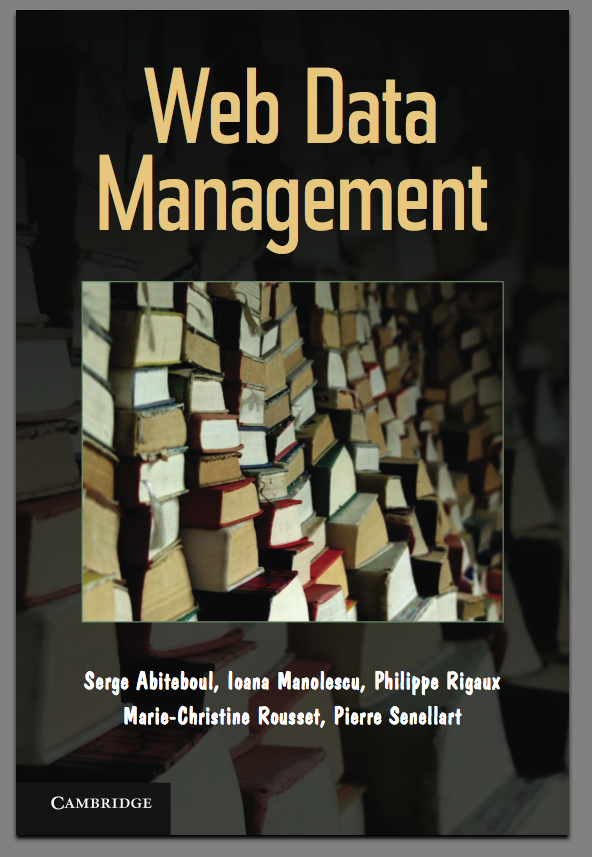
Marie-Christine ROUSSET is a Professor of Computer Science at the University of Grenoble Alpes (UGA) in France, where she is a member of the LIG (Laboratoire d'Informatique de Grenoble) in the SLIDE group. Previously affiliated with Paris-Saclay (LRI), she has established herself as a leading researcher in Knowledge Representation and Information Integration. She holds the distinguished position of Senior member of the Institut Universitaire de France (IUF) (2011-2016, renewed for 2016-2021) and serves as co-responsible for the chair Explainable and Responsible AI within MIAI Grenoble Alpes. Her research focuses on ontology-based data access, logic-based mediation between distributed data sources, query rewriting using views, data linkage, and distributed reasoning for the Semantic Web. She skillfully combines artificial intelligence and database techniques to address complex information integration challenges, with applications spanning biomedical informatics, educational technology, and trustworthy AI. Her work demonstrates consistent innovation from foundational research to practical implementations, as evidenced by her co-authorship of the book 'Web Data Management' published by Cambridge University Press. Professor ROUSSET's recent publications (2019-2022) reveal a growing emphasis on data privacy, RDF graph anonymization, and interactive ontology engineering, while maintaining her strong contributions to semantic web technologies and knowledge representation. Her research shows increasing attention to trustworthy AI concerns, aligning with her leadership roles in relevant projects. Scientific Recognition Senior member of Institut Universitaire de France (IUF) (2011-2016, renewed for 2016-2021) Junior member of Institut Universitaire de France (IUF) from 1997 to 2002 Chevalier de l'Ordre National du Merite (July 11, 2011) EurAI Fellow (nominated ECCAI Fellow in 2005) Best Paper Award at AAAI'96 for 'Verification of Knowledge Bases based on Containment Checking' Professor ROUSSET maintains an active role in the scientific community through editorial work and organizational leadership. She serves on the Editorial Board of Communications of the ACM (CACM) and has held significant roles including PC chair of EGC 2019, Workshops co-Chair of WWW 2018, and Area Chair of IJCAI 2017. Her consistent service on program committees of major international conferences demonstrates her standing in the field. Her laboratory, the SLIDE group within LIG, focuses on semantic web technologies, knowledge representation, and data integration. The group maintains strong connections with the international research community and participates in collaborative projects addressing cutting-edge challenges in artificial intelligence and data management, with particular emphasis on trustworthy and explainable AI systems.