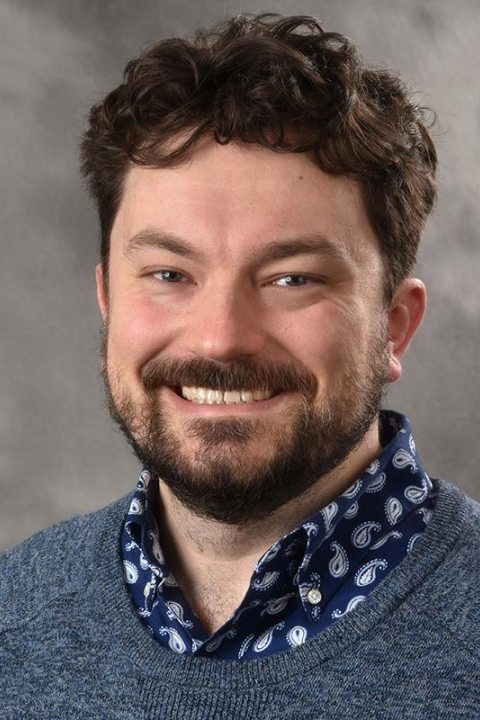
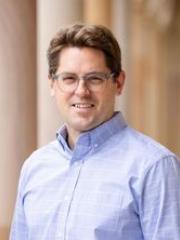
Charles Athanasopoulos is an Assistant Professor of African American and African Studies & English at The Ohio State University. His research focuses on intersections of Black rhetorics, media, and culture, with expertise in The Black Radical Tradition, Rhetorical Theory, and Cultural Critique. He earned his Ph.D. in Rhetoric & Communication from the University of Pittsburgh. His work analyzes racial progress, public symbols, and post/Ferguson America through lenses of iconoclasm and critical race theory. Education: Ph.D., Rhetoric & Communication, University of Pittsburgh. Research interests span Black American and Diasporic Cinema, Afro-Caribbean and Greek-Roma identity critiques. He has published in venues like Lateral: The Journal of the Cultural Studies Association and Western Journal of Communication. His 2024 book Black Iconoclasm explores dismantling racial symbols in public discourse. Recent articles address Fanonian thought, anti-racist campus rhetoric, and transnational Blackness studies. His publications critically engage with visual activism, film analysis, and decolonial theories. Current projects include studies on sonic rhetorics in Black women’s music and global race discourses in Mediterranean contexts.
Dr. hab. Piotr Łukomski is an Associate Professor at the Department of Political Theory, Institute of Political Science, University of Wrocław. His academic career focuses on the intersection of political theory, philosophy, and cultural analysis, with notable contributions to Hannah Arendt's philosophy, game theory applications in politics, and the role of imagination in political thought. Department: Political Theory Email: piotr.lukomski@uwr.edu.pl ORCID: 0000-0002-5307-616X Research Interests: His work spans conceptual metaphors in political theory, decision-making under hazardous conditions, cultural evolution of tyranny, and the aestheticization of politics. He examines how digital technologies (like VR) reshape political identity and how Arendtian frameworks apply to modern governance. Teaching: Coordinates social consulting labs and teaches decision-making processes in political contexts, with a focus on practical applications in hazardous conditions. Publications: Recent articles analyze VR-era political identity, Hannah Arendt's relevance to modern democracy, and the integration of problem-solving strategies in political thought.
Erik Wade is an Assistant Professor in the Department of English and Creative Writing at SUNY Oswego. He holds a PhD from Rutgers University and has taught at Rheinische Friedrich-Wilhelms-Universität Bonn in Germany. His research focuses on race, sexuality, and national identity in early medieval English literature, with a particular emphasis on how these themes intersect with religious texts and cultural narratives. He currently directs the Medieval and Renaissance Studies minor and serves on the advisory board for Exemplaria: Medieval, Early Modern, Theory . Educational Background: PhD in English, Rutgers University (2018) MA in English, University of Oregon (2011) BA in English and History with a minor in Medieval and Renaissance Studies, SUNY Oswego (2009) AA in Humanities, Onondaga Community College (2007) Research Interests: Interrogates racial and sexual discourses in medieval literature Examines how early English texts constructed national identity through contested themes like rape culture and racial hierarchies Investigates global influences (e.g., Byzantine theology) on medieval English thought Challenges Eurocentric narratives in medieval studies Recent Publications Highlight: His work analyzes trans and queer themes in medieval hagiography, the racialized language of 'Anglo-Saxon' terminology, and the intersections between animal studies and gender relations. He co-authored a Smithsonian Magazine article deconstructing the term 'Anglo-Saxon.' Teaching and Advocacy: Teaches courses on medieval global literature, critical theory, and premodern identity. Actively promotes inclusive pedagogy and addresses systemic racism in academic disciplines through published opinion pieces and collaborative projects like the upcoming Race in Early Medieval England (Cambridge UP).
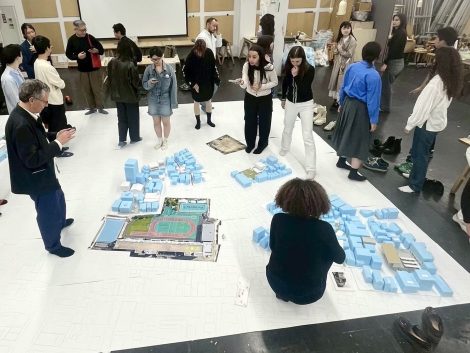
Keigo Kobayashi is an Associate Professor at Waseda University's Faculty of Science and Engineering, School of Creative Science and Engineering, Department of Architecture. He has served in this position since 2016, previously holding the rank of Assistant Professor from 2012 to 2016. His professional journey includes significant experience at the Office for Metropolitan Architecture (OMA) in Rotterdam, where he worked as a Senior Architect and Project Architect from 2007 to 2012. His educational background includes a Master of Architecture II from Harvard University's Graduate School of Design (2005), a Master of Architecture from Waseda University's Graduate School of Science and Engineering (2003), and a Bachelor's degree in Architecture from Waseda University's School of Science and Engineering (2002). Kobayashi's research focuses on architectural planning and city planning, with particular interests in food-related architecture, spatial behavior, and sustainable design. His work explores the intersection of architecture with everyday life, examining how spatial configurations influence human behavior and community formation. Recent research has investigated food systems in urban contexts, playful approaches to spatial design, and the relationship between architectural form and environmental performance. His publications demonstrate a strong focus on practical applications of architectural theory, with projects spanning from food truck design in Shodoshima to zero-energy housing solutions and innovative approaches to architectural education. His work shows a consistent interest in how architecture can respond to contemporary social challenges while maintaining theoretical rigor. Excellence in Concrete Construction Award 2019, American Concrete Institute (ACI), Qatar National Library / OMA Kobayashi actively contributes to architectural education through various committee memberships, including serving as Chief of the Subcommittee on Strategies for International Compatibility in Architectural Education at the Architectural Institute of Japan and leading the Caberra Accord Correspondence Subcommittee at the Japan Accreditation Board for Engineering Education. His teaching portfolio at Waseda University is extensive, covering architectural design studios from undergraduate to doctoral levels. He leads several research initiatives, including the Wakusei Project in Tosa, Kochi, NPO PLAT (Platform for Architectural Thinking), and the European Thinkbelt/McDonald's Radio University project which represents an innovative approach to architectural education and community engagement, particularly in contexts of migration and cultural exchange.
Ethan Mollick is the Ralph J. Roberts Distinguished Faculty Scholar, Rowan Fellow, and Associate Professor of Management at the Wharton School of the University of Pennsylvania. He serves as Co-Director of the Generative AI Labs at Wharton, where he researches AI's impact on work, entrepreneurship, and education. His academic background includes a PhD and MBA from MIT's Sloan School of Management and a bachelor's degree from Harvard University. Mollick's research spans artificial intelligence applications in business and education, entrepreneurship dynamics, and innovation management. He explores how generative AI transforms classroom education through simulations like PitchQuest, and investigates startup funding disparities with a focus on gender representation. His work on the 'jagged technological frontier' demonstrates how humans integrate AI capabilities through Centaur and Cyborg approaches. His publications reveal consistent focus on practical AI implementation, with recent work examining prompt engineering for diverse idea generation, AI-assisted teaching strategies, and gender representation tipping points in venture capital. The research shows increasing emphasis on educational applications since 2022, coinciding with the ChatGPT breakthrough. MBA Professor of the Year Award, Poets & Quants (2024) Named to TIME Magazine's Most Influential People in Artificial Intelligence ASQ Award for Scholarly Contribution (2024) Greif Research Impact Award (2020) McGraw-Hill/Academy of Management Innovation in Entrepreneurship Pedagogy Award (2016) As Co-Director of Wharton's Generative AI Labs, Mollick leads prototype development and research on human-AI collaboration. His teaching includes Technology Strategy, Entrepreneurship, and Innovation courses where he implements AI simulations. He has advised numerous organizations and co-founded a startup prior to academia, bringing practical experience to his research on solo versus team ventures. Mollick directs Wharton Interactive's game development initiatives, creating educational simulations including PitchQuest (AI-powered VC simulator), The Saturn Parable (crisis management), and The Entrepreneurship Game. His lab work focuses on creating scalable AI educational tools that provide personalized learning experiences through simulated practice environments.
Sheena Malhotra is a Professor of Gender & Women’s Studies at California State University, Northridge (CSUN), where she serves as Director of Queer Studies and Academic Director of the MA in Humanities Program. She holds concurrent appointments within the College of Humanities and Gender and Women's Studies Department, with extensive administrative experience including former roles as Associate Dean of the College of Humanities (2017-2019) and Chair of Gender and Women's Studies (2009-2013). Her academic trajectory bridges Indian film/television production and critical academia. Her educational background includes a Ph.D. in Communication Studies (1999) from the University of New Mexico, an M.A. (1993) from Pepperdine University, and a B.A. (1991) from DePauw University. Research interests span Media and Gender , Postcolonial Analysis of Indian Media , Queer Diasporic Audiences , and Racialized Implications of Silence , with methodological roots in intercultural communication and feminist theory. Her publication portfolio reveals consistent thematic evolution toward intersectional analyses of globalization, media, and identity. Early work focused on Indian television commercialization and Bollywood's cultural politics, while recent scholarship examines neoliberal impacts on youth imaginaries and queer coalition-building. Key methodological threads include postcolonial critique, discourse analysis, and embodied feminist approaches across 15+ peer-reviewed articles and two major books. Silence, Feminism, Power: Reflections at the Edges of Sound (2013, Palgrave MacMillan) - Co-edited anthology exploring silence as political strategy Answer the Call: Virtual Migration in Indian Call Centers (2013, University of Minnesota Press) - Co-authored ethnographic study of call center labor National Television Award nominations (India, 1995) during executive television production career Her advisory work includes five years on SATRANG's board (serving South Asian LGBTQIA+ communities in SoCal) and founding directorship of CSUN's Queer Studies Program. Current teaching includes GWS 351 (Gen Race Clas Sex) with hybrid/online course design expertise. Documentary film production remains integral to her scholarly practice through projects like The Shape of Water (2006) examining global feminist organizations.
Morten Søndergaard is an Associate Professor at Aalborg University’s Department of Communication and Psychology, affiliated with the Faculty of Social Sciences and Humanities. He is part of the Art, Aesthetics & Health Research Laboratory and the MASSHINE initiative. His research focuses on sound art, media art curation, and transdisciplinary practices, emphasizing the exclusion mechanisms in 20th-century art systems and unarchived avant-garde movements. Søndergaard has curated exhibitions globally, including at Kiasma and ZKM, and co-founded the POM conference series and ISACS symposia. He leads the Erasmus Master of Excellence in Media Arts Cultures, collaborating with institutions in Austria, Poland, and Hong Kong. His work bridges art, science, and technology, with recent projects exploring sonic archives and participatory curatorial frameworks. Key collaborations include roles with the European NeMe network, SUNY College New York, and the Momentum Biennial. He has organized over 20 projects since 2008, including the 2025 Momentum Biennial as head curator. His teaching spans media art theory, sound art practices, and curatorial methodologies at both bachelor and master levels. Søndergaard’s research outputs include over 145 publications, with a focus on sound art’s theoretical and practical dimensions. His current projects emphasize ‘uncurating’ methodologies and the reactivation of marginalized avant-garde practices. Notable activities include editorial roles, international conference organization, and advisory roles in art and science networks. His work has been featured in media outlets like Artdaily and the Biennial Foundation, highlighting his contributions to contemporary art discourse and curatorial innovation.
Dr. Mary Ann Hunter is Associate Professor in Education at University of Tasmania, specializing in arts-based enquiry and transformative educational practice. Her work explores creative ecologies and reflective supervision frameworks for educators, examining how curiosity and nomad creativity shape learning across formal and informal contexts. Research examines: Arts-based peacebuilding methodologies Reflective supervision for educational leaders Creative ecologies in learning environments Arts-sustainability education connections Community cultural development She leads international networks including IMPACT (initiative for conflict transformation) and coordinates interdisciplinary research projects evaluating arts-based programs like Terrapin Puppet Theatre's dementia care initiative and APRA AMCOS's Songmakers residency program. Honors include the Australian Philip Parsons Prize for Research and Excellence in Leadership Award from the Australian Council for Educational Leadership.
Sophie Swoffer is a Lecturer in Acting and Performance at the Department of Humanities, Sheffield Hallam University, within the College of Social Sciences and Arts. She holds a PhD from De Montfort University and previously taught there on the Drama course. Her research focuses on re-envisioning the male gaze through feminist performance practices, exploring hyper-femininities and monstrous femininity to challenge heteronormative frameworks. Key interests include intermedial technology's role in performance, notions of feminine multiplicity, and resistance to patriarchal structures. Her work bridges performance art and film studies, emphasizing activism and experimental techniques. Notable contributions include guest-editing the International Journal of Creative Media Research’s 2020 special edition on creative methodologies and chairing the 2019 M4C-funded conference on practice-based research. Recent publications analyze feminist strategies in video editing and the subversion of starlet archetypes through endurance-based performance. Swoffer’s interdisciplinary approach integrates live art, new media, and critical theory, aiming to dismantle the consumable spectacle of the female body. She actively participates in academic communities through journal contributions and conference leadership, advocating for innovative methodologies in creative research.
Dr. Rob Rouse is a Lecturer at the School of Education, University of Queensland , with expertise in maker education and integrated STEM learning environments . Previously, he taught chemistry at a New York City performing arts secondary school through the New York City Teaching Fellows and served as former Director of the Southern Methodist University (SMU) Maker Education Project , co-founded with SMU's School of Engineering. PhD in Learning, Teaching, and Diversity from Vanderbilt University's Peabody College Current research focuses on supporting teachers to utilize school makerspaces for innovative, hands-on instruction Collaborates with informal STEM organizations to provide professional development for educators His work explores inclusive makerspace design , mobile instructional spaces , and K-12 teacher training . Publications emphasize systematic reviews of makerspace research , best practices for mobile STEM spaces , and culturally relevant maker pedagogy . While no specific scientific awards are listed, his projects like the MakerTruck mobile makerspace demonstrate practical impact. Dr. Rouse supervises PhD research on topics including maker pedagogy , differentiated science learning , and gender dynamics in STEM education . He actively partners with teams at institutions like the International Symposium on Academic Makerspaces and Australian Technology Education Research Conference .
Rasmus Koss Hartmann serves as an Associate Professor in the Department of Management, Society and Communication at Copenhagen Business School, Denmark. His scholarly work critically examines innovation and entrepreneurship through interdisciplinary lenses, contributing to United Nations Sustainable Development Goals related to responsible consumption, reduced inequalities, and sustainable economic growth. His research interests center on critical innovation management and entrepreneurship studies , with particular focus on deconstructing mainstream narratives around entrepreneurial culture. Key themes include organizational reflexivity in university incubators, the political economy of 'tech theater' in Silicon Valley, and Veblenian critiques of contemporary entrepreneurialism. Hartmann's work consistently challenges assumptions about acceleration in startup culture while exploring alternatives like slow management and untrepreneurial economic models. Analysis of his 39 publications reveals evolving scholarly trajectories: early work examined user innovation in government settings (2013-2018), followed by critical CMS contributions (2014-2016), and recent intense focus (2021-2025) on deconstructing entrepreneurial mythology through books like Innovation Management: Foundations and Futures (2025) and articles analyzing 'wantrepreneurs' and the 'speed ethic'. Hartmann has supervised three research projects including one PhD thesis, demonstrating commitment to mentoring next-generation critical scholars. His work shows significant interdisciplinary reach with publications spanning management journals ( Scandinavian Journal of Management ), innovation outlets ( Innovation: Organization & Management ), and engineering management forums ( IEEE Engineering Management Review ).
Dr. Wai Kiong Oswald Chong is an Associate Professor at Arizona State University's School of Sustainable Engineering and the Built Environment, with a dual affiliation as Senior Global Futures Scientist at the Global Futures Scientists and Scholars program. He holds a PhD in Civil Engineering from the University of Texas-Austin, MSc and BSc in Building from the National University of Singapore, and focuses on integrating artificial intelligence with sustainable engineering systems. PhD (2005): Civil Engineering, University of Texas-Austin MSc (1999) & BSc (1997): National University of Singapore His research bridges lunar construction with Earth-bound sustainable systems, covering topics like: Space habitat modularization Resource circularity systems AI-enhanced building codes Climate-resilient infrastructure Advanced energy modeling Construction supply chain optimization Publications demonstrate consistent focus on: Semiconductor facility HVAC optimization Building energy consumption anomalies Life cycle assessment frameworks Construction risk management Deconstruction and material reuse AI-driven system modeling Current research projects include: Lunar MVI (Moon Village Initiative) Semiconductor fab design optimization Human-AI knowledge interfaces Thermal insulation systems for extreme environments Smart grid energy modeling
Prof. Dr. Almut Peukert is a Junior Professor at the University of Hamburg's Faculty of Economics and Social Sciences , holding the Junior Professorship in Sociology with specializations in Work, Organization, and Gender. Her research focuses on the intersectionality of gender and labor across professional, familial, and reproductive domains, employing qualitative methods to examine societal transformations. Specializes in care work and gender-differentiated labor division Leads the "LFF Care Transformations" research network Engaged in public outreach through "Lecture for All" and media commentary Research Interests include: Reproductive work and family-building practices Gendered labor dynamics in heterosexual and same-sex relationships Analysis of parental allowance reforms Work-family reconciliation strategies during the pandemic Care work's socioeconomic status Queer kinship and non-heteronormative family structures Recent Publications analyze ambivalent recognition orders in parenthood, pandemic-era labor negotiations, and family policy reforms. Her work frequently appears in Femina Politica , German Politics , and WSI-Mitteilungen . Scientific Awards include: 2023: Maria Weber Grant for outstanding young female scientists 2022: Gender Prize for bachelor thesis on social reproduction crisis 2022: Gender Prize for article on intra-family labor division during the Corona crisis Her teaching innovations include the "Flipped Gender" project, integrating flipped classroom methods with gender sociology research. She actively collaborates with institutions like the German Institute for Interdisciplinary Social Policy Research (DIFIS) and participates in international conferences such as EASST-4S.
Dr. Sven Mackenbach serves as a Postdoctoral Researcher and Senior Engineer at RWTH Aachen University's Institute of Construction Management, Digital Engineering and Robotics in Construction (ICoM) since January 2023. Holding a doctorate in circular construction from the same institution, he leads the development of the "Circular Construction" research area, oversees multidisciplinary projects, and teaches Sustainable Construction Management to engineering students. His academic credentials include: PhD in Circular Construction, RWTH Aachen University (2023) Mackenbach's research integrates circular economy principles with digital construction technologies, focusing on strategic management frameworks for sustainable building practices. His expertise spans modular construction methods, BIM-based sustainability assessment, and digital twinning applications for infrastructure management. He bridges theoretical research with practical implementation through sustainability consulting for construction stakeholders, addressing real-world challenges in resource efficiency and regulatory compliance. His publication portfolio reveals a decisive shift toward data-driven circular construction solutions, with increasing emphasis on BIM-ontology integration for deconstruction planning, public participation systems, and sewer infrastructure management. Recent works demonstrate sophisticated methodological approaches to quantify ecological, economic, and social sustainability metrics without specialized expertise. As a scientific supervisor, Mackenbach mentors research assistants in project execution while contributing to curriculum development through his specialized course instruction. His leadership in research project coordination indicates substantial grant management experience, though specific funding sources aren't detailed in available materials. Within ICoM's collaborative environment, he contributes to cross-disciplinary teams advancing digital engineering and robotics applications in construction, particularly through the KaSyTwin sewer management project and BIPV facade digitalization initiatives.
Dr. Anna Bendrat is an Assistant Professor at the Department of English and American Studies, Maria Curie-Skłodowska University, Poland. A scholar in Rhetoric, American Drama, and Cognitive Poetics, she is actively involved in interdisciplinary research, particularly through the Cognitive Studies Team and the International Federation for Theatre Research (IFTR). Her research interests span Rhetoric, Social Communication, Identity Studies, New Media, and Affect Studies. She has led the EU Erasmus+ project MigraMedia (2023–2026) and co-founded the journal New Horizons in English Studies . Her work bridges academic rigor with public engagement, including organizing the Media in America, America in Media conference series. Anna’s recent publications interrogate urban trauma in Pulitzer-winning drama, AI’s role in reconstructing memory, and cognitive texture in multi-perspective narratives. Her scholarly activities are enriched by editorial roles in Res Rhetorica and New Horizons in English Studies , alongside grants for research in New York and Poland. She mentors the UMCS Philology Student Circle, promoting anglophone cultures, and maintains a focus on Polish-American academic collaborations. Her research team explores digital rhetoric, migration narratives, and the intersection of literature with cognitive theory.