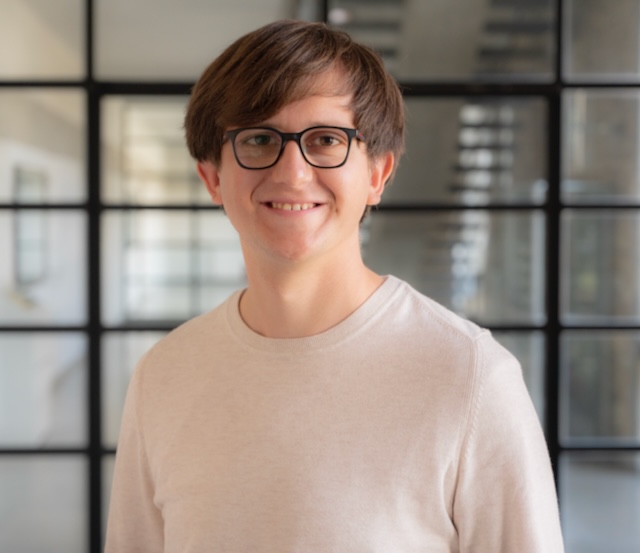
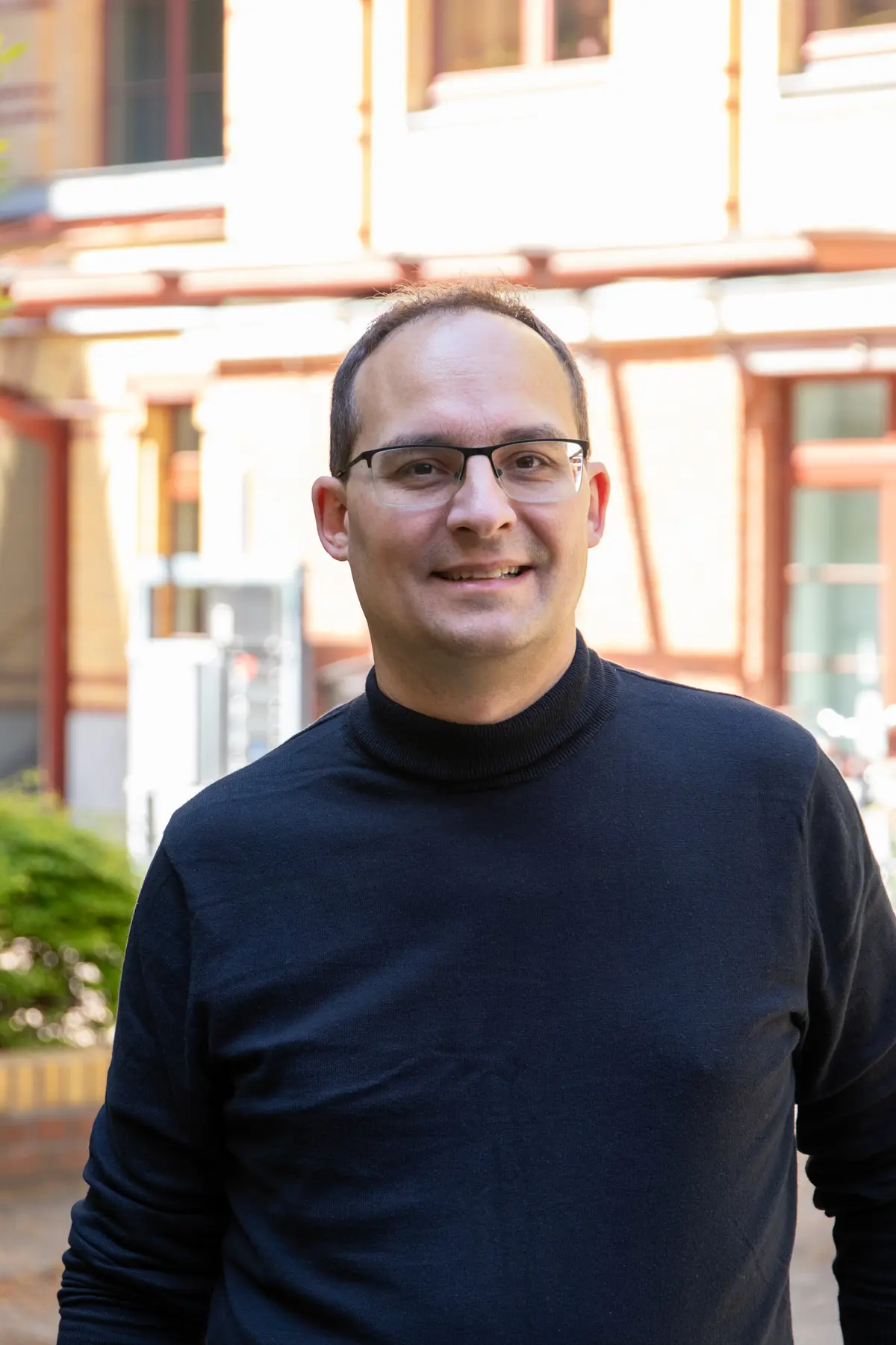
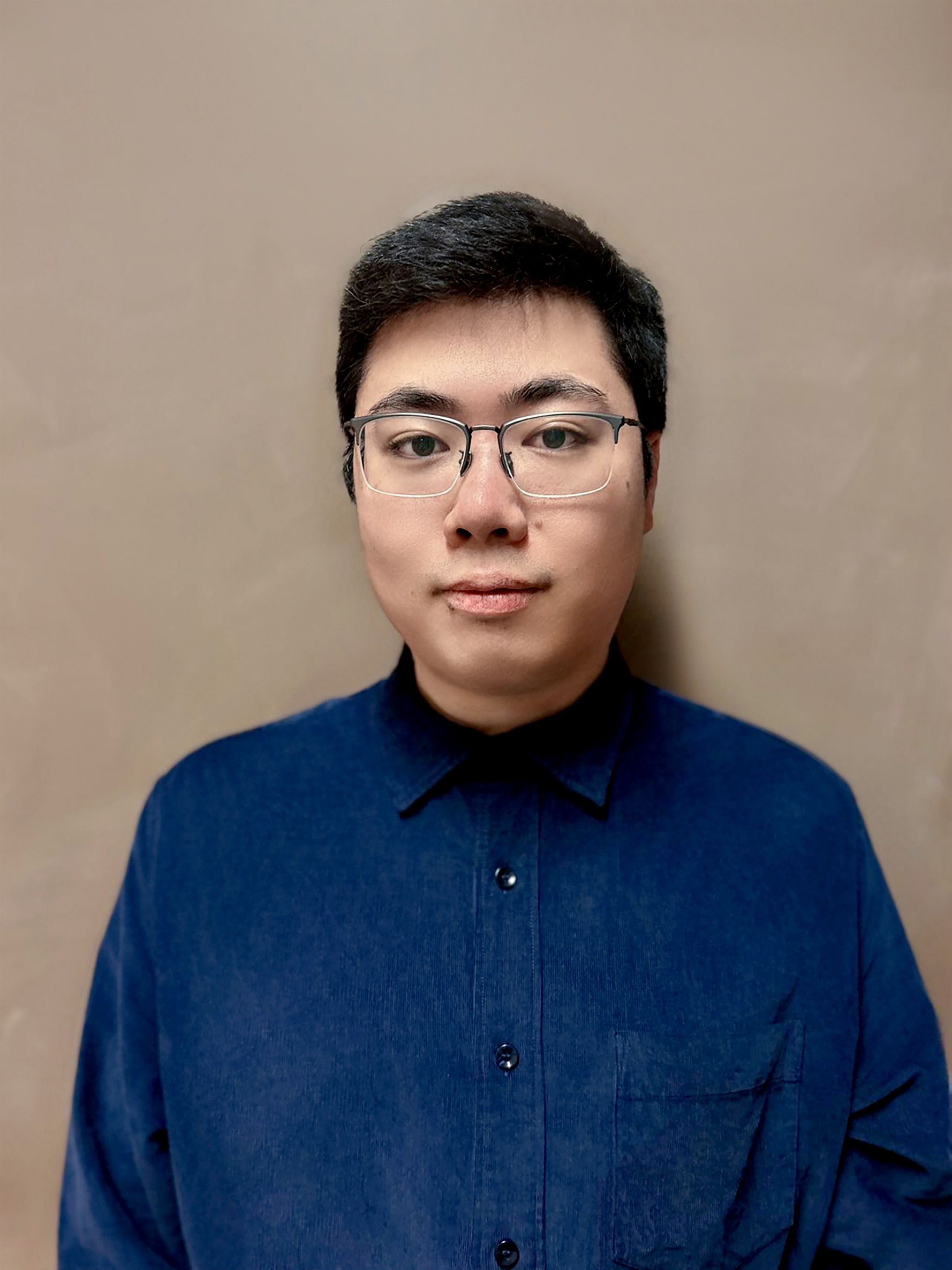
Sam Elman is a Postdoctoral Research Fellow at the School of Computer Science, University of Technology Sydney. His research focuses on Quantum mechanics and quantum information theory Mathematical aspects of free-parafermion solvability Topological entanglement entropy in multiple dimensions Optimal scheduling of quantum graph states Recent work includes publications on path decomposition algorithms for quantum computation and integrability of spin systems via frustration graphs. He is available for Masters Research or PhD student supervision. He is affiliated with the Faculty of Engineering and Information Technology Centre for Quantum Software and Information (QSI) UTS Research Centre
Dr. Ali Sekmen serves as Professor and Chair of the Department of Computer Science within the College of Engineering at Tennessee State University, where he has held leadership positions since joining in 1998. He additionally contributes to university governance as a member of the Tennessee State University Board of Trustees. His academic credentials include dual Ph.D. degrees from Vanderbilt University in Electrical Engineering (2000) and Mathematics (2012), complemented by an MS in Mathematics (2009) from Vanderbilt and undergraduate/postgraduate engineering degrees from Bilkent University. This unique interdisciplinary background fuels his research at the intersection of theoretical mathematics and practical computing. Dr. Sekmen's research program centers on Approximation Theory, Sampling Theory, High-Dimensional Data Analysis, Machine Learning, and Robotics, with particular emphasis on subspace segmentation algorithms and their real-world implementations. His work demonstrates a consistent pattern of bridging abstract mathematical concepts with tangible engineering applications, especially in robotics systems and data analysis frameworks. The publications spanning 2012-2019 reveal increasing focus on deep learning integration with traditional mathematical approaches for handling complex datasets. As an active Principal Investigator, Dr. Sekmen has secured substantial funding from major agencies including NSF, NASA, USDA, and the Department of Defense. His current projects include USDA-funded water infrastructure robotics and Army-sponsored subspace segmentation research, demonstrating sustained competitiveness in federal grant acquisition. His teaching portfolio spans foundational computer science courses to specialized topics in machine learning and robotics, reflecting his commitment to both theoretical and applied education.
Antoine Renaud is an Associate Professor at CentraleSupélec, affiliated with the EM2C Laboratory (Eiffel Building, Office EB.115). His research focuses on experimental combustion, particularly in aeronautics and energy production, with expertise in flame stabilization, combustion instabilities, and alternative fuels. Teaching: Deputy Head of the Aerospace and Transportation track, teaching aerodynamics, fluid mechanics, and experimental methods across all curriculum levels Research: Experimental methods for transient combustion phenomena, hydrogen and sustainable aviation fuels, swirling flows, and acoustic instability control Recent publications (2025–2024) highlight his work on: Hydrogen combustion dynamics and lean blowout limits Plasma-assisted and cross-flow injection techniques Thermo-acoustic instabilities in annular/swirl combustors NOx emissions and stabilization of low-NOx hydrogen flames Dynamic Mode Decomposition (DMD) and precessing vortex core (PVC) analysis Acoustic energy conservation models for combustion systems His collaborative work spans institutions like Technische Universität Darmstadt and involves advanced diagnostics (OH-PLIF, PTV, LES modeling).
Sofia Eriksson is an Associate Professor in the Department of Mathematics within the Faculty of Technology at Linnaeus University. She specializes in numerical analysis and scientific computing, with a primary focus on developing finite difference methods for solving time-dependent partial differential equations. Her research has significant applications in fluid dynamics and aerodynamics. Dr. Eriksson's research interests span numerical analysis, scientific computing, finite difference methods, partial differential equations, and computational mathematics. She leads or participates in two major research groups: Computational Mathematics for Predictive Digital Twins (PreDiTwin) and Scientific Computing and Partial Differential Equations. Her work emphasizes developing stable numerical methods with proper boundary and interface treatments. Her publication record shows consistent output since 2007, with 15 recent publications spanning journals like Journal of Computational Physics, SIAM Journal on Numerical Analysis, and Foundations of Computational Mathematics. Her research shows a clear progression from foundational work on finite difference methods to more specialized applications in fluid dynamics and aerodynamics. The publications demonstrate expertise in developing stable numerical schemes, particularly for time-dependent problems with complex boundary conditions. Dr. Eriksson teaches courses in Numerical Methods, Linear Algebra, and Calculus, contributing to both undergraduate and graduate education in mathematics and computational science. Her teaching reflects her research expertise, providing students with practical knowledge of numerical methods applicable to real-world scientific and engineering problems.
Kade Head-Marsden is an Assistant Professor in the Department of Chemistry at the University of Minnesota's College of Science and Engineering. The Head-Marsden Group conducts interdisciplinary research at the intersection of quantum physics, chemistry, and computer science, focusing on elucidating electronic structure properties and open quantum system dynamics relevant to emerging quantum materials and technologies. Research interests span multiple interconnected domains: Classical method development for open quantum system dynamics in Markovian and non-Markovian regimes Quantum algorithm development for chemical applications on noisy-intermediate scale quantum computers Electronic structure characterization of correlated molecular systems Applications in quantum materials, molecular energy transport, and quantum information science The research output shows consistent growth with multiple publications in high-impact journals including Physical Review Research, Chemical Reviews, and Journal of Chemical Physics. Recent work demonstrates expertise in stabilizing quantum system properties, modeling decoherence dynamics, and developing quantum algorithms for chemical applications. Awards and recognitions include: Scialog Fellow in Quantum Matter and Information Professor Head-Marsden actively mentors students at multiple levels, including graduate students, REU participants, and undergraduates. The research group hosts seminars and participates in major conferences, indicating strong engagement with the scientific community. Current funding supports multiple graduate students and summer research programs through UMN's MRSEC and Lando programs. The Head-Marsden Group maintains a research focus on both theoretical development and practical applications, with work spanning from fundamental quantum dynamics to algorithm implementation for near-term quantum hardware.
Dominik Stöger is an Assistant Professor (tenure-track) in the Department of Mathematics at KU Eichstätt-Ingolstadt since 2021, affiliated with the Mathematical Institute for Data Science and Machine Learning (MIDS). His research bridges mathematical theory and data science applications. His educational background includes: B.Sc. in Mathematics, Technical University of Munich (2013) M.Sc. in Mathematics, Technical University of Munich (2015) Ph.D. in Mathematics, Technical University of Munich (2019) Stöger's research centers on mathematical foundations of data science, with emphasis on non-convex optimization in machine learning, theoretical analysis of overparameterized models, and low-rank matrix recovery. He combines optimization theory and high-dimensional probability to develop rigorous guarantees for modern algorithms, addressing critical challenges in deep learning theory. His recent publications (2020-2025) demonstrate consistent output in top venues including COLT, NeurIPS, and ICLR, with particular focus on implicit regularization phenomena and non-convex recovery guarantees. The 2025 pipeline shows active work extending theoretical boundaries in matrix sensing and neural network analysis. Stöger has received significant recognition: NeurIPS 2021 Spotlight Paper (top 3% of submissions) COLT 2025 paper presentation As a tenure-track faculty member, he maintains active collaborations across institutions (USC, TUM) and likely advises graduate students. His research program shows strong momentum with multiple concurrent projects advancing theoretical machine learning. He contributes to the research ecosystem through affiliation with MIDS, fostering interdisciplinary work in mathematical data science at KU Eichstätt-Ingolstadt.
Daniel Kráľ is an Alexander von Humboldt Professor for Discrete Mathematics at Leipzig University and an affiliated member of the Max Planck Institute for Mathematics in the Sciences (MPI MiS). Previously, he held the Donald Ervin Knuth Professorship at Masaryk University in Brno and is also an honorary professor at the University of Warwick, where he was a professor of mathematics and computer science and a member of the Centre for Discrete Mathematics and its Applications (DIMAP). His research addresses various topics at the interface of mathematics and computer science, with primary focus on structural and extremal graph theory, discrete algorithms, and combinatorial limits. The theory of combinatorial limits is an emerging area that provides analytic methods to study large graphs such as social networks, establishing new links between analysis, combinatorics, ergodic theory, group theory and probability theory. His work has been supported by prestigious ERC grants including the CCOSA Starting grant and LADIST Consolidator grant. Dr. Kráľ's scholarly output includes over 150 journal research papers and numerous conference contributions. His recent publications demonstrate continued leadership in extremal combinatorics, graph limits, and structural graph theory, with significant contributions to understanding quasirandomness, Turán densities, and the coloring of complex graph structures. Scientific Recognition: SIAM Fellow (2024) Fellow of the American Mathematical Society (2020) Philip Leverhulme Prize in Mathematics and Statistics (2014) European Prize in Combinatorics (2011) ERC Consolidator grant LADIST (2015-21) ERC Starting grant CCOSA (2010-15) Professor Kráľ has supervised numerous PhD students and postdoctoral fellows throughout his career. His editorial service includes Editor-in-Chief of SIAM Journal on Discrete Mathematics (2017-2022), Co-Editor-in-Chief of Journal of Combinatorial Theory (since 2025), and Managing editor of Advances in Combinatorics (since 2018). He has organized multiple international workshops and conferences including Oberwolfach workshops on Graph Theory and the European Conference on Combinatorics, Graph Theory and Applications (EUROCOMB'23).
Yichi Zhang is an Assistant Professor in the Department of Statistics at Indiana University Bloomington. Previously, he was a Postdoctoral Scholar at Duke University with dual appointments in the Fuqua School of Business and Department of Biostatistics & Bioinformatics. His academic credentials include a Ph.D. in Statistics from North Carolina State University (2023) and a B.S. in Mathematics and Applied Mathematics from Sichuan University (2018). Professor Zhang's research centers on methodological innovation in statistical learning, with primary focus areas: Causal Mechanism and Causal Learning High-dimensional Models Large-scale Computations Randomized Algorithms Uncertainty Quantification His publication trajectory (2023-2025) reveals rapid advancement in theoretical statistics and machine learning, with increasing contributions to causal inference frameworks and computational methodologies. Recent work demonstrates particular strength in adapting statistical theory to AI challenges, including large language model evaluation and network analysis. His scholarly recognition includes: ASA Nonparametric Statistics Student Paper Award Finalist (2023) IMS Hannan Graduate Student Travel Award (2021) ENAR Distinguished Student Paper Award (2021) Mu Sigma Rho National Statistics Honor Society (2018) As an early-career faculty member, Professor Zhang is establishing his research program while teaching core statistics courses. His active publication pipeline suggests robust research momentum, though specific grant details aren't provided. Prospective students interested in theoretical-computational statistics should contact him directly regarding advising opportunities and current projects.
François RAULT serves as an Assistant Professor at the National Higher School of Arts and Industries of Textiles (ENSAIT) in Roubaix, France, affiliated with the Multifunctional Textiles and Processes Group and GEMTEX research laboratory. His work bridges advanced materials science with textile engineering to develop next-generation functional fabrics for industrial and wearable applications. His research focuses on two interconnected domains: (1) multifunctional fiber development through melt spinning and electrospinning techniques for fire-retardant and piezoelectric applications, and (2) functional textile engineering using knitting, weaving, and embroidery to create smart textiles for energy harvesting, protective sound-absorbing materials, and sustainable eco-materials. This work integrates polymer chemistry, nanomaterials science, and textile processing to solve real-world challenges in safety, energy, and environmental sustainability. Recent publication analysis (2022-2025) reveals three dominant research trajectories: piezoelectric energy harvesting using optimized PVDF nanofiber architectures, bio-based flame retardancy leveraging lignin-phosphinate systems for polyamide textiles, and stimuli-responsive materials incorporating photochromic molecules for light-activated textile actuation. These themes demonstrate consistent innovation in merging molecular-scale material properties with macroscopic textile structures. Scientific Recognition: PEDR Award for PhD supervision and research (French Ministry of National Education, 2018-2022) RAULT coordinates major research initiatives including TENERIFE (piezoelectric textiles), INTIMIRE (flame-retardant fibers), TACTIL (photoactive textiles), and CONTEXT (wireless communication textiles), securing funding from ANR, European Interreg, and regional programs. He supervises ENSAIT's professional licenses in innovative textiles and mentors student projects while teaching courses on knitting technology, smart textiles, and material characterization. Based at GEMTEX laboratory, he leads the Multifunctional Textiles and Processes Group through collaborations with European academic institutions (University of Lille, UMONS) and industry partners (CETI, Devan, Mulliez-Flory), driving industrial applications of academic research in technical textiles.