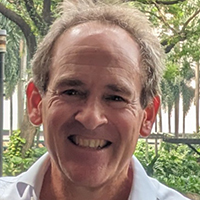
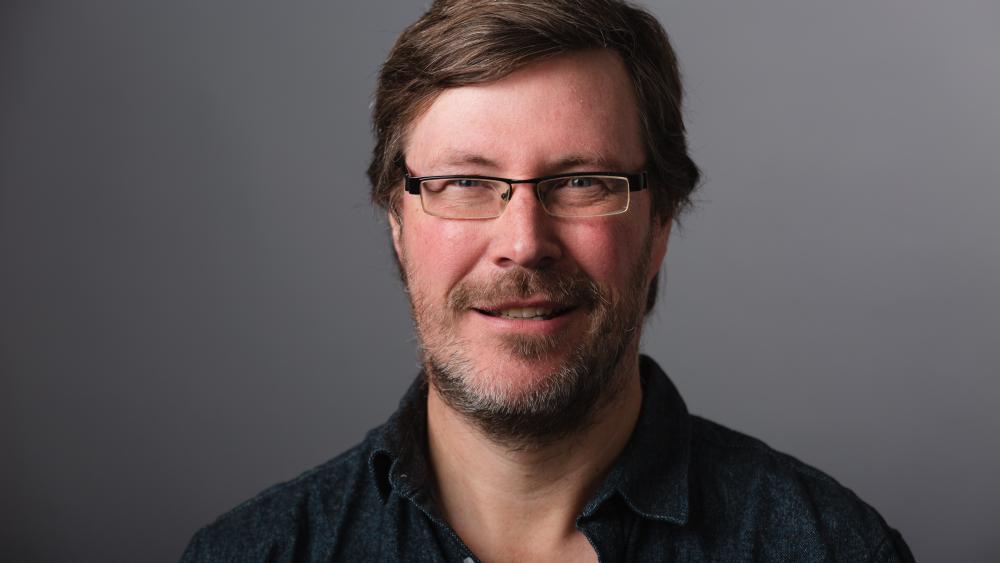
Faye Ginsburg is the David B. Kriser Professor of Anthropology at New York University (NYU), affiliated with the College of Arts & Science. Her work focuses on social anthropology, ethnographic film, media studies, indigenous media, and disability. She holds a Ph.D. from CUNY (1986) and a B.A. from Barnard College (1976). Research interests include global media dynamics, disability studies, and indigenous sovereignty. She co-edited pivotal works like *Media Worlds: Anthropology on New Terrain* (2002) and *Disability Worlds* (2024). Recent publications address disability in the digital age, indigenous media sovereignty, and reproductive politics. Awards include the 2025 American Academy of Arts and Sciences membership and the 2025 CUNY President's Distinguished Alumni Award. She directs NYU’s Graduate Certificate Program in Culture and Media and co-founded the NYU Council for the Study of Disability. Her grants include NEH funding for disability research and leadership roles at the Center for Religion and Media. Key initiatives include SKILLS transition program for NYC youth with learning disabilities and collaborations with global media festivals (e.g., Margaret Mead Film Festival). Her interdisciplinary work bridges academia, activism, and media practice.
John T. Sidel Summary Professor John T. Sidel is the Sir Patrick Gillam Chair in International and Comparative Politics at the London School of Economics and Political Science (LSE), holding joint appointments in the Government and International Relations Departments. He is also Director of the Saw Swee Hock Southeast Asia Centre. His career spans over three decades of research on Southeast Asia, with a focus on the Philippines, Indonesia, and Vietnam. Education B.A. and M.A. in Political Science from Yale University Ph.D. in Government from Cornell University Research Interests Sidel specializes in Southeast Asian politics, including local power dynamics, comparative historical sociology, Islam in politics, reform advocacy campaigns, and infrastructure politics. Key themes include: Local Politics: Analysis of political bossism, dynasties, and subnational governance in the Philippines and beyond. Comparative History: Long-term patterns of state-building, nationalism, and colonial legacies in Southeast Asia. Islam & Politics: Study of religious violence, political mobilization, and transnational Islam in Indonesia. Reform Advocacy: Advising development initiatives like the Philippines' Coalitions for Change program. Infrastructure Politics: Urban transport reforms and their socio-political implications in Metro Manila. Key Publications Major works include Republicanism, Communism, Islam: Cosmopolitan Origins of Revolution in Southeast Asia (2021), Riots, Pogroms, Jihad (2006), and Capital, Coercion, and Crime (1999). His recent research explores transport policy reforms and the political economy of development in the Philippines. Teaching Sidel teaches courses on Southeast Asian politics, comparative historical sociology, and Islam in world politics at LSE. Notable courses include GV4D3 (Local Power in Globalization) and IR461 (Islam in International Relations). Public Engagement He advises international organizations such as The Asia Foundation and UNHCR, contributing reports on Indonesia's refugee policies and Philippine development initiatives. Active in public lectures and podcasts, he promotes Southeast Asian studies through platforms like the LSE's 'Dialogues on Southeast Asia' series.
Professor Eric Atwell is a Professor of Artificial Intelligence for Language at the University of Leeds' School of Computer Science, part of the Faculty of Engineering and Physical Sciences. He holds additional roles as a LITE Fellow at the Leeds Institute for Teaching Excellence (40% part-time), Turing Fellow at the Alan Turing Institute, and member of the Leeds Institute for Data Analytics (LIDA) and Language at Leeds (LATL). His research focuses on AI applications in corpus linguistics, text analytics, and computational analysis of religious and medical texts, with a strong emphasis on Arabic and Islamic studies. He leads the AI4L research group and has supervised over 60 research students and fellows, many of whom have pursued careers in academia, tech, and AI-driven fields. Education: PhD in Corpus Linguistics and Language Learning (University of Leeds, 2008), BA (First Class) in Computing and Linguistics (Lancaster University, 1981) Grants: Includes EPSRC-funded projects like Natural Language Processing with Arabic and Islamic Studies (£337K, 2013-2015) and EDUBOTS chatbots for education (£94K, 2019-2022) Teaching: Leads modules in Data Mining, Text Analytics, and AI across multiple programs, including online Masters and PhDs. Known for innovative teaching approaches and student support, receiving positive feedback for engagement and course design. Research Interests: AI applied to corpus linguistics, Quranic text analysis, Arabic NLP, chatbots for education, and decolonizing curricula. Notable projects include Quranic semantic search tools, Hadith corpus analysis, and AI-driven fact-checking systems. Publications: Over 277 publications, with recent work focusing on Quranic QA systems, Arabic dialect identification, and generative AI applications in education. His research is widely cited, earning recognition from ResearchGate for high readership. Awards: Recognized for his most-read research items on ResearchGate (June 2021). Gallup StrengthsFinder highlights his top traits as Learner, Achiever, Ideation, Intellection, and Maximizer. Labs/Teams: Leads the AI4L research group and collaborates with international institutions including SUSTECH Sudan, King Saud University, and SWJT University (China). Active in research networks like LIDA and LATL.
Emmanuel K. Akyeampong is the Ellen Gurney Professor of History and Professor of African and African American Studies at Harvard University, with affiliations to the Weatherhead Center for International Affairs and the Hutchins Center. He earned his Ph.D. in African History from the University of Virginia (1993), MA in English Labor History from Wake Forest University (1989), and BA in History and Religions from the University of Ghana at Legon (1984). Education Ph.D., African History, University of Virginia (1993) M.A., English Labor History, Wake Forest University (1989) B.A., History and Religions, University of Ghana at Legon (1984) His research spans African history, eco-social dynamics, cultural change, and post-colonial nation-building. He has edited major works including Themes in West Africa's History and co-edited the Dictionary of African Biography , focusing on Ghanaian societal structures and transnational African narratives. Recent projects like Independent Africa analyze leadership and governance in the post-independence era. Scientific Awards and Recognitions : Zora Neale Hurston Fellow (Northwestern University, 1993-1994) Corresponding Fellow, Royal Historical Society (UK, 2002) Fellow, Ghana Academy of Arts and Sciences (FGA) Honorary Doctor of Laws (University of Ghana, 2018) Loeb Harvard College Professor (2005) As Oppenheimer Faculty Director of Harvard's Center for African Studies and former chair of the Committee on African Studies, he co-founded the International Institute for Advanced Study of Cultures, Institutions and Economic Enterprise (IIAS) in Accra. He also leads the African Public Broadcasting Foundation, promoting development-oriented media.
Maisha T. Winn serves as the Excellence in Learning Graduate School of Education Professor at Stanford University and is Faculty Director of the Stanford Accelerator for Learning's Equity in Learning Initiative. She leads the Futuring for Equity Lab as Principal Investigator and holds significant leadership positions including President-Elect of the American Educational Research Association and membership in the National Academy of Education. Dr. Winn's research examines how non-dominant youth and communities develop literate trajectories across historical and contemporary settings. As an ethnographer by training, she investigates how communities depicted as under-resourced create their own educational practices, processes, and institutions. Her scholarship bridges historical analysis with contemporary educational practice to build more just, collaborative, and equitable futures in education. Her work spans restorative justice in education, Black literacy studies, and transformative justice approaches, with particular attention to the school-to-prison pipeline, independent Black institutions, and futures-oriented educational frameworks. Dr. Winn analyzes how historical educational models can inform contemporary practices that center community knowledge and cultural identity. Andrew W. Mellon Fellow at CASBS (2022-23) American Educational Research Association Fellow Member of the National Academy of Education Dr. Winn advises doctoral students including Christina Hewko and Misbah Naseer, and leads research initiatives focused on educational equity. Her Futuring for Equity Lab develops frameworks for understanding how marginalized communities have historically created educational spaces that affirm their identities and knowledge systems, with direct implications for contemporary educational practice and policy. Her research team collaborates with community organizations and schools to translate scholarly insights into practical applications that promote educational justice, particularly in areas of school discipline reform and literacy education for marginalized youth.
Dr Luke Hespanhol is a Senior Lecturer in Design and Computation at the University of Sydney's School of Architecture, Design and Planning. He is affiliated with the Sydney Southeast Asia Centre and Sydney Nano Institute, and previously served as a guest researcher at Aarhus University's Department of Aesthetics and Communication. His work focuses on interactive media installations that foster reflection on human-environment relationships, blending urban design, technology, and social engagement. He holds a PhD in interactive media architecture from the University of Sydney's Design Lab, with research exploring user-centred hybrid urban environments. His doctoral work laid the foundation for his current interests in digital placemaking, urban informatics, and smart cities. Research Interests: - Designing technology-infused public spaces - Media architecture as a tool for inclusive urban development - Ethical implications of AI and blockchain in cultural contexts - Temporal and spatial dimensions of urban interaction design - HCI methodologies for multiperspectival cultural heritage interpretation - Antifragile city frameworks integrating citizen participation His recent publications highlight trends in reimagining urban futures through speculative design, ethical AI systems, and autonomous vehicle interaction paradigms. While no specific scientific awards are listed, his work often addresses critical societal issues like decolonization in technology and climate-resilient infrastructure. Grants and Collaborations: - 2025: 'Waste to Resilience: Sanitation Against Stunting and Climate Vulnerability in Informal Coastal Areas' (Sydney Southeast Asia Centre) - 2022: 'The Metaverse as Vehicle for Aboriginal Digital Inclusion, Wellness and Self-Determination' (Facebook Research) Dr Hespanhol is actively involved in the Media Architecture Institute and contributes to cross-disciplinary initiatives uniting technology, art, and urban planning. His research emphasizes co-creation processes with communities to ensure equitable technological integration in urban systems.
Odd Arne Westad is the Elihu Professor of History at Yale University, specializing in modern international and global history with a focus on East Asia since the 18th century. He previously held positions at Harvard University and the London School of Economics. His research bridges Cold War studies, empire/colonialism, and China's economic reforms. Education: BA in History, Philosophy, and Modern Languages (University of Oslo) Graduate Degree in US/International History (University of North Carolina at Chapel Hill) Research Interests: Global Cold War dynamics and post-colonial transformations China’s international history and imperial trajectories Economic reforms in late 20th century China and their global impact Key Publications: The Cold War: A World History (2017) Restless Empire: China and the World Since 1750 (2012) The Global Cold War (2007) Awards: Fellow of the British Academy Fellow of multiple national academies Professional Activities: Active in global history networks, advising doctoral students on Cold War and Asian history. Teaches courses on empire, decolonization, and modern East Asia.
Karoline Noack is a full Professor of Ancient American Studies and Ethnology at the Institute of Archaeology and Cultural Anthropology , University of Bonn, where she also directs the BASA Museum (Bonn Collection of the Americas). She has held this position since 2009 and is a leading scholar in Andean studies, museum ethnology, and colonial Latin American history. Her research interests are deeply interdisciplinary, focusing on: The Inca state and early colonial Andes, particularly in Peru, Bolivia, and Mexico Transculturation and gender in colonial contexts The history of ethnological knowledge, especially in the GDR Museum studies, collection ethics, and the decolonization of ethnographic museums Material culture and provenance research Her recent scholarly output centers on dependency and mobilization in the Inca Empire, the global history of resources (like cotton and coca), and the role of museums in knowledge production. She has led major projects such as 'Balancing the Center and the Local' in Cochabamba and the KOSMOS collaborative project on object-based knowledge. Her publications span museum ethics, colonial legal history, and transcultural exchange. Karoline Noack has received significant recognition, including: Membership in the German Archaeological Institute Fellowships from the Volkswagen and Gerda Henkel Foundations Membership in the DFG Review Board Leadership roles as Spokesperson for the Transdisciplinary Research Area 'Present Pasts' and Chair of BASS e.V. She advises and mentors students in ethnology and archaeology, and her work involves extensive collaboration with international scholars and institutions. Her research is supported by major German funding bodies and is published in leading academic venues. She is also deeply involved in public engagement through museum curation and exhibitions.
Kornel Chang is Professor of History and Chair of the History Department at Rutgers University-Newark, specializing in U.S. immigration and foreign relations with a focus on U.S.-East Asian dynamics. His scholarship examines transnational borderlands, decolonization processes, and the intersections of race, labor, and empire, particularly in Korean and Pacific contexts. Recent work centers on U.S. occupation in Korea and enduring Cold War legacies on the peninsula. His educational background includes: Ph.D. from the University of Chicago Chang's research bridges U.S. immigration history, Asian American studies, and diplomatic history through a transnational lens. He investigates how U.S. interventions shaped decolonization in Korea, racial formations in border regions, and labor activism across the Pacific world. Current projects analyze the persistent Cold War framework in U.S.-North Korean relations and why peace remains elusive on the Korean Peninsula. Publication trends reveal consistent engagement with marginalized perspectives in borderland histories, evolving from early work on U.S.-Canada boundary formation to recent scholarship on Korea. His work consistently links race, gender, and labor to imperial power structures across the Americas and Asia, demonstrating methodological innovation in transnational historical analysis. His accolades include: Longlisted for the 2025 Cundill History Prize Named one of The New Yorker's Best Books of 2025 Association of Asian American Studies Book Prize winner (2014) Binkley-Stephenson Award winner (2021) ACLS Charles Ryscamp Fellowship recipient (2014-2015) Andrew W. Mellon Foundation Grant co-investigator ($225,000, 2020-2021) Chang has secured significant research funding including the Mellon Foundation grant for the Sawyer Seminar on urban migration dynamics, alongside prestigious fellowships from Harvard, Yale, and the American Academy of Arts and Sciences. While specific advisees aren't documented here, his departmental leadership and active research agenda indicate substantial graduate mentorship across history and American studies programs.
Prof. Dr. Aimee van Wynsberghe is the Alexander von Humboldt Professor for Applied Ethics of Artificial Intelligence at the University of Bonn. She serves as Director of the Institute for Science and Ethics (IWE) and founded the Bonn Sustainable AI Lab. Her affiliations include the German National Academy of Sciences Leopoldina, the European Commission's High-Level Expert Group on AI (2018-2020), and advisory roles at Deloitte, the World Economic Forum, and the Konrad Zuse Schools for AI Excellence. . Education PhD in Applied Ethics, University of Twente (2012) M.A. in Bioethics, Erasmus Mundus (2008) M.A. in Applied Ethics, Catholic University of Leuven (2007) B.Sc. in Honours Cell Biology, University of Western Ontario (2006) Research Interests focus on integrating ethical frameworks into AI and robotics design. Key areas include AI ethics, robotics ethics, digital ethics, care ethics, and value-sensitive design. She pioneered ethical guidelines for care robots and explores systemic risks in AI sustainability. Publication Trends show a shift toward sustainability challenges in AI, analyzing hidden environmental costs, post-colonial biases in AI standards, and structural ethical frameworks. Her work bridges philosophy, technology, and policy to address global AI impacts. Scientific Awards L'Oréal UNESCO For Women In Science Award (2018) Grants include a 3.8M EUR Mercator Foundation grant (2022), 3.5M EUR Humboldt Professorship (2021), NWO Gravitation Grant (2020), and others. She advises governments and institutions on AI ethics and co-founded the Foundation for Responsible Robotics. Labs & Teams : She leads the Bonn Sustainable AI Lab and has directed the Artificial Intelligence Lab at TU Delft. Her work involves interdisciplinary collaborations, including the interdisplinary task force at Aarhus University (2025).
Durba Mitra is the Richard B. Wolf Associate Professor in the Department of Studies of Women, Gender, and Sexuality at Harvard University's Faculty of Arts and Sciences. She is a leading scholar at the intersection of feminist and queer studies, global intellectual history, and the history of sexuality in the colonial and postcolonial world, particularly South Asia. Education: PhD, Emory University Research Interests: Her work critically examines how sexuality, gender, and racial difference have shaped modern social thought. She is especially known for her intellectual history of deviant female sexuality in colonial India and its foundational role in social sciences. Her research spans feminist theory, queer studies, histories of science and epistemology, and transnational feminist networks in the Global South. Recent Publications Trends: Her recent articles reflect a deep engagement with Third World feminism, feminist rage, decolonial knowledge production, and the politics of sexuality. She frequently publishes in top journals such as Signs , GLQ , and South Atlantic Quarterly , often in collaborative or roundtable formats, highlighting her role in shaping feminist intellectual discourse. Scientific Awards: Bernard S. Cohn Book Prize Walter Channing Cabot Fellow Award (Harvard) Roslyn Abramson Award for Teaching Excellence Star Family Prize for Faculty Advising Multiple 'Favorite Professor' honors from Harvard undergraduates Fulbright-Nehru and Mellon fellowships Advising and Grants: Mitra has received numerous research grants from Harvard, the Weatherhead Center, and external foundations. She has been recognized for excellence in faculty advising and undergraduate teaching. She has served as Acting Faculty Director of the Schlesinger Library and is active on editorial boards, indicating strong institutional and scholarly leadership. Labs and Teams: She is a faculty associate of the Weatherhead Center for International Affairs, a member of the Asia Center Council, and part of the Mittal South Asia Institute at Harvard. She curated the multimedia exhibit 'Solidarity! Transnational Feminisms Then and Now,' demonstrating her commitment to public scholarship and collaborative knowledge creation.
Peo Hansen is a Professor of Political Science at Linköping University's REMESO research institute, part of the Department of Culture and Society (IKOS) within the Faculty of Arts and Sciences (FILFAK). He serves as Director of the PhD Programme in Ethnic and Migration Studies and the Swedish Research Council’s Graduate School in Migration and Integration. His work critically examines European integration, colonialism, and EU migration policy through a geopolitical lens. Research Interests: Hansen specializes in the colonial origins of EU integration, modern migration theory, and the political economy of migration. He challenges orthodox economic assumptions about migration's fiscal impact, advocating for Modern Monetary Theory (MMT) as a transformative framework. Key themes include Eurafrica's historical role in shaping post-war European expansion and the EU's current 'geopolitical turn' amid declining global influence. Awards: Received the 2023 EUSA Honorable Mention for his book *A Modern Migration Theory*, which redefines migration's economic contributions to welfare states. His work has been published in journals such as *Journal of Common Market Studies*, *European Political Science*, and *History of the Present*. Visiting Roles: Senior Fellow at NYU's Remarque Institute (2006), Visiting Professor at the Max Planck Sciences Po Center (2018), and Simone Veil Fellow at the European University Institute (2023, 2025). He co-authored *Eurafrica: The Untold History of European Integration and Colonialism* with Stefan Jonsson. Labs/Teams: Active in the Institute for Research on Migration, Ethnicity and Society (REMESO), focusing on transnational migration, ethnicity, and citizenship. His research integrates historical analysis with contemporary policy critique, emphasizing decolonial perspectives in EU studies.
Professor Richard Powell is a Cultural, Political, and Historical Geographer with expertise in the Polar Regions. He is currently the Professor of Arctic Studies and Director of the Scott Polar Research Institute at the University of Cambridge, while also serving as a Fellow of Fitzwilliam College. His career spans roles at the University of Oxford and the University of Liverpool, with a focus on the Arctic and its geopolitical, cultural, and environmental complexities. BA Geography, St. John's College, University of Oxford (Double First Class Honours) MA Geography, University of British Columbia (Distinction) PhD Geography, Emmanuel College, University of Cambridge PG Cert. Learning and Teaching in Higher Education, University of Liverpool Richard's research explores historical and cultural geographies, the geopolitics of the Arctic, geographies of science, and the interplay between environment and politics in the Circumpolar Region. His ERC-funded project ARCTIC CULT investigates colonial representations in Arctic studies, while prior work includes ethnographic studies of Arctic scientific practices and the political implications of resource extraction. He has authored a monograph, Studying Arctic Fields , and edited volumes on polar geopolitics. His recent publications emphasize the intersection of Arctic governance, colonial histories, and environmental science. Notable awards include the ERC Consolidator Grant and the Gill Memorial Award , alongside teaching accolades like the Teaching Excellence Award at the University of Oxford. He has supervised over 30 postgraduate students and leads interdisciplinary teams in projects funded by the Leverhulme Trust, AHRC, and ESRC. ERC Consolidator Grant (2016) Gill Memorial Award (2013) Teaching Excellence Award (2012) Environment and Planning A Ashby Prize (2007) RGS-IBG Area Prize (2002) H.O. Beckit Memorial Prize (1998) Gibbs Book Prize (1998) Richard collaborates with institutions like the Royal Society, Royal Geographical Society, and National Museum of Denmark, and has hosted seminars and workshops on Arctic geopolitics. He is a member of the UK Arctic and Antarctic Partnership Steering Committee and contributes to policy discussions on polar governance.
Professor Phil Clark is a Professor of International Politics at SOAS University of London, specializing in conflict and post-conflict issues with a focus on transitional justice, peacebuilding, and reconciliation after mass atrocity in Rwanda, Uganda, the Democratic Republic of Congo, and Burundi. He holds a DPhil in Politics from the University of Oxford, where he studied as a Rhodes Scholar, and a Bachelor of International Studies from Flinders University. His research focuses on international, national, and community-based responses to mass violence in Central Africa, particularly examining the gacaca community courts in post-genocide Rwanda and the International Criminal Court (ICC). Professor Clark has advised multiple governments (Danish, Sudanese, Swedish, Ugandan, and UK), international organizations (ICC, International Criminal Tribunal for Rwanda), and NGOs (Human Rights Watch, Crisis Group) on conflict issues in Africa. Professor Clark's work spans several key areas including the History, Politics and Law of the African Great Lakes; Transitional Justice Theory and Practice; the Politics of Violence; Community-Based and Customary Law; Conflict Resolution and Reconciliation; the Politics of International Criminal Justice; Peacebuilding, Security and Post-Conflict Reconstruction; and Moral and Political Philosophy. His approach often combines theoretical analysis with practical fieldwork in post-conflict societies. His publications reveal a consistent focus on the tension between international legal frameworks and local justice mechanisms, particularly examining how post-genocide societies navigate complex reconciliation processes. Over time, his work has evolved from documenting specific cases (like the gacaca courts) to analyzing broader patterns of transitional justice and international criminal law across the African continent. Shortlisted for the Raphael Lemkin Award for best book on genocide and mass violence (for "Distant Justice: The Impact of the International Criminal Court on African Politics") Regular contributor to major media outlets including The New York Times, Foreign Affairs, Washington Post, The Guardian, and BBC Frequent media commentator on international news networks including BBC, France 24, Al Jazeera, CNN, and Deutsche Welle Professor Clark has supervised multiple PhD students working on topics related to conflict analysis, women's access to transitional justice, China-Africa relations, and conflict transformation. His current research includes "Intergenerational Justice in Eastern Africa" and "Reframing Justice after Atrocity," which examines justice interactions beyond the linear international-to-national transmission of norms and practices. He has led significant research projects, including serving as technical advisor and co-author of a 2007 UN Office of the High Commissioner for Human Rights project surveying popular perceptions of transitional justice and peacebuilding in northern Uganda. His ongoing work continues to shape academic and policy discussions about justice mechanisms in post-conflict societies.
Dr. Hyunjung Shin is an Associate Professor in the Department of Curriculum Studies at the University of Saskatchewan's College of Education. Her work focuses on applied linguistics, EAL education, and critical pedagogy. She holds a Ph.D. from the University of Toronto (2010) in Curriculum, Teaching and Learning, with a specialization in Second Language Education. Her research explores topics such as transnational student experiences, neoliberalism in education, refugee language policies, and identity formation. Notable awards include the Government of Canada Post-doctoral Research Fellowship (2010-2011) and the BAAL International Scholarship (2010). Shin's publications challenge dominant narratives in language education, emphasizing critical perspectives on multilingualism and globalization. She has presented widely, including a TEDx talk on diversity in 2019. Her work integrates participatory action research and ethnographic methods to address systemic inequities.