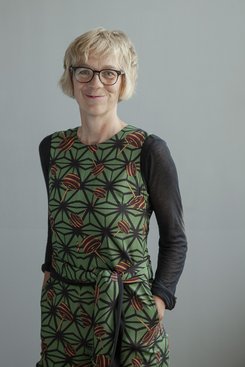
Claire Bowern is Professor of Linguistics at Yale University specializing in historical linguistics, language documentation, and Australian Indigenous languages. Her research employs computational phylogenetics to study language evolution and supports language revitalization through digital archives and fieldwork methodologies. Recent publications address: Phylogenetic signal in lexical evolution across language families Digital infrastructure for endangered language documentation (FLEx software analysis) Decolonizing linguistics pedagogy and research practices Her work consistently integrates linguistic, anthropological, and computational approaches to analyze language diversity and change. She contributes to global databases including Grambank and D-PLACE, examining links between linguistic, cultural, and environmental patterns.
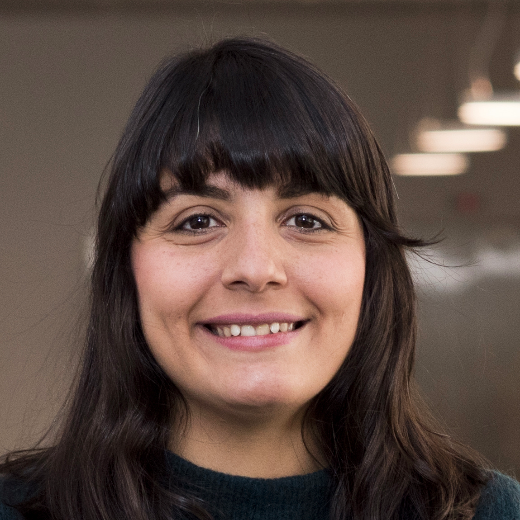
Amanda Phillips is an Associate Professor at Georgetown University, affiliated with the Departments of English, Film and Media Studies, Women’s and Gender Studies, and American Studies. Their research focuses on feminist and queer theory in digital media, with a particular emphasis on critical game studies and digital humanities. Selected publications include Gamer Trouble: Feminist Confrontations in Digital Culture and co-editing the Queer/Trans/Digital book series. Their scholarship appears in journals such as ROMchip , Feminist Media Histories , and Games and Culture . Research Interests: Digital media and gender politics Queer theory in gaming contexts Decolonial and anti-racist digital humanities Critical analysis of game mechanics Digital labor and precarity Affective histories of gaming Scientific Awards: Mellon/ACLS Dissertation Completion Fellow Academic Leadership: Former chair of the American Studies Association Digital Humanities Caucus Co-founder of the #transformDH Collective Editorial work on special issues of Game Studies and Antares: Letras e Humanidades Previous Institutions: IMMERSe Postdoctoral Fellow at University of California, Davis Ph.D. recipient from University of California, Santa Barbara with emphasis in Feminist Studies
Antonio A. Casilli is a Professor of Sociology at Télécom Paris (Institut Polytechnique de Paris) and a researcher at the Interdisciplinary Institute of Innovation (i3) . He is an associate member of LACI-IIAC (formerly the Edgar Morin Center) at EHESS and serves as a Faculty Fellow at the Nexa Center for Internet and Society (Polytechnic University of Turin) since 2018. Research Focus: Digital labor, platform economy, AI ethics, and the social implications of technology Awards: Prix Étoiles de la SCAM, Prix Meilleur Documentaire de l'Année (Bangkok), selected as Nature Journal Top Science Pick His work analyzes how digital platforms reshape labor dynamics, privacy norms, and social inequalities. Recent studies explore global AI data work, including fieldwork in Latin America, Africa, and Europe. He advocates for ethical frameworks recognizing human labor behind automation. Media Engagement: Regular contributor to France Culture , Le Monde , Wired , and Rue89 . Authored En attendant les robots (2019) and Schiavi del clic (2020), investigating hidden digital labor structures.
Maria Fernandez is an Associate Professor at Cornell University's College of Arts and Sciences, Department of History of Art and Visual Studies. She holds a Ph.D. from Columbia University and specializes in the history and theory of digital art, cybernetics, feminist media arts, and posthumanism. Ph.D., Columbia University Research Focus : Maria's work bridges cybernetics, feminist media arts, posthumanism, new materialism, BioArt, and AI in art. She investigates how women artists in new media contribute to posthumanist and new materialist discourses, with a current book project on British cybernetician Gordon Pask. Publications span digital art history, Latin American modernism, and feminist cybernetics. Her articles appear in Leonardo , Art Journal , and Third Text , with a focus on interactivity, media theory, and technological aesthetics. Scientific Awards : Arvey Book Award by the Association for Latin American Art (2015) She co-edited Domain Errors: Cyberfeminist Practices (2002) and Latin American Modernisms and Technology (2018). Her advising policy emphasizes formal departmental application reviews.
Courtney Rivard is an Assistant Professor in English & Comparative Literature at the University of North Carolina, Chapel Hill, with a secondary appointment at the School of Data Science & Society. She directs the Digital Literacy and Communications (DLC) Lab, focusing on digital humanities, critical game studies, and archival rhetorics. Her research bridges rhetoric, digital methods, and social justice, examining how archives and digital tools shape narratives around race, gender, and national identity. Dr. Rivard holds a Ph.D. from the University of California, Santa Cruz (2012). Her book Layered Lives (2022) combines archival and computational methods to analyze Depression-era life histories. She has secured grants from NEH, ACLS, and UNC initiatives, supporting projects like the Critical Gaming Initiative and oral history archives on PFAS contamination. Her teaching emphasizes digital literacy and public engagement, including courses on data rhetoric, game studies, and multimodal composition. The DLC Lab hosts the Greenlaw Gameroom, a game-based classroom funded by Lenovo, fostering critical pedagogies through play. Research Labs: Digital Literacy and Communications Lab, Greenlaw Gameroom Grants: NEH, ACLS Digital Extension Grant, UNC Arts & Humanities Fellowships Key Projects: Critical Gaming Initiative, Photogrammar collaboration, “Forever Chemicals” oral history archive
Claudia Berger is a Visiting Assistant Professor at the School of Information, Pratt Institute, and serves as the Digital Humanities Librarian at Sarah Lawrence College. They are actively engaged in digital scholarship, critical making, and interdisciplinary research at the intersection of libraries, technology, and the humanities. Education: MSLIS and Advanced Certificate in Digital Humanities, School of Information, Pratt Institute MA in Classics & Ancient History, University of Exeter BA in Electronic Media & Art and Classics, Bard College at Simon’s Rock Their research focuses on innovative methodologies in digital humanities, particularly data physicalization, digital environmental humanities, and critical engagement with data through craft and tactile experiences. They explore how digital tools can be reimagined through embodied and inclusive practices, often integrating queer perspectives and ecological awareness into scholarly work. Their recent publications reflect a strong trend toward interdisciplinary making, environmental justice, and pedagogical innovation in library and information science. Themes include countermapping, plant-human relations, craft-based digital scholarship, and inclusive professional identity formation. Their work bridges technical practice with critical theory, emphasizing accessibility and material engagement. Professional Service: Editor, dh+lib and dh+lib Review Deputy Secretary, Association for Computers and the Humanities (ACH) Former Librarian, The Mellon Foundation (supporting research in higher learning, arts and culture, public knowledge, and humanities in place) Claudia Berger is deeply involved in mentoring and shaping the future of information professionals through curriculum analysis, editorial work, and collaborative projects. While no formal grants or advising relationships are listed, their leadership in digital humanities education and community-building initiatives demonstrates significant scholarly impact. They maintain an active public research presence through a Zotero repository on physical data visualization.
Professor Dan Goodley is a leading academic in Critical Disability Studies at the University of Sheffield , affiliated with the School of Education and co-director of the iHuman research center. His work bridges critical psychology , medical sociology , and posthuman theory to challenge ableist norms in education, healthcare, and society. He has secured major grants, including a £2.9m Wellcome Trust Discretionary Award and multiple ESRC-funded projects, focusing on themes like disablism , social justice , and inclusive research methodologies . Research Themes : Critical Disability Theory, Posthumanism, Dis/ability and Technology, Decolonizing Disability, Austerity and Dis/ability, Co-Production with Marginalized Communities. Grants : Wellcome Trust, ESRC, EPSRC, Research England, European Social Fund. Professional Roles : Visiting Professor at University of Ghent, Editorial Board Member for multiple journals, ESRC Peer Review College. His recent publications interrogate the intersections of disability , pandemic ethics , and autonomous technologies , often employing co-produced and participatory frameworks. He advocates for disabled voices in research and policy, emphasizing resilience and decolonizing praxis in global contexts.
Nicholas Ng-A-Fook is a Full Professor in the Faculty of Education at the University of Ottawa, where he has served as former Associate Dean of Graduate Studies and Director of Teacher Education and Indigenous Teacher Education Programs. His work is deeply engaged with the Truth and Reconciliation Commission's 94 Calls to Action, working in partnership with Indigenous communities and school boards to disrupt colonialism, systemic racisms, and inequalities in educational curricula. Dr. Ng-A-Fook's educational background includes a Ph.D. in Curriculum and Instruction from Louisiana State University (2006), an M.A. in Education (Multicultural Education) from York University (2001), a Graduate Diploma in Education (Secondary Science and History) from the University of Western Sydney (1998), and a B.A. in Classical Studies from the University of Ottawa (1996). His research interests span Curriculum Studies, History of Education (particularly oral history), Life-writing research (autobiography and narrative inquiry), Critical Youth Studies (focusing on first-generation immigrant and Indigenous youth), Community-based research, and Contemporary perspectives in philosophy, science and technology including AI, genomic education, and anti-racist science education. Dr. Ng-A-Fook approaches his work as a curriculum theorist who draws on life writing research methodologies to co-create culturally responsive, relevant, and relational curriculum with educators. Dr. Ng-A-Fook's publications reveal a strong focus on reconciliation education, decolonizing curriculum, and addressing systemic racism in educational contexts. His work increasingly engages with digital technologies and artificial intelligence from a critical, decolonial perspective, examining how these technologies intersect with historical and ongoing colonial structures. His research shows a clear evolution toward more interdisciplinary work connecting curriculum studies with Indigenous knowledge systems, technology studies, and social justice movements. Among his notable honors are the 2024 Coutts Prize, the Ted T. Aoki Distinguished Service Award (2018), and the R.W.B. Jackson Award for an outstanding article in the Canadian Journal of Education. He also serves as Director of the EdCan Network and was Past-President of the Canadian Society for the Study of Education. As a supervisor, Dr. Ng-A-Fook currently mentors several graduate students including Melissa Daoust, Lisa Ambaye, Bahareh Samsamiardekani, and Madelaine McCracken. He created the FooknConversation podcast to address educational challenges with colleagues, community activists, artists, education leaders, teachers, and politicians, and maintains the Canadian Curriculum Theory Project website as a resource for his research.
Jennifer Nish serves as Associate Professor of Rhetoric and Composition at Michigan Technological University, holding dual affiliations with the Academy of Teaching Excellence and the Institute of Computing and Cybersystems (ICC). Her interdisciplinary work critically examines power dynamics in digital activism and transnational feminist movements. Her academic credentials include: Ph.D. in English from the University of Kansas B.A. in English & Psychology from the University of Nebraska at Lincoln Dr. Nish's research centers on intersections between rhetorical practices and systems of power, with signature contributions in transnational feminist rhetoric, disability justice advocacy for Long Covid/ME communities, and digital media activism. Her monograph Activist Literacies: Transnational Feminisms and Social Media Rhetorics establishes frameworks for analyzing contemporary activism, while recent projects expand into chronic illness narratives and globalization's impact on rhetorical studies. She teaches graduate courses in Disability Studies and undergraduate Advanced Composition. Analysis of her 2016-2024 publications reveals evolving methodological priorities: early work focused on digital campaign rhetoric (e.g., Humans of New York analysis), while current research integrates crip theory with transnational feminist approaches to address disability justice in academic labor and chronic illness communities. This trajectory demonstrates increasing engagement with embodied knowledge systems and intersectional activism. As an ICC member, Dr. Nish contributes to cyber-social systems research through rhetorical perspectives on technology-mediated activism and community formation.
Prof. Dr. Andrea Sick is Professor of Cultural and Media History/Theory at the University of the Arts Bremen (HfK Bremen) where she leads the Digital Media study program. She founded the Binational Artistic PhD Program, collaborating with institutions including Leiden University, University of Groningen, and University of Gothenburg. Her research explores intersections between technology, art, and cultural production through both academic and curatorial work. Education includes studies in German Studies, Political Science, Cultural Studies, and Art History at Heidelberg, Bremen, and Hamburg universities, culminating in a 2001 PhD from Universität Hamburg on cartographic knowledge systems. She co-directs the art-science project thealit Frauen.Kultur.Labor , producing exhibitions, conferences, and publications. Research focuses span: Technological media's impact on artistic production Art-biology-information technology intersections Performance art history/theory Queer Studies frameworks Artistic research methodologies Generative AI in cultural analysis Her work critically examines how digital tools transform cultural documentation and archival practices. Recent projects include: Latent Museums (AI analysis of museum collections) The Dynamic Archive (ongoing digital archiving project) Re Capitulating.Queer (2024-2026 curatorial project) Administrative roles include: Dean of Art and Design (2012-2018) Co-Rector for Research & International Affairs (2018-2023) Lead of Binational Artistic PhD Program (since 2022) Awards include the Heinrich-Böll-Stiftung doctoral scholarship (1998-2001). She mentors 12+ PhD students in artistic research, including projects on sonic archaeology, queer archives, and decolonial practices.
Secil Ugur Yavuz is a Professor at the Faculty of Design and Arts, Department of Design, at Free University of Bozen-Bolzano. Her academic work spans eco-social design, research through design, and tangible human-technology interactions, with a particular focus on sustainable materials and collective making practices. She teaches courses including Design 3 for the Master in Eco-social Design and doctoral programs in Experimental Research through Design, Art and Technologies. Professor Yavuz's research explores the intersection of analog and digital through tangible human-technology interactions, with significant contributions to sustainable material systems. Her FERAL WOOL project investigates ecological and cultural dimensions of wool, while her work with biomaterials like microbial cellulose and open-source bioreactors addresses circular production systems. She employs embodied and speculative approaches to examine microplastic emissions, children's nature engagement through tools like TREESENSE, and social play with interactive toys. Her recent publications reveal a strong thematic focus on material culture, sustainability, and human-centered design across multiple scales. The research demonstrates consistent exploration of how digital and physical realms interact to create meaningful user experiences while addressing ecological challenges. Key trends include the use of embodied interaction methods, speculative design for cultural critique, and co-creative processes that bridge technological innovation with social and environmental responsibility. Yavuz leads the Design Friction Lab, which investigates the philosophical foundations of design through customizable interfaces and DIY approaches. Her work with doctoral students in Experimental Research through Design emphasizes reshaping technologies through collective making processes. The FERAL WOOL research project represents a significant current initiative exploring sustainable textile futures through both ecological and cultural lenses.
Steven Devleminck is an Associate Professor in the Department of Computer Science at KU Leuven's Faculty of Engineering Technology, concurrently serving as coordinator of the School of Arts (Associated Faculty) in Brussels. His dual appointment bridges engineering and arts through the Human-Computer Interaction (HCI) group at Group T Leuven Campus and Unit Art & Technology in Brussels, with active membership in DigiSoc – KU Leuven Digital Society Institute. His research centers on human-centered computing and speculative design methodologies , with core expertise in tangible interaction for emotion regulation and multispecies futures. Key themes include biofuturing as co-creative response to climate crises, squeeze-based interfaces for workplace stress, and artistic AI collaborations. His work uniquely integrates computer science with choreography, film studies, and anthropology through projects like “Youth TikTok production as public pedagogy” and “Imagining the Post-Anthropocene in BioFutures Living Lab”. Analysis of recent publications reveals three dominant trajectories: (1) Advancement of squeeze interaction techniques for affective computing, (2) Development of biofuturing frameworks for multispecies speculation, and (3) Critical examinations of AI's role in artistic mediumship. Cross-cutting themes include post-anthropocentric design, climate-responsive technologies, and decolonial approaches to digital pedagogy. Devleminck actively mentors doctoral candidates including Ula Sickle (choreographic exhibitions) and J. Verbesselt (cinema studies), while leading major funded projects such as: Living Corpora (2025-2029): Pioneering human-AI collaboration in digital humanities as Co-promotor Experiential Futuring (2022-2026): Co-creative methodology for social media outage response as Co-promotor Deradicalizing the City (2021-2025): Urban intervention research as Promotor He serves on the Computer Science Department Council and Doctoral Committee for the Associated Faculty of Arts. His laboratory ecosystem spans the HCI Group T Leuven Campus for technical development, Brussels-based Unit Art & Technology for artistic integration, and BioFutures Living Lab for participatory multispecies experimentation. This tripartite structure enables transdisciplinary work connecting squeeze sensor engineering with climate futures speculation and museum interface design.
Dr. Tajul Islam is a Lecturer in Islamic Studies at the School of Languages, Cultures and Societies , University of Leeds , where he has been a member of staff since 2009. He also holds a visiting position at the University of the Punjab, Lahore. His academic work bridges traditional Islamic scholarship and critical theory, and he is a co-founder of Critical Muslim Studies (CMS) at Leeds, a framework aimed at centering Muslim subjectivity and decolonizing knowledge production in higher education. Education: BA in Arabic and Islamic Studies — University of Leeds PhD in Arab and Islamic Studies — University of Exeter Dr. Islam’s research encompasses a wide range of fields, including Islamic Theology (kalam) , Qur’anic Studies , Hadith , Islamic Law , Islamic Philosophy , Islamism , Islamophobia , antisemitism , racism , Biblical Studies , and Madrasa studies . His teaching emphasizes inclusivity and sensitivity to contemporary issues of identity and prejudice. His recent publications reflect a strong interdisciplinary trend, combining religious studies with food ethics, digital humanities, and decolonial theory. Key themes include theological minimalism , racial justice in early Islam , Islamic reform , and cross-traditional dialogue . He frequently presents at international conferences and public events on topics such as decolonial imagination, fatwa borrowing, and Muslim identity. Scientific Contributions and Recognition: Co-authored a well-cited article on Hanafi fiqh and British Muslims’ views on cultured meat. Published on Qur’anic phonetics and automatic lexis extraction. Contributed to encyclopedias on Ibn Mujahid and the Bible’s use in Islamophobic discourse. Co-founded the Iqbal Centre for Critical Muslim Studies. Dr. Islam supervises a diverse cohort of PhD students on topics ranging from blasphemy laws and translation studies to female religious authority and Qur’anic coherence. He has successfully guided over 15 doctoral candidates to completion. He is also involved in collaborative research and international academic partnerships, particularly with institutions in Pakistan. Labs and Research Groups: Co-Director, Iqbal Centre for Critical Muslim Studies Member of research groups in Arabic Cultural Studies , Conflict , and History
Roles & Affiliations: King Omeihe is a Senior Lecturer at the School of Business and Creative Industries, University of the West of Scotland, and serves as UoA 17 Associate Research Lead for People, Culture, and Environment. He holds external roles including Chair of African Studies at the British Academy of Management and Chair of Entrepreneurship in Minority Groups at the Institute for Small Business and Entrepreneurship (ISBE). He advises on African economic policy and chairs several parliamentary groups in Scotland. Education: PhD from University of the West of Scotland, MBA from University of Aberdeen, and a diploma from University of Cambridge. Research Interests: Focuses on trust institutions, entrepreneurship in Africa, and the intersection of AI with societal challenges. Recent works include Trust and Market Institutions in Africa (2023), Qualitative Research Methods for Business Students (2024), and Handbook of African Studies (2025). Explores institutional economics, ethical AI applications, and decolonizing business education. Articles Trends: Recent publications emphasize AI ethics in healthcare, institutional resilience in developing economies, and leadership in complex systems. Key themes include sustainable development goals (SDGs), cross-cultural entrepreneurship, and policy interventions for minority entrepreneurs. Awards: Includes the 2025 UWS Innovation Teaching Award, 2022 Entrepreneurial Supporter of the Year, and multiple recognitions for teaching excellence. His work has been highlighted by Bright Red Spark for shaping enterprise education. Grants & Advising: Advises startups, policymakers, and global bodies like UNCTAD. Leads initiatives such as the MSc Entrepreneurship programme and collaborates with organizations like Marcel Advisory and the West African Transitional Justice Centre. Active in cross-party policy groups addressing social enterprise and racial equality. Labs & Teams: Co-leads the Centre for African Research on Enterprise and Economic Development (CAREED) and contributes to Emerald’s African Context of Business and Society as Editor-in-Chief. Oversees the UWS BME Staff Network and Academic Integrity Panel.
Danielle Wilde is a Professor at the Umeå Institute of Design (UMU), where she explores the intersections of design, sustainability, and participatory methodologies . She also holds a professorship at the University of Southern Denmark . Her work spans scales from the microbial to the planetary , focusing on how food practices and Indigenous knowledges can foster Environmental Citizenship and systemic change. Head, Sympoietic Research Collaboratory Arctic Six Chair of Arctic Food Citizenship Research interests include more-than-human design , embodied methodologies , and co-creative practices . She challenges conventional design paradigms by positioning designers as facilitators of relationships rather than product creators. Her methodological development emphasizes participatory research through design , particularly in Arctic contexts and with microbiomes. Current projects include: FlavourFerm (2024-2028): Fermentation-based food innovation Px7 (2024-2027): Experimental design for societal transitions Remaking Gut Relations (2024): Human-microbiome engagement Digesting Data : Data physicalization for environmental awareness Her publications highlight food as a methodological tool , multisensory design , and decolonial approaches to sustainability. She collaborates with interdisciplinary teams across Europe, bridging design, ecology, and policy.