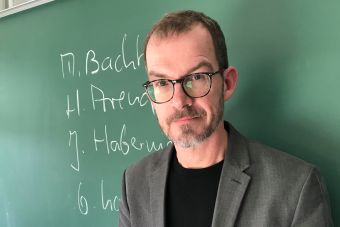
Andreas Langenohl is a full Professor at the Institute of Sociology , Justus Liebig University Giessen , holding the Chair in General Comparative Studies. He has held fellowships at institutions like the Kulturwissenschaftliches Kolleg (Konstanz) and the Collaborative Research Center in Freiburg, and is an Extra-Ordinary Professor at North-West University (South Africa). PhD in Social Sciences (1999, magna cum laude ), Justus Liebig University Giessen M.A. in Sociology and Slavic Philology (1996, with highest honors ) His research spans economic sociology , financial market temporality , security studies , and cultural foundations of integration . He explores intersections of finance and politics, infrastructural security, and socio-temporal dynamics in economic theory. Recent work focuses on geoeconomic hegemony during the Ukraine conflict, pandemic security governance, and decentralized finance algorithms. Scientific Awards : Karl-Polanyi-Award (2010) for economic sociology Wolfgang-Mittermaier-Award (2007) for academic teaching Knowledge Unlatched Open Access selection (2020) Grants : He has secured multiple DFG and foundation grants for projects on financial infrastructures, securitization, and EU-Russia relations, including collaborations with institutions like Cornell University and the Einaudi Center for European Studies. Labs & Teams : Langenohl leads projects within the Collaborative Research Centre/Transregio 138 Dynamics of Security (Giessen & Marburg) and contributed to the Center of Excellence Cultural Foundations of Integration (Konstanz).
Lisa Nathan is an Associate Professor and current PhD Program Chair at the University of British Columbia's School of Information, situated on unceded Musqueam territory. Her academic home resides within the Department of Library, Archival and Information Studies under the Faculty of Arts, where she directs doctoral studies and teaches specialized courses in information ethics and climate justice. Her research examines the critical intersection of information policy, sustainability, and Indigenous knowledge systems, exploring how information ecosystems shape societal values through frameworks like climate justice and multi-lifespan design. Nathan's work consistently centers on disrupting colonial information practices while developing ethical alternatives through community-engaged scholarship, particularly evident in her collaborations with Indigenous communities on language preservation and cultural protocols. Analysis of her recent publications reveals a strong trajectory toward decolonial computing and environmental justice, with increasing emphasis on Indigenous-led information initiatives and the inclusion of 'other-than-human' participants in design processes. Her scholarly output spans high-impact journals including Journal of Documentation and First Monday, alongside influential books like Digital Technology and Sustainability: Engaging the Paradox. Outstanding Information Science Teacher Award (2017) Honorable Mention Paper Award at ACM CSCW (2016) Leadership in ACM SIGCHI Sustainability initiatives British Columbia Library Association Climate Action Committee Nathan actively supervises doctoral research through UBC's Indigenous Information Studies pathway, currently mentoring Rodrigo dos Santos while having guided recent graduates including Shaffer, Shankar, and Kaczmarek to completion. Her service includes chairing the First Nations Curriculum Concentration (2010-2018) and developing innovative courses like LIBR 564: Information Practice and Protocol in Support of Indigenous Initiatives. As Director of the Centre for Climate Justice research cluster, she fosters interdisciplinary collaborations addressing information policy's role in environmental crises.
Rebecca Lemov is a Professor of the History of Science at Harvard University's Faculty of Arts and Sciences, specializing in the intersection of science, technology, and society. Her research examines pivotal moments in the history of human and behavioral sciences, with a focus on mind control, archival practices, and data-driven epistemologies. PhD in Anthropology, UC Berkeley BA in English Literature, Yale University Her recent work investigates brainwashing techniques from Cold War-era experiments to modern surveillance capitalism, analyzing how data and technology shape human cognition. She also explores the evolution of behavioral engineering and the ethical challenges of preserving endangered anthropological archives. Her publications span topics like cybernetics, predictive policing, and the quantified self, reflecting a deep engagement with interdisciplinary methodologies. Lemov’s forthcoming 2025 book, The Instability of Truth , continues her exploration of coercive persuasion in digital contexts. As Director of Undergraduate Studies, she mentors students in courses covering big data history, animal studies, human experiments, and technologies of mind control. She has held visiting scholar positions at the Max Planck Institute for the History of Science in Berlin (2010–11, 2013–14), contributing to working groups on archival science and data historiography.
Bettina Nissen is a Lecturer in Interaction Design and Programme Director for Design Informatics at the University of Edinburgh's School of Design within Edinburgh College of Art. Her position bridges academic teaching and research with practical applications in data-driven design. She directs the Design Informatics MA program while maintaining an active research profile through the Institute for Design Informatics. Dr. Nissen's research interests focus on making complex technological concepts accessible through tangible means. Her expertise spans Research through Design , Data Physicalisation , Digital Fabrication , and Designing with Data . She explores how physical representations of data can enhance understanding and engagement with complex systems, particularly in contexts of trust, consent, and economic value. Her recent publications reveal a strong trajectory toward community-centered approaches to data governance and indigenous knowledge systems. The work shows increasing engagement with decolonial design methodologies, more-than-human interactions, and feminist economic perspectives on technology. A notable pattern emerges in her focus on tangible interfaces for abstract concepts like blockchain, trust, and value systems. Best paper award at CHI 2024 for "Cosmovision of data: An indigenous approach to technologies for self-determination" Dr. Nissen currently supervises three PhD students (Yifei Li, Carlos Guerrero Millan, and Yixun Li) and has secured funding from multiple prestigious sources including AHRC, EPSRC, ESRC, and EU programs. Her research projects include PACTMAN (EPSRC-funded work on trust in pervasive environments), After Money (ESRC-funded collaboration with Royal Bank of Scotland), Crypto-Knitting with People's Bank of Govanhill, DCODE (EU-funded network), REPHRAIN research center, and the VisHub visualization laboratory. She actively participates in interdisciplinary research communities through the Visual+Interactive Data group and the Regulation and Design (RAD) Lab, fostering collaborations between design, technology, and policy domains.
Prof. Elisa Giaccardi is a Professor in Industrial Design Engineering at Delft University of Technology, specializing in Human-Technology Relations. Their research focuses on sustainable energy practices, AI ethics, decolonial design, and material interactions in everyday life. Giaccardi has led projects exploring heat pump adoption, clinical AI development, and microbial coexistence with humans. They are affiliated with TU Delft’s 4TU.ResearchData repository and hold editorial roles in design conferences such as EKSIG 2017. Notable contributions include datasets on heat pump practices and awards like the 2023 Best Paper Honourable Mention. Giaccardi actively participates in international conferences, emphasizing interdisciplinary collaboration across design, technology, and social sciences. Research interests span decolonizing design methodologies, energy transition practices, and the ethical implications of AI. Their work bridges technical innovation with human-centered approaches, addressing societal challenges through speculative and critical design frameworks. Recent publications analyze household improvisation with heat pumps, hauntological critiques of AI, and material care for cyanobacteria in domestic contexts. Giaccardi has supervised 5 academic works and contributed to over 70 research outputs. They organize conferences, review journal submissions, and advocate for inclusive, equitable design practices. Current activities include exploring AI’s societal integration and fostering dialogue between designers, engineers, and marginalized communities.
Roles & Affiliations: Distinguished Research Professor in Statistical Science at Queensland University of Technology (QUT), Director of QUT Centre for Data Science, and Associate Member of University of Oxford's Department of Statistics. Served as Deputy Director of ARC Centre of Excellence in Mathematical and Statistical Frontiers (2015–2021) and ARC Laureate Fellow (2015–2021). Education: BA (Hons) and PhD in Mathematical Statistics from University of New England, Australia. Completed post-doctoral roles at multiple Australian universities. Research Interests: Specializes in Bayesian statistical modelling, computational methods, and their applications in environmental science, genetics, healthcare, and industry. Leads projects on coral reef recovery, cancer epidemiology (Australian Cancer Atlas), and virtual citizen science platforms like Virtual Reef Diver. Her work emphasizes interdisciplinary collaboration, integrating complex data sources with advanced statistical techniques to address real-world challenges. Publications & Grants: Over 350 refereed journal publications and attracted >30 major grants. Recent focus areas include influenza epidemiology, spatial health disparities, and AI-driven early warning systems for climate-sensitive diseases. Active in developing methodologies for spatial statistics, small-area estimation, and federated learning. Awards & Recognition: 2024 Ruby Payne-Scott Medal (Australian Academy of Science), Pitman Medal (2016), first female recipient of this award in 35 years. Elected Fellow of Australian Academy of Science (2018), Academy of Social Sciences (2018), and Queensland Academy of Arts and Sciences (2018). Holds international roles including Vice-President of International Statistical Institute (2021–2025) and Scientific Council Member at Centre International de Rencontres Mathématiques (France). Supervision & Leadership: Supervised over 36 PhD students and leads teams in >50 collaborative projects. Current supervision includes 5 PhD and 4 Masters students at QUT. Founded the QUT Centre for Data Science and previously led the Collaborative Centre for Data Analysis, Modelling and Computation. Labs & Initiatives: Core contributor to the Australian Cancer Atlas 2.0, Virtual Reef Diver project, and Queensland's Learning Potential Fund. Active in global initiatives like the World of Statistics campaign and UN Big Data Task Teams.
Prof. Dr. Tristan Weddigen serves as Director of the Bibliotheca Hertziana – Max Planck Institute for Art History in Rome since 2017. He is also a full Professor of the History of Early Modern Art at the University of Zurich since 2009, following academic roles at TU Berlin (PhD 2002), University of Bern (Lecturer 2008), and University of Lausanne (Assistant Professor). Research Priorities include: Rome Contemporary : Re-evaluating Rome's role in 20th-21st century art via digital methods. Materiality and Mediality : Intermedial analysis of art's physical and theoretical dimensions. Italy in a Global Context : Decolonial studies of fascist cultural heritage and Latin American-Italian artistic connections. Transnational History of Art History : Critical editions of Heinrich Wölfflin's Collected Works (co-edited with Oskar Bätschmann, Joris van Gastel). Digital Visual Studies : Leading the DH Lab's integration of Art History and Computer Science. Publications focus on critical editions of foundational art historical texts, including: Italien und das deutsche Formgefühl (2024) – Analyzing Italo-German art contrasts. Renaissance und Barock (2023) – Reassessing Baroque architectural analysis. Die Jugendwerke des Michelangelo (2020) – Formalist studies of early works. Prolegomena zu einer Psychologie der Architektur (2020) – Psychological impact of architectural forms. Salomon Geßner (2020) – Enlightenment-era interdisciplinary research. The Department's methodological innovation extends to #ScienceForUkraine initiatives and collaborations with institutions in Zurich, Rome, and global partners. Research seminars (e.g., on mimesis, eco-criticism, and Southern discomfort) reflect interdisciplinary engagement.
Dr. Uma Pradhan is an Associate Professor at UCL's Institute of Education (IOE), Faculty of Education and Society, and serves as Deputy Programme Leader for BA Education, Culture, and Society. She also holds the position of Inclusion Co-Lead for the Department of Education, Practice and Society (EPS). At UCL, she is actively involved with the Centre for Education and International Development (CEID) and the Centre for the Study of South Asia and the Indian Ocean World. Prior to her current position, Dr. Pradhan was a Lecturer and Leverhulme Early Career Fellow at the University of Oxford from 2018 to 2022, and then a Lecturer at University College London from 2022 to 2024 before her promotion to Associate Professor in 2024. Dr. Pradhan's research spans multiple interconnected fields including Anthropology, Development Studies, Applied Linguistics, Humanitarian Disasters, Conflict and Peacebuilding, and Educational Technology. Her work particularly focuses on South Asian educational contexts, with extensive research on Nepal's educational landscape. She examines how educational policies intersect with social structures, linguistic diversity, and political transformations, with special attention to marginalized communities and post-disaster educational reconstruction. Her research demonstrates a consistent commitment to addressing educational inequality and exploring how education can serve as a vehicle for social justice. Dr. Pradhan's scholarly output reveals a strong focus on the intersections between language, technology, and education in South Asia. Her recent publications examine how artificial intelligence is being used for indigenous language preservation, the impact of the pandemic on educational systems across South Asia, and the bureaucratic mechanisms that can inadvertently reproduce social inequality through scholarship programs. Her work consistently connects theoretical frameworks with practical implications for educational policy and practice. Leverhulme Early Career Fellow Fellow of Higher Education Academy (FHEA) As an academic leader, Dr. Pradhan supervises research degrees and engages in collaborative projects and consultancy work. Her research aligns with several United Nations Sustainable Development Goals, particularly Quality Education (SDG 4), Reduced Inequalities (SDG 10), Peace, Justice and Strong Institutions (SDG 16), and Partnerships for the Goals (SDG 17). Her position at the intersection of multiple research centers at UCL enables her to foster interdisciplinary collaborations that address complex educational challenges in global contexts.
Murat Oztok serves as Senior Lecturer at the University of Aberdeen's School of Education, actively supervising PhD candidates across Education, Sociology, Psychology, Philosophy, and Computing Science. His work fundamentally challenges the assumption that digital learning spaces are inherently equitable, positioning online education as an extension of colonial practices where societal Discourses reproduce systemic inequalities through hidden curricula. Oztok's research program centers on decolonizing digital education through critical analysis of the interplay between self, knowledge, digital tools, and power structures. Key projects include his 2019 monograph The Hidden Curriculum of Online Learning which applies Foucault's power theory alongside postcolonial critiques of whiteness, and current investigations into cognitive apprenticeship models for equitable online doctoral provision. His scholarship consistently prioritizes intersectionality, epistemic justice, and transformative pedagogical approaches that confront historical power imbalances in digital learning environments. Analysis of his 2019-2025 publications reveals a clear trajectory from foundational work on social presence in MOOCs toward sophisticated postcolonial frameworks for networked learning. Oztok increasingly centers Global South perspectives and Indigenous knowledge systems, arguing technological solutions must address colonial legacies to achieve educational justice. His interdisciplinary methodology bridges educational theory, sociology, and digital humanities to develop practical strategies for inclusive digital pedagogy. As an active PhD supervisor across five disciplines, Oztok demonstrates strong commitment to mentoring next-generation scholars in decolonial digital pedagogies, though specific grant-funded projects remain undocumented in available materials. His work remains pivotal in reimagining online education as a site for transformative social change rather than reproduction of inequality.
Dr. Irene Fubara-Manuel is an Associate Professor in Digital Media Practice at the University of Sussex's School of Media, Arts and Humanities. Their work bridges media art, animation, game design, and critical theory, focusing on race, migration, surveillance, and queer futurities. They hold a PhD from Sussex (2016-2019) and a PgCert in Higher Education (2020-2022). Their research interrogates biometric surveillance systems, digital colonialism, and intersectional feminist praxis in technology. Key research areas include: Algorithmic governance of migration Data colonialism and global south perspectives Feminist digital infrastructures Queer media representation Intersectional methodologies in digital humanities Recent projects include the AHRC-funded Full Stack Feminism initiative (2021-2024), exploring anti-racist feminist tech ecosystems. Their creative practice spans installations addressing border control algorithms and queer digital futurisms. Notable works include the Full Stack Feminism Archive and Manifestations exhibition. Awards include the JUST AI Fellowship (2020). Teaching focuses on critical media production and digital culture. Their publications span peer-reviewed journals, edited collections, and creative-critical exhibitions, demonstrating a commitment to interdisciplinary praxis.
Prof. Dr. Erich Hörl holds the Chair of Media Culture and Media Philosophy at Leuphana University Lüneburg since 2014 and serves as Vice President for Research since 2022. He is Co-Director of the Leuphana Institute for Advanced Studies in Culture and Society, Deputy Speaker of the DFG Research Group 'Cultures of Critique,' and Extraordinary Professor at the University of the Western Cape, South Africa (2024). His research focuses on media philosophy, general ecology, environmentality, and the technological condition, engaging with thinkers like Heidegger, Stiegler, and Simondon. He co-leads projects analyzing the Social Credit System in China and Western scoring mechanisms. Previously, he directed the Bochum Colloquium on Media Studies (bkm) and held professorships at Ruhr University Bochum (2006-2014). His doctoral work Sacred Channels (2005) critiques archaic communication illusions. Hörl advises 11 active doctoral researchers and has supervised 19 completed dissertations, including works on Marxian theory, cryptographic carbon economies, and cybernetics’ philosophical implications. His recent publications (2021-2024) explore 'environmentalitarian time,' disruption theory, and the anthropocenic illusion. Key works include Critique of Environmentality (2021) and Unseating Mastery (2024). He contributes to editorial boards for Meaning Systems (Fordham UP) and Jahrbuch Technikphilosophie .
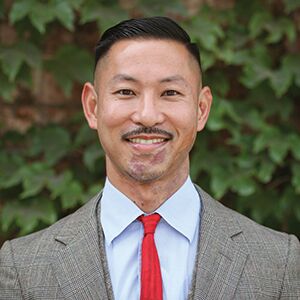
Jih-Fei Cheng is Associate Professor and Chair of the Department of Feminist, Gender, and Sexuality Studies at Scripps College, where he teaches and researches at the intersection of science, media, surveillance, and social movements. He holds a PhD in American Studies and Ethnicity with an emphasis in Visual Studies from the University of Southern California, an MA in Asian American Studies from UCLA, and a BA in Communication from UC San Diego. His interdisciplinary scholarship engages feminist, queer, and decolonial theories to analyze the political economies of virology, global health, and racial capitalism. His research centers on the historical and transnational entanglements of science, empire, and social justice. Key areas include the institutionalization of queer politics, the geopolitics of HIV/AIDS, and the racialized foundations of virology. His co-edited volume AIDS and the Distribution of Crises (Duke UP, 2020) rethinks the pandemic as a network of overlapping crises shaped by colonialism and neoliberalism. He is currently working on a book project titled Materialist Virology , which historicizes virology within Euro-American empire. Cheng’s recent publications span journals such as History and Technology , Radical History Review , and GLQ , with 2025 articles on financial contagion and reservoirs signaling his continued engagement with interdisciplinary frameworks linking finance, disease, and history. His work often collaborates with artists and activists, exemplified by writings on Candice Lin’s art and co-organized dialogues on care and intravention during the pandemic. He has been recognized with multiple awards, including the Lavender Graduation Award (2023, 2016), Professional Development Grants (2019–2020, 2016–2017), and fellowships from USC and the American Antiquarian Society. His teaching and service reflect a deep commitment to LGBTQIA inclusion, racial justice, and community-based scholarship. Lavender Graduation Award for providing safe and inclusive spaces for LGBTQIA students, Queer Resource Center, The Claremont Colleges (2023) Professional Development Networks Grant at The Claremont Colleges (2019–2020) Diversity Teaching Award Nominee, The Claremont Colleges (2018) EnviroLab Asia Research and Conference Award (2017–2018) Lavender Graduation Award (2016) Professional Development Networks Grant (2016–2017) Research Fellow, Summer Institute for the Center for Historic American Visual Culture, American Antiquarian Society (2014) Visual Studies Summer Research Award, USC (2014) New Directions Fellow, USC Center for Feminist Research (2011–2012) Tritia Toyota Fellowship (2001–2002) Cheng has advised and collaborated with numerous scholars and activists, though no formal advisees are listed. His work is deeply rooted in community engagement, having previously worked in HIV/AIDS social services and served on the Board of Directors at the HIV League. He was managing editor of American Quarterly (2010–2013) and has taught at UCLA and Hunter College. His research is supported by interdisciplinary networks and collaborative projects, including digital humanities initiatives and art-theory praxis. He is involved in multiple collaborative research and publishing projects, often working with artists like Candice Lin and scholars such as Alexandra Juhasz and Nishant Shahani. His recent special issue on 'Reservoirs' brings together scholars from anthropology, media studies, and philosophy to rethink historical and ecological crises. His lab-like collaborative environments include feminist media praxis collectives and interdisciplinary workshops on crisis, care, and decolonial knowledge.
Richard Albert holds the prestigious Hines H. Baker and Thelma Kelley Baker Chair in Law and serves as Director of Constitutional Studies at the University of Texas at Austin School of Law. He is also Professor of Government in the Department of Government within the College of Liberal Arts. With an extensive scholarly record featuring 89 papers and over 69,000 downloads on SSRN, Albert is a leading authority in constitutional law and constitutional amendment studies. Albert's research focuses on constitutional amendment from comparative, doctrinal, historical, and theoretical perspectives. His work spans constitutional design, constitutional dismemberment, unamendability, constitutional conventions, and the relationship between written and unwritten constitutional elements. He has made significant contributions to understanding how constitutions change through both formal amendment processes and informal mechanisms. His recent scholarship reveals several key trends: a growing interest in decolonial constitutionalism, constitutional dynamics in the Commonwealth Caribbean, and the intersection of artificial intelligence with constitutional design. Albert has also edited numerous Global Reviews of Constitutional Law and International Reviews of Constitutional Reform, establishing himself as a central figure in global constitutional scholarship. As Director of Constitutional Studies, Albert oversees a significant research program that brings together scholars from around the world to examine pressing constitutional questions. His work has influenced constitutional design processes in multiple jurisdictions and has been cited by courts and constitutional drafters internationally. Albert frequently collaborates with prominent scholars including David Landau, Pietro Faraguna, and Šimon Drugda on major comparative constitutional projects.
Jonathan Hsy is a Professor of English at George Washington University, affiliated with the Columbian College of Arts & Sciences. He holds additional roles as Director of Undergraduate Advising in the English Department, co-director of the GW Digital Humanities Institute, and affiliated faculty in Women’s, Gender, and Sexuality Studies, as well as the Sigur Center for Asian Studies. Hsy’s research focuses on medieval literature, disability studies, critical theory, and global medievalisms. His work bridges historical and contemporary issues, exploring intersections of language, race, gender, and disability. Education: PhD (2007), MA (2002) from the University of Pennsylvania; MA (2001), BA (2000) from Stanford University, with a minor in Human Biology. Research Interests: Hsy’s expertise includes medieval literary and cultural studies, antiracist medievalisms, digital humanities, and Asian American cultural studies. His publications, such as Antiracist Medievalisms: From “Yellow Peril” to Black Lives Matter (2021), challenge traditional narratives by centering marginalized voices. He co-edits A Cultural History of Disability in the Middle Ages (2020) and leads collaborative projects like Global Chaucers. Publications & Grants: Over 20 peer-reviewed articles and books address topics from medieval disability to global Chaucerian studies. Recent grants include a $3.5M Mellon Higher Learning Grant for RaceB4Race and a Folger Shakespeare Library fellowship. His work has appeared in PMLA , Journal of Bioethical Inquiry , and postmedieval . Awards & Leadership: Recipient of the John Hurt Fisher Award (2015) and multiple fellowships. He chairs initiatives like the MLA’s Committee on Disability Issues and co-founded Medievalists of Color. His teaching emphasizes disability justice and digital pedagogy. Labs & Collaborations: Directs the GW Digital Humanities Institute, fostering projects like the Digital Medieval Disability Glossary. Leads crowdsourced efforts such as the Race and Medieval Studies bibliography, promoting equity in academic networks.
Raquel Coelho is an Assistant Professor at the University of Pittsburgh's School of Computing and Information (SCI) and a Research Scientist at the Learning Research and Development Center (LRDC). She holds a PhD in Learning Sciences and Technology Design from Stanford University, with a focus on human-centered applications of emerging technologies in learning environments. Her joint appointments include senior researcher roles at the University of Bergen's SLATE and Columbia University's TLTL, alongside her founding role in Learning Sciences Brazil Affiliate. Education: PhD in Learning Sciences and Education Data Science (Stanford University), postdoctoral research at University College London and University of Bergen, and teaching at University of Nottingham's Learning Sciences Research Institute. Research Interests: Proleptic thinking in technology design, leveraging future-oriented frameworks to shape present-day educational systems. Focus areas include AI ethics in education, data visualization for learning, and culturally responsive pedagogical practices. Her lab, ProlepSys, emphasizes 'prolepsis'—imagining future possibilities to guide current design decisions—integrating human-machine collaboration for developmental advancements. Teaching Philosophy: Project-based, ungraded doctoral and undergraduate courses emphasizing design thinking, critical discourse, and practical research skills. Courses include INFSCI 3350 (Learning Sciences & Technology Design) and INFSCI 0410 (Human-Centered Systems Design). Lab & Collaborations: ProlepSys lab members include Cassandra Kelley (project coordinator) and undergrad researchers (Eliza Callahan, Erick Makita, etc.). The lab prioritizes equitable technology integration, avoiding 'lock-ins,' and maintaining human agency through design principles like 'use is design' (Pea) and Bruner's 'back and forward between possible and actual.'