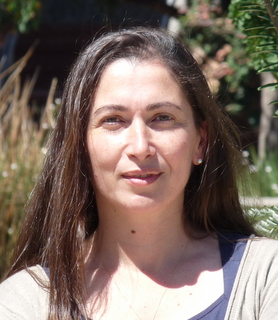
Maria Garcia De La Banda Garcia is a Professor at Monash University's Faculty of Information Technology with over 25 years of academic experience. She currently serves on the ARC College of Experts and is Co-Chair of the Monash-Woodside FutureLab. Her research spans: Combinatorial optimization techniques Program analysis and transformation Constraint programming languages Bioinformatics applications She has secured over $34M in research funding and serves as Area Editor for the Journal of Theory and Practice of Logic Programming. Awards include: Logan Fellowship (1997) International Constraint Modelling Challenge (2005) Monash Honour Roll (2021)
Maria Garcia de la Banda is a distinguished Professor at Monash University's Faculty of Information Technology, where she serves in the Department of Data Science and Artificial Intelligence (DSAI). With over 25 years of academic experience, she has held significant leadership roles including Deputy Dean (Research) until July 2022, overall Deputy Dean of the Faculty (2013-2016), and Head of the Caulfield School of Information Technology (2009-2011). She is currently a member of the ARC College of Experts and Co-Chair of the Monash-Woodside FutureLab. Her educational background includes a Doctor of Philosophy in Computer Science from the Universidad Politecnica de Madrid (awarded July 7, 1994) and an Ingeniero Informatico degree from the same institution (awarded March 1, 1992). Her PhD received the university's Best PhD Award. Garcia de la Banda's research spans multiple disciplines with a strong focus on constraint programming, combinatorial optimization, program analysis, and bioinformatics. She leads the Optimization research group within DSAI and has made significant contributions to declarative programming languages, parallelism, and automatic parallelization. Her interdisciplinary work bridges computer science with biological applications, particularly in protein structure analysis and computational drug design. Her publication record shows consistent contributions across constraint programming, optimization, and bioinformatics. Recent work demonstrates increasing interdisciplinary collaboration, with a notable expansion into bioinformatics applications alongside her core constraint programming research. She has maintained a strong presence at major conferences like CP (International Conference on Principles and Practice of Constraint Programming) while also building impactful industry collaborations. Her scientific recognition includes: Logan Fellowship (1997) - the first and only prestigious award of its kind in the Faculty of IT International Constraint Modelling Challenge winner (2005, with Peter Stuckey) Universidad Politecnica de Madrid's Best PhD Award (1994) Induction into the Monash Honour Roll (2021) Vice-Chancellor's Diversity and Inclusion Award (2020) As a research leader, Garcia de la Banda has secured over $20M in industry funding and $14M in nationally competitive funding, including $8M as Chief Investigator in 11 ARC grants (5 as lead). She has served as Area Editor of the Journal of Theory and Practice of Logic Programming since 2010 and on the Editorial Board of the Constraints journal since 2019. Her leadership extends to professional organizations, having served on the Executive Committees of both the Association of Logic Programming (2005-2008) and the Association of Constraint Programming (2017-2020), where she was President (2019-2020). She leads the Optimization research group within DSAI and collaborates extensively across Monash University and with industry partners. Her current major projects include HARNESS (Hierarchical Abstractions and Reasoning for Neuro-Symbolic Systems), the ARC Training Centre in Optimisation Technologies, and the Building 4.0 CRC project focused on better buildings through technology. These initiatives demonstrate her commitment to translating theoretical research into practical applications with real-world impact.
Dr. Peter Schüller is a Professor affiliated with the Department of Knowledge-Based Systems at TU Wien (Vienna University of Technology). He holds the academic title of Privatdozent (Priv.-Doz.) and has a background in Technical Engineering (Dipl.-Ing. Dr.techn. / Bakk.techn.). His roles include academic research, consulting services for intelligent automation, and partnership with Potassco Solutions. He is based at Favoritenstrasse 11, Room HG0312, and can be contacted via peter.schueller@tuwien.ac.at or contact@peterschueller.com. Education : Master's Thesis: 'Reconstructing borders of manually torn paper sheets using integer linear programming' (2008) PhD (Dr.techn.) in Informatics Habilitation (Privatdozent) qualification Research Interests : Schüller specializes in declarative problem solving through Answer Set Programming (ASP), with focus areas including hybrid knowledge integration systems, inconsistency management, and applications in robotics, traffic optimization, and industrial automation. His work bridges theoretical advances in computational logic with practical implementations in enterprise software architecture and database systems. Projects & Grants : He has led projects funded by the Austrian Research Promotion Agency (FFG), Austrian Science Fund (FWF), and Vienna Science and Technology Fund (WWTF). Key projects include: 'Dynamic knowledge-based (re)configuration of cyber-physical systems' (2017–2020) 'Integrated Evaluation of Answer Set Programs' (2015–2018) 'Inconsistency Management for Knowledge-Integration Systems' (2009–2012) Consulting & Partnerships : Provides services in enterprise software design, database optimization, GDPR compliance, and hybrid knowledge systems. Official partner of Potassco Solutions. Collaborates on initiatives like AI4EU and HumanE-AI-Net. Labs & Teams : Active in TU Wien's Knowledge-Based Systems Group. Involved in developing the DLVHEX and Hexlite solvers.
Wolfgang Slany is Professor at Vienna University of Technology focusing on AI applications in scheduling systems. His research develops domain-specific languages and hybrid algorithms for workforce optimization in healthcare, call centers, and industrial settings. Key research areas: Fuzzy logic in AI systems Automated shift planning Break scheduling heuristics Test automation frameworks Publications demonstrate iterative development of the TEMPLE modeling language for staff scheduling. Recent work combines constraint programming with local search techniques to solve complex real-world scheduling problems across supervision systems and manufacturing environments.
Dr. Leroy Chew is a Research Fellow at the Institute of Logic and Computation at Technische Universität Wien. He specializes in theoretical computer science with focus areas in proof complexity, quantified Boolean formulas (QBF), and SAT solving. His educational background includes a PhD from the University of Leeds and postdoctoral research at Carnegie Mellon University. Dr. Chew's research explores the boundaries of computational complexity and formal verification systems. His current projects include developing novel proof systems for quantified formulas and expansion-based approaches for constraint satisfaction problems. He leads research funded by the ESPRIT Grant on QBF Proofs and Certificates. His publication record demonstrates consistent contributions to formal verification and computational logic, with recent advances in strategy extraction techniques and dual proof systems. He maintains academic collaborations across Europe and the United States, and has served on program committees for major conferences including SAT and QBF Workshops. Dr. Chew has received the EPSRC Postdoctoral Prize Research Fellowship and continues to develop computational tools for the research community, including proof generators and strategy extraction software.
Tim Scott is a Professor (Joint Appointment) and Vice Provost at Texas A&M University, where he has been affiliated since 1990. He holds degrees from Louisiana College (B.S. Biology/Chemistry, 1987), Texas A&M University (M.S. Biology, 1989), and a Ph.D. in Zoology from Texas A&M (1996). His dual research focus includes foundational studies on alligator chemoreception and parasite ecology, alongside transformative work in STEM education policy and teacher preparation. In science education, Dr. Scott pioneered initiatives like aggieTEACH and the Robert Noyce Scholarship Program, which have produced top-tier STEM teachers in Texas. He leads Texas A&M’s Office for Student Success and has been recognized with awards such as the Exemplary Faculty Practices Award and membership in the Chancellor’s Academy of Teacher Educators. His work emphasizes K-20 education systems, focusing on equitable teaching strategies, STEM workforce development, and student retention at all academic levels. Key research themes include predictive factors for STEM persistence, transfer student success, and curriculum design informed by 5E models. His recent publications address teacher recruitment, program evaluation, and federal-agricultural partnerships. Scott’s career reflects a commitment to bridging ecological research and systemic educational reform.
Dr. John Paul Minda is a Professor in the Department of Psychology at Western University and an associate director of the Western Institute for Neuroscience. He holds a PhD from the University of Buffalo and was a Beckman Fellow at the University of Illinois. His research focuses on categorization, concept formation, and their influence on decision-making. He has authored influential books like *The Psychology of Thinking* and *How to Think*. Dr. Minda is renowned for his teaching excellence, receiving the 2020 Dean’s Award for Teaching and the 2023 OUSA Teaching Excellence Award. He directs the Minda Lab, a cognitive psychology group affiliated with the Brain and Mind Institute. The lab studies how people learn categories and how these concepts shape behavior. Funded by NSERC, SSHRC, and Mitacs, the lab has produced over 100 publications. Recent work explores implicit learning, cultural differences in categorization, and mindfulness interventions. Key lab members include PhD students Anthony Cruz and Chelsea McKenzie, and postdoc Priya Kalra. Dr. Minda advises over 20 graduate and undergraduate students, mentoring through grants and collaborative projects. His teaching emphasizes accessibility and innovation, reflected in courses on cognitive psychology. He lives in London, Ontario, and balances academia with running and family life.
Mattias Guns is an Associate Professor in the Department of Computer Science at the Faculty of Engineering Science, KU Leuven. He is a core member of the Declarative Languages and Artificial Intelligence (DTAI) research unit and holds affiliations with Leuven.AI and the KU Leuven Institute for Mobility (LIM). He serves on the Council of the Faculty of Engineering Science and the Programme Committees for Artificial Intelligence and Mobility and Supply Chain. His research centers on bridging Artificial Intelligence with constraint-based optimization, focusing on Explainable AI, Predict-and-Optimize frameworks, and machine learning integration for constraint solving. Key interests include human-centric explainability in decision systems, perceptual reasoning, and energy-efficient optimization models. His work addresses fundamental challenges in program synthesis, scheduling, and trustworthiness of AI planning systems. Recent publications reveal strong trends in fusing machine learning with declarative problem-solving paradigms. Notable themes include LLM-driven constraint modeling, mutational testing for solvers, step-wise explanation generation, and preference learning for unsatisfiable constraints. His research consistently targets real-world applications in supply chain optimization, inventory management, and perceptual reasoning systems. As principal investigator, he leads multiple major projects: TED-AI: Trustworthy Explanations for Decision Making in AI (2025) Towards Human-Centric Explainable Constraint Solving (2025-2028) SAELING: Energy Optimization via Learning (2024-2027) From Natural Language to Constrained Optimization (2023-2027) He has supervised PhD student Mulamba Ke Tchomba on machine learning-enhanced constraint solvers for perceptual reasoning. Within the DTAI research group, he contributes to KU Leuven's leadership in declarative AI through collaborative work on constraint programming foundations and applications. His team actively develops open-source tools like CMPpy for prediction-optimization integration and participates in European AI initiatives through Leuven.AI.
Siegfried Nijssen is a Professor at the Department of Computer Science within the Faculty of Engineering Science at KU Leuven. He is a core member of the Declarative Languages and Artificial Intelligence (DTAI) research group at the Arenberg campus and affiliated with Leuven.AI, the university-wide Institute for Artificial Intelligence. His academic position is designated as 'professor BOF', reflecting a specialized research-focused appointment. Nijssen's research centers on the integration of declarative programming paradigms with machine learning, particularly through constraint programming frameworks. Key focus areas include interpretable rule learning, neural-symbolic integration, and constraint-based optimization for combinatorial problems. His work bridges theoretical computer science with practical applications in bioacoustics, pandemic response modeling, and network analysis, emphasizing transparency and reliability in AI systems. Analysis of his 2021-2024 publications reveals a strong trajectory toward interpretable AI, with significant contributions like RL-Net (combining neural networks with rule-based reasoning) and novel approaches to NP-hard optimization using structured perceptrons. His research consistently targets the intersection of symbolic reasoning and statistical learning, addressing critical challenges in constraint imposition, model explainability, and stochastic optimization. Nijssen currently leads two major research initiatives: 'Declarative Languages for Imposing Constraints on Machine Learning Models' (2025-2027) and the long-term 'Declarative Programming for Machine Learning (DeclaLearn)' project (2025-2035), demonstrating sustained leadership and funding in his specialized domain. These projects extend his foundational work on constraint-based machine learning frameworks. Based at the DTAI research group, Nijssen contributes to KU Leuven's AI ecosystem through collaborative research in logic programming, constraint solving, and data mining. His work with Leuven.AI positions him at the forefront of institutional efforts to advance trustworthy and constraint-aware artificial intelligence systems.
Dirk Fahland is an Associate Professor in Process Analytics on Multi-Dimensional Event Data at the Analytics for Information Systems group, Eindhoven University of Technology (TU/e), School of Mathematics and Computer Science. He combines formal methods with data-driven approaches to analyze complex distributed systems through event data. His current research focuses on process mining, data engineering, and multi-dimensional analysis of business processes. Academic Background: PhD from Humboldt-Universität zu Berlin and TU/e under Profs Wolfgang Reisig and Wil van der Aalst Post-Doc at TU/e on EU-funded ACSI project Research stays at Weizmann Institute, HPI Potsdam, and National University of Singapore Appointments: Assistant Professor (2013), Tenure (2016), Associate Professor (2019) Research Interests: Dirk's work centers on analyzing complex systems through event data by developing techniques for large-scale preprocessing, model synthesis, and multi-angle behavioral analysis. He explores object-centric process mining, anomaly detection, and knowledge graph applications for auditing. His research emphasizes balancing model accuracy with simplicity and integrating domain knowledge for explainable process analysis. Scientific Awards: Best Paper Award BIS 2011 Best Paper Award BPM 2011 Best Paper Award ICPM 2020 Best Paper Award ICPM 2021 Best Reviewer Award ICPM 2019 Educational Contributions: He manages the "Data Science in Engineering" Master's program, leads the "Data Challenge" course series at JADS, and teaches advanced process mining courses. He also contributes to BPMN visualization and performance monitoring education.
Thomas Eiter is a Professor at TU Wien's Institute of Logic and Computation. His research focuses on declarative programming paradigms, knowledge representation, and artificial intelligence. He leads projects in neurosymbolic systems, answer set programming (ASP), and stream reasoning, with applications in visual question answering, scheduling optimization, and semantic scene generation. Eiter has contributed to foundational work in ASP semantics, computational complexity, and hybrid reasoning frameworks. His work bridges logical formalisms with practical AI challenges, emphasizing explainability and scalability. Projects like ALASPO and neurosymbolic integration showcase his focus on advancing both theoretical and applied aspects of AI. Projects: HumanE AI Network, WASP, REWERSE Research Themes: Neurosymbolic AI, Answer Set Programming, Stream Reasoning Notable achievements include pioneering work on semiring-based reasoning frameworks and developing efficient ASP solvers like Alpha. His contributions span over 471 publications, emphasizing interdisciplinary applications in computer vision, robotics, and automated planning.
Neng-Fa Zhou is a Professor of Computer and Information Science at Brooklyn College and the Graduate Center of the City University of New York (CUNY). He holds a BS from Nanjing University (1984), and MS and PhD from Kyushu University (1988, 1991). Before joining CUNY, he served as an Associate Professor at Kyushu Institute of Technology (1991-1999) and held visiting positions at Yale, Alberta, Tokyo Tech, and Melbourne. Specializes in programming languages, constraint logic programming, and compiler design Developed Picat and B-Prolog languages with constraint-based graphics libraries Contributed to SAT encodings, multi-agent pathfinding, and declarative programming Scientific Awards: Most Practical Paper Award at PADL 2017 Award in ASP Solver Competition for BPSolver (2011)
Carlos Damásio is an Associate Professor at the Faculty of Science and Technology , NOVA University Lisbon , affiliated with the SSDI section. His office is located in room P2/12, with contact details: telephone +351 212 948 300 ext. 10758 and email cd@fct.unl.pt . His research spans Logic Programming , Knowledge Representation , and Non-monotonic Reasoning , focusing on theoretical foundations and practical applications in Artificial Intelligence . He investigates computational logic frameworks for knowledge-intensive systems, semantic reasoning, and declarative problem-solving paradigms.
Carmine Dodaro is an active researcher in Answer Set Programming (ASP) at the University of Calabria's Department of Mathematics and Computer Science. With over 130 publications from 2011-2025, his work bridges theoretical advances in logic programming with practical healthcare applications. His primary research interests include: Answer Set Programming theory and implementation Compiler techniques for ASP solvers Healthcare scheduling optimization (operating rooms, nurse staffing, chemotherapy) Integration of ASP with other AI paradigms Real-world constraint satisfaction problems Dodaro's recent work demonstrates exceptional focus on healthcare applications of ASP, with multiple 2023-2024 publications addressing nurse scheduling, operating room management, rehabilitation planning, and nuclear medicine scheduling. His approach typically involves developing specialized ASP encodings that handle complex real-world constraints while maintaining computational efficiency. He maintains a highly productive collaboration network, particularly with Marco Maratea (52 co-authored papers), Mario Alviano (40), and Giuseppe Galatà (23), forming one of Italy's leading ASP research groups. His publications appear consistently in top venues including Theory and Practice of Logic Programming, IJCAI, AAAI, and specialized logic programming conferences. Dodaro has contributed significantly to both theoretical foundations (unsatisfiable core analysis, paracoherent reasoning) and practical implementations (WASP solver extensions, CNL2ASP translation tools). His 2024-2025 publications indicate ongoing research momentum with no signs of reduced activity.
Stephen Chong is a Gordon McKay Professor of Computer Science in the Harvard John A. Paulson School of Engineering and Applied Sciences, where he serves as Co-Director of Undergraduate Studies for Computer Science. His academic career spans over a decade of teaching and research at Harvard, where he has made significant contributions to programming languages and information security. Chong received his PhD from Cornell University under the guidance of Andrew Myers, and a bachelor's degree from Victoria University of Wellington, New Zealand. Prior to graduate school, he worked as a consultant and contractor in the software industry, bringing practical experience to his academic research. Professor Chong's research focuses on language-based information security, using programming language techniques to provide information security assurance. His work bridges the gap between theoretical foundations and practical applications, developing tools and frameworks that help programmers write trustworthy programs. His research has evolved to address increasingly complex security challenges in modern computing environments, from web applications to cyber-physical systems. His recent publications reveal a strong trend toward integrating advanced programming language techniques with security analysis, particularly through the use of Datalog, SMT solvers, and program synthesis. His work on Formulog has been particularly influential, extending Datalog with mechanisms to construct and reason about SMT formulas for static analysis. His research has expanded to address security challenges in cyber-physical systems, where sensor attacks pose unique threats to safety-critical infrastructure. Chong has received numerous prestigious awards including an NSF CAREER award, an AFOSR Young Investigator award, and a Sloan Research Fellowship. He has also served in leadership roles for major conferences including CSF 2012-2013, PLMW @ PLDI 2021, and as SIGPLAN-M Chair for 2025-2026. As an educator, Chong has mentored numerous students through Harvard's undergraduate research programs and has served as a thesis advisor. His teaching portfolio includes foundational courses like CS51, systems courses like CS61, and advanced topics in programming languages (CS152) and compilers (CS1530). He has been instrumental in shaping Harvard's computer science curriculum, particularly in security and programming languages. Chong leads a research group focused on language-based security, with projects including Formulog (for SMT-based static analysis), PRINCESS (for autonomous adaptation of software), and work on secure shell scripting (Shill). His group collaborates with researchers across Harvard and other institutions to tackle challenging problems at the intersection of programming languages and security.