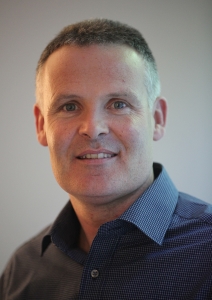
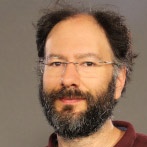
John Newell is a statistician and the inaugural Professor of Biostatistics at the School of Mathematical and Statistical Sciences at the National University of Galway. He serves as a Funded Investigator at the Insight Centre and leads research collaborations with elite athlete organizations and industry partners across the globe. Research Focus: Biostatistics, Sports Analytics, Translational Statistics Expertise: Statistical modeling, computational inference, design and analysis of medical device trials, statistical learning decision trees His work bridges classical and computational statistical approaches to enhance clinical trial design and athlete performance monitoring, with applications in multidisciplinary translation of statistical analyses. He has collaborated with prestigious institutions and sports organizations, including the Premier League, NFL, NBA, and Aspire Academy, and co-authored the textbook Statistics for Sports and Exercise Scientists . Scientific Awards Fulbright Scholar John has developed the widely used R package 'Dynom,' which has seen over 45,000 downloads, with its 2019 PLOS ONE paper ranking in the top 10% most cited.
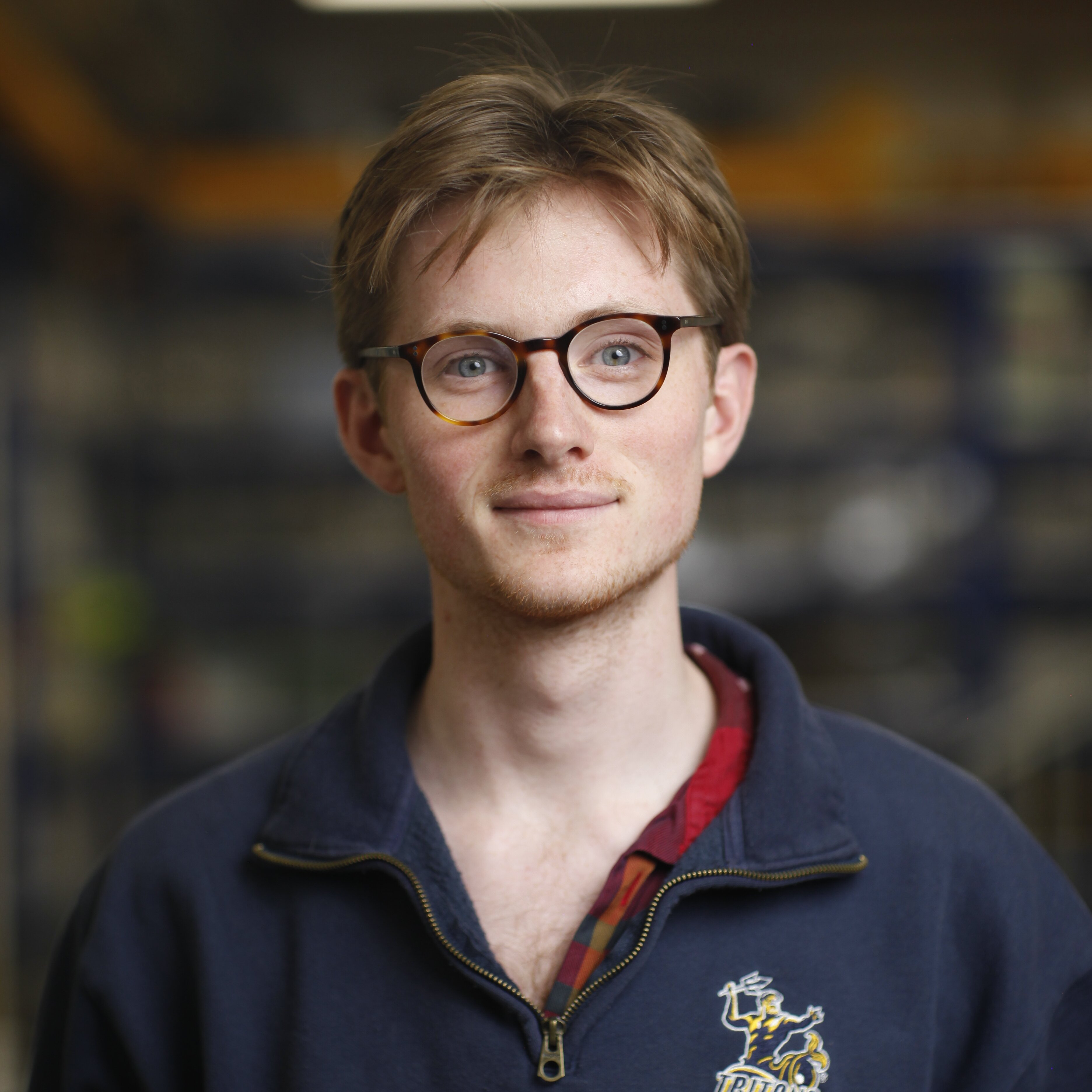
Alex Rutherford is a PhD Student at the University of Oxford and a Teaching College Lecturer in Engineering at Pembroke College, affiliated with the Oxford Robotics Institute. Supervised by Prof. Nick Hawes, Dr. Bruno Lacerda, and Prof. Jakob Foerster, he currently maintains academic status while on leave due to Long Covid as of July 2025. His research centers on reinforcement learning with specialized focus on multi-agent systems, open-ended learning, and curriculum design. He investigates environment optimization frameworks, regret approximation techniques, and uncertainty management in robotic decision-making. His work bridges theoretical AI with practical robotics applications through frameworks like JaxMARL. Recent publications demonstrate progression from foundational motion planning (2021) to advanced multi-agent RL systems (2024-2025), with increasing emphasis on curriculum design and environment optimization. His work consistently connects reinforcement learning theory with real-world robotics challenges, particularly in multi-robot coordination and uncertain environments. Beyond research, Rutherford organizes the Tolkien Lecture series at Pembroke College and has represented Oxford in competitive fencing. He actively shares resources through his personal website and blog, including the JaxMARL open-source library for multi-agent reinforcement learning.
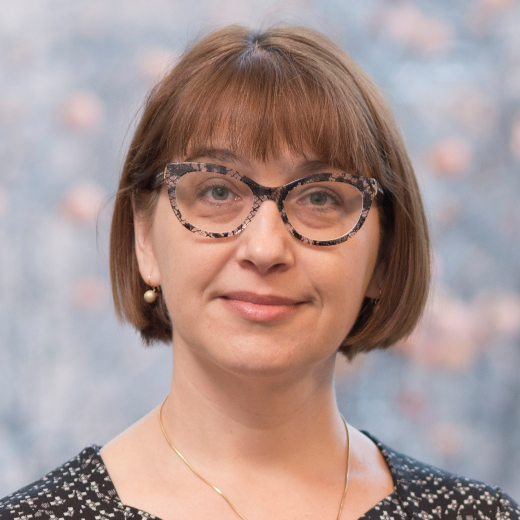
Dr. Mathieu Gerber is an Associate Professor in Statistics at the School of Mathematics in the University of Bristol. His research focuses on computational statistics and machine learning methodologies. Bayesian methods Online inference Particle filtering Monte Carlo methods His recent work includes adaptive sampling techniques using decision trees, noisy optimization algorithms, and software development for maximum mean discrepancy applications. No scientific awards or supervised students are explicitly listed in the provided profile.
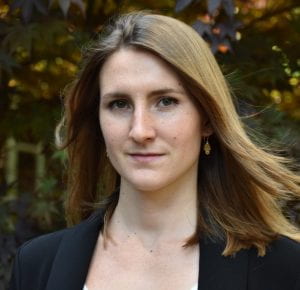
Dr.-Ing. Tim Brüdigam is a researcher affiliated with the Chair of Automatic Control Engineering at the Technical University of Munich . His work focuses on stochastic model predictive control (MPC) for systems with uncertainty, particularly in autonomous driving applications. He received the 2nd Prize IEEE ITSS Germany – Best PhD Dissertation Award for his research on safety and efficiency in MPC under uncertainty. 2024: Best PhD Dissertation Award (2nd prize), IEEE ITSS Germany His research bridges control theory , transportation systems , and uncertainty quantification , with recent publications addressing constraint tightening, collision avoidance, and distributed control strategies. Articles demonstrate a focus on stochastic MPC algorithms for autonomous vehicles, integrating machine learning and multi-granularity models to enhance safety and computational efficiency. Key scientific contributions include advancements in probabilistic constraint handling , event-based maneuver planning , and scenario-based uncertainty representation . His work has implications for urban automated driving , vehicle platooning , and high-speed autonomous racing .
Jeffrey Zhang is a Research Fellow at the Yale School of Medicine , affiliated with the Department of Biomedical Informatics and Data Science . Supported by an NLM T15 training grant , he works in Dr. Hua Xu's lab , applying large language models to biomedical challenges. Education: PhD in Operations Research and Financial Engineering , Princeton University (2020) BA in Computer Science, Economics, and Mathematics , Yale University (2014) His research spans biomedical informatics , data science , and optimization algorithms , with a focus on machine learning applications in clinical contexts and mental health analysis . Recent publications investigate higher-order Newton methods , computational complexity , and biomedical relation extraction using AI models. Scientific Awards: NLM T15 Training Grant Jeffrey collaborates with Dr. Hua Xu , Dr. Kalpana Raja , and Dr. Qingyu Chen , among others, and contributes to interdisciplinary projects at the intersection of immunology , engineering , and AI .
Sanja Baric is a Professor at the Faculty of Agricultural, Environmental and Food Sciences of Free University of Bozen-Bolzano (unibz), Italy. Her research focuses on plant pathology , particularly chestnut blight and apple postharvest diseases , integrating molecular genetics and agricultural technology to enhance disease detection and management. Current projects address phytoplasma infections in apple trees and fungal pathogens in fruit crops. She teaches courses in plant protection and phytopathology for bachelor’s and master’s programs in Agricultural, Food and Mountain Environmental Sciences. Her publications emphasize genetic diversity of pathogens like Cryphonectria parasitica and Colletotrichum species , alongside innovative diagnostic tools such as knowledge-based Bayesian networks and duplex TaqMan assays . While no specific awards are listed, her work aligns with EU-funded collaborations and interdisciplinary agricultural research .
Professor Amir H Gandomi is a leading academic in data science and artificial intelligence at the University of Technology Sydney, where he serves as Professor of Data Science at the Data Science Institute within the Faculty of Engineering and Information Technology. An ARC DECRA Fellow with over 450 journal papers and 14 books, his research has garnered more than 70,000 citations with an H-index exceeding 110. Ranked 18th among over 17,000 researchers in Genetic Programming bibliography and 24th in Artificial Intelligence & Image Processing by Stanford University, Prof. Gandomi is recognized as one of the world's most influential scientific minds. His research interests span machine learning, evolutionary computation, global optimization, and big data analytics, with applications across healthcare, structural engineering, environmental science, and cybersecurity. He has developed innovative frameworks like Adaptive Strategy Management for large-scale optimization and Boundary Update methods for constrained optimization problems. His work bridges theoretical advancements with practical implementations in diverse fields including medical diagnostics, renewable energy site selection, and smart infrastructure. Prof. Gandomi's publication portfolio demonstrates consistent high-impact contributions across multiple disciplines, with recent work focusing on AI-driven healthcare solutions, optimization algorithms, and climate modeling. His research shows strong interdisciplinary connections between computer science, engineering, and medical applications, with particular emphasis on practical implementations of theoretical frameworks. The breadth of his work reflects both deep technical expertise and the ability to apply computational methods to solve real-world problems across various domains. 2024 IEEE TCSC Award for Excellence in Scalable Computing (MCR) 2023 Achenbach Medal from Stanford University 2022 Walter L. Huber Prize (highest-level mid-career civil engineering research award) 2025 Sigma Xi Young Investigator Award 6 consecutive years as Clarivate Analytics Highly Cited Researcher AmCham Alliance Award in AI As a dedicated educator and mentor, Prof. Gandomi has supervised numerous research students in evolutionary machine learning, structural health monitoring, and uncertainty-aware AI systems. His funded research projects include Amazon Research Awards for medical report generation, Climate Change AI grants for drought prediction, and Digital Finance CRC projects for cyber threat detection. He leads the Data Science Institute's efforts in developing practical AI solutions while maintaining strong industry partnerships and international collaborations across multiple continents.
Shunsuke Horii is an Associate Professor at the Center for Data Science, Waseda University. His research spans information theory, coding theory, statistical learning theory, and data science applications. He actively collaborates with industry through initiatives like the Waseda Data Science Consortium. Education: Ph.D. in Science and Engineering from Waseda University (2009), Master's from Waseda University Graduate School of Science and Engineering (2004). Research Focus: Addresses causal effect estimation in data science using Bayesian decision theory, sparse modeling, and optimization techniques like ADMM and variational inference. Develops efficient algorithms for multiuser communication, matrix completion, and privacy-preserving distributed computing. Teaching: Instructs courses on statistics literacy, data science, and programming with Python/R across multiple academic quarters. Grants: Leads projects funded by Japan Society for the Promotion of Science, including causal inference frameworks, product recommendation systems, and business analytics. Publications: 21 papers with 61 Scopus citations, focusing on LP decoding, Bayesian hierarchical models, and statistical causal analysis.
Esther Rolf is an Assistant Professor of Computer Science at the University of Colorado, Boulder. Her research focuses on statistical and geospatial machine learning, emphasizing usability, data efficiency, and fairness. She explores environmental monitoring via machine learning and the impact of data representation on algorithmic fairness. Prior to CU Boulder, she was a postdoctoral fellow at Harvard’s Data Science Initiative. She earned her PhD in Computer Science from UC Berkeley, advised by Benjamin Recht and Michael I. Jordan, supported by NSF, Google, and UC Berkeley fellowships. Her work has garnered best paper awards and international recognition, including the SDG Digital Gamechangers Award. She currently teaches courses on geospatial ML and machine learning, and leads the MOSAIKS project for accessible satellite-based ML systems. She actively recruits PhD students and postdocs focused on interdisciplinary, applied ML research. Education: PhD in Computer Science, UC Berkeley (2022) Postdoctoral Fellowship, Harvard (2022) Research Interests: Esther’s work bridges ML methodology and real-world applications, particularly in environmental and social domains. Key areas include: Geospatial ML for environmental monitoring (e.g., satellite imagery analysis) Ethical AI: fairness, representation, and bias mitigation Algorithmic approaches for data-efficient, scalable systems Recent Trends in Publications: Her recent work emphasizes geospatial challenges, such as satellite data modality, global location embeddings, and policy impacts of ML-driven environmental models. She also investigates data representation’s role in model fairness across domains like poverty mapping and resource extraction tracking. Awards: SDG Digital Gamechangers Award (2023) Best Paper at ICML (2018) Best Paper at NeurIPS AI for Social Good Workshop (2019) Lab & Collaboration: Her lab at CU Boulder fosters interdisciplinary research, emphasizing collaborative, communication-driven projects. Current initiatives include the MOSAIKS project and the ML & Environment Postdoctoral Fellowship program. She teaches advanced courses on geospatial ML and machine learning theory.
Antonio Vigueras Rodríguez serves as a Full Professor at the School of Industrial and Mining Engineering, Polytechnic University of Cartagena, Spain, with an active research career spanning two decades in water-energy systems integration. His research focuses on Water Resources Engineering , Energy Systems , and Renewable Energy Integration , examining critical intersections like water infrastructure's role in power grid stability, AI-driven wastewater characterization, and sustainable urban drainage solutions. His methodological approach frequently employs machine learning, genetic algorithms, and hydrodynamic modeling to address environmental engineering challenges. Analysis of his 77 publications (31 articles, 41 conference papers) reveals a pronounced shift toward interdisciplinary water-energy nexus research since 2020, with increasing emphasis on real-world applications in Spanish municipalities. His work demonstrates strong industry relevance through practical implementations in Cartagena's water systems and contributions to power grid stability frameworks under high renewable penetration scenarios.
Chunliang Wang is a researcher with Docent title at the School of Technology and Health (STH), KTH Royal Institute of Technology, Sweden. His primary affiliation is with the Division of Biomedical Imaging at Hälsovägen 11C, Stockholm. He serves as course responsible for Deep Learning Methods for Medical Image Analysis (CM2003) and Medical Engineering, Basic Course (HL1007), while also teaching 3D Image Reconstruction and Analysis in Medicine (HL2027) and Degree Projects in Medical Engineering. His educational background includes medical training at Tianjin Medical University (1998-2005) and a PhD in Medical Science from Linköping University (2011). Prior to his academic career, he worked as a software engineer at Sectra AB in Linköping (2011-2015). Wang's research focuses on medical image analysis , specializing in image segmentation , deep learning , and statistical shape modeling . His work bridges clinical applications with computational methods, particularly in cardiovascular and neurological imaging. As the key contributor to MiaLab software (mialab.org), he develops practical tools for medical image processing. His publication portfolio spans 21 journal articles and 18 conference papers since 2007, with recent work emphasizing deep learning applications in multi-organ segmentation, coronary artery analysis, and neurological imaging. The 15 most recent publications demonstrate consistent focus on algorithm development for clinical image interpretation, particularly in segmentation challenges across multiple anatomical systems. Wang has developed significant research software including MiaLab (since 2011), CMIV CTA plug-in for OsiriX, MeVisHub, and MiaLite. His patented work on level-set based image processing (2013) demonstrates translational impact. While no formal awards are listed, his leadership in multiple MICCAI challenges and VISCERAL benchmarks highlights community recognition.
Samir Bhatt is a Professor of Machine Learning and Public Health at the University of Copenhagen's Faculty of Health and Medical Sciences, Department of Public Health, Section for Health Data Science and AI. He also holds a position as Professor of Statistics and Public Health at Imperial College London since 2016. His work focuses on developing mathematical, statistical, and computer science tools to address critical questions in human health. His educational background includes a DPhil in Statistical Genetics from the University of Oxford (2010), an MPhil in Computational Biology from the University of Cambridge (2006), and a BEng in Chemical and Bioprocess Engineering from the University of Bath (2005). Professor Bhatt's research spans the intersection of statistics, machine learning, and public health with particular emphasis on infectious disease modeling. His primary research areas include Bayesian inference, genomic epidemiology, and kernel methods applied to health data. His work bridges theoretical statistical approaches with practical public health applications, particularly in disease surveillance and outbreak response. The integration of AI with traditional epidemiological methods represents a key innovation in his research program. Analysis of his recent publications reveals a strong focus on applying advanced computational methods to pressing public health challenges. His work demonstrates consistent innovation in developing AI-driven approaches for infectious disease modeling, genomic surveillance, and survival analysis. Notable themes include the application of graph neural networks to epidemiological data, development of interpretable AI tools for public health decision-making, and sophisticated modeling of disease transmission dynamics across multiple pathogens including malaria, cholera, and respiratory viruses. Professor Bhatt has published extensively with over 107 research outputs to date. His work has received significant attention, with multiple publications covered by news outlets, referenced on social media platforms, and read by researchers on academic platforms like Mendeley. His research on AI for infectious disease modeling published in Nature demonstrates the high impact of his work in both academic and policy spheres. His research group at the University of Copenhagen appears to focus on developing computational tools for health data science, with particular emphasis on creating analytical frameworks that can be rapidly deployed during disease outbreaks. The development of GRAPEVNE (Graphical Analytical Pipeline Development Environment for Infectious Diseases) represents one such effort to create accessible tools for public health practitioners.
Hiraku Morita serves as a Research Fellow in the Department of Computer Science at the University of Copenhagen, actively contributing to the Machine Learning research group. His work bridges theoretical cryptography with practical secure computation applications, focusing on protocol efficiency and privacy preservation in data analysis. His research interests prominently feature Cryptography , Secure Multi-Party Computation , and Privacy-Preserving Machine Learning , with specialized expertise in card-based cryptographic systems and secret-sharing methodologies. He investigates foundational protocols for secure data processing while optimizing computational rounds and resource constraints in privacy-sensitive environments. Recent publications reveal a distinct trajectory toward practical cryptographic implementations for machine learning tasks, particularly in developing constant-round evaluation techniques for decision trees and novel card-based gate protocols. These contributions address critical challenges in balancing security guarantees with computational feasibility in distributed settings. As a core member of the University of Copenhagen's Machine Learning research group, Dr. Morita collaborates extensively with international researchers including Takaaki Mizuki, Koji Tozawa, and A. Mitrokotsa, advancing the field through both theoretical innovations and applied cryptographic solutions.
William Wang is a Professor of Computer Science at the University of California, Santa Barbara (UCSB), holding the Mellichamp Chair in Artificial Intelligence. He leads the UCSB NLP Group, directs the Center for Responsible Machine Learning, and co-directs the Mind and Machine Intelligence Initiative. His research focuses on machine learning, natural language processing, and interdisciplinary data science, emphasizing scalable algorithms for complex datasets. He earned his PhD from Carnegie Mellon University and has mentored numerous students in AI and NLP. Affiliations: Director of UCSB NLP Group, UCSB Center for Responsible Machine Learning, and Mind and Machine Intelligence Initiative. Education: PhD in Computer Science from Carnegie Mellon University, MS from Columbia University. Research interests include statistical relational learning, knowledge representation, and ethical AI. Notable awards include the NSF CAREER Award, IEEE AI's 10 to Watch, and the Karen Sparck Jones Award. His work bridges theoretical foundations and practical applications in AI, with contributions to vision-language models, multimodal reasoning, and generative AI. Key publications span top venues like NeurIPS, ICLR, and CVPR, addressing challenges in LLM reasoning, video generation, and ethical AI systems. He has advised over 15 PhD students and postdocs, many now in academia and industry leadership roles. Labs/Teams: UCSB NLP Group, Center for Responsible Machine Learning, and collaborations on multimodal AI and safety.
Youngtak Sohn is an Assistant Professor in the Division of Applied Mathematics at Brown University. His research bridges probability theory with statistical physics, machine learning, and theoretical computer science. Current investigations focus on high-dimensional statistical inference, random constraint satisfaction problems, and phase transitions in disordered systems. Previously, he was a postdoctoral researcher at MIT and earned his PhD in Statistics from Stanford University under Amir Dembo. Key research areas include: Phase transitions in random constraint satisfaction problems Statistical-computational gaps in high-dimensional inference Replica symmetry breaking in spin glass models Sharp thresholds in graph inference and community detection His publications demonstrate deep mathematical rigor, with recent work establishing fundamental limits in statistical estimation using low-degree polynomials and characterizing exact phase transitions in stochastic block models. The research consistently develops new mathematical frameworks for understanding computational thresholds in high-dimensional statistics and statistical physics. He mentors students through programs like MIT PRIMES, guiding projects on hypergraph coloring thresholds. His teaching portfolio includes graduate courses in probability theory and seminars on statistical learning theory.