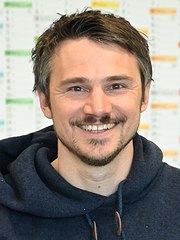
Helge Langseth is a Professor at the Department of Computer Technology and Informatics , within the Faculty of Information Technology and Electrical Engineering at the Norwegian University of Science and Technology (NTNU). His research focuses on Artificial Intelligence , Machine Learning , and Probabilistic Graphical Models , particularly Bayesian Networks and their applications in Decision Support Systems . Langseth's work addresses Explainable AI (XAI) , Reinforcement Learning , and Recommender Systems . He has contributed to Bayesian Optimization , Probabilistic Modeling , and Robotic Control in oceanic environments. His recent publications emphasize transparency , fairness , and scalability in AI systems, with applications spanning maritime trade, migraine diagnosis, and power grid management. He is affiliated with the Intelligent Systems Research Group at NTNU and actively mentors doctoral and master's students. Co-authored works with Yanzhe Bekkemoen , Sverre Herland , and Jørgen Hanssen reflect his role in advising the next generation of AI researchers.
Tim Baarslag is a Senior Researcher and group leader of the Intelligent and Autonomous Systems group at CWI (The Dutch research institute for Mathematics and Computer Science). He holds the title of Professor of Mathematics of Cooperative AI at Eindhoven University of Technology and serves as a Visiting Associate Professor at Nagoya University of Technology, Visiting Fellow at the University of Southampton, and Visiting Scholar at MIT. His research focuses on automated negotiation systems for collaborative decision-making in smart energy trading, IoT, autonomous vehicles, and digital privacy. Education : MSc (cum laude) and BSc (cum laude) from Utrecht University; PhD (cum laude) from Delft University of Technology Tim pioneered the COMBINE project (NWO Vidi grant) for coordinating multi-deal negotiations and developed the widely-used Genius negotiation environment. His work appears in prestigious venues like Science Magazine , Artificial Intelligence , and MIT Technology Review . He also leads the International Automated Negotiating Agent Competition and contributes to policy through memberships in The Young Academy and Netherlands Academy of Engineering . Recent research trends emphasize multi-deal negotiation protocols (2024), preference uncertainty modeling in privacy negotiations (2022), and scalable algorithms for handling outcome spaces as large as 10²⁵⁰ possibilities. His 2023 work on search algorithms for large negotiation domains has applications in energy trading and supply chain management. Scientific Awards : Cor Baayen Young Researcher Award (2017), Springer Theses Award (2016), multiple Best Paper Awards (AAMAS 2022, WI-IAT 2015, IJCAI 2014), and recognitions as Science Talent (2018), Academic Pioneer (2020), and Young Talent (2019) As a grant recipient , Tim leads NWO Vidi project COMBINE and previously held a Veni grant for preference uncertainty research. He mentors through organizing competitions, serving on conference PCs (AAAI, IJCAI), and reviewing in top journals like Artificial Intelligence . His work bridges theory and practice through the Genius framework and real-world implementations in smart grid and vehicular platooning.
Dr Andrew Coles is a Reader in Artificial Intelligence at the Department of Informatics, King's College London, within the Faculty of Natural, Mathematical & Engineering Sciences. His research focuses on temporal and numeric planning, explainable planning, and human-robot collaboration. He leads and co-investigates multiple research projects funded by EPSRC, the Royal Academy of Engineering, and the European Commission. His research interests include Artificial Intelligence, Temporal and Numeric Planning, Planning with Rich Domain Models, Explainable Planning, Human-Robot Interaction, Autonomous Systems, Heuristic Search, and Decision-Making. He has published extensively in top-tier AI and robotics conferences such as ICAPS, IROS, HRI, AAAI, and IJCAI. His recent publications demonstrate a strong trend toward explainable AI in human-robot collaboration, with a focus on multimodal sensing (e.g., eye tracking), user needs for explanation, and adaptive planning. His work integrates planning algorithms with human-centered evaluation and real-world applications in robotics. Scientific Awards: International award for PhD thesis on assistive robots (2020) Advising and Grants: Dr Coles has supervised multiple students, including Lara Wachowiak, Guillem Canal, and Petra Tisnikar. He has led or co-investigated several major research projects, including: COHERENT (EPSRC): Collaborative Hierarchical Robotic Explanations Plan and Goal Reasoning for Explainable Autonomous Robots (Royal Academy of Engineering) ADE (European Commission): Autonomous Decision Making in Very Long Traverses ERGO (European Commission): European Robotic Goal-Oriented autonomous controller Labs and Teams: He is affiliated with the Reasoning and Planning research group and the Trusted Autonomous Systems Hub at King's College London, focusing on developing trustable autonomous systems through robust planning and human-centered AI.
John G. Bullock is a Professor in the Department of Political Science at Northwestern University. His research focuses on political psychology, public opinion, and methodological issues in political science. He teaches courses including Introduction to American Politics (undergraduate lecture), Political Behavior (graduate seminar), Political Psychology (undergraduate lecture), Public Opinion and Representation in the United States (undergraduate seminar), and Quantitative Causal Inference (graduate seminar). Dr. Bullock's research interests span several interconnected domains: Political Psychology : Examining how partisanship affects factual beliefs and political decision-making Public Opinion : Studying political knowledge measurement, the influence of elite cues, and attitudes toward redistribution Methodology : Developing rigorous approaches to mediation analysis, survey design, and causal inference Political Behavior : Investigating how voters process information and respond to party cues His publication record demonstrates a consistent focus on methodological rigor, particularly in survey design and causal inference. Bullock has made significant contributions to understanding partisan bias in factual beliefs (showing such differences may be more illusory than real), the measurement of political knowledge (demonstrating how response options affect knowledge estimates), and the challenges of mediation analysis (arguing conventional approaches are fundamentally flawed). His recent work has expanded to examine leadership competence in government, particularly through his analysis of the U.S. response to the COVID-19 pandemic. Dr. Bullock maintains an active scholarly presence through his personal website and GitHub profile, where he shares academic tools including R packages and LaTeX classes. His work appears consistently in top political science journals including the American Political Science Review, Journal of Politics, and British Journal of Political Science.
Professor Vania Sena is a Chair in Entrepreneurship and Enterprise at the Management School of the University of Sheffield. She is a leading scholar in innovation, entrepreneurship, big data analytics, and institutional economics, with a strong focus on productivity, SMEs, and collaborative innovation systems. Her work spans finance, public policy, and technology management, often employing advanced econometric and network analysis methods. Her research interests include big data and performance , open and collaborative innovation , institutional impacts on innovation , entrepreneurship and SMEs , circular economy , and peer-to-peer lending . She has extensively studied the role of human capital, governance, and intellectual property in firm performance and innovation outcomes. The 15 most recent articles reflect a consistent trajectory in data-driven innovation research, with increasing emphasis on AI, machine learning, resilience in supply chains (notably hydrogen), and the circular economy. Her publications appear in top journals such as Technological Forecasting and Social Change , British Journal of Management , Journal of Banking & Finance , and Journal of Economic Literature , showcasing interdisciplinary reach and methodological rigor. Her scientific contributions include influential reviews on appropriability mechanisms and innovation, empirical studies on R&D spillovers, and frameworks for evaluating resilience in emerging energy systems. While specific awards are not listed, her publication record indicates significant recognition in the field. She has supervised doctoral researchers, including recent completions on immigrant entrepreneurship and institutional effects on business survival. Her work is supported by extensive collaborations across Europe and beyond. She is actively involved in PhD supervision and research leadership within the Entrepreneurship, Strategy and International Business group. Professor Sena has contributed to major research themes such as the impact of big data on SMEs, stakeholder diversity in innovation, and the role of policy in enabling circular economy business models. She is also engaged in policy-relevant research on financial inclusion, data intelligence in local government, and the effects of labor market restructuring.
Prof. Dr. Janick Edinger is a Professor of Distributed Operating Systems at the Department of Informatics, Faculty of Mathematics, Informatics and Natural Sciences, University of Hamburg, Germany. He leads a research group focused on distributed, context-aware, and adaptive computing systems, with a strong emphasis on edge computing, computation offloading, and assistive technologies. Education: PhD in Computer Science, University of Mannheim Studies at National Taiwan University Studies at University of Alberta, Canada Research stays at University of British Columbia, Hong Kong Polytechnic University, and Georgia State University, USA His research explores how edge computing and computation offloading can enable efficient, privacy-preserving processing of sensor and video data close to their sources, particularly in dynamic environments. He investigates the integration of autonomous and heterogeneous systems—such as drone fleets and mobile devices—into scalable middleware platforms for real-time monitoring and decision-making in logistics and industrial operations. His work also emphasizes societal impact, contributing to accessible routing, adaptive interfaces, and crowd-sourced mapping. The recent publications reflect a strong trend in edge computing, federated learning, privacy-preserving analytics, and assistive technologies. Topics include WebAssembly-based offloading, emotion prediction via eye tracking, real-time traffic detection, and predictive maintenance in Industry 4.0, showcasing a blend of foundational systems research and applied human-centered computing. Scientific Awards: PerCom 2021 Mark Weiser Best Paper Award Best Paper Award at IEEE PerCom 2021 for 'Voltaire: Precise Energy-Aware Code Offloading Decisions with Machine Learning' Prof. Edinger actively advises students and leads research projects involving grants and collaborations. His team includes PhD candidates and researchers working on middleware, edge systems, and context-aware applications. He has served on conference program committees, such as shadow PC member for EuroSys 2021, and publishes in top venues including IPDPS, PerCom, CHIIR, and COMPSAC. Labs and Teams: He leads the Distributed Operating Systems research group at the University of Hamburg, where he mentors students and collaborates on projects involving edge computing, IoT, and adaptive systems.
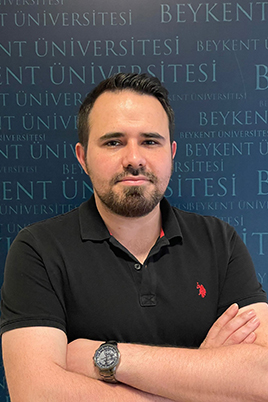
Melih Sefa YAVUZ is an Assistant Professor in the Department of Finance and Banking at Istanbul Beykent University, Faculty of Economics and Administrative Sciences. He has been actively contributing to academic and administrative duties, including serving as Deputy Director of the Institute and working in the Strategy Development and Planning Department. His teaching responsibilities include Investment Analysis and Portfolio Management, Digital Finance, and Financial Statement Analysis, all delivered in Turkish. His research interests span a wide range of topics in finance and economics, including digital finance, blockchain technology, ESG performance, firm performance, digital literacy, financial decision-making, and macroeconomic influences on equity markets. These interests are reflected in his extensive publication record in both national and international peer-reviewed journals. His recent scholarly work focuses on the impact of ESG performance on financial outcomes, behavioral aspects of financial decisions, digital transformation in finance, and the interplay between blockchain initiatives and stock prices. He frequently collaborates with scholars such as Gozde Bozkurt, Hasan Sadik Tatli, and Mehmetcan Suyadal, producing empirical studies grounded in Turkish and international financial markets. Dr. YAVUZ has published in journals such as the Journal of Entrepreneurship, Management and Innovation, EMAJ: Emerging Markets Journal, and Turkish Studies - Economics, Finance, Politics. His work appears in databases including ESCI, TR INDEX, EBSCO, and JournalPark. He has also contributed to scientific books on sustainable finance, digital transformation, and public procurement. Scientific Awards: No awards mentioned in the provided text. He advises and collaborates with various researchers and co-authors, though no formal PhD or Master’s students are listed. He does not appear to have led any externally funded grants explicitly mentioned in the text. He is involved in academic administration and curriculum development, particularly in digital finance and investment-related courses. There is no mention of specific labs or research centers, but his work suggests engagement with digital finance and financial market research teams.
Seth Blumsack is a Professor at the Pennsylvania State University in the Department of Energy and Mineral Engineering and serves as Director of the Center for Energy Law and Policy . He holds an Adjunct Research Professor position at the Carnegie Mellon Electricity Industry Center and is affiliated with the Santa Fe Institute as an External Faculty member. His research spans energy economics , power grid reliability , and complex infrastructure networks . Key projects include: Interdependent natural gas and electricity systems analysis Governance of regional transmission organizations Smart grid consumer behavior studies Power grid reliability tools development He has secured funding from the U.S. National Science Foundation , Department of Energy , Environmental Protection Agency , and private industry. His Best paper award at Hawai’i International Conference on System Sciences (2011) and John T. Ryan, Jr. Fellowship (2011-17) highlight his scientific recognition. Publications emphasize electricity market deregulation , energy infrastructure resilience , and consumer response to smart grid technologies . His work has been cited in major media outlets like The New York Times and The Los Angeles Times , and he has consulted for National Renewable Energy Laboratory , U.S. Department of Energy , and other industry stakeholders.
Eduardo Velloso is a Professor of Computer Science at the University of Sydney , focusing on interaction design for emerging technologies . His work explores novel user experiences through input modalities, interaction devices, and AI/ML integration in systems. Education: PhD in Computer Science (Lancaster University, UK), Bachelor in Computer Engineering (Pontifical Catholic University of Rio de Janeiro, Brazil) Research Interests: Interdisciplinary work combining Human-Computer Interaction , Augmented/Virtual Reality , Eye Tracking , Wearable Computing , and Machine Learning . Publication Trends: Recent work addresses methodology in HCI , AR/VR applications , AI integration , and sensor-based interaction . Scientific Awards: Best Paper Award at CHI Best Paper Award at UIST Best Paper Award at TOCHI Best Paper Award at TEI Supervision: Actively supervises PhD students and collaborates with companies/government on projects like VR training systems and AI mediation tools . Labs/Teams: Affiliated with institutions in Australia (University of Sydney) and Brazil (PUC-Rio), with global co-authors in projects involving mixed reality , wearables , and AI ethics .
David Alan Goldberg is an Associate Professor in the School of Operations Research and Information Engineering (ORIE) at Cornell University, part of Cornell Engineering. He joined Cornell in 2017 and previously held the A. Russel Chandler III Associate Professorship at Georgia Tech’s Industrial and Systems Engineering department. Goldberg earned his Ph.D. in Operations Research from MIT (2011) and a B.S. in Computer Science from Columbia University (2006). Education: B.S. in Computer Science, Columbia University (2006) Ph.D. in Operations Research, MIT (2011) Research Interests: Goldberg’s work focuses on applied probability and stochastic processes, including optimal stopping, inventory and queueing models, combinatorial optimization, and robust optimization. He develops algorithms and insights for complex systems, addressing challenges like the curse of dimensionality. His research spans applications in data science, operations research, and stochastic modeling. Notable contributions include distributionally robust inventory control and high-dimensional decision-making frameworks. Awards and Honors: 2025 Community-Engaged Practice and Innovation Award (David M. Einhorn Center) 2023 Sunny Yau ’72 Teaching Award (Cornell) 2019 INFORMS Applied Probability Society Best Publication Award 2015 NSF CAREER Award Multiple INFORMS Nicholson Student Paper Competitions (First Place, 2019 & 2015) Teaching and Service: Goldberg leads Cornell ORIE’s undergraduate research program, connecting students to real-world applications of OR and data science. He teaches courses in probability modeling, stochastic models, and academic skills for PhD students. He chairs the INFORMS Applied Probability Society and serves on editorial boards for Operations Research and Stochastic Systems . At Cornell, he advises the Undergraduate ORIE Society and directs undergraduate studies in ORIE. Labs & Collaborations: Goldberg’s research integrates theoretical rigor with practical applications, often involving collaborations across disciplines. His work bridges operations research, statistics, and computer science to address modern challenges in inventory systems, queueing networks, and decision-making under uncertainty.
Dr. Eric Tan is a Senior Lecturer in Finance at the University of Queensland's School of Business. He holds a PhD in Finance from the University of New South Wales and a Bachelor of Commerce (First Class Honours) from Monash University. Currently, he serves as the postgraduate coordinator for the finance PhD program and is a member of the Low and Negligible Risk (LNR) Ethics Review Panel. His research focuses on investments, fund management, and institutional investors like mutual funds and hedge funds. He has expanded into corporate finance, examining media coverage and political connections' roles. His work has been presented at major conferences such as the American Finance Association (AFA) and European Finance Association (EFA). He has received numerous grants from AFAANZ, industry bodies, and internal funding. Dr. Tan's articles explore topics like media influence on CEO dominance, climate transition risk in banking, and mutual fund performance. His research has won three Best Paper Awards at academic forums between 2016 and 2018. He also referees for top journals including the Review of Financial Studies and Financial Analysts Journal . Educations: PhD in Finance, University of New South Wales Bachelor of Commerce (First Class Honours), Monash University Awards: Best Paper Award, UWA Accounting and Finance Research Forum (2018) Best Paper Award, FIRN Annual Conference (2017) Best Paper Award, New Zealand Finance Colloquium (2016) Grants: AFAANZ, industry, and internal research grants. His advisory roles include overseeing the finance PhD program and ethics review. He contributes to the academic community through peer review and conference participation.
Luca Braghieri is an Associate Professor in the Department of Decision Sciences at Bocconi University. His affiliations include CEPR, CESifo, IGIER (Innocenzo Gasperini Institute for Economic Research at Bocconi), and BELSS (Bocconi Experimental Laboratory for the Social Sciences). He serves as a board member of the Review of Economic Studies (REStud) . Education: PhD in Economics, Stanford University Bachelor’s Degree in Economics, Harvard University Research Interests: Braghieri’s work centers on applied microeconomics , behavioral economics , and political economy . He explores how behavioral insights shape economic decision-making in markets, organizations, and political systems. His affiliations with experimental laboratories like BELSS suggest a focus on empirical and behavioral research methodologies. Advising & Grants: No specific advisees or grants are mentioned in the provided texts. His CV and personal page may contain further details, which are available upon request. Labs & Teams: Active in IGIER and BELSS, which support interdisciplinary economic research and experimental social science studies.
Colin Cooper is a Professor of Cancer Genetics at the Norwich Medical School, University of East Anglia. He is also a member of the Metabolic Health and Cancer Studies research groups. His work focuses on genomic evolution, tumor microbiome dynamics, and biomarker development for prostate cancer and musculoskeletal health. Cooper’s recent research explores the interplay between cancer genetics and microbial communities, emphasizing their role in prognosis and treatment outcomes. He investigates clonal evolution in tumors, mutational signatures, and non-invasive diagnostic tools like urinary extracellular vesicles. His collaborations span genomics, microbiology, and clinical applications. 2025: Causes of evolutionary divergence in prostate cancer (Genomics, Precision Medicine) 2024: Applications of urinary extracellular vesicles... (Biomarker Development, Liquid Biopsy) 2023: Caution regarding pan-cancer microbial structure (Methodological Considerations, Microbiome Analysis) In 2022, Cooper received the European Urology Oncology SoMe Award for his contributions. His work is frequently cited and has been featured in media outlets globally, highlighting his impact on cancer and aging research.
Dr. Manuel Anglada-Tort is a Lecturer in Psychology at Goldsmiths, University of London, and a visiting researcher at the Max Planck Institute for Empirical Aesthetics. His research focuses on the psychology of cultural systems, including music, creativity, and empirical aesthetics. He combines computational methods with psychological experiments to explore cultural evolution, music perception, and the interplay of cognition and social interaction. Research Interests: Cultural Evolution Music Perception & Cognition Empirical Aesthetics Creativity Big Data Analyses Key Projects: Large-scale iterated singing experiments on music evolution Investigating weather's influence on music success Developing the REPP platform for online sensorimotor synchronization studies Teaching: MSc in Music, Mind, and Brain MSc Psychology of the Arts, Neuroaesthetics, and Creativity Affiliations: Music, Mind and Brain Group at Goldsmiths Computational Auditory Perception Group at Max Planck Institute
Maya Balakrishnan is an Assistant Professor of Operations Management at the Jindal School of Management (JSOM), University of Texas at Dallas. She holds a PhD in Business Administration from Harvard Business School (2024) and a BS in Computer Science from Stanford University (2016). Her primary research focuses on Human-AI collaboration, Corporate Social Responsibility, and Behavioral Operations Management. She teaches courses such as AI in Supply Chain Management (OPRE 4393) and Advanced AI in Supply Chain Management (OPRE 6383). Her research explores how humans interact with algorithms in operational contexts and the ethical implications of workforce diversity disclosures on consumer behavior. Recent work emphasizes trust-building through operational design and mitigating risks in human-AI systems. Her awards include multiple first-place recognitions in behavioral operations competitions and a best presentation award at the Advances in Decision Analysis Conference. Awards: 2024 Production and Operations Management Junior Scholar Paper Competition (1st Place) 2023 INFORMS Behavioral Operations Working Paper Competition (2nd Place) 2022 Best PhD Blitz Presentation (Advances in Decision Analysis) Dr. Balakrishnan is actively involved in professional organizations such as INFORMS and the Manufacturing and Service Operations Management Society (MSOM). Her work bridges behavioral insights with operational systems, addressing real-world challenges in AI ethics and supply chain innovation.