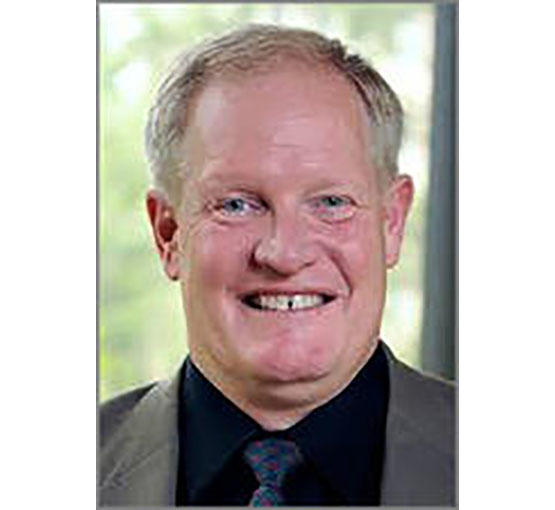
David Leslie is a Professor of Statistics and Director of Engagement in the Department of Mathematics and Statistics at Lancaster University. He specializes in statistical learning, decision-making algorithms, and game theory, with applications in real-time website optimization through bandit algorithms. Previously, he served as a Senior Lecturer at the University of Bristol and co-directed a cross-disciplinary decision-making research group. He has led significant projects such as the EPSRC/NERC-funded DSNE initiative and contributed to strategic partnerships like ALADDIN (with BAE Systems and EPSRC) and NG-CDI (with BT). His work emphasizes bridging theoretical research with practical industry solutions. Education details are not explicitly provided, but his career trajectory includes prior roles at prestigious institutions. Research interests focus on statistical methodologies, AI-driven decision systems, and environmental data science. He advises multiple PhD students in areas like Statistical AI and Extreme Value Theory. Notable projects include AI Hub, NABS+, and ProbAI, reflecting his engagement with cutting-edge technologies and interdisciplinary collaboration. David actively participates in research groups such as STOR-i Centre for Doctoral Training and the Statistical Artificial Intelligence group. His contact information includes an office at B73 in the PSC building and a direct email address. No specific scientific awards are listed, but his extensive project leadership and contributions to foundational AI research highlight his academic impact.
Sonja Buchegger is a Professor at the Division of Theoretical and Computer Science at KTH Royal Institute of Technology. She serves as Co-PI of the DataLEASH research project (Learning and Sharing under Privacy constraints) and is affiliated with the Digital Futures Faculty, a cross-disciplinary center focused on digital technologies and societal challenges. Her work addresses privacy-preserving technologies in decentralized systems, IoT, and secure communication. Research Interests: Privacy-Preserving Technologies Data Security and Synthetic Data Generation Decentralized Systems and Cryptographic Protocols IoT Privacy and Ownership Management Secure Communication in Social Networks Key Projects: DataLEASH: Focuses on privacy constraints in data sharing and learning chownIoT: Enhances IoT privacy during ownership transfers Anonfaces: Anonymization of facial data with efficacy and security constraints Advising & Grants: As Co-PI of DataLEASH, she leads collaborative research on privacy challenges. Her work is supported by Digital Futures' interdisciplinary initiatives. Labs/Teams: Active contributor to Digital Futures' research on digital technologies and societal impact.
Cristian Rojas is a Professor of Automatic Control at KTH Royal Institute of Technology, specializing in system identification. His research bridges control theory, statistics, and machine learning to develop data-driven methods for analyzing and controlling dynamical systems. He holds an MS in Electronics Engineering from Universidad Técnica Federico Santa María (Chile) and a PhD in Electrical Engineering from the University of Newcastle (Australia). Research focuses on efficient utilization of data for self-learning systems, including topics like continuous-time system identification, robust control, and statistical estimation. Notable contributions include work on subspace identification, input design for sparse systems, and algorithms for H-infinity norm estimation. His methodologies emphasize practical applications in industrial automation, smart infrastructure, and autonomous systems. Recent publications highlight advancements in inverse filtering, decentralized learning systems, and the theoretical underpinnings of data-driven control. He collaborates widely on projects involving Bayesian methods, adversarial systems, and privacy-protected decision-making frameworks. Rojas' work often addresses challenges such as undersampling effects, model consistency, and computational efficiency in real-world control scenarios. His academic contributions include organizing academic ceremonies at KTH and mentoring researchers in the Department of Automatic Control. Current research explores intersections between machine learning interpretability and control theory, with applications to explainable AI in engineering systems.
Roles and Affiliations: Sukhpal Singh Gill is a Lecturer (Assistant Professor) in Cloud Computing at Queen Mary University of London (QMUL), UK. He leads the GillNet Research Lab and is the Editor-in-Chief of the International Journal of Applied Evolutionary Computation (IJAEC) . He also serves as an Associate Editor for journals like IEEE IoT and Nature Scientific Reports. As Programme Director for MSc Advanced Computer Science and MSc Business Analytics, he contributes to curriculum development and education excellence. Research Interests: His research focuses on Cloud Computing, Edge AI, Internet of Things (IoT), and Energy Efficiency. He explores AI-driven solutions for resource management, security, and sustainable computing. Key areas include fog-edge integration, serverless computing frameworks, and healthcare applications. Publications and Impact: With over 200 peer-reviewed publications (including IEEE TCC, Elsevier JSS, and ACM TOIT), Dr. Gill has achieved 12,500+ citations and an H-index of 54 (Google Scholar). His work has been featured in IEEE Spectrum and Tech Monitor. Notable contributions include frameworks like HealthEdgeAI (healthcare systems), CloudAISim (cloud simulation), and EdgeAISim (edge computing modeling). Awards and Recognition: Recognized with the 2024 IEEE Outstanding Reviewer Award, Elsevier Editor’s Choice Award, and Queen Mary Education Excellence Award. He is a Fellow of the Higher Education Academy (FHEA). Teaching and Leadership: Teaches modules like Cloud Computing (Postgraduate) and Semi-structured Data Modeling. Leads the Networks and Systems Teaching Group (N&STG) and chairs academic misconduct panels. Advocates for inclusive curriculum design and intercultural development in higher education. Labs and Collaborations: The GillNet Lab develops next-generation systems for EdgeAI, CloudAIBus, and CloudAISim. Collaborates with institutions like Lancaster University, The University of Melbourne, and industry partners on fog-cloud IoT ecosystems.
Ken Barker is a Professor and Director of ISPIA at the University of Calgary's Department of Computer Science within the Faculty of Science. He holds a Ph.D. from the University of Alberta (1990) and has extensive experience in industrial computer systems and database design. His research focuses on distributed systems, data privacy/security, bioinformatics, and heterogeneous systems. He has served as Dean of the Faculty of Science, Department Head of Computer Science, and Past President of the Canadian Association of Computer Science (CACS/AIC). His work emphasizes privacy-preserving technologies, blockchain applications, and event understanding systems. Barker has published over 200 peer-reviewed papers across domains like transaction systems, spatial databases, and astro-informatics. He advocates for balancing data utility with privacy through frameworks like the Privacy Policy Permission Model. His contributions include the CHRONOS event prediction system and blockchain-based platforms for secure data storage.
Dr. Pamela Carreno-Medrano is a Lecturer and Early Career Research Representative in the Department of Electrical and Computer Systems Engineering at Monash University. Her research focuses on Human-Robot Interaction (HRI), robot learning, and socially assistive robotics. She holds a PhD in Information & Communication Sciences (Université de Bretagne-Sud), Master's in Computer Science (École Nationale d’Ingénieurs de Brest), and a Bachelor's in Computer Systems Engineering (Universidad EAFIT). Her work emphasizes human-centered design for intelligent systems, including adaptive navigation algorithms, human-robot collaboration models, and affective computing applications. She leads projects on long-term human-robot interaction and has contributed to interdisciplinary studies on robot ethics and public space integration. Dr. Carreno-Medrano also serves as an Adjunct Lecturer at Universidad EAFIT and collaborates internationally on sustainable aging technologies through the ARC Training Centre for Optimal Ageing. Current research themes include aligning task representations between humans and robots, modeling non-goal-driven human behaviors, and socially aware navigation strategies. She actively supervises postgraduate students in HRI, offering projects on interactive robot learning and embodied AI systems.
Garth V. Crosby is an Associate Professor at Texas A&M University's Department of Engineering Technology and Industrial Distribution within the College of Engineering. He is also affiliated with the Multidisciplinary Engineering program. His research focuses on IoT and IIoT security, cyber-physical systems, and STEM education innovation. Crosby holds a Ph.D. in Electrical Engineering from Florida International University (2007), an M.S. in Computer Engineering, and a B.S. in Electronics (Applied Physics) from the University of the West Indies. His work spans cybersecurity frameworks for emerging technologies, including blockchain-based federated learning, post-quantum cryptography, and IoT threat mitigation. He has contributed to educational advancements through online lab design and faculty efficacy studies in hybrid learning environments. Crosby's recent publications emphasize securing robotic IoT systems, supply chain blockchain applications, and ransomware evasion techniques using generative AI. His research portfolio includes over 40 peer-reviewed articles in journals like IEEE Transactions and conferences such as ASEE and FiCloud. Key themes include volunteer cloud reliability models (ProTrust), edge computing security, and educational technology evaluation. Crosby's interdisciplinary approach bridges engineering systems with pedagogical innovation, addressing both technical and human factors in modern technological challenges.
Karen Butler-Purry is a Professor of Electrical & Computer Engineering at Texas A&M University, holding the Raytheon Company Professorship. She is affiliated with the Power System Automation Laboratory and the College of Engineering. Her research focuses on intelligent systems for power distribution automation, fault diagnosis, and renewable energy integration. She completed her B.S. at Southern University (1985), M.S. at UT Austin (1987), and Ph.D. at Howard University (1994). Her work emphasizes cyber-physical systems, smart grid security, and microgrid resilience. Recent research includes AI-driven grid restoration, cybersecurity frameworks for distribution systems, and self-healing shipboard power systems. She has pioneered methods for transformer lifespan prediction and unbalanced load management in distributed networks. Publications span over three decades, with notable contributions to IEEE journals and conferences. Her educational initiatives include the Texas A&M System AGEP Alliance and LSAMP programs, advancing underrepresented minority participation in STEM academia. She leads interdisciplinary projects at the intersection of power systems, machine learning, and equity-focused academic workforce development. Labs/Teams: Principal Investigator in the Power System Automation Laboratory, collaborating with industry partners like Raytheon. Active in curriculum development for digital systems education through initiatives like the Enrichment Experiences in Engineering (E³) program.
Professor YuanTong Gu is the Pro Vice-Chancellor (Research Career Advancement) and Head of the School of Mechanical, Medical and Process Engineering at Queensland University of Technology (QUT). He holds an ARC Future Fellowship and leads the Laboratory for Advanced Modelling and Simulation in Engineering and Science. His research focuses on computational mechanics, biomechanics, and nanotechnology, with over $40M in secured research funding since 2000. He has supervised over 15 PhD students and collaborates with global institutions including Tsinghua University and the University of California. His awards include the International Computational Methods Award (2017) and ICACM Computational Mechanics Award (2017). Prof. Gu's work spans interdisciplinary projects in joint biomechanics, advanced materials, and AI-driven engineering solutions. Education: PhD (National University of Singapore), Graduate Certificate in Education (QUT). Research Groups: Leads a team of 3 academics, 2 ARC Future Fellows, and 15+ PhD students. Key projects include diamond nanothread composites, AI in biomedical devices, and fracture detection frameworks. His group collaborates with industry leaders and global universities to advance computational methods and materials science. Editorial Roles: Associate Editor of Engineering Analysis with Boundary Elements and Applied Mathematical Modelling , among others. Conference leadership includes chair roles in international computational mechanics conferences since 2012.
Dr. Xiaoyu Xia is a Lecturer (equivalent to Assistant Professor in North America) in Cybersecurity & Software Systems at RMIT University's School of Computing Technologies. He received his PhD with the prestigious Alfred Deakin Medal from Deakin University, Australia, and has established himself as a leading researcher in distributed systems and cybersecurity with over 50 peer-reviewed publications in top-tier venues including IEEE S&P, ACM WWW, and IEEE Transactions. Dr. Xia's research spans critical areas at the intersection of computing and security: System Privacy and Security Distributed Systems and Edge Computing AI Privacy and Machine Learning Systems Sustainable Computing Cybersecurity and Privacy-Preserving Technologies His recent work demonstrates a clear trajectory toward developing practical privacy-preserving frameworks for emerging technologies, particularly in edge computing environments and large language models. Dr. Xia has made significant contributions to machine unlearning, secure data management in distributed systems, and energy-efficient edge computing solutions that balance performance with sustainability concerns. Dr. Xia has received notable recognition for his scholarly impact: World's Top 2% Scientists by Stanford University (2022-2024) Alfred Deakin Medal for PhD research excellence (2021) Teaching Excellence Award from Swinburne University of Technology (2021) As an active researcher, Dr. Xia currently leads multiple funded projects including an ARC Discovery Project grant worth over $500,000 for developing privacy-aware intelligent digital twins for secure critical infrastructures. He is open to supervising motivated PhD students with interests in system security and privacy, and distributed ML systems. Dr. Xia serves the academic community through editorial roles as Associate Editor for IEEE Transactions on Dependable and Secure Computing and as a Review Board Member for IEEE Transactions on Parallel and Distributed Systems, and regularly participates in program committees for major conferences including ACM WWW and IEEE ICDCS.
Christos Thrampoulidis is an Assistant Professor in the Department of Electrical and Computer Engineering at the University of British Columbia (UBC), Vancouver. Previously, he held positions at the University of California, Santa Barbara (UCSB). His research focuses on machine learning theory, deep learning principles, mathematical optimization, and statistical signal processing. He leads the Machine Intelligence and Learning Design (MILD) group at UBC, emphasizing foundational studies of large language models, neural collapse, and high-dimensional data analysis. Education: PhD and MS in Electrical Engineering from the California Institute of Technology (Caltech), with a minor in Applied and Computational Mathematics. Undergraduate degree (Diploma) in Electrical and Computer Engineering from the University of Patras, Greece. Research interests include the implicit geometry of next-token prediction, optimization bias in neural networks, and robust generalization in overparameterized models. Key contributions include work on adversarial training, neural collapse phenomena, and safe reinforcement learning. His group actively explores theoretical frameworks for language models and develops methodologies to analyze their mechanics and limitations. Awards: NSERC Discovery Grant (2021). Teaching includes courses on optimization and signals & systems at UBC. He has advised numerous graduate students (PhD and MSc) and undergraduates, focusing on rigorous mathematical approaches to machine learning problems. Active collaborations span academia and industry, with publications in top venues such as NeurIPS, ICASSP, and AAAI. Current projects include understanding language model geometry, decentralized learning, and mitigating imbalances in training data. The group prioritizes equity and diversity, welcoming students with strong mathematical backgrounds and curiosity about foundational ML questions.
Prof. Dr. Heinz Bernhardt is a Full Professor at the Chair of Agricultural Systems Engineering at Technische Universität München (TUM), part of the TUM School of Life Sciences. His research focuses on technology integration in agricultural sciences, emphasizing precision agriculture, energy management, agricultural logistics, robotics, and sustainable farming systems. He holds a diploma in agricultural sciences from Justus Liebig University Giessen, a doctorate on bulk material transport in agricultural enterprises, and a habilitation on regulatory challenges in grain production. His career includes roles as Senior Lecturer at JLU Giessen and teaching positions at Kiel University before joining TUM in 2008. He leads research in smart farming, renewable energy integration, and IoT applications in agriculture. Notable projects include the CowEnergy energy management system and agrivoltaic systems for sustainable land use. Prof. Bernhardt’s publications highlight innovations in precision agriculture, livestock monitoring via AI, and sustainable energy solutions for farms. He is actively involved in industry collaborations and policy initiatives to advance agricultural technology through memberships in organizations like the Max Eyth Society and ASABE.
Dr. Alessio Faccia is an Assistant Professor in Finance at the School of Business and Law, University of Birmingham Dubai, with a strong international academic and professional background. He holds a PhD in Business Economics (Accounting & Finance) from Università Politecnica delle Marche and has taught at institutions in Italy, UAE, UK, and Malta. He is also a qualified Chartered Accountant and Auditor in Italy, with prior experience at Accenture and as founder of an independent audit firm. Education: PhD in Business Economics (Accounting & Finance), Università Politecnica delle Marche, 2012 MBA (Hons) in Business Economics & Accounting, Università Roma TRE, 2006 BSc in Business Economics and Accounting, Università Roma TRE, 2004 LLM, Pegaso University, 2019 MSc in Criminology, Pegaso University, 2017 CA (Chartered Accountant and Auditor), Italy, 2009 Fellow of the Higher Education Academy (FHEA), 2021 Certified Management & Business Educator (CMBE), 2020 His research spans interdisciplinary domains including blockchain, accounting information systems, machine learning, fraud examination, and sustainable finance. He explores how emerging technologies like AI, blockchain, and cognitive computing can enhance transparency, resilience, and innovation in financial systems. His work often bridges theory with practical applications in fintech, auditing, and regulatory compliance. His recent publications reflect a strong trend toward leveraging big data, blockchain, and AI to transform traditional finance and accounting practices. Topics include blockchain for supply chain risk, NLP for financial transparency, generative AI in education, and quantum fintech. These contributions appear in high-impact journals such as Annals of Operations Research , Sustainability , and Big Data and Cognitive Computing . Scientific Awards and Recognition: Fellow of the Higher Education Academy (FHEA), 2021 Certified Management & Business Educator (CMBE), 2020 Dr. Faccia actively contributes to the academic community as a reviewer for top-tier journals including Technovation , Chaos, Solitons & Fractals , PLoS ONE , and International Journal of Production Economics . He serves on the editorial board of the International Journal of Accounting & Finance Review and Journal of Risk and Financial Management . He has also acted as Guest Editor for special issues and Publicity Chair for international conferences, demonstrating leadership in academic dissemination. He supervises MSc students’ dissertations in finance and accounting and teaches postgraduate modules such as Financial Statement Analysis, Risk Management, and Alternative Finance. His advisory role extends to guiding research on blockchain, fraud, and sustainable business models. He has no listed grants, but his collaborative research indicates strong engagement with international scholars. Dr. Faccia is involved in cutting-edge research teams focused on blockchain, AI in finance, and digital transformation. He contributes to initiatives like the International Conference on Cloud and Big Data Computing and participates in technical research on ERP integration, semantic web applications, and cybersecurity resilience, positioning him at the forefront of technological innovation in business education.
Allison Beemer is an Associate Professor in the Department of Mathematics at the University of Wisconsin-Eau Claire (UWEC), College of Arts and Sciences, and serves as co-academic director for the UW Online Collaboratives' Master's of Science in Data Science program. Her professional mission centers on welcoming diverse students into mathematics through engaging classrooms and ethical research experiences, while balancing academic work with gardening, hiking, and reading. Her educational background includes: Ph.D. in Mathematics from the University of Nebraska - Lincoln M.S. in Mathematics from the University of Nebraska - Lincoln B.A. in Mathematics from Whitman College Dr. Beemer's research spans error-correcting codes , secure communication , and information privacy , with specialization in graph-based coding systems and discrete mathematics applications. She actively develops ethical frameworks for data transmission security while addressing real-world privacy challenges through combinatorial structures. Her recent publications (2024-2025) reveal strong trends in network security and community detection, combining graph theory with communication protocols. Key themes include authentication under adversarial conditions, decentralized learning validation, and indigenous pattern analysis – consistently involving undergraduate collaborators in cutting-edge information theory applications. Scientific awards and grants include: Mathematical Congress of the Americas 2025 AMS Travel Grant ($1240) UWEC Student Faculty Research Grant for 'Fast Algorithms for Computing Map Foldings' (2025) NSF CISE Collaborative Research Award for 'Keyless Authentication' ($300,000 UWEC share) UWEC Student Faculty Research Grant for 'Decoding Indigenous Beaders' (2024) Dr. Beemer maintains an active undergraduate research group with two current students, serving as a Math Alliance mentor while securing competitive grants. Her advising focuses on translating theoretical discrete mathematics into tangible projects like indigenous beadwork analysis and map-folding algorithms, with funding specifically allocated for student stipends. She leads a dedicated error-correcting codes research team at UWEC while collaborating across the University of Wisconsin system through the Online Collaboratives Data Science program, integrating her postdoctoral work in electrical engineering with mathematical foundations from her UNL training.
Suryanarayana Sankagiri is a postdoctoral researcher at the École Polytechnique Fédérale de Lausanne (EPFL) in Switzerland, affiliated with the Information and Network Dynamics (INDY1) group under Professor Matthias Grossglauser. Previously, he earned his Ph.D. in Electrical & Computer Engineering (2018-2022) from the University of Illinois at Urbana-Champaign , where he was supervised by Bruce Hajek and participated in the Coordinated Science Lab . He also holds an M.S. in Electrical & Computer Engineering from the University of Illinois (2016-2018) and a B.Tech. in Electrical Engineering from the Indian Institute of Technology Bombay (2012-2016). Education : Ph.D., Electrical & Computer Engineering, University of Illinois (2018-2022) M.S., Electrical & Computer Engineering, University of Illinois (2016-2018) B.Tech., Electrical Engineering, IIT Bombay (2012-2016) Suryanarayana's research focuses on discrete choice models and their application to recommendation systems , with a particular emphasis on learning from choice data and developing novel models for human decision-making. His broader interests include blockchain security under adverse network conditions, network dynamics , probabilistic modeling , and algorithm design . Recent work explores nonconvex matrix factorization and contextual dueling bandits for recommendation systems. His publications span theoretical and applied domains, including high-impact venues like ICML , Stochastic Systems , and IEEE Transactions on Networking . Themes include blockchain efficiency , hidden community detection in preferential attachment graphs, and temporal analysis of Indian classical music. Current projects involve refining recommendation systems through sparse comparison data and designing protocols for resilient blockchain networks. Scientific Awards : zkCapital Paper of the Week (2021) Rambus Fellowship (2021) Mavis Future Faculty Fellowship (2019) List of Teachers Ranked as Excellent (2019) Nomination for IIT Bombay Undergraduate Colloquium (2016) Best Poster Award, IIT Bombay Undergraduate Research Symposium (2013) Suryanarayana has advised no students listed in the provided materials. His work has been supported by fellowships such as the Mavis Future Faculty Fellowship and Rambus Fellowship . He contributes to the INDY1 group at EPFL, which investigates information and network dynamics through interdisciplinary approaches combining probability , network theory , and algorithmic design .