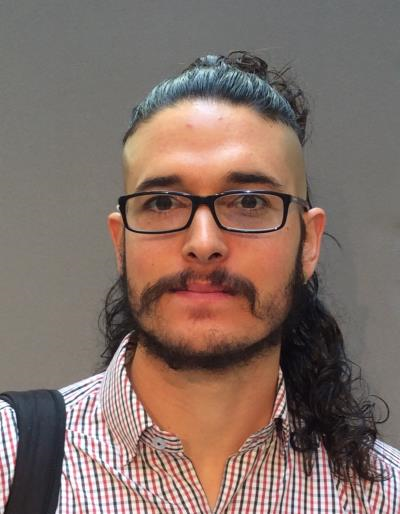
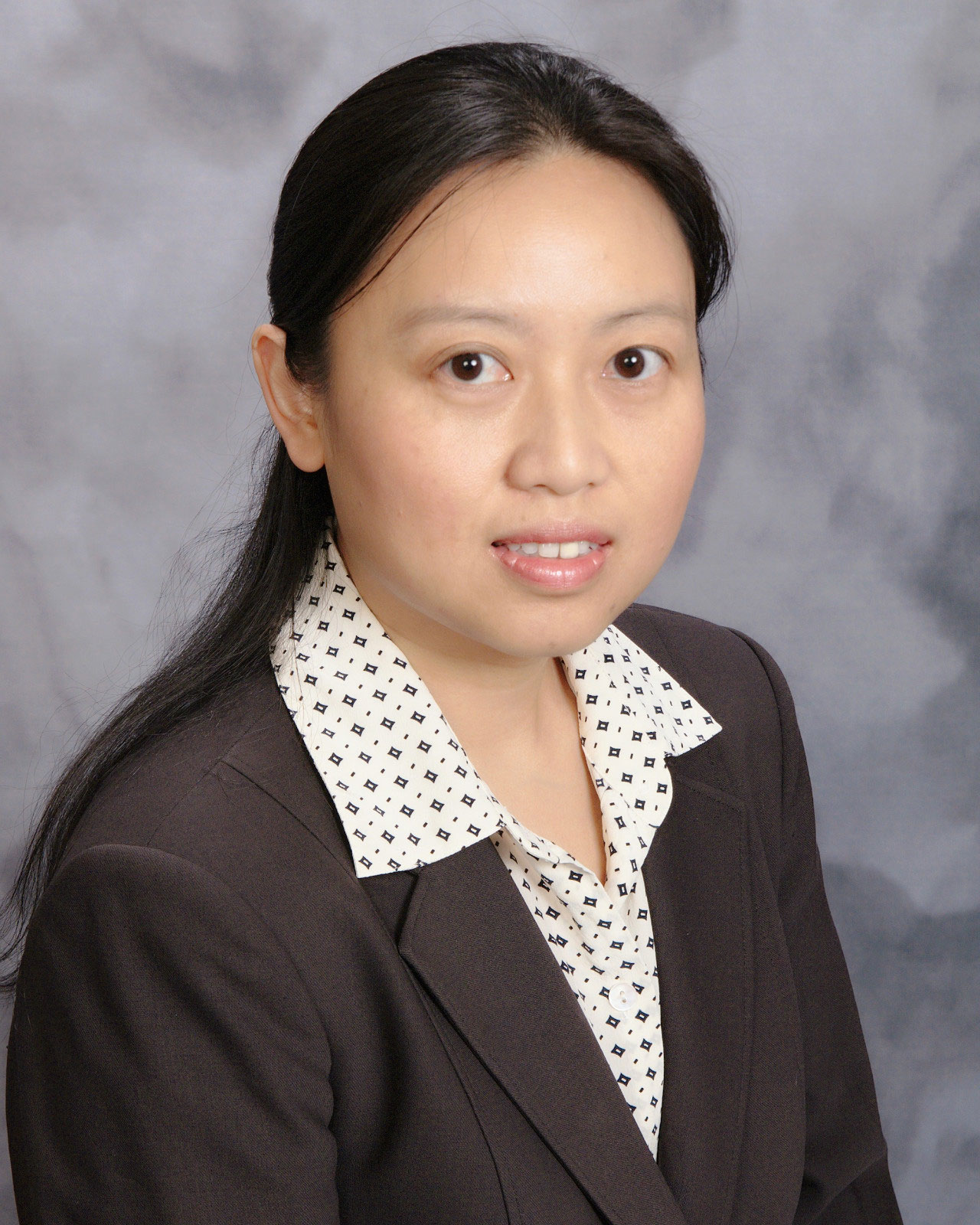
Alejandro Moure Abelenda is a Research Fellow at Lancaster University developing sustainable waste valorization technologies. His research focuses on circular economy approaches for organic residues, particularly integrating anaerobic digestate and wood ash into fertilizers. Core innovations: Ash-based digestate stabilization processes Nutrient recovery systems Chemical process modeling (Aspen Plus®) E-waste plastic microfactories Recent work (2021-2024) demonstrates three focus areas: organic waste transformation (47%), process simulation (33%), and educational applications (13%). His EPSRC Doctoral Prize research examines decentralized recycling technologies for engineering plastics. Current Projects: AKT2i project: Decentralized e-waste plastic recycling EPSRC Doctoral Prize: Digestate-ash valorization
Milton Mueller is a Professor of Public Policy at the Jimmy and Rosalynn Carter School of Public Policy at Georgia Institute of Technology. He specializes in the political economy of digital technologies, focusing on global governance frameworks for the internet, cybersecurity, and policy related to domain names and telecommunications. Mueller holds a Ph.D. from the Annenberg School at the University of Pennsylvania (1989). His research explores the intersection of technological innovation and governance, emphasizing how governments, civil society, and private sector actors shape internet policies. Key areas include ICANN reforms, digital sovereignty debates, and the economic dynamics of internet infrastructure. He co-founded the Internet Governance Project (IGP), which analyzes global internet policies and engages in multilateral forums like the UN and ICANN. Mueller’s work bridges academic scholarship and practical policy influence. His books include *Networks and States* (2010), *Will the Internet Fragment?* (2017), and the upcoming *Declaring Independence in Cyberspace* (2025). His recent publications address AI governance, cybersecurity institutional design, and the geopolitical dimensions of digital trade. Notable contributions include analyses of IPv6 adoption economics, TLS 1.3 standardization debates, and the impact of deep packet inspection on net neutrality. He has advised on ICANN stewardship transitions, cybersecurity attribution mechanisms, and GDPR-compatibility issues in domain name systems. Mueller teaches courses on telecommunications policy, information security, and digital public policy. His lab, the Internet Governance Project, fosters interdisciplinary research and student engagement in global governance challenges.
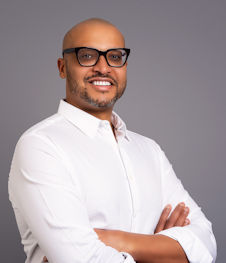
Dr. Remi Adekoya serves as a Lecturer in the Department of Politics and International Relations at the University of York, specializing in identity construction, African politics, and leadership dynamics. His work bridges academic research with high-profile media commentary, having contributed to The Guardian , Foreign Policy , Foreign Affairs , and major broadcast networks including CNN, BBC, and Al Jazeera. His educational background includes: PhD in Politics and International Relations from the University of Sheffield MA in Law from the University of Warsaw A leading scholar on identity-emotion interplay in international relations, Adekoya investigates how material, political, and psychological processes shape 21st-century identity constructions. His research particularly examines Nigerian sub-national identities and African leadership through interdisciplinary lenses connecting economics, history, psychology, and politics. This focus manifests in his books It's Not About Whiteness, It's About Wealth (2023) and Biracial Britain (2021), which challenge conventional race discourse while analyzing African development paradigms. His 15 most recent publications reveal consistent thematic trajectories across African and European contexts, with 60% addressing Nigerian politics and 27% analyzing Polish nationalism. Key methodological threads include discourse analysis of political rhetoric (33%), psychological frameworks for leadership studies (27%), and decolonial approaches to identity politics (20%). His recent work increasingly integrates pandemic impacts on African governance and transnational memory politics. No scientific awards are documented in available records. Professional engagements include: External expert on the UK Home Office Strategic Race Board Host of the podcast How to Become a Leader in Africa Undergraduate instruction in Africa and International Politics, Introduction to International Politics, and What is Politics? PhD supervision in African politics, development, and identity studies Prior to academia, Adekoya worked as political editor of Warsaw Business Journal and columnist for Nigeria's Business Day , establishing his dual expertise in African and Eastern European political landscapes.
Mohamed-Lamine Messai is a Professor at Université Lyon 2, France, specializing in cybersecurity, IoT security, and networking. He teaches courses such as Computer Security, Hacking Labs, and Cryptography, and is actively involved in research projects like ROMANCE (knowledge graph modeling for organizational vulnerabilities) and GLADIS (graph-based intrusion detection). His work focuses on key management systems, resource-constrained networks, and AI-driven cybersecurity solutions. He has supervised numerous PhD and master's students, including Abel Oroke, Floribert Katembo, and Sami Bettayeb. His research spans IoT security, blockchain applications, and graph neural networks for threat detection. He frequently presents at international conferences and workshops, including GRASEC, ARES, and IWCMC. Current projects include Federated Learning with Hybrid Encryption for APT detection and autonomous bio-inspired 5G deployment strategies. Key Projects: ROMANCE, GLADIS, CyberSecGraph, DATACAP Teaching: M1/M2 courses in Computer Security, IoT, Networking, and Distributed Computing Lab Affiliations: Involved in L3i lab activities and Open Days at the University of La Rochelle
Professor Sierk Ybema holds a dual appointment as Professor of Organization Studies at Anglia Ruskin University (Cambridge, UK) and a research position at Vrije Universiteit Amsterdam (Netherlands). He is affiliated with the Faculty of Business and Law, specializing in Management studies. His research focuses on organizational identities, cross-boundary collaboration, and workplace resistance, with a methodological emphasis on ethnography and discourse analysis. Education: PhD in Social Science (2003) from VU University Amsterdam, thesis on organizational identity crisis MA in Organizational Psychology (1992) from VU University Amsterdam Research Interests: Ybema’s work examines social and cultural processes in organizational settings, including inter-organizational relationships, managerial discourse, and narratives of organizational change. His research has explored Japanese-Dutch business collaborations, Chinese enterprises in Europe, and healthcare systems in the Netherlands. Grants & Projects: €1.15 million project on integrated healthcare innovation €1.4 million study on elderly care decentralization €180k NWO-funded research on Japanese managerial regimes Awards & Recognition: While no explicit awards are listed, Ybema’s extensive editorial roles reflect his influence: Associate Editor, Organization Studies Editorial Board Member, Organization Studies Principal Organizer of International Conferences on Organizational Discourse Lab/Team Affiliations: Collaborations include the Talma Institute, Trimbos Institute, and Dutch National Police, emphasizing applied research in public sector and healthcare innovation.
Professor Michael Templeton is a leading academic in Public Health Engineering at Imperial College London , affiliated with the Faculty of Engineering and the Department of Civil and Environmental Engineering . He also holds the Royal Academy of Engineering Research Chair in Global Sanitation Technology , working closely with organizations like Oxfam , Water For People , and the International Worm-Based Sanitation Association . His work addresses critical issues in water supply , sanitation , and public health , particularly in regions affected by schistosomiasis and water scarcity . Professor Templeton earned a Bachelor's degree with honours in Engineering Science and a PhD in Civil-Environmental Engineering , both from the University of Toronto . He is a chartered civil engineer , Fellow of the Institution of Civil Engineers , and elected Fellow of the African Academy of Sciences . His professional experience includes advisory roles for the World Health Organization , Ethiopian Federal Ministry of Health , and various research councils. Environmental Engineering : Water treatment Infectious Diseases : Schistosomiasis control Global Health : Sanitation in low-income settings Climate Resilience : Cold region sanitation Waste Valorization : Biochar from faecal sludge Diagnostic Innovation : Biosensors for pathogens His most recent research explores stormwater odorants , UV disinfection , and smartphone-based water quality monitoring . He has also advanced tiger worm toilets and citizen science approaches in data-scarce regions. His work spans 15 countries including Ghana , Sierra Leone , India , and Ethiopia . Scientific awards and honors include: Fellow of the Institution of Civil Engineers Elected Fellow of the African Academy of Sciences Royal Academy of Engineering Research Chair Professor Templeton has no listed students in the provided data but has contributed extensively to sanitation innovation , waterborne disease prevention , and capacity-building in developing nations. He has led field projects and published on vermifiltration systems , biochar production , and disinfection byproducts .
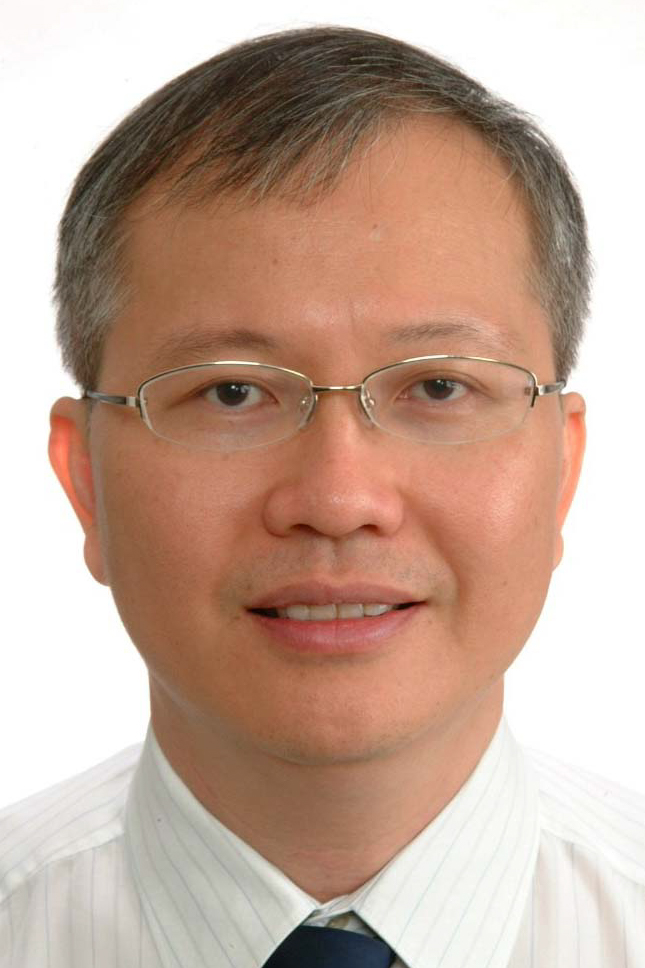
Chew Ek Peng is an Associate Professor and Deputy Head at the Institute of Operations Research and Analytics (IORA), part of the National University of Singapore’s Smart Nation Research Cluster. His research focuses on optimizing port logistics, maritime transportation systems, and inventory management through advanced simulation techniques and data-driven methodologies. His work spans critical areas such as automated port operations, simulation-optimization frameworks, and stochastic systems analysis. Notably, he develops solutions for challenges like AGV scheduling, container relocation problems, and intermodal terminal design. His research integrates machine learning (e.g., hybrid neural networks) with traditional operations research methods. Recent publications highlight contributions to electric vehicle sustainability in carsharing systems, multi-agent reinforcement learning for AGV recharging, and facility location under random utility models. His work emphasizes practical applications in smart logistics, disaster response optimization, and supply chain resilience. Chew Ek Peng collaborates on projects like digital twin validation frameworks and modular simulation pipelines for residential energy modeling. His research has been applied to real-world scenarios such as Singapore’s construction demand forecasting and pandemic impact analyses using modified SEIR models.
Lan Wang is a Professor in the Department of Computer Science at the University of Memphis, temporarily assigned as a Program Director at the NSF. She holds a PhD in Computer Science from UCLA (2004). Her research focuses on Internet architecture, network security, and wireless sensor networks, with major grants from NSF, NIST, and DoD, including a $15M NSF-funded 'Named Data Networking' project. She has served as Department Chair (2016-2023) and is an IEEE Senior Member. Dr. Wang's research emphasizes scalable, reliable, and secure Internet infrastructure. She has pioneered advancements in named-data networking (NDN), including protocols for adaptive forwarding, secure access control, and efficient traffic management. Her work extends to applications in smart cities, public safety, and healthcare data sharing. She has received prestigious awards including the Willard R. Sparks Eminent Faculty Award (2022) and Dunavant Professorship (2021). Her teaching spans courses like Networking and Information Assurance, Advanced Computer Networks, and Wireless and Mobile Computing. She actively promotes gender diversity in CS, co-organizing events like the 'Networking Networking Women' panel at SIGCOMM. Her grants total over $15M, including NSF’s NDN project and university-funded initiatives. She advises the Women in Computing student chapter and has served on over 50 conference committees.
Frans Kaashoek is the Charles Piper Professor in MIT's Department of Electrical Engineering and Computer Science (EECS) and a member of the Computer Science and Artificial Intelligence Laboratory (CSAIL). He leads the Parallel and Distributed Operating Systems (PDOS) group, focusing on secure systems, formal verification, and distributed computing. His work emphasizes crash-safe systems, concurrent programming, and cryptographic security. Education: PhD in Computer Science from Vrije Universiteit Amsterdam (1992), thesis on group communication in distributed systems under Andy Tanenbaum. Research interests include operating systems, networking, programming languages, and computer architecture. Notable projects: FSCQ (verified crash-safe file system), Perennial (framework for verifying concurrent systems), and Noria (high-performance web backend). Awards: ACM SIGOPS Mark Weiser Award (2001), ACM Prize in Computing (2010), National Academy of Engineering membership (2006), and American Academy of Arts and Sciences membership (2012). Publications: Over 150 papers on systems software, verification, and security. Authored textbooks like Principles of Computer System Design: An Introduction and xv6 commentary.
Hugh Durrant-Whyte is a Professor at the University of Sydney and Director of the Centre for Translational Data Science. He holds a BSc (Eng) from the University of London, an MSE, and a PhD from the University of Pennsylvania. Previously, he served as CEO of National ICT Australia (NICTA) and Director of the Australian Centre for Field Robotics (ACFR). His research focuses on robotics, autonomous systems, and data fusion, with over 350 publications and four successful startups. Education: BSc (Eng) in Engineering, University of London MSE in Robotics, University of Pennsylvania PhD in Robotics, University of Pennsylvania Affiliations: Director, Centre for Translational Data Science Former CEO, NICTA (2010-2014) Former Director, ACFR (1995-2010) His research interests span robotics, autonomous systems, and sensor networks. Notable contributions include foundational work on SLAM (Simultaneous Localization and Mapping) and decentralized data fusion. He has pioneered applications in mining automation, autonomous vehicles, and environmental modeling. His work emphasizes practical real-world systems, with projects like autonomous straddle carriers for container terminals and terrain mapping for mining operations. Awards & Honors: NSW Scientist of the Year (2010) Fellow of the Royal Society (FRS), Australian Academy of Science (FAA), and IEEE (FIEEE) Recipient of multiple IEEE Best Paper awards Grants & Labs: Leadership in securing multi-million-dollar grants for robotics and data science initiatives Centre for Translational Data Science: Focuses on translating data science into real-world impact He advises on numerous government and industry projects, bridging academic research with industrial applications. His research teams have developed influential algorithms for autonomous navigation and multi-agent systems.
Cliff C. Zou is a Professor at the Department of Computer Science, University of Central Florida (UCF), and Program Coordinator for Master's degrees in Digital Forensics and Cyber Security and Privacy. He serves as a UCF Cybersecurity and Privacy Cluster member, Point-of-Contact for UCF CAE-CD/CAE-R designations, and leads the Data Systems Group. With a Ph.D. from University of Massachusetts, Amherst (2005), and B.S./M.S. from USTC, he has received numerous awards including the UCF-TIP Award (2013, 2024), Best Paper Awards, and Fellowships. Ph.D., Electrical & Computer Engineering, University of Massachusetts, Amherst (2005) M.S., Automation, University of Science & Technology of China (USTC) (1999) B.S., Automation, USTC (1996) His research spans Computer and Network Security , IoT Security , Blockchain Systems , Wireless Network Security , and Malware Analysis . Recent work focuses on adversarial machine learning, side-channel attacks, encrypted traffic classification, and secure IoT architectures. His publications (2025-2020) highlight trends in deep learning-based defense , WiFi fingerprinting , TrustZone security , and malware propagation . Scientific Awards: UCF Teaching Incentive Program (TIP) Award (2024, 2013) Best Paper Award (2023) Best Student Paper Award (ACSAC 2007) Guo Moruo Scholarship (USTC, 1996) Graduate Fellowships (University of Massachusetts, 1999-2001) Prof. Zou has advised 14 PhD graduates and numerous Master's/BS students, many now holding academic/industry roles. His funded projects include NSF grants (DGE-2325452, DGE-2042996, DGE-1723587, DGE-1915780), US Army PEO STRI collaborations, and Florida Center for Cybersecurity seed grants. He leads the cyberforensic.net educational platform and has contributed to free IoT security labs for professionals.
Prof. Dr. Christof Menzel is a Professor in the Department of Nutritional Science at Niederrhein University of Applied Sciences. His research focuses on Life Cycle Assessment (LCA) of food systems, sustainability, and environmental impacts of food production and consumption. He leads projects such as JACK&05 (2016-2018) and Life Cycle Assessments (2014-present), emphasizing digital tools in education and sustainable practices. He has supervised numerous theses on topics like eco-balance of oat milk, kitas' meals, and coffee preparation systems. Awards include the Wissenschaftspreis 2023 and Nachwuchspreis 2021. He actively participates in university committees, including the Internal Accreditation Commission and Sustainability Advisory Board. Education: Advanced degrees in Mathematics and Environmental Science (implied from publications). Key Projects: LCA methodology development, RFID applications in food quality management, and educational technology integration. Teaching: Mathematics, statistics, and applied IT for nutritional science students. Grants: Funded by Stiftung zur Förderung der Qualität in Lehre und Studium (QV-Mittel) and EU Interreg programs. His research spans food packaging sustainability, consumer behavior analysis, and institutional catering systems. Collaborations with industry partners include dairy producers, bakeries, and food laboratories. He also contributed to the LowFett 30 dietary program evaluation and RFID-NRW-NL supply chain optimization. Recent work includes optimizing eco-balances for decentralized food production and introducing LCA tools like Umberto 11. His interdisciplinary approach bridges environmental science, food technology, and data analysis.
Dr. Clay Moltz is a Professor in the Department of National Security Affairs at the Naval Postgraduate School with a joint appointment in Space Systems. His research addresses space security, nuclear strategy, and regional security dynamics in East Asia and Russia. Publications include six books on space policy and security, with current work examining conflict risks in cislunar space. Leadership roles: Dean of the Graduate School of International and Defense Studies (2020-2022) Chairman, Department of National Security Affairs (2018-2020) Director of Center on Contemporary Conflict (2012-2016) Awards include: David Williams Outstanding Professor Award (2023) Carl E. and Jesse W. Menneken Award (2015) Richard W. Hamming Interdisciplinary Achievement Award (2010) Publications focus on space governance, commercial space developments, and nuclear proliferation, with recent collaborative work applying artificial intelligence to security challenges.
Aaron D Dotson is a Professor and Vice Chancellor for Research at the University of Alaska Anchorage, holding appointments in the School of Engineering's Civil Engineering Department. He also serves as Affiliate Professor at the University of Alaska Fairbanks and directs the Environmental Engineering Laboratory. His academic journey includes a PhD in Civil & Environmental Engineering from Arizona State University (2008), an MSE from the same institution (2005), and a B.S. in Civil Engineering from the University of Arizona (2003). Dr. Dotson's research focuses on water treatment processes, disinfection by-product formation, and Arctic infrastructure challenges. He leads investigations into dissolved organic matter characterization, advanced oxidation technologies, and sustainable water systems for remote communities. His work integrates environmental engineering with policy, addressing food-energy-water nexus issues and climate adaptation in cold regions. Professional Roles: Chair of Civil Engineering Graduate Committee, member of University Research Council, and advisor to Anchorage Water Utility. Committees: Technical Council for Cold Regions Engineering, AWWA Organic Contaminant Research Committee. His recent research explores household water reuse systems, FEW nexus applications in microgrids, and pathogen mitigation in unpiped communities. Over 50 peer-reviewed articles and book chapters reflect his contributions to environmental engineering science.
Sander van Triest is a researcher associated with the Faculty of Economics and Business at the University of Amsterdam. His work intersects Management Accounting , Organizational Behavior , and Information Systems , focusing on performance evaluation, control mechanisms, and employee dynamics in both public and private sectors. Education: Not explicitly detailed in the provided text. His research explores how subjective performance information , Robotic Process Automation (RPA) , and decentralization influence managerial decisions and organizational outcomes. His recent work (2023–2025) emphasizes remote work policies, enabling controls, and innovation in professional services. From 2023 to 2025, his publications highlight trends in employee autonomy , digital transformation , and management control systems . Earlier works (2000–2009) address cost structures, customer profitability, and accounting standards, with a focus on B2B contexts and cross-cultural management. Despite his extensive contributions, no scientific awards or honors are mentioned in the provided text. His academic collaborations and mentorship roles remain unspecified.