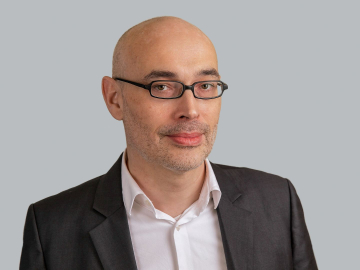
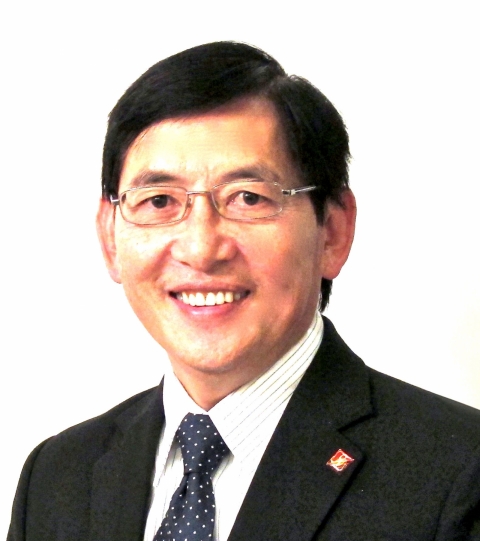
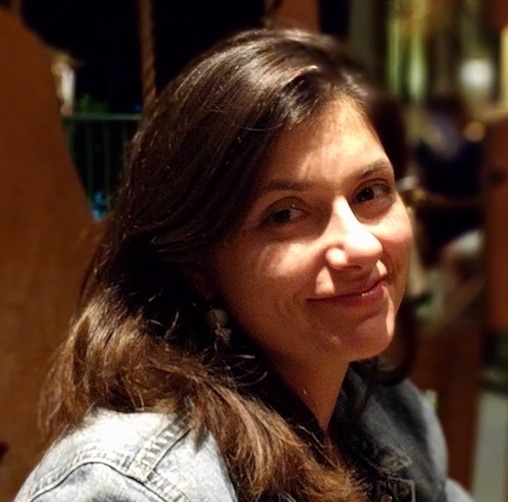
Per-Olov Östberg is an Associate Professor at the Department of Computing Science, Umeå University, and a research leader in the Autonomous Distributed Systems Lab (ADSLab). His work focuses on resource management for distributed cloud environments using AI/ML-based techniques, with a particular emphasis on ethical reasoning integration for responsible AI solutions. Research Themes: Cloud-edge continuum optimization, serverless frameworks, 6G computing challenges, data fabric architectures, and energy-aware systems Projects: COGNIT (cognitive serverless framework), WARA Common Information Bridge (data-driven cloud operations), De facto Center of Excellence in Autonomous Distributed Systems His publications (2011-2024) demonstrate consistent contributions to cloud resource management, including fairshare scheduling, decentralized prioritization, and power-performance tradeoffs. He has collaborated on interdisciplinary projects with institutions across Europe. Scientific Awards: None explicitly stated in provided information.
Francis de Véricourt is Professor of Management Science and the founding Academic Director of the Institute for Deep Tech Innovation (DEEP) at ESMT Berlin, where he also holds the Joachim Faber Chair in Business and Technology. He has held faculty positions at Duke University and INSEAD and was a post-doctoral researcher at MIT, reflecting a global academic footprint across France, the USA, Germany, and Singapore. His educational background includes a PhD from Université Paris VI and an engineering degree from ENSIMAG (Grenoble Institute of Technology), establishing a strong foundation in applied mathematics and computer science. Francis's research focuses on decision science, analytics, and operations, with impactful applications in healthcare, sustainability, and human-AI interaction. He investigates how mental models—'framing'—enable individuals and organizations to transcend data and generate better alternatives for decision-making. His work emphasizes cognitive agility, translational innovation, and the role of human intuition in the age of artificial intelligence. The analysis of his recent publications reveals a consistent trajectory in understanding cognitive frameworks in decision-making, the integration of AI in human contexts, and the ethical and strategic dimensions of deep-tech innovation. His writings bridge academic rigor with practical insight, targeting both scholarly and industry audiences. ENRE Best Publication Award, INFORMS MSOM Best Publication Award, INFORMS He has been a Department Editor for Operations Research and MSOM , and his academic leadership includes establishing the Center for Decisions, Models, and Data at ESMT. He has received multiple teaching awards for his work with MBA and Executive MBA students and is deeply engaged in executive education and corporate learning solutions. His book Framers , published by Penguin Random House and listed among the Financial Times' Best Books, has amplified his influence in both academic and public spheres. Francis leads DEEP—the Institute for Deep Tech Innovation—which fosters research, education, and entrepreneurial action in areas like AI, quantum computing, and biotechnology. The DMD Center, now integrated into DEEP, explores how modeling and representation enhance decision-making beyond data. These initiatives reflect his commitment to cultivating cognitive and entrepreneurial capabilities within scientific and business communities.
Tung X. Bui is a Professor of Information Technology Management at the Shidler College of Business, University of Hawaii at Manoa, holding the Matson Navigation Company Chair of Global Business. He serves as Faculty Director of the Vietnam Executive MBA Program, Chair of the Hawaii International Conference on System Sciences (HICSS), and Director of both the APEC-Study Center and Pacific Research Institute for Information Systems and Management (PRIISM), while maintaining a Senior Research Affiliate position at UC Berkeley's APEC Study Center. His academic credentials include: PhD in Computer and Information Systems, Stern School of Business, New York University PhD in Managerial Economics, University of Fribourg, Switzerland MS in Economics and Social Sciences, University of Fribourg, Switzerland Professor Bui's research bridges digital transformation , geoeconomics , and crisis management , with emphasis on Southeast Asia. His work examines computer-supported group decision systems , blockchain governance , emergency response technologies , and Vietnam's Bamboo Diplomacy foreign policy strategy through interdisciplinary lenses combining information systems, political economy, and sociology. Analysis of his 2020-2025 publications reveals three dominant trends: (1) Blockchain applications in healthcare governance and supply chain resilience, (2) Geoeconomic analyses of Vietnam's middle-power strategy amid US-China competition, and (3) Crisis communication systems validated through real-world disasters like Hawaii's Red Hill fuel leak. His work consistently integrates technical innovation with socio-political contexts across 80+ publications in top venues including HICSS and Decision Sciences . His major recognitions include: INFORMS Lifetime Research Achievement Award (2019) SRII Leadership Service Award (2014) University of Hue Honorary Professorship (2012) Five-time Shidler Kaizen Award recipient US Department of Labor and Congress commendations Through PRIISM and the APEC-Study Center, Professor Bui directs multi-institutional research on Pacific Rim information systems and trade policy, securing federal and APEC funding for projects spanning emergency response systems, digital economy frameworks, and Vietnam-US business relations. His doctoral seminar (ITM 704) trains next-generation scholars in advanced information systems research. He leads the Pacific Research Institute for Information Systems and Management (PRIISM), which develops decision-support technologies for regional governments and APEC policymakers, and co-directs the APEC-Study Center focusing on trade facilitation systems across 21 Pacific economies. These units maintain active partnerships with Vietnam's Ministry of Industry and Trade, NASA, and the US Department of Labor.
Magdalini Eirinaki is a Professor and Academic Program Coordinator for the MS in Artificial Intelligence at San José State University's Charles W. Davidson College of Engineering. With a career spanning two decades, her work bridges recommender systems , machine learning , and smart city applications . PhD in Computer Science (2006), Athens University of Economics and Business MSc in Advanced Computing (2000), Imperial College London BSc in Computer Science (1998), University of Piraeus Her research focuses on machine learning and recommender systems with extensions to generative AI , privacy-sensitive algorithms , and social network analysis . Recent publications explore federated learning , multi-resolution diffusion models , and autonomous network defense using reinforcement learning. Current projects include NSF-funded CollaborAIte (2024) EU Horizon/Marie Sklodowska-Curie's MUSIT (2024) IBM SkillsBuild Cloud Credits for Sustainability (2024) She has received multiple teaching and mentorship awards including: Newnan Brothers Award (2019) Applied Materials Award (2017) 5-time SJSU Distinguished Faculty Mentor Award Dr. Eirinaki advises students in AI , ML , and smart city projects, with recent graduates presenting at IEEE CAI (2025) and CSU Conference (2025).
Lars Dittmann is a Professor at the Department of Electrical and Photonics Engineering at the Technical University of Denmark (DTU), leading the Networks Technology and Service Platforms section. His work bridges advanced networking technologies with real-world applications in healthcare and transportation. Academic Role: Professor, Head of Section University: Technical University of Denmark (DTU) Department: Networks Technology and Service Platforms Research Interests: Professor Dittmann specializes in Software-Defined Networking (SDN) , 5G and IoT technologies , and energy-efficient network design , with a focus on applications in telemedicine and transportation systems . His work integrates machine learning for privacy-preserving traffic analysis and explores optical networks for high-bandwidth scenarios. Scientific Contributions: His recent publications emphasize green cellular networks using SDN/NFV/C-RAN, IoT benchmarking for coverage and mobility, and secure edge architectures for railways. Collaborative projects like the Future Patient telerehabilitation program highlight his interdisciplinary impact. Supervision: He supervises PhD candidates such as Radheshyam Singh, focusing on SDN-based IoT security and 5G network optimization. Labs & Projects: Leads initiatives like EXplorative network PLAnnINg and Broadband Trial Integration , addressing challenges in network reliability , emergency communication , and optical data center scaling .
Pierre-Yves Lajoie is an Assistant Professor in the Department of Computer Engineering and Software Engineering at Polytechnique Montréal, a leading engineering school affiliated with Université de Montréal. His research focuses on robotics and artificial intelligence, with specialization in robotic perception for single and multi-agent systems. He has held research positions at prestigious institutions including the Massachusetts Institute of Technology (2019), Samsung AI Center (2023), and University of Oxford (2024). Education: Ph.D. in Computer Engineering, Polytechnique Montréal Dr. Lajoie's research interests span across robotics, computer vision, and distributed systems. He specializes in developing algorithms for robotic perception in challenging environments, with applications in aerial, underground, indoor, and space robotics. His work focuses on enabling robots to understand their surroundings through visual and sensor data, particularly in collaborative multi-robot scenarios where communication may be limited or unreliable. His primary research center of excellence is the Industry of the Future and Digital Society, with secondary centers in Modeling and Artificial Intelligence and New Frontiers in Information and Communication Technologies. His publication record demonstrates a strong focus on collaborative SLAM (Simultaneous Localization and Mapping) systems, with recent work addressing challenges in planetary exploration, swarm robotics, and pedestrian positioning. His research combines computer vision, machine learning, and distributed systems to create robust solutions for real-world robotic applications, particularly in environments with communication constraints. Scientific Awards: Vanier Canada Scholarship Best Paper Award at IEEE ICC 2024 Dr. Lajoie is actively recruiting graduate students for PhD and Master's programs, with openings for Fall 2025 and Spring 2026. He encourages students to apply for various scholarship opportunities including NSERC, FRQ, and IVADO scholarships at multiple academic levels. His research is supported by collaborations with academic and industrial partners, focusing on applications in space robotics, automated manufacturing, and service robotics. He has supervised research projects in areas such as search and rescue with sparsely connected swarms and distributed risk-aware exploration systems.
Shuang Gao is an Assistant Professor in the Department of Electrical Engineering at Polytechnique Montréal . Prior to joining Polytechnique Montréal, he held postdoctoral and research fellow positions at McGill University and the Simons Institute for the Theory of Computing at UC Berkeley, respectively. His research focuses on control systems , mean field games , network science , and machine learning , with applications in large-scale networks such as social networks, renewable energy systems, transportation, and neural networks. He is affiliated with the Union of Neurosciences and Artificial Intelligence - Quebec (UNIQUE) and the Decision Analysis Study and Research Group (GERAD) . Dr. Gao’s recent publications highlight his work on Graphon mean field games for analyzing and controlling large-scale networked systems Linear quadratic regulation with quantile-dependent cost coefficients Spectral decomposition for optimal control of coupled subsystems Transmission neural networks for approximation and control His work bridges theoretical advancements in optimal control theories and mathematical modeling with practical applications in complex networks. He teaches graduate courses such as ELE6953KE: Network Models, Systems and Games and ELE6210 Control System Design , and serves as course coordinator for ENE8412: Management of Fluctuating Load and Production . His research is available in 23 publications, including 7 journal articles and 16 conference papers.
Paul Johannesson is a Professor at the Department of Computer and Systems Science , Stockholm University. He leads the PRECIS research group (Process Requirements Enterprise Capability Information Systems Modeling), focusing on theories and methods for integrated organizational and IT solutions. Education: BSc in Mathematics (Stockholm University), PhD in Computer Science (1993, Stockholm University). Research Interests: Conceptual modeling, enterprise modeling, process integration, design science, and ontological analysis, with applications in healthcare systems, IoT security, and digital innovation. His work bridges linguistic instruments with information systems design. Recent Article Trends: Focus on healthcare interoperability, IoT security, and ontological frameworks. Topics include drug-drug interaction modeling, decentralized identity management, and policy-based decision-making systems. Projects: Current work includes intelligent IoT security solutions and data-driven services for elderly care (DISRA, DISAL). Past projects examine EU knowledge systems, IT in healthcare, and process modeling education. Teaching: Courses on enterprise modeling and business models at bachelor and master levels. Thesis supervision at the Department of Computer and Systems Sciences. Labs/Teams: Leads the PRECIS research group, which integrates conceptual modeling with IT strategy and organizational design.
Sunoo Park is an Assistant Professor in Computer Science at NYU Courant Institute of Mathematical Sciences, with a secondary affiliation at NYU School of Law. He directs the DeTaIL Lab , focusing on security, privacy, and transparency in digital technologies. His educational background includes a J.D. from Harvard Law School, a Ph.D. in Computer Science from MIT, and a B.A. from the University of Cambridge. He is a licensed attorney in New York. His research bridges computer science and technology law , with core interests in cryptography, election security, AI ethics, blockchain, and digital policy. Recent work emphasizes legal risks in security research, verifiable voting systems, and adversarial robustness in AI. Park's publications (2017–2025) reveal strong trends in cryptographic applications for societal challenges , including election auditing, deniable encryption, and blockchain vulnerabilities. He consistently addresses tensions between technological capabilities and legal/policy frameworks. Teaching includes graduate courses on Digital Technology Law and AI Ethics , alongside clinical work in NYU's Technology Law & Policy Clinic. Service roles include program committees for IEEE Security & Privacy and NeurIPS (Ethics Committee).
Dr. Amir Taherizadeh is an Assistant Professor in Strategic Management at the DeGroote School of Business, McMaster University . His research focuses on innovation dynamics and digital transformation in small and medium-sized enterprises (SMEs), particularly analyzing how organizations leverage emerging technologies to gain competitive advantage in volatile markets. His scholarly work spans AI-driven digital transformation frameworks Critical analysis of open innovation theories Comparative studies of innovation practices in Germany, China, and Malaysia Coordination mechanisms in open-source software development Business-technology integration strategies Dr. Taherizadeh partners with businesses and non-profits to develop management case studies, enriching his teaching with real-world insights. His recent publications emphasize artificial intelligence in healthcare , cross-sector collaboration , and organizational adaptation to disruptive technologies. Contact: amir.taherizadeh@mcmaster.ca
Mickaël Bettinelli is an Associate Professor at Université Savoie Mont Blanc, affiliated with the LISTIC laboratory. He holds a PhD in Computer Science (Distributed Artificial Intelligence) from Université Grenoble Alpes and previously worked as a postdoctoral researcher at the University of Oulu's Center for Ubiquitous Computing under the EU Horizon 2020 Fractal project. Current research focuses on federated learning and distributed systems resilience Developed DonatelloPyzza, an educational Python gridworld game Active reviewer for journals/conferences including IEEE Transactions and AAMAS His research bridges federated learning, multi-agent systems, and collective intelligence, emphasizing societal impact through sustainable technological solutions and science popularization via his French YouTube channel DonatelloPyzza . Publications span topics like decentralized decision-making and bias mitigation frameworks. Scientific Awards Prix 'Coup de coeur', Concours Conter et Rencontrer les Sciences 2024 Best Paper Award at JFSMA 2021
Prof. Dr. Fadi AL-TURJMAN serves as the founding Dean of the Faculty of AI and Informatics at Near East University (NEU), Cyprus. He holds multiple leadership roles including Head of the Software Engineering Department and Director of the AI and Robotics Institute and the International Research Center for AI and IoT. With a PhD in Computer Science from Queen’s University (2011), he specializes in AIoT systems, wireless networks, and blockchain integration. Affiliation: Near East University Leadership: Founding Dean for AI and Informatics, Director of AI & Robotics Institute Research Focus: His work bridges Artificial Intelligence of Things (AIoT) , Blockchain Applications , and Smart Networking . He explores cybersecurity frameworks for smart cities, quantum state optimization techniques, and novel AI-driven solutions for healthcare, agriculture, and energy systems. Key Article Trends: Recent publications emphasize Transformer models for environmental monitoring, blockchain-enabled security protocols , and evolutionary algorithms for resource optimization. His research spans interdisciplinary domains including medical diagnostics, vehicular networks, and sustainable infrastructure. Scientific Awards: Lifetime Golden Award of Dr. Suat Gunsel (2022) Multiple Best Research Awards at International Venues Labs & Teams: Directs the International Research Center for AI and IoT at NEU, leading multidisciplinary teams in developing advanced networking technologies and AI-driven solutions for global value chain applications.
Joshua Marshall is an Associate Professor in the Department of Electrical and Computer Engineering at Queen's University, cross-appointed to Mechanical and Materials Engineering. He serves as Interim Director of Ingenuity Labs Research Institute and leads the Offroad Robotics research group (formerly Mining Systems Laboratory). Previously, he held positions at Carleton University and MDA, Inc. Education: PhD in Electrical and Computer Engineering, University of Toronto (specializing in systems control) Research Interests: Dr. Marshall specializes in field robotics for mining, space, and industrial applications. His work integrates control systems engineering , localization and mapping , and mechatronics to develop autonomous solutions for harsh environments. Key focus areas include mobile robot navigation, sensor fusion, and real-world deployment challenges in underground and extraterrestrial settings. Publication Trends: His 2022-2025 publications reveal dominant themes in autonomous industrial vehicle control (motor graders, excavators), marine robotics (uncrewed surface vessels), and terrain/material classification . Work consistently combines model predictive control with machine learning (Gaussian processes, reinforcement learning) for dynamic environment adaptation. Multi-robot systems and simulation-to-real transfer represent emerging research directions. Professional Recognition: Senior Member of IEEE Associate Editor, IEEE Control Systems Society Conference Editorial Board Senior Editor, IEEE/RSJ International Conference on Intelligent Robots and Systems (IROS) Research Impact: Dr. Marshall's Offroad Robotics group develops technologies featured in the Canada Science and Technology Museum's 'From Earth to Us' exhibit. His work bridges academic research with industry applications through collaborations with MDA and international institutions like Örebro University, though specific grant details are not provided in source materials. Leadership: He directs both the Offroad Robotics research group and Ingenuity Labs Research Institute, fostering interdisciplinary innovation in robotics, autonomous systems, and intelligent technologies for real-world implementation in mining, space exploration, and environmental monitoring.
Mél Hogan is an Associate Professor in the Department of Film and Media at Queen's University and host of The Data Fix podcast. She serves as MA/PhD supervisor within her department, though currently not accepting new students while remaining available for supervisory committees and exams via Zoom. Her research critically examines the environmental impacts of data infrastructures through environmental humanities, critical data studies, and science and technology studies (STS). She employs qualitative, research-creation, and ethnographic methods to investigate data centers, archival theory, and elemental media, with particular focus on how digital technologies intersect with climate crisis and ecological systems. Her work bridges media studies with environmental concerns, emphasizing cultural, social, and historical dimensions of technology. Recent publications (2022-2025) reveal consistent thematic evolution toward data center ecologies, climate-tech intersections, and materialities of digital storage. Key trends include solastalgia (environmental distress) in cloud computing, archival responses to extinction, and critical examinations of AI's environmental costs. Her scholarship demonstrates increasing interdisciplinary reach across media archaeology, environmental humanities, and critical infrastructure studies. Dr. Hogan actively supervises graduate students with interdisciplinary projects using qualitative methods in communication/media studies, environmental humanities, and critical theory. She explicitly notes unsuitability for technical problem-solving projects or quantitative social science approaches, emphasizing her preference for critical-humanistic perspectives on data, media, and technology. Her advising philosophy centers on collaborative exploration of environmental impacts within data infrastructures.
Nectarios Koziris is a Professor at the Department of Computer Science , National Technical University of Athens (NTUA) , and former Dean of the School of Electrical and Computer Engineering . His research focuses on Parallel and Distributed Systems , Computer Architecture , and Cloud Computing . Key Research Themes: Compiler-OS-Architecture Interaction, Datacenter Hyperconvergence, Sparse Matrix Optimization, Quantum Computing, FPGA Virtualization Leadership: Founder of ~okeanos (Europe's largest public Cloud IaaS), Co-founder of GFOSS , Member of IEEE Computer Society Greece, Advisor to Arrikto Inc. His work has led to over 180 publications with 5800+ citations (h-index 33) , including two Best Paper Awards (IPDPS 2001, CCGRID 2013) and Intel Recognition (2015). He has supervised 12 PhD students and participated in 15+ EU projects as coordinator or consortium partner. Scientific Leadership: Program Co-Chair for Europar 2012 , Organizer for IPDPS , ICPP , SC conferences, and active member in Cloud Computing Expert Groups for the European Commission.