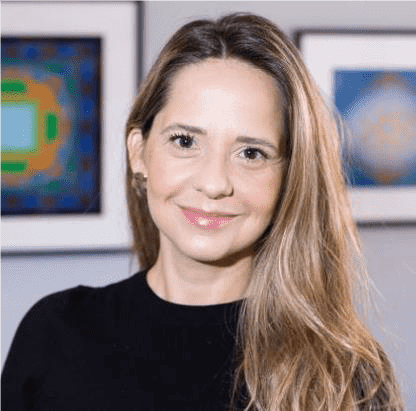
Maria Fernanda Pessatti de Toledo Waissman is a Lecturer at the School of Management and Public Accounts (São Paulo, Brazil) and a legal adviser at the São Paulo Municipal Audit Court (TCMSP). She is a PhD candidate in Development, Societies and Territories at UTAD (Portugal) and holds a Master's in Constitutional Law from PUC-SP (Brazil). Her research focuses on government decentralisation, street-level bureaucracy, and challenges in public health management. She coordinates projects like the Implementation of Brazil's General Data Protection Law (TCMSP) and participates in the Group of Work in Health – Public Policies Observatory. Her academic work includes contributions to legal frameworks in public administration, electoral systems analysis, and data protection governance. She actively contributes to research groups like Territorial Transitions & Wellbeing (T2WELL). Professional roles include advising on municipal audits and teaching public management disciplines.
Dr. Kelsie Nabben is a Research Fellow at RMIT University's Centre of Excellence for Automated Decision-Making & Society (ADM+S) in Melbourne, Australia, specializing in the social impacts of emerging technologies. Her work focuses on decentralized digital infrastructure including blockchains, peer-to-peer protocols, and Decentralised Autonomous Organizations (DAOs), as well as algorithmic systems like Large Language Models. She is affiliated with the School of Media & Communication at RMIT University's City Campus. Dr. Nabben completed her PhD at RMIT University's ADM+S on the topic of resilience in decentralised technologies, for which she received the RMIT Vice Chancellor's HDR Prize for Research Engagement and Impact. In 2024, she completed a Max Weber Fellowship at the European University Institute, focusing on accountability in blockchain systems as a context of digital private ordering and self-governance with Dr. Primavera De Filippi and BlockchainGov. Her interdisciplinary research analyzes the complex interplay between social and technical elements of digital infrastructure, with particular emphasis on security and accountability in digital governance contexts. Dr. Nabben's work spans multiple domains including political science, cybersecurity and privacy, human-centered computing, communication and media studies, law, screen and digital media, policy administration, and anthropology. She has published extensively on topics such as decentralized infrastructure, cryptoeconomics, ad hoc networks, permissionless systems, and digital responses to crises like the COVID-19 pandemic. Dr. Nabben's research trajectory demonstrates a consistent evolution from examining theoretical foundations of decentralized systems to addressing practical governance challenges. Her recent publications reveal increasing sophistication in analyzing how data value creation, hardware security, and institutional design intersect in decentralized ecosystems. She effectively bridges economic anthropology, Science and Technology Studies, and practical governance frameworks to develop novel approaches to digital accountability. RMIT Vice Chancellor's HDR Prize for Research Engagement and Impact Dr. Nabben actively translates research into policy and industry applications through contributions to an Australian Federal blockchain working group and development of international policy toolkits on 'Decentralised Autonomous Organisations' for the World Economic Forum. She collaborates with engineering firm BlockScience on industry projects and frequently shares insights through peer-reviewed publications, national news, and radio. Her work connects academic research with real-world policy and industry applications, demonstrating significant research impact beyond traditional academic boundaries. As a core member of RMIT University's Centre of Excellence for Automated Decision-Making & Society, Dr. Nabben contributes to a multidisciplinary research environment focused on understanding and shaping the societal impacts of automated decision-making systems. Her current work with the ADM+S Centre positions her at the forefront of research examining how emerging technologies intersect with social, political, and economic systems, particularly in the context of digital governance and accountability.
Beth Probert is a Doctor of Philosophy researcher specializing in satellite communications, distributed ledger technologies, and autonomous systems. She is currently active in the DACS (Decentralised Autonomous Community in Space) project from 2024 to 2027, focusing on blockchain-integrated space systems for collaborative applications. Her academic foundation includes a Bachelor of Science in Physics with Astrophysics with professional Placement from the University of Bath, completed in July 2019. Probert's research bridges aerospace engineering and computer science, with core expertise in satellite communications, blockchain applications for space systems, and open-source healthcare technologies. Her work directly supports UN Sustainable Development Goals through innovations in space infrastructure and accessible medical devices like the OpenFlexure Microscope. Analysis of her 2025 publications reveals converging trends in blockchain-enabled satellite operations and democratized healthcare technology. The IEEE Access review demonstrates technical integration of distributed ledgers with space systems, while her E+T Magazine article highlights real-world healthcare impact through open-source microscopy. As a key researcher on the £-funded DACS project, Probert contributes to advancing decentralized space communities through satellite-blockchain integration. She actively disseminates knowledge via high-profile engagements including the 'From Code to Cosmos' invited talk and 'Software is the Rocket Fuel for the Next Space Age' media feature. Probert operates within a multidisciplinary team on the DACS project, collaborating with Principal Investigator Macdonald and Research Co-investigator Clark to develop Low Earth Orbit space systems with distributed ledger capabilities.
Ruaridh Clark is a Senior Research Fellow in the Department of Electronic and Electrical Engineering at the University of Strathclyde, where he serves as an interdisciplinary research lead in the Future Hospital Initiative. His work bridges engineering, space systems, neuroscience, and public health, fostering collaboration across faculties to develop innovative solutions for complex societal challenges. Doctor of Engineering, Methodologies for scalable and responsive swarms and networked systems, University of Strathclyde (2018) Master of Engineering, MEng Aero-Mechanical Engineering, University of Strathclyde (2013) His research interests lie at the intersection of systems, networks, and patterns, with applications in satellite systems, disease spread modeling, neurodevelopment in autism, and redesigning NHS patient pathways. He applies engineering principles to diverse domains, including space technology, epidemic preparedness, and brain aging. His work contributes to UN Sustainable Development Goals related to health, innovation, and infrastructure. His recent publications reflect a strong trend in interdisciplinary research, combining space systems with distributed ledger technologies, and neuroscience with biophysical modeling of aging. Key themes include blockchain for satellite operations, brain clocks in dementia, and equitable epidemic preparedness. This indicates a trajectory toward systems-level solutions that integrate technology, health, and sustainability. Notable scientific awards include: CompleNet Best Poster Award (2024) Galileo Masters EUSPA Space for FUN Challenge – 2nd Place (2021) Vitae International Recognition Award (2021) 2nd Place, Copernicus Masters – BMVI Transport Challenge (2020) Finalist, E&T Innovation Awards (2020) IAC Student Paper Competition (2013) Dr. Clark is actively involved in research grants and collaborative projects, including EPSRC IAA funding for NHS unscheduled care design, ESA-funded tidal channel mapping, and the Decentralised Autonomous Community in Space (DACS) project. He co-investigates multiple interdisciplinary initiatives, such as Mobilising Scotland’s Assets for Epidemic Control (MOSAEC) and UK Biobank-based aging research. He is accepting PhD students and contributes to public engagement through media appearances on BBC Click and Border Life. He is a key member of research teams focused on space systems innovation, including Matryoshka Orbital Networks (MatrON), AUDITS (Autonomous Distributed Time signal in-Space), and SAfe Passage through Shifting Sands. These projects explore next-generation satellite constellations, time synchronization in space, and remote sensing for environmental monitoring.
Michael Winter is a composer, sound artist, and researcher currently working as a specialist for the Digital Humanities project 'Commoning Biomedicine: Networking Decentralised Collections of Oral Histories' at the Max Planck Institute for the History of Science in Berlin. He is also the co-founder and director of the nonprofit arts organization The Wulf, which hosts free experimental music performances in Los Angeles. His career bridges artistic practice with rigorous academic research in algorithmic information theory and digital humanities. Winter's research interests focus on the intersections of Algorithmic Information Theory, Music Theory, Digital Humanities, Sound Art, Phenomenology, Mathematics, and Epistemology. His work explores how algorithmic processes shape musical composition, perception, and social structures. He frequently examines the connections between music, mathematics, communication theory, and epistemology, with particular attention to how computational models can illuminate phenomenological experiences. His publications reveal a consistent interdisciplinary trajectory, with recent works like 'A simplicity bubble problem and zemblanity in digitally intermediated societies' (2024) demonstrating his ongoing exploration of how algorithmic information theory relates to social phenomena in the digital age. His research often investigates the emergence of complexity, consensus, echo chamber effects, and niche construction through mathematical models, with applications to understanding Big Data and algorithmization in contemporary society. Winter has extensive experience in digital humanities projects, having worked as a research programmer for Wolfram Alpha and the Brain Operation Database developed by the University of Southern California Brain Project. He was also an artist-in-residence at the Akademie Schloss Solitude in Stuttgart, Germany from 2018 to 2019, and co-founded the Los Angeles-based arts organization The Wulf in 2008, which has become a hub for experimental arts.
Dr. Sfiso Mabizela serves as a Researcher at the Centre for Health Science Education, University of the Witwatersrand, Johannesburg. His work bridges educational psychology and health sciences through methodological rigor in statistical analysis and academic performance research, primarily within South African medical and health science training contexts. Education: BA (UNISA) BA Hons (UNISA) PhD (UNISA) MA (Psych) (UNISA) His research centers on Health Science Education and Medical Education , with deep expertise in statistical methodologies for health research , predictors of academic success , and cultural dimensions of learning . He investigates critical issues including selection test validity for health professions students, risk factors in medical education, and online learning readiness—applying both quantitative and qualitative approaches to address systemic challenges in resource-constrained environments. His work directly informs curriculum development and student support systems across South African universities. Analysis of his 14 recent publications (2014-2025) reveals three dominant trends: (1) assessment science examining predictive validity of entrance exams like the National Benchmark Test; (2) cultural-educational intersections through discourse analysis of practices like ukuthwala; and (3) innovative pedagogy for decentralized medical training. The overwhelming focus on South African institutional contexts highlights his commitment to locally relevant educational solutions, with statistical methodology serving as the unifying thread across diverse health science disciplines. No scientific awards are documented in current records. While specific grant funding isn't detailed, his research program demonstrates sustained engagement with Wits University's medical education infrastructure, particularly through the Centre for Health Science Education. Future work appears poised to expand into longitudinal studies of educational interventions and culturally responsive assessment frameworks. His dissertation on peer helpers suggests ongoing interest in student-led support systems within distance learning environments. The Centre for Health Science Education functions as his primary research hub, likely coordinating interdisciplinary efforts to enhance teaching quality across Wits' health science faculties. This unit serves as a critical nexus for developing evidence-based educational practices tailored to South Africa's unique healthcare training needs.
Birgit Altrichter is a Lecturer at the Surrey Business School , University of Surrey, specializing in the intersection of digital economy, blockchain technology, and consumer behavior. Her research explores decentralized systems, technology adoption, and supply chain dynamics. Doctor of Philosophy (PhD) in Management and Business Master of Science (MSc) in International Management with Marketing Bachelor of Arts (BA) in Media Management Graduate Certificate in Learning and Teaching Her work focuses on business models in decentralized digital economies , consumer technology resistance , and blockchain applications for regulatory compliance . Recent publications analyze technology discontinuance, autonomous retail systems, and blockchain's role in conflict mineral supply chains. Dr. Altrichter has taught at all academic levels (Bachelor to PhD) and served as a Research Fellow at the EPSRC Centre for Decentralised Digital Economy (DECaDE) . She is a Fellow of the Higher Education Academy (FHEA) .
Corey MANDERS is an Adjunct Lecturer at the School of Computing and Information Systems, Singapore Management University (SCIS). His expertise lies in emerging technologies within financial systems, including digitalised currencies, central bank digital currencies (CBDCs), and tokenised assets such as non-fungible tokens (NFTs). Research Interests: Digitalised Currencies and CBDCs Tokenised Assets and NFTs He holds a Ph.D. in Electrical and Computer Engineering from the University of Toronto and teaches courses related to blockchain, digital finance, and decentralised technologies.
Michèle Finck is Professor of Law and Artificial Intelligence at the University of Tübingen, Germany, and co-director of the CSZ Institute for Artificial Intelligence and Law. She is a member of the Cluster of Excellence “Machine Learning: New Perspectives for Science” and represents Tübingen at the CIVIS Hub “Digital and Technological Transformation”. Research Focus: Regulation of artificial intelligence EU data law and GDPR Data intermediaries and the Data Governance Act Explainability of AI systems Access to data for environmental purposes Automation of public administration Her recent publications (2021-2024) chart a trajectory from foundational questions of data protection and AI governance to concrete regulatory challenges posed by the EU AI Act and the Data Governance Act, reflecting a commitment to interdisciplinary and policy-oriented legal scholarship. Service & Expert Advice: Member, Council of Europe ad hoc Committee on Artificial Intelligence Advisor to the European Commission and European Parliament on digitalisation issues Professor Finck has previously held posts at the University of Oxford, the London School of Economics, the Max Planck Institute for Innovation and Competition, and has been a Visiting Professor at LUISS University and a Visiting Fellow at University College London.
Stoo Sepp is a Lecturer in Educational Technology and Learning Design at the University of British Columbia's Master of Educational Technology (MET) program. With experience since 2018, he specializes in integrating cognitive science principles into digital education frameworks. University of British Columbia Master of Educational Technology His research bridges cognitive science and educational technology , focusing on: working memory optimization , self-regulated learning , and gesture-based interaction in digital environments. Recent work explores educational data privacy and decentralized learning platforms . Key article trends span: 2019-2020: Cognitive load and movement integration 2022: Open educational resources evolution 2023-2025: Gesture analytics and translingual assessment tools Professional Networks : Active in #EdTech communities Contributor to #OpenEd movements Collaborator in cognitive load research
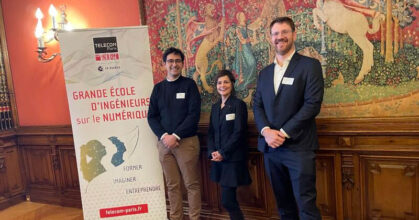
Ada Diaconescu is a Tenured Associate Professor at Télécom Paris (Institut Polytechnique de Paris) since October 2009. She is a member of the Autonomous Critical Embedded Systems (ACES) team within the Information Processing and Communication Laboratory (LTCI) , affiliated with the Computer Science and Networks (Infres) department. Research Focus: Autonomic Computing, Organic Computing, Complex Adaptive Systems, Self-Organising Systems, Smart Grids/Cities/Homes, Nature-Inspired Computing, Socio-Technical Systems Key Methodologies: Decentralised Control, Multi-Agent Systems, Component/Service-Oriented Architectures, Multi-Scale Feedback Loops Her recent publications (2021-2023) explore topics like holonic architectures for self-integration, multi-scale feedback systems in smart environments, and decentralised explanatory frameworks for AI transparency. She co-authored the textbook "Autonomic Computing: Principles, Design and Implementation" (Springer, 2013) and contributed chapters to books on Organic Computing (Springer, 2018) and Self-Aware Systems (Springer, 2017). Scientific Leadership: General Chair of IEEE SASO 2017 Steering Committee Co-Chair of IEEE ACSOS (2019-2021) Co-Organizer of Dagstuhl Seminars (2015, 2018) Doctoral Symposium Co-Chair at FAS* 2019 Teaching: Delivered courses on software engineering, autonomic systems, and complex system modeling at Télécom Paris and other institutions. Collaborations: Active in interdisciplinary research with institutions including Leibniz University, ETH Zurich, Arizona State University, and Lancaster University.
Helen Poulter is a Research Fellow at the Science Policy Research Unit (SPRU) within the University of Sussex Business School. Her work focuses on energy governance, sustainability, and decarbonisation strategies, particularly in the context of achieving net-zero goals. She holds a PhD in adaptive governance for energy system decentralisation from the University of Exeter, alongside earlier degrees in renewable energy and engineering. PhD: University of Exeter (2016-2020) BSc(Hons): Renewable Energy, University of Exeter (2013-2015) FdSc: Renewable Energy Technologies, University of Plymouth (2011-2013) Her research interests include energy system governance frameworks, customer engagement, social value in energy regulation, and decentralisation pathways. She is currently investigating governance frameworks for reducing energy demand within the Energy Demand Research Centre. Her publications explore topics such as electricity network regulation, regional energy planning, and the integration of low-carbon technologies. Notable contributions include analyses of Ofgem's regulatory models and studies on Australia's energy market transition. Dr. Poulter has held roles at the University of Edinburgh and University of Exeter, contributing to interdisciplinary research on energy systems and policy innovation. She is affiliated with the UK Energy Research Centre and has authored numerous blogs and reports on energy governance challenges.
Kjersti Løken Ødegaard is a Researcher at the Centre for Lifelong Learning (LUP) within the Faculty of Education at the University of Inland Norway. Holding a PhD in Educational Leadership from the University of Oslo (2025), she works as a process facilitator in national partnership arrangements including Decentralised Competence Development and The Competence Boost, collaborating with schools, local education authorities, and educational-psychological services. Her research focuses on educational partnerships, leadership, and organizational learning, with particular interest in how data reflecting school practices can reveal tensions that trigger development work. Using cultural-historical activity theory as her primary analytical lens, she investigates tools used in schools and their mediating effects on educational practices. Ødegaard's publications demonstrate a consistent focus on formative interventions in research-practice partnerships, with recent work examining timing and context in theoretical models (2025), school leaders' reframing of teacher activities (2024), management expectations in partnerships (2024), and policy pressures on Norwegian educational reform (2023). Her research shows strong alignment with practical school development needs while maintaining theoretical rigor. As a former teacher and school leader in upper secondary and lower secondary education, she brings practical experience to her academic work, bridging research and practice through the Change Laboratory method she explored in her doctoral project.
Dr. Asri Maharani is a Lecturer in the Division of Nursing, Midwifery and Social Work at the University of Manchester's School of Health Sciences. Her research focuses on healthy ageing, cognitive function, epidemiology, and advanced statistical methods including multilevel modeling and longitudinal data analysis. She has extensive experience as a public health educator, physician, and hospital manager in Indonesia. Education: PhD in Public Health (2015), University of Manchester (Thesis: 'Decentralisation, performance of health providers and health outcomes in Indonesia') Masters in Public Health Medical Degree Research Interests: Her work addresses socioeconomic determinants of health across the life course, with particular focus on frailty, cognitive decline, and mental health in aging populations. Methodologically, she specializes in longitudinal studies and advanced statistical techniques. Grants & Collaborations: Principal Investigator: 'Sustainable Treatment of Anxiety and Depression in Indonesia' (2022-2026, £3.2M) Member: Healthy Ageing Research Group Global partnerships in Indonesia, China, Greece, South Korea, and Australia Labs/Teams: Led the Healthy Ageing Research Group's work on frailty trajectories, contributing to UK and international aging policy frameworks. Collaborates with Indonesia's health sector on mHealth interventions and primary care innovations.
Safina Showkat Ara is a Lecturer in Computer Science at the University of Sunderland's School of Computer Science within the Faculty of Technology. She teaches modules including Advanced Programming, Agile Development, Immersive Application Development, and Foundations of Computer Science. Her research focuses on Decentralised AI, IoT, Social IoT, Explainable AI, Deep Learning, Semantic Web, and Blockchain technologies. Prior to her current role, she held academic positions at Teesside University and conducted PhD research at National University of Ireland, Galway, alongside a research assistant role at Hankuk University of Foreign Studies. She supervises students in AI, Data Analysis, and Blockchain domains. Her academic journey includes interdisciplinary work bridging distributed systems, AI, and IoT, with a particular emphasis on decentralised architectures and semantic technologies. Recent research outputs explore blockchain-based coordination mechanisms, reputation management in crowdsourcing, and semantic service composition in IoT environments. Her teaching portfolio reflects practical industry-relevant skills development in modern software practices. Notable technical contributions include methodologies for enhancing security and efficiency in distributed systems, as well as semantic similarity computation for resource recommendation. Her work aligns with contemporary challenges in scalable, user-centric internet technologies and AI explainability.