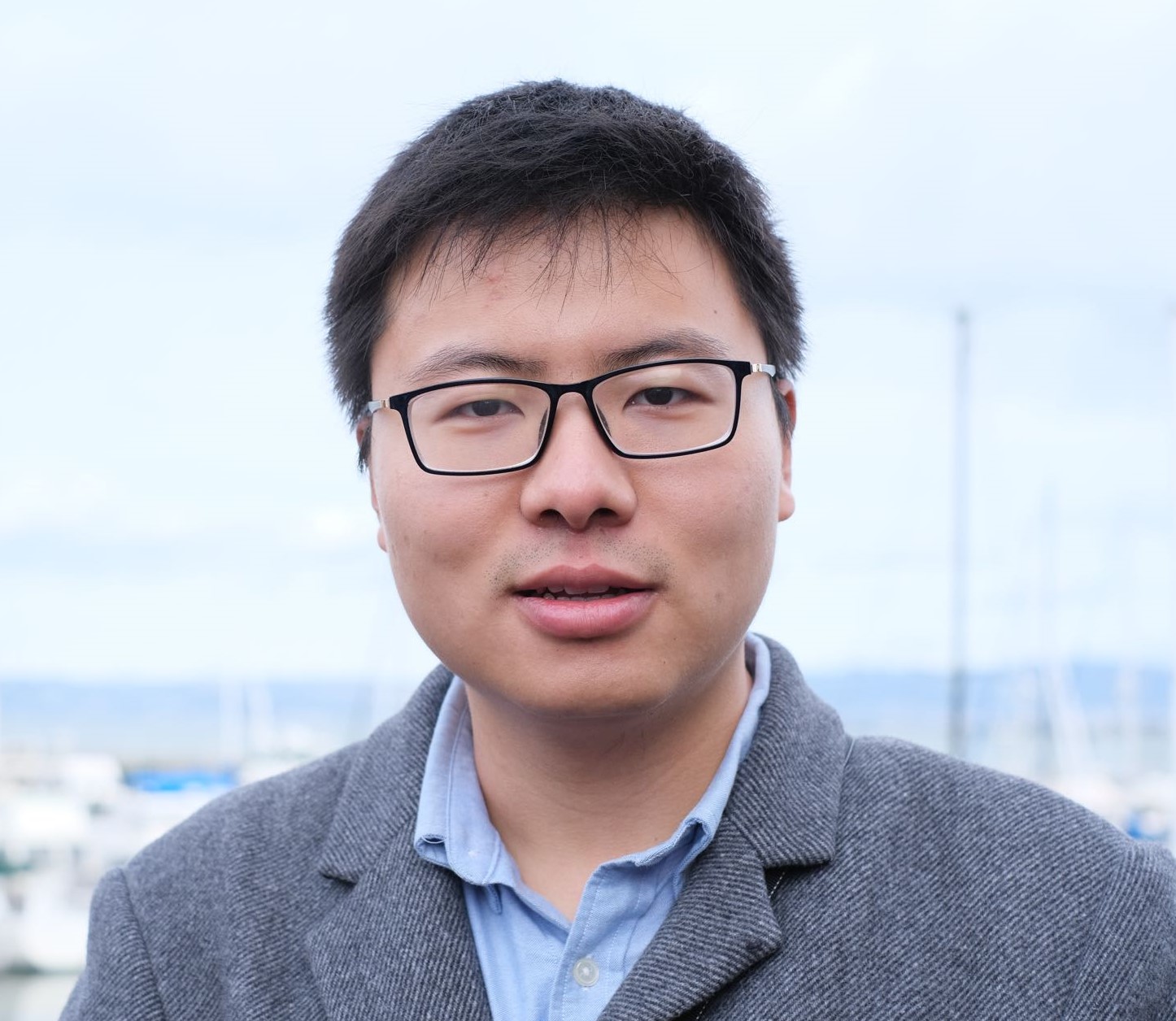
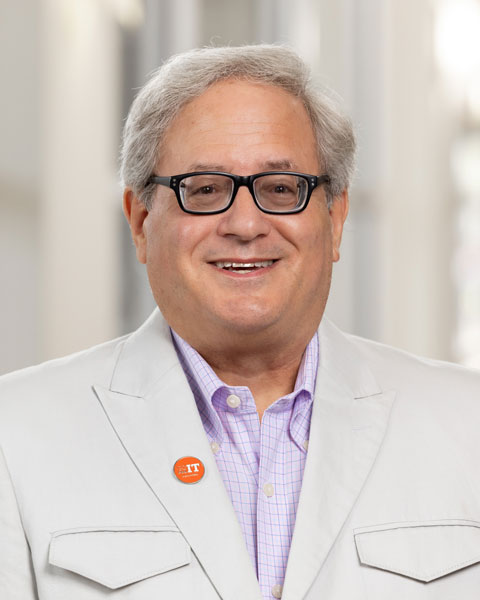
Agnes Melinda Kovacs serves as Associate Professor in the Department of Cognitive Science at Central European University (CEU), where she directs the Cognitive Development Center and co-leads the Center for Belief Update and Debiasing (DEBIAS) as Project Leader and Principal Investigator. Her research investigates early social cognition—including perspective taking, theory of mind, and tracking others' epistemic states (knowledge, belief, uncertainty)—alongside foundational abstract thought processes like generalization, compositionality, and evidence-based belief updating in children and adults. This work has been featured in Nature , Scientific American , The New York Times , and major international media outlets. Scientific Awards: ERC Starting Independent Research Grant Advising and Grants: She supervises multiple PhD candidates and has graduated students including Dora Kampis and Martin Freundlieb (as co-supervisor). Her DEBIAS project received FWF Special Research Area funding for investigating coherent belief systems. Current PhD advisees include Maja Blesic and Maria Mavridaki. Labs and Teams: She directs CEU's Cognitive Development Center and co-founded the Center for Belief Update and Debiasing (DEBIAS), focusing on experimental paradigms to study cognitive biases and developmental trajectories.
Giuseppe Alessandro Veltri is a Full Professor at the University of Trento's Department of Sociology and Social Research. His expertise spans Behavioral Economics, Big Data, Computational Social Science, and Social Psychology. He currently teaches courses such as 'Big Data' and 'Social Dynamics Lab' within the Data Science and Previsione Sociale programs. His research focuses on understanding human behavior through digital methodologies, including studies on vaccine hesitancy, darknet markets, and the psychological aspects of pandemics. Veltri is also actively involved in designing computational tools like TextualLLMap to analyze societal biases in AI systems. His work bridges theoretical frameworks with empirical data, emphasizing interdisciplinary approaches to social science challenges. Research interests include the application of computational methods to study risk perception, online behavior, and policy design. Recent studies explore how behavioral insights can improve public health strategies during crises and how transparency in digital platforms influences consumer decisions. Veltri's contributions also extend to methodological innovations, such as optimizing online experiments and addressing gaps in cognitive sociology.
Wenlong Mou is an Assistant Professor at the University of Toronto's Department of Statistical Sciences, with additional affiliation at the Vector Institute for AI. His research develops optimal statistical methods and efficient algorithms for data-driven decision-making, focusing on reinforcement learning, stochastic approximation, and causal estimation. He teaches advanced courses in theoretical statistics (STA3000) and stochastic processes (STA447/2006). Education: Ph.D. in EECS, University of California, Berkeley (2023) B.Sc. in Computer Science and Economics, Peking University Research Focus: Mou's work bridges statistical theory with machine learning practice. Key areas include: Theoretical foundations of reinforcement learning (e.g., Bellman equations, continuous-time systems) Efficient algorithms for semi-parametric estimation and debiasing Non-asymptotic analysis of stochastic optimization and MCMC methods High-dimensional statistical inference and causal modeling Publication Trends: Recent articles (2023–2025) emphasize reinforcement learning theory (policy evaluation, adaptive interpolation), causal inference (debiased estimators, propensity scores), and statistical computing (diffusion processes, Langevin algorithms). Methodological rigor and non-asymptotic guarantees characterize his work. Awards: INFORMS APS Student Paper Competition Finalist (2022) Advising and Labs: Actively recruiting PhD students with backgrounds in mathematics or deep learning. Students access GPU clusters via the Vector Institute. Grants unspecified in sources.
Lu Yin is an Assistant Professor in the School of Computer Science and Electronic Engineering at the University of Surrey. He holds affiliations as a long-term visiting researcher at Eindhoven University of Technology (TU/e) and collaborator with the Visual Informatics Group (VITA) at the University of Texas at Austin. Previously, he served as a Postdoctoral Fellow at TU/e and worked as a research scientist intern at Google's New York City office. His work bridges academic and industrial research, focusing on AI Efficiency, AI for Science, and Large Language Models. His research emphasizes optimizing neural networks through sparsity techniques, including pruning strategies for LLMs and vision models. Notable contributions include the OWL method for LLM pruning and Lottery Pools for improving sparse network performance. Yin actively collaborates with institutions like TU/e, Google Research, and Intel Research, and has organized conferences such as CAPBS 2025 and CAI 2025 Workshops. Yin has secured significant grants, including a 10,000,000 NWO-funded grant for NVIDIA A100 GPU resources. He has delivered invited talks at prestigious institutions like Carnegie Mellon University and City University of Hong Kong. His work has been recognized with the Best Paper Award from LoG 2022.
Dr. Ivan Vulic is a Research Professor at the University of Cambridge, affiliated with the Faculty of Modern and Medieval Languages and Linguistics and the Department of Theoretical and Applied Linguistics . He leads research in multilingual lexical acquisition and knowledge transfer under the ERC-funded LEXICAL project, while also holding a Royal Society University Research Fellowship . His work spans cross-lingual and multi-modal natural language processing, with a focus on representation learning and responsible AI applications for low-resource languages. Research Interests Cross-lingual and multilingual NLP Representation learning for language models Multi-modal semantics (vision-text-speech) Few-shot and unsupervised learning Debiasing and safety in ML/NLP Language acquisition and computational modeling Education PhD in Computer Science, KU Leuven (awarded summa cum laude with congratulations of the board of examiners) Awards & Recognition 2021 Microsoft BCS/BCS IRSG Karen Spärck Jones Award for contributions to NLP and information retrieval Additional Affiliations Visiting Researcher at Google DeepMind (Zurich) Former Senior/Principal Scientist at PolyAI (2018-2024)
Sanmi (Oluwasanmi) Koyejo is an Assistant Professor in the Department of Computer Science at Stanford University and an adjunct Associate Professor at the University of Illinois at Urbana-Champaign. He leads Stanford Trustworthy AI Research (STAIR), working to develop the principles and practice of trustworthy machine learning with applications to neuroscience and healthcare. Koyejo holds affiliations with multiple Stanford institutes including SAIL, HAI, CRFM, AIMI, AI Safety, Machine Learning Group, and Bio-X. Koyejo completed his Ph.D. at the University of Texas at Austin followed by postdoctoral research at Stanford University. His research bridges theoretical machine learning with practical healthcare applications, focusing on developing robust and fair AI systems that can be trusted in critical domains. His work spans algorithmic fairness, robust distributed learning, metric elicitation, and applications to medical imaging and neuroscience. His recent publications demonstrate a strong focus on emerging challenges in AI including emergent abilities in large language models, fairness in medical AI, federated learning, and robustness against adversarial attacks. His work has increasingly addressed real-world healthcare challenges through deep learning applications to medical imaging, particularly chest radiographs for disease detection. Scientific Awards: NSF CAREER Award 2021 Skip Ellis Early Career Award Sloan Research Fellowship Frederick E. Terman Faculty Fellow (2022) Best Paper Award from UAI Kavli Fellowship IJCAI Early Career Spotlight Koyejo actively mentors a large research group with numerous PhD students and postdocs. His research has been supported by significant grants including NSF funding for projects like 'Fair Federated Representation Learning for Breast Cancer Risk Scoring.' He serves in leadership roles including as General Co-chair for NeurIPS 2022 and President of the Black in AI organization. His STAIR research group focuses on developing trustworthy AI principles and practices, with applications to healthcare and neuroimaging. The group collaborates extensively with healthcare institutions including OSF Healthcare and participates in major initiatives like the NIH-funded MIDRC and the NSF AI research institute AIFARMS.
Arianna Bisazza is an Associate Professor in the Computational Linguistics Group at the University of Groningen, where she leads the InClow research group focused on Interpretable, Cognitively inspired, Low-resource language models. Her work bridges computational linguistics, cognitive science, and language acquisition to develop more robust and interpretable language processing algorithms that can adapt to diverse linguistic phenomena worldwide. Dr. Bisazza's research interests span statistical modeling of human languages in multilingual contexts, with particular focus on improving language model performance for "challenging" or low-resource languages. Her work explores how insights from human language acquisition can inform better language modeling techniques, and she investigates methods to make state-of-the-art NLP systems more interpretable and transparent. As a cross-disciplinary researcher, she actively seeks to enhance our understanding of human language processing and evolution through computational modeling tools. Her recent publications reveal a strong emphasis on multilingual evaluation frameworks (like TurBLiMP and MultiBLiMP), interpretability of language models, and connections between human language acquisition and neural network learning. Her work consistently addresses the challenge of making language technology more robust across diverse linguistic structures and typological features. Outstanding Paper Award at the BabyLM Challenge (CoNLL'24 Shared Task) for "BabyLM Challenge: Exploring the Effect of Variation Sets on Language Model Training Efficiency" Dr. Bisazza currently leads a Vidi project funded by the Dutch Research Council (NWO) on improving low-resource language modeling through child language acquisition insights. She is also part of two national consortium projects funded by NWA-ORC initiatives: InDeep (Interpreting deep learning models for language, speech & music) and LESSEN (Low Resource Chat-based Conversational Intelligence). She supervises multiple PhD students, including two China Scholarship Council (CSC)-funded researchers working on simulating human patterns of language learning and change. Her earlier research was supported by a Veni grant (2017-2021) focused on understanding and improving the encoding of linguistic structure in Neural Machine Translation models. As head of the InClow research group, Dr. Bisazza oversees a team investigating interpretable, cognitively inspired approaches to low-resource language modeling. The group's work combines insights from cognitive science and linguistics with cutting-edge NLP techniques to develop language models that better reflect human language processing capabilities, particularly in resource-constrained settings.
Stephen Cheung is a Senior Lecturer at the School of Economics, The University of Sydney, with affiliations to the Brain and Mind Centre. He serves on the Editorial Board of the Journal of Economic Psychology Deputy Chair of the University's Human Research Ethics Committee Research Fellow at IZA Institute of Labor Economics (since 2008) Research Fellow at the ARC Centre of Excellence for Children and Families over the Life Course (since 2015) His research focuses on Experimental Economics and Economic Psychology , particularly Decision-making under risk and time Reference-dependent preferences Team behavior in markets Behavioral interventions in financial decisions From his experimental studies , key trends emerge in Portfolio framing effects Conditional cooperation mechanisms Present bias across reward domains Market expectation formation Scientific recognition includes Two Australian Research Council Discovery Grants Teaching Excellence Awards from two University faculties Fellow of the Higher Education Academy His experimental methodology combines lab experiments with meta-analytic approaches, particularly evident in his analyses of quasi-hyperbolic discounting and disposition effect experiments. Collaborative work spans interdisciplinary teams in behavioral economics and market experiments.
Stuart Shieber is the James O. Welch, Jr. and Virginia B. Welch Professor of Computer Science in the School of Engineering and Applied Sciences at Harvard University. He is a prominent researcher in computational linguistics and natural language processing, with significant contributions across multiple related fields including theoretical linguistics, computer-human interaction, automated graphic design, and the philosophy of artificial intelligence. Professor Shieber's research interests focus primarily on computational linguistics, examining natural language from the perspective of computer science. His work spans scientific and engineering goals, utilizing foundational formal and mathematical tools. He has made significant contributions to grammar formalisms, psycholinguistics, semantics, and synchronous grammars with applications in machine translation and sentence compression. Beyond computational linguistics, his research extends to automatic layout of charts and maps, novel interaction techniques for document reading and diagram layout, online auction mechanisms, library book access prediction, biological evolution tree reconstruction, and the philosophical basis for Turing's test for machine intelligence. His recent publications demonstrate a continued focus on neural language models, syntactic agreement mechanisms, readability assessment, conversational understanding, and bias detection in language models. His research has evolved from traditional grammar formalisms to incorporate modern neural network approaches while maintaining a strong theoretical foundation. The trend shows increasing attention to ethical considerations in NLP, particularly around bias detection and mitigation, alongside continued theoretical work on language structure. Presidential Young Investigator award (1991) Presidential Faculty Fellow (1993) John L. Loeb Associate Professorship in Natural Sciences (1993) Harvard College Professorship (2001) Fellow of the American Association for Artificial Intelligence (2004) Fellow of the Association for Computing Machinery (2014) Fellow of the Association for Computational Linguistics (2017) Professor Shieber has advised numerous PhD students who have gone on to successful careers at institutions including UCSD, Cornell University, Microsoft Research, Google, and various academic institutions. His work on open access and scholarly communication policy, particularly his development of Harvard's open-access policies, led to his appointment as the first director of the university's Office for Scholarly Communication. He is also the founding director of the Center for Research on Computation and Society and a faculty co-director of the Berkman Center for Internet and Society. His laboratory work has focused on advancing computational linguistics through both theoretical and applied research, with numerous patents and co-founding of Cartesian Products, Inc., a high-technology research and development company. His future work appears to be focusing on the intersection of neural network approaches with traditional linguistic theory, particularly in understanding and mitigating bias in language models, while continuing his long-standing interest in the theoretical foundations of language processing.
Dr. Stefanie Ullmann is a Researcher at the University of Cambridge's Minderoo Centre for Technology and Democracy . She holds a PhD in Linguistics from University of Marburg, Germany, where her thesis analyzed metaphorical framing of the 2011 Arab Spring revolutions in media/political discourse. Her research spans functional linguistics, critical theory, and digital ethics with particular focus on algorithmic bias, counterspeech strategies, and socio-political conflict discourse. Current affiliation: University of Cambridge, UK Education: PhD in Linguistics (University of Marburg, Germany) Key research areas: Critical metaphor analysis, corpus linguistics, machine translation ethics, digital democracy Recent projects: Giving Voice to Digital Democracies (AI communication impacts) Her publications include: Discourses of the Arab Revolutions in Media and Politics (Routledge, 2022) - monograph on metaphorical framing Counterspeech: Multidisciplinary Perspectives (Routledge, 2023) - co-edited volume on dangerous speech mitigation Contact: su272@cam.ac.uk
Debabrota Basu is a tenured faculty member (Inria Starting Faculty Position - ISFP) at the Scool team (previously called SequeL) of Inria Centre at University of Lille in France. He teaches postgraduate-level courses on privacy, responsible machine learning, and research methods in AI at École normale supérieure-PSL University, Université de Lille, and Centrale Lille. He is also a member of the ELLIS Society (European Laboratory for Learning and Intelligent Systems) and the Paris unit of ELLIS. Dr. Basu earned his PhD in Computer Science from the Department of Computer Science, School of Computing, National University of Singapore, advised by Stéphane Bressan and Pierre Senellart. Prior to that, he obtained a B.E. degree with Honours in Electronics and Telecommunication Engineering from Jadavpur University. Before joining Inria, he was a postdoctoral researcher at Chalmers University of Technology's Data Science and AI Division. Dr. Basu's research focuses on constructing algorithms for developing efficient, robust, private, and ethical learning machines that solve real-world problems. His methodological approach blends statistics, machine learning, and optimization. His application interests span sustainable agro-ecology, medical and pharmaceutical applications, energy-efficient autonomous systems, and algorithmic audits. Recent collaborations include the Inria-Indian Statistical Institute associate team SeRAI for developing Sequential Testing and Learning Algorithms for Verifiably Robust and Responsible AI, and the Inria-INRAE collaboration on Resilient Agricultural Decision Making under Environmental Risks. His publication record demonstrates expertise in bandit algorithms, reinforcement learning, and privacy-preserving machine learning. Recent work shows a strong theoretical foundation with practical applications, particularly in pure exploration bandits, differential privacy mechanisms, constrained optimization, and fairness verification. His research bridges the gap between theoretical guarantees and real-world deployment challenges across multiple domains. Dr. Basu has received notable recognition for his contributions: Best Student Paper Award at ACM EAAMO 2022 for 'On Meritocracy in Optimal Set Selection' Young researcher (JCJC) grant from the French National Research Agency (ANR) in 2022 in 'Artificial Intelligence and Data Science' He leads the project 'RL under Real-life Constraints: Regrets and Algorithms' and supervises PhD students and postdoctoral researchers. His research is supported by multiple projects including REPUBLIC ('Vers l'IA responsable avec l'apprentissage par renforcement sous contraintes') and 'Foundations of robustness and reliability in artificial intelligence.' Dr. Basu actively collaborates with institutions worldwide, including establishing the RELIANT associate team with Kyoto University for investigating structured multi-armed bandit problems.
Morteza Zihayat is an Associate Professor and Canada Research Chair (Tier 2) in Human-Centered Artificial Intelligence at Toronto Metropolitan University. He holds dual appointments in the Faculty of Engineering and Architectural Science (Department of Electrical, Computer, and Biomedical Engineering) and the Ted Rogers School of Management. Additionally, he serves as an Adjunct Professor at the University of Waterloo in Management Sciences and is a Faculty Fellow at IBM's Centre for Advanced Studies. Dr. Zihayat's educational background includes: PhD in Computer Science from York University (2016) MSc in Computer Engineering from University of Tehran (2011) Postdoctoral Research Fellowship at University of Toronto's Faculty of Information (2017) His research lies at the intersection of AI, security, and society with a focus on building fair and transparent AI systems. Dr. Zihayat's expertise spans human-centered AI, fair information retrieval systems, and blockchain-enabled AI infrastructures. His work emphasizes creating AI systems that are accountable and designed to serve the public good, with applications in healthcare, digital media, and social networks. Dr. Zihayat has received numerous accolades including the Canada Research Chair (Tier 2) in Human-Centered AI (2024), Dean's Outstanding Scholarly, Research, and Creative Activity Award (2023), Best Short Paper Award at ECIR (2023), and IBM CAS Faculty Fellowship (2021). His research has attracted over $1.7 million in external funding from agencies such as NSERC, Mitacs, and multiple industry partners including Toronto Transit Commission, The Globe and Mail, AT&T, and IBM. Dr. Zihayat serves as Associate Editor of the Computational Intelligence Journal and is an active reviewer for top-tier venues. He is also Co-director and Co-founder of the Digital Enterprise Analytics and Leadership (DEAL) Research Center.
Dr. Erik Bean serves as Professor of Practice in the Ph.D. in Global Leadership program at Indiana Tech ’s College of Business. He holds an EdD in Educational Administration (University of Phoenix) and an MA in Journalism (Michigan State University) . His research focuses on leadership theory, media literacy, AI ethics, and customer experience (CX), with recent work exploring UNESCO AI policy and information bias analysis. Bean has authored award-winning books on media literacy, self-leadership, and curriculum design, including Bias is All Around You (2021). He serves as Michigan Chapter Leader for Media Literacy Now and founded a mental health nonprofit. His 2022 Henry Ford Innovation Award recognized his information literacy curriculum for libraries and community colleges. Teaches leadership courses: LDS 7001, LDS 7003, OLHE 7008, RES 7011 Former roles: Journal editor (John Wiley & Sons leadership journal), minority newspaper editor, technical writer for automotive industry Key areas: Media bias mitigation, educational equity, and applying AI ethics to leadership Recent presentations include international conferences on AI in education (India, 2025) and qualitative research methodologies (Florida, 2024). His scholarly work bridges leadership studies with media literacy, emphasizing critical thinking and ethical responsibility in a digital age.
Ivana Malenica is an Assistant Professor of Biostatistics at the University of North Carolina at Chapel Hill's Gillings School of Global Public Health. Previously, she was a HDSI Fellow at Harvard Data Science Initiative and Postdoctoral Fellow in Statistics at Harvard University. She holds a Ph.D. in Biostatistics from UC Berkeley and a B.S. in Mathematics from Arizona State University. Her research focuses on causal inference, machine learning, nonparametric statistics, efficiency theory, and precision health. She specializes in longitudinal and structured dependent settings including adaptive sequential experiments, online learning, and reinforcement learning applications in personalized health. Her recent publications demonstrate strong methodological contributions to causal inference and machine learning, with applications spanning clinical trials, public health, genomics, and reinforcement learning. Her work consistently develops novel statistical approaches for complex data structures. Awards include: Harvard Data Science Initiative Fellowship (2022) Berkeley Wellness Letter Fellowship (2020) Wellness Scholarship in Honor of Chin Long Chiang (2019) Berkeley Institute for Data Science Moore-Sloan Fellowship (2018) She teaches graduate courses including Advanced Probability and Statistical Inference I (BIOS 760). Her computational work includes contributions to the tlverse ecosystem for causal inference in R.
Marko Tkalčič is a Full Professor at the Faculty of Mathematics, Natural Sciences and Information Technologies (FAMNIT) at the University of Primorska in Koper, Slovenia. He is affiliated with the Department of Information Sciences and Technologies and leads research in psychologically-informed recommender systems through the HICUP lab. His academic journey includes prior roles as Associate Professor and Assistant Professor at the Free University of Bozen-Bolzano, and postdoctoral work at Johannes Kepler University and the University of Ljubljana. Research interests include computational psychology, user modeling, personality and emotion modeling, affective computing, and bias mitigation in AI. His work integrates machine learning, data mining, and user studies to enhance personalization systems by incorporating cognitive and emotional models. He focuses on music and film domains, with applications in social media, automotive interfaces, and multimedia. The recent publications demonstrate a strong trend toward human-centric AI , exploring eudaimonic and hedonic user experiences, cognitive load in driver assistance, music relistening behavior, privacy in group recommendations, and emotion-based video and music prediction. His research increasingly blends cognitive science theories (e.g., ACT-R) with practical recommender system design. University of Primorska Golden Plaque Award (2024) Stanford List of Top Scientists Cited Worldwide Best Reviewer Award at ISMIR 2020 Italian National Habilitation for Full Professor (2020) Italian National Habilitation for Associate Professor (2017) He actively supervises PhD students, including Elham Motamedi, and has secured teaching and research roles within his team. He is a member of the editorial board for UMUAI and Frontiers in Psychology, and has co-edited books and special issues on group recommender systems and human-centered AI. He leads the HICUP lab, fostering interdisciplinary research at the intersection of psychology and computer science.