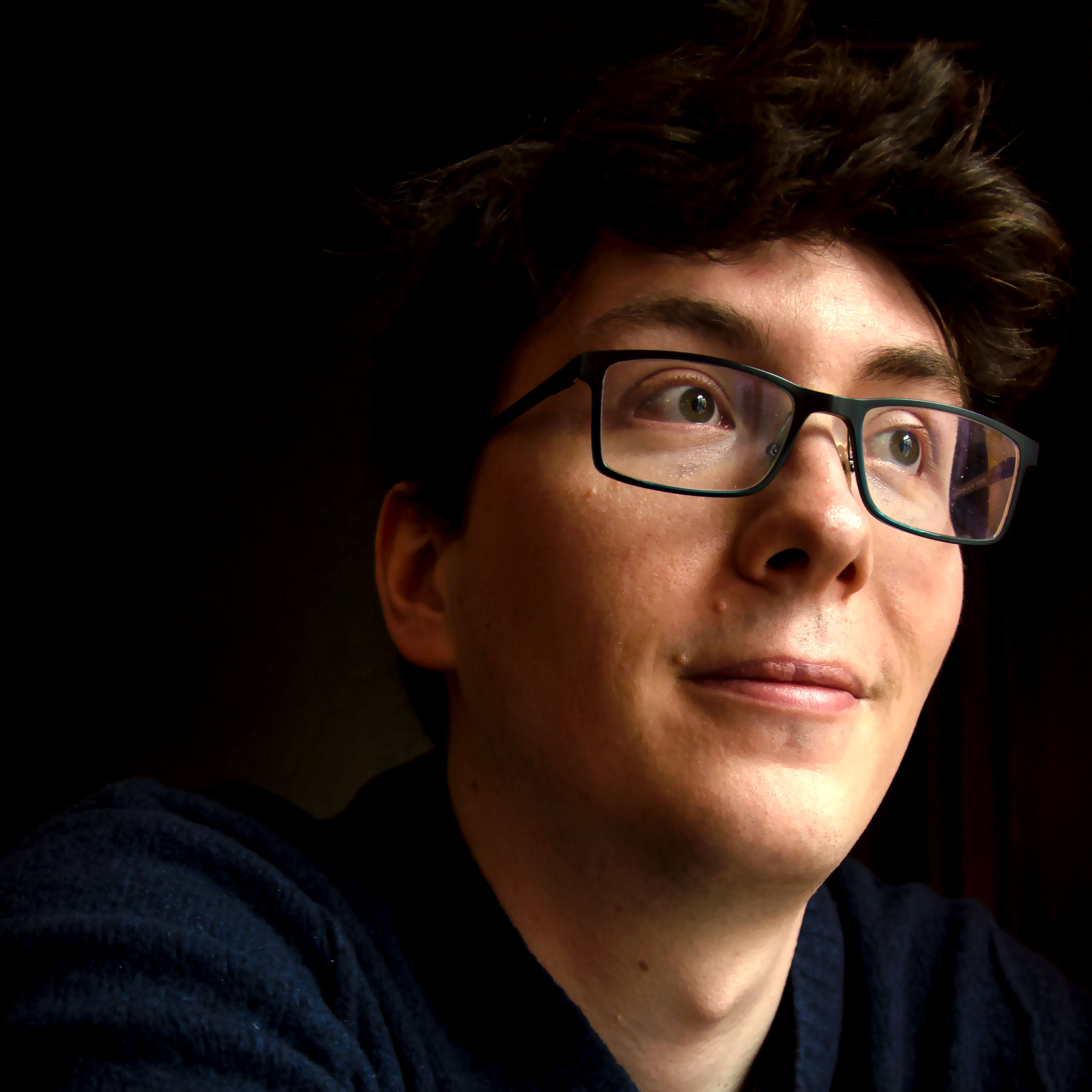
Christian Rupprecht is an Associate Professor at the Department of Computer Science, University of Oxford, specializing in computer vision and machine learning. His research focuses on unsupervised learning, 3D reconstruction, and visual understanding. His work includes contributions to conferences such as GCPR'25, ICCV'25, and CVPR'25, with papers spanning topics like correspondence estimation, animal pose modeling, and synthetic data generation. He leads projects within the prestigious Visual Geometry Group (VGG). Notably, his paper VGGT received the Best Paper Award at CVPR'25. His research integrates deep learning and geometric modeling, emphasizing robustness and generalization in visual systems. Best Paper Award at CVPR'25
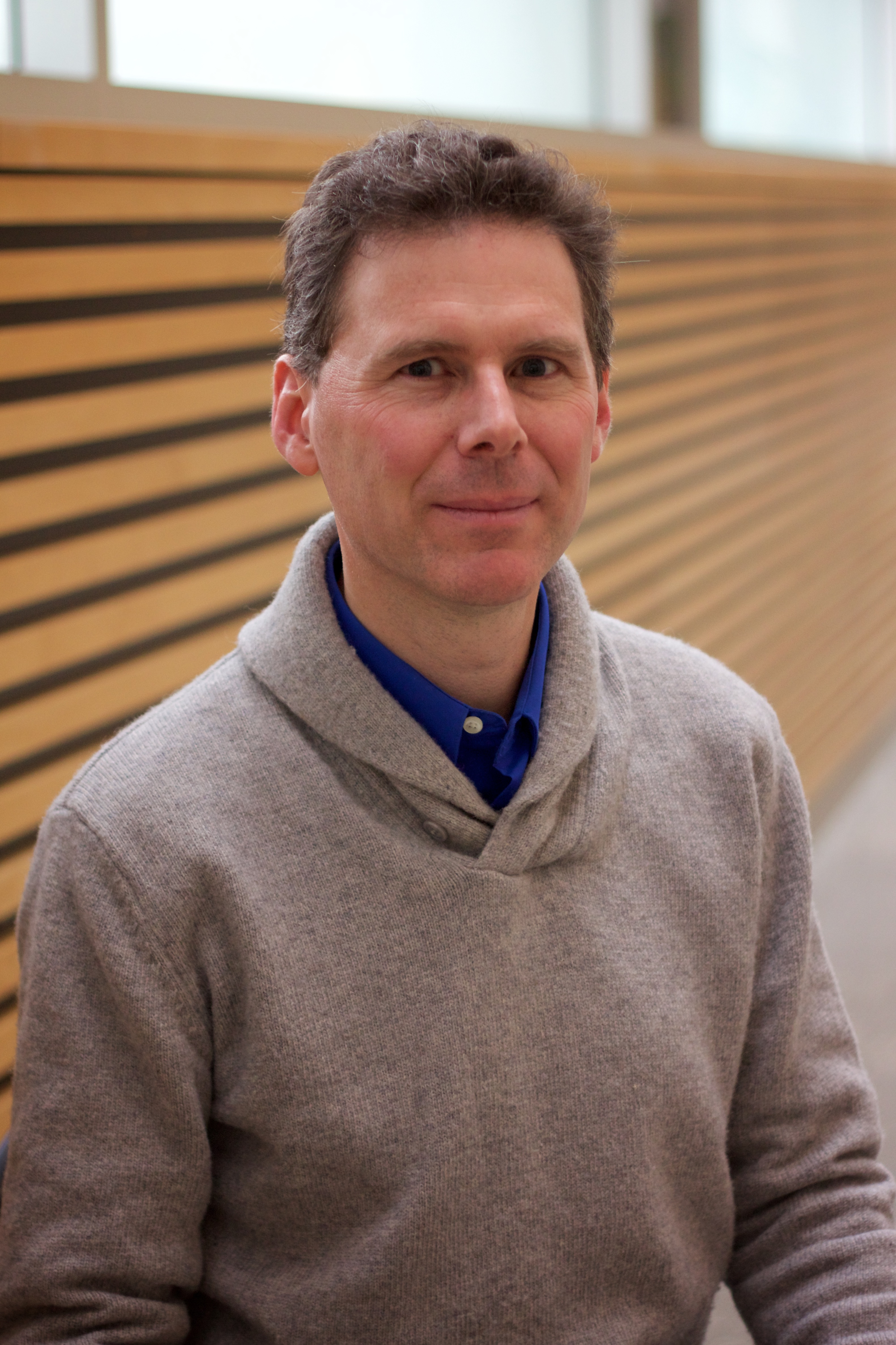
Robert Rohling is a Professor at the University of British Columbia's Faculty of Applied Science, affiliated with the Department of Mechanical Engineering and holding a joint appointment with the Department of Electrical and Computer Engineering. As Director of the Institute of Computing, Information and Cognitive Systems (ICICS), his research focuses on biomedical engineering, medical imaging, robotics, and computational methods. B.A.Sc. (UBC) M.Eng. (McGill) Ph.D. (Cambridge) Rohling's work spans three primary research areas: medical imaging (3D ultrasound, spatial compounding, elasticity reconstruction), medical information systems (radiologist navigation tools for large image datasets), and robotic calibration for surgical applications. His multidisciplinary approach integrates mechanical and electrical engineering principles with clinical needs. Rohling's publications (2020-2022) reveal trends in advanced ultrasound techniques (e.g., shear wave vibro-elastography), AI-driven image processing (cycleGAN translation), and computational optimization for diagnostic accuracy. Keywords across his work include Medical Imaging, Biomedical Engineering, Robotics, and Computational Modeling. As director of the Robotics and Control Laboratory , Rohling leads interdisciplinary collaborations with industry and clinical partners to address practical challenges in medical diagnostics and surgical robotics. His research emphasizes translating engineering innovations into clinical practice.
Alane Suhr is an Assistant Professor at UC Berkeley's Electrical Engineering and Computer Sciences (EECS) department and a member of the Berkeley Artificial Intelligence Research Lab (BAIR). Her research focuses on natural language processing (NLP), machine learning, and computer vision, emphasizing systems that interact with humans through language. She designs models and datasets for language grounding (e.g., NLVR) and develops algorithms for learning through interaction. Education: PhD in Computer Science, Cornell University (2022), advised by Yoav Artzi Bachelor's in Computer Science and Engineering, Ohio State University (2016), with a Linguistics minor Research Interests: Interactive systems for collaborative language use (e.g., CerealBar) Language grounding in multimodal contexts Embodied agents and reinforcement learning Generalization in NLP and the role of language in learning Key Contributions: Developed the NLVR dataset for visual reasoning with natural language Pioneered work on SWE-Gym for training software engineering agents Contributed to research on language models' sensitivity and commonsense reasoning Awards: ACM Doctoral Dissertation Award (2022) Outstanding Paper Awards at ACL 2023 and EMNLP 2021 Professional Activities: Organized workshops at ICML, NeurIPS, and ACL on topics like agents, generalization, and theory of mind Active in academic outreach and conference speaking (e.g., ICML, NeurIPS, CVPR) Labs/Teams: Berkeley Artificial Intelligence Research (BAIR) Lab SWE-Gym research group
Alexander Schwing is an Associate Professor in the Department of Electrical and Computer Engineering and Computer Science at the University of Illinois at Urbana-Champaign, affiliated with the Coordinated Science Laboratory. His research focuses on machine learning and computer vision with applications in 3D scene understanding, generative modeling, and multi-agent systems. Education: Diploma in Electrical Engineering and Information Technology, Technical University of Munich (TUM) PhD in Computer Science, ETH Zurich Postdoctoral Fellow, University of Toronto Research Interests: Structured prediction in deep learning Generative adversarial networks and stability Multi-modal vision-language models 3D scene reconstruction from single images Embodied agent collaboration Semantic segmentation with temporal coherence Recent Publications: Highlight trends in neural rendering, video object segmentation, and reinforcement learning with applications to 3D modeling and multi-agent systems. Notable innovations include SAIL-VOS dataset for amodal segmentation and NeRFDeformer for single-view scene transformation. Scientific Awards: NSF CAREER Award, 3M and Amazon research awards, multiple student recognition awards, ETH Zurich PhD medal, and best paper at Intelligent Tutoring Systems 2014. Teaching: Offers graduate courses in Pattern Recognition (ECE 544) and Machine Learning (CS 446/ECE 449). Previously taught at University of Toronto and ETH Zurich. Labs & Collaborations: Leads research at Coordinated Science Laboratory (UIUC) with collaborations across University of Toronto, ETH Zurich, and industry partners like Samsung SAIT and Amazon.
Jackie Chit Kit Cheung is an Associate Professor in the School of Computer Science at McGill University, where he co-directs the Reasoning and Learning Lab. He holds the Canada CIFAR AI Chair and serves as an Associate Scientific Co-Director at the Mila Quebec AI Institute. He is also a consulting researcher at Microsoft Research Montreal. Academic Background: Ph.D. in Computer Science, University of Toronto (2010–2014) M.Sc. in Computer Science, University of Toronto (2008–2010) B.Sc. (Honours) in Computer Science, minors in Linguistics and German, University of British Columbia (2004–2008) Research Interests: Jackie Cheung's research lies at the intersection of natural language processing, machine learning, and cognitive science. He focuses on natural language generation , automatic summarization , commonsense and pragmatic reasoning , and the evaluation of NLP systems . His work aims to build language models that reflect real-world structure and reasoning, with applications in health, education, and language revitalization. He is particularly interested in how implicit meaning is processed in context, a core concern in linguistic pragmatics. Publication Trends: His recent publications (2024–2025) show a strong emphasis on evaluation methodologies (e.g., COSMIC, ECBD), hallucination and factuality in language models, coreference and reasoning , and long-context modeling . He frequently collaborates across institutions and integrates insights from linguistics and psychology into NLP system design and analysis. Scientific Awards: Best Paper Award, ACL 2018 Outstanding Paper Award, NAACL 2018 Student Research Workshop SAC Award, ACL 2024 (for COSMIC) Best Poster Award, CMDO AI-Health Symposium 2024 Advising and Grants: He advises a large and diverse group of graduate students, including PhD and Master’s candidates, often in co-supervision with other faculty. His group has received support from major AI and health research initiatives, including CIFAR and Mila. He has trained alumni who have gone on to faculty and industry research positions. He has served in leadership roles in top NLP conferences, including as Senior Area Chair, Workshop Chair, and Program Chair of Canadian AI 2018. Labs and Teams: He co-directs the Reasoning and Learning Lab at McGill and is deeply involved with Mila – Quebec AI Institute . He founded the NLP Reading Group at McGill, which brings together researchers from computer science, linguistics, and information studies to discuss theoretical and applied NLP topics.
Prof. Matthias Nießner is a Professor at the Technical University of Munich, leading the Visual Computing Lab. His research intersects computer graphics, vision, and AI, focusing on 3D reconstruction, semantic understanding, and AI-driven video synthesis. He holds a PhD from the University of Erlangen-Nuremberg (2013) and was a Visiting Assistant Professor at Stanford University (2013–2017). Notable awards include the ERC Starting Grant (2018), Nvidia Professorship Award, and Eurographics Young Researcher Award (2019). His work has been featured in mainstream media and led to startups like Synthesia Inc. Research spans Gaussian splatting, neural radiance fields, and generative AI for 3D avatars. Over 150 publications include SIGGRAPH, CVPR, and ECCV, with best paper awards. Projects like Face2Face and ScanNet have driven innovation in facial reenactment and 3D scene datasets. Education: PhD in Computer Science, University of Erlangen-Nuremberg (2013) Diploma in Computer Science, University of Erlangen-Nuremberg (2010) Research Interests: 3D digitization, neural rendering, generative AI, non-rigid reconstruction, and applications in AR/VR. Awards: ERC Starting Grant (2018) Nvidia Professorship Award (2018) Google Faculty Award (2018) SIGGRAPH Best Emerging Tech Award (2016) Grants: Over €1.5M from ERC and industry partnerships. Labs/Teams: Visual Computing Lab at TUM and Synthesia Inc. (co-founder). Key projects include ScanNet (large 3D indoor dataset), Face2Face (real-time facial reenactment), and Gaussian-based 3D avatars. Current work focuses on diffusion models, neural radiance fields, and AI-generated media detection.
Tim Althoff is an Associate Professor at the Paul G. Allen School of Computer Science & Engineering, University of Washington, specializing in Artificial Intelligence and Human-Centered Computing. His research focuses on behavioral data science, combining Data Science Natural Language Processing Social Computing Human-Centered AI Ethics & Fairness to extract insights about health and well-being. Recent publications highlight advancements in: Mental health support through AI Wearable sensor health monitoring Online community analysis Reproducibility in data science Public health interventions with notable papers in ACL, Nature Machine Intelligence, and NeurIPS. Scientific recognition includes: ACL 2023 Outstanding Paper Award WWW 2021 Best Paper Award Double ICWSM 2021 Best Paper Awards SIGKDD Dissertation Award 2019 Fulbright Scholarship German National Merit Foundation Actively mentoring postdoctoral researchers and seeking PhD students in areas like neural representation learning, NLP applications to psychology, and mobile health technologies through his Behavioral Data Science Group .
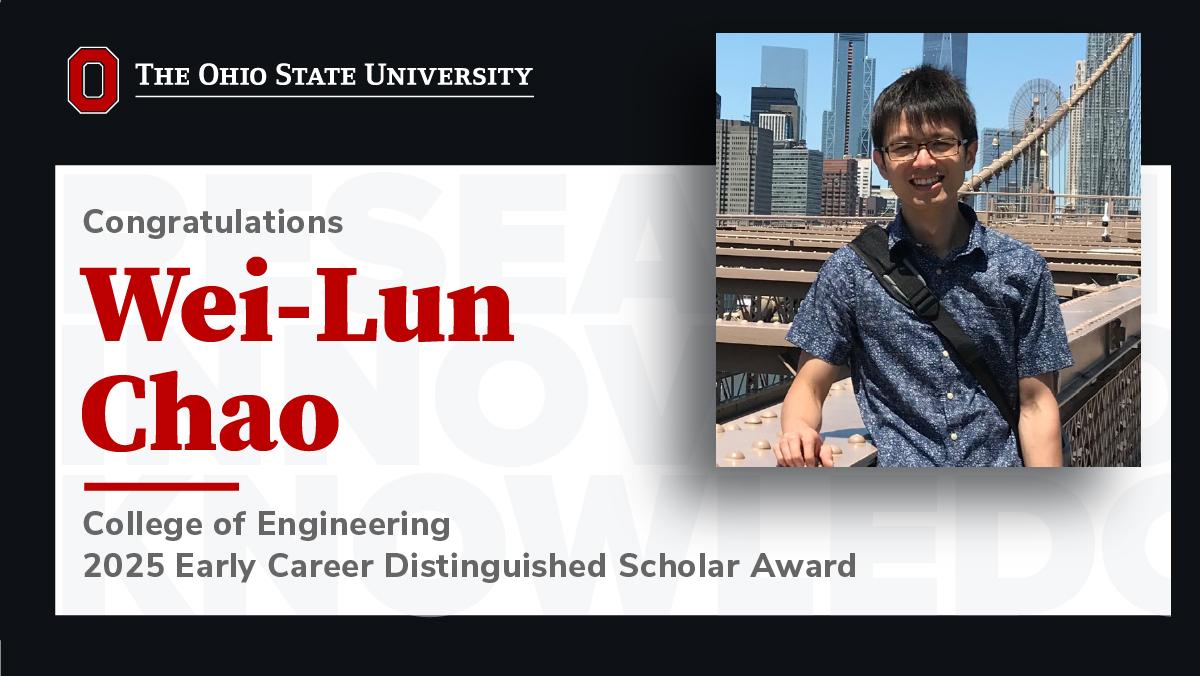
Wei-Lun (Harry) Chao is an Associate Professor in the Department of Computer Science and Engineering at the Ohio State University (OSU), College of Engineering. Promoted to this role in May 2025, he is also an Innovation Scholar and Distinguished Assistant Professor of Engineering Inclusive Excellence. His work spans machine learning, computer vision, and their applications in autonomous driving, healthcare, biology, and natural language processing. Research Focus: Machine learning with imperfect data, interpretable and personalized learning, robust perception for autonomous systems, and visual recognition in real-world scenarios. Awards: 2025 OSU Early Career Distinguished Scholar Award, CVPR Best Student Paper Award (2024), CSE Faculty Teaching Award (2024), Lumley Research Award (2023). Grants: Funded by NSF, NIH, ONR, Cisco, AWS, and Google. Notable Research Trends: The 15 most recent articles highlight his work on vision foundation models, federated learning, diffusion models for biological species generation, interpretable vision transformers, and robust perception systems for autonomous driving. Key subfields include sparse autoencoders, 3D object detection, semi-supervised learning, and anomaly detection in scientific domains. Scientific Awards: 2025 Early Career Distinguished Scholar Award (OSU) CVPR Best Student Paper Award (2024) CSE Faculty Teaching Award (2024) Lumley Research Award (2023) Mentoring & Grants: As an advisor for the OSU Buckeye AutoDrive Team and AI Club, he mentors graduate and undergraduate students. His research is supported by major grants from NSF, NIH, ONR, and industry partners like Cisco and Google.
Insup Lee is the Cecilia Fitler Moore Professor in the Department of Computer and Information Science and Director of the PRECISE Center at the University of Pennsylvania's School of Engineering and Applied Science. He holds a secondary appointment in the Department of Electrical and Systems Engineering and the Perelman School of Medicine’s Department of Biostatistics, Epidemiology, and Informatics. IEEE TCCPS Distinguished Leadership Award (2023) Fellow of the AAAS (2022) Test of Time Award, Runtime Verification (2019) Fellow of the ACM (2017) Best Paper Awards at IEEE ICPS, ACM/IEEE ICCPS, and MEMOCODE His research focuses on cyber-physical systems , real-time and embedded systems , safe autonomy , and internet of medical things , with applications in healthcare and connected systems. He advises PhD students including Eric Lu, Kaustubh Sridhar, Sooyong Jang, and Jean Park (co-advised with Kevin Johnson). Recent publications address safety monitoring for learning-enabled systems, model-free control synthesis using reinforcement learning, and multilingual toxicity guardrails for large language models. His team collaborates with institutions like Hillrom and Penn Nursing to optimize medical device usage in clinical settings.
Trevor Campbell is an Associate Professor in the Department of Statistics at the University of British Columbia (UBC), Vancouver. He holds a Ph.D. in Machine Learning and Statistics from MIT and a B.A.Sc. in Aerospace Engineering from the University of Toronto. His research focuses on automated, scalable Bayesian inference algorithms, Bayesian nonparametrics, and streaming data analysis. Campbell is a core contributor to probabilistic programming tools like Pigeons.jl and has developed influential methods for coreset-based Bayesian inference. Education : Ph.D. in Machine Learning and Statistics (2016), MIT M.S. in Aeronautics and Astronautics (2013), MIT B.A.Sc. in Aerospace Engineering (2011), University of Toronto Research Interests : His work emphasizes scalable Bayesian computation, including variational inference, MCMC optimization, and coresets. He develops algorithms that balance statistical accuracy with computational efficiency, particularly for large-scale datasets. His recent work explores adaptive samplers (e.g., AutoStep, autoMALA) and theoretical guarantees for coreset methods. Applications span astrophysics, materials science, and network analysis. Awards & Grants : NSERC Discovery Grant (2025) Blackwell-Rosenbluth Award (2021) PIMS Early Career Award (2023) Google Perception Academic Funding (2020) Advising & Labs : He supervises a team of PhD and M.Sc. students at UBC, focusing on Bayesian methodology and computational tools. His lab collaborates with institutions like SFU and MIT on projects involving distributed sampling and probabilistic modeling. He co-organizes workshops on Bayesian computation and serves on editorial boards for Bayesian Analysis and TMLR.
Jonas Fischer is the head of the Explainable Machine Learning group at the Max Planck Institute for Informatics, Department of Computer Vision and Machine Learning. His research focuses on interpreting complex machine learning models, particularly in genomics and healthcare, aiming to enhance robustness and alignment with human decision-making. Prior to his role at MPI, he was a postdoctoral fellow at Harvard University's Department of Biostatistics, where he worked on interpretable models for gene regulatory systems in cancer. Education: PhD in Computer Science from Saarland University (2022), with a thesis titled More than the sum of its parts , exploring the intersection of pattern mining and deep learning. He has contributed to advancing methods in neural network pruning, federated learning, and low-dimensional embeddings (e.g., dtSNE, Mercat). His work bridges computational biology, data mining, and machine learning, with applications in DNA methylation analysis, graph-based differential networks, and biomedical informatics. Key research areas include: (1) Explainable AI and neural network interpretability, (2) Biomedical applications of machine learning (e.g., gene regulatory networks, cancer genomics), (3) Low-dimensional embeddings and visualization techniques, (4) Federated learning for privacy-preserving collaborative models, and (5) Pattern mining for error analysis in NLP and classification tasks. Publications span top venues like NeurIPS, ICLR, Bioinformatics, and Genome Biology. His group develops tools such as BONOBO for omics data integration and node2vec2rank for scalable graph analysis. He actively collaborates with biomedical researchers to address challenges in data-driven healthcare and precision medicine.
Dr. Jimeng Sun is a Health Innovation Professor at the Siebel School of Computing and Data Science and Carle Illinois College of Medicine at the University of Illinois Urbana-Champaign. Co-founder of Keiji AI , he leads groundbreaking research at the intersection of artificial intelligence and healthcare, actively deploying clinical AI systems and developing frameworks like PyHealth and Therapeutics Data Commons . His research spans four major areas: Clinical AI Systems : Developing interpretable models (e.g., RETAIN) for patient similarity, temporal event prediction, medication recommendation, and clinical outcome forecasting Drug Discovery : Creating molecular optimization frameworks, drug-target interaction models, and AI-driven platforms Clinical Trials : Pioneering patient-trial matching, outcome prediction, and optimization frameworks using deep learning and graph neural networks Biosignal Analysis : Advancing sleep staging, seizure classification, and automated EEG/Cardiac monitoring systems With over 500 top-tier publications (including in Nature , NEJM AI , and leading AI conferences) and an h-index of 99, his work has been recognized with the Top 100 AI Leaders in Drug Discovery and Advanced Healthcare award. He maintains active collaborations with institutions like Massachusetts General Hospital , Medidata Solutions , and OSF Healthcare . His recent publications reveal a strong focus on: Reinforcement learning applications in medical data analysis Large language model adaptation for clinical tasks Knowledge graph integration with AI systems Synthetic data generation for healthcare Multi-modal learning in clinical contexts Explainable AI for medical applications Dr. Sun's lab ( Sunlab ) emphasizes practical impact over theoretical work, actively collaborating with hospitals and healthtech companies. He welcomes contributions from clinicians, researchers, and industry partners through initiatives like his AI for Health webinar series .
Caglar Gulcehre is a Tenure Track Assistant Professor at École Polytechnique Fédérale de Lausanne (EPFL) and Principal Investigator of the CLAIRE (Caglar Gulcehre Laboratory of Artificial Intelligence Research) lab. Previously, he worked as a Staff Research Scientist at Google DeepMind, Microsoft Research, and IBM Research. His research focuses on reinforcement learning , foundation models , LLM alignment , and sequence modeling . Current Position : Assistant Professor, EPFL Lab : CLAIRE Lab Previous Roles : Staff Research Scientist at DeepMind, MSR, IBM Research His work spans reinforcement learning , deep learning , and neural architecture design , with a focus on safety , trustworthy AI , and real-world applications . He has published in top venues including Nature , NeurIPS , ICML , and JMLR . Scientific contributions include: Best paper award at NeurIPS Nonconvex Optimization workshop Honorable mention for best paper at ICML 2019 Co-organizer of seven workshops at NeurIPS, ICML, and ICLR He supervises PhD students in areas related to AI for algorithm discovery , neural architectures , and foundation models , including: Skander Moalla Justin Samuel Deschenaux Liangze Jiang Xiuying Wei Yitao Xu
Jiatao Gu is an Assistant Professor in the Department of Computer and Information Science (CIS) at the University of Pennsylvania, with a part-time role as Staff Research Scientist at Apple (MLR). He holds a Ph.D. in Electrical and Electronic Engineering from the University of Hong Kong (2018) and a B.Eng. in Electronic Engineering from Tsinghua University (2014). His research focuses on generative machine learning and AI agent interaction with the physical world, emphasizing multi-modal systems spanning language, images, videos, and 3D. Key themes include efficient modeling , flexible architecture design , and scalable decision-making frameworks . 2025: ICLR paper on DART framework 2024: TMLR work on GFlowNet alignment 2023: NeurIPS research on diffusion stability 2022: ACL papers on speech translation Recent publications explore diffusion models for text-to-image synthesis, 3D reconstruction, and efficient sampling techniques. His work addresses fundamental challenges in attention mechanisms, entropy collapse, and multi-stage distillation while advancing non-autoregressive translation and vision-language reasoning . Prospective students can apply through his recruitment process at UPenn. Prior affiliations include Meta AI (FAIR Labs) and academic collaborations with institutions like New York University's CILVR Lab.
Olga Russakovsky is an Associate Professor of Computer Science at Princeton University and Associate Director of the Princeton Laboratory for Artificial Intelligence. Her research focuses on computer vision , machine learning , human-computer interaction , and fairness, accountability, and transparency in AI systems. Princeton University faculty member since 2025 Affiliated with Princeton's Center for Statistics and Machine Learning and Center for Information Technology Policy Scientific Recognition: Presidential Early Career Award for Scientists and Engineers (2025) PAMI Young Researcher Award (2022) AnitaB.org Emerging Leader Abie Award (2020) CRA-WP Anita Borg Early Career Award (2020) MIT Technology Review 35-under-35 Innovator (2017) PAMI Everingham Prize (2016) As a co-founder and current Board Chair of AI4ALL , she drives initiatives to expand diversity in AI. Her recent publications demonstrate expertise in vision-language models , deepfake detection , and ethical AI systems .