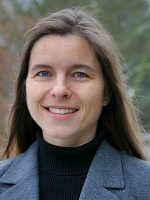
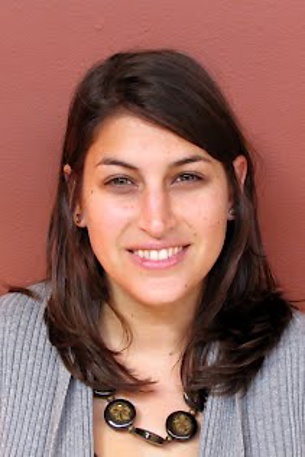
Frauke Feser is a senior researcher at the Helmholtz-Zentrum Hereon , Institute of Coastal Systems - Analysis and Modeling, leading the Coordination of Storm Themes team. Her work focuses on cyclone dynamics, climate change impacts on storm patterns, and regional climate modeling. Key research areas include: Extreme weather event attribution using spectral nudging Arctic and North Atlantic storm activity trends Coastal climate risk assessment and adaptation Validation of regional climate models against observations Her recent publications analyze: Climate change effects on marine heatwaves Comparative studies of storm datasets Methodological advances in dynamical downscaling Historical storm reconstructions using pressure data She actively investigates: Cyclone formation under warming scenarios Regional climate model performance metrics Storm impact forecasting systems Interactions between large-scale circulation and coastal weather
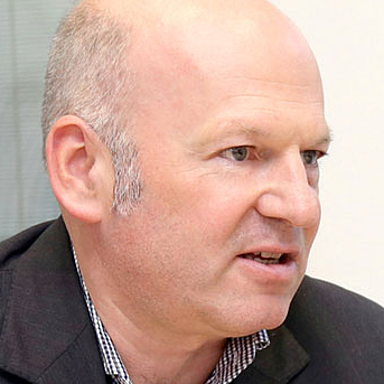
Joachim Burger is Professor of Anthropology at the Institute of Anthropology, Johannes Gutenberg University Mainz, a position held since 2010 following progression from Junior Professor (2005-2010), Academic Council member (2004-2005), and Research Assistant (2000-2004) at the same institution. His research integrates ancient DNA analysis with archaeological evidence to investigate European prehistory, specializing in Neolithic transitions, animal domestication processes, and population genomics. His educational foundation includes a PhD in Biology (Anthropology, Zoology, Botany) from Göttingen University (2000) and Master of Arts in Anthropology (minoring in Pre- and Protohistoric Archaeology and Musicology) from Johannes Gutenberg University Mainz (1997). This interdisciplinary training underpins his methodological approach combining biological anthropology with archaeological context. Burger's research centers on ancient DNA and population genetics to reconstruct demographic histories, with particular emphasis on Neolithic transitions and animal domestication in Eurasia. His work examines genetic interactions between hunter-gatherers and early farmers, kinship structures in ancient communities, and genomic adaptations during cultural shifts. Methodologically, he pioneers techniques for analyzing degraded archaeological specimens and develops computational frameworks for large-scale genomic datasets. Analysis of his recent publications reveals sustained leadership in high-impact archaeogenomic studies, particularly large international consortia examining the genomic origins of European farmers, kinship in Bronze Age societies, and domestication trajectories of livestock. His work consistently bridges disciplinary divides between genetics, archaeology, and anthropology to address fundamental questions about human cultural and biological evolution. Burger leads the GenEvo research group at the Institute of Anthropology (iomE) in Mainz, maintaining active collaborations across European institutions. His team focuses on paleogenomic analysis of human and animal remains from key archaeological contexts, contributing to major projects like Project 1.1, 1.2, and 1.3 as indicated in institutional materials.
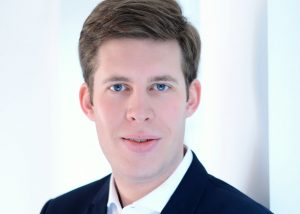
Bin Huang is a Professor in the Department of Internal Medicine at the University of Kentucky, with affiliations as a Member of the Cancer Prevention and Control Research Program and the Markey Cancer Center. His research focuses on applying novel statistical and epidemiological methodologies to population-based cancer studies, contributing to UN Sustainable Development Goals (SDGs) in Public Health and Health Equity. Education: Doctor of Public Health (DPH), University of Kentucky (2009) Huang’s work spans cancer epidemiology, healthcare disparities, and statistical modeling, with a focus on lung cancer, ovarian cancer, breast cancer, and colorectal cancer. He investigates how sociodemographic factors, Medicaid policies, and environmental exposures (e.g., air pollution) mediate cancer outcomes, utilizing large datasets like SEER and NCDB. Recent projects include studies on the impact of air pollution on pediatric brain tumors, risk-stratified survivorship care pathways for early-onset colorectal cancer, and community-engaged mixed-methods cancer needs assessments. His research has received funding from the National Cancer Institute and Eli Lilly & Company.
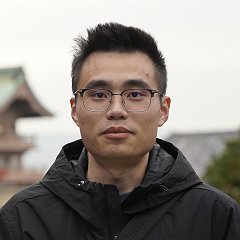
Cordelia Schmid serves as Research Director at Inria (French National Institute for Research in Digital Science and Technology) and Director at Google, while leading the ELLIS program on Machine Learning and Computer Vision and serving on the Computer Vision Foundation Board. Her academic background includes: PhD in Computer Science from Institute National Polytechnique de Grenoble (France) MS in Computer Science from University of Karlsruhe (Germany) Dr. Schmid revolutionized computer vision through foundational work on local/semi-local image descriptors, enabling robust texture classification and category recognition in cluttered scenes. She pioneered real-world video analysis by developing action recognition methods and creating the "Hollywood dataset", shifting the field from staged to naturalistic video understanding. Her innovations underpin technologies in robotics, autonomous vehicles, and medical imaging. Her distinguished accolades include: ACM Athena Lecturer Award (2025) Three-time Longuet-Higgins Prize recipient Koenderink Prize for fundamental contributions European Inventor Award IEEE Fellowship Membership in German National Academy of Sciences Schmid is celebrated for exceptional mentorship and community leadership, having chaired major conferences, edited top journals, and built globally recognized research groups that established critical benchmarks in computer vision. Her experimental evaluation frameworks remain industry standards. She founded and directs research teams at Inria that consistently set new directions in computer vision and machine learning, driving both theoretical advances and practical applications through rigorous methodology.
Dr. Georgina Hunt is an Honorary Lecturer affiliated with the School of Biological Sciences , focusing on marine and climate-related research. Her work bridges historical ecological data with modern challenges in fisheries and ecosystem management. Primary research areas: Marine Biology, Climate Change Impact, and Fisheries Science. Key themes: Trophic ecology, fish distribution modeling, and anthropogenic effects on aquatic ecosystems. Recent publications emphasize the intersection of offshore renewable energy, climate change, and marine biodiversity. Her studies analyze long-term ecological shifts using historical datasets and contemporary monitoring. Notable trends include the application of interdisciplinary approaches to fisheries management and the integration of historical ecology in predicting climate-driven species distributions.
Jan Amcoff serves as a Professor in the Department of Human Geography at Uppsala University, Sweden. His contact details include telephone (+46 18 471 73 85), mobile (+46 70 425 01 35), and email (Jan.Amcoff@kultgeog.uu.se), confirming active institutional affiliation. His core research examines internal migration in Sweden—particularly return migration dynamics—alongside methodological concerns regarding geographical data units, regional enlargement through commuting, and rural development trajectories. This focus manifests in empirical studies of Swedish demographic shifts, urban-rural interactions, and spatial policy impacts. Analysis of his 15 most recent publications (2024-2009) reveals consistent investigation of migration patterns, retail geography, and rural population change, with increasing interdisciplinary engagement in health geography and political economy. His work predominantly utilizes Swedish spatial datasets to address methodological challenges in human geography. No scientific awards were referenced in the source materials. The provided text contained no information regarding student supervision, research grants, or collaborative teams beyond co-authorship patterns in publications.
Paul-Albert Anselm Schneide is a Research Fellow in the Department of Food Science within the Faculty of Science at the University of Copenhagen, actively contributing to the Design and Consumer Behavior section. His research integrates advanced chemometric methodologies with analytical chemistry to address complex data challenges in food science applications. His primary research interests center on developing innovative algorithms for multilinear data analysis, particularly shift-invariant models that resolve peak misalignments and shape variations in chromatography-mass spectrometry datasets. This work spans theoretical chemometrics framework development, practical signal processing workflows for suspect screening, and applications in sensory-driven food quality prediction. Key focus areas include non-negative tensor decomposition, gas/liquid chromatography data optimization, and crowd-sourced sensory data integration for predictive modeling in food systems. Analysis of his recent publications reveals a cohesive research trajectory advancing chemometric techniques for analytical chemistry data, with increasing emphasis on real-world food science applications. His 2023-2025 work demonstrates progression from foundational shift-invariant tri-linearity models to sophisticated frameworks handling "in-between" data structures, culminating in practical implementations for wine quality prediction and complex sample analysis. This trend highlights his dual expertise in mathematical methodology development and domain-specific food science problem-solving.
Nicholas Vargas is an Associate Professor of Chicanx/Latinx Studies in the Department of Ethnic Studies at the University of California, Berkeley. He co-leads the Latinxs and Democracy Cluster and serves as Faculty Co-Director of the Latino Social Science Pipeline Initiative (LSSPI), both focused on advancing Latinx social science scholarship and academic pipelines. He previously held roles at the University of Florida and University of Texas at Dallas, and currently serves on the National Advisory Committee of the U.S. Census Bureau and as Deputy Editor of the journal Sociology of Race and Ethnicity . His research focuses on ethnoracial classification, identity contestation, and stratification, particularly in higher education contexts. Methodologically, he critiques race data utility for addressing systemic racism, using nationally representative datasets to explore racial boundaries, label use, and institutional inequities in Hispanic-Serving Institutions (HSIs). Notable work includes examining Latinx faculty representation, HSI funding dynamics, and generational shifts in ethnoracial labeling like 'Latinx.' Key contributions include analyses of Latino Studies program growth, pandemic-era racialized risk perceptions, and the intersection of skin tone with colorblind ideology adherence. His work bridges demographic analysis, critical race theory, and institutional policy critique. Advising and grants involve mentoring students through LSSPI and collaborative projects on racialized federal funding mechanisms. He collaborates with interdisciplinary teams on projects like tracking Latino Studies program development and analyzing census data trends.
Professor Jarkko Harju serves as Professor at Tampere University's Faculty of Management and Business in Finland, holding dual prestigious affiliations as both CESifo Research Network Fellow and Distinguished CESifo Affiliate within the Public Economics research area. His research spans critical domains of Public Economics and Labour Economics , with particular expertise in: Tax policy design and behavioral responses Firm dynamics under taxation systems Entrepreneurial decision-making International tax challenges for multinationals Labour market institutions and employee representation Analysis of his publication trajectory reveals sustained scholarly impact through 9 CESifo Working Papers (2013-2023), with recent work addressing urgent policy questions including healthcare economics and workplace democracy. His methodological approach combines rigorous empirical analysis of administrative tax data with institutional knowledge of Nordic and global tax systems. Professor Harju's contributions are recognized through his distinguished CESifo affiliations, which connect him to Europe's premier economic research network. His work directly informs tax policy design at national and international levels, with findings regularly utilized by EU institutions and finance ministries. As a professor at Tampere University, he contributes to graduate education and research supervision while maintaining active international collaborations. His research program provides students with opportunities to engage in policy-relevant economic analysis using real-world administrative datasets and cutting-edge empirical methods.
Johannes Quaas is a Professor of Theoretical Meteorology and Vice Dean of the Faculty of Physics and Earth System Sciences at Leipzig University. His research focuses on cloud processes and their role in climate change, with particular emphasis on anthropogenic aerosols' effects on clouds and climate. He is a lead contributor to the IPCC Assessment Reports and leads multiple European collaborative research projects while maintaining active roles in the German Meteorological Society and University Partnership for Atmospheric Sciences. Professor Quaas's research spans cloud-climate interactions, parameterization of cloud processes in climate models, satellite observations of atmospheric phenomena, aerosol-cloud-precipitation-radiation interactions, and the relationship between biodiversity and climate change. His methodology combines climate modeling with satellite data analysis to understand how human activities influence atmospheric processes. Recent work increasingly incorporates machine learning techniques to improve cloud parameterizations in climate models and analyze complex satellite datasets, demonstrating his ability to integrate emerging computational methods with fundamental atmospheric science. Analysis of Professor Quaas's publication record reveals a consistent focus on aerosol-cloud interactions, with growing emphasis on machine learning applications and biodiversity-climate connections. His work bridges observational studies, climate model development, and fundamental physical investigations of cloud processes. The research has significant implications for understanding climate sensitivity, improving climate model projections, and assessing potential climate intervention strategies. His leadership in multiple major research projects demonstrates his standing as a key contributor to advancing our understanding of climate system dynamics. Professor Quaas leads several major research initiatives including ECO-N (The Economics of Connected Natural Commons - Atmosphere and Biodiversity), WarmWorld (calibrating liquid water cloud microphysics in ICON), CleanCloud, and VolCloud (studying volcanic influences on clouds). His work receives funding from prestigious organizations including the German Research Foundation (DFG), Federal Ministry of Education and Research (BMBF), and European Union, reflecting the significance and impact of his research program. As Vice Dean of the Faculty of Physics and Earth System Sciences, Professor Quaas provides academic leadership while maintaining an active teaching schedule. His courses span theoretical meteorology topics including Differential Equations, Dynamics, Global Climate Dynamics, Thermodynamics, and Climate Crisis and Solutions. This teaching portfolio reflects his commitment to training the next generation of atmospheric scientists while addressing contemporary climate challenges through education.
Dr. Thilo Kroeger is a German economist serving as an External Research Fellow at the Kiel Centre for Globalization (KCG), a Leibniz ScienceCampus based at the Kiel Institute for the World Economy. He currently holds a postdoctoral position at EKF Denmark’s Export Credit Agency while maintaining academic affiliations with Copenhagen University. His research focuses on structural economic transformations, particularly servitization and its impacts on wage inequality within manufacturing establishments. His primary research interests include International Economics, Labour Economics, Development Economics, Industrial Organization, and Competition Economics. Kroeger investigates how shifts toward service occupations within establishments affect wage distributions, finding that increased servitization accounts for approximately 7% of rising within-establishment wage inequality in German manufacturing between 1994-2017. His work demonstrates that higher servitization correlates with lower wage levels, especially for low-skilled manufacturing workers and those at the lower end of the wage spectrum. Kroeger's publication trends reveal a consistent focus on global value chains, structural economic change, and labor market dynamics. His research employs matched employer-employee datasets to analyze occupational shifts and their distributional consequences, bridging theoretical models with empirical evidence from German manufacturing. Key methodological approaches include gravity models and analyses of firm-level volatility in international trade contexts. As an active participant in the academic community, Kroeger regularly presents at major international conferences including the European Trade Study Group Conference and Midwest Economic Theory and International Trade Conference. He has engaged with leading institutions such as Yale University and the OECD through research visits and advanced seminars. Kroeger mentors early-career researchers through KCG's doctoral program and collaborates extensively with institutions including the Deutsche Bundesbank, University of Warwick, and University of Trier. His work contributes to understanding how globalization and structural economic transformations affect labor markets and inequality.
Dr. Yun Peng is an Assistant Professor in the Department of Computer Science and Engineering at The Chinese University of Hong Kong, specializing in software engineering with a focus on intelligent code analysis, automatic program repair, and software ecosystems. With an active research profile, Dr. Peng serves on program committees for major conferences including ASE and ESEC/FSE. Dr. Peng's educational background includes doctoral training focused on programming languages and software engineering, though specific institutions aren't detailed in the available information. Their research primarily addresses challenges in type inference, code analysis, and the application of large language models to software engineering tasks. Research interests center on intelligent code analysis techniques, particularly in type inference systems for dynamic languages like Python. Dr. Peng has pioneered hybrid approaches combining static analysis with deep learning, as demonstrated in their influential ICSE 2022 paper on HiTyper. Recent work has shifted toward leveraging large language models for code review, program repair, and API recommendation, reflecting the field's evolution. Current projects examine LLM applications in secure code review, code efficiency optimization, and vulnerability detection in smart contracts. Dr. Peng's publication record shows a clear progression from foundational type inference research toward cutting-edge LLM applications in software engineering. The work spans multiple dimensions of code quality including security, performance, and maintainability, with tools like HiTyper, TypeGen, and APIBench making significant contributions to the research community. As a program committee member for top-tier conferences, Dr. Peng actively contributes to the software engineering research community. Their work has been recognized through publication in premier venues including ICSE, ASE, and ESEC/FSE, demonstrating consistent high-impact contributions to the field. Dr. Peng maintains an active research group focused on advancing the state of the art in intelligent code analysis, with current projects exploring the intersection of large language models and traditional program analysis techniques. The research has practical applications in developer productivity tools, security analysis systems, and software maintenance automation.
Rachel Margolis is a Professor in the Department of Sociology at the University of Western Ontario, where she conducts research at the intersection of demography and family studies. Her academic work focuses on how family dynamics shape population change, with particular attention to kinship structures in aging societies and the effects of parental benefits policies on families. Dr. Margolis received her PhD in sociology and demography from the University of Pennsylvania in 2011. Her research interests span demography, family dynamics, population change, kinship structures, aging societies, parental benefits policies, Indigenous fertility, loneliness studies, and Canadian divorce trends. She examines how demographic shifts affect family structures across the life course and how policy interventions influence family formation and stability. Her publication record reveals a strong focus on kinship networks, aging populations, and family dynamics. Recent work examines loneliness trajectories across countries, kin loss and bereavement, children's cognitive outcomes following grandparental death, and the care gap in later life across European nations. Her research employs sophisticated demographic methods to analyze large-scale datasets from multiple countries, revealing important patterns in how family structures are evolving globally. Dr. Margolis has established herself as a leading researcher in the demography of kinship, with publications appearing in top journals including Demography, Journal of Gerontology, and Social Science Research. Her work bridges demographic methods with sociological theory to provide nuanced understandings of contemporary family change.
Taekwan Kim is a Research Fellow at the Max Planck UCL Centre for Computational Psychiatry and Ageing Research, University College London, specializing in computational models of decision-making and psychopathology. His work bridges cognitive neuroscience and clinical psychiatry to decode mechanisms underlying psychiatric disorders. Education: PhD in Brain and Cognitive Sciences, Seoul National University (2021) Research Interests: Dr. Kim investigates adaptive decision-making , goal-directed behavior , and metamemory through neurocomputational frameworks. His lab develops models of control processes during decision-making and translates cognitive/brain evidence into psychopathology diagnostics, with obsessive-compulsive disorder as a primary clinical focus. This integrates machine learning with fMRI and behavioral paradigms to identify circuit-level biomarkers. Publication Trends: Recent work in Brain journal reveals consistent themes: computational modeling of compulsivity (2024) and fronto-striatal circuit imbalances in OCD (2022). These studies employ hierarchical Bayesian models and neuroimaging to map cognitive control failures onto neural circuits, advancing precision psychiatry approaches. Awards: No scientific awards were documented in the source material. Advising and Grants: Student mentorship and grant details were not disclosed; affiliations suggest involvement in UCL's Applied Computational Psychiatry Lab infrastructure. Labs and Teams: He contributes to the Applied Computational Psychiatry (ACP) Lab at UCL, which develops quantitative frameworks for psychiatric nosology using computational modeling, neuroimaging, and large-scale behavioral datasets.
Raffaele Guetto is Full Professor of Demography at the University of Florence, Department of Statistics, Computer Science, and Applications 'G. Parenti' (DiSIA). He serves as Coordinator of the Socio-demographic Curriculum within the national Doctorate in Life Course Research, teaching Demography, Social Demography, and Quantitative Methods across undergraduate, graduate, and doctoral programs. His research centers on family behavior and social stratification, with emphasis on socioeconomic determinants of fertility, union formation/dissolution dynamics, and gender/migration impacts on life courses. Recent work investigates how economic uncertainty and social policies shape family decisions, utilizing advanced quantitative methods including longitudinal tax data and factorial surveys to analyze structural inequalities in Italian and European contexts. Analysis of his 2023-2025 publications reveals three dominant trends: (1) pandemic-induced shifts in fertility intentions and family reshuffling, (2) innovative policy evaluation methods for pronatalist measures, and (3) cross-national comparisons of economic narratives' influence on demographic behavior. His work consistently bridges demographic theory with contemporary socioeconomic challenges through rigorous empirical analysis. Guetto actively mentors doctoral students through his curriculum coordination role and has directed numerous national/international research projects in social demography. He serves on the Editorial Boards of Polis and Demographic Research , contributes to the Italian Association for Population Studies' Scientific Council, and regularly disseminates findings through the Population Report and public science outlets.