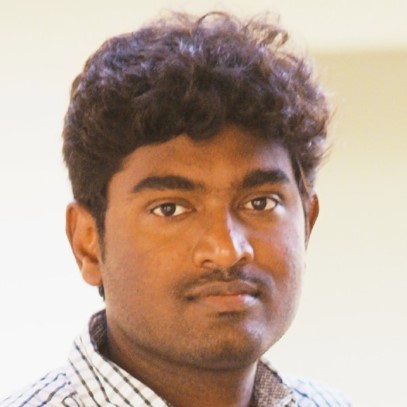

Shruti Tople is a Principal Researcher at Microsoft Research in the Azure Research – Security and Privacy group. She holds a Ph.D. from the School of Computing at the National University of Singapore (NUS) , where she received the Dean's Graduate Research Excellence Award . Her work focuses on quantifying and mitigating information leakage in machine learning models while preserving their utility. Key Research Areas include: Systems Security Privacy in Machine Learning Differential Privacy Causal Learning Transfer Learning for Vision & Language Models Recent Publications address challenges such as membership inference attacks, federated backdoor defense, and privacy-enhanced deep learning. Her open-source projects like Analyzing PII Leakage and RobustDG provide practical tools for differential privacy and domain generalization. She collaborates with interns from institutions like NUS , University of Waterloo , and Imperial College London . Scientific Awards : Dean's Graduate Research Excellence Award (NUS)
Zhigang Zhu is the Herbert G. Kayser Professor of Computer Science at The City College of New York (CUNY), affiliated with the Grove School of Engineering. He holds academic roles in the Computer Science PhD Program and M.S. Program in Cognitive Neuroscience at the CUNY Graduate Center. As Director of the City College Visual Computing Laboratory (CCVCL) and Co-Director of the Master’s Program in Data Science and Engineering, he focuses on advancing assistive technologies, computer vision, and human-computer interaction. His research emphasizes accessibility solutions for visually impaired individuals, leveraging AR/VR, machine learning, and multimodal perception. Education: Ph.D. (Computer Science, with honor) from Tsinghua University (1997), M.E. (1991), B.E. (1988) Affiliations: Department of Computer Science, CCNY; CUNY Graduate Center Research interests include assistive technology applications, augmented reality systems, and energy efficiency analysis. Notable projects include the BLV App Arcade for visually impaired navigation and MAC-U-Vision+ for AMD patients. He has received awards such as the President’s Award for Excellence (2013) and the CUNY Salute to Scholars recognition. His work integrates AI, computer vision, and IoT to address urban accessibility challenges, with contributions to sidewalk material analysis, real-time indoor navigation, and emotion recognition systems. Ongoing projects explore multimodal data fusion and energy-efficient building systems.
James Hays is affiliated with Brown University . His research spans Computer Vision , Robotics , 3D Reconstruction , and Image Synthesis . His recent work focuses on 3D Object Detection (e.g., CoRL 2024 ), Semantic Scene Flow (e.g., ICLR 2024 ), and Multimodal Image Generation (e.g., CVPR 2024 ). He has contributed to datasets like ContactDB and ContactPose for robotic grasp analysis. Key trends in his publications include 3D Perception , Efficient Neural Architectures , and Cross-modal Learning for autonomous systems. While no explicit scientific awards are listed, his work is frequently published in top-tier venues like CVPR , ECCV , and CoRR .
Prof. Dr. Behçet Uğur Töreyin is a full Professor at the Informatics Institute of Istanbul Technical University, where he also serves as Head of Department since 2023. He leads the Signal Processing for Computational Intelligence (SP4CING) research group, focusing on advanced signal and image processing techniques for intelligent systems. His work spans interdisciplinary applications in bioimaging, environmental monitoring, surveillance, and remote sensing. PhD in Electrical and Electronics Engineering, İhsan Doğramacı Bilkent University (2009) MS in Electrical and Electronics Engineering, İhsan Doğramacı Bilkent University (2003) BS in Electrical and Electronics Engineering, Middle East Technical University (2001) His research interests include signal processing, image processing, machine learning, pattern recognition, deep learning, computer vision, and compressed domain analysis. He has pioneered work in flame detection, video understanding in compressed domains, and efficient neural architectures. His recent publications emphasize green AI, model efficiency, and privacy-preserving techniques. The analysis of his 15 most recent articles (2022–2024) reveals a strong focus on compressed domain processing, efficient deep learning models (e.g., HaLViT), biomedical imaging, and environmental applications. He frequently employs transformer models, CNNs, and hybrid architectures for tasks such as Raman spectroscopy quantification, smoking detection in video, and server fault diagnosis using thermal imaging. Scientist of the Year, SCIENCE HEROES ASSOCIATION (2017) Entrepreneurial and Innovative Graduation Design Project (BTP) Competition, ITU (2016) 2241 Industrial Undergraduate Thesis Competition, TÜBİTAK (2016) Golden Youth, İş Bank (1997) Prof. Töreyin has supervised several students, including Mr. Berk Arıcan, whose M.S. thesis won the best thesis award in computer science at ASELSAN Akademi in 2023. He has led numerous research projects funded by TÜBİTAK and other agencies, including work on quantum machine learning for carbon credit trading and lip-sync error detection in live broadcasts. He actively mentors students and promotes innovation in computational intelligence. He leads the SP4CING research group at ITU, which focuses on designing signal processing techniques for computational intelligence. The group's work integrates deep learning, compressed domain analysis, and multi-modal sensing for real-world applications in healthcare, environment, and industry.
Jens-Michalis Papaioannou is a prominent Researcher in clinical natural language processing (NLP) and medical informatics, with extensive publications in top-tier venues like ACL, LREC, and EMNLP. His work focuses on improving clinical decision support systems through advanced machine learning techniques. 2024 : Revisiting clinical outcome prediction for MIMIC-IV with biomedical transformers 2023 : Developing MEDBERT.de for German medical NLP and MedAlpaca conversational AI 2022 : Introducing ProtoPatient for interpretable diagnosis prediction 2021 : Creating self-supervised knowledge integration frameworks for admission note analysis His research spans seven major themes : Clinical outcome prediction from admission notes Cross-lingual knowledge transfer in medical NLP Prototypical network applications Data drift analysis in longitudinal datasets Knowledge integration techniques Model optimization for healthcare LLM interpretability frameworks He has collaborated with Wolfgang Nejdl, Alexander Löser, and Betty van Aken on 13+ publications , with over 445 citations. Notable contributions include: Novel patient similarity modeling approaches ICD code hierarchy integration methods Multilingual clinical model strategies Adversarial robustness analysis Medical conversational AI frameworks
Cristiano Premebida is an Assistant Professor in the Department of Electrical and Computer Engineering (DEEC) at the University of Coimbra, Portugal. He is also a senior researcher at the Institute of Systems and Robotics (ISR-UC) and holds a PhD in Electrical and Computer Engineering from the University of Coimbra (2012), a Master's degree from the same institution (2007), and a B.Sc. in Electrical Engineering from the State University of Santa Catarina, Brazil (2001). Current Academic Rank: Assistant Professor Affiliation: University of Coimbra His research focuses on robotic perception , mobile robotics , applied machine learning , and autonomous vehicle systems . Key methodologies include sensor fusion , multimodal perception , and 3D LiDAR-based navigation , with applications in precision agriculture, autonomous driving, and industrial automation. Recent publications highlight advancements in deep learning calibration , fuzzy system interpretability , and multimodal human detection . Projects funded by the Fundação para a Ciência e a Tecnologia include the GreenBotics initiative for intelligent agricultural systems and AI+Green for automation in precision agriculture. Collaborations span institutions like MIT Portugal, ISR-UC, and international robotics conferences.
Anxiang Zeng is a researcher affiliated with the University of Kansas School of Business , Department of Management and Leadership. His work focuses on machine learning applications in e-commerce , particularly in search engines, recommender systems, and preference optimization.
Iraklis Varlamis is a Professor in Data Management at Harokopio University of Athens (HUA). He contributes to Data Science and Artificial Intelligence Cloud and Edge Systems Information Systems Management Digital Transformation and teaches courses in these domains. His research interests span AI applications across healthcare, security, and education, with a focus on Digital Twin technologies Federated Learning Educational Robotics Anomaly Detection . Recent work integrates LLMs for fake news detection and robotics task execution. Key publication trends highlight interdisciplinary efforts in Medical data analysis Edge AI Secure data systems Continual learning .
Hoifung Poon is General Manager at Microsoft Health Futures and affiliated faculty at University of Washington Medical School. He leads Real-World Evidence (RWE) research focusing on AI applications for precision health. Poon earned a B.S. with Distinction in Computer Science from Sun Yat-Sen University and a Ph.D. in Computer Science and Engineering from University of Washington. Specializes in biomedical AI research Focuses on structuring unstructured medical data Co-PI for DARPA Big Mechanisms projects Research strength lies in biomedical multimodal learning (text, radiology, pathology, genomics) and causal learning for real-world evidence generation. His team develops methods for LLM self-verification , multi-modal fusion , and biases correction in observational data. Publications show expertise in Nature , Nature Methods , and NEJM AI , covering topics from digital pathology to clinical text analysis. Scientific recognition includes: Best Paper Awards at NAACL, EMNLP, and UAI Winner of ACM Health Best Paper Award Named Technology Champion 2022 by Puget Sound Business Journal
Markus Schaffer is a Researcher at Aalborg University, affiliated with the Department of Construction, Urban and Environmental Engineering under the Faculty of Engineering and Science. His work focuses on leveraging commercial smart heat and water meter data to drive building-specific renovation strategies, integrating these datasets with existing building information to create actionable insights for the scientific community. PhD-level contributions to energy data integration Automated disaggregation of space heating and domestic hot water demands at city scale Non-intrusive large-scale occupancy detection via water meter analytics Advanced clustering for energy data distillation His research portfolio extends to school renovation concepts, where he explores double-skin facades with diffuse ceiling ventilation through parametric simulations. He applies machine learning to Indoor Environmental Quality sensor data collaboration, and teaches master's courses in IT System Development and Sensitivity/Uncertainty Analysis. 2025: Residential Household Dataset publication 2024: 4 peer-reviewed journal articles across Energy, Data in Brief, and REHVA Journal 2023: 2 datasets and 3 conference participations 2022: District Heating data time-series publication Markus' scientific contributions align with UN Sustainable Development Goals 7 (Affordable Energy) and 11 (Sustainable Cities), with ongoing roles in IEA EBC Annex 84 (2020-2025) and FOREFRONT (2021-2024) projects.
Ovidiu Șerban is a Research Fellow at the Data Science Institute, Imperial College London, leading the Data Observatory group. His work focuses on real-time Natural Language Processing, Data Curation, and Large Scale Visualization Systems. PhD in Computer Science (2013) - Joint from INSA de Rouen Normandy and Babeș-Bolyai University MSc in Artificial Intelligence (2009) - Babeș-Bolyai University BSc in Computer Science (2008) - Babeș-Bolyai University Research interests span Artifical Intelligence, Natural Language Processing, Interactive Systems, Affective Computing, and Deep Learning. Recent publications emphasize knowledge graph completion, temporal graph analysis, and multimodal data processing frameworks. Contributed to development of OVE (Open Visualization Environment) for scalable data rendering Created TKGQA dataset for temporal knowledge graph validation Advanced conflict-aware multilingual knowledge graph techniques Projects include SENTINEL for real-time event detection, Watchme for workplace analytics, Intuitel for e-learning enhancement, and Agentslang for distributed interactive systems. Affiliations include Imperial College London, University of Cambridge, and University of Reading.
Dai Liu is a researcher at the Chair of Computer Architecture and Parallel Systems at the Technical University of Munich . His work focuses on Dataset Distillation , Deep Learning on Heterogeneous Systems , Network Compression , and Hardware Acceleration for AI , with a particular emphasis on AI optimization for edge devices and specialized hardware like Cerebras. Education : Master of Informatics in Computational Science and Engineering (Technical University of Munich), Bachelor of Engineering in Electrical and Electronic Engineering (Tel Aviv University) His teaching activities include contributions to courses on Parallel Programming Systems , Advanced Computer Architecture , and Efficient Programming of Multicore Processors and Supercomputers .
Dimitrios Kosmopoulos serves as Professor in the Computer Engineering and Informatics Department at the University of Patras, Greece, with extensive experience across multiple academic institutions including National Technical University of Athens (NTUA), Rutgers University, and University of Texas at Arlington. His research bridges theoretical computer science with practical applications in accessibility, agriculture, and cultural heritage preservation. Education: B.Eng. in Electrical and Computer Engineering, National Technical University of Athens (1997) PhD in Electrical and Computer Engineering, National Technical University of Athens (2002) Professor Kosmopoulos' research integrates computer vision, machine learning, and signal processing to solve real-world problems. His primary focus areas include sign language recognition systems for museum accessibility, precision agriculture applications for crop monitoring and disease detection, and digital restoration of ancient scripts like Mycenaean Linear B. His methodological innovations frequently involve geometric analysis, time-series modeling, and multimodal data fusion techniques that advance both theoretical frameworks and practical implementations. Analysis of his recent publications (2023-2025) reveals three dominant research thrusts: accessibility technologies for deaf communities (particularly museum navigation systems), agricultural automation using computer vision (olive grading, tomato disease detection), and computational archaeology (Linear B tablet restoration). His work consistently employs cutting-edge approaches including geometric knowledge distillation, coupled learning architectures, and 3D motion analysis, demonstrating strong interdisciplinary connections between computer science, agriculture, and humanities. No scientific awards were documented in the provided source materials. While specific advising details and grant information were not explicitly stated, his leadership in projects like HealthSign (sign language healthcare systems) and MuseLearn (museum accessibility platforms) indicates substantial research funding and collaborative supervision activities spanning computer vision, robotics, and assistive technology domains. Professor Kosmopoulos operates within the Division of Hardware and Computer Architecture at the University of Patras, collaborating with the Computer Technology and Architecture Laboratory, VLSI Microelectronics Laboratory, Signals and Telecommunications Laboratory, and Computer Communications Networks Laboratory. His current research integrates these facilities to develop systems like the SignGuide project for museum tours and frameworks for early pest detection in greenhouse crops, emphasizing practical implementations of machine learning in constrained environments.
Konda Reddy Mopuri is an Assistant Professor at the Indian Institute of Technology Hyderabad , leading the Data-Driven Intelligence & Learning Laboratory (DiL) . He holds a PhD from Indian Institute of Science, Bengaluru , where he worked under Prof. R. Venkatesh Babu. His research spans Artificial Intelligence , Deep Learning , Computer Vision , and Optimization , with recent work focusing on coreset selection , fairness in ML , and medical imaging . Awards include the IUPRAI Best Doctoral Dissertation Award and SPCOM Best Doctoral Dissertation Award in 2018, and the Young Alumni Achiever Award from IISc in 2022. Notable publications include work on data-free knowledge distillation , adversarial perturbations , and medical AI applications . He has advised students like Saumyaranjan Mohanty , Nikita Malik , and Naveen George , and teaches courses on Machine Learning and Deep Learning .
Tarik Kelestemur is a roboticist specializing in autonomous systems, with affiliations including Boston Dynamics AI Institute and Northeastern University. His work bridges robotics, artificial intelligence, and computer engineering, focusing on tactile manipulation, 3D semantic understanding, and policy learning frameworks. His research interests include: Robotics Artificial Intelligence Machine Learning Computer Engineering Autonomous Systems Human-Robot Interaction Recent publications highlight advancements in diffusion policies, vision foundation models, and 3D relational object graphs. Tarik received an Outstanding Paper Award Finalist at CoRL 2024 and contributes to open-source robotics projects like point_cloud_proc and icub_arm_imitator .