- Computer Security
- Cybersecurity
- Malware Analysis
- +۴ مورد دیگر
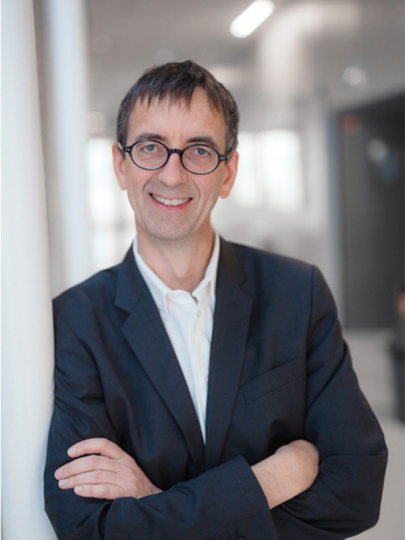
Jean-Yves Marion is a Professor at the University of Lorraine and director of LORIA (Laboratoire Lorrain de Recherche en Informatique et ses Applications) since 2013. He is a Senior Member of the Institut Universitaire de France (IUF) with appointments in both 2015 and 2025. He teaches at the École Nationale Supérieure des Mines de Nancy (ENSMN) and serves as a scientific advisor for the Cyber Campus. His educational background includes a PhD in Computer Science from the University of Paris 7 (1991), followed by post-doctoral research at Indiana University (1992-1993), and Habilitation to Direct Research (2000). He served as a lecturer at the University of Nancy 2 from 1995-2002 before becoming a professor at the University of Lorraine in 2002. Marion specializes in computer security with a focus on distinguishing malicious code from ordinary software through morphological analysis techniques. His research involves extracting the internal structure of code as if giving it an 'X-ray' to identify signatures of malicious behavior. He works extensively with the High Security Laboratory which maintains a collection of 6 million computer viruses for research purposes. His publications demonstrate a consistent focus on binary code analysis, malware detection, and implicit computational complexity. His work bridges theoretical computer science concepts like Kleene's recursion theorem with practical cybersecurity applications. Senior Member of the Institut Universitaire de France (2015) Senior Member of the Institut Universitaire de France (2025) As director of LORIA, Marion leads research teams working on cybersecurity challenges. His approach to malware analysis, which examines the 'skeleton' of code rather than surface features, represents an innovative methodology in the field. He has presented his work internationally at venues including the International Symposium on Foundations & Practice of Security (FPS 2016) and the International Workshop on Logic and Computational Complexity in Kyoto.