

Gerald Jay Sussman is the Panasonic Professor of Electrical Engineering at the Massachusetts Institute of Technology (MIT). He received his S.B. (1968) and Ph.D. (1973) in mathematics from MIT and has been conducting artificial intelligence research there since 1964. His primary research focuses on understanding problem-solving strategies used by scientists and engineers, with dual goals of automating these processes and formalizing educational methodologies. He co-directs the Sussman Lab at MIT's Computer Science and Artificial Intelligence Laboratory (CSAIL). His research spans artificial intelligence, computer languages, VLSI design, computational classical mechanics, synthetic biology, and telescope engineering. Notable contributions include co-creating the Scheme programming language, developing AI-based CAD tools for VLSI, designing the Digital Orrery for orbital mechanics simulations, and pioneering computational approaches to teaching classical mechanics. His current work includes developing explainable AI systems for autonomous vehicles. Professor Sussman's publications demonstrate broad interdisciplinary impact, with recent works spanning computer science education, software design, computational physics, and synthetic biology. His research consistently bridges theoretical computer science with practical engineering applications and educational innovation. Scientific Awards & Honors: Karl Karlstrom Outstanding Educator Award (ACM, 1990) Amar G. Bose Award for Teaching (MIT, 1992) IEEE EAB Major Education Innovation Award (2023) Taylor L. Booth Education Award (IEEE, 2024) National Academy of Engineering Member Fellow: IEEE, AAAI, ACM, AAAS, American Academy of Arts and Sciences He has supervised 46 PhD students spanning five decades, with dissertations covering AI, computer architecture, computational biology, and physical system modeling. His Sussman Lab develops computational tools for science education and engineering design, including contributions to the Magellan telescopes in Chile. Current projects involve explainable AI systems and computational mechanics frameworks.
جستوجوی استاد و پژوهشگر
استاد راهنما، استاد دانشگاه یا پژوهشگر مناسب برای مسیر پژوهشیتان را پیدا کنید و با او ارتباط بگیرید.
نمایش ۲۲۶-۲۴۰ از ۲۵۳ استاد راهنما
اطلاعات این پروفایلها از صفحات عمومی دانشگاهها جمعآوری شده و ممکن است بهروز نباشد.
- Software Security
- Cybersecurity
- Usable Security
- +۶ مورد دیگر
Riccardo Scandariato is a full professor and head of the Institute of Software Security at Hamburg University of Technology (TUHH), Germany. He coordinates the International Master in Information and Communication Systems and has held academic positions at institutions like the University of Virginia, Politecnico di Torino, KU Leuven, and the University of Gothenburg before joining TUHH in 2020. Education: PhD in Computer Science from Politecnico di Torino (2004). Career highlights include leading interdisciplinary research in software security, vulnerability repair, and AI-driven cybersecurity solutions. Research focuses on secure software design, automated vulnerability repair, and empirical methods for cybersecurity. Key interests include microservices, IoT, and cyber-physical systems, with emphasis on developer-centric security practices and usable privacy features. Notable projects include SEC4AI4Sec (EU Horizon Europe) and KiThreat (CREATUM GmbH), addressing AI-augmented systems and GenAI-based software risks. Former projects include CASUS (automotive security assurance cases) and CyReV (automotive cyber resilience). Research team includes senior researchers and PhD students working on topics like secure code generation (Catherine Tony), vulnerability localization (Cuong Bui Quang), and ML-driven threat analysis (Torge Hinrichs). Alumni have contributed to areas like automotive systems, privacy in smart homes, and architectural threat modeling. Grants: EU-funded AssureMOSS (2020–2023), H2020, and VINNOVA-backed CASUS (2017–2021). Committees: PC member of major conferences like ECSA, ARES, and SANER. Steering committee for ARES. Labs/Teams: Leads the Institute of Software Security at TUHH, focusing on interdisciplinary tools for secure application design. Collaborates with industry partners like Volvo and CREATUM GmbH.
Yannis Ioannidis is a Professor at the Department of Informatics & Telecommunications of the University of Athens. He also holds significant roles as President and General Director of the Athena Research & Innovation Center (since 2011) and Adjunct Researcher at the Institute for the Management of Information Systems (IMIS) within Athena RIC (since 2009). Professor, Department of Informatics & Telecommunications, University of Athens (2001-present) President & General Director, Athena Research & Innovation Center (2011-present) Adjunct Researcher, Institute for the Management of Information Systems (IMIS) (2009-present) Associate Professor, Computer Sciences Department, University of Wisconsin – Madison (1993-1998, with leave in 1997-1998) Assistant Professor, Computer Sciences Department, University of Wisconsin – Madison (1986-1993) His research spans multiple domains within Database Systems , including query optimization, distributed processing, and heterogeneous systems. He also focuses on Human-Computer Interaction (e.g., database user interfaces, data visualization), Scientific Experiment Management , Digital Libraries , and Data Mining . His work intersects social networking, user modeling, and context-aware computing. Ioannidis has received prestigious honors such as IEEE Fellow , ACM Fellow , and the Presidential Young Investigator (PYI) Award . Additional accolades include multiple teaching awards like the Chancellor's Distinguished Teaching Award and Students' Choice Professor of the Year . He has supervised 6 Ph.D. and 5 MS graduates, taught 7 courses in databases and human-computer interaction, and contributed extensively to academic service through program committee chairmanships, associate editorships, and participation in review boards. He also holds a patent.
George Bosilca is a Professor at the University of Tennessee, Knoxville, specializing in high-performance computing and parallel systems. With over two decades of research contributions, he has established himself as a leading expert in task-based runtime systems, distributed computing, and MPI implementations. His research focuses on developing and optimizing task-based runtime systems for extreme-scale computing environments, with particular emphasis on fault tolerance, performance optimization, and scalability. Bosilca's work spans multiple domains including scientific computing, climate modeling, and deep learning applications. He has made significant contributions to the PaRSEC runtime system and has extensively researched MPI optimization techniques for modern HPC architectures. The trend in Bosilca's recent publications demonstrates a strong focus on addressing challenges in exascale computing, including fault tolerance in distributed systems, GPU acceleration for scientific workloads, and energy-efficient computing techniques. His work bridges theoretical computer science with practical implementations for real-world scientific applications across various domains. Bosilca maintains extensive collaborations with leading researchers in the HPC community, most notably with Jack J. Dongarra (103 co-publications), Aurelien Bouteiller (60 co-publications), and Thomas Hérault (54 co-publications). These collaborations have resulted in numerous publications at top-tier conferences including SC, IPDPS, and EuroMPI, as well as in prestigious journals such as IEEE Transactions on Parallel and Distributed Systems and the International Journal of High Performance Computing Applications.

Hongyang Gaoمشاهده پروفایل
استادیار
Hongyang Gao is an Assistant Professor at Iowa State University, focusing on AI, Machine Learning, and Data Science. His work bridges theoretical foundations and practical applications in neural networks, graph representation learning, and cybersecurity. Education: PhD in Computer Science, Texas A&M University MS in Computer Science, Tsinghua University B.S. in Biomedical English, Peking University Research Interests: Explores neural ODEs, graph neural networks (GNNs), and their applications in molecular modeling, vulnerability detection, and trustworthy AI systems. His recent work emphasizes model interpretability (e.g., MotifExplainer), optimization theory for implicit networks, and graph-based explainability techniques. Publications Trends: Recent papers (2022-2025) highlight advancements in graph learning frameworks, such as G2T-LLM for molecule generation and MAGE for GNN explainability. His work on Neural ODEs explores activation function impacts on convergence, while cybersecurity papers apply dataflow analysis for vulnerability detection. Advising: Collaborates with students on projects involving motif-based methods (e.g., Motifpiece), meta-learning (Meta-AdaM), and trustworthy AI (data preconditions research). No grants explicitly listed in provided texts.

Erik P. de Vink is an Associate Professor at Eindhoven University of Technology (TU/e), Department of Mathematics and Computer Science. He also serves as an Associated Research Fellow at CWI, the Dutch National Research Institute for Mathematics and Computer Science. His research focuses on formal methods, software product lines, dynamic system adaptation, and probabilistic process algebra. He has held roles such as Treasurer of Formal Methods Europe and organized symposia like the International Symposium on Formal Methods (2018). His academic background includes a PhD from VU Amsterdam, a Senior Researcher position at KPN, and prior teaching at Leiden University. Key research interests include formal modeling of software systems using tools like mCRL2 and Prism, analysis of feature-behavior interactions in software product lines, and validation techniques for dynamic system adaptation. He has co-promoted 9 PhD students in areas like denotational semantics, security, and probabilistic process algebra. His work integrates theoretical computer science with practical applications in distributed systems and concurrency. Recent articles explore topics such as formal methods education, bisimulation in polyhedral models, and probabilistic process analysis. He contributes to open-source tool development (e.g., mCRL2) and has published extensively in journals like Formal Aspects of Computing and Journal of Logical and Algebraic Methods in Programming .
Maciej Bestaمشاهده پروفایل
پژوهشگر
Maciej Besta is a leading researcher at ETH Zurich's Institute for Computing Platforms, where he heads research initiatives at the Scalable Parallel Computing Lab (SPCL) and contributes to the ETH Future Computing Laboratory (EFCL). Working under the mentorship of Professor Torsten Hoefler, he has established himself as a prominent figure in high-performance computing, graph processing, and large language models. Position: Researcher at Institute for Computing Platforms, ETH Zurich Research Leadership: Head of Sparse Graph Computations and Large Language Models Research at SPCL Collaboration: Leads project management for SPCL's contributions to ETH Future Computing Laboratory Besta's research spans multiple abstraction levels, from hardware and network topologies to middleware, algorithms, and programming models. His primary focus areas include graph-enhanced language models, graph neural networks, graph databases, and sparse models, with applications across various computational settings. He approaches these problems through rigorous performance modeling and formal reasoning, emphasizing both scalability and practical implementation. His recent publications reveal a clear trend toward integrating graph structures with language models and AI systems. Besta has pioneered work on graph databases, knowledge graphs of thoughts, and higher-order graph neural networks, while maintaining his strong foundation in high-performance computing and network topology design. His research bridges traditional HPC with cutting-edge AI, creating novel approaches for efficient large-scale computation. IEEE TCSC Award for Excellence in Scalable Computing (Early Career, 2023) Multiple Best Paper Awards at Supercomputing conferences (2022, 2023) ACM SIGHPC Doctoral Dissertation Award (2022) ETH Medal for outstanding doctoral thesis (2021) Fellow of The Explorers Club (2022) Besta actively mentors ETH Zurich students through semester projects, Bachelor's, and Master's theses, focusing on graph processing and related computer science challenges. His mentorship extends beyond technical guidance, incorporating lessons from his extensive polar and mountaineering expeditions that emphasize mental resilience, efficient risk management, and leadership. He has supervised numerous student projects that have resulted in high-impact publications at top-tier conferences. As a core member of the Scalable Parallel Computing Lab, Besta collaborates with researchers across ETH Zurich and international institutions. His unique approach integrates insights from extreme environment expeditions into research methodology, creating a distinctive framework for tackling complex computational problems. The lab's work under his leadership spans theoretical modeling, practical implementation, and real-world deployment of high-performance systems.
Alexandru Calotoiu is a Researcher in the Department of Computer Science at ETH Zürich, affiliated with the Professorship for Scalable Parallel Computing. His work focuses on performance modeling, high-performance computing (HPC), serverless systems, and cloud computing. He leads research in empirical performance modeling for complex applications, optimization of parallel algorithms, and scalable cloud architectures. Key research areas include noise-resilient performance models, serverless computing frameworks, and compositional parallel programming. He has contributed to benchmarking tools like SeBS and developed techniques for loop scheduling, static analysis, and resource disaggregation in HPC environments. His publications from 2023–2025 emphasize serverless systems (e.g., FaaSKeeper, Cppless), performance embeddings for optimization, and specialized supercomputing for climate science. These studies address scalability, reproducibility, and cross-platform performance portability in data-centric workloads. No scientific awards are explicitly listed, but his work has been presented at leading conferences such as ISCA and IEEE/ACM events. He collaborates on projects like rFaaS (RDMA-enabled serverless platforms) and Process-as-a-Service frameworks. His research bridges theoretical models with practical implementations in distributed systems and cloud infrastructure.
Rajit Manohar is the John C. Malone Professor of Electrical & Computer Engineering at Yale University, with appointments in Applied & Computational Mathematics and Computer Science. He is a core member of the interdisciplinary Computer Systems Lab (CSL), which bridges ECE and CS departments. His research focuses on asynchronous VLSI design, neuromorphic computing, and hardware-software co-design. Education: Manohar holds a B.S., M.S., and Ph.D. from the California Institute of Technology. His academic career spans over two decades, with notable contributions to asynchronous circuit theory and neuromorphic engineering. Research Interests: Manohar's work emphasizes energy-efficient asynchronous architectures, concurrency control, and biologically inspired computing. He explores topics like formal methods for circuit verification, cognitive systems, and dynamic sensor networks. His lab develops tools like Fluid (asynchronous synthesis) and Neurobench (neuromorphic benchmarking). Publications: Recent work includes advancements in asynchronous logic synthesis (Maelstrom), neuromorphic frameworks (Neurobench), and scalable brain-computer interfaces (SCALO). His research often intersects NSF-funded projects in energy-aware computing and neuromorphic systems. Awards: Inaugural Misha Mahowald Prize (2025), MIT TR35 (2000s), IBM Goldberg Award (2023) Grants & Labs: Manohar leads NSF-supported initiatives in carbon-aware networking and neuromorphic hardware. The Computer Systems Lab collaborates across disciplines to advance sustainable computing and neuro-inspired architectures.
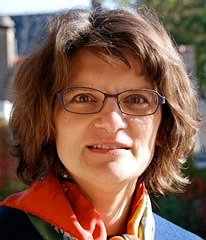
Sandrine Blazy is a Professor at the University of Rennes , where she teaches mechanized semantics (in Coq), functional programming (in OCaml), formal methods (using Why3), and software vulnerabilities. She is a member of the CELTIQUE and Epicure project-teams, both affiliated with Inria Rennes and IRISA laboratory. Her research focuses on formal verification of compilers and program transformations, notably through the CompCert compiler and Versaco static analyzer. Education : HDR (Habilitation à Diriger des Recherches) in Computer Science, Université d'Évry Val d'Essonne (2008). Research Interests : Her work ensures mathematical guarantees in compiler correctness, preventing security bugs during program translation. She specializes in deductive verification , static analysis , and software security , with applications in critical systems like avionics and cryptography. Scientific Awards : CNRS Silver Medal (2023) Lucas Award from Formal Methods Europe (2023) ACM SIGPLAN Programming Languages Software Award (2022) ACM Software System Award (2021) Best Paper Award at FMTea 2014 La Recherche Award in Information Sciences (2011) Advising and Grants : She has advised numerous PhD students (e.g., Solène Mirliaz, Aurèle Barrière) and led research projects like Scrypt (secure compilation for cryptography), ERC VESTA (verified static analysis), and VERASCO (formal verification of compilers). Her grants include ANR and FNRAE funding. Labs and Teams : Actively involved in IRISA CNRS UMR 6074 as deputy director (2021), and collaborates with Inria Rennes and CNRS project teams.
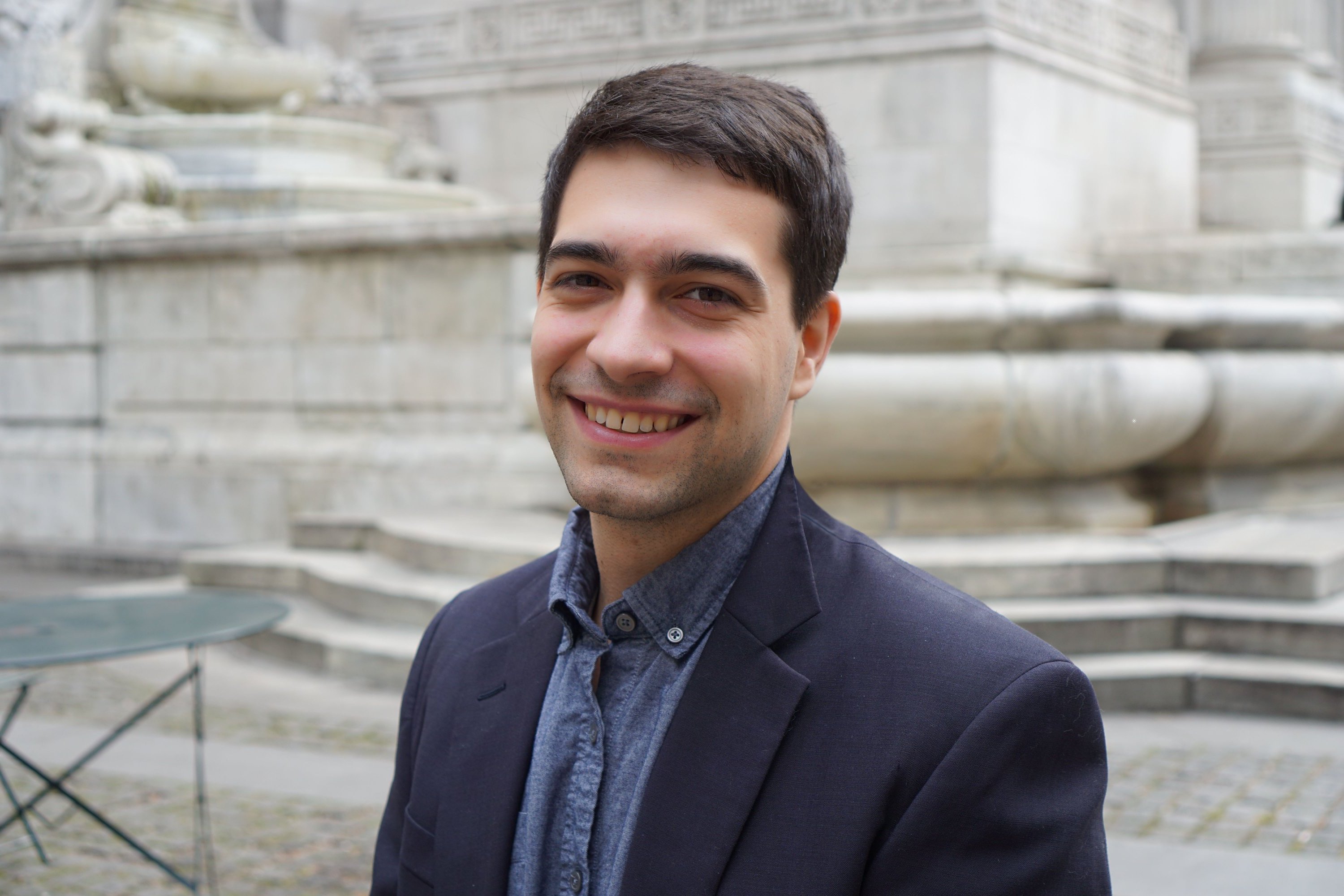
Mark Santolucitoمشاهده پروفایل
استادیار
- Program Synthesis
- Computer Music
- DevOps
- +۴ مورد دیگر
Mark Santolucito is an Assistant Professor of Computer Science at Barnard College, Columbia University. He holds a PhD in Computer Science from Yale University, where his research focused on program synthesis and computer music. His current work explores program synthesis techniques to enhance programmer productivity, particularly in lowering barriers to entry for underrepresented groups and optimizing workflows for advanced developers. He leads the Barnard PL (Programming Languages) Labs, which develops tools like TSL (Temporal Stream Logic) for synthesizing reactive systems and analyzing infrastructure-as-code (IaC). His research intersects formal methods with creative applications in music and live coding, emphasizing accessibility and usability. Education: PhD in Computer Science (Yale University), focusing on program synthesis and computer music. Research interests include program synthesis, temporal logic specifications, infrastructure configuration analysis, and music technology. He emphasizes human-centered design in his work, aiming to make programming more accessible through tools like TSL and interactive synthesis environments. Projects include TSL Move Cube, Block-based Editor for Temporal Logic, and Spiral Analysis for medical software migration. Notable contributions include developing TSL synthesis pipelines, optimizing Arduino configurations, and exploring static analysis for cost prediction in cloud deployments. His work bridges theoretical foundations with practical applications in both software engineering and creative computing. Labs/Teams: Leads Barnard PL Labs, collaborating on projects like TSL Synthesis Engine and Static Analysis for IaC. Active in workshops such as SEConfig and FMCAD.

Arvindمشاهده پروفایل
استاد
Arvind is the Johnson Professor of Computer Science and Engineering at MIT and a member of CSAIL (Computer Science and Artificial Intelligence Laboratory). He holds a B.Tech. from IIT Kanpur (1969), M.S. and Ph.D. from the University of Minnesota (1972-1973). His research focuses on computer architecture, parallel computing, memory models, and hardware synthesis. He pioneered dataflow architectures and developed the pH programming language. Notable projects include the Monsoon dataflow machine and Sandburst, a semiconductor company for 10G-bit Ethernet routers. Arvind has received prestigious awards like the IEEE Harry H. Goode Memorial Award (2012) and ACM Fellow (2007). He co-founded Bluespec Inc. and managed collaborations like Nokia-CSAIL (2006-2010). His work spans academia and industry, emphasizing scalable systems and secure computing. Research interests include synthesis/verification of digital systems, graph algorithms, and weak memory models. Current projects explore next-gen Graph AI systems and financial security applications.
- Robotics
- Computer Vision
- Industrial Automation
- +۴ مورد دیگر
Oleksandr Semeniuta is an active researcher specializing in robotics, computer vision, and industrial automation systems. His work demonstrates consistent contributions to the field with publications spanning from 2015 to 2022, indicating ongoing academic or research activity. His collaborations with researchers like Petter Falkman across multiple publications suggest established research partnerships in the robotics domain. Dr. Semeniuta's research interests center around practical applications of robotics and computer vision in industrial settings. His work encompasses event-driven architectures for data processing and robot control, stereo calibration methods for 3D reconstruction, and resource-aware machine learning for IoT security. His research shows a strong focus on developing practical frameworks and systems that address real-world challenges in manufacturing and industrial automation. The publication trends reveal a consistent focus on robotics systems engineering, with particular emphasis on vision-based solutions and event-driven architectures. His work bridges theoretical computer vision concepts with practical industrial applications, especially in automotive manufacturing and robotic deburring systems. The research demonstrates progression from foundational work on dataflow programming for vision systems to more complex implementations of machine learning on edge devices for security applications. While specific awards are not documented in the available publication records, the consistent output in reputable venues including IEEE conferences and PeerJ Computer Science indicates recognition within the academic community. His work appears in both journal and conference publications, suggesting a balanced approach to disseminating research findings through different academic channels. Dr. Semeniuta's collaborative network includes researchers from various institutions, with Petter Falkman appearing as a frequent co-author across multiple projects. This suggests participation in research teams focused on industrial robotics and computer vision applications. His work on frameworks like EPypes indicates contributions to software infrastructure that enables more efficient development of robotic systems and data processing pipelines.
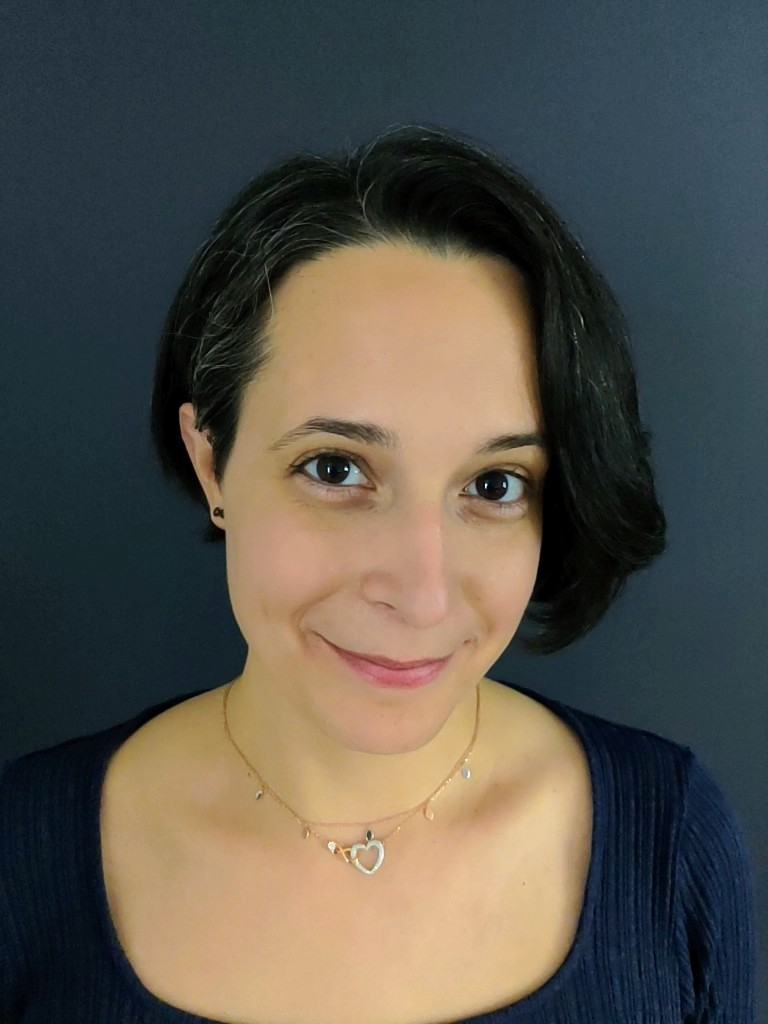
Elisavet Kozyri is an Associate Professor at UiT The Arctic University of Norway's Department of Informatics within the Faculty of Science and Technology, where she conducts research in computer security and information flow control. Her office is located in Realfagbygget A232 in Tromsø. Her research focuses on: Information flow properties and enforcement mechanisms Privacy-preserving technologies and GDPR compliance Reactive information flow systems Formal methods for security verification Diversity and inclusion in computer science education She leads the Better Balance in Informatics (BBI) project and participates in the Cyber Security Group (CSG). Her publications demonstrate a consistent focus on information flow control, privacy enforcement, and security formalization, with recent expansion into educational equity research. Analysis shows strong emphasis on: Formal modeling of security properties (60% of publications) Practical implementation of privacy frameworks (25%) Educational initiatives in computer science (15%) Teaching responsibilities include: Advanced Computer Security (2023-2025) Computer Security (2022-2025) Computer Communication (2022) Professional activities include: IEEE Computer Security Foundations Symposium PC member (2021-2026) Deputy Representative to Informatics Europe (2023-present) EUGAIN Management Committee member (2022-2024)
Jonas Skeppstedtمشاهده پروفایل
مدرس ارشد
- Computer Science
- Parallel Processing
- Heuristics
- +۲ مورد دیگر
Jonas Skeppstedt is a Senior Lecturer in the Department of Parallel Systems at Lund University's Faculty of Engineering. His research focuses on Computer Science and Parallel Processing. Institution: Lund University School: Faculty of Engineering Department: Parallel Systems Research Interests span multiple domains in computer science: Heuristics for optimizing computational processes Parallel Processing architectures and implementation Compiler design and optimization techniques Dataflow programming models Publications reflect his expertise in code optimization and parallel systems. Contact: jonas.skeppstedt@cs.lth.se