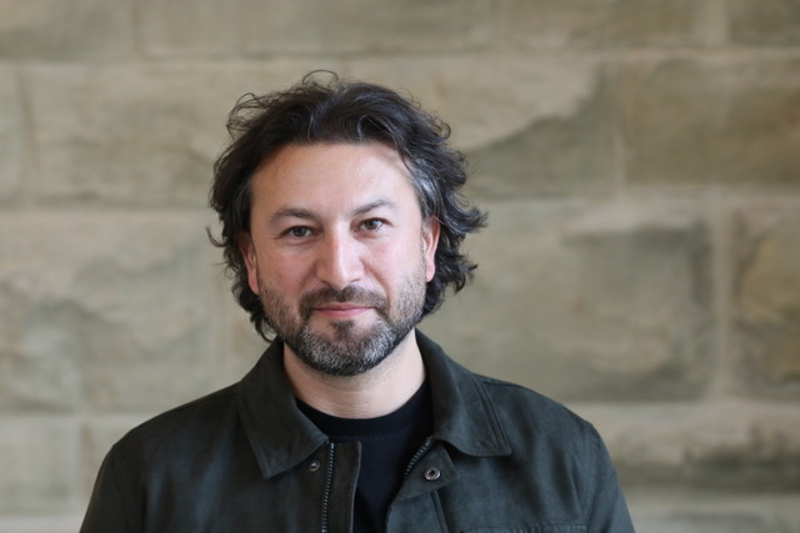
Matt Ratto is a full Professor in the Faculty of Information at the University of Toronto , where he also serves as Associate Dean, Research . He is a faculty affiliate of the Climate Positive Energy Institute , the Schwartz Reisman Institute for Technology and Society , and an SDG Fellow with the Sustainable Development Goals Institute . His work bridges critical theory and digital innovation , focusing on the social production of knowledge through emerging technologies. His research explores critical making and socio-technical systems , with applications in 3D-printed prosthetics (deployed in Cambodia, Tanzania, and Uganda), AI-driven healthcare solutions , and climate justice in computing . He has received over $6 million in funding, including two Canada Grand Challenge grants , and founded organizations advancing equitable technology access. Ontario Minister of College and Universities’ Award of Excellence (2020) Bell Canada Usability Labs Chair in Human-Computer Interaction (2018–2023) He supervises students such as Olivia Doggett and Sarah Gram , with past advisees including Brian Sutherland and Dan Southwick . His Critical Making Lab fosters interdisciplinary collaboration, and he teaches courses like INF2241: Critical Making and INF351: Information Design Studio .
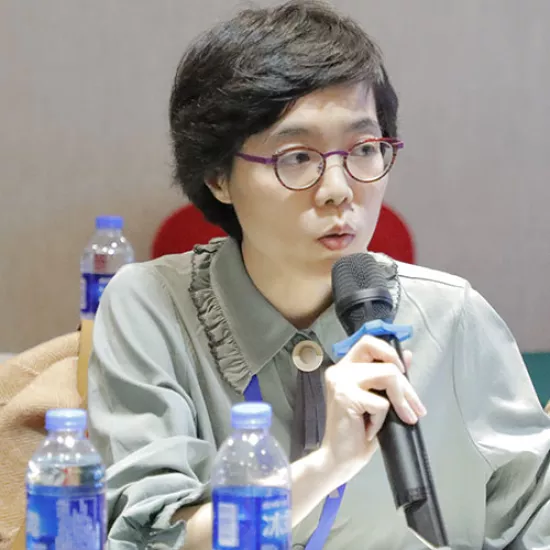
Dr. Yujie (Julie) Chen is an Associate Professor (on leave) at the University of Toronto's Faculty of Information, affiliated with the Department of Communication, Culture, Information & Technology (CCIT). Her work focuses on digital media's political economy, platform capitalism, and digital labour studies. She authored Super-Sticky WeChat and Chinese Society , analyzing WeChat's societal integration and platform power dynamics in China. Her research critiques how labour is marginalized in datafication discourse, particularly in platform-mediated sectors like ride-hailing (DiDi) and food delivery. Key themes include algorithmic control, worker resistance, and the interplay between technology, state policies, and labour conditions in China. Dr. Chen’s work bridges sociotechnical systems analysis with critical political economy frameworks. Her recent studies explore temporal exploitation in platform labour (e.g., food delivery workers’ time management), gamification of work processes, and the 'digital utility' concept deployed by platforms to justify market dominance. She frequently presents at conferences like AoIR and ICA, emphasizing global platform capitalism’s socio-economic impacts. Dr. Chen is completing a book manuscript examining labour’s erasure in datafication narratives and advocating for analytical frameworks that foreground embodied labour experiences. Her research also intersects with global South labour comparisons, notably between China and the Philippines in platform economies.
Elvin Wyly is a Professor in the Department of Geography within the Faculty of Arts at the University of British Columbia. His research focuses on the relations between market processes and state policy in producing and reinforcing urban social inequalities, blending critical social theory, legal and policy analysis, and multivariate quantitative methods. Wyly earned his PhD (1995) and MA from the University of Minnesota, Minneapolis, and his BSc from The Pennsylvania State University. His academic journey reflects a deep engagement with geographical thought and methodology. His research interests span urban geography, housing policy and finance, gentrification and displacement, urban inequality, spatial analysis, critical social theory, digital geographies, GIS, and race, class, and gender studies. Wyly's approach combines critical theory with empirical analysis to examine how market forces and public policy interact to create spatial inequalities in urban environments. Analysis of Wyly's recent publications (2019-2024) reveals consistent engagement with themes of urban transformation, housing finance, and spatial inequality. His work increasingly addresses the digital turn in urban studies, examining smart cities, datafication of urban space, and the evolving nature of gentrification in the 21st century. There's a clear trajectory from studying traditional urban processes toward examining how digital technologies reshape urban inequalities and governance. Wyly's research demonstrates significant contributions to understanding the financialization of urban space, particularly through his work on subprime mortgage markets, housing discrimination, and the racial dimensions of urban development. His publications in leading geography and urban studies journals establish him as a significant voice in critical urban scholarship. His teaching appears to focus on urban geography, with courses covering topics related to cities, economies, transnational flows, digital geographies, and issues of gender, race, and class. His research website serves as a resource for students and colleagues interested in advanced urban geographical analysis.
Sun-ha Hong is an Assistant Professor in the School of Communication at Simon Fraser University, with affiliations at Stanford’s Humanities Center, SFU’s Digital Democracies Institute, and the VINCI Institute. Her work critically examines data-driven technologies, surveillance practices, and the epistemological shifts in a machine-readable society. Hong holds a PhD from the Annenberg School for Communication (2016), and has held fellowships at MIT and Microsoft Research. Her research focuses on the limits of datafication, exploring how predictive technologies and algorithmic systems reshape knowledge production. Key themes include speculative inequality, the politics of prediction, and the societal implications of AI bias. Hong’s monograph Technologies of Speculation (2020) analyzes state surveillance and self-tracking technologies, arguing that datafication creates gaps between technological promises and social realities. Hong has secured over $280,000 in SSHRC grants and serves on editorial boards for Media Peripheries and Big Data & Society . Her teaching spans AI ethics, surveillance studies, and media historiography, with courses like AI, Algorithms and Power . She advises 11 graduate students researching topics from biopolitical surveillance in China to gendered AI violence. Her recent work explores ‘speculative drama’ in generative AI and the ritualized temporality of technological futures. Hong frequently advises Canadian government bodies on AI policy and digital governance, balancing academic rigor with public engagement.
Paul Théberge is a Professor at Carleton University, cross-appointed to the Institute for Comparative Studies in Literature, Art and Culture and the School for Studies in Art and Culture (Music). He teaches graduate courses in Cultural Mediations (technologies of culture), Film Studies (sound in visual media), and Music (sound studies), reflecting his interdisciplinary academic home within Ottawa's major research institution. His research interrogates the material and cultural dimensions of sound technologies, with core expertise in music-technology-culture intersections, internet-mediated musical practices, and sonic applications in film/television. Théberge's scholarship bridges musicology, media studies, and science and technology studies, examining how recording technologies reshape creative practice and auditory experience across historical periods from analog tape to digital streaming platforms. Analysis of his 15 most recent publications reveals persistent engagement with sound's materiality—from multichannel audio histories to the embodied nature of listening—and consistent exploration of technological transitions, particularly the internet's disruption of traditional music production/distribution models. His work demonstrates deep methodological versatility spanning archival research, ethnographic observation, and creative composition. Scientific recognition includes: International Association for the Study of Popular Music (US branch, 1998) Society for Ethnomusicology (2000) While the source text doesn't specify current advising activities, his extensive editorial work (e.g., co-editing Living Stereo ) and composition output suggest significant mentorship through collaborative projects. His research has been supported through Canada Research Chair funding and industry partnerships like Sony Classical International.
Dr. Sara M. Grimes is Wolfe Chair in Scientific and Technological Literacy and Full Professor at McGill University's Department of Art History and Communication Studies. Her research examines children's digital media cultures, rights in digital environments, and game design ethics, with emphasis on commercialization of play, privacy protections, and responsible AI. Publications consistently address regulatory gaps in children's digital spaces, privacy politics, and participatory design. Recent work demonstrates strong focus on age-appropriate design frameworks and cross-cultural policy comparisons. Grimes founded the Kids Play Tech Lab, focusing on rights-based children's technologies. Current projects include SSHRC-funded Child Appropriate Game Design initiative analyzing age norms in Canada/UK/US game industries, and Privacy Commissioner-funded Jeu Dangereux examining data practices in children's apps. Community partnerships include A-Game Studios' rights-by-design climate science game. Award-winning book: Digital Playgrounds
Martin Hand is a Professor and Department Head of Sociology at Queen's University. He also serves as Acting Undergraduate Chair. He holds a Ph.D. in Sociology from the University of York, U.K. His primary research interests include the sociology of culture, media, technology, digital culture, visual culture, and consumerism. He has authored/co-authored influential books such as Ubiquitous Photography and Making Digital Cultures , and edited volumes on big data and digital research methods. Hand has extensive teaching experience, recently teaching graduate courses in sociological theory and new media cultures, as well as undergraduate courses on visual culture and consumer culture. He has supervised 4 PhDs, 29 MAs, and 37 undergraduate thesis students. His publications span over two decades, focusing on topics like computational seeing, social media visuality, smartphone practices, and digital memory. He actively contributes to academic discourse through journal articles, book chapters, and special issue editorships, such as the 2023 Photographies special issue on machine vision. Hand's work bridges theoretical sociology with empirical research on digital media's societal impacts. His research emphasizes the interplay between technology, everyday practices, and cultural dynamics, with a focus on temporality, visuality, and datafication in contemporary life.
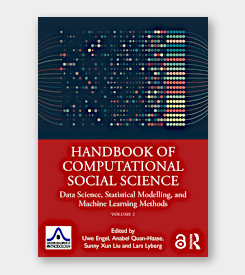
Anabel Quan-Haase is a Professor of Sociology at the University of Western Ontario and Associate Dean (Graduate & Postdoctoral Studies) at the Faculty of Information and Media Studies (FIMS). She holds a Ph.D. in Information Studies from the University of Toronto. Her interdisciplinary research focuses on the effects of technology on society, particularly in areas such as social networks, digital activism, and computational social science. She is jointly appointed between the Department of Sociology and FIMS, reflecting her dual academic focus on sociological theory and digital media studies. Key roles include leadership in graduate education at FIMS and contributions to initiatives like the Sociodigital Media Lab. Her research spans topics such as social media methodology, digital inequalities, and the sociological implications of AI. Notable works include co-editing Handbook of Computational Social Science and authoring textbooks like Real-Life Sociology . She has advised numerous projects on topics ranging from feminist digital activism to health communication on social platforms. Publications highlight her commitment to understanding how technology shapes social relations, with recent work addressing influencer dynamics in health advocacy, datafication of social movements, and aging in a digital society. Her interdisciplinary approach bridges sociology, information science, and computational methods to address contemporary societal challenges.
Matthew Flisfeder is an Associate Professor in the Cultural Studies program at the University of Winnipeg, where he teaches critical theory, rhetoric, and digital culture. His research interrogates the intersections of ideology, media, and contemporary capitalism through frameworks derived from Lacanian psychoanalysis and Hegelian dialectics. His academic credentials include: PhD (2010) from the Joint Graduate Programme in Communication and Culture (Toronto Metropolitan University and York University) MA (2005) from the same program Honours BA (2003) in Fine Arts Cultural Studies and Communication Studies (York University) Flisfeder's scholarship centers on critical analyses of digital culture, particularly the ideological operations of social media platforms and algorithmic systems. He develops concepts like 'algorithmic desire' and the 'hysterical sublime' to critique posthumanist and new materialist theories, arguing for renewed dialectical humanism to address climate crisis and AI-driven displacement of agency. His work frequently engages Slavoj Žižek's theories while examining populist rhetoric, antisemitism, and cyberpunk aesthetics in contemporary media. His publication trajectory reveals three dominant trends: (1) Systematic application of Žižekian/Lacanian frameworks to digital culture since 2017; (2) Increasing focus on the 'hysterical sublime' as a critical tool against posthumanism (2021-2025); (3) Expansion into antisemitism studies and Jewish question analyses within socialist theory (2023-2024). This evolution demonstrates his commitment to adapting critical theory for emergent capitalist contradictions in the Capitalocene era. Flisfeder is the author of four major monographs: Algorithmic Desire: Toward a New Structuralist Theory of Social Media (2021), Postmodern Theory and Blade Runner (2017), The Symbolic, the Sublime, and Slavoj Žižek’s Theory of Film (2012), and co-editor of Žižek and Media Studies: A Reader (2014). His current project 'The Hysterical Sublime' extends this work through dialectical humanism to confront anthropogenic climate change and technological displacement of human agency.
Hamza Bashandy is an Assistant Professor at Carleton University's School of Information Technology , Faculty of Engineering and Design. He holds a PhD in Architecture and Urban Planning from the University of Liège, Belgium, funded by the Belgian National Fund for Scientific Research (FNRS). His work bridges urban issues with playful simulations through critical interaction design. PhD in Architecture & Urban Planning (University of Liège) Teaches Interactive & Multimedia Design undergrad and Digital Media grad programs SSHRC-funded research on crowd behavior datafication Active PhD/M.A.Sc. recruitment for co-design projects His research explores playful interventions in participatory urban design and social movement simulations , particularly focusing on: Datafication of crowd behavior Agent-based modeling in games Digital environments for political protests Geospatial data integration in game design Platform studies of protest-themed games Recent projects include: The Crowd Problem in Videogames (SSHRC-funded) Dis-Play Lab for Ludic Design and Spatial Play Simulation CTRL ALT RESIST exhibition participation (2025) Notable awards: Civil Society Scholar , Open Society Foundations (2021) FDG 2025 Honorable Mention in Game Design Track He actively mentors graduate students through: M.A.Sc. & PhD positions in Co-Design and Interactive Urban Play Research Assistant opportunities
Professor Alice Bradbury is a leading Sociologist of Education at the UCL Institute of Education , where she co-directs the Helen Hamlyn Centre for Pedagogy (0-11 years) . Her research critically examines how education policy shapes inequalities in class , gender , and 'race' within primary and early years education . Key focus on assessment policy and datafication in education Active involvement in social justice and school welfare initiatives Her recent work explores the normalization of food banks in schools during the cost-of-living crisis, highlighting how schools increasingly fill gaps in welfare provision. She also investigates the toxic effects of Ofsted inspections on teacher retention and pedagogical autonomy. Notable publications include: Ability, Inequality & Post-Pandemic Schools (2021) The Datafication of Primary and Early Years Education (2017) Scientific recognition includes: BERA SAGE Impact Award (2016) Director's Thesis Prize from UCL (2012) A dedicated critic of neoliberal educational reforms , Bradbury advocates for policy that prioritizes teacher expertise and student well-being over rigid accountability measures. She currently serves as ORCID:0000-0003-3269-6199 .
Philippe M. Frowd is an Associate Professor of Political Studies at the University of Ottawa’s Faculty of Social Sciences. His research focuses on borders and migration, critical security studies, and African politics. He holds a PhD from McMaster University (2015), with prior degrees from the University of Ottawa. Previously, he worked at the University of York and University of Sheffield. His current teaching includes courses on security politics, migration, and citizenship. Frowd’s work examines transnational security governance, digital border technologies, and security dynamics in West Africa, particularly the Sahel region. Notable projects include studies on automated border systems in Canada and intervention strategies in the G5 Sahel. His research also addresses migrant smuggling in Niger and vigilante groups in Burkina Faso. Publications span journals like Geopolitics , African Affairs , and Security Dialogue , emphasizing security policy, border technologies, and African agency. He contributes to debates on surveillance, datafication, and the evolving architecture of security in Africa.
Ojelanki Ngwenyama is a Professor of Global Management and Director of the Institute for Innovation and Technology Management at Toronto Metropolitan University's Ted Rogers School of Management. He holds additional appointments as Emeritus Professor of Information Systems at the University of Cape Town and Docent at University of Jyväskylä since 1996. His international academic career spans institutions including Université de Nantes, University of Münster, Deakin University, University of South Africa, and Copenhagen Business School. Education: D.Phil (HC, 2009) - University of Pretoria, Faculty of Engineering Ph.D. in Computer Science (1988) - SUNY Binghamton, Thomas J. Watson School of Engineering MBA in Organizations and Management (1985) - Syracuse University, Whitman School of Management MS in Computer Information Systems and BS in Computer Science (1983) - Roosevelt University Professor Ngwenyama's research spans critical areas of Information Systems with particular focus on organizational innovation, technology management, and the social implications of ICT in development contexts. His work bridges theoretical rigor with practical applications, examining how technology influences organizational structures, social dynamics, and economic development. His recent research explores the ethical dimensions of AI, digital entrapment in big data systems, and sustainable technology practices, reflecting his commitment to addressing pressing societal challenges through information systems research. Analysis of his publication trends reveals a consistent focus on critical social theory applied to information systems, with increasing attention to digital ethics, human flourishing in digital environments, and the societal implications of emerging technologies. His work demonstrates interdisciplinary breadth, connecting information systems with management theory, social science, and development studies. Scientific Awards and Recognitions: Fellow of the Association for Information Systems Member of the Academy of Science of South Africa Andrew Mellon Professor (2011) in South Africa Velux Visiting Professor (2012) at Copenhagen Business School As Director of the Institute for Innovation and Technology Management, Professor Ngwenyama leads the SSHRC-funded project 'Accelerating Digital Technology Adoption In Canadian Companies' and oversees several ongoing research initiatives including Organizational Innovation and Design, Decision modeling for Technology Management, Information Technology and Global Development, and Critical Social Science Research Methods. His research has secured significant funding and has been applied in both developed and developing country contexts. Professor Ngwenyama maintains active research collaborations across multiple continents, working with scholars from Europe, Africa, and North America. His research group focuses on critical examination of technology implementation, particularly examining power dynamics, social implications, and ethical considerations in digital transformation processes.
Tony Christensen serves as an Associate Professor in the Faculty of Human and Social Sciences at Wilfrid Laurier University. His scholarly work bridges sociology and criminology with critical examinations of social problem construction, identity dynamics, and qualitative methodologies. Christensen's research centers on the social construction of social problems through symbolic interactionist frameworks. He investigates how attention is systematically diverted from marginalized populations, analyzes deviance construction in digital spaces, and critiques technological interventions in criminal justice. His work consistently employs qualitative methods to unpack power dynamics in social problem framing and identity work within communities like the seduction movement. Analysis of his 2001-2019 publications reveals three dominant trajectories: (1) deconstruction of criminal justice narratives (death penalty closure myths, big data crime construction), (2) identity and agency in digital contexts (seduction communities, online identity performance), and (3) critical examinations of sociological practice (public sociology limitations, vernacular resource usage). His scholarship demonstrates persistent engagement with marginalized perspectives across criminological, technological, and social movement contexts. While no doctoral students or research grants are documented in available materials, Christensen maintains active scholarly contributions through his critical analyses of social problems construction and identity dynamics. His work provides essential counter-narratives to mainstream criminological and sociological discourses, particularly regarding technology's role in shaping social problems definitions.
Sandra Widmer is an Associate Professor and Graduate Program Director in the Department of Anthropology at York University, part of the Faculty of Liberal Arts & Professional Studies. Her research focuses on medicine, science, reproduction, and colonialism, particularly in the southwestern Pacific Islands (Vanuatu), Canada, and digital spaces. She holds a PhD from York University and MA/BA degrees from Dalhousie University. Research Themes: Reproductive justice and datafication of reproduction Indigenous kinship and land care in Vanuatu Social life of microbiome tests and personalized nutrition Colonial impacts on metabolism and labor governance Current Projects: Moral Figures: Making Reproduction Public in Vanuatu (examines quantification of reproduction and indigenous resilience) Eating for Trillions: DTC Microbiome Tests (SSHRC-funded study on microbiome tests and fermentation cultures) Metabolizing Modernity (investigates colonial nutrition science in Pacific labor systems) Background: Previously held postdoctoral positions at the Max Planck Institute for the History of Science (Berlin) and visiting roles at the University of Auckland and University of Toronto. Identifies as a settler scholar with ancestral ties to Tkaronto.