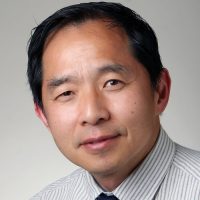
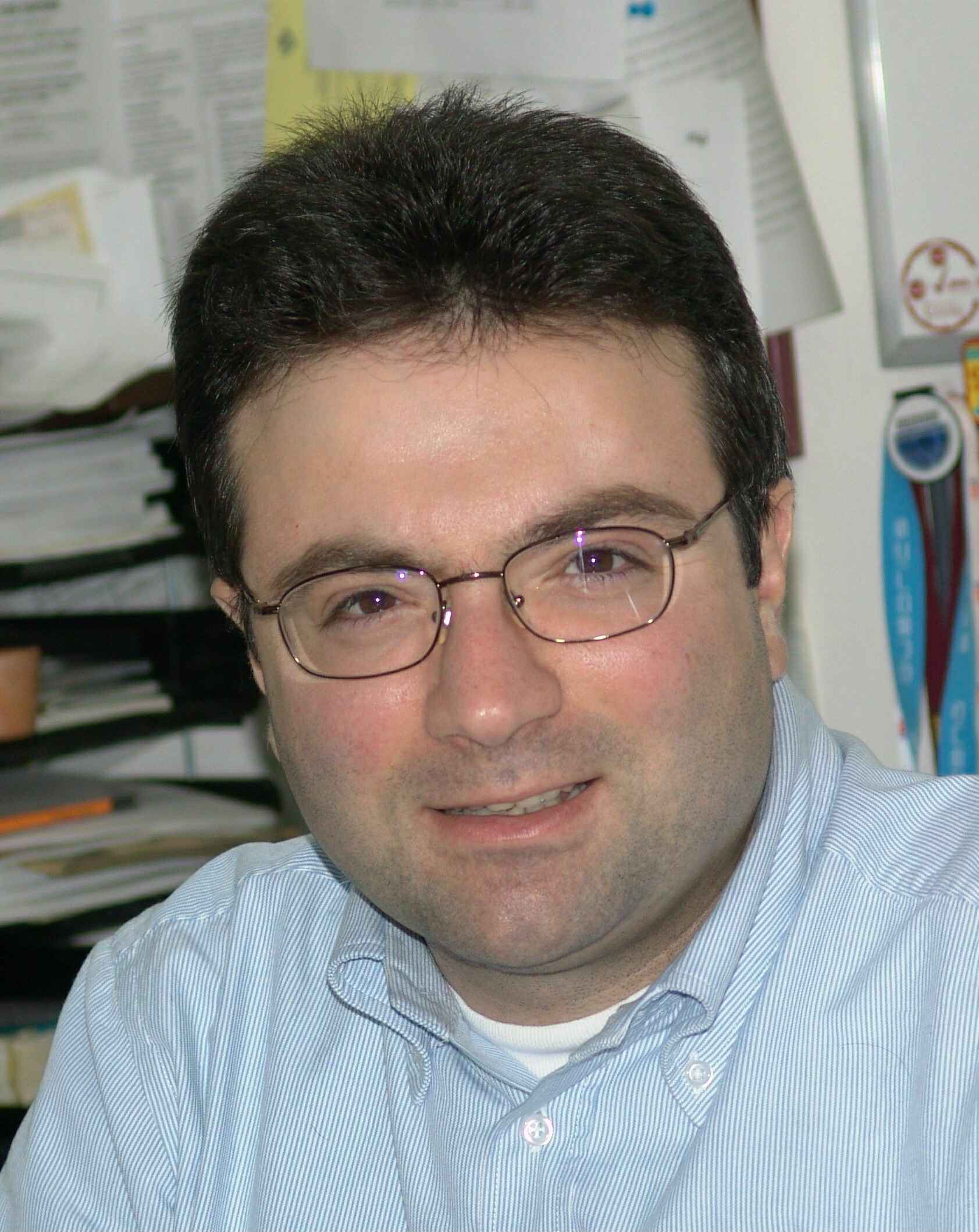
T. N. Vijaykumar is a Professor of Electrical and Computer Engineering at Purdue University's Elmore Family School of Electrical and Computer Engineering. His research focuses on computer architecture, VLSI design, and hardware acceleration for machine learning and datacenter systems. He holds a B.E. (Hons) in Electrical and Electronics Engineering and M.Sc.(Tech) in Computer Science from Birla Institute of Technology and Science, followed by M.S. and Ph.D. in Computer Science from the University of Wisconsin. His work spans GPU architecture optimization, memory systems, network security, and energy-efficient computing. Notable contributions include sparse tensor accelerators, disaggregated datacenter architectures, and secure speculative execution techniques. He has been actively involved in developing accelerators for machine learning inference and frameworks for distributed training of neural radiance fields. His publications address challenges in parallel computing, hardware-software co-design, and real-time systems, with applications in robotics, genomics, and microfluidics. He leads research initiatives funded by NSF and industry partnerships, emphasizing cross-layer optimizations across hardware, software, and networking layers.
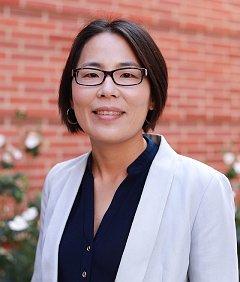
Changcheng Huang is a Professor at Carleton University's Department of Systems and Computer Engineering, part of the Faculty of Engineering and Design. He holds a Ph.D. from Carleton University and is licensed as P.Eng. His research focuses on Machine Learning, Network Architecture, and Optical Networks, emphasizing resource optimization and protocol design. Dr. Huang leads the Advanced Optical Network Laboratory (AONL), funded by CFI and OIT, which explores optical network technologies and interworking with electronic networks. His lab includes state-of-the-art equipment like Nortel switches and photonic switches. Recently, he advised PhD students Qiao Lu, Khoa Nguyen, and others, and completed postdoc Eslam G. AbdAllah. RA positions are available at both master's and PhD levels. His work spans publications in journals like IEEE Transactions and conferences such as Globecom and ICC. Research areas include intelligent network control mechanisms, wireless networks, and network protocol implementation. Education: Ph.D. (Carleton University). Research interests also include modeling/simulation techniques and reliability mechanisms for optical networks. He teaches courses like SYSC 5108 (Deep Learning) and SYSC 4602 (Computer Communications). Grants funded by CFI and OIT support his lab's optical networking projects. Over 150+ publications highlight his contributions to virtual network embedding, edge computing, and optical data center networks. Lab facilities include OMM photonic switches, Nortel routers, and Dell servers. Collaborative projects involve industry and academic partnerships, advancing interworking technologies between optical and electronic networks. His work bridges theoretical research with practical implementations, addressing challenges in network scalability, energy efficiency, and reliability.
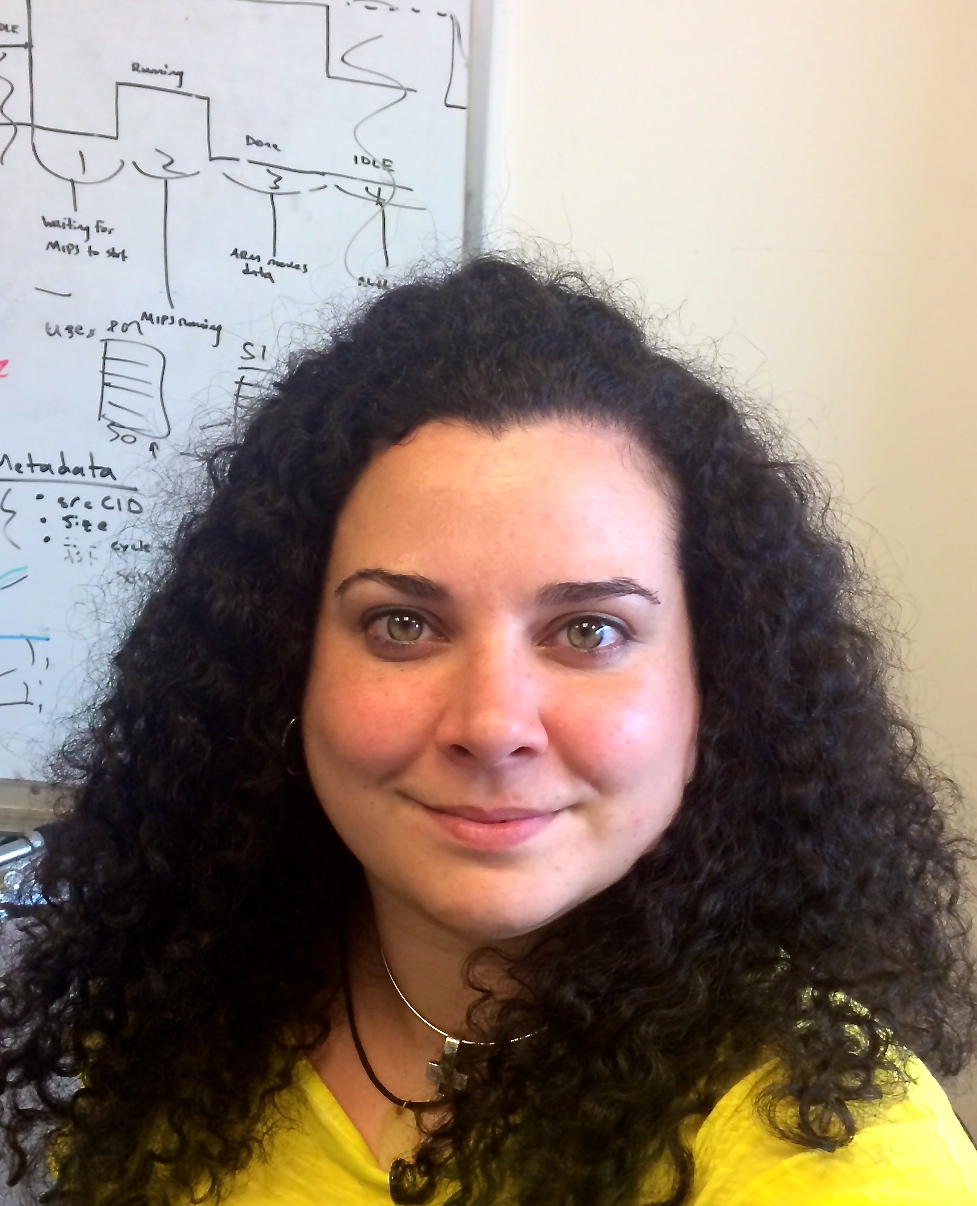
Jovan Stojkovic is an incoming Assistant Professor at the Department of Computer Science at the University of Texas at Austin, set to join in Fall 2026. Prior to his appointment at UT Austin, he will spend a year at Meta working with the AI and Systems Co-design group. His research focuses on cloud computing and datacenters, with particular emphasis on cloud-native workloads and machine learning inference. Education: PhD in Computer Science from the University of Illinois at Urbana-Champaign, advised by Professor Josep Torrellas Undergraduate studies at the School of Electrical Engineering, University of Belgrade, Serbia, where he was recognized as the best student of the Computer Engineering and Information Theory Department every year from 2017-2020 Research Interests: Jovan's research focuses on cloud computing and datacenters , with two primary domains: Cloud-native workloads , such as microservices and serverless computing. He investigates how to co-design novel hardware platforms and software systems that deliver orders-of-magnitude improvements in performance, energy efficiency, and resource utilization for these emerging workloads. Machine Learning (ML) inference , particularly large language models (LLMs). His work addresses the challenges of ML inference through smart scheduling, workload placement, and system-level configuration tuning to reduce energy, power, and thermal overheads while maintaining performance and accuracy guarantees. Publication Trends: Jovan's publications demonstrate a strong focus on optimizing cloud infrastructure for emerging workloads. His research spans across serverless computing, microservices, and large language model inference. A clear trend emerges in his work: addressing the performance, energy efficiency, and resource utilization challenges of modern cloud workloads through innovative hardware-software co-design approaches. His most recent work shows increasing focus on LLM inference optimization, particularly in the areas of thermal management, power efficiency, and scheduling for many-adapter environments. Awards and Honors: HPCA Best Paper Award (2025) IEEE MICRO Top Picks Honorable Mention (2024) 6 patents with IBM and Microsoft on: Serverless systems, Processor overclocking in the cloud, and Energy-efficient LLM inference W. J. Poppelbaum Memorial Award (2025) for hardware and architecture innovation Mavis Future Faculty Fellowship (2024–2025) Invited to present at 11th Heidelberg Laureate Forum (2024) Kenichi Miura Award (2022) for excellence in High Performance Computing Multiple student travel grants to ISCA, MICRO, ASPLOS, and HPCA Advising and Grants: Jovan is actively seeking prospective PhD students for his research group at UT Austin. His research has been supported through collaborations with major tech companies including IBM, Microsoft, and Meta. His six patents with IBM and Microsoft demonstrate the practical impact of his research in serverless systems, processor overclocking, and energy-efficient LLM inference. His work on serverless computing (MXFaaS, EcoFaaS) and LLM inference optimization has received significant recognition in top-tier computer architecture conferences. Research Groups: During his PhD at UIUC, Jovan worked with Professor Josep Torrellas on cloud infrastructure research. He has collaborated extensively with researchers at IBM Research (particularly Hubertus Franke) and Microsoft (particularly Íñigo Goiri and Ricardo Bianchini). His upcoming position at UT Austin will establish his independent research group focused on cloud computing and datacenter systems. His year at Meta working with the AI and Systems Co-design group will further strengthen his expertise in AI infrastructure.
Christina Delimitrou is an Assistant Professor in the Electrical and Computer Engineering Department at Cornell University, where she leads the SAIL research group and is a member of the Computer Systems Laboratory (CSL). She holds the John and Norma Balen Sesquicentennial Faculty Fellowship and will join MIT EECS and CSAIL as a professor starting September 2022. Dr. Delimitrou earned her Ph.D. and M.S. in Electrical Engineering from Stanford University, working with Christos Kozyrakis, and completed her undergraduate studies at the National Technical University of Athens. Her research focuses on computer architecture and systems, particularly on improving resource efficiency in large-scale datacenters through QoS-aware scheduling, resource management techniques, efficient server architectures, distributed performance debugging, and cloud security. Her publication record demonstrates consistent high-impact research in datacenter systems, with recurring themes in microservices architecture, machine learning for systems, and QoS-aware resource management. Her work bridges theoretical computer architecture with practical cloud computing challenges, resulting in multiple IEEE Micro TopPicks awards and best paper recognitions at major architecture conferences. Dr. Delimitrou has received numerous prestigious awards including: Sloan Research Fellowship in Computer Science NSF CAREER Award Microsoft Research Faculty Fellowship Intel Rising Star Award 2020 IEEE TCCA Young Computer Architect Award Multiple Google Faculty Research Awards Facebook Faculty Research Award Cornell Excellence in Research and Teaching Awards She actively mentors PhD, MS, and undergraduate students in the SAIL research group, focusing on cloud computing and computer architecture. Her research has been supported by significant grants from NSF, Google, Microsoft, Facebook, and Intel. She teaches ECE5710: Datacenter Computing at Cornell, exploring hardware, systems software, and distributed systems technology in modern datacenters. The SAIL research group develops innovative solutions for cloud infrastructure challenges, spanning from hardware acceleration to machine learning-driven resource management, with strong emphasis on practical implementation and real-world impact.
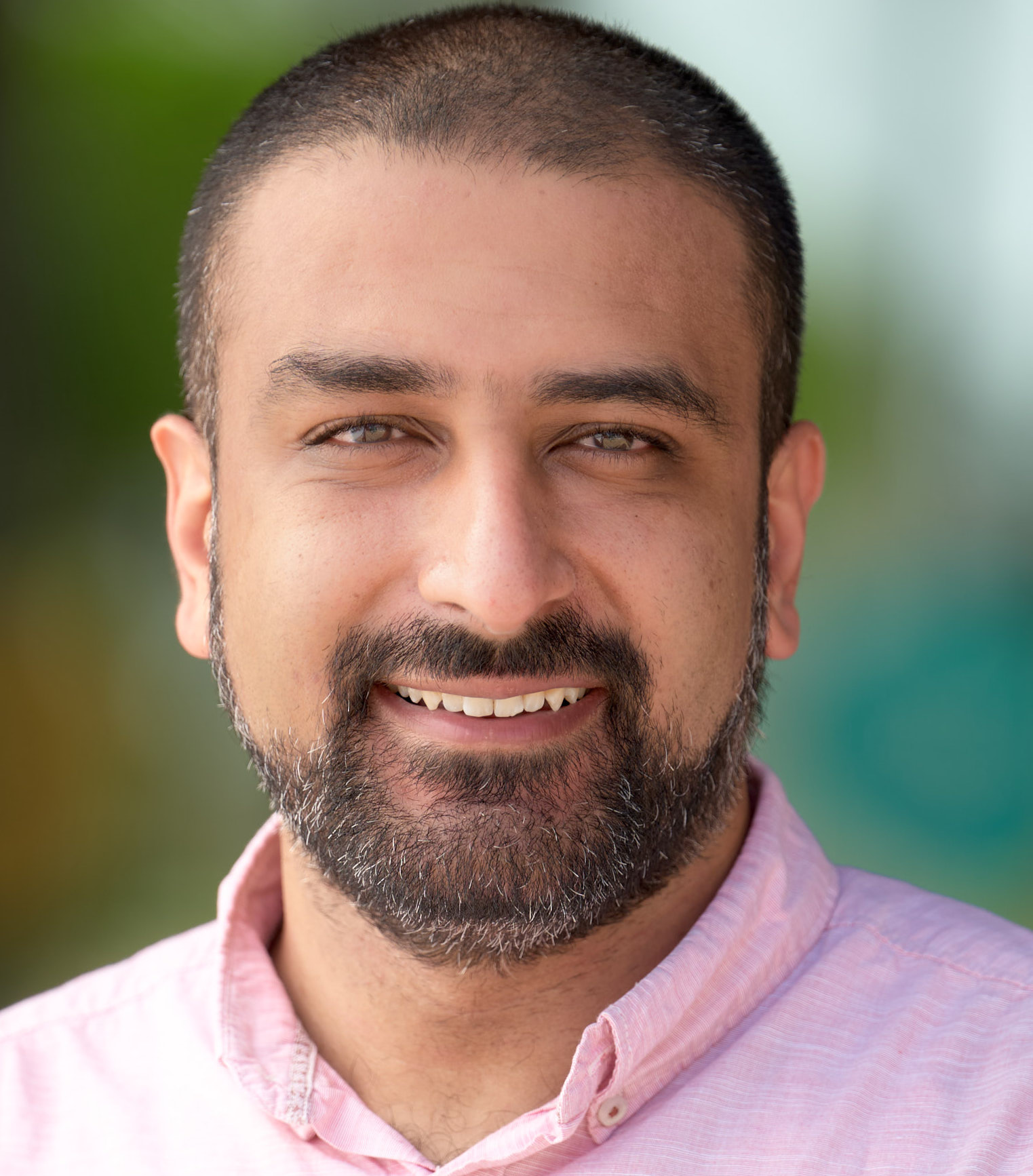
Rakesh Kumar is an Associate Professor in the Department of Computer Science (IDI) at the Norwegian University of Science and Technology (NTNU) , affiliated with the Computer Architecture Lab (CAL) within the Faculty of Information Technology and Electrical Engineering . Prior to joining NTNU, he held postdoctoral and research associate positions at Uppsala University and the University of Edinburgh, and interned at Intel Barcelona Research Center. Research Interests include improving large-scale datacenter efficiency through microarchitecture and memory system optimizations, hardware/software co-designed processors, dynamic code translation, vectorization, and serverless function execution. His work explores ready-aware instruction scheduling, branch prediction organization, and address translation mechanisms. Scientific Contributions span publications at top-tier conferences like MICRO (2024, 2023, 2018, 2016) HPCA (2020, 2019, 2023, 2022) ASPLOS (2018) DATE (2019, 2021) Journal articles appear in ACM Transactions on Computer Systems and IEEE Computer Architecture Letters . Awards include Intel Spontaneous Level II/Excellence Award (2014) Best Presentation Award at HiPC-SS08 (2008) Best Paper Award at National Conference on High Computing Technologies (2008) Distinguished Artifact Award at MICRO 2023 PhD Supervision involves advising students like Roman Kaspar Brunner, Elias Orrem, and Truls Asheim on topics spanning microarchitecture, vector units, and runahead execution policies.
Dr. Ahmed M. A. Sayed is a Senior Lecturer (equivalent to Associate Professor) and Director of the MSc Big Data Science Programme at Queen Mary University of London's School of Electronic Engineering and Computer Science. He leads the SAYED Systems Group and focuses on distributed systems, federated learning, edge computing, and network optimization. His research bridges system design and machine learning, emphasizing scalability and efficiency. Education: PhD in Computer Science (HKUST, 2017), M.Sc. and B.Sc. (Assiut University, 2012 and 2007). Prior roles include Research Scientist at KAUST and Senior Researcher at Huawei's Future Network Lab. Research Interests: Systems for ML, federated learning, edge/Cloud computing, network congestion control, and IoT. He has secured £730K+ in grants, including a UKRI-EPSRC grant for the KUber project (2024–2027). Awards: 2024 Best Student Paper (IJCAI FL Workshop), Hong Kong PhD Fellowship (2013–2017), and numerous travel grants. Actively supervises PhD/MSc students and postdocs. Grants & Leadership: PI of UKRI-EPSRC KUber project, Co-I in HKRGC and KAUST grants. Organizes workshops at venues like MobiSys and serves on TPC for ICML, EuroSys, and NeurIPS. Labs: Leads SAYED Systems Group, affiliated with Networks Group and DT4SGD Lab at Queen Mary.
Tiziano De Matteis is an Assistant Professor in the @Large Research group at Vrije Universiteit Amsterdam's Faculty of Science, Department of Computer Systems. He also holds an affiliation with the Network Institute. His research focuses on overcoming post-Moore architecture challenges through parallel and distributed computing, high-performance systems, energy efficiency, and FPGA applications. Previously, he was a PostDoc at ETH Zurich's SPCL Group and earned his MSc/PhD from the University of Pisa. Education PhD in Computer Science, University of Pisa MSc in Computer Science, University of Pisa Research Interests Post-Moore architectures for distributed ecosystems Energy-aware parallel computing High-level abstractions for parallel software development FPGA-based hardware acceleration Data stream processing and distributed systems Recent Research Trends Recent work emphasizes: Data center risk analysis and sustainability Optimizing microservices and distributed scheduling LLM model offloading to NVMe storage Python-based data-centric programming productivity GPU interconnect performance in supercomputing Grants & Projects Participates in the EU-funded 'Extreme and Sustainable Graph Processing' project (2023-2025), exploring scalable graph algorithms and energy-efficient computing systems. Teaching Accelerator-Centric Computing Ecosystems Computer Organization Distributed Systems Systems Seminar
Christina Delimitrou is an Associate Professor at MIT's Department of Electrical Engineering and Computer Science (EECS) and a Principal Investigator at the Computer Science and Artificial Intelligence Laboratory (CSAIL). Her research focuses on optimizing cloud computing systems, with a strong emphasis on resource management, sustainability, and machine learning-driven solutions. Delimitrou leads projects on carbon-aware scheduling, efficient datacenter operations, and serverless computing frameworks like Ursa and Ditto. Her work bridges theoretical system design with practical deployment challenges, addressing topics such as microservices orchestration, approximation techniques for resource efficiency, and security implications of multi-tenancy in shared cloud environments. Notably, she received the Presidential Early Career Award for her contributions to improving datacenter efficiency through innovative scheduling and resource allocation strategies. Delimitrou's research group develops tools like Sage (ML-driven performance debugging) and Seer (big data analytics for cloud systems), emphasizing reproducibility and scalability. Her lab also explores edge computing, swarm robotics coordination (e.g., Hivemind), and hardware-software co-design for next-generation systems. Her academic affiliations include MIT CSAIL's Systems Community of Research, where she collaborates on large-scale software systems. Key themes in her work include QoS-aware resource management, sustainable computing practices, and leveraging approximation to enhance cloud resource utilization.
Willy Zwaenepoel is a Professor and Dean of the Faculty of Engineering at the University of Sydney. He holds a B.S. from the University of Gent and M.S./Ph.D. from Stanford University. Previously, he served as Dean of the School of Computer and Communication Sciences at EPFL and was a faculty member at Rice University. His expertise spans operating systems, distributed systems, and high-performance computing. Education: B.S., University of Ghent, Belgium (1979) M.S., Stanford University (1980) Ph.D., Stanford University (1984) Research Interests: Dr. Zwaenepoel focuses on distributed systems, operating systems, and their applications in database replication, virtual machine performance, and software update mechanisms. His work includes foundational contributions to distributed shared memory (e.g., Treadmarks) and startups like iMimic Networking. Awards: ACM Fellow (2000) IEEE Fellow (1998) Fellow of the Australian Academy of Technical Sciences and Engineering (2020) Recipient of the IEEE Tsutomu Kanai Award (2007) Key Contributions: His research addresses challenges in distributed systems performance, such as latency reduction in key-value stores and efficient graph processing. Current projects explore I/O optimization in virtualized environments and causal consistency for geo-replicated systems. Students/Advising: Advises Ph.D. students and postdocs, including William in database replication. His mentorship led to the Rice University Teaching Award (2000).
Nectarios Koziris is a Professor at the Department of Computer Science , National Technical University of Athens (NTUA) , and former Dean of the School of Electrical and Computer Engineering . His research focuses on Parallel and Distributed Systems , Computer Architecture , and Cloud Computing . Key Research Themes: Compiler-OS-Architecture Interaction, Datacenter Hyperconvergence, Sparse Matrix Optimization, Quantum Computing, FPGA Virtualization Leadership: Founder of ~okeanos (Europe's largest public Cloud IaaS), Co-founder of GFOSS , Member of IEEE Computer Society Greece, Advisor to Arrikto Inc. His work has led to over 180 publications with 5800+ citations (h-index 33) , including two Best Paper Awards (IPDPS 2001, CCGRID 2013) and Intel Recognition (2015). He has supervised 12 PhD students and participated in 15+ EU projects as coordinator or consortium partner. Scientific Leadership: Program Co-Chair for Europar 2012 , Organizer for IPDPS , ICPP , SC conferences, and active member in Cloud Computing Expert Groups for the European Commission.
Miryung Kim is a Professor and Vice Chair of Graduate Studies in UCLA's Computer Science Department, where she directs the Software Engineering and Analysis Laboratory. She is renowned for her pioneering work in software evolution, code clone management, and establishing the emerging field of Software Engineering for Data Intensive Computing (SE4DA and SE4ML). Her research focuses on automated testing and debugging for Apache Spark, developer tools for heterogeneous computing, and conducting systematic studies of refactoring practices in industry. She led the first large-scale study of data scientists in industry and developed JDebloat, a Java bytecode debloating tool that made significant tech transfer impact to the Navy. Her recent publications demonstrate strong trends in fuzz testing for big data analytics and heterogeneous computing, with a focus on natural input generation, co-dependence awareness, and leveraging hardware probes for acceleration. Her work bridges software engineering with data-intensive and heterogeneous computing paradigms. ACM SIGSOFT Influential Educator Award (2022) ICSME Most Influential Paper Award (2023 and 2020) NSF CAREER award Google Faculty Research Award Okawa Foundation Research Award Humboldt Fellow ACM Distinguished Member As an academic advisor, she has produced eight tenure-track faculty members at institutions including Columbia, Purdue, and Virginia Tech. Her research has been supported by National Science Foundation, Air Force Research Laboratory, Google, IBM, Intel, Okawa Foundation, Samsung, and Office of Naval Research. She previously served as Program Co-Chair of ESEC/FSE 2022 and has delivered keynotes at ASE 2019 and ISSTA 2022. She maintains active industry collaborations, serving as an Amazon Scholar at Amazon Web Services and having spent time as a visiting researcher at Microsoft Research.
Binoy Ravindran is a Professor at Virginia Tech’s College of Engineering, Department of Electrical and Computer Engineering, leading the Systems Software Research Group (SSRG). His research focuses on computer systems, emphasizing security, performance, concurrency, distributed systems, and real-time computing, with recent work in software verification and heterogeneous-ISA platforms. Key projects: Low-level Reasoning Machine (LLRM), Popcorn Linux, LibrettOS, Hyflow, HermiTux, SlimGuard, HydraVM, KairosVM. He has co-authored 15+ papers from 2025 to 2022, spanning venues like ASPLOS, POPL, PLDI, VEE, PPoPP, and MIDDLEWARE, with awards including ACM Distinguished Scientist and eight Best Paper Awards. Service roles: Editorial Boards (IEEE Transactions on Cloud Computing, ACM TECS), Program Co-Chair (ACM Systor 2025), Committee memberships across ASPLOS, PLDI, and more.
Dr. Zhijun Wang is an Associate Professor of Research in the Department of Computer Science and Engineering at The University of Texas at Arlington. His work focuses on cloud and edge computing, resource management, task scheduling, and network traffic control. He holds a PhD in Computer Science from UTA (2005), an MS in Electrical Engineering from Penn State (2001), and a BS in Physics from Huazhong University of Science & Technology (1992). His research explores internet traffic control mechanisms , cloud resource allocation , and microservices architecture . Recent projects include NSF-funded work on tail latency guarantees for microservices ($600k grant, 2022-2026) and industry collaborations with Alibaba on datacenter transport protocols ($148k grant, 2018-2021). Publications highlight innovations like CurTail (tail latency scheduling) and Tailguard (data-intensive task scheduling). His work often combines price-aware protocols with distributed scheduling algorithms . Teaching focuses on foundational topics: discrete math, computer networks, and cloud computing. Grants: NSF (2022), Alibaba (2018) Key Patents: Tail Latency Scheduling (2023), Database Target Enforcement (2024) Recent Publications: 15+ papers since 2020 in top-tier venues
Professor Ning Wang is a leading academic in communication systems at the University of Surrey's Institute for Communication Systems (ICS), School of Computer Science and Electronic Engineering. He holds a PhD from the University of Surrey (2004) and has expertise in 5G/6G networks, edge computing, and space-terrestrial integration. As a coordinator for the EuroMaster Programme and Communication Networks and Software (CNS) pathway, he leads research in network management, mobile video delivery, and IoT applications. His work has been featured in IEEE ComSoc Technology News three times since 2012. Current leadership roles include 5GIC Work Area 1 leader for content and network context. Research collaborations span global institutions like UCL, ETH Zurich, and industry partners like BT and InterDigital. Notable contributions include SDN-based space-terrestrial network integration (VDPA scheme) and O-RAN automation via federated DRL. Over 130 publications and active participation in standards bodies (IETF, 3GPP) reflect his impact on future network architectures. Educations: BEng in Computing (Changchun University of Science and Technology, 1996) MEng in Electronic Engineering (Nanyang Technological University, 2000) PhD in Electronic Engineering (University of Surrey, 2004) Research Focus: Future Internet design, network intelligence, content-centric networking, and satellite integration. Key projects include EU Horizon Europe SPIRIT (immersive telepresence), ESA TINA (satellite 5G functions), and EPSRC NG-CDI (converged digital infrastructures). His research emphasizes practical solutions like edge-AI for VNF splitting and holographic frame synchronisation. Grants & Projects: Over £20M in grants from EPSRC, EU Horizon, InnovateUK, and Royal Society. Active in EU-funded SAT5G (satellite-terrestrial 5G) and C-DAX (smart grid cybersecurity).
Professor Mark Handley is a Professor of Networked Systems in the Department of Computer Science at University College London. His research focuses on network architecture, protocols, and systems with a particular emphasis on low-latency networking, datacenter networks, and network security. Education: Doctor of Philosophy, University College London (1997) Bachelor of Science (Honours), University College London (1988) Professor Handley's research spans multiple areas of computer networking with a focus on practical, deployable solutions. His work addresses fundamental challenges in network architecture, including low-latency routing, congestion control, network security, and datacenter networking. He has made significant contributions to Multipath TCP, congestion control algorithms, and network security protocols. His research often bridges theoretical foundations with practical implementation, ensuring real-world applicability of his innovations. His recent publications demonstrate a continued focus on cutting-edge networking challenges, particularly in low-latency routing, datacenter networks, and network security. The trend shows increasing attention to space-based networking, in-switch processing, and novel approaches to congestion control. His work consistently addresses the fundamental tension between theoretical network design and practical deployment constraints. Scientific Awards: IEEE Internet Award (2012) Usenix NSDI Best Paper Award (2011) ACM SIGCOMM Test of Time Award (2011) Roger Needham Award (2007) Professor Handley has served on numerous program committees including ACM SIGCOMM and Usenix NSDI. His work has influenced both academic research and industry standards, with contributions to IETF RFCs including Multipath TCP and TCP encryption. He has mentored numerous students and researchers who have gone on to make significant contributions in the networking field. His research group at UCL focuses on next-generation network architectures, with particular expertise in low-latency routing, datacenter networks, and network security. The group maintains strong collaborations with industry partners to ensure practical relevance of their research.