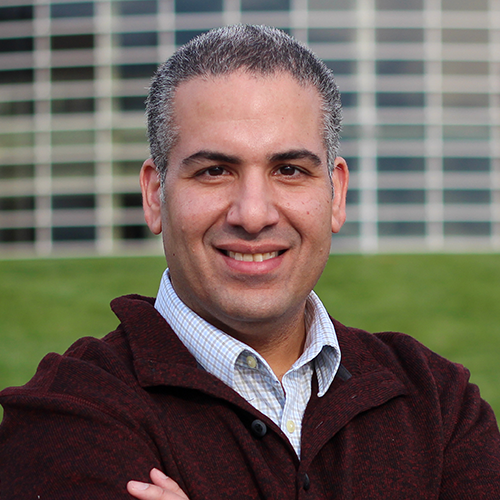
Randy H. Katz is a distinguished Professor in the Department of Electrical Engineering and Computer Sciences at the University of California, Berkeley's College of Engineering. With an extensive publication record spanning over two decades, he has established himself as a leading researcher in computer systems, distributed computing, and energy-efficient architectures. His work bridges theoretical foundations with practical implementations in cloud computing, networking, and smart infrastructure systems. Professor Katz's research interests span a broad spectrum of computer systems topics, with particular emphasis on energy-efficient computing, distributed systems design, and infrastructure for emerging applications. His work on FireSim represents a major contribution to FPGA-based system simulation, while his research on energy-aware datacenters and smart grids addresses critical sustainability challenges in computing infrastructure. He has pioneered approaches in serverless computing, blockchain systems, and mobile augmented reality that balance performance with energy constraints. Analysis of Professor Katz's recent publications reveals a strong focus on hardware-software co-design for emerging computing paradigms. His work consistently addresses the tension between performance and energy efficiency across multiple domains including cloud infrastructure, smart buildings, and mobile systems. A notable trend is his focus on making complex systems more accessible and manageable through innovative abstractions like FireSim for hardware simulation and Cirrus for serverless machine learning workflows. Scientific Awards: IEEE James H. Mulligan, Jr. Education Medal (2010) - Recognizing his exceptional contributions to engineering education Professor Katz has advised numerous PhD and Master's students who have gone on to influential positions in both academia and industry. His research has been supported by major grants from NSF, DARPA, and industry partnerships with leading technology companies. His work on Mesos, a cluster resource management system, has had significant industry impact, and his energy-efficient computing research has informed datacenter design practices across the industry. His research group at UC Berkeley has been instrumental in developing frameworks like FireSim for hardware acceleration and FirePerf for performance profiling. These tools have become important resources for the computer architecture community, enabling researchers to explore new hardware designs with unprecedented efficiency. His work on smart buildings through projects like SnapLink demonstrates his commitment to applying computing research to solve real-world sustainability challenges.