Dr. Zhang Qixia is a Postdoctoral Research Fellow in Computer Science at UiT The Arctic University of Norway and a guest researcher at the University of Oslo. She actively contributes to cutting-edge research in cloud/edge computing , machine learning , and energy-efficient IoT systems , with particular focus on air pollution monitoring and wind energy optimization . Current roles: Postdoctoral Research Fellow (UiT), Guest Researcher (University of Oslo) Research projects: HAPADS, MISO, EMLEMS, DILUTE, AirQMan Research group: Arctic Green Computing (AGC) Contact: qixia.zhang@uit.no , +47 96 64 67 05 Her research integrates artificial intelligence with distributed systems to enhance environmental monitoring technologies and renewable energy systems. Recent work demonstrates expertise in autonomous data collection , vehicular edge computing , and machine learning-driven wind energy modeling . Publication Trends reveal a focus on IoT/5G network optimization (2019-2021), wind energy analytics (2022-2023), and intelligent environmental monitoring (2024-2025). Her work bridges computer science with climate science through interdisciplinary applications of transfer learning and control theory . Teaching : Instructor for INF-2300 Computer Communication at UiT.
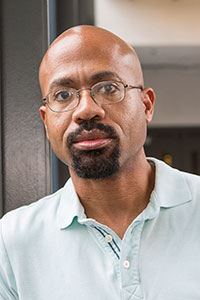
James Mickens is the Gordon McKay Professor of Computer Science at Harvard University's School of Engineering and Applied Sciences (SEAS). He specializes in systems security, cloud computing, and web technologies. His research focuses on fundamental advancements in secure systems design, including isolation mechanisms for AI, privacy-preserving protocols, and fault-tolerant storage solutions. Notable contributions include groundbreaking work on hypervisor security (Guillotine), TinyML vulnerability analysis, and resilient cloud storage systems (Carbink). He has been recognized with the Harvard College Professorship (2022) and tenure (2019). His work spans theoretical breakthroughs and practical implementations, often addressing critical gaps in system reliability and user privacy. Mickens' research trends emphasize proactive security measures, efficient resource management, and balancing performance with safety in distributed environments. His articles reflect a focus on real-world applicability, from browser optimization (Crom, Vesper) to cloud infrastructure resilience (Blizzard, Oort). Awards include the Harvard College Professor title, signaling exceptional teaching and scholarly impact. While specific grant details are not provided, his prolific publication record suggests sustained funding in systems research. Mickens' work often critiques conventional approaches, exemplified by his humorous yet incisive keynote critique of 'security as an afterthought.'
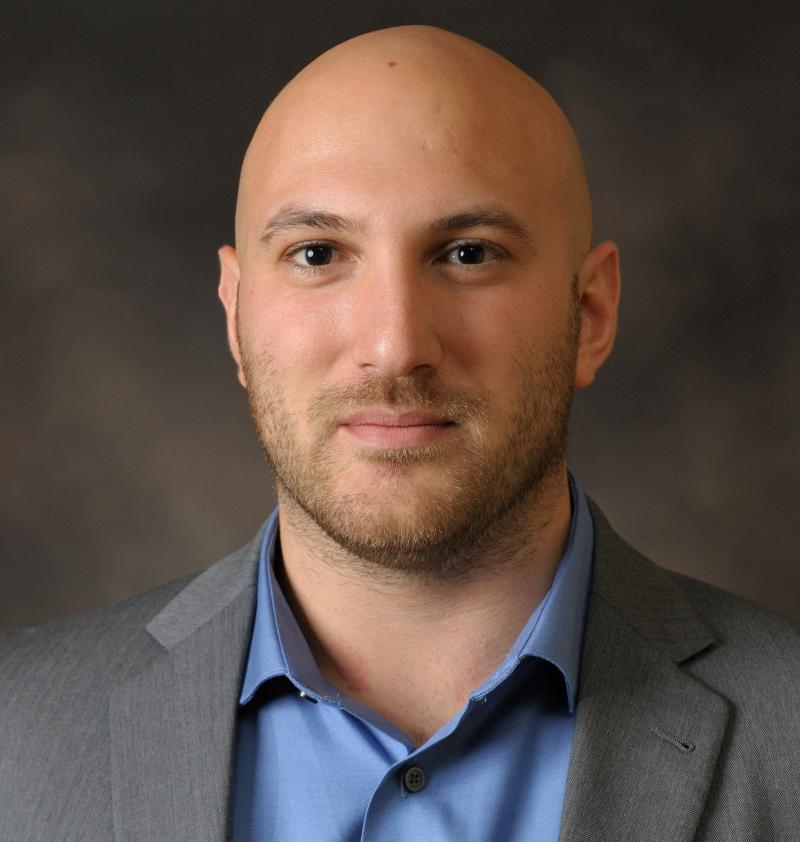
Alexey Tumanov is an Assistant Professor in the School of Computer Science at Georgia Institute of Technology, part of the College of Computing. His research focuses on systems for machine learning, resource management, and scheduling in distributed environments. He holds a PhD from Carnegie Mellon University and conducted postdoctoral research at UC Berkeley under Ion Stoica. Previously, he worked at the University of Toronto and in industry on cloud computing and datacenter systems. Education: PhD in Computer Science, Carnegie Mellon University (2019) Postdoc, UC Berkeley RISELab (2019) MSc in Computer Science, University of Toronto (2012) BSc in Computer Science, University of Toronto (2010) Research Interests: Tumanov's work addresses challenges in distributed machine learning, including efficient resource management for inference and training pipelines, scheduling algorithms for soft-real-time systems, and federated learning. His lab (SAIL) develops systems like SARATHI-SERVE and RocketKV to optimize LLM inference and co-scheduling. He emphasizes practical deployments in healthcare (HOLMES) and cloud environments. Key Contributions: Ray distributed framework for AI (OSDI 2018) ESCHER scheduler for ephemeral cloud resources (SoCC 2022) InferLine ML pipeline orchestration (SoCC 2020) Awards: NSERC CGS-D3 Scholarship (2016) Best Paper at EuroSys 2016 (TetriSched) Google PhD Fellowship Nominee (2018) Lab & Teaching: Leads the Systems for Artificial Intelligence Lab (SAIL) at Georgia Tech. Teaches advanced courses on operating systems (CS3210) and systems for ML (CS8803-SMR). Supervises 15+ graduate students across PhD and MS programs.
Dimitrios Skarlatos is an Assistant Professor in the Computer Science Department at Carnegie Mellon University's School of Computer Science. His research bridges computer architecture and operating systems with a focus on performance, security, and scalability. His work revolves around two central themes: (1) redesigning abstractions and interfaces between hardware and OS layers to improve performance and scalability, and (2) uncovering security vulnerabilities and building defenses at the hardware-OS boundary. Research Focus: Operating system security and vulnerability prevention Virtual memory systems and page table optimizations Serverless computing architectures Hardware-software co-design for security Datacenter resource management Dr. Skarlatos advises five PhD students and has published extensively on systems research. He received his PhD from the University of Illinois at Urbana-Champaign, where his dissertation received the ACM SIGARCH & IEEE CS TCCA Outstanding Dissertation Award for contributions to redesigning hardware-OS abstractions.
Kennedy Chinedu Okafor is a Research Fellow in Mechatronics & Software Engineering at Manchester Metropolitan University (MMU), with a PhD from the University of Nigeria, Nsukka. His roles include Senior Research Associate at the University of Johannesburg (UJ), Adjunct Facilitator at the World Bank Africa Center of Excellence, and external examiner at UJ. He specializes in Cyber-Physical Systems, IoT, Edge Computing, and Robotics. His work includes developing the first indigenous Nigerian COVID-19 Marketplace Robot and establishing Cisco Labs across multiple institutions. Education: PhD in Electronics Engineering (University of Nigeria, 2017), MSc and BSc in Mechatronics Engineering. Professional certifications include AWS, CCNA/CCNP, and IEEE certifications in Cybersecurity, Green IT, and Big Data. Research focuses on Large Scale Software Engineering, Smart Infrastructure, and Cybersecurity. Key projects include the Pandemic Engineering Initiative ($1.2M), Solar-Powered Blood Bank systems, and driverless vehicular dynamics. Over 150 publications across IEEE, Elsevier, and Springer, with 300+ peer reviews. Awardees include UK Tier-1 Global Talent, IEEE Humanitarian Awards, and multiple best paper awards. Active in global initiatives like IEEE Skillup Hub and mentoring 50,000+ youths. Grants exceed £27M, with leadership roles in IEEE committees and global consortiums.
Sam Ogden is an Assistant Professor at California State University, Monterey Bay (CSUMB), where he joined in August 2022. He holds a Ph.D. in Computer Science from Worcester Polytechnic Institute (2022), focusing on mobile-oriented deep learning inference. His academic journey includes degrees in Electrical Engineering, Mathematics, and Computer Science from the University of Vermont, and prior roles as a Product Engineer at IBM and GlobalFoundries. His research bridges mobile devices and cloud computing, emphasizing optimization of machine learning inference for mobile applications. Key areas include edge computing, model execution caching, latency reduction, and energy-efficient distributed systems. Recent work explores mental health screening through smartphone data and text message analysis, expanding into health informatics applications. Research Trends : Recent publications highlight innovations like Layercake (2023) for edge-cloud inference efficiency and MiseEnPlace (2022) for mobile deep learning optimization. Earlier work addresses GPU scheduling (2021), DNN caching challenges (2019), and hybrid mobile-edge frameworks (MODI, 2018). Awards : No scientific awards explicitly mentioned in the provided texts. Advising & Grants : No student advisees or grant details listed. Labs/Teams : Affiliated with CSUMB’s School of Computing & Design, though specific lab affiliations are not detailed.
Michael A. E. Andersen is a Professor and Head of Section in the Department of Electrical and Photonics Engineering at the Technical University of Denmark (DTU). His work focuses on power electronics with applications in electric power supplies, switch mode techniques, and audio amplifiers. He teaches courses at all levels in power electronics and supervises student projects including special courses, mid-term projects, thesis projects, and PhD research. Dr. Andersen's research interests center on power electronics, with specific expertise in DC-to-DC converters, boost converters, power supply design, power density optimization, and switching frequency techniques. His work contributes to UN Sustainable Development Goals related to sustainable energy and technology innovation. His research fingerprint shows strong activity in areas like DC-to-DC conversion (100%), boost converters (75%), power supply engineering (70%), and experimental power electronics (70%). His recent publications demonstrate a clear trend toward high-efficiency power conversion systems, particularly for datacenter applications, LED drivers, and wireless power transfer. The research focuses on improving power density, reducing losses, and developing novel control schemes for various converter topologies. Many papers explore partial power processing techniques to achieve efficiencies above 99% while maintaining high power density. AEG Elektronprisen (2004) 2013 IEEE ECCE Asia Downunder First Prize Paper A. R. Angelo's Grant (1990) Best Poster Prize UPEC '91 (1991) Best Presentation Award at WiPDA-Asia 2021 Multiple recognition for Power Factor Converter research Several awards related to High Efficiency Audio Power Amplifiers Professor Andersen actively supervises multiple PhD students including Andresen, J. on High-Efficiency Converters for Next-Gen HPC, Guglielmino, S. on battery cell impedance spectroscopy, and Wolstrup, A. F. on flexible and printable electronics. He serves on numerous review committees including for the Cyprus Agency of Quality Assurance and Accreditation in Higher Education, Prince Sattam Bin Abdulaziz University, and the Chilean National Commission for Scientific and Technological Research. His research contributes to sustainable energy solutions aligned with UN Sustainable Development Goals. His work involves multiple research groups focused on power electronics design, high-efficiency converters, and wireless power transfer systems. The research environment includes advanced laboratories for power converter testing, magnetic component analysis, and high-frequency circuit development. Current projects emphasize next-generation power conversion technologies for datacenters, portable devices, and industrial applications with a strong focus on efficiency and power density improvements.
Filipe de Faria Pacheco Paulo (born Filipe de Faria Pacheco in 1971) is a Professor and PhD Researcher at the Department of Computer Engineering within the School of Engineering at the Polytechnic Institute of Porto. He has been teaching at this institution since 1996 and is actively involved in research through CISTER (Centre for Research in Cyber-Physical Systems and Technologies), where he has served on the board of directors since 2013. He earned his undergraduate degree in 1994, MSc in 1997, and PhD in 2009, all in Electrical and Computer Engineering from the University of Porto. His academic journey began with research at the Systems and Robotics Institute, Industrial Automation Group (University of Porto) from 1994 to 1996, where he focused on User Interfaces. Professor Pacheco's research spans multiple domains of computer engineering with a strong emphasis on practical applications. His work has evolved from early research in industrial communication protocols and power-line communications to more recent work in wireless sensor networks, Internet of Things, and datacenter energy optimization. His publications reveal a consistent interest in real-time systems and networked embedded computing across diverse application domains including industrial automation, transportation, aerospace, and sustainable computing infrastructure. His approach combines theoretical protocol design with practical implementation considerations. His publication record demonstrates a clear progression from foundational work in industrial communication protocols to cutting-edge research in cyber-physical systems. The thematic evolution shows increasing focus on energy efficiency, scalability, and integration of diverse technologies. His recent work particularly emphasizes applications in sustainable computing, smart infrastructure, and vehicular networks, reflecting contemporary challenges in computer engineering. Best paper award nominee at INForum 2015 for 'Social Media Integration in Video Games: A Social Overlay for Desktop Games' Professor Pacheco has been instrumental in several major research projects including R-Fieldbus, REMPLI, SENODS, SmartSkin, and CarCoDe. His leadership in CISTER since 2002 and position on the board of directors since 2013 highlight his significant role in the research community. His work often involves collaboration with international partners and has practical applications in industrial settings. As a core member of CISTER, he contributes to one of Portugal's leading research centers in cyber-physical systems. The center focuses on real-time and embedded systems with applications across multiple sectors. His work within this framework has helped establish important connections between academic research and industrial applications, particularly in the domains of transportation, energy, and manufacturing.
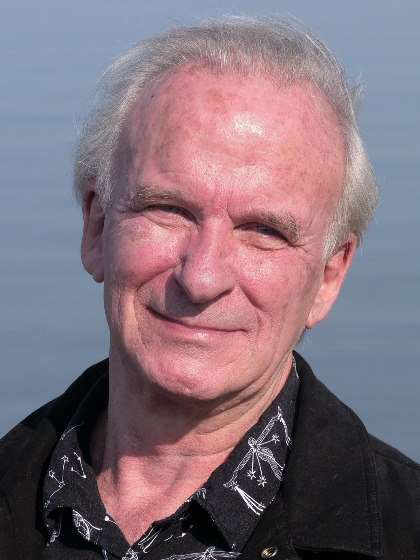
Pierre Olivier is a Senior Lecturer in Computer Architecture specializing in virtualization, hypervisors, systems security, and unikernels. He is affiliated with the Advanced Processor Technology group and has contributed to 37 research outputs since 2017. His work spans embedded systems, cloud computing, and hardware-software co-design, with a focus on improving performance, security, and energy efficiency. Research Interests: Olivier's expertise includes virtual machine optimization, secure software compartmentalization, and cross-architecture execution. His projects, such as HermiTux (a binary-compatible unikernel) and HEXO (offloading compute workloads), highlight his commitment to advancing edge computing and heterogeneous architectures. He collaborates internationally on topics like memory protection and vulnerability mitigation. Key Achievements: He has received the Best Paper Award (2019) and Distinguished Artifact Award (2022) for contributions to unikernel and security research. His work on FlexOS and Secure Code for Capability Hardware (SCorCH) demonstrates his role in advancing secure operating system design. Grants and Projects: Olivier leads or participates in major initiatives like the Centre for Digital Trust and Society and SCorCH, focusing on interdisciplinary cybersecurity and hardware-aware software systems. His datasets, including HermiTux on GitHub, are widely referenced in academic research. Labs/Teams: He contributes to the SCorCH team and collaborates with institutions on projects like Multi-Variant Execution and Heterogeneous-ISA container migration, emphasizing practical applications of theoretical research.
Dalibor Radovanović is an academic affiliated with Singidunum University, where he holds the position of Professor. His academic journey includes a doctoral dissertation from Singidunum University (2016) and postgraduate studies at the Faculty of Business Informatics. He has contributed extensively to cybersecurity, blockchain, IoT, and IT governance research. His research focuses on cybersecurity challenges in IoT and blockchain applications, smart card security, and e-business safety. He has authored/co-authored over 50 publications including books on Internet marketing and technical journals. Notable works include analysis of blockchain in healthcare IoT (2022), IoT security in industrial markets (2022), and evolutionary algorithms for environmental performance (2019). Radovanović's work spans academic conferences such as Sinteza, FINIZ, and IEEE events. His contributions address both theoretical and practical aspects of IT security, digital transformation in Serbian businesses, and data protection mechanisms. He has advised on virtualization bottlenecks, penetration testing for wireless networks, and cryptographic tool development for education. He has collaborated with institutions like the European Journal of Applied Economics and contributed to projects analyzing Serbia's investment advantages (2015) and mobile banking impact (2016). His research often bridges technical innovation with real-world business applications.
Dr. Ari Kulmala serves as Professor of Practice at Tampere University's Faculty of Information Technology and Communication Sciences in the Computing Sciences department. With extensive industry experience in System-on-Chip (SoC) architecture and design, he specializes in ASIC and FPGA development for applications spanning 5G telecommunications, cloud acceleration, machine learning, security, and ultra-low-power mobile chips. His research focuses on System-on-Chip (SoC) design , with particular emphasis on heterogeneous architectures, RISC-V implementations, and hardware-software co-design for autonomous systems. Recent work includes secure SoC development for nano-UAVs, FPGA-based cryptographic acceleration, and agile chip development methodologies. The article collection demonstrates expertise in SoC architecture (10+ years), with evolving focus from foundational network-on-chip analysis (2008-2009) to modern implementations in RISC-V (2023-2024), cloud security acceleration (2019), and VR/4K video processing (2017-2018). Key technical areas include clock domain management, resource sharing, and performance optimization across various domains. As an industry leader in chip development organizations, Kulmala has worked across Telecom infrastructure (5G) Cloud acceleration Machine learning/AI Security hardware Ultra-low-power IoT Mobile chip design His work spans both academic research and practical implementation, including patents and commercial applications.
Prof. Edwin A. Valentijn is a Professor at the University of Groningen's Faculty of Science and Engineering, leading the Kapteyn Astronomical Institute's Astronomy department. He serves as Head of the OmegaCEN National datacenter for wide-field astronomical imaging and chairs the Target Fieldlab steering committee. His research focuses on developing advanced survey information systems, gravitational lensing, and large-scale data processing for projects like Euclid. Key roles include National Project Manager for Euclid and Creative Director of DOTliveplanetarium. Research interests span astronomical data science, weak lensing, galaxy cluster analysis, and Euclid mission support. Recent work includes automated gravitational lens detection, Euclid Quick Data Release analyses, and globular cluster detection. His teams develop algorithms and pipelines for multi-wavelength catalogues and photometric redshifts. He leads over 17 staff/PhD researchers and collaborates internationally on Euclid's spectroscopic and photometric data. Advising and grants involve managing OmegaCEN and Target Fieldlab, with teams contributing to survey instrumentation and data infrastructure. He founded initiatives like Astro-WISE and Infoversum Foundation, now DOTliveplanetarium. Current efforts include advancing cosmic dawn surveys and integrating astronomical data into immersive planetarium experiences.
Andrew Rindos is an Associate Teaching Professor at North Carolina State University (NC State), specializing in academia-industry collaboration, cloud computing, and systems engineering. He holds an email address at ajrindos@ncsu.edu. His research spans interdisciplinary areas including resiliency quantification in large-scale systems, machine learning interactions, and educational technology integration with enterprise cloud solutions. His work emphasizes practical applications such as data-driven route optimization, wireless power transfer for electric vehicles, and topological document summarization. Rindos has also contributed to foundational networking technologies like ATM, Token Ring, and Ethernet adapters, focusing on performance tuning and high-speed communication systems. Collaborations with IBM highlight his commitment to bridging academic research with industrial innovation. No scientific awards or grants are explicitly mentioned in the provided texts. He has no listed advisees or students in the records. His contributions span over three decades, demonstrating a sustained impact in both contemporary and legacy networking systems.
Saksham Agarwal is an Assistant Professor in the departments of Electrical and Computer Engineering and Computer Science at the University of Illinois at Urbana-Champaign (UIUC). His research focuses on the intersection of networking, systems, and hardware, with a particular emphasis on host congestion control, datacenter architectures, and network protocols. He received his Ph.D. in Computer Science from Cornell University under the supervision of Prof. Rachit Agarwal and completed his undergraduate studies at IIT Kanpur. Research Interests: Host congestion control, datacenter networks, hardware-software co-design, network protocols, and systems optimization. His work includes seminal contributions like hostCC (host congestion control architecture) and Harmony (congestion-free datacenter architecture). Awards: ACM SIGCOMM Doctoral Dissertation Award (2025), Cornell CS Dissertation Award (2025), IRTF Applied Networking Research Prize (2025), Google PhD Fellowship (2019), Best Student Paper Awards (SIGCOMM 2024 and SIGCOMM 2018). Teaching: CS 438/ ECE 438 Communication Networks, ECE 598MCI Modern Cloud Infrastructure. Advising: Current students include Midhul Vuppulapati (SIGCOMM'24 Best Paper recipient), Shreyas Kharbanda, and Omar Eqbal. Labs/Teams: Lead researcher on host congestion control and datacenter network projects. Collaborates on open-source implementations of hostCC and Harmony .
Haoran Qiu is a Systems Researcher at Microsoft Azure Research – Systems (AzRS), focusing on AI-driven cloud systems efficiency. He holds a Ph.D. in Computer Science from the University of Illinois at Urbana-Champaign (UIUC), advised by Prof. Ravishankar K. Iyer, and a B.Eng. in Computer Science from the University of Hong Kong (HKU). His research interests span AI/ML systems, cloud computing, distributed systems, and sustainability. He has interned at Google, Microsoft Research, and IBM Research. Notable awards include the 2023 ML Systems Rising Stars by MLCommons and the Mavis Future Faculty Fellowship. Education: Ph.D., Computer Science, UIUC (2024) B.Eng., Computer Science, HKU (2019) Visiting Student, University of Wisconsin-Madison (2018) Research Interests: Designing learning-based solutions for cloud systems Energy-efficient LLM serving and resource management Resilience and sustainability in hyperscale datacenters AIOps and ML-driven systems management Recent Contributions Include: Advances in thermal-aware scheduling for LLMs (TAPAS) Green computing strategies balancing SLOs and carbon emissions Queue management for large language models (QLM) Awards: Best Paper Finalist (L4DC 2024) Best Presentation Award (COMPSYS 2022) Multiple Fellowships and Scholarships Labs/Teams: Active in Microsoft Azure Research, contributing to cutting-edge ML-centric cloud systems projects. Collaborates widely with industry (Google, IBM) and academic institutions.