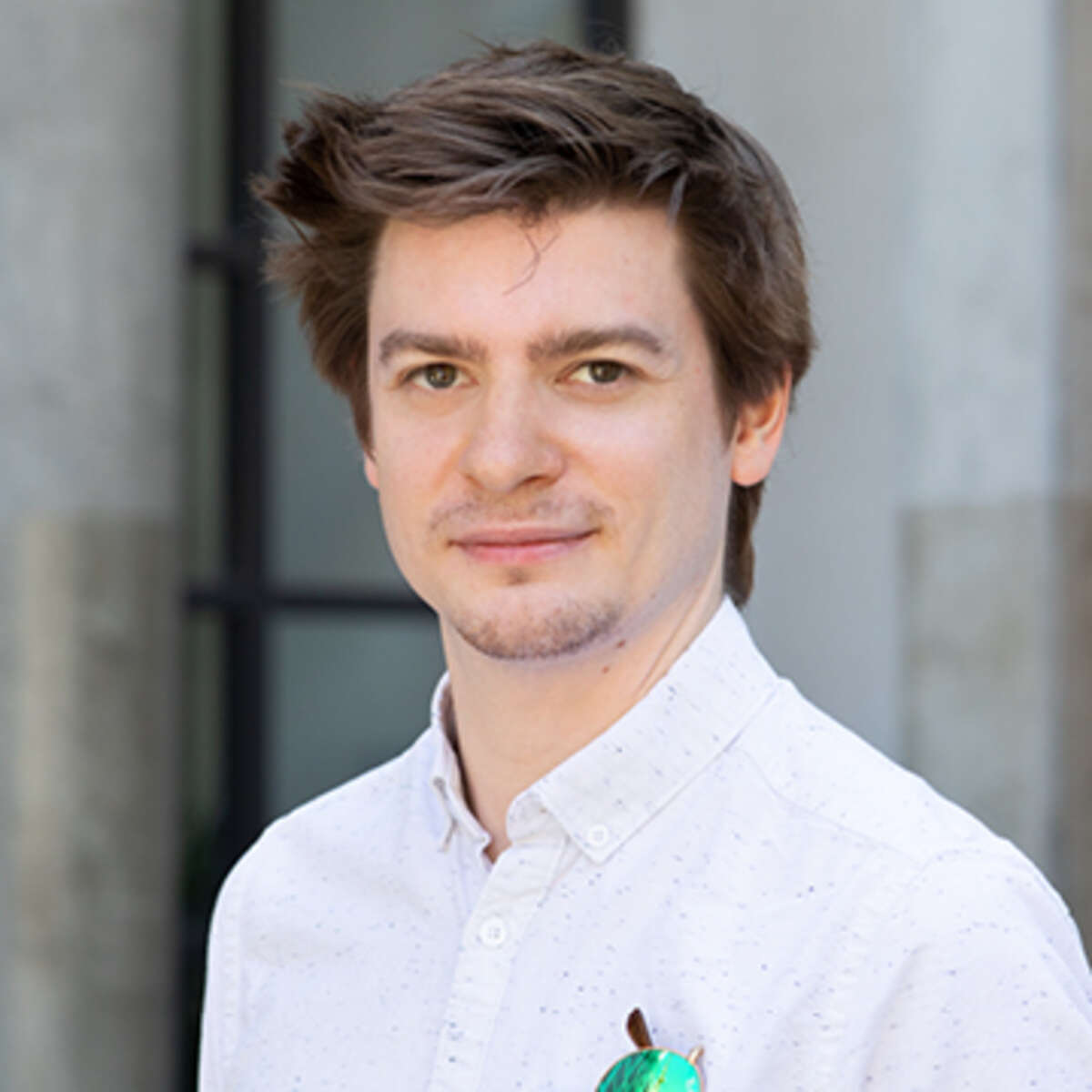
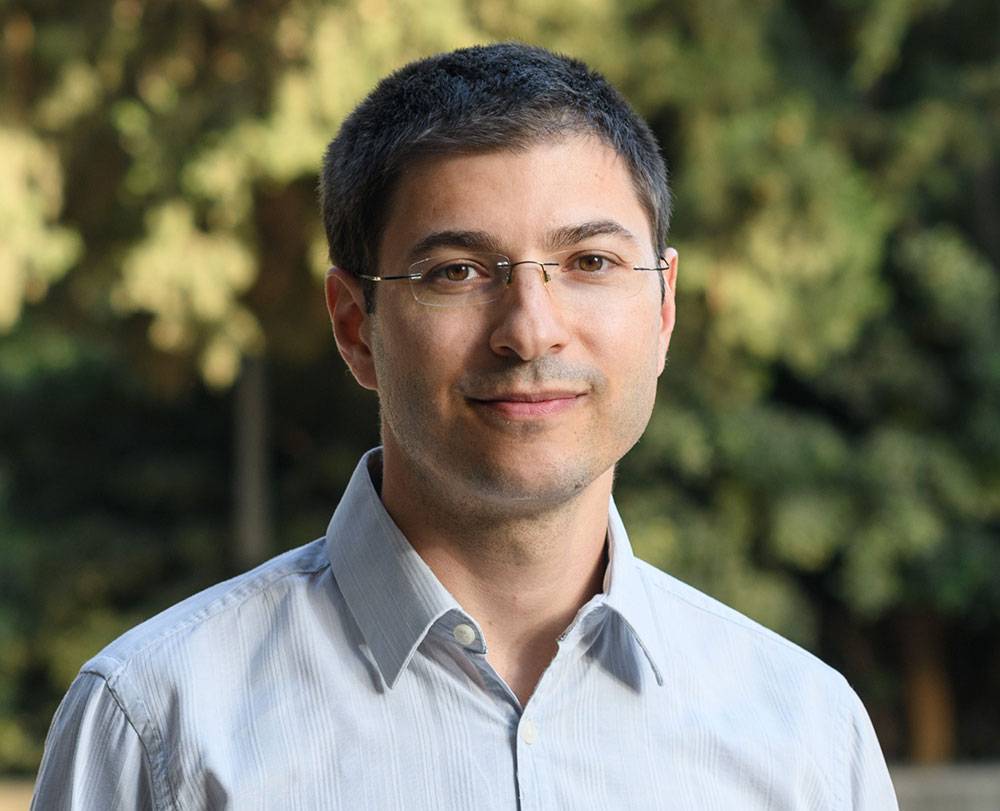
Anya Prince is a Professor and Joseph F. Rosenfield Fellow at the University of Iowa - College of Law. Her work bridges genetic discrimination , insurance law , and bioethics , with a focus on the intersection of artificial intelligence , reproductive health , and data privacy . Her research explores how genomic technologies impact insurance practices , informed consent , and reproductive justice . She has co-authored interdisciplinary studies on polygenic risk scores , genetic exceptionalism , and health equity in wellness programs . Key trends in her publications include ethics of embryo selection , privacy implications of genetic databases , and legal challenges in reproductive health surveillance . She has received the Joseph F. Rosenfield Fellow award for her contributions.
Mateo Dujić is a PhD student at the Database Technology Group (DBTG) of the Department of Informatics, University of Zürich, joining in September 2023. Advisors: Prof. Dr. Michael Böhlen and Prof. Dr. Sven Helmer Research Focus: Development of algorithms for Directed Acyclic Graphs (DAGs), with a core application in the Software Heritage Graph , emphasizing graph traversal and optimization techniques Teaching: Lecturer for Database Systems (Spring 2024 and Spring 2025) Education: B.Sc. in Mathematics (University of Zagreb, 2021), followed by an M.Sc. in Computer Science and Mathematics (University of Zagreb, 2023). His work intersects computer science and mathematics , with technical expertise in graph theory and database systems .
Davide Martinenghi is a contract professor at the Università della Svizzera italiana (University of Italian Switzerland) and an Associate Professor at the Department of Electronics, Information and Bioengineering (DEIB) at Politecnico di Milano, Italy. His academic career bridges theoretical and applied research in database systems and data science. Educational Background: M.Sc. in Computer Engineering from Politecnico di Milano Ph.D. in Computer Science from Roskilde University, Denmark His research focuses on advanced database topics such as ranking mechanisms, preference modeling, conceptual modeling of data, and fairness in data science and AI. He has contributed extensively to major journals and conferences including ACM Transactions on Database Systems, VLDB Journal, and IEEE Transactions on Knowledge & Data Engineering. Key domains of his work include: Database optimization and constraint handling Big data analytics and business intelligence Ranking algorithms and data analysis Ensuring fairness in AI-driven data systems Martinenghi actively engages in academic service as an Editorial Board member for the Data & Knowledge Engineering Journal and has participated in program committees for top-tier conferences like ACM-SIGMOD, ICDE, and PVLDB.
Haozhe Zhang is a Postdoctoral Researcher in the Data Systems and Theory (DaST) group at the Department of Informatics, University of Zurich, supervised by Prof. Dan Olteanu. His career bridges theoretical research and practical implementation in database systems. Education: DPhil in Computer Science, University of Oxford (2023) MSc in Computer Science, University of Oxford (2017) BSc in Computer Science, University of Nottingham (2016) Research Focus: Haozhe's work centers on database theory, emphasizing incremental view maintenance and cardinality estimation . His research explores efficient algorithms for dynamic relational data, theoretical foundations of conjunctive queries, and robust cardinality estimation techniques like LpBound. Publications & Trends: His contributions include theoretical analyses of conjunctive queries under updates, practical systems like F-IVM for analytics over evolving data, and worst-case optimal algorithms for triangle counting. Recent work at SIGMOD 2025 and ICDT/AMW workshops highlights advancements in dynamic query evaluation and cardinality estimation guarantees. Scientific Recognition: Best Paper Award, SIGMOD 2025 Best Paper Award, ICDT 2019 Teaching Contributions: Instructor, Foundations of Data Sciences (UZH, Fall 2024) Teaching Assistant for Foundations of Data Sciences (UZH, Fall 2020–Fall 2023), Efficient Algorithms (UZH, Spring 2021–Spring 2025), and Modern Data Analytics (UZH, Fall 2023).
Matthias Studer is an Associate Professor of quantitative methods for social sciences at the LIVES center and Institute of Demography and Socioeconomics of the Faculty of Social Sciences at the University of Geneva. His work focuses on developing and applying advanced statistical methods for analyzing life course trajectories and social inequalities. With a PhD in Socioeconomics from the University of Geneva, he has established himself as a leading expert in sequence analysis methodology. Studer's research interests center on quantitative methods for longitudinal data analysis, sequence analysis, gendered career inequalities, and labor market and social policy evaluation. His work bridges methodological innovation with substantive applications in sociology, demography, and public health. He has made significant contributions to the development of sequence analysis techniques, particularly through his work on the TraMineR package for R, which has become a standard tool in life course research. His recent publications (2023-2025) demonstrate the breadth of his research, spanning applications in cognitive aging, women's empowerment, labor market transitions, and cancer risk. These works consistently employ sophisticated sequence analysis techniques to examine complex life trajectories across different domains. His methodological contributions include advancements in validating sequence typologies, handling missing data in multichannel sequence analysis, and developing feature selection approaches to identify critical aspects of trajectories. Studer actively collaborates with researchers across multiple disciplines and institutions, contributing to interdisciplinary projects that examine life course vulnerabilities, social inequalities, and health outcomes. His work has significant implications for understanding how early life conditions shape later outcomes and how social policies might mitigate vulnerabilities across the life course.
Dr. Alessia PANNESE is an Associate Professor at the University of Milan , affiliated with the College of Science and the Department of Computer Science . Her expertise spans Artificial Intelligence, Machine Learning, and Data Science. Fields of Interest: Artificial Intelligence, Machine Learning, Data Science Key Research: Multi-modal data integration, graph-based knowledge discovery Her recent publications focus on deep learning architectures , big data algorithms , and graph analytics , reflecting interdisciplinary applications in AI and database systems. Notable accolades include the ACM Best Paper Award (2020) and IEEE Rising Star Award (2021) . She advises PhD candidates in data-driven research and leads the Data Intelligence Lab , specializing in real-time analytics and scalable solutions.
Dr. Surya Gupta is a PostDoc researcher at the University of Basel's Department of Environmental Sciences, Faculty of Science, working within the FG Alewell research group. He joined the university in April 2022 after completing his Ph.D. at ETH Zurich. His research focuses on the intersection of soil science, hydrology, and remote sensing applications, with particular emphasis on digital soil mapping and the relationship between soil properties and erosion processes. Education: Ph.D. in Environmental Sciences (2018-2021), ETH Zurich M.Tech in Remote Sensing and GIS (2013-2015), Indian Institute of Remote Sensing, Dehradun B.Tech in Agricultural Engineering (2009-2013), Punjab Agricultural University, Ludhiana Dr. Gupta's research primarily centers on soil hydraulic properties and their applications in environmental modeling. His work involves developing advanced methods for global and national digital mapping of soil properties, particularly saturated hydraulic conductivity and van Genuchten parameters. He investigates the complex relationship between soil erosion and soil hydraulic properties, examining how incorporating hydraulic properties changes soil erosion modeling outcomes. A significant portion of his research focuses on machine learning applications in soil science, where he works on reducing clustering and overfitting in algorithms while developing Pedo-Transfer Functions (PTFs) and Covariate-based GeoTransfer Functions (CoGTFs). His methodological approach combines extensive field data with remote sensing datasets and sophisticated computational techniques to address critical environmental questions related to soil health and water management. Analysis of Dr. Gupta's recent publications reveals a strong focus on global-scale soil property mapping using machine learning approaches. His research demonstrates increasing sophistication in integrating legacy soil data with modern environmental covariates to produce high-resolution global datasets. A notable trend is his work bridging soil physics with practical applications in erosion modeling and agricultural management, particularly in how soil hydraulic properties influence crop responses to climate variability. His publications span top-tier journals in soil science, hydrology, and environmental modeling, indicating strong recognition within these interdisciplinary fields. Dr. Gupta has demonstrated exceptional productivity with numerous first-author publications in high-impact journals. His collaborative network is extensive, working with researchers across multiple institutions in Switzerland, Europe, and India. While no specific major grants are mentioned in the provided text, his publication record suggests involvement in significant research projects addressing global soil and water challenges. As part of the Department of Environmental Sciences at the University of Basel, Dr. Gupta contributes to the institution's strong research profile in environmental systems science. His work aligns with the department's focus on understanding complex Earth system processes and human-environment interactions, particularly through the integration of field observations, remote sensing, and computational modeling approaches.
Simon Aeschbacher is an Independent Research Fellow at the Department of Evolutionary Biology and Environmental Studies, University of Zurich. His work bridges mathematical theory, computational methods, and genomic data to address fundamental questions in evolutionary biology. His educational background includes: M.Sc. in Zoology (2007) and undergraduate studies (2001-2003) at University of Zurich Ph.D. in Evolutionary Biology (2008-2011) at University of Edinburgh/IST Austria under Nick Barton Postdoctoral positions at University of Vienna (2011-2013), UC Davis (2014-2016), and University of Bern (2017) Aeschbacher's research centers on population genomics, specializing in the interplay between gene flow, natural selection, and recombination. His work combines mathematical modeling with genomic analyses to investigate local adaptation, speciation, and human evolutionary history. Key contributions include developing methods for demographic inference and quantifying selection against gene flow. His publication record shows a clear trajectory from theoretical foundations (early work on linkage effects) to applied genomic methodologies (recent development of gIMble for barrier detection). Current research emphasizes human evolution, plant speciation, and hybridization dynamics across diverse taxa. Scientific recognition includes: Swiss NSF Advanced Postdoc.Mobility Fellowship While not explicitly mentioned in the text, his role as Independent Research Fellow implies grant leadership and potential mentoring responsibilities. His work with multiple international collaborators suggests active participation in research networks across Europe and North America.
Eva Scheurer is a Clinical Professor of Forensic Medicine and Director of the Institute of Forensic Medicine at the University of Basel since 2014. She currently serves as Dean of the Faculty of Medicine at the same institution. Her work focuses on advancing forensic medicine through imaging technologies and scientific methodology. Education: MSc in Physics (University of Bern), Dr. med. (University of Bern), Habilitation in Forensic Medicine (Medical University of Graz) Expertise: Forensic Radiology, Postmortem Imaging, MRI-based Trauma Analysis, Age Estimation Key research areas include clinical-forensic imaging , particularly for injury dating and identification. She pioneered MRI alternatives to X-ray-based age estimation and developed technical frameworks like infrared photography setups for forensic documentation. Her publications (2012-2022) demonstrate consistent innovation in postmortem MRI , hematoma quantification , and computational forensic tools . As Institute Director, she established: Postdoc/PhD positions in forensic chemistry and genetics Research group for forensic imaging Interdisciplinary journal clubs Ethical frameworks for non-invasive postmortem imaging
Professor Jean-Louis Reymond is a distinguished academic at the University of Bern, currently serving as Dean of the Faculty of Science since 2024. He leads the Reymond Research Group within the Department of Chemistry, Biochemistry and Pharmaceutical Sciences. Previously, he served as Director of the Department of Chemistry and Biochemistry from 2015-2017. His educational background includes diploma studies in Chemistry and Biochemistry at ETH Zürich (1981-1985), a Ph.D. in Natural Products Synthesis at the University of Lausanne (1986-1989), and post-doctoral research on Catalytic Antibodies at Scripps Research Institute (1990-1991). He joined the University of Bern as a Professor in 1997 after serving as Assistant Professor at Scripps Research Institute (1992-1997). Reymond's research centers on The Chemical Space Project, which explores the vast universe of possible chemical compounds with potential medical applications. His work spans three interconnected areas: Peptide Chemistry (design of bioactive peptides including dendrimers and polycyclic structures), Cheminformatics (development of the GDB chemical universe database), and Medicinal Chemistry (computer-aided design of small molecule modulators). His research has significant implications for addressing antimicrobial resistance through novel peptide-based therapeutics. Analysis of his recent publications reveals a strong focus on navigating and exploiting chemical space for drug discovery, particularly in antimicrobial applications. His work combines computational methods with synthetic chemistry to identify novel scaffolds and optimize bioactive compounds. The 2024-2025 publications demonstrate continued innovation in peptide design, chemical space visualization, and applications in drug delivery systems. ERC Advanced Grant (2020) for project SPACE4AMPS (€2.5 million over 5 years) Professor Reymond actively mentors numerous graduate students and leads a vibrant research group that collaborates across disciplines. His research is supported by significant grants including the ERC Advanced Grant and participation in the NCCR TransCure initiative. The Reymond Research Group maintains strong connections with other research units at the University of Bern and international collaborators. The research group operates state-of-the-art facilities for peptide synthesis, cheminformatics analysis, and biological testing. They have developed specialized tools including the GDB chemical space database (www.gdb.unibe.ch) and collaborate with the NCCR TransCure consortium on transporter and ion channel research. Their work on antimicrobial peptides positions them at the forefront of addressing the global antimicrobial resistance crisis.
Florent Waltz is an SNSF Ambizione Project Leader hosted at the University of Basel's Biozentrum within the Engel Lab, leading research on mitochondrial architecture in photosynthetic organisms using cutting-edge cryo-electron tomography. His work bridges structural biology, evolutionary studies, and cellular energy metabolism with a focus on green micro-algae like Chlamydomonas reinhardtii. His research program explores three interconnected themes: (1) visualizing mitochondrial architecture and remodeling using cryo-ET to understand energy production under environmental changes; (2) investigating mitochondrial evolution across eukaryotes with emphasis on photosynthetic organisms; and (3) examining molecular-level interactions between mitochondria and chloroplasts. His March 2025 Science publication on the in-cell architecture of the mitochondrial respiratory chain represents a landmark achievement in visualizing molecular machines within native cellular contexts. Waltz co-developed TomoGuide, an online resource for cryo-ET workflows, and contributed to major datasets like the 1,829-tomogram Chlamydomonas resource enabling community-driven visual proteomics. His technical innovations include MemBrain v2 for membrane analysis in cryo-ET data. SNSF Ambizione Fellowship (major Swiss early-career award) Featured on Science magazine cover (March 2025) Key contributor to open science resources for cryo-ET community As a collaborative researcher, Waltz participates in international consortia studying mitochondrial biology, plant systems, and cryo-ET methodology development. His work has established new standards for in situ structural analysis of energy-producing organelles while advancing open science through public data sharing and software tools.
Prof. Dr. Kurt Stockinger is a Professor of Computer Science at ZHAW School of Engineering and holds a doctorate at the University of Zurich . He serves as Head of the MAS Data Science program and co-leads the ZHAW Datalab . His research focuses on Intelligent Information Systems , bridging information systems, natural language processing, and machine learning. Affiliated with the University of Zurich, he contributes to Quantum Machine Learning and Open Data Exploration initiatives. Stockinger's educational background includes a PhD in Computer Science (University of Vienna & CERN), a Master in Business Informatics (University of Vienna), and a CAS in Didactics & Methodology (ZHAW). He has taught courses in Quantum Computing , Big Data for Natural Sciences , and Data Science programs at ZHAW and University of Zurich. His research spans Data Science , Big Data , Natural Language Query Processing , Knowledge Graphs , and Quantum Machine Learning . Recent publications focus on quantum autoencoders , hybrid quantum neural networks , and prompt engineering for knowledge graph question answering. He has developed frameworks like ScienceBenchmark for real-world NL-to-SQL evaluation and NQuest for natural language query exploration. Scientific awards include the Best Paper Award at 7th Swiss Conference on Data Science (2020) He leads major projects such as DataGEMS (Data Discovery Platform, Horizon Europe) Digital Health Zurich (Clinical Innovation Lab) INODE4StatBot.swiss (NL-to-SQL Translation) GraphQueryML (Graph Database Optimization) ScienceBenchmark (NL-to-SQL Evaluation) Stockinger's work intersects with computer vision , biomedical data , and industrial applications , demonstrated through collaborations with institutions like Lawrence Berkeley National Laboratory, CERN, and University of Washington. He has contributed to establishing QuantumBasel and ZHAW Datalab as research hubs.
Professor Nikolaus Obwegeser serves as the Institute Director of the Digital Technology Management institute within the Business Institute at Bern University of Applied Sciences. His leadership position reflects his expertise at the intersection of business strategy and digital technologies, where he guides research initiatives and academic programs focused on contemporary digital challenges facing organizations. Professor Obwegeser's research spans several interconnected domains focused on digital transformation. His work examines digital innovation processes , particularly how organizations navigate the shift from radical to incremental innovation ('innovation drift'). He investigates business transformation methodologies, as evidenced by his book 'Hacking Digital,' which provides practical frameworks for accelerating business transformation. His research also extends to IT service management , with studies on ITIL processes from a lean perspective, and educational technology , where he examines how audience response systems impact student learning and metacognition. Analysis of Professor Obwegeser's recent publications (2019-2021) reveals a strong focus on practical applications of digital innovation, particularly in crisis contexts. His work shows increasing attention to the organizational implications of digital artifacts and the challenges of maintaining radical innovation ambitions within established organizational structures. The publications span business, technology management, and educational domains, demonstrating his interdisciplinary approach to studying digital transformation. Professor Obwegeser maintains active research collaborations across international boundaries, as evidenced by his co-authorship with researchers from diverse geographic and disciplinary backgrounds. His work appears in reputable journals including Nature, IEEE Transactions on Engineering Management, and Journal of Computer Assisted Learning, reflecting the interdisciplinary nature and quality of his research contributions. As Institute Director of Digital Technology Management, Professor Obwegeser leads an organization focused on bridging business strategy with digital technology implementation. The institute provides a platform for research, education, and practical application of digital transformation principles, serving as a hub for academic and industry collaboration in the field of digital business innovation.
Emmanuel Levy is a Full Professor at the Department of Molecular and Cellular Biology, University of Geneva. His research focuses on the self-organization of proteins, integrating computational and experimental approaches such as structural biology, proteomics, and synthetic biology. Using budding yeast as a model organism, his lab investigates principles of protein assembly, phase separation, and evolutionary constraints. Full Professor University of Geneva Department of Molecular and Cellular Biology Research interests include: Protein Structure and Assembly Synthetic Biology applications Proteomics and Evolutionary Biology Biomolecular Condensates Structural and Computational Biology Recent publications highlight work on: Protein complex alignment Co-translational assembly Evolution of oligomeric states Coiled coil analysis Stickiness and condensate recruitment Phase separation dynamics Laboratory name: Explorers and Architects of Cells' Proteome