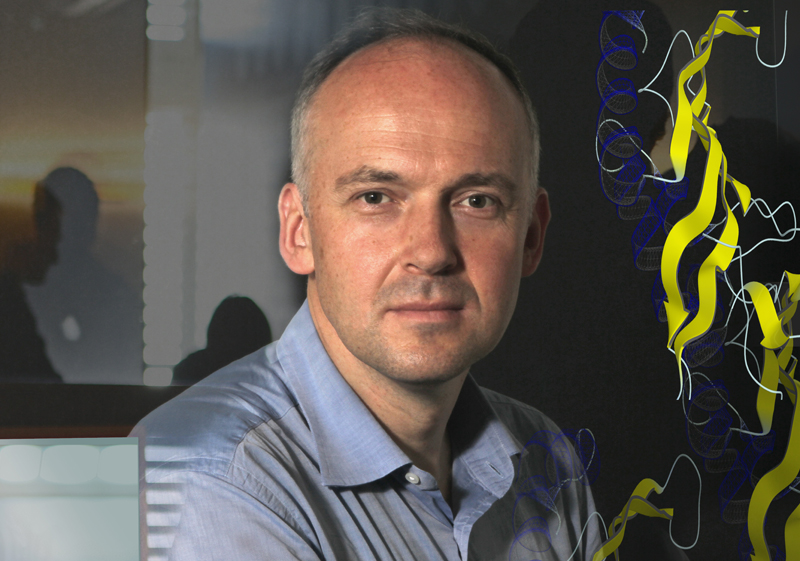
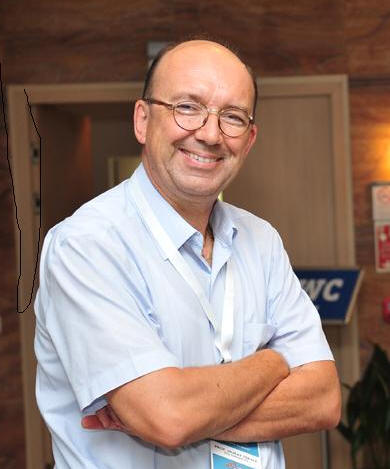
Torsten Schwede is a Professor for Structural Bioinformatics at the Biozentrum, University of Basel, and serves as Vice President for Research at the same institution. He leads the SPHN Data Coordination Center at SIB Swiss Institute of Bioinformatics. His research focuses on computational structural biology, protein structure prediction, and structural bioinformatics, with contributions to tools like SWISS-MODEL. He has been honored as a Highly Cited Researcher in Biology and Biochemistry (2019–2021). Education: PhD in Protein X-ray Crystallography from Albert-Ludwigs-Universität Freiburg (Germany). Positions include leadership roles in academia and industry (e.g., GlaxoSmithKline). His work emphasizes protein modeling, data management, and integrative structural methods. Collaborations span computational drug design, benchmarking initiatives (CASP), and open-source software development. Scientific contributions include advancements in protein-ligand interactions, homology modeling, and the development of ModelCIF and QMEANDisCo frameworks. He actively participates in global initiatives like the Swiss Personalized Health Network (SPHN) and precision medicine.
Victor Vianu is a Professor of Computer Science and Engineering at the University of California, San Diego and holds the INRIA International Chair at INRIA-Saclay in Paris. He has maintained continuous faculty status at UC San Diego since 1983 while developing extensive international collaborations, particularly with French research institutions including INRIA, ENST-Paris, ENS-Paris, and the University of Paris. His academic credentials include a Ph.D. in Computer Science from the University of Southern California (1983) and undergraduate studies in Mathematics and Informatics at the University of Bucharest (1974-1977). Professor Vianu's research spans computational logic, database systems and theory, and automatic verification. His work uniquely bridges theoretical foundations with practical applications in XML processing, workflow systems, and data-driven applications. He has made seminal contributions to understanding the theoretical underpinnings of database query languages and their expressive power, particularly in the context of XML technologies and workflow systems. His research demonstrates a consistent trajectory from theoretical computer science to practical database systems applications. His publication record reveals significant contributions to database theory spanning over three decades, with particular emphasis on XML technologies, workflow systems, and formal methods for data-driven applications. His work shows a clear evolution from foundational theoretical work to practical applications in business processes and web technologies. INRIA International Chair (2013) Fellow of the American Association for the Advancement of Science (AAAS) (2013) ACM PODS Alberto O. Mendelzon Test-of-Time Award (2010) Fellow of the Association for Computing Machinery (ACM) (2006) Professor Vianu has held significant leadership roles including Editor-in-Chief of the prestigious Journal of the ACM, numerous program committee chair positions for major database conferences (PODS, ICDT, ASIAN), and General Chair for ACM SIGMOD conferences. He has served on the executive committees of SIGMOD (1998-2000) and PODS (1993-2004), and was a member of the ICDT Council (1997-2007), demonstrating sustained influence in the theoretical database community. His extensive invited talks at major conferences including College de France, ACM PODS, and International Conference on Database Theory highlight his international recognition.
François Alexandre is a Senior Research Fellow (Research Fellow) at the CNRS, holding tenured positions in departments LaCiTO (2015–2018) and LaTTiCe (2018–present). He concurrently serves as Honorary Associate Professor in the School of Culture, History & Language at the Australian National University (ANU). He leads major research initiatives such as the ComPLETE project on complex predicates and the HéLiCéO project on Pacific languages preservation. Education: PhD in Linguistics (2001, Université Paris IV Sorbonne), Habilitation à Diriger des Recherches (2014, INALCO). His work focuses on Oceanic languages of Vanuatu and Solomon Islands, emphasizing grammatical description, typology, and language documentation. He conducted extensive fieldwork in Vanuatu (since 1997) and Solomon Islands (since 2005), producing 15+ educational books and bilingual dictionaries for endangered languages. Research interests include linguistic typology, language dynamics, areal linguistics, and semantic change. Recent projects involve semantic databases (Evo Sem) and collaborative archival efforts. Awards include the CNRS Bronze Medal (2004) and election to Academia Europeae (2020). Grants: PI of ANR grant (2004–2007), ELDP Legacy Grant (2017–2018) Service: Convenor of 7 research groups, editor for 3 journals, organizer of major conferences (ICAL11, APLL9) Labs/Teams: Leads CNRS research units and collaborates internationally on language revitalization projects.
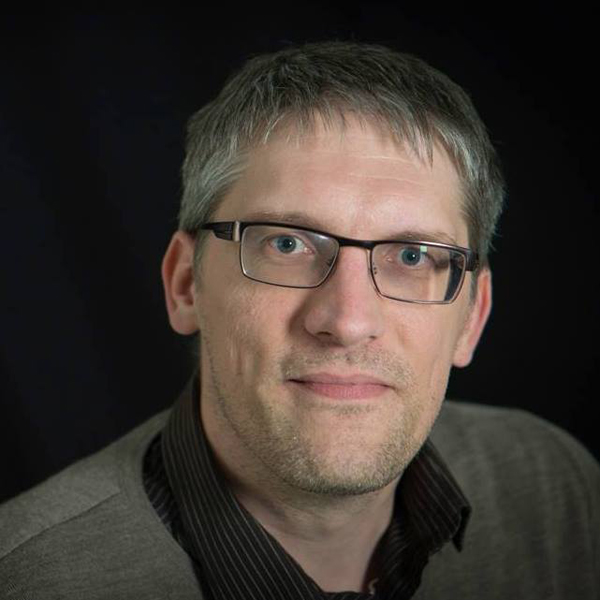
Univ.-Prof. Martin Pinzger is a Professor at the Department of Informatics Systems, Alpen-Adria-Universität Klagenfurt. He serves as Head of Department and Member of the Senate, actively contributing to academic governance. Research Focus: Automating Software Engineering Tasks, Mining Software Repositories, Program Analysis, Software Evolution and Visualization Recent Work: Developing tools for API evolution analysis, cybersecurity AI (CAI), robotics benchmarking (RobotPerf), and dependency validation His research combines empirical studies with tool development for software maintenance and security. Current projects address challenges in REST API breaking changes, cloud security certifications, and robotic system performance evaluation. Publications since 2023 demonstrate continued engagement with topics spanning AI-driven code segmentation, microservice API evolution, and cybersecurity tool development. Key trends include cross-disciplinary applications of NLP to software engineering and security-focused tool creation. Contact: martin.pinzger@aau.at
Andreas Rauber is an Associate Professor in the Department of Data Science at Technical University of Vienna. He serves as Curriculum Coordinator for Bachelor and Master programs in Business Informatics and Data Science, and chairs the Curriculum Commission for Business Informatics. His research focuses on Information Systems Engineering, Logic and Computation, and Visual Computing, addressing challenges in data management, digital preservation, and reproducibility in e-science. He leads projects like OS Trails and FAIR-AI, emphasizing FAIR principles and trustworthy research infrastructures. Rauber has contributed to over 150 publications, including works on data citation frameworks, adversarial ML defenses, and reproducibility in IR. His work bridges technical innovation with policy, exemplified through roles in the EOSC Support Office Austria and RDA Austria initiatives. Key projects include establishing FAIR data practices across universities and advancing digital preservation through repositories like DBRepo. He coordinates international collaborations, such as the EU-funded EOSC-Life and EGI Advanced Computing projects. His teaching spans courses in machine learning, information retrieval, and research methods, fostering next-generation data scientists.
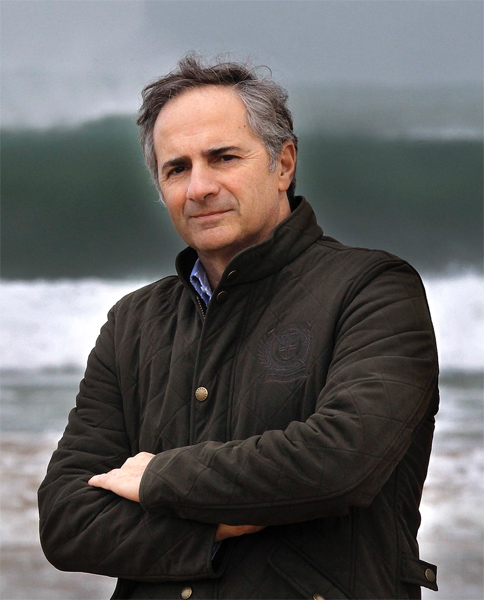
Iñigo J. Losada is a Full Professor at the School of Civil Engineering, University of Cantabria, and Research Director at the Environmental Hydraulics Institute (IHCantabria). He co-founded the Cantabria-Cornell Engineering Exchange Program and serves as Scientific Director of the Cantabria Coastal and Ocean Wave Basin. His work focuses on coastal dynamics, climate change adaptation, and ocean renewable energy. Coordinating Lead Author for IPCC reports (2014-2019) Editor-in-Chief of Coastal Engineering Ranked 2nd in Ocean Engineering citations (1992-2019) His research emphasizes: Coastal protection using green and grey solutions Wave interaction modeling with coastal features Climate change risk assessment and adaptation Wind and wave energy conversion systems Recent publications analyze global wave power variability, coral reef flood protection benefits, and nature-based coastal defenses. His work bridges experimental facilities (Cantabria Coastal Basin) with policy impact across 25+ countries. Scientific Awards King Jaime I Award (2018) John G. Moffat-Frank E. Nichol Award (2017) Navy Medal of Merit (2017) Member of Spanish Royal Academy of Engineering Losada has led over 25 EU/national projects, >80 technology transfer initiatives, and supervised 23 PhD students, shaping coastal protection policies and ocean energy development in Europe. His experimental infrastructure ranks 6th globally in Ocean Engineering (Shanghai Ranking, 2017).
Alexander Selzer is a PreDoc Researcher in Databases and Artificial Intelligence at Vienna University of Technology. His research focuses on query optimization, database systems, and AI-driven data processing. His work bridges theoretical computer science and practical database engineering, emphasizing efficient algorithms for modern data challenges. Recent projects explore machine learning applications in query performance and distributed computing frameworks. He mentors students in database optimization research, including projects on structure-guided query techniques and SQL-based system enhancements.
Giuseppe Camodeca (born November 9, 1945 in Naples) is Professor of Roman History and Latin epigraphy at the University of Naples L'Orientale since 1994, with additional teaching at University of Salerno and Naples 'Federico II'. His research encompasses: Roman administrative history (iuridici, curatores rei publicae, provincial governors) Editions of Latin epigraphs focusing on senators and equestrians Élites and social structures of Roman Campania Historical-juridical analysis of Herculaneum and Pompeii wax tablet archives With over 180 publications, his landmark works include the two-volume Tabulae Pompeianae Sulpiciorum (1999) and the National Museum of Naples Latin inscriptions catalogue (2000). He currently leads the EAGLE project team digitizing Campanian inscriptions for the Epigraphic Database Roma. Academic honors include: Membership in Accademia Archeologia Lettere e Belle Arti di Napoli Corresponding membership in Pontifical Roman Academy of Archaeology As an active researcher in both traditional epigraphy and digital humanities, Professor Camodeca continues to shape understanding of Roman administrative systems and social history through innovative archival work and international collaborative projects.
Kostas Triantis is an Associate Professor of Biodiversity of Ecosystems at the Department of Ecology and Taxonomy, Faculty of Biology, National and Kapodistrian University of Athens. He holds a PhD from the University of Crete and has held post-doctoral positions at institutions including Oxford University and the University of Azores. His research focuses on island biogeography, macroecology, conservation biology, and the biogeography of Aegean invertebrates. He has served as a Visiting Professor at the University of Bayreuth and held roles in Greece’s Ministry of Environment. Triantis is a leading expert in land snail biodiversity and has contributed to over 70 peer-reviewed articles. Awards include Marie Curie Fellowship and editorial roles in journals like Journal of Biogeography . His work addresses species-area relationships, island ecosystems, and conservation strategies for endangered species. Current projects include understanding biodiversity patterns in the Aegean under the Anthropocene and global avian extinction dynamics. Education: PhD and MSc in Biology, University of Crete Post-doctoral fellowships at Oxford, Azores, and Patras Research Interests: Island biogeography, conservation biology, macroecology, ecological modeling, Aegean biodiversity His articles explore topics like ant biodiversity on Aegean islands, global avian functional diversity loss, and extinction debt on oceanic islands. Triantis collaborates internationally on projects such as the European Red List of terrestrial molluscs and biodiversity databases like MEDIS. He actively contributes to conservation policy through IUCN Red Listing assessments for over 200 Greek land snail species. Grants & Projects: Principal Investigator: 'Understanding the Anthropocene: the case of the Aegean Islands' (Hellenic Foundation for Research and Innovation, 2020–2023) Co-PI: 'Biodiversity on Oceanic Islands' (Portugal’s FCT, 2012–2015) Triantis leads the University of Athens’ Ecology and Taxonomy Department’s research on island ecosystems, emphasizing the interplay between ecological theory and conservation practice. His lab focuses on integrating spatial data and evolutionary dynamics to address biodiversity challenges.
Ass.Prof. Mag. Christian Domenig is an Assistant Professor at the University of Klagenfurt's Institute of History, specializing in Medieval History and Historical Auxiliary Sciences. His research focuses on the Counts of Cilli, medieval social structures, source criticism, and interdisciplinary approaches linking medieval studies with modern media like Star Trek. He holds a doctoral degree from the University of Klagenfurt (2004) and completed diploma studies in History and Media Communication (1999). Education: 1994-1999: Diploma in History & Media Communication, University of Klagenfurt 1999-2004: Doctoral Studies in History, University of Klagenfurt His research interests include medieval administrative practices, cultural history, and the intersection of medieval themes with contemporary media. Notable projects include the 'Documents and Letters of the Counts of Cilli' (2002-2005) and exhibitions on medieval calendars. He received the Rome Scholarship (2005) for research at the Austrian Cultural Forum in Rome. His publications explore topics like medieval catastrophe narratives, castle politics, and the role of Jewish communities in feudal power structures. He also engages with pop culture interpretations of the Middle Ages, such as analyzing Star Trek's portrayal of pre-modern societies. Awards: Rome Scholarship, Federal Ministry of Education (2005) He advises projects on medieval source criticism and collaborates on digital humanities initiatives like the Klagenfurt Charter Database. His work often bridges traditional historiography with modern pedagogical methods.
Vienna University of Economics and BusinessAustria
Axel Polleres is a full professor at the Institute for Data, Process and Knowledge Management in Vienna University of Economics and Business (WU Wien). He leads the department of Information Systems and Operations Management while maintaining active research in knowledge graphs, semantic web technologies, and ontology engineering. PhD and Habilitation from Vienna University of Technology Former positions at University of Innsbruck, Universidad Rey Juan Carlos, DERI Ireland, and Siemens AG Co-chair of W3C SPARQL working group Editorial board member for Semantic Web Journal and IJSWIS His research focuses on: Querying and reasoning over ontologies Graph schema languages (SHACL, SPARQL) Wikidata constraint formalization Ontology reuse in collaborative platforms Crisis management knowledge graphs FAIR data principles implementation Recent publications analyze knowledge graph evolution, constraint validation methodologies, and semantic web standardization efforts. Key topics include: OWL/RDF interoperability solutions Unit conversion systems for Wikidata Partition-based query processing frameworks Network resilience analysis for urban planning Open data platform discovery tools Temporal analysis of collaborative knowledge graphs He has co-organized major conferences like ISWC2023 and ESWC workshops while maintaining active roles in European research projects. Current work involves spatiotemporal knowledge graphs for city resilience and semantic web infrastructure development.
Gerti Kappel is a full professor at the Institute of Information Systems Engineering at TU Wien, affiliated with the Business Informatics Group (BIG). Since 2020, she has served as Dean of the Faculty of Informatics at TU Wien, previously holding the role of Dean’s team member responsible for research, diversity, and financial affairs (2016–2019). She previously held a full professorship in computer science (database systems) and led the Department of Information Systems at Johannes Kepler University Linz (1993–2001). Her research focuses on Model Engineering, Web Engineering, and Process Engineering, particularly in cyber-physical production systems. She has co-authored influential works such as UML@Work (2005), UML@Classroom (2015), and Web Engineering (2006). Key projects include leadership roles in Vienna Informatics Living Lab (2018–2019), MPM4CPS (2014–2019), and ARTIST (2012–2015), addressing topics like model versioning, cloud architecture modeling, and inter-organizational systems. Her recent articles explore circular systems engineering, IoT-based simulation environments, and model-driven approaches for time-series analytics and cloud applications. She actively contributes to academic governance, including managing the Office of the Dean (E199-01) and overseeing faculty services. Her work emphasizes bridging theory and practice through collaborative frameworks like ERPEL and TROPIC . Grants: Projects funded by Austrian Research Promotion Agency, European Cooperation in Science and Technology, Vienna Business Agency, and others. Advising: Supervised over 15 graduate theses, including recent works on model-driven techniques for railway planning, debugging frameworks for modeling tools, and cloud-based IDEs. Labs/Teams: Leads research within the Business Informatics Group (BIG) and collaborates with the Vienna Informatics Living Lab for applied systems engineering.
Takashi Gojobori (born October 24, 1951) is a Japanese molecular biologist who serves as Vice-Director of the National Institute of Genetics (NIG) and Professor at the Center for Information Biology and DNA Data Bank of Japan (DDBJ) in Mishima, Japan. He also holds multiple visiting positions including Special Research Consultant at the National Institute of Advanced Industrial Science and Technology (AIST), Visiting Professor at Keio University, Tokyo University, and Tokyo Institute of Technology, and Visiting Research Director at RIKEN. His educational background includes a Ph.D. from Kyushu University (1979), followed by research positions at the University of Texas at Houston (1979-1983), Washington University in St. Louis (1985, 1986), and the Imperial Cancer Research Fund in London (1989). Professor Gojobori's research spans multiple areas of molecular and evolutionary biology. His work focuses on comparative genomics, molecular evolution, viral evolution, and bioinformatics. He has made significant contributions to understanding the rates of synonymous and non-synonymous substitutions, positive selection, horizontal gene transfer, and genome evolution. More recently, he has been investigating the evolution of the brain and central nervous system. His extensive publication record includes 389 peer-reviewed articles as of May 2012, reflecting his broad impact across multiple fields of biological research. His work shows a consistent focus on evolutionary mechanisms at the molecular level, with applications ranging from viral evolution to comparative genomics across diverse organisms including humans, plants, and model organisms like Hydra. Scientific Awards 2009: The Medal with Purple Ribbon from the government of Japan 2007: Academician Member of the Pontifical Academy of Sciences, Vatican 2006: Foreign Honorary Member of the American Academy of Arts and Sciences, USA 2005: Fellow of the American Association for the Advancement of Science (AAAS), USA 2005: Society Prize (Kihara Medal), The Genetic Society of Japan 2004: Society Prize (Motoo Kimura Medal), The Society of Evolutionary Studies, Japan 2004: The Gaetano Salvatore Gold Medal, Statione Zoologica, Anton Dohrn, Italy 1997: Science Award from Japan Science and Technology Corporation (JST), Japan 1995: Science Award from Hitoshi Kihara Memorial Foundation, Japan 1987: Promotion Award from Japanese Society of Genetics, Japan Professor Gojobori has served in numerous editorial capacities, including as Founding Editor of Genome Biology and Evolution, Executive Editor of GENE, and Associate Editor for several major journals. He has also held significant administrative roles including Program Director of the Council for Science and Technology Policy (CSTP) of the Japanese government and Science Officer of MEXT. His contributions to international genomic databases including DDBJ/GenBank/EMBL and the H-Invitational human gene database have been instrumental in advancing global genomics research. As Director of the Center for Information Biology and DNA Data Bank of Japan from 1994-2009, Professor Gojobori led important initiatives in biological data management and analysis. His work continues to influence the field through his leadership roles in international scientific organizations including the International Genetics Federation and CODATA/ICSU.
Wolfgang Nejdl is a Full Professor of Computer Science at Leibniz Universität Hannover since 1995 and the Head of the L3S Research Center since 2001. His research focuses on Web Science, search and information retrieval, semantic web technologies, peer-to-peer infrastructures, databases, technology-enhanced learning, and artificial intelligence. Education: M.Sc. (1984) and Ph.D. (1988) in Computer Science from Vienna University of Technology. Previous Positions: Assistant Professor in Vienna (1988–1992), Associate Professor at RWTH Aachen (1992–1995), and visiting professor/researcher at Xerox PARC, Stanford, University of Illinois at Urbana-Champaign, EPFL Lausanne, and PUC Rio. His research spans foundational and applied Web technologies, including social networks, trust and reputation, Web infrastructure, digital libraries, semantic web, collaborative filtering, and privacy-preserving systems. Recent projects like PHAROS, OKKAM, LiWA, and LivingKnowledge highlight his work in audio-visual search, web entities, web archive management, and diversity bias algorithms. Wolfgang Nejdl published over 230 scientific articles and held leadership roles as General Chair for AH'08 and PC Chair for WWW'09. He co-founded iSearch IT Solutions in 2006 to commercialize digital library and web engineering research from L3S projects. Scientific Awards: Founding member and head of the L3S Research Center The L3S Research Center, with a 2009 budget of €6 million (75% third-party funding), focuses on connecting the Web to real-world entities through research in Web Science, service computing, and security. Funding comes equally from the European Union and national/industry sources.
Ahmet Tekalp is a Professor in the Department of Electrical and Computer Engineering at Koc University's College of Engineering since 2001. He holds dual citizenship in Turkey and the USA, with prior academic roles at the University of Rochester (1986-2005) and research positions at Eastman Kodak (1984-1987) and Rensselaer Polytechnic Institute (1981-1984). He chairs the Electronics and Informatics Group at TUBITAK since 2004 as a part-time position. B.S. (1980) in Electrical Engineering & Mathematics, Bogaziçi University M.S. (1982) and Ph.D. (1984) in Electrical, Computer, and Systems Engineering, Rensselaer Polytechnic Institute His research focuses on digital image and video processing, including video compression, motion-compensated filtering for high-resolution applications, video segmentation, object tracking, content-based video analysis, multi-camera surveillance processing, and digital content protection. He has led numerous European and U.S. grants, including FP7 STREP projects and NSF awards, emphasizing applications in sensor networks, visual databases, and medical imaging. His scholarly work spans diverse areas such as superresolution reconstruction, head gesture animation, 3DTV streaming, and reversible data hiding. He has played pivotal roles in editorial boards, including serving as Editor-in-Chief of Signal Processing: Image Communication, and has contributed to major standards bodies like ISO MPEG and ANSI NCITS. Member, Turkish Academy of Sciences (TUBA) Fellow, IEEE Fulbright Senior Scholarship (1999) TUBITAK Science Award (2004) IEEE Signal Processing Society Distinguished Lecturer (1998) He has led multiple international research collaborations and projects, including European FP6/FP7 networks and NATO programs, with substantial grant funding from NSF, NYSTAR, and industry partners like Eastman Kodak, Xerox, and Siemens.