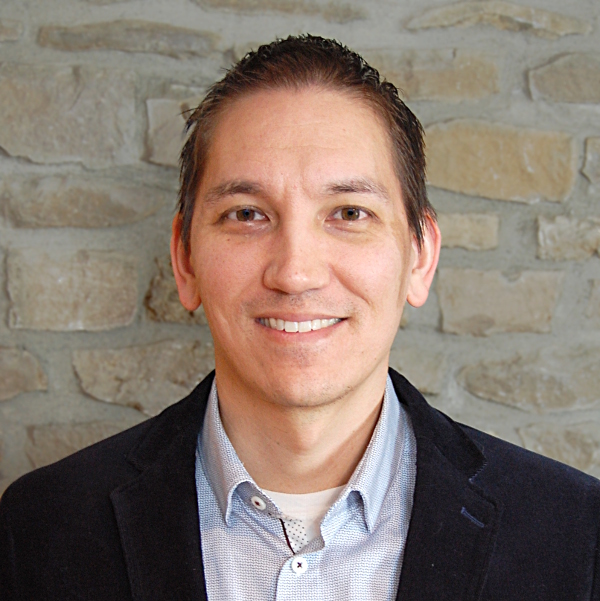
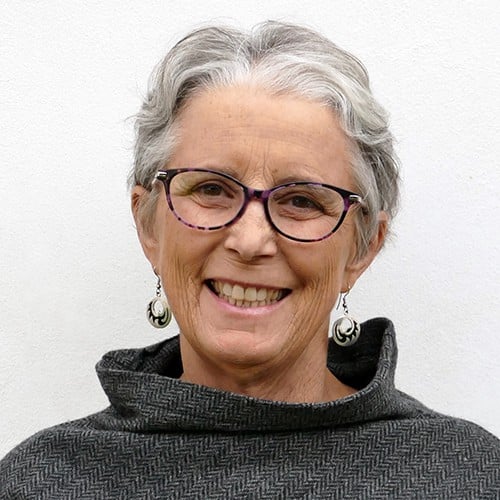
Kris Hauser is a Professor in the Department of Computer Science at the University of Illinois at Urbana-Champaign (UIUC), with affiliate appointments in the Departments of Electrical and Computer Engineering and Mechanical Science and Engineering. He holds a PhD in Computer Science from Stanford University and B.A. degrees in Computer Science and Mathematics from UC Berkeley. Prior to UIUC, he served as faculty at Indiana University (2009–2014) and Duke University (2014–2019), where he founded the Intelligent Motion Lab. He has also consulted for Waymo since 2019 and is the Director of the Coordinated Sciences Lab Robotics Group at UIUC. His research focuses on robot planning and control, semi-autonomous systems, and applications in intelligent vehicles, medical robotics, and legged locomotion. Key methodologies include optimization, probabilistic methods, AI, and physics simulation. His work bridges theory with real-world applications, such as robotic surgery, warehouse automation, and autonomous driving. Prof. Hauser has received notable awards including the NSF CAREER Award, Siebel Scholar Fellowship, and multiple Amazon Research Awards. He actively engages in teaching advanced robotics courses at UIUC and has contributed to open-source robotics frameworks like the Klamp't package. His lab emphasizes interdisciplinary collaboration, with projects ranging from UV disinfection robots to telepresence avatars.
Sri Devi Ravana is a Professor in the Department of Information Systems at the University of Malaya's Faculty of Computer Science and Information Technology in Kuala Lumpur, Malaysia. She holds a PhD from the University of Melbourne (2011) where her doctoral research focused on experimental evaluation of information retrieval systems. Her research spans several key domains: Information Retrieval : Specializing in evaluation methodologies, relevance judgment, and system performance metrics Machine Learning Applications : Including data classification, anomaly detection, and sentiment analysis Network Systems : Particularly IoT networks and vehicular communication systems Applied Computing : Addressing real-world challenges in healthcare, agriculture, and social media Her recent publications demonstrate a consistent focus on enhancing machine learning algorithms for classification tasks, improving evaluation methodologies for information systems, and developing practical applications for IoT and network technologies. She maintains active collaborations across academia and has supervised numerous graduate students in computer science research.
Wei Jia is a Professor at the School of Computer and Information, Hefei University of Technology, China. Their research focuses on artificial intelligence, machine learning, computer vision, and robotics, with contributions to knowledge graphs, biometric systems, and autonomous systems. They have co-authored over 130+ publications in top-tier journals and conferences, including venues like IEEE Transactions, CVPR, and AAAI. Research interests span deep learning techniques, graph neural networks, and optimization for large-scale systems. Notable work includes entity extraction frameworks, safety analysis in engineering systems, and swarm control algorithms for unmanned vehicles. Contributions also extend to data management systems, such as the TierBase key-value store and the OVERLORD data loader for foundation models. Publications highlight interdisciplinary applications in cybersecurity, robotics, and biomedical imaging. Their work often bridges theoretical advancements with practical implementations, addressing challenges in both software and hardware systems. No specific awards or grants are listed in the provided text.
Petar Spalević is a professor at Singidunum University within the School of Electrical Engineering and Computing. With over two decades of academic contributions from 2002 to 2025, he has established himself as a significant researcher in electrical engineering and computer science disciplines. His research expertise spans multiple interconnected domains: Wireless communications and fading channel modeling Free space optical (FSO) transmission systems Machine learning applications for healthcare diagnostics Educational technology and innovative teaching methodologies Dr. Spalević's publication trajectory reveals an evolution from foundational work in signal processing and wireless communications to more contemporary applications integrating machine learning techniques. His recent publications (2023-2025) demonstrate a strong focus on healthcare applications including Parkinson's detection from gait analysis, respiratory condition classification from audio, and ECG anomaly detection using advanced neural network architectures. He maintains parallel research in wireless communications, particularly examining FSO system performance under various atmospheric turbulence conditions. His work bridges theoretical communication engineering with practical applications across healthcare, transportation, and education sectors. This multidisciplinary approach while maintaining technical depth in core engineering principles characterizes his research philosophy.
Milan Tair is a researcher at the University of Singidunum, affiliated with the Faculty of Informatics and Computing and the Department of Postgraduate Studies . His academic work spans topics in computer science, web technologies, and optimization algorithms. Doctoral Studies : Electrical Engineering and Computing (2016–2022) Master's Studies : Contemporary Information Technologies (2012–2013) Undergraduate Studies : Programming and Design (2008–2012) His research interests focus on artificial intelligence , web development , cybersecurity , and optimization algorithms , as evidenced by his publications in journals and conference proceedings. Recent publications highlight his work on hybrid metaheuristic algorithms applied to intrusion detection, medical diagnostics, and web quality evaluation. His studies also explore adaptive web technologies, database systems, and mobile computing solutions. Milan has authored or co-authored works on topics including: Optimization of machine learning models (XGBoost tuning, swarm intelligence) Web performance and security (AES encryption, HTTP header licensing) Adaptive web formats (multi-layered image compression) Usability in multilingual web design
Ladan Tahvildari is a Full-time Professor in the David R. Cheriton School of Computer Science at the University of Waterloo. Her research focuses on software engineering, self-adaptive systems, cloud computing, and test case prioritization. She leads the Software Technologies Applied Research Laboratory (STAR Lab), emphasizing hands-on industry collaboration and practical software solutions. Her work spans over two decades, with notable contributions to adaptive software systems, runtime adaptation frameworks (GRAF), and cloud modeling (StratusML/Adoop). She has pioneered techniques for flaky test detection (FlaKat), spatiotemporal auto-scaling (STaleX), and POMDP-based uncertainty management for security systems. Key research areas include: Self-protecting software systems Component-based software evolution Defect detection and prioritization Autonomic computing decision models Cloud infrastructure optimization Her recent work bridges academia and industry through hands-on learning approaches and frameworks like Semeru Cloud Compiler for performance enhancement. She has served as workshop chair for ACSOS 2023 and contributed to IBM tool integration in educational curricula. Her lab focuses on transforming theoretical concepts into practical tools like StarMX for self-managing systems and ReLACK for VoIP steganography. Current efforts emphasize adaptive machine learning frameworks and scalable microservice architectures.
Tamer Özsu is a University Professor at the David R. Cheriton School of Computer Science, University of Waterloo, where he previously served as Director (2007-2010) and currently holds the role of Associate Dean of Research. He is also a Distinguished Visiting Professor at Tsinghua University. Professor Özsu's research spans distributed data management, graph/RDF systems, and database fundamentals. His current work focuses on: Distributed graph processing algorithms SPARQL query optimization for RDF systems Streaming graph analytics Indexing techniques for modern hardware Distributed database architectures He has authored the seminal textbook Principles of Distributed Database Systems and co-edited the Encyclopedia of Database Systems . As founding Editor-in-Chief of ACM Books, he has shaped computing literature. His recent publications demonstrate continued innovation in graph partitioning, streaming graph algorithms, and scalable RDF processing. Özsu maintains active research leadership in database systems with over 30 years of influential contributions.
P. Sadayappan is a Professor at the School of Computing, University of Utah, specializing in high performance computing, compiler optimization, and scalable machine learning. His research focuses on developing efficient computational methods for scientific applications, particularly in the areas of sparse/dense matrix and tensor computations. His research interests include: Compiler Optimization for High Performance Computing Optimization of Sparse/Dense Matrix/Tensor Computations Scalable Machine Learning Algorithm-Architecture Co-Design Optimization Sadayappan's recent publications demonstrate a strong focus on tensor computations, GPU acceleration, and compiler optimizations for machine learning workloads. His work spans from fundamental compiler theory to practical implementations that improve performance across various architectures. A significant trend in his recent work involves the development of frameworks for efficient tensor operations, sparse matrix computations, and domain-specific code generation, with particular emphasis on performance portability across heterogeneous computing platforms. His notable scientific achievement includes receiving the ACM SIGPLAN Most Influential PLDI Paper Award in 2018 for his work on polyhedral compilation. Sadayappan has been principal investigator or co-investigator on numerous significant research grants, including: NSF award #2217154 (2022-2027): A Comprehensive Framework for Efficient, Scalable, and Performance-Portable Tensor Applications NSF award #2112606 (2021-2026): AI Institute for Intelligent CyberInfrastructure with Computational Learning in the Environment (ICICLE) NIH SBIR-Phase 2 (2023-2025): Enabling next generation machine learning for large scale image analysis NSF award #2009007 (2020-2024): Data Locality Optimization for Sparse Matrix/Tensor Computations DARPA SBIR-Phase 2 (2017-2022): Performance Portable Framework for Developing Graph Applications He teaches CS 4230/6230 (Parallel and High-Performance Computing) at the University of Utah and collaborates extensively with researchers across multiple institutions on projects involving computational chemistry, physics simulations, graph analytics, and machine learning.
Thomas Heinis is a Professor in Computing at Imperial College London. He leads the SCALE Lab and conducts research in DNA data storage and high-performance data analytics. His academic journey includes a Ph.D. and M.Sc. in Computer Science from ETH Zürich, a Postdoctoral fellowship at EPFL’s DIAS Lab, and a Fulbright Scholarship at Purdue University. He specializes in scalable data management techniques for scientific and spatial datasets, novel hardware optimization, and interdisciplinary applications such as medical data analysis. Education: Ph.D. and M.Sc. in Computer Science, Swiss Federal Institute of Technology in Zürich (ETH Zürich) Postdoctoral Fellow, DIAS Lab, EPFL Fulbright Scholarship, Purdue University (2002–2004) Research Interests: Big Data and Distributed Processing Spatial Data Indexing and Visualization High-Performance Computing (HPC) Data Analytics Data Management on Novel Hardware (e.g., neuromorphic systems) Synthetic DNA Storage Technology Interdisciplinary Applications in Medicine and Neuroscience Recent Work Trends: Heinis’s publications emphasize innovative storage solutions like Motif-based DNA encoding, efficient spatial indexing algorithms (e.g., FLAT, SCOUT, TOUCH), and machine learning-driven approaches for healthcare and scientific data analysis. His work bridges computational methods with real-world applications in neuroscience, medicine, and environmental science. Scientific Awards: SystemsX Interdisciplinary Ph.D. Fellowship (2007) Finalist, Venture Leaders Entrepreneurship Competition (2007) Finalist, Purdue Burton D. Morgan Entrepreneurship Competition (2003) Fulbright Scholarship (2002–2004) Advising & Grants: Supervises Ph.D. students in scientific data management, spatial data, and DNA storage. Funding opportunities include Marie-Curie post-doctoral fellowships, CSC Imperial Scholarships, and others. His lab actively collaborates with institutions like the Blue Brain Project and explores scalable tools for data-driven research. Labs & Teams: Leader of the SCALE Lab at Imperial College. Collaborations with the Blue Brain Project (BBP) on neuroscientific data management.
Christos Anagnostopoulos is Reader (Associate Professor) in Distributed Computing & Data Engineering Systems at the University of Glasgow, where he directs the MSc Information Technology and MSc Software Development programmes. His research focuses on distributed computing, federated learning, and edge intelligence for large-scale systems. Research interests span: Distributed ML/AI for edge environments Federated learning optimization Proactive data management in pervasive systems Edge-centric predictive analytics Funded projects include EU Horizon grants TERRA, COIN-3D, ELLIE, and TRACE, focusing on intelligent platforms for climate services, 3D VLSI reliability, cultural heritage technologies, and logistics optimization. Additional support comes from EPSRC, Royal Academy of Engineering, and industry partners including BMW and NXP. Recent publications (2024-2012) demonstrate innovations in edge-based task allocation, federated learning efficiency, distributed query processing, and mobile edge offloading. Article trends show consistent development of resource-aware distributed intelligence algorithms. Serves as Editor-in-Chief of Open Computer Science and Associate Editor of IEEE Access, and General Chair of IEEE ICDCS 2025. Leads the Knowledge and Data Engineering Systems research group.
Prof. Weikuan Yu is a Professor in the Department of Computer Science at Florida State University. His research focuses on computer architecture, high-performance computing (HPC), cloud computing, parallel file systems, and deep learning applications. He holds the role of Chair and can be contacted via yuw@cs.fsu.edu or (850) 644-5442. His expertise includes optimizing storage systems and I/O behaviors in scientific workflows, developing scalable distributed systems, and applying machine learning to improve computational efficiency. Notable projects include work on burst buffer systems (e.g., BurstFS, TRIO), persistent memory management (PHAST), and distributed deep learning frameworks (e.g., compression techniques for time-evolutionary data). Recent research trends emphasize enhancing HPC storage efficiency through novel file systems and I/O emulation, as well as leveraging machine learning for fault tolerance and configuration tuning. His work bridges hardware-software co-design to address challenges in exascale computing and big data analytics. Prof. Yu has contributed to multiple open-source projects and frameworks, including OpenSHMEM-based key-value stores and MapReduce optimizations. His publications highlight advancements in parallel processing, distributed algorithms, and energy-efficient memory architectures.
Jin Chen is an Associate Research Scientist at the Yale School of Medicine and holds an Associate Professor position at Huazhong University of Science and Technology. He specializes in surgical education and training, with clinical roles including Deputy Chief Physician and Doctor-in-Charge at Tongji Hospital. His academic journey includes a PhD and MD from Huazhong University, alongside a visiting scholar stint at the University of Kentucky. Dr. Chen’s research focuses on advanced materials science, catalysis, and nanotechnology, with notable contributions to 2D materials, electrochemical processes, and MXene-based systems. His work bridges theoretical simulations and practical applications, addressing challenges in energy conversion and environmental sustainability. Education includes a PhD and MD in Otolaryngology-Head and Neck Surgery (Huazhong University, 2013), an MS in the same field (2010), and an MD in Clinical Medicine from Wuhan University (2007). He has received awards such as the Honor Graduate Student/Postdoctoral Fellow Travel Award and an International Award from the Association for Research in Otolaryngology. His research interests span catalytic mechanisms for CO2 reduction, nanomaterial growth dynamics, and computational modeling of materials. Recent publications highlight innovations in single-atom catalysts, graphene applications, and MXene superconductors. Dr. Chen’s contributions are pivotal in advancing nanotechnology’s role in energy and environmental solutions. Awards: Travel Award (2013), International Research Recognition (2013). Grants & Funding: Details not explicitly provided in text. Labs/Teams: Affiliated with surgical education teams at Yale and research groups at Tongji Hospital, though specific lab names are not mentioned.
Dr. Le Gruenwald is the David W. Franke Professor and Samuel Roberts Noble Foundation Presidential Professor at the School of Computer Science, University of Oklahoma. She also served as Program Director for Data Management Systems at the National Science Foundation (NSF) and held roles including Director of the University of Oklahoma's School of Computer Science. Her academic journey includes a PhD from Southern Methodist University (1990), an M.S. from the University of Houston, and a B.S. in Physics from the University of Saigon, Vietnam. Research Interests: Her work focuses on Database Management Information Privacy & Security Mobile/Distributed Databases Data Mining Quantum Computing Applications in Databases Outlier Detection in Data Streams Key Projects: Includes NSF-funded research on GPU-accelerated spatial data processing, cloud query optimization, and big data hubs. Notable projects: "Spatial Data Management on GPUs" (2013), "Big Data Innovation Hub for the South" (2015), and quantum data science initiatives (2023). Awards: 2012 NSF Directorate Recognition 2007 Distinguished Alumnus Award (SMU) 2009 ACM Recognition Award 2016-2017 Semantic Big Data Workshop Leadership Advising & Grants: Oversees NSF grants totaling millions, focusing on cyberinfrastructure, ecological forecasting, and medical data analytics. No formal student advisees listed but collaborates extensively with researchers globally. Labs & Teams: Leads initiatives in quantum database optimization, mobile-cloud systems, and GPU-accelerated spatial analytics within OU's School of Computer Science.
Professor Miftar Ganija is a Professor in the Department of Electrical and Electronic Engineering at the University of Adelaide, affiliated with the School of Physics, Chemistry and Earth Sciences. His research focuses on advanced laser technologies, gravitational wave detection, and radiation dosimetry. He holds a prestigious academic position and contributes to cutting-edge projects involving cryogenic laser systems, high-power optically pumped lasers, and applications in astrophysical signal detection. His work spans multiple domains including: Laser engineering: High-power Q-switched cryogenic lasers, Ho:YAG oscillators, and fiber laser systems Gravitational wave astronomy: Analysis of LIGO/Virgo data, searches for continuous gravitational waves, and tests of general relativity Radiation detection: Optically stimulated luminescence dosimetry using BeO ceramics and fiber-coupled systems Key contributions include: Developing high-energy cryogenically cooled holmium lasers Pioneering techniques for gravitational wave signal extraction in multi-detector networks Advancing real-time optical dosimetry methods for radiation measurement He maintains active collaborations with international detector networks like LIGO and contributes to gravitational wave data analysis frameworks. His lab focuses on both theoretical advancements and experimental implementations in photonics and astrophysical instrumentation.
Stephanie Forrest is a Professor in the School of Computing and Augmented Intelligence (SCAI) at Arizona State University (ASU), where she also serves as Director of the Biodesign Center for Biocomputation, Security and Society. She is an External Faculty member of the Santa Fe Institute (SFI), where she previously held leadership roles including Co-Chair of the Science Board (2010–2013) and Interim Vice President for Academic Affairs (1999–2000). Prior to joining ASU, she was a Regents Distinguished Professor and Department Chair of Computer Science at the University of New Mexico (2006–2011). B.A., St. John's College M.S., Ph.D., University of Michigan, Computer Science Her research lies at the intersection of biology and computation, focusing on computational immunology, automated software repair, evolutionary computation, and modeling complex systems such as cancer and immune responses. She pioneers bio-inspired algorithms for cybersecurity and develops evolutionary techniques for software optimization and repair. Her work integrates principles from immunology, genetics, and complex adaptive systems to solve problems in computer science. The trends in her recent publications reveal a sustained focus on automated program repair using evolutionary computation, GPU code optimization, and modeling biological systems. Her work increasingly combines machine learning with mutation-based search, explores semantic representations in code repair, and applies bio-inspired models to real-world software and security challenges. ACM/AAAI Allen Newell Award (2011) Presidential Young Investigator Award (1991) Stanislaw Ulam Memorial Lectures, SFI (2013) IEEE Fellow UNM Annual Research Lecture (2012) IEEE S&P Test of Time Award (2020) ICSE Most Influential Paper Award (2019) ACM/SIGEVO Impact Award (2019) SEAMS Best Paper Award (2019) WEIS Best Paper Award (2015) Stephanie Forrest has advised numerous students and researchers, often in collaboration with W. Weimer, C. Le Goues, and M. Moses. Her research is supported by major funding agencies including the National Science Foundation (NSF), Defense Advanced Research Projects Agency (DARPA), Air Force Research Laboratory (AFRL), and the Santa Fe Institute. She has also contributed to public policy as a Jefferson Science Fellow at the U.S. Department of State (2013–2014), advising on cyber-policy. She currently chairs the Government Affairs Committee of the Computing Research Association (CRA). She leads the Biodesign Center for Biocomputation, Security and Society, which brings together interdisciplinary teams to study the co-evolution of technology and society. Her research group has developed tools for intrusion detection (e.g., STIDE, pH, RISE), automated software repair (e.g., GenProg), and biological modeling (e.g., CancerSim). Current projects include engineering diversity for enhanced cybersecurity, measuring internet censorship, and modeling immune and cancer systems.