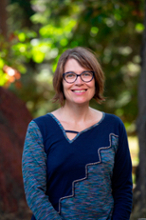
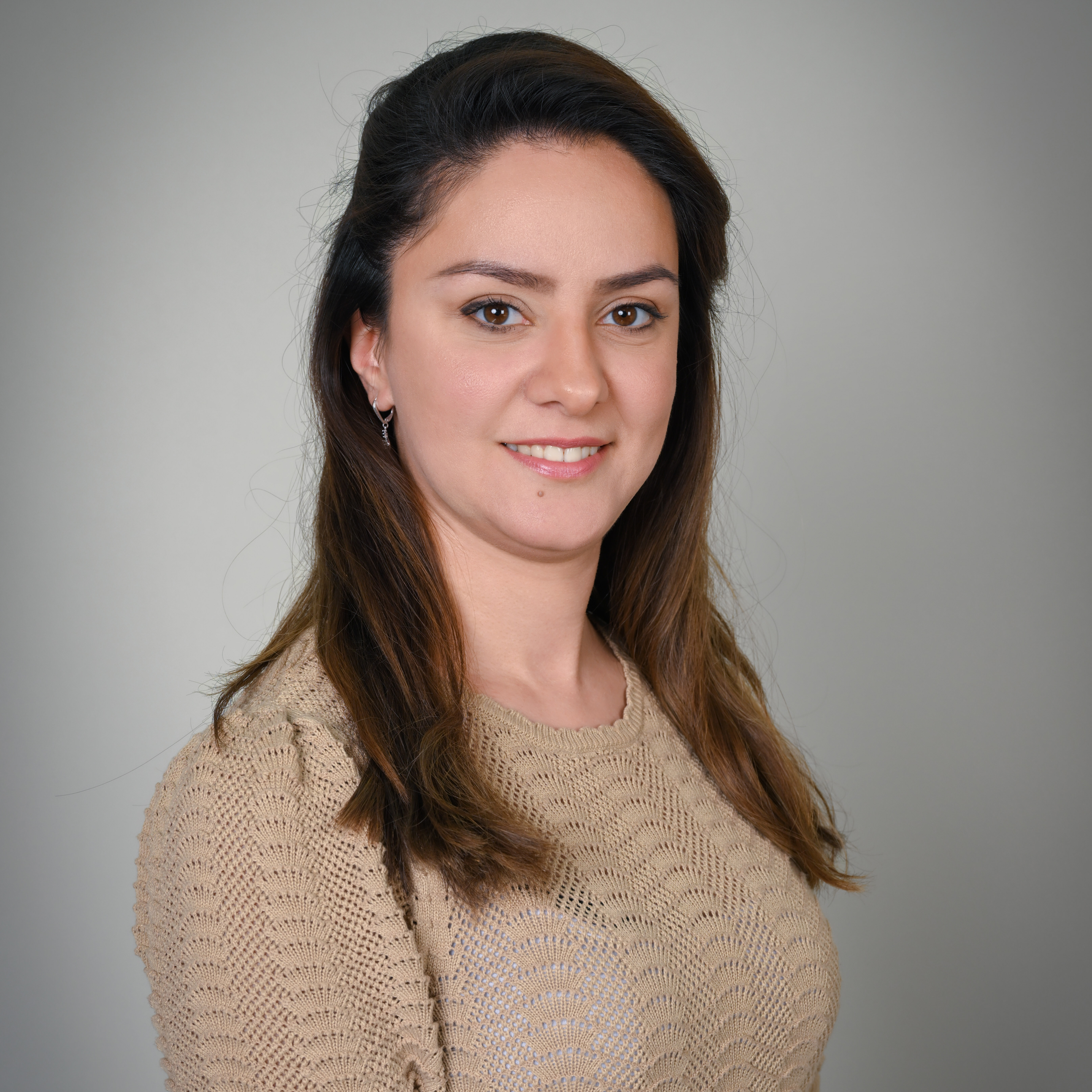
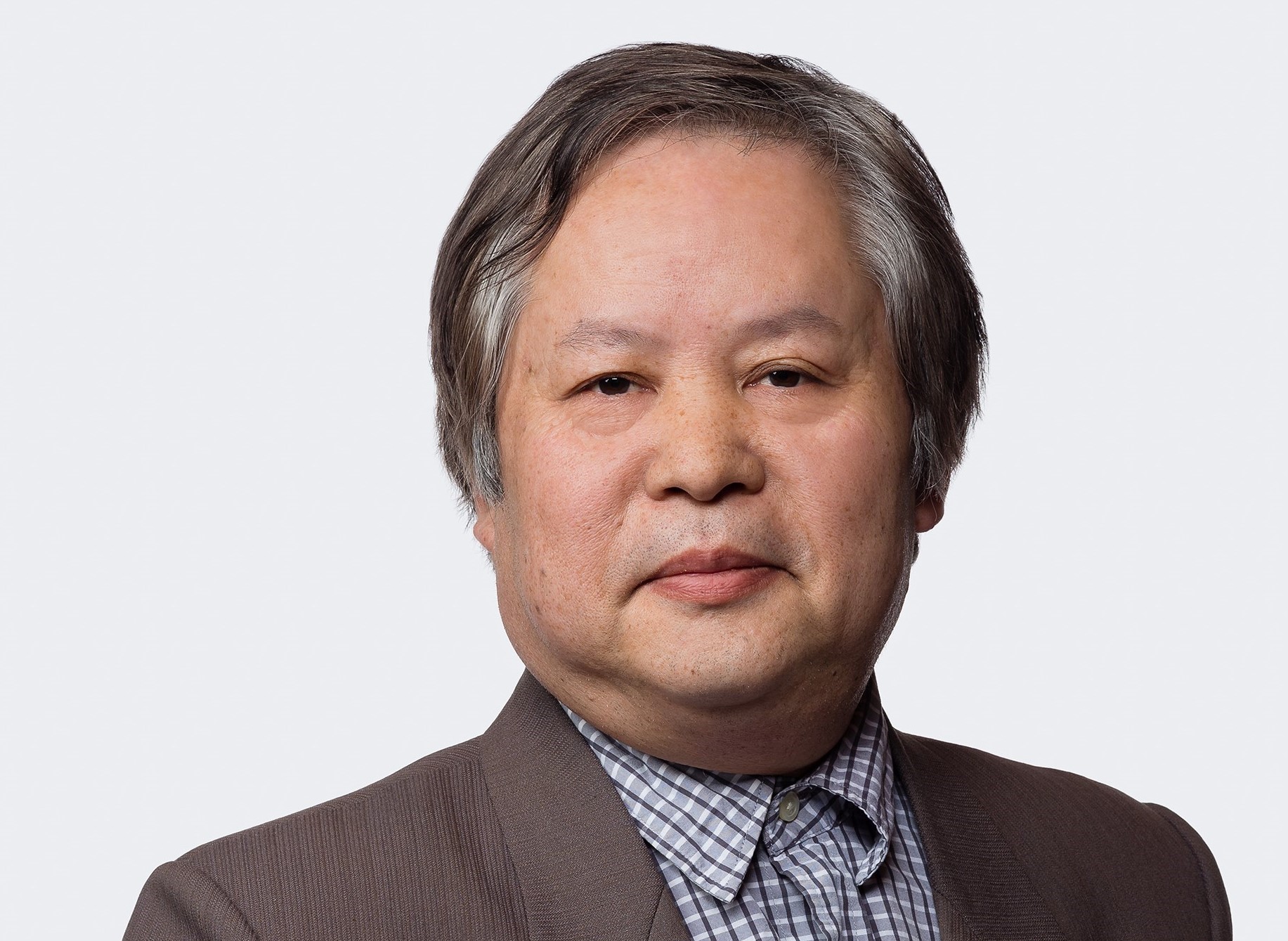
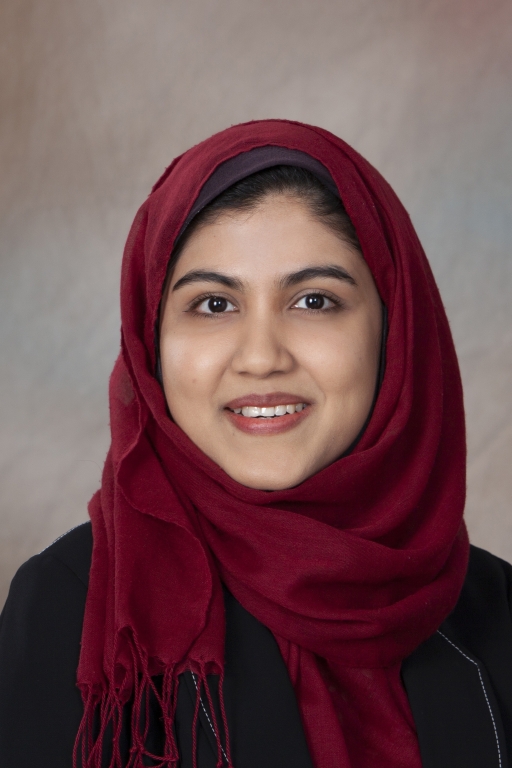
Shafaq Khan is an Assistant Professor in the School of Computer Science at the University of Windsor. She holds a PhD in Computer Science from the University of Salford (2017). Her research spans machine learning, deep learning, data analytics, and database systems with applications in healthcare informatics, agricultural technology, educational systems, and blockchain. Recent work focuses on AI-driven healthcare transformation, privacy-preserving data methods, federated learning for disease prediction, and computer vision applications in agriculture. Additional interests include educational technology for addressing disparities, blockchain implementations in government services, and open-source search engine development. Her work demonstrates consistent integration of cutting-edge computing techniques with practical domain applications.
Ben KEFFORD is an Associate Professor at the University of Canberra, affiliated with the Centre for Applied Water Science and Systems Ecology. His research focuses on the ecological effects of contaminants and environmental stressors in freshwater systems. He leads projects addressing salinization, pesticide impacts, climate change, and alpine stream ecology. Key areas of expertise include macroinvertebrate community dynamics, toxicology, and ecosystem function assessment. He is actively involved in 15+ research projects, including studies on firefighting chemical effects, alpine ecosystem resilience to climate change, and ecological impacts of mange treatment in wombats. His work emphasizes bridging laboratory experiments and field observations to inform conservation and management strategies. KEFFORD's research outputs (107+ publications) highlight innovative methods for assessing environmental risks, such as improved toxicity testing and trait-based biomonitoring. He collaborates globally, with recent contributions to initiatives like GLOBSALT analyzing freshwater salinization impacts. His projects often integrate mesocosm experiments with large-scale ecological data to address pressing environmental challenges. While no formal awards are listed, his extensive grant history and project leadership reflect his recognition in freshwater ecology. He advises PhD students exploring chemical stressors in streams, ecological realism in risk assessment, and trait-based approaches to biomonitoring. KEFFORD's work extends to policy-relevant areas like algal bloom management in Lake Burley Griffin and the effects of road de-icing salts in alpine regions. His interdisciplinary approach combines field studies, experimental work, and trait databases to advance freshwater conservation science.
Amanda Bates is Professor of Biology at the University of Victoria's Faculty of Science. She directs research on global ecology, conservation biology, and marine eco-physiology, using macroecological approaches to understand how climate change and human activities impact ecosystem resilience and functioning. Her work spans biological scales from organismal physiology to global biomes, with applications to sustainable conservation solutions. Her research program investigates ecological resilience across temperature gradients, biodiversity patterns in marine sediments, and climate impacts on coastal ecosystems. Recent projects examine thermal tolerance in marine ectotherms, deep-sea hydrothermal vent communities, and coral reef resilience. She employs diverse methodologies including field surveys, experimental manipulations, and large-scale data synthesis. Bates coordinates international collaborations such as the BioTIME database expansion and socio-ecological indicator development for northern coastal environments. Her publications demonstrate consistent focus on climate-biodiversity interactions, with recent articles addressing functional vulnerability in deep-sea ecosystems, coral thermal adaptation, and marine protected area effectiveness. She mentors graduate students and postdoctoral researchers in conservation ecology, promoting interdisciplinary approaches to environmental challenges. Her laboratory investigates ecological responses to global change across marine and terrestrial systems.
Douglas Nychka is a Professor in the Department of Applied Mathematics and Statistics at Colorado School of Mines since 2018. He holds an emeritus position at the National Center for Atmospheric Research (NCAR), where he previously directed the Institute for Mathematics Applied to Geosciences (IMAGe) from 2004 to 2017. Nychka earned his PhD in Statistics from the University of Wisconsin-Madison and a BA in Mathematics (with Physics emphasis) from Duke University. His research focuses on spatial statistics, nonparametric regression, and computational methods for large datasets, particularly applied to environmental and geophysical problems. He has developed influential R packages like fields and LatticeKrig , which are widely used for spatial data analysis. Nychka received prestigious awards including the Jerry Sacks Award for Multidisciplinary Research (2004) and recognition as a Fellow of both the American Statistical Association and the Institute of Mathematical Statistics. His work bridges statistical theory, computational innovation, and real-world applications in climate science and renewable energy. His academic career includes 14 years as a faculty member at North Carolina State University and roles at the National Institute of Statistical Sciences. Nychka's research emphasizes spatial statistics for climate data, statistical downscaling, and uncertainty quantification, with contributions to solar radiation modeling and extreme event analysis. He actively engages in interdisciplinary projects, collaborating with experts in climatology, environmental science, and data science. Professional service includes roles on committees for the National Research Council and leadership in statistical societies. His teaching focuses on modernizing curricula to integrate data science with applied statistics. Nychka’s work is characterized by a commitment to open-source software and reproducible research, exemplified by his R package contributions.
Dr. En Cheng is an Associate Professor in the Department of Computer Science at The University of Akron, affiliated with the College of Engineering and Polymer Science. She joined the university in 2012 and specializes in research areas such as Data Integration, Big Data Management, Database Systems, Mobile Applications, Business Intelligence, and Bioinformatics. Her work bridges theoretical computer science with practical applications, including educational mobile games and business productivity tools. Dr. Cheng’s education includes a Ph.D. from Case Western Reserve University and advanced degrees from Huazhong University of Science and Technology, China. Her research emphasizes innovative solutions in database systems and interdisciplinary applications like bioinformatics. Notable publications include studies on mobile game integration, web content extraction libraries, and business intelligence optimization. Her recent work explores supramolecular assembly, material science, and nanostructure engineering, reflecting a shift toward interdisciplinary collaboration. Over 30 publications since 2014 highlight her contributions to both computer science and materials research. Dr. Cheng teaches courses such as Data Integration, Database Management, and NoSQL systems. She maintains an active research lab and collaborates on projects funded by institutional grants. Her office is located in CAS 229, and she can be reached via echeng@uakron.edu or her website.
Shiva Jahangiri is an Assistant Professor in the Department of Computer Science and Engineering at Santa Clara University's School of Engineering. His research focuses on Big Data Management Systems, Databases for AI/ML, and Query Optimization. He leads the DBIS Lab, which explores database internals, vectorized data processing, and open-source projects like Apache AsterixDB. Education: Ph.D. in Computer Science from the University of California, Irvine; M.S. in Computer Science (Data Science) from the University of Southern California. Current courses taught include Advanced Programming, Advanced Database Systems, and Introduction to Database Systems. He advises Ph.D. and Master’s students on topics like Vector Databases, Query Scheduling, and Resource Management. Recent research trends involve optimizing group-by/aggregation operators, schema inference for semi-structured data, and memory management in complex join queries. His work bridges theoretical advancements with practical implementations in open-source systems. DBIS Lab activities include student participation in senior design projects, directed research, and volunteer roles. The lab emphasizes industry collaboration for hands-on experience in database systems development.
Dr. Yangjun Chen is a Full Professor in the Department of Applied Computer Science at the University of Winnipeg, Canada. He holds a Ph.D. from the University of Kaiserslautern, Germany (1995). His research focuses on database systems, graph algorithms, computational complexity, and theoretical computer science. Key areas include Federated Databases, Deductive Databases, DNA Databases, and the P vs NP problem. Education: Ph.D. in Computer Science, University of Kaiserslautern, Germany (1995). Research interests span graph query processing, algorithm design, big data optimization, and NP-completeness. Recent work includes polynomial-time solutions for 2-MAXSAT and advancements in string matching algorithms for DNA databases. Publications highlight contributions to graph indexing, efficient reachability queries, and algorithmic efficiency in databases. His work often bridges theoretical foundations with practical database applications. Awards: Excellent Merit Award (2022-2023, 2021-2022) - University of Winnipeg Best Article, ACTA Scientific Computer Sciences (2022) Multiple Best Paper Awards at conferences like DBKDA 2016 and CyberC Summit Teaching includes Advanced Databases, Distributed Database Systems, and Algorithms courses at both undergraduate and graduate levels. Active in supervising research in database systems and theoretical computer science. Laboratory and team focus on database innovation, including projects on graph databases and efficient query processing techniques.
Matthew R. Ryan is an Associate Professor in the School of Integrative Plant Science (Soil and Crop Sciences Section) at Cornell University. His research focuses on sustainable cropping systems, agroecology, and cover crop management with an emphasis on ecological weed suppression and organic production. Ryan leads the Sustainable Cropping Systems Lab and co-directs the Organic @ Cornell initiative. Education: PhD in Agronomy (2010), MS in Agronomy (2007) from The Pennsylvania State University; BS in Biology (2001) from Kutztown University. Research Interests: Development of diversified cropping systems that integrate perennial grains like Kernza Evaluation of cover crop genetics and management strategies Optimization of no-till systems for organic crop production Assessment of agronomic practices' environmental impact Recent Work Trends: Over 15 publications (2023–2025) emphasize cover crop genetics, no-till weed management, and perennial grain development. Collaborative projects across 16 U.S. states highlight regional adaptation strategies. Awards: No formal awards listed, though his work has been featured in news articles about cover crop adoption and perennial grain development. Teaching & Mentorship: Teaches PLSCI 1900 and 3800 courses. Advises graduate students in Soil and Crop Sciences. Coordinates multi-university courses like the Cover Crop Challenge. Labs/Teams: Leads Sustainable Cropping Systems Lab and collaborates with Cornell's Agricultural Experiment Station. Active in regional farmer-extension partnerships.
Sarah Masud Preum is an Assistant Professor of Computer Science at Dartmouth College, with adjunct roles in the Department of Biomedical Data Science at Geisel School of Medicine and as Faculty Affiliate at the Center for Technology and Behavioral Health (CTBH). She also serves as Technical Associate Director of the Dartmouth Center for Precision Health and Artificial Intelligence. Her work focuses on machine learning for computational health, including natural language processing, temporal modeling, and human-AI interaction to develop personalized decision support systems in healthcare. Education includes a B.Sc. from Bangladesh University of Engineering and Technology, followed by M.Sc. and Ph.D. degrees from the University of Virginia. Previously, she was a postdoctoral research scholar at Carnegie Mellon University's School of Computer Science, recognized as a Rising Stars in EECS (2020) for her academic excellence and contributions to equity in STEM. Her research interests span Human-AI Interaction, Natural Language Processing, Mobile Health, and Cyber-Physical Systems. Over 2020–2023, her publications emphasize AI-driven solutions for healthcare challenges like conflict detection in health information and cognitive assistants for emergency response. Earlier work includes behavioral prediction models (MAPer) and spatial database optimizations (Maximum Visibility Queries). Awards: Rising Stars in EECS (2020) In teaching, she offers courses like Transforming Healthcare through Machine Learning and Machine Learning and Statistical Data Analysis. Her affiliations with multidisciplinary centers reflect her commitment to bridging technology and healthcare.
Hanno Hilbig is an Assistant Professor of Political Science at the University of California, Davis. He holds a PhD from Harvard University’s Department of Government (2022) and an MS in Economics from Humboldt University Berlin. His research focuses on the interplay between structural economic changes—such as labor markets, housing crises, and energy transitions—and their political impacts in advanced democracies. He employs causal inference methods for observational data, using designs like natural experiments and large-scale administrative datasets. Key research areas include voter preferences, policymaking processes, and democratic institutions. His work addresses topics such as public housing budget tradeoffs, refugee labor market integration, and the effects of local newspaper decline on polarization. He has published in top journals like the American Journal of Political Science , British Journal of Political Science , and Journal of Politics . His recent articles explore themes such as green party support following natural disasters, the role of wealth disparities in radical right voting, and the consequences of rent control policies. Hilbig co-leads collaborative projects like the German Election Database (GERDA) and investigates refugee integration dynamics. His research bridges quantitative methods with substantive political questions, emphasizing policy relevance and democratic stability.
Prof. Dan Olteanu is a full professor at the Department of Informatics, University of Zurich, leading the Data Systems and Theory (DaST) group. He holds visiting professorships at the University of Oxford and is an emeritus fellow of St Cross College. His academic journey includes a PhD from Ludwig Maximilian University (2005), postdoctoral roles at Saarland University and Cornell University, and prior faculty positions at Oxford (2007–2020). He has also worked in industry with companies like LogicBlox and RelationalAI, focusing on database systems and AI. Education: Bachelor’s in Computer Science, Politehnica University of Bucharest (2000) PhD in Computer Science, Ludwig Maximilian University (2005) Professional Roles: Full Professor, University of Zurich (since 2020) Visiting Professor, University of Oxford Emeritus Fellow, St Cross College Editorial Roles: ACM TODS, VLDBJ, SIGMOD Conference Chair: ICDT Council (since 2022) His research focuses on data systems theory, including query optimization, probabilistic databases, factorized databases, and in-database machine learning. He co-authored the seminal book Probabilistic Databases (2011) and has pioneered algorithms for efficient machine learning over relational data and incremental maintenance of analytical workloads. His work emphasizes scalable, theoretically grounded solutions for real-world data challenges. Awards: ICDT 2019 Best Paper Award ACM SIGMOD 2018 Distinguished PC Member Award ERC Consolidator Grant (2016) Oxford Outstanding Teaching Award (2009) Grants & Funding: Supported by Google, Microsoft Azure, Amazon AWS, EPSRC, and the European Commission. His research bridges academia and industry, with contributions to commercial systems like LogicBlox and RelationalAI. Labs & Teams: Heads the DaST group at Zurich, focusing on data systems theory and applications. Collaborates widely in the database and AI communities.
Associate Professor Daniel Fried holds the Chair position in the Department of East Asian Studies at the University of Alberta's Faculty of Arts. His research focuses on comparative approaches to classical Chinese literature, intellectual history, and Daoist semiotics, with particular attention to Northern Song Dynasty print culture and European literary theory intersections. Current projects include a literary non-fiction work linking Daoist philosophy to social activism. Key academic roles include Co-Editor of the Routledge Studies in Comparative Chinese Literature and Culture series (2020–present), Founding Chair of the MLA Forum on pre-14th century Chinese Literature (2018), and President of the Association of Chinese and Comparative Literature (2017–2019). Teaching responsibilities include advanced readings in modern Chinese literature and graduate research methods courses. Research interests span ancient Chinese textuality, medieval print culture transformations, and cross-cultural philosophical dialogues. Recent publications (2020–2023) emphasize Song Dynasty print modernity and Daoist semiotic frameworks. Earlier works address pre-Qin philosophical discourse and 20th century comparative literature methodologies. No scientific awards explicitly listed. Advising focuses exclusively on graduate students researching Chinese literature/philosophy from Warring States to Southern Song periods. Active in developing interdisciplinary research programs bridging Anglophone and Sinophone scholarship. Led development of East Asia Research Methods (EASIA 550), an online graduate course covering regional and disciplinary methodologies. Current research projects maintain focus on pre-modern Chinese cultural production and its global comparative dimensions.
Professor Tobias Nipkow is a leading researcher in formal methods and interactive theorem proving at the Technical University of Munich (TUM), affiliated with the School of Computation, Information and Technology and the Department of Computer Science. He is a core developer of the Isabelle proof assistant and leads the Theorem Proving Group. His work has profoundly influenced program verification, semantics, and formalized mathematics. University: Technical University of Munich School: School of Computation, Information and Technology Department: Department of Computer Science Research Group: Theorem Proving Group Key Projects: Isabelle, Archive of Formal Proofs, Concrete Semantics His research focuses on formal verification, higher-order logic, semantics of programming languages, and verified algorithms. He has pioneered the formalization of textbook algorithms, data structures like B+-trees and quadtrees, and logical systems. His work bridges theoretical foundations with practical tools for software correctness. The most recent publications show a strong trend in verifying classical algorithms (e.g., Gale-Shapley, Earley parser), data structures (B+-trees, deques), and decision procedures, primarily using Isabelle/HOL. His contributions span foundational logic, program analysis, and educational approaches to formal methods. Best Paper Award at CADE 28 (2021) Tobias Nipkow has made extensive contributions to advising and collaborative research, co-authoring with numerous researchers and students. He has secured support for large-scale formalization efforts and contributed to major projects like the Flyspeck proof of the Kepler conjecture. His work is supported by ongoing development of the Isabelle framework and the Archive of Formal Proofs. He leads the Theorem Proving Group at TUM, which is central to the development and application of Isabelle. The group fosters international collaboration, contributes to the Archive of Formal Proofs, and advances research in automated reasoning, semantics, and verified systems.
Giovanna Tinetti is a Professor of Astrophysics and Vice Dean (Research) at King's College London's Faculty of Natural, Mathematical & Engineering Sciences. She leads the European Space Agency's Ariel mission, a space telescope surveying exoplanet atmospheres, set to launch in 2029. As co-founder of the London Centre for Space Exochemistry Data and Blue Skies Space Ltd, she pioneers satellite technology for scientific data collection. She holds a PhD in Theoretical Physics from the University of Turin, with prior affiliations at Caltech/JPL, the Institute of Astrophysics in Paris, and University College London (UCL), where she was a Royal Society University Research Fellow. Her research focuses on exoplanetary atmospheres, molecular spectroscopy, and advanced data science techniques. With over 300 publications, her 2019 paper on water vapor in K2-18b's atmosphere achieved the highest altmetric score in Physical Sciences that year. She has delivered over 350 international talks and lectures. Education: PhD in Theoretical Physics (University of Turin) Affiliations: King's College London, UCL (past), ESA's Ariel Mission, Blue Skies Space Ltd Research Interests: Exoplanet atmospheres, molecular spectroscopy, space science, data-driven analysis methodologies, and atmospheric modeling. Her work bridges observational astronomy with computational chemistry to interpret exoplanet compositions and climates. Awards: Royal Society University Research Fellow Highest Altmetric Score (2019 Physical Sciences) Grants & Projects: Principal Investigator for ESA's Ariel mission Co-leader of the Ariel Data Challenge 2025 Labs/Teams: London Centre for Space Exochemistry Data, Blue Skies Space Ltd technical team, and the international Ariel collaboration network.
Dr. Jann Michael Weinand is the head of the Integrated Scenarios department at the Institute of Climate and Energy Systems (ICE-2) within Forschungszentrum Jülich GmbH. He leads a team of 30 scientists, PhD students, and master students focusing on energy system analysis, complexity management, and AI integration. His work addresses regional and international energy systems, emphasizing renewable energy resource assessment and techno-economic feasibility. Dr. Weinand holds a Dr.-Ing. from the Karlsruhe Institute of Technology (2020) and a Mechanical Engineering and Business Administration degree from RWTH Aachen University (2016). His research spans energy autonomy, renewable resource optimization, and the socio-technical challenges of energy transitions. Key research areas include energy system modeling, geothermal and wind energy potential, and data-driven methodologies. He coordinates interdisciplinary projects with academic and industrial partners, contributing to high-impact journals like Nature Energy and Joule. His team develops open-source tools (e.g., ETHOS workflows) for reproducible energy assessments and advocates for spatially disaggregated energy planning. Publications highlight trade-offs in energy system design, AI risks, and land-use conflicts for renewables. He emphasizes integrating social, technical, and environmental factors into energy policy frameworks.