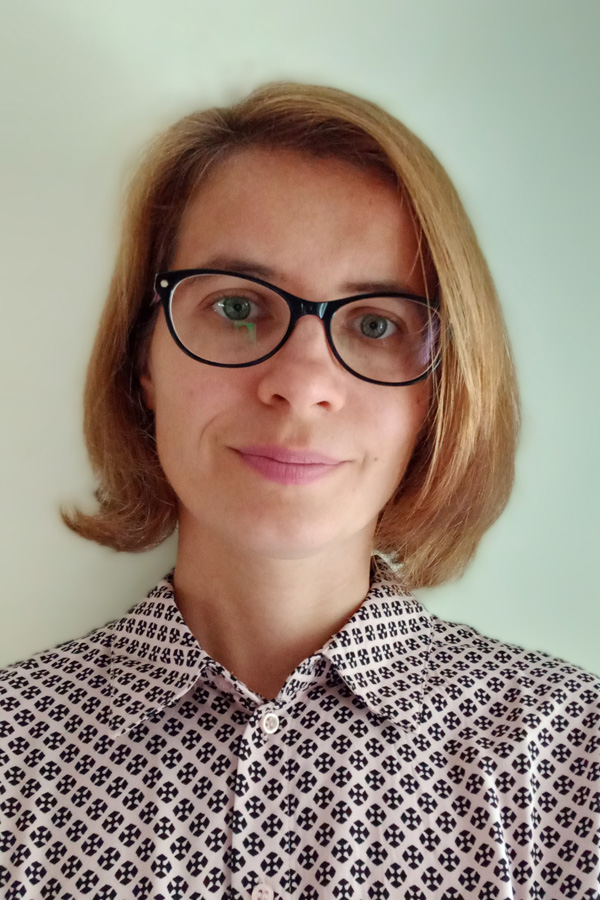
Małgorzata Maria Szczęsny serves as a Teaching and Research Assistant at the Department of Entrepreneurship within the Faculty of Management at the University of Economics in Katowice, where she contributes to both academic instruction and scholarly research. Her scholarly work centers on Social Policy , Labor Economics , and Unemployment Studies , with particular emphasis on Workforce Activation programs and the socioeconomic challenges of the Coal Mining Industry . Her research examines the intersection of social services with economic policy, especially regarding vulnerable populations affected by industrial transitions in Poland. With 8 documented publications accumulating a total ministerial score of 136, her work demonstrates meaningful contribution to her field according to the Polish academic evaluation system. Dr. Szczęsny maintains a verified scholarly presence through her ORCID identifier (0000-0002-0133-2053) and is connected to international research databases including Scopus, Crossref, and EuropePMC.
Wrocław University of Science and TechnologyPoland
Ngoc Thanh Nguyen is a Full Professor at Wroclaw University of Science and Technology where he serves as Head of the Department of Applied Informatics. He holds the prestigious title of Professor granted by the President of Poland and has been recognized as a Distinguished Scientist of ACM since 2009. He serves as Editor-in-Chief of both the Journal of Information and Telecommunication (JIT) and the Vietnam Journal of Computer Science (VJCS), and chairs the IEEE SMC Technical Committee on Computational Collective Intelligence. His research spans computational collective intelligence, knowledge integration, data mining, social media analysis, and sentiment analysis. Professor Nguyen has pioneered significant methodologies in spatial data clustering within network space, inter-sequence pattern mining, and graph neural network applications. His work bridges theoretical computer science with practical applications in intelligent information systems, demonstrating particular expertise in handling complex spatial and sequential data structures. His research has evolved from foundational pattern mining techniques to sophisticated neural network approaches for geospatial and social data analysis. The analysis of his recent publications reveals a strong focus on spatial data analysis in network environments, with significant contributions to clustering algorithms, graph neural networks, and pattern mining. His work consistently addresses efficiency challenges in data processing while expanding into emerging areas like Vietnamese language processing and topological data analysis. The research demonstrates a clear trajectory from traditional data mining techniques toward more sophisticated AI-driven approaches that incorporate spatial relationships and network topologies. Distinguished Scientist of ACM (2009) ACM Distinguished Speaker (2009-2013) IEEE Distinguished Visitor (2009-2013) Title of Professor granted by the President of Poland Professor Nguyen has supervised over 20 PhD students to completion and currently mentors several ongoing doctoral candidates. His academic leadership extends to founding two major conference series: the Asian Conference on Intelligent Information and Database Systems (ACIIDS) and the International Conference on Computational Collective Intelligence (ICCCI), which have become significant venues in their respective fields. His collaborative network spans multiple institutions, particularly with Yeungnam University as evidenced by several co-supervised PhD projects. As founder and chair of the IEEE SMC Technical Committee on Computational Collective Intelligence, he leads an international community of researchers advancing this specialized field. His departmental leadership at Wroclaw University of Science and Technology positions him at the center of applied informatics research and education in Poland, with particular emphasis on computational intelligence applications.
Dr. Katarzyna Jesse-Józefczyk is an Assistant Professor at the Institute of Mathematics, University of Zielona Góra, Poland. She maintains an office in Room 509 A-29 and can be contacted at k.jesse-jozefczyk@im.uz.zgora.pl. Her academic profile combines teaching responsibilities with diverse research activities across theoretical and applied mathematics. Her primary research interests include: Graph Theory (graph coloring, computational complexity of graph algorithms, coalitions and safe sets in graphs) Stochastic Inclusions and Multivalued Stochastic Equations with applications in economics and biological sciences Multivariate Linear Models and Analysis Game Theory (stochastic, multigenerational, and large games) Approximation Theory using Fourier series Preference Models using graded and interval relations Dr. Jesse-Józefczyk's work bridges theoretical mathematics with practical applications in secure data transmission, e-business, and space communication. She actively participates in the Center for Applications of Mathematics and Computer Science (OZMI), contributing to interdisciplinary research projects focused on sustainable energy, healthy society initiatives, and innovative industrial technologies. Her teaching portfolio includes algorithms and data structures, computer programming courses (both introductory and advanced), object-oriented programming, and database systems curriculum.
Paweł Pilarczyk is an Associate Professor at the Institute of Applied Mathematics within the Faculty of Applied Physics and Mathematics at Gdańsk University of Technology, where he has been employed since 2018. His research spans multiple mathematical disciplines with applications across various scientific fields. Dr. Pilarczyk's research interests include dynamical systems , computational topology , rigorous numerics , and applications of advanced computational techniques . His work bridges theoretical mathematics with practical applications in neuroscience, cardiology, ecology, and epidemiology. Analyzing his publication record from 2025 back to 2007 reveals a consistent focus on rigorous mathematical approaches to understanding complex systems. His recent work shows increasing interdisciplinary applications, particularly in medical diagnostics (sleep apnea detection, heart rate variability analysis) and neuroscience (neuron modeling), while maintaining strong foundations in pure dynamical systems theory. As project manager for the OPUS-funded "Topological and numerical methods in dynamical systems" (since 2022), he leads significant research initiatives at the Department of Differential Equations and Mathematical Applications. Dr. Pilarczyk maintains an active research program with collaborators across multiple institutions, evidenced by his extensive publication record and research data sets available through Gdańsk Tech's Bridge of Knowledge platform.
Bydgoszcz University of Science and TechnologyPoland
Włodzimierz Kasprzak is a Professor at the Institute of Control and Computation Engineering, Faculty of Electronics and Information Technology, Warsaw University of Technology. His research focuses on computer vision, robotics, human-computer interaction, and machine learning. He has contributed to advancements in human action classification, skeleton-based feature analysis, and multimodal interface design. Research Highlights: Development of lightweight classification models for human actions in video using skeleton-based features. Advances in multi-stream fusion techniques for image and video analysis. Design of embodied agent systems for cybersecurity event visualization and control. Awards and Recognition: 2024: Individual First Class Rector's Award for Scientific Achievements (2022-2023) 2021: Medal of the Commission of National Education 2011: Golden Cross of Merit His work integrates theoretical contributions with practical applications in robotics, surveillance systems, and human-centered technologies.
Igor Wojnicki is a Professor at AGH University of Science and Technology's Faculty of Electrical Engineering, Automatics, Computer Science and Biomedical Engineering, where he serves as Vice-Dean of the Faculty of Cooperation and Education. His primary affiliation is with the Department of Applied Informatics, where he maintains an active research laboratory focused on knowledge engineering and smart systems. His research spans multiple domains with evolving focus: Early career: Deductive databases and rule-based inference engines (PhD thesis on "A Rule-based Inference Engine Extending Knowledge Processing Capabilities of Relational Database Management Systems") Mid-career: Graph-based knowledge representation and Tabular Trees (XTT predecessor) Current focus: Smart city applications, particularly energy-efficient lighting control systems and graph-based urban data integration His recent publications demonstrate a clear trajectory toward applied urban computing, with over 15 significant papers in the last five years addressing smart city infrastructure optimization. Key themes include dynamic street lighting control, graph-based computational methods for urban environments, and energy conservation in public infrastructure. Wojnicki actively contributes to academic-practical collaboration through initiatives like the Green AGH Campus Project and IBM academic partnerships. His technical leadership includes development of the ReDaReS system for relational database knowledge processing and the Jelly View technology for advanced database queries. His laboratory maintains strong industry connections, particularly with IBM through student internship programs and technology transfer initiatives. The team produces both theoretical frameworks and practical implementations, with notable outputs including the Osiris GUI system and Magellan GPS software for Poland.
Dr. Wojciech Kosior is a researcher at the Department of Comparative Civilization Studies within the Centre for Comparative Studies of Civilisations at Jagiellonian University, Poland. He holds degrees in Jewish Studies from the Paideia Institute, Religious Studies, and Psychology from Jagiellonian University. Education: Jewish Studies (Paideia Institute) Religious Studies (Jagiellonian University) Psychology (Jagiellonian University) His research focuses on angelology, demonology, and apotropaism, cognitive science of religion, and digital humanities applications in religious text analysis. He specializes in Hebrew Bible, early rabbinic literature (Talmuds, Midrashes), Targums, Dead Sea Scrolls, and apocryphal texts. His work often intersects ancient religious traditions with modern quantitative and qualitative analysis. Key trends in his recent publications include systematic databases for supernatural entities (Elyonim veTachtonim project), cognitive theory of religion applications, and digital humanities tools in Jewish and Biblical studies. His work has been supported by grants from the National Science Centre (2018/31/D/HS1/00513) and Ministry of Science and Higher Education initiatives. While he has not explicitly listed scientific awards, his research has been funded through competitive grants. He manages significant projects like the Elyonim veTachtonim database and co-edits comparative religious studies outputs.
Christian Orobello is an Assistant at the Department of Macroeconomics, Faculty of Economics, University of Gdańsk. He is actively involved in academic and teaching duties, with office hours held on Thursdays from 12:00 to 13:30. His work is supported through institutional academic frameworks, and he maintains a scientific profile with publications registered in the University of Gdańsk's Knowledge Base. His research interests lie primarily in macroeconomics and applied economic analysis. Given his departmental affiliation, his scholarly focus likely includes economic growth, fiscal policy, monetary systems, and national income dynamics. While specific publications are listed in institutional databases, no individual titles or trends could be extracted from the provided text. However, the presence of a scientific profile suggests ongoing engagement in academic research and dissemination. Email: christian.orobello@ug.edu.pl Phone: +48 58 523 13 54 Office Room: 222 Christian Orobello does not appear to have received any publicly listed scientific awards based on the available information. There is no mention of graduate student supervision or grant funding in the provided data. No information about laboratories, research teams, or collaborative groups was found in the text.
Wrocław University of Science and TechnologyPoland
Robert Czechowski, PhD , is an Assistant Professor at the Faculty of Information and Communication Technology , Wrocław University of Science and Technology , Poland, stationed in the Department of Telecommunications and Teleinformatics . His office is located in building D-20, room 421, and he holds regular consultation hours on Tuesdays 14:00–15:00, Wednesdays 15:00–17:00, and Thursdays 13:00–15:00. His research portfolio is centred on securing the next generation of electrical power systems. Core interests include: Cyber-security architectures for smart grids and micro-grids Artificial-intelligence-driven intrusion detection and prevention systems (IDS/IPS) Network protocols and time-synchronisation security in SCADA environments Simulation of information flow in complex, dynamically reconfigurable networks IPv4/IPv6 network design and security policy enforcement in power-system automation Database and expert-system solutions for real-time energy-management and fraud detection Between 2014 and 2019 he authored or co-authored more than fifteen peer-reviewed works. The publications reveal a clear longitudinal trend: early work established foundational security policies and good-practice guidelines, while later studies pivot toward advanced AI/ML techniques for anomaly detection and risk quantification in smart-metering infrastructures. A recurring theme is the integration of communication-protocol security (IEC 61850, PLC, IPv4/IPv6) with higher-level cyber-physical risk governance. Scientific recognitions: None explicitly mentioned in the supplied text. Advising & Grant activities: The provided material does not list specific doctoral or master’s students, nor does it enumerate funded projects. Laboratories & Teams: He conducts research within the Department of Telecommunications and Teleinformatics, leveraging university laboratories and the wider ICT Faculty infrastructure, although no dedicated lab name is specified.
Agnieszka Cybulska-Bienioszek serves as an Assistant Professor in the Department of Commercial Law at the Faculty of Finance, University of Economics in Katowice, Poland. Her academic profile centers on Polish bankruptcy and insolvency law within the national legal framework, with documented expertise in commercial litigation and debt restructuring mechanisms. Her research concentrates on Bankruptcy Law, Insolvency Law, and Commercial Law with specific emphasis on pre-pack sales, secured creditor rights, and asset valuation in insolvency proceedings. Key investigations include the death implications for insolvent entrepreneurs, treatment of secured creditors in restructuring plans, and legal frameworks for enterprise sales during bankruptcy. Her work consistently analyzes Polish Supreme Court rulings and legislative amendments to the Bankruptcy Law, demonstrating deep engagement with practical implementation challenges in national insolvency practice. Publications reveal a strong trend toward contemporary restructuring mechanisms, particularly pre-pack liquidation procedures and their impact on creditor hierarchies. Her scholarship bridges theoretical legal analysis with procedural implementation, focusing on Articles 293 and 323 of the Commercial Code while addressing critical gaps in secured creditor protection and asset disposal protocols. With a ministerial score of 455 reflecting significant scholarly impact within the Polish academic system, her contributions are recognized through ORCID (0000-0003-2664-6611) and various publication databases. Though specific awards aren't documented, this score indicates substantial contribution to legal scholarship in Poland. Dr. Cybulska-Bienioszek actively engages in legal discourse through case commentaries and scholarly analyses, though no student advisement, grant funding, or laboratory affiliations are indicated in available records. Her research maintains consistent focus on evolving Polish insolvency regulations and their practical application in commercial disputes.
Wrocław University of Science and TechnologyPoland
Dr. Bogumiła Hnatkowska serves as Assistant Professor at the Institute of Informatics within the Faculty of Computer Science and Management at Wrocław University of Science and Technology. Her academic career spans software engineering research and education with emphasis on model-driven approaches and quality assurance methodologies. Her research interests include: Software Engineering Analysis and Design of Information Systems Software Development Methodologies Model-Based Software Development Domain-Specific Languages Software Quality Recent publications (2021-2025) reveal concentrated research in model-driven engineering, business rules processing, and ontology integration. Key trends involve textual specification languages for use-cases, automated test generation mechanisms, and formal transformations for ontologies – demonstrating consistent application of theoretical rigor to practical software development challenges across agile and model-based contexts. Scientific Awards: No scientific awards were mentioned in the provided text Dr. Hnatkowska has served as principal investigator for multiple State Committee for Scientific Research grants including UML extensions for multimedia systems (2000), real-time systems analysis (2005), and model-driven database design (2008). Her teaching portfolio includes Software Engineering, Software System Development, and Advanced Programming Techniques courses where she supervises team projects providing students with hands-on development experience. She actively participates in partner programs including Visual Paradigm's Academic Training Partner Program (providing UML/BPMN/agile tools) and IBM Academic Initiative, supporting her research in software engineering methodologies and educational tool development.
Cardinal Stefan Wyszyński University in WarsawPoland
Elżbieta Loska serves as a Professor at the Faculty of Law and Administration of Cardinal Stefan Wyszyński University in Warsaw , where she conducts specialized research in historical legal systems. Her scholarly work centers on the intricate relationship between religion and law in ancient Rome, with particular focus on: The legal authority of augurs (augurowie) and auspices (auspicja) in Roman governance Pontifical interpretations of religious law and their impact on civil proceedings The concept of pax deorum and its enforcement through legal sanctions Adrogatio as a formal legal mechanism in Roman adoption practices The treatment of false religious signs (signa falsa) within Roman jurisprudence With 22 documented publications, Professor Loska has established significant expertise in ancient legal traditions. Her research demonstrates consistent scholarly impact with a Scopus h-index of 1 and a Total SNIP of 0.463, reflecting specialized contributions to legal history. Her academic profile is maintained through ORCID (0000-0001-6838-7721) and appears across major scholarly databases including Google Scholar, Scopus, and EuropePMC, indicating active participation in the international legal history community.
Dr hab. Barbara Wiśniewska-Paź is a Professor at the University of Wrocław's Department of the Sociology of Education. She holds the academic title of professor (prof. UWr) and specializes in sociological research related to education systems, social inequality, and youth studies. Her work addresses topics such as educational policy, social stratification, and mobility within educational contexts. Her research focuses on understanding structural and individual factors influencing access to education and its societal impacts. While specific publications are listed in the university database, no detailed article titles or years are provided in the current text. Contact: Email barbara.wisniewska-paz@uwr.edu.pl , Office 336, Consultations every Wednesday 10:00–12:00.
Wrocław University of Science and TechnologyPoland
Dariusz Król is a Professor at the Department of Applied Computer Science, Faculty of Computer Science and Telecommunications at Wrocław University of Science and Technology. He serves as Vice-dean for general matters and Head of the Knowledge Engineering Lab. With a strong background in technical and engineering sciences, his academic career spans over two decades of teaching and research in computer science and telecommunications. Professor Król's educational background, though not explicitly detailed in the provided texts, is evidenced by his habilitation (dr hab. inż.) and professorship at one of Poland's leading technical universities. His extensive experience is reflected in his long-standing teaching career and research leadership. Professor Król's research interests focus on knowledge engineering, multi-agent systems, data quality, and intelligent production. His scholarly output shows a progression from foundational work in multi-agent systems to contemporary applications of deep learning in industrial contexts. Recent publications demonstrate increasing emphasis on practical applications of data quality assessment in production environments, with strong connections to Industry 4.0 and intelligent manufacturing concepts. His work consistently bridges theoretical foundations with real-world industrial applications where data quality and intelligent systems play crucial roles. His scholarly impact is evidenced by his edited books ranking among Springer's top downloaded publications, with two titles placing in the top 25% most downloaded books in 2018. His editorial leadership extends to serving as editor for Computational Intelligence (Wiley-Blackwell) since 2008 and International Journal of Distributed Systems and Technologies since 2010. Book 'Advanced Topics in Intelligent Information and Database Systems' among top 25% most downloaded Springer books in 2018 (31,481 downloads) Book 'Recent Developments in Intelligent Information and Database Systems' among top 25% most downloaded Springer books in 2018 (24,896 downloads) Book 'Propagation Phenomena in Real World Networks' among top 50% most downloaded Springer books in 2015-2016 Professor Król has supervised over 50 Master's and Engineering theses across diverse topics in computer science. He teaches courses ranging from foundational programming to advanced topics in knowledge engineering, maintaining an active teaching schedule for over 18 academic years. He leads the KNJavaTech scientific circle, which has provided research opportunities for students since 2005. His international collaborations include invited seminars at prestigious institutions worldwide, demonstrating global recognition of his expertise in knowledge engineering and intelligent systems.
Małgorzata Augustyniak serves as a Professor in the Department of Constitutional Law and State Theory at the Faculty of Law and Administration, University of Warmia and Mazury in Olsztyn, Poland. Her academic profile reflects deep engagement with legal theory, constitutional frameworks, and political philosophy, with particular emphasis on the philosophical underpinnings of legal systems and human rights. She maintains an active scholarly presence through the university's research repository and international academic databases. Her research interests span constitutional law, political philosophy, and human rights theory, with notable focus on French legal traditions, environmental protection jurisprudence, and the conceptual foundations of solidarity in legal systems. Her work frequently examines Hannah Arendt's political thought, natural law theories, and the interplay between constitutional freedoms and state obligations. The recurring themes in her scholarship demonstrate consistent exploration of duty, protection mechanisms, and the role of legal institutions in safeguarding societal values. Professor Augustyniak's publication trends reveal sustained scholarly productivity across multiple domains, with recent work addressing contemporary challenges including pandemic-era legal adaptations, sustainability frameworks, and direct democracy mechanisms in Poland. Her interdisciplinary approach connects legal theory with philosophical inquiry, particularly evident in her analyses of French jurisprudence and constitutional interpretation methodologies. The thematic evolution shows increasing attention to environmental law and future-oriented legal concerns while maintaining foundational work in constitutional theory. She has supervised 12 doctoral theses, indicating substantial commitment to academic mentorship and the development of next-generation legal scholars. Her academic service includes participation in international conferences such as the Polish-Lithuanian Colloquium addressing state and legal challenges during the Covid-19 pandemic, reflecting active engagement with current global issues affecting legal systems.