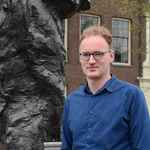
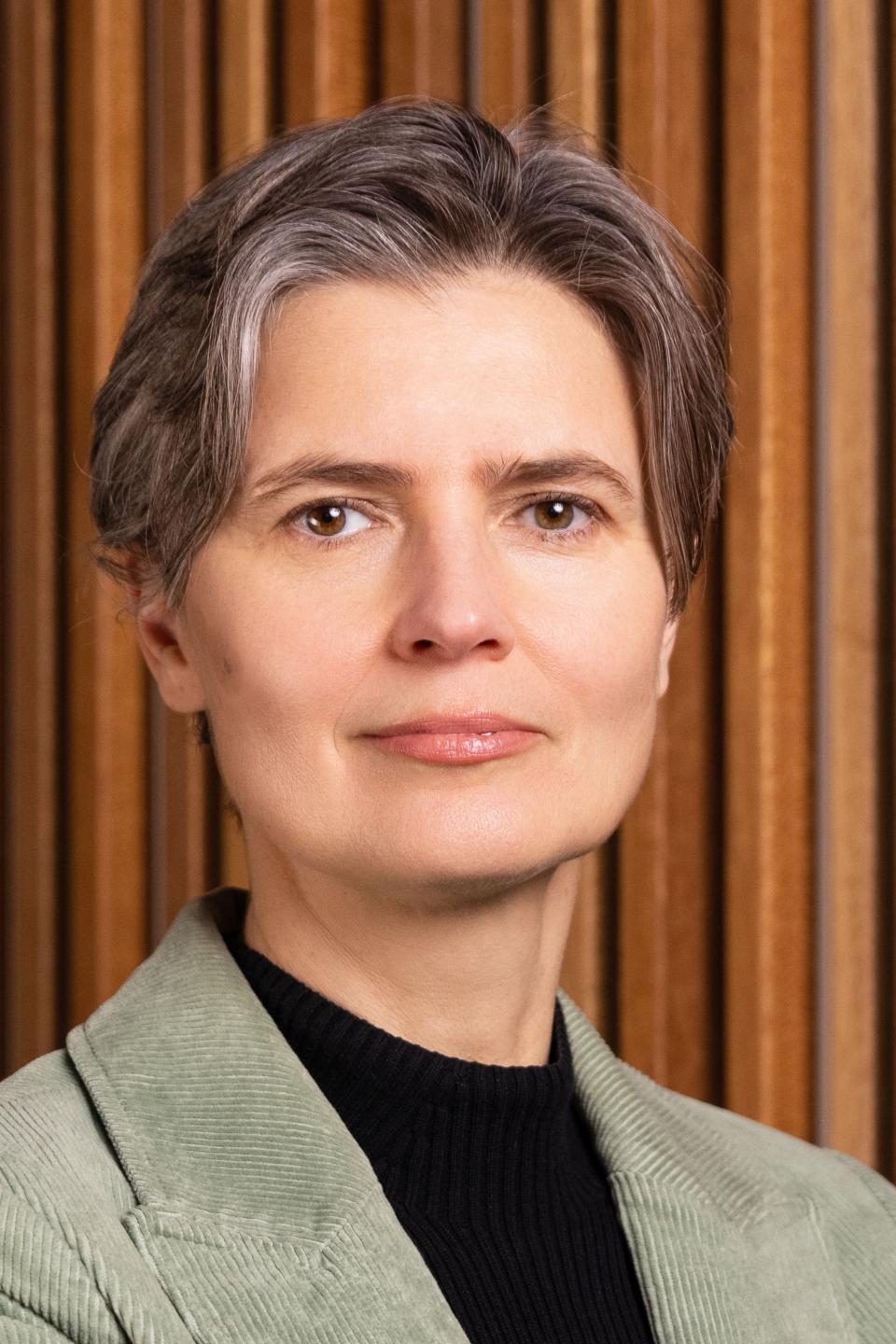
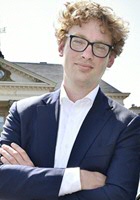
Dr. Renske Hijbeek is an Associate Professor at the Plant Production Systems group of Wageningen University & Research. Her research focuses on nutrient management in arable farming systems, emphasizing soil fertility improvement through organic waste recycling, legume cultivation, and minimizing environmental impacts like greenhouse gas emissions. She teaches courses including 'The Carbon Dilemma - A Soil Perspective' and 'Analysing Sustainability of Farming Systems'. Key projects include the GRA Benchmarking Nutrient Circularity and EDF Soil Carbon Sequestration initiatives. Her work integrates agronomy with ecological principles to achieve sustainable agricultural practices globally. Research Contributions: Dr. Hijbeek's projects address nutrient circularity, soil carbon dynamics, and organic amendment efficiency across temperate and tropical regions. Recent work explores dietary impacts on nitrogen fertilizer dependency and systemic redesign of food production systems. Collaborations: Active in international collaborations like the Global Crop Nutrient Removal Database and the CATCH-C Legumes project in Tanzania. Her interdisciplinary approach bridges crop science, environmental management, and policy analysis.
Dr. Jennifer Koch is an Associate Professor at the Laboratory of Geo-information Science and Remote Sensing, part of Wageningen University & Research. Previously, she served as an Associate Professor and Associate Research Director at the University of Oklahoma's Data Institute for Societal Challenges. Her research integrates data-driven methods like simulation modeling to address socio-economic and climate change challenges, focusing on sustainable urbanization and environmental management. Education: She holds a Diplom (Univ.) in Geoecology from the University of Bayreuth and a Dr.-Ing. in Electrical Engineering/Computer Science from the University of Kassel. She teaches courses on geo-information management and data analytics. Research emphasizes multi-scale modeling, stakeholder engagement, and participatory approaches to socio-ecological systems. Recent work explores urban growth in Africa, methane emission monitoring, and renewable energy siting. Articles highlight interdisciplinary methods in GIS, climate policy, and community geography. Professional service includes roles with iEMSs, IALE, and the AAG. No ancillary activities reported. Her work bridges technical geospatial tools with societal challenges, emphasizing practical policy applications.
Prof. Jacco van Ossenbruggen is a Full Professor in Intelligent Information Systems at Vrije Universiteit Amsterdam (VU), affiliated with the Network Institute. He serves on the Management Board of ODISSEI, a national research infrastructure for social sciences and economics. His academic background includes a PhD in Computer Science (2001) from VU’s Faculty of Science, focusing on hypermedia processing. Research Interests: His work centers on cultural AI, FAIR data principles, ontology engineering, and semantic web technologies. Key areas include inclusive cultural heritage metadata, bias mitigation in AI systems, and knowledge discovery via linked data. Recent projects involve leveraging large language models (LLMs) for metadata enrichment and ontology construction. Key Contributions: He leads initiatives like the Cultural AI Lab, exploring AI applications for cultural heritage. His research bridges technical innovations (e.g., semantic integration of restricted-access data) with societal impacts (e.g., ethical AI frameworks for public-sector applications). Developed frameworks for evaluating entity alignment in knowledge graphs Pioneered FAIR-aligned data management plans for scientific communities Designed tools like Alter Heritage for collaborative metadata curation Grants & Projects: Principal Investigator of the ODISSEI Portal project (2020–2024), advancing open data infrastructures. Active in funding initiatives promoting reproducible research and ethical data practices. Labs/Teams: Cultural AI Lab at VU, focusing on AI-driven solutions for cultural heritage preservation and accessibility.
Dr. Tanja Stratmann is a Postdoctoral Researcher at Utrecht University 's Department of Earth Sciences within the Faculty of Geosciences since July 2025, with prior affiliations at NIOZ Royal Netherlands Institute for Sea Research (2022-2025), Max Planck Institute for Marine Microbiology (2019-2022), and Ghent University (2018-2019). PhD in Marine Sciences (2018) from NIOZ/Ghent University MSc in Statistical Data Analysis (2019) from Ghent University MSc in Biology (2014) from Aarhus University Her research focuses on extreme marine environments , particularly deep-sea ecosystems and polar regions . Key areas include: Environmental impacts of deep-sea mining Benthic food web dynamics using isotopic tracers Megafaunal roles in carbon/nitrogen cycling Dissolved organic matter cycling in Arctic systems Recent work analyzes 13C, 15N, 2H tracers in sponge feeding studies (2025) and Clarion-Clipperton zone food web integrity (2023). Her databases ( BenBioDen , ProkaBioDen ) support global marine research. Scientific Recognition: Veni Laureate (2022) Open Science XS Grant (2022) Rubicon Research Fellowship (2019-2022)
Sible Andringa is Professor of Second Language Pedagogy at the University of Amsterdam's Faculty of Humanities, officially inaugurated on June 16, 2023. Dr. Andringa serves as Academic Director of the Institute for Dutch Language Education (INTT), Coordinator of the Language Learning, Literacy and Multilingualism research group, and Coordinator of the Master's program in Dutch as a Second Language and Multilingualism. Dr. Andringa's research focuses on second language acquisition and bilingualism, specifically investigating the added value of explicit instruction, how input distribution affects language learning outcomes, and the role of awareness in language learning trajectories. Key ongoing projects include the Meta-LLL project examining how literacy shapes language learning, the SLA4All initiative for reproducing SLA research with non-academic samples, and the OASIS project creating accessible research summaries for practitioners. Previously, Dr. Andringa led Project MIND studying bilingual daycare effects and contributed to the Stilis project on listening proficiency. As General Editor of the Dutch Journal of Applied Linguistics (DuJAL), Dr. Andringa promotes open science principles in language research. Recent publications demonstrate a focus on addressing sampling biases in SLA research, open access publishing ethics, and practical applications of language acquisition research for educational settings. Academic Director, Institute for Dutch Language Education (INTT) Coordinator, Language Learning, Literacy and Multilingualism research group Coordinator, Master's program Dutch as a Second Language and Multilingualism General Editor, Dutch Journal of Applied Linguistics (DuJAL) Member, Mastery Team for Modern Foreign Languages Member, OASIS project team Member, IRIS database advisory group Dr. Andringa supervises PhD candidates including Kyra Hanekamp and Darlene Keydeniers, particularly in research related to bilingual daycare environments and language development. The research program has received funding from the Dutch ministry of Social Affairs for Project MIND and continues to secure support for ongoing projects examining language learning mechanisms. Dr. Andringa leads the Language Learning, Literacy, and Multilingualism research group which investigates language and literacy acquisition across the lifespan, with emphasis on how language skills are learned, maintained, and used in educational contexts. The group meets weekly to discuss projects, plans, funding opportunities, and research topics while promoting collaboration, methodological innovation, and open science principles.
Nina Schwarz is Assistant Professor of human-environment interactions in cities at the Department of Urban and Regional Planning and Geo-Information Management, ITC—University of Twente. Holding a Diploma in Environmental Sciences (University of Lüneburg, 2003) and a PhD in Social and Economic Sciences (University of Kassel, 2007), she spent a decade as senior scientist at the Helmholtz Centre for Environmental Research – UFZ before joining ITC. Her interdisciplinary research integrates urban land-use science, ecosystem-service evaluation and advanced modelling techniques—especially agent-based models—to explore sustainable urban development under global change. Research interests revolve around three interconnected themes: (i) urban land-use change —understanding how residential, commercial and green-space dynamics co-evolve; (ii) urban ecosystem services —quantifying both supply and demand of services such as local climate regulation, recreation and biodiversity; and (iii) behavioural modelling —formalising human decision-making to simulate policy scenarios ranging from slum-upgrading to vineyard management. She actively links these themes to UN Sustainable Development Goals, notably SDG 11 (Sustainable Cities) and SDG 15 (Life on Land). Recent publications (2022-2025) reveal a methodological breadth spanning citizen-science impact assessment in Suriname, cooling effects of urban water bodies in Chinese mega-cities, European wine-growers’ adaptive behaviour, and methodological advances in upscaling and validating agent-based land-use models. Across these studies, Schwarz consistently combines empirical field data, geospatial analytics and participatory approaches to produce policy-relevant insights for cities in both the Global North and South. She has (co-)authored >80 peer-reviewed works, accumulating c. 5 900 citations and an h-index of 28 (Scopus). While specific honours are not itemised in the supplied text, her sustained citation impact and invited contributions to major conferences (e.g., iEMSs 2020, IAHR 2025) underscore scientific recognition. Schwarz frequently engages with societal stakeholders: her projects have generated open datasets on urban green-space monitoring in Paramaribo, e-learning modules for Latin-American universities, and interactive dashboards for sustainable water management. Within ITC she contributes to capacity-building programmes for emerging economies, supervises graduate researchers and maintains active collaborations across Europe, Latin America, Africa and Asia. No explicit lists of PhD students or personal grants are provided in the current corpus, but her leadership of externally funded projects (e.g., citizen-science evaluation, vineyard decision-making database) indicates ongoing acquisition of research funding.
Paul Moritz Wiegmann is an Assistant Professor in the Department of Industrial Engineering and Innovation Sciences at Eindhoven University of Technology (TU/e), where he is part of the ITEM group. He currently serves as President of the European Academy of Standardisation (EURAS). His academic career includes visiting research positions at TU Berlin (2014 & 2015), Yonsei University, Seoul (2018), and the University of California, Davis (2023). Paul holds a PhD from Rotterdam School of Management, Erasmus University, alongside additional degrees from Erasmus University and the University of Warwick. His educational background emphasizes interdisciplinary training, reflected in his research and teaching. His research focuses on the role of standardization in innovation ecosystems, particularly how explicit and implicit rules enable value creation and capture. He employs mixed-methods approaches, including case studies, grounded theory, choice experiments, and conjoint analysis. His work aligns with UN Sustainable Development Goals, addressing societal challenges like sustainability and smart technologies through collaborative frameworks. Notable awards include the Industria Education Award 2022-2023 for Best Teacher Talent (2023) and the ISPIM Dissertation Award 2020 (2020). These recognize his contributions to both education and research in standardization and innovation. In advising and grants, Paul has supervised 30 works (names not listed) and leads the Measuring societal impact of standards project (2021–2022). He also coordinates the FIQCS: FIeldlab Quantum Cryptography Solutions for Safe Society initiative (2023–2028). His activities include organizing conferences like EU-SPRI 2025 and delivering invited talks on topics ranging from standardization governance to quantum technologies. Paul teaches courses such as Methodology for IE research and Patents design rights & standards exploration course , reflecting his expertise in standardization and research methods. He contributed to the Standardization literature database (2024), an interdisciplinary review, and engages in media discussions on topics like AI adoption in SMEs and quantum threat mitigation in public safety.
Prof. Dr. J. Ellers is a Full Professor at the Faculty of Science, Vrije Universiteit Amsterdam , and a member of the Amsterdam Institute for Life and Environment . His research focuses on understanding how an individual’s phenotype is shaped by interactions between genes, genome, and environment , employing molecular, physiological, and experimental tools within an evolutionary framework. Ellers contributes to the Netherlands Society of Evolutionary Biology (NLSEB) as a co-founder and serves as Vice-Chair of the Dutch Biology Council , advocating for biology research and education in the Netherlands. Research Interests: Ellers explores the intersection of evolutionary biology, ecology, and environmental science , with key themes in phenotypic plasticity, urbanization effects on species, trait-based ecology, and adaptive signaling . His work spans soil fauna dynamics, invasive species impacts, and metabolic adaptations , emphasizing interdisciplinary approaches to link mechanisms with ecological and evolutionary outcomes. Recent Publications highlight trends in urban ecology, climate change impacts, and trait evolution . Notable studies examine how noise and light pollution alter animal communication , high-sugar diets affect microbiomes , and robot morphologies reflect biological systems . His research also addresses data interoperability through initiatives like ShareTrait and global soil arthropod assessments . Scientific Contributions: Ellers advocates for open-access publishing and interdisciplinary climate change experiments. His leadership in the Dutch Biology Council and co-founding of NLSEB reflect sustained commitment to scientific policy and community engagement. Supervised 23 PhD theses and teaching courses like Ecosystem Services and Scientific Advocacy underscore his mentorship and educational impact.
Mark D. Smucker is a Professor in the Department of Management Science and Engineering at the University of Waterloo, cross-appointed with the David R. Cheriton School of Computer Science (Faculty of Mathematics). His research focuses on interactive information retrieval systems, including search engines and recommendation systems, aiming to enhance evaluation methods for better prediction of human search performance. He co-organized the TREC Health Misinformation Track (2019–2022) and currently co-leads the TREC DRAGUN Track, addressing health misinformation and trustworthiness assessment in news. Education: PhD (Computer Science, UMass Amherst, 2008), MSc (Computer Science, UW-Madison, 1996), BSc (Physics & Computer Science, Iowa State, 1994). Research interests include design/analysis of interactive IR systems, evaluation frameworks, and human-computer interaction. He has been recognized with the ACM SIGIR 2012 Best Paper Award and teaching excellence awards from the University of Waterloo. Teaching includes courses like Search Engines (MSCI/MSE 541/720) and Databases/Software Design (MSCI 245). Active in organizing TREC tracks and publishing over 50 peer-reviewed articles.
Willem Jonker is a Full Professor at the Digital Society Institute, specializing in Semantics, Cybersecurity & Services. His research focuses on encryption schemes, access control, and privacy-preserving technologies. He has contributed to over 120 publications, with recent work addressing CVE-to-CWE mapping, anomaly detection in network traffic, and functional encryption systems. His expertise aligns with UN Sustainable Development Goals related to secure digital systems and privacy. Jonker has supervised 10 students and actively participates in academic conferences, presenting on topics like secure data management and cryptographic protocols. Research interests include cryptographic protocols, secure data management, and cybersecurity solutions. Notable projects involve developing methods for detecting covert channels, enhancing data privacy in healthcare, and improving secure search over encrypted data. He has also contributed to standards in digital rights management and forensic image recognition.
Andreas Weber is an Associate Professor at the University of Twente's Digital Society Institute , specializing in the Knowledge, Transformation & Society (KiTeS) research group . His work examines the long-term historical and global relationship between Science, Technology, and Society , with particular focus on colonial histories of natural history, chemistry, and sustainability , as well as computational technologies for contextualizing digitized archives . He leads the HAICu project (2023–2029) on digital cultural heritage and coordinates STS PhD training for the Netherlands Graduate Research School (2019–2024). MA & PhD in History (2005 & 2012), Leiden University Assistant Professor (2017–2023), University of Twente Andreas' research integrates digital humanities with colonial science history , emphasizing global histories of minerals , digital humanism , and AI's societal context . His 15 most recent publications (2016–2025) explore topics like colonial bias in natural history collections , FAIR data implementation , and semantic annotation of handwritten archives , spanning disciplines from history of science to computer science and museum studies . He has received 7 scientific awards , including multiple Best Teacher Awards (2020–2023) and the IEEE eScience Best Poster Award (2018). Andreas supervises PhD and postdoctoral projects while engaging in media commentary on colonial heritage issues and co-organizing international conferences like Hydrogen Pasts and Futures (2024).
Didier Meuwly is a Full Professor of Forensic Biometrics at the University of Twente (since 2013) and Principal Scientist at the Netherlands Forensic Institute (NFI). His work focuses on automating and validating probabilistic evaluation of forensic evidence, particularly biometric traces. He has contributed to international standards via ISO Technical Committee 272 and served as Associate Editor for Forensic Science International . PhD in Forensic Speaker Recognition (University of Lausanne, 2000) Research spans forensic biometrics, likelihood ratios, AI validation, and gait/body analysis from surveillance footage. Recent work addresses ISO standards (21043), forensic AI explainability, and multimodal evidence evaluation. His publications emphasize empirical validation and statistical rigor. Key awards include: ENFSI Distinguished Forensic Scientist Award (2022) University of Lausanne Law Faculty Prize (2002) Active in global forensic networks, he chairs the ENFSI R&D Committee and collaborates across disciplines on digital evidence, biometric security, and forensic methodology.
Adriana Iamnitchi is a Full Professor and Key Domain Chair for Computational Science at Maastricht University's Faculty of Science and Engineering, affiliated with the Department of Advanced Computing Sciences. Her research focuses on computational social science, social media dynamics, and misinformation detection. Her primary research interests include: Analysis of coordinated information campaigns across social platforms Development of LLM-based synthetic data generation for social media research Polarization quantification in multi-community networks Policy compliance frameworks for digital regulation (e.g., EU's Digital Services Act) Ethical AI applications for content moderation and transparency Her recent publications (2023-2025) demonstrate strong focus on: Cross-platform disinformation detection using multimodal embeddings Generative AI for synthetic social media datasets Quantitative analysis of toxicity monetization in creator economies Regulatory compliance automation for content transparency
Thomas Spijkerboer is Full Professor of Migration Law at the Faculty of Law, Vrije Universiteit Amsterdam, where he has been employed since 2000. He also holds positions at the Kooijmans Institute and established the Amsterdam Centre for Migration and Refugee Law, which has grown to become one of the largest research groups on migration worldwide. His academic career includes significant appointments as Raoul Wallenberg Visiting Professor of Human Rights and Humanitarian Law at Lund University (2017-2020) and International Franqui Professor at Ghent University (2020-2021). His educational background includes law studies at the Universiteit van Amsterdam. Before his academic career, he gained practical experience working at the Rechtswinkel Amsterdam legal clinic (1982-1986), specializing in housing law, and at Advokatenkollektief Zaanstreek (1986-1993), where he specialized in asylum cases. He completed his dissertation Gender and Refugee Status at the Catholic University Nijmegen, where he worked as a lecturer in Migration Law from 1993 to 2000. Professor Spijkerboer's research centers on the intersection of migration law, human rights, and border policies, with particular emphasis on the right to life of irregular migrants and the human costs of border control. His work critically examines European migration policies, especially their externalization and the resulting mortality among migrants attempting to reach European territory. He has pioneered research on border deaths, developing databases that document migrant fatalities along European borders, and has extensively analyzed the legal and moral implications of European border policies. His scholarship combines legal analysis with sociological and empirical approaches, addressing issues such as gender in refugee status determination, LGBTQ+ asylum claims, and the impact of migration policies on family life. His extensive publication record, including over 450 research outputs, demonstrates a consistent focus on the human rights dimensions of migration control. Recent work explores the bifurcation of migration law in Europe, asylum systems as instruments of containment, and the legal frameworks governing European border enforcement. His publications reveal a trajectory from detailed legal analysis of Dutch asylum procedures toward broader critiques of European and global migration governance. Scientific Awards and Distinctions: Praemium Erasmianum Studieprijs (2001) for his dissertation Gender and Refugee Status Elected member of the Koninklijke Hollandsche Maatschappij der Wetenschappen (2016) Elected member of the Koninklijke Nederlandse Academie van Wetenschappen (2017) Raoul Wallenberg Visiting Professorship at Lund University (2017-2020) International Franqui Professorship at Ghent University (2020-2021) Professor Spijkerboer has supervised 17 PhD theses and led multiple major research projects funded by NWO and the EU, including the significant five-year project Border Policies and Sovereignty. Human rights and the right to life of irregular migrants (2013-2018) and Fleeing Homophobia. Asylum claims related to sexual orientation and gender identity in the EU (2010-2011). His research has been instrumental in establishing the field of border death studies, influencing both academic discourse and policy debates on migration. He serves on the editorial boards of the Nederlands Juristenblad and the European Journal of Migration and Law, contributing significantly to the scholarly discourse in his field. He directs the Amsterdam Centre for Migration and Refugee Law, which functions as a hub for interdisciplinary research on migration law, bringing together legal scholars, sociologists, and political scientists. The center has become internationally recognized for its innovative approach to migration law research, particularly its focus on the human costs of border policies and the intersection of migration law with other legal domains such as family law and human rights law.
Michel Vols is a Professor of Public Order Law at the University of Groningen's Faculty of Law. He earned his degrees in Law and Philosophy from the same university and completed his PhD in 2013 on housing-related anti-social behavior across jurisdictions. As an academic researcher at the Centre for Public Order and Public Security (linked to the University of Groningen), he focuses on public order law, housing law, and human rights. His work includes founding the International Research Network on Law and Anti-social Behavior and conducting research for the Dutch Ministry of Interior and Kingdom Relations. Key roles include: Chair in Public Order Law Academic Researcher at the Centre for Public Order and Security Visiting Scholar at universities in Ghent, Bristol, Puerto Rico, Cape Town His research interests span public order, anti-social behavior mitigation, housing rights, and legal methodologies involving AI. Notable achievements include launching the free legal advice website overlastadvies.nl in 2019 and securing an ERC Starting Grant (€1.5M) in 2020 to study eviction protections under human rights frameworks. He has been awarded the Nicolaas Muleriusstipendium (2016) and has authored over 150 publications, including books on housing law and comparative jurisprudence. His work bridges legal theory and practice, often using interdisciplinary approaches like data science in legal analysis. He advises on policy reforms, such as exclusion orders for nuisance neighbors and drug-related property closures, and collaborates with government bodies on urban safety strategies. His research also explores the impact of evictions on vulnerable populations, including minorities and children.