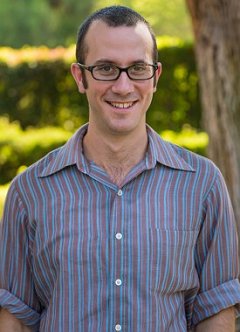
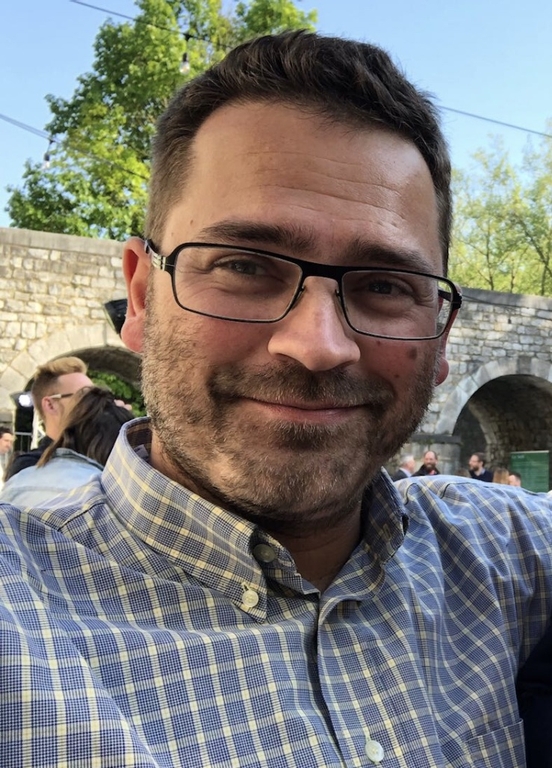
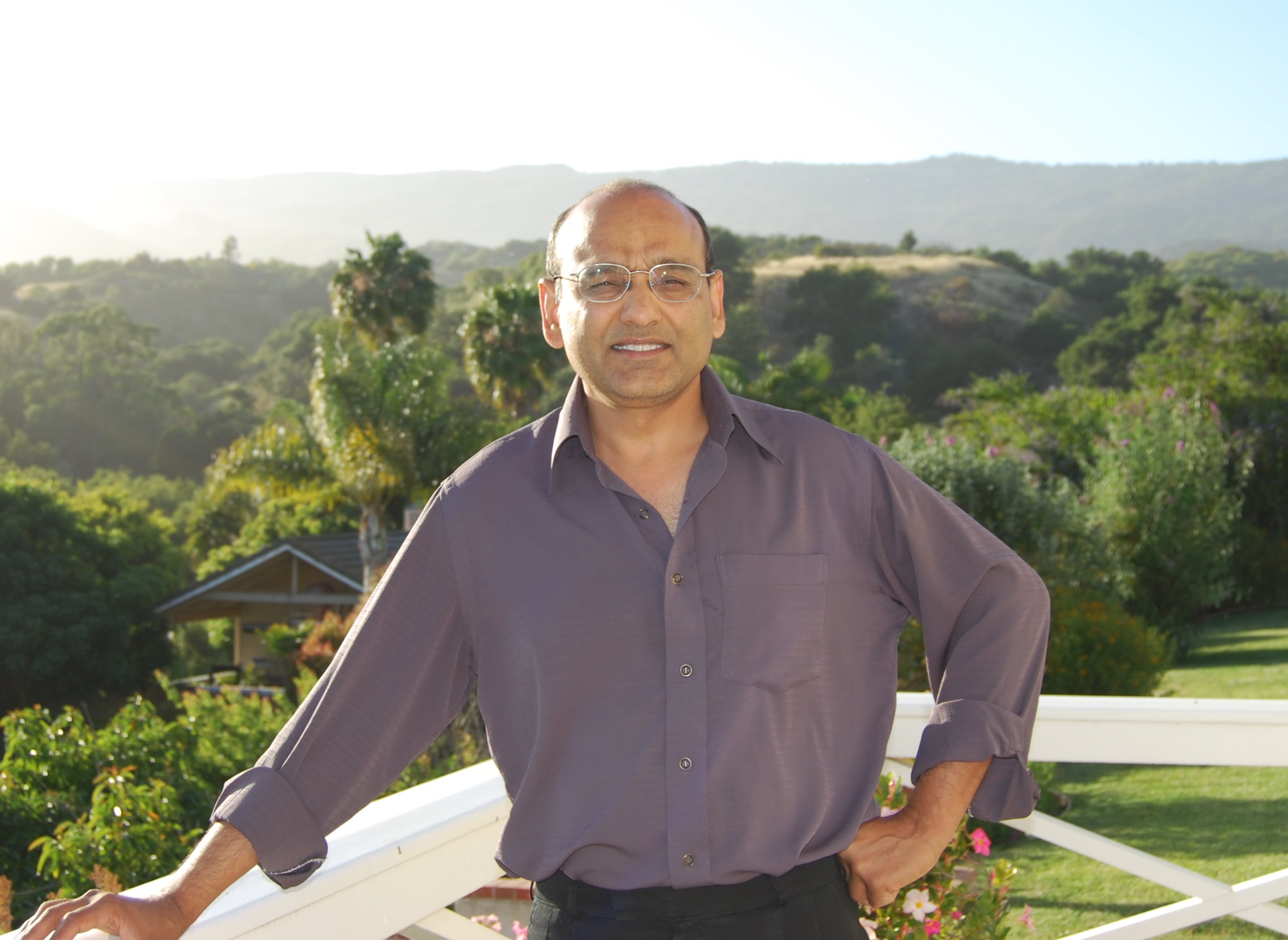
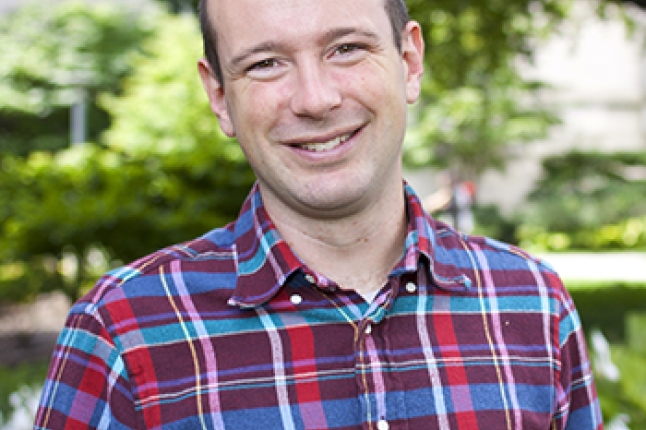
Michael Greenberg is a researcher at Stevens Institute of Technology. He actively contributes to programming language design, static analysis, and formal methods, with a focus on Datalog, SMT solvers, and type systems.
Laila Niedrite is a Professor at the University of Latvia 's Faculty of Computing, actively contributing to data warehousing, adaptive e-learning systems, and big data management since 2001. She leads collaborative research with key partners Darja Solodovnikova, Aivars Niedritis, and Guntis Arnicans. Specializes in performance measurement frameworks and evolution management of heterogeneous data sources Develops personalized adaptive e-learning architectures with implemented learning path recommendations Advances cross-domain data integration including social media analytics and institutional research evaluation Research Trends: Recent work focuses on indoor environmental quality monitoring during pandemics (2022), institutional research analytics (2017), and big data requirements (2018). She bridges academic performance analysis with technical implementations of scalable data systems. Collaborative Network: Maintains long-term collaborations with researchers at the University of Latvia, particularly with Darja Solodovnikova (16 co-publications) and Natalija Kozmina (12 co-publications), contributing to both theoretical frameworks and practical implementations.
Juliana Freire is a Professor at the New York University Tandon School of Engineering, where she leads research at the intersection of data management, artificial intelligence, and data science. Her work focuses on developing innovative systems for data discovery, integration, and reproducibility, with a recent emphasis on leveraging large language models to address traditional database challenges. Dr. Freire's research spans several critical areas in modern data science. She has pioneered approaches for data cleaning, schema matching, and dataset discovery that have significantly advanced the field. Her recent work demonstrates a strategic shift toward integrating large language models with database systems, creating novel solutions for data understanding and integration. She investigates methods for improving the reproducibility of data analysis workflows and the transparency of machine learning pipelines, addressing fundamental challenges in contemporary data science practice. Analysis of Dr. Freire's publication trajectory reveals a clear evolution toward AI-enhanced data management systems. Her recent papers demonstrate sophisticated applications of large language models to problems like dataset description generation, column type annotation, and table discovery. She has developed cost-effective approaches that balance advanced capabilities with computational efficiency, making powerful data techniques accessible to broader audiences. Her work bridges theoretical advances with practical implementations, often resulting in open-source tools that benefit the wider research community. Dr. Freire maintains an active advising role, mentoring numerous researchers who have become significant contributors in their own right. Her collaborative approach is evident in the interdisciplinary nature of her projects, which span domains from wildlife conservation to biomedical research. She has led initiatives addressing real-world challenges such as identifying wildlife trafficking in online marketplaces and developing systems for biomedical data integration. She directs research efforts focused on creating practical data science tools, including the Auctus dataset search engine and the BugDoc debugging system. These projects reflect her commitment to building systems that address pain points throughout the data science workflow. Her leadership extends to community initiatives, where she has contributed to influential reports on the future of database research and diversity in computing conferences.
Boris Glavic is a Professor at Illinois Institute of Technology, Chicago, specializing in database systems with a strong research focus on data provenance, uncertain data management, and database optimization techniques. His work bridges theoretical database concepts with practical applications in data cleaning, debugging, and ML integration. Glavic's research primarily centers on data provenance, where he has developed innovative techniques for tracking data lineage, optimizing provenance computations, and applying provenance to various database tasks. His work spans theoretical foundations of provenance in database query languages to practical systems like GProM (a 'Swiss Army Knife' for provenance needs) and applications in data debugging, uncertain data management, and ML pipeline robustness. Key contributions include provenance-based data skipping, reenactment techniques for transaction debugging, and frameworks for explaining query answers and non-answers. Analysis of Glavic's recent publications reveals a clear evolution from foundational provenance research toward integration with machine learning systems and addressing data quality challenges. His work increasingly focuses on practical applications where provenance techniques enhance data reliability in ML pipelines, improve debugging of complex data workflows, and enable efficient handling of uncertain and incomplete data. The publications demonstrate strong interdisciplinary connections between database theory, data management systems, and machine learning. While specific awards aren't documented in the provided information, Glavic's extensive publication record in top-tier venues (VLDB, SIGMOD, ICDE) over more than a decade demonstrates significant recognition within the database research community. His work has clearly influenced both theoretical and practical aspects of data management systems. Glavic has mentored numerous researchers who have become frequent collaborators, including Seokki Lee, Xing Niu, Su Feng, and Pengyuan Li. His research has been supported by grants enabling substantial contributions to data provenance, database debugging, and uncertain data management. The collaborative nature of his work is evident through extensive co-authorship networks spanning multiple institutions and research groups. Though specific lab affiliations aren't detailed in the provided information, Glavic's research appears to be conducted within a vibrant database research group at Illinois Institute of Technology, with strong connections to other leading database research centers. His work on systems like GProM suggests an active research laboratory focused on practical database tools and techniques.
Anthony Cleve is a Full Professor in information system evolution at the University of Namur, Faculty of Computer Science. He serves as President of the Faculty Council and is a member of the Council of the Academic Body (COACA). Cleve is affiliated with the PReCISE research center and the Namur Digital Institute (NADI), where he leads the Data-Intensive Systems Evolution Lab. He holds a PhD in Computer Science (2009) and an MSc in Computer Science (2004) from the University of Namur, along with a Bachelor in Economics and Management. Prior to his current position, Cleve was an ERCIM post-doctoral research fellow at INRIA Lille (2009-2010) and worked as a visiting researcher at CWI, Amsterdam (2005-2006). Professor Cleve's research focuses on information system maintenance and evolution, with particular expertise in software and data reverse engineering, program analysis and transformation, and self-adaptive systems. His work bridges theoretical computer science with practical applications, especially in database engineering, system migration, and co-evolution of databases and programs. More recently, his research has expanded into applying computer science techniques to French-Sign language alignment and translation. His research output shows a strong trend toward microservices architecture, data access patterns, and visualization techniques for understanding complex software systems. Cleve has been actively developing tools like DENIM for exploring data access in microservices environments, demonstrating his commitment to practical solutions for contemporary software engineering challenges. Scientific Awards Namurois of the year 2022, Sciences category Best Paper Award at the 20th IEEE Working Conference on Source Code Analysis and Manipulation (SCAM 2020), NIER track Best Paper Award at the 2016 International Conference on Software Quality, Reliability and Security (QRS 2016) Nominated for the Cor Baayen Award 2012 IBM Belgium / FRS-FNRS 2010 Award for best PhD thesis in Computer Science ERCIM "Alain Bensoussan" Post-doctoral Fellowship (2009-2010) Professor Cleve actively mentors students and researchers, serving as promoter/supervisor for several PhD candidates. He has secured significant research funding through multiple projects including RAINDROP, INSTINCT, and various projects on database schema evolution in microservices applications. His research group collaborates extensively with institutions across Europe. He leads the Data-Intensive Systems Evolution Lab at the Namur Digital Institute (NADI) and is a key member of the Namur Institute of Language, Text and Transmediality (NaLTT), where he applies his expertise to sign language processing challenges. His lab focuses on developing practical tools and methodologies for system evolution, with recent work emphasizing microservices architectures and data access patterns.
Jacky Akoka is a Professor at the Conservatoire National des Arts et Métiers (CNAM), affiliated with the CEDRIC Laboratory in Paris, France. With a distinguished academic career spanning nearly three decades, Akoka has established himself as a leading researcher in information systems, database design, and conceptual modeling. Akoka's research interests primarily focus on Information Systems , Database Design , Conceptual Modeling , Data Quality , and more recently, Big Data applications in humanities (particularly prosopography). His work demonstrates a consistent evolution from foundational database research to interdisciplinary applications bridging computer science with historical and social sciences. Analysis of Akoka's recent publications (2019-2023) reveals a strong emphasis on Design Science Research methodology, historical database applications, and data quality assessment. His work increasingly intersects with digital humanities, particularly through prosopography research that applies database modeling techniques to historical social network analysis. The consistent publication output across top venues indicates ongoing research productivity and scholarly impact. Akoka has maintained a longstanding research partnership with Isabelle Comyn-Wattiau, with whom he has co-authored numerous publications across multiple decades. This collaboration represents one of the most enduring research partnerships visible in his publication record. His work with the CEDRIC Laboratory has contributed significantly to the fields of information systems quality, database reverse engineering, and more recently, the application of information systems methodologies to humanities research. The laboratory environment appears to support interdisciplinary work that bridges technical database research with practical applications in historical and social sciences.
Isabelle Comyn-Wattiau is a full professor at ESSEC Business School and affiliated with the Conservatoire National des Arts et Métiers (CNAM) , contributing to the CEDRIC laboratory. With over two decades of academic activity, her work bridges computer science, information systems, and digital humanities through conceptual modeling, data quality, and reverse engineering. ESSEC Business School (since 2013) CNAM - CEDRIC Laboratory (since 2001) Her research interests focus on database design, quality assessment, and modeling techniques, particularly for historical data and business intelligence applications. Key themes include: Conceptual modeling of prosopographic databases Uncertainty detection in historical data Quality metrics for web applications Security requirements engineering with ontologies Mapping multidimensional schemas to graph models Evaluation frameworks for design science research Her article trends show consistent contributions to database evolution (2001-2023), with recent work emphasizing design science research (2019-2023) and historical data quality (2019-2021). Collaborative patterns reveal long-term partnerships with Jacques Akoka and Nathalie Prat across multiple domains.
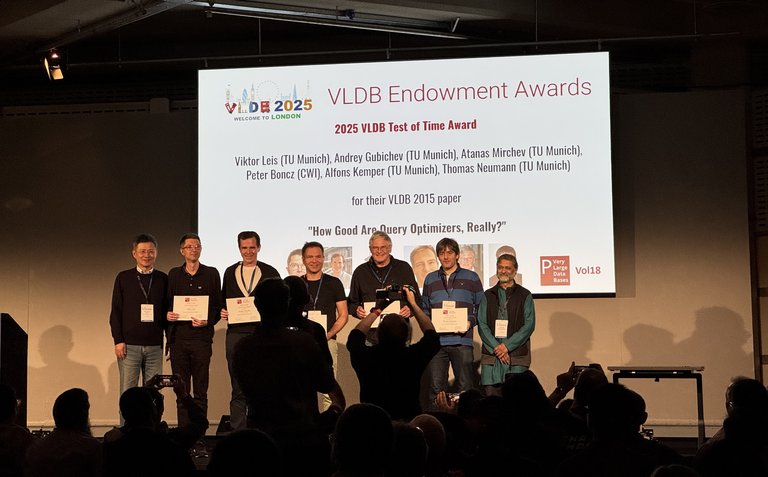
Peter Boncz is a Professor in the special chair of Large Scale Analytical Database Systems at Vrije Universiteit Amsterdam and leads the Database Architectures (DA) research group at CWI (Centrum Wiskunde & Informatica), the Netherlands' national research institute for mathematics and computer science. He serves on the CWI management team and is actively involved in multiple research initiatives and industry collaborations. Professor Boncz is internationally recognized as a pioneer of column-store databases, introduced through his PhD project MonetDB. His research spans database architecture, query processing optimization, and analytical database systems. His work on vectorized query processing with his first PhD student Marcin Zukowski has become foundational in modern analytical databases including BigQuery, Databricks, Snowflake, and DuckDB, which has millions of monthly downloads. Current research focuses include GPU data processing, vector search optimization, confidential computing, and graph data management. Boncz's recent publications reveal strong trends toward optimizing database systems for modern hardware architectures, particularly GPUs and cloud CPUs. His work bridges theoretical database concepts with practical implementation, focusing on performance optimization through innovative data layouts, compression techniques, and hardware-aware processing. The research shows a clear trajectory from foundational database concepts toward specialized optimization for emerging hardware and application requirements. VLDB Test of Time Award 2025 (second time, previously won in 2009) CIDR Test of Time Award 2024 ACM Fellow (2022) Humboldt Research Award (2013) ICTRegie Award (2006) Boncz has co-founded six spin-off companies in data systems, including MonetDB BV, and serves as an advisor to ventures like Databricks Corp. His research is supported by multiple external funding projects including Actian Research Grants, Databricks research agreements, and Motherduck Service Agreements. He has advised numerous students, with Marcin Zukowski being notably mentioned as his first PhD student who co-developed vectorized query processing. As leader of the Database Architectures research group at CWI, Boncz oversees a team focused on pushing the boundaries of database technology. The group maintains close ties with industry through projects with Databricks, Motherduck, and RelationalAI, while continuing to develop open-source technologies like DuckDB. The team is particularly active in GPU acceleration, confidential computing, and graph data management through the Linked Data Benchmark Council (LDBC), which Boncz founded.
Divyakant Agrawal is a Distinguished Professor and Chair of the Computer Science Department at the University of California, Santa Barbara (UCSB). He holds a PhD from SUNY Stony Brook and a BS from Birla Institute of Technology and Science. His research focuses on large-scale distributed systems, cloud data management, and database security, with notable contributions to geo-replicated data, privacy-preserving techniques, and social network analysis. Agrawal has led NSF-funded projects on data summarization, hardware acceleration, and wireless sensor networks. He served as VP of Data Solutions at ASK.com and as a visiting senior researcher at NEC Laboratories and the University of Hong Kong. Education: PhD (Computer Science, SUNY Stony Brook), BS (Electrical Engineering, BITS Pilani). Leadership Roles: Chair of UCSB Computer Science Department (1999–2003), Visiting Professorships at National University of Singapore and University of Hong Kong. His research spans distributed algorithms, database concurrency control, and privacy in cloud systems. Key areas include transaction processing, data stream operators, and fraud detection in advertising networks. Agrawal has authored over 300 papers and co-edited journals like the VLDB. He is a Fellow of IEEE, ACM, and AAAS, and has received awards such as the Outstanding Graduate Mentor from UCSB (2011). Professional Contributions: Served on program committees for SIGMOD, VLDB, and IEEE conferences; led editorial roles for Distributed and Parallel Databases and the VLDB Journal. His work on systems like G-Store (cloud data retrieval) and Zephyr (elastic databases) showcases innovations in scalability and autonomy.
Eddie Kohler is the Microsoft Professor of Computer Science at Harvard University's Harvard John A. Paulson School of Engineering and Applied Sciences (SEAS), where he also serves as Director of Undergraduate Studies in Computer Science. His research focuses on high-performance systems, networks, and databases with an emphasis on concurrency control, data privacy, and scalable software design for multicore processors. He has contributed to foundational work in transactional systems, web application backends (e.g., Noria), and privacy-preserving technologies (e.g., Edna). His research spans theoretical frameworks like the Scalable Commutativity Rule and practical implementations such as the Alto lightweight virtualization system. Kohler's work often bridges theory and practice, addressing challenges in distributed systems, sensor networks, and regulatory compliance (e.g., GDPR). Notable contributions include innovations in in-memory database concurrency, optimistic transaction processing, and network congestion control protocols (e.g., TFRC-SP). His projects frequently emphasize system correctness through formal verification and empirical evaluation. His articles reflect a trajectory from foundational concurrency research to applied systems engineering, with recent focus on privacy in web applications and optimizing modern multicore architectures. No specific grants or advisees are listed in the provided information. Kohler leads research initiatives in scalable systems and maintains active collaboration with industry through his academic leadership roles.
Panos Vassiliadis is a Professor in the Department of Computer Science at the University of Ioannina. He received his Diploma in Electrical Engineering (1995) and PhD in Computer Science (2000) from the National Technical University of Athens. His academic career includes significant contributions to data management, particularly in data warehousing technologies and database evolution. Education: PhD (2000) and Diploma (1995) from National Technical University of Athens Research interests span multiple dimensions of data-intensive systems: Data Management & Databases Data Warehousing & Business Intelligence Schema Evolution & Metadata Management Software Engineering & Web Services Database Evolution & Data-Intensive Ecosystems His work emphasizes rigorous models for managing interdependencies between data and software systems, with applications in visualization and design of complex information architectures. Current teaching responsibilities include: MYY301 : Software Development MYE030 : Advanced Topics of Database Technology and Applications Active in the academic community as a reviewer and board member for international journals, and frequent program committee chair/member for conferences.
Gösta Grahne is a Professor in the Department of Computer Science at Concordia University, Montreal, Canada. He holds a Ph.D. from the University of Helsinki and completed a postdoctoral fellowship at the University of Toronto. His research focuses on database theory, data mining, and systems for managing incomplete information and uncertainty. He is affiliated with the Concordia Database Systems Research Group. Education: Ph.D., University of Helsinki (1989) Postdoctoral Fellow, University of Toronto (1990–1992) Research Interests Dr. Grahne's work spans database theory , data integration , and uncertainty management . He has contributed to foundational areas such as regular path queries, XML processing, and probabilistic databases. His recent projects explore provenance tracking and formal methods for data exchange. His publications span over three decades, with notable contributions to conferences like PODS and ICDT. He maintains an active research group and collaborates internationally on theoretical and applied database challenges.
Zachary G. Ives is the Adani President's Distinguished Professor and Chair of the Computer & Information Science Department at the University of Pennsylvania. His research focuses on data integration, provenance, machine learning systems, and scalable computing. Notable contributions include the Juneau project for data management in computational notebooks and the Orchestra system for collaborative data sharing. He leads initiatives like the ASSET Center for Safe, Explainable, and Trustworthy AI and the Warren Center for Network and Data Science. Education: While explicit degrees aren’t detailed, his roles and academic contributions imply advanced degrees in Computer Science. Current courses include CIS 2450 (Big Data Analytics) and NETS 212 (Scalable and Cloud Computing). Research spans data lakes, sensor networks (ASPEN project), and biomedical applications like seizure prediction via the IEEG Portal. His work bridges databases, ML, and distributed systems, with emphasis on trustworthiness and explainability. Key awards include the NSF CAREER Award, Lindback Teaching Award, and ACM Fellow status. Grants from NSF, NIH, DARPA, and industry partners (Amazon, Google) support his work. He advises numerous PhD students and collaborates with faculty across disciplines, including Neurology and Biostatistics. Labs/Teams: Penn Database Group, ASSET Center, Warren Center, and collaborations with Meta Research and Mayo Clinic. Active in academic service as SIGMOD PC co-chair and journal editor.
Jeremy Bailenson is the founding director of Stanford University’s Virtual Human Interaction Lab and holds the Thomas More Storke Professorship in the Department of Communication. He is also a Senior Fellow at the Woods Institute for the Environment and Professor (by courtesy) in the Graduate School of Education and Symbolic Systems Program. His research focuses on the psychology of Virtual and Augmented Reality, examining how immersive experiences alter perceptions of self and others. B.A., University of Michigan (1994) M.S. and Ph.D., Cognitive Psychology, Northwestern University (1996, 1999) Post-Doctoral Fellow and Assistant Research Professor, University of California, Santa Barbara (2000-2004) Bailenson’s lab develops systems for virtual social interaction, exploring transformations in education, environmental conservation, empathy, and health. His work has been continuously funded by the National Science Foundation for over 25 years and has produced over 200 academic papers across communication, computer science, education, environmental science, law, linguistics, marketing, medicine, political science, and psychology . He has received numerous accolades including the Dean’s Award for Distinguished Teaching at Stanford (2007) and IEEE’s Virtual/Augmented Reality Technical Achievement Award (2020) . Bailenson co-authored the Amazon Best-seller Infinite Reality , cited by the U.S. Supreme Court, and authored Experience on Demand , reviewed by major global publications. Bailenson’s lab has created six Tribeca Film Festival VR documentaries and exhibited at venues from The Smithsonian to The Superbowl. He has served as Director of Graduate Studies in Communication for over a decade and currently teaches courses like Advanced Topics in Human Virtual Representation and Virtual People .
Leander Kallas is the Curator of the GEOROC Database within the DIGIS project at the Department of Geochemistry and Isotope Geology, Georg-August-University Göttingen. His role focuses on data harvesting, database development, and tool creation for the GEOROC 2.0 initiative, emphasizing interoperability and FAIR principles. He holds an M.Sc. (2022) and B.Sc. (2019) in Geoscience from Göttingen, with thesis work on ruthenium isotopes and volcanic magma dynamics. Education: M.Sc. Geoscience (summa cum laude), 2019–2022: Ruthenium Isotopic Composition of Terrestrial and Extraterrestrial Materials , supervised by Prof. Dr. Matthias Willbold and Nils Meßling. B.Sc. Geoscience, 2016–2019: Compositional zonation in minerals as tracer for ascent of mafic East Eifel magmas , supervised by Prof. Dr. Gerhard Wörner and Dr. Andreas Kronz. Research Interests: High-temperature and isotope geochemistry, volcanic systems, crust-mantle evolution, and geochemical database development. His work combines analytical techniques like major/trace element analysis and stable/radiogenic isotope geochemistry with modern data management strategies. Research Trends in Articles: Leander’s publications emphasize FAIR-compliant data systems, interoperability between global geochemical databases (e.g., GeoReM and GEOROC integration), and legacy data modernization. Recent efforts focus on unified vocabularies, unit standardization, and analysis-ready data for computational modeling. Labs/Teams: Active contributor to the GEOROC team, collaborating with the DIGIS initiative and international groups like EarthChem. Engaged in projects to enhance global geochemical data accessibility and usability through standardized tools and platforms.