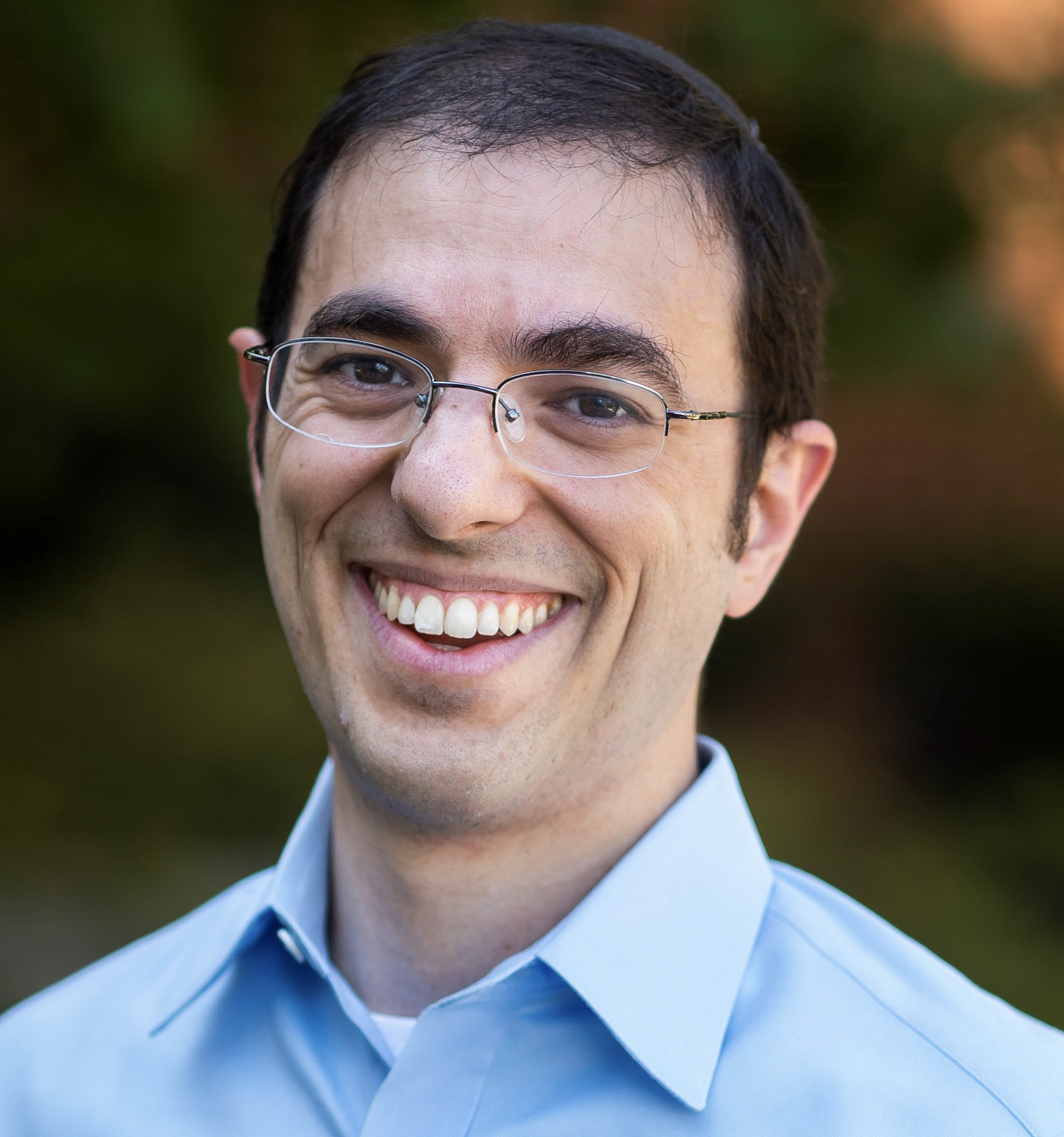
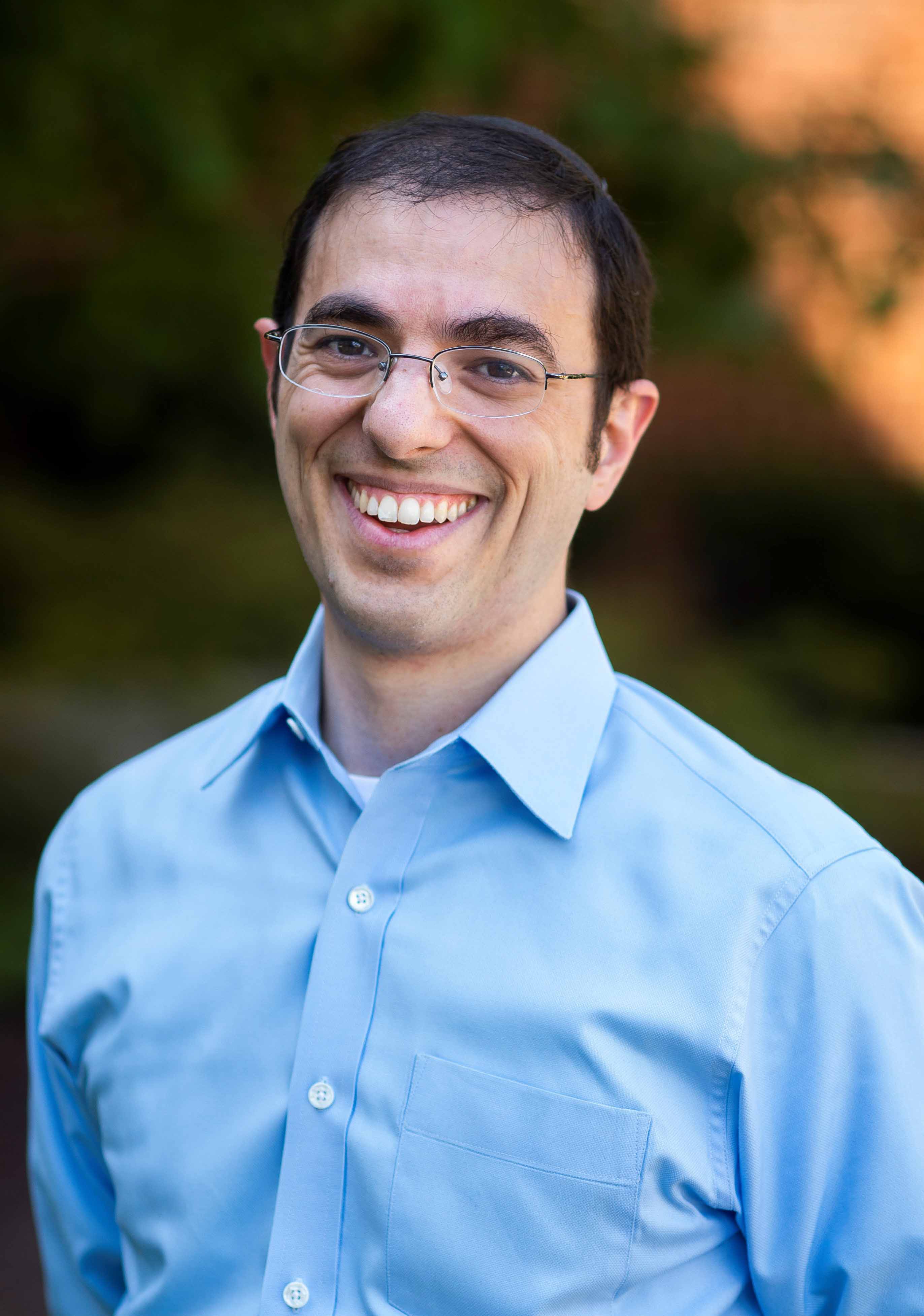
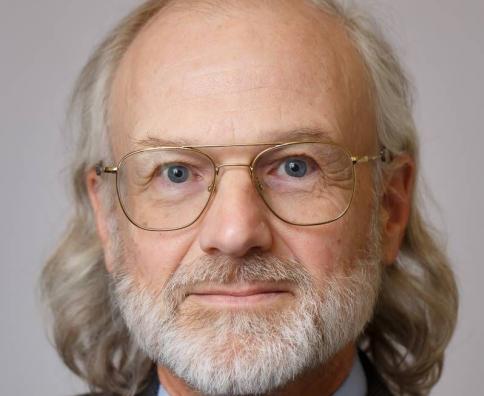
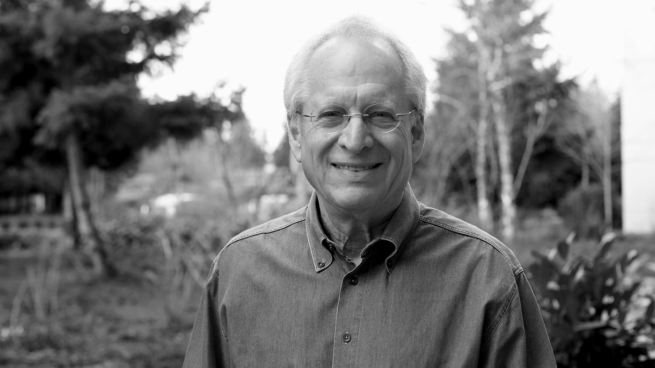
Khuzaima Daudjee is a Professor and David R. Cheriton Faculty Fellow in the Cheriton School of Computer Science at the University of Waterloo. His research focuses on systems-oriented problems at the intersection of systems and data management, particularly building large-scale systems, storage infrastructure in the cloud, and modern hardware applications. He leads projects in distributed database systems, elastic scaling, and resource optimization. His recent work includes Caerus (geo-replicated transactions), Tiresias (predictive storage), and MorphoSys (automatic physical design metamorphosis). Daudjee has chaired major conferences including ICDE 2026 and serves on editorial boards for VLDB, SIGMOD, and IEEE TKDE journals. His awards include ACM Distinguished Scientist and multiple best paper awards. Educational initiatives include developing distributed systems teaching materials and supervising graduate students across database and distributed systems domains. His industry collaborations involve cloud infrastructure optimization and scalable data processing frameworks.
Daniel Abadi is the Darnell-Kanal Professor of Computer Science at the University of Maryland, College Park, with an appointment in the University of Maryland Institute for Advanced Computer Studies. He leads the Data Systems Lab at Maryland (DSLAM) and has made significant contributions to database system architecture and implementation, particularly in scalable and distributed systems. Prof. Abadi's research focuses on database system architecture, especially at the intersection with scalable and distributed systems. He is best-known for the development of the storage and query execution engines of the C-Store (column-oriented database) prototype, which was commercialized by Vertica and eventually acquired by Hewlett-Packard, and for his HadoopDB research on fault tolerant scalable analytical database systems which was commercialized by Hadapt and acquired by Teradata. His current work includes deterministic distributed systems like Calvin and SLOG, which provide strictly serializable, low-latency, geographically replicated database transactions. Analysis of his recent publications reveals a strong focus on modern database challenges including transaction processing, distributed systems architecture, data mesh concepts, schema evolution, and IoT data management. His work consistently addresses the tension between consistency, availability, and performance in distributed database systems, with recent emphasis on moving beyond traditional two-phase commit protocols and exploring novel approaches to data architecture like data mesh. ACM Fellow Sloan Research Fellowship Churchill Scholarship NSF CAREER Award VLDB Best Paper Award Two VLDB Test of Time Awards (for C-Store and HadoopDB) 2008 SIGMOD Jim Gray Doctoral Dissertation Award 2013-2014 Yale Provost's Teaching Prize 2013 VLDB Early Career Researcher Award PhD dissertation advisor for Alexander Thomson and Jose Falerio, whose dissertations won SIGMOD Jim Gray Doctoral Dissertation Awards in 2015 and 2020 respectively Prof. Abadi has advised multiple PhD students, including Alexander Thomson and Jose Falerio, both of whom received the prestigious SIGMOD Jim Gray Doctoral Dissertation Award. His research has been supported by numerous grants including NSF funding for projects like SLOG. He maintains an active presence in the database community through his widely-read blog DBMS Musings and through service on program committees for major conferences including SIGMOD, VLDB, and CIDR. He leads the DSLAM research group at the University of Maryland, which focuses on cutting-edge database system research with strong industry connections and practical impact.
Daniel Abadi is the Darnell-Kanal Professor of Computer Science at the University of Maryland, College Park. He leads the Data Systems Lab at Maryland (DSLAM) and is widely recognized for his groundbreaking contributions to database system architecture and implementation. Previously, he was a faculty member at Yale University where he received the Provost's Teaching Prize. Abadi's research primarily focuses on database system architecture, particularly at the intersection with scalable and distributed systems. He is best known for developing the storage and query execution engines of the C-Store prototype (a column-oriented database system commercialized by Vertica and later acquired by Hewlett-Packard), HadoopDB research (commercialized by Hadapt and acquired by Teradata), and deterministic distributed transactional systems like Calvin (currently being commercialized by Fauna). His work bridges theoretical innovation with practical industrial impact. Analysis of his recent publications reveals a consistent trajectory toward solving fundamental challenges in distributed database systems. His research has evolved from foundational work on column-stores and hybrid database architectures to cutting-edge innovations in geo-replicated transactions, concurrency control mechanisms, and the integration of machine learning with database systems. The trend shows increasing focus on practical implementations that address real-world scalability and performance challenges in large-scale data processing environments. ACM Fellow Churchill Scholarship recipient NSF CAREER Award winner Sloan Research Fellowship recipient VLDB Best Paper Award winner Two VLDB Test of Time Awards (for C-Store and HadoopDB) 2008 SIGMOD Jim Gray Doctoral Dissertation Award 2013-2014 Yale Provost's Teaching Prize 2013 VLDB Early Career Researcher Award Professor Abadi has successfully mentored several PhD students, most notably Alexander Thomson and Jose Falerio, both of whom won the prestigious SIGMOD Jim Gray Doctoral Dissertation Award for their work under his supervision. His research has been generously supported by multiple NSF grants including BIGDATA awards and other funding mechanisms that have enabled significant advances in database technology. He actively collaborates with industry partners, with several of his research projects leading directly to commercial products. At the University of Maryland, Abadi directs the Data Systems Lab at Maryland (DSLAM), which focuses on developing innovative database technologies that address contemporary challenges in data management. The lab's research spans distributed transaction processing, database architecture, and the integration of database systems with emerging computing paradigms. Notable projects include SLOG (Serializable, Low-latency, Geo-replicated Transactions), which eliminates traditional tradeoffs in distributed database design, and ongoing work in deterministic database systems that provide strong consistency guarantees without sacrificing performance.
Katja Hose is a Full Professor of Data Management at TU Wien's DBAI research unit, heading the Data Management and Knowledge-Driven AI Lab. She previously held a Poul Due Jensen Foundation Professorship at Aalborg University. Her research focuses on data and knowledge engineering, including graph databases, knowledge graphs, querying, analytics, and machine learning, with interdisciplinary applications in bioscience, healthcare, and environmental assessment. Education: PhD in Computer Science (Ilmenau University of Technology, 2009), Postdoc at Max Planck Institute for Informatics (2009–2012). Academic roles include Program Co-Chair for ISWC 2024 and EDBT 2023, and editorial board membership at VLDBJ and TGDK. She leads projects like TARGET (health virtual twins) and ARMADA (data management). Research Interests: Knowledge Graphs, Semantic Web, Big Data, Machine Learning, Data Integration, and Provenance Systems. Key contributions include SHACL shape extraction, conversational data analytics, and environmental knowledge graphs. Awards include the 2025 Distinguished Meta-Reviewer Award and 2024 Manfred Paul Award. Advising and Grants: Supervised students including E. Pürmayr (Diploma Thesis 2025). Active in EU projects (TARGET, ARMADA) and grant coordination. Labs/Teams: DMKI Lab at TU Wien, collaborating with interdisciplinary teams in healthcare and environmental science.
Renée J. Miller is a Professor and Canada Excellence Research Chair in Data Intelligence at the Cheriton School of Computer Science, University of Waterloo. Her research focuses on data integration, data management, and open data systems. She holds a PhD in Computer Science from the University of Wisconsin-Madison and bachelor’s degrees in Mathematics and Cognitive Science from MIT. Her work addresses challenges in data preparation, integration, and curation, aiming to reduce the burden on data scientists. She co-authored foundational papers on data exchange and schema mapping, earning the ICDT Test-of-Time Award (2013) and the Alonzo Church Award (2020). Miller has led major initiatives like the NSERC Business Intelligence Network and the International Very Large Data Base Foundation. Her grants include NSERC Accelerator Awards and funding from IBM, SAP, and Microsoft. Notable students include Ariel Fuxman (SIGMOD Dissertation Award winner) and Oktie Hassanzadeh (IBM PhD Fellow). Her research group, the Miller Lab, develops tools like Clio for schema mapping and systems for data lake exploration (RONIN, JOSIE).
Stefania Dumbrava is an Associate Professor of Computer Science at ENSIIE (École Nationale Supérieure d'Informatique pour l'Industrie et l'Entreprise) and a permanent member of the ACMES team in the SAMOVAR laboratory at Télécom SudParis, Institut Polytechnique de Paris. She is also actively involved in the Property Graph Schema Working Group and the European Research Network on Formal Proofs (EuroProofNet). Education PhD in Computer Science, Université Paris-Sud (2016) MSc in Computer Science, Jacobs University Bremen (2012) BSc in Mathematics, Jacobs University Bremen (2010) Research Interests Dumbrava's research lies at the intersection of formal methods and data management . She designs and verifies algorithms and systems for graph databases , with emphasis on property graphs , schema discovery , query optimization , and distributed graph processing . Recently, her work focuses on certifying large-scale distributed graph systems under the ANR JCJC VERDI project (2025–2029). Awards & Honors SIGMOD Best Paper Award 2023 – “PG-Schema: Schemas for Property Graphs” SIGMOD Research Highlight Award 2023 – “Threshold Queries” VLDB 2022 Best Regular Research Paper Runner-Up – “Threshold Queries in Theory and in the Wild” SIGMOD 2025 Distinguished Reviewer Award ICDE 2025 Best Program Committee Member Award EASST Best Software Science Paper Award, ICGT 2025 Students & Grants Dumbrava has supervised numerous research interns and is actively recruiting PhD students for her ANR VERDI project on verified foundations of large-scale distributed graph systems. She has also served on six PhD thesis committees as examiner since 2021. Labs & Teams She leads the ACMES research group within the SAMOVAR laboratory (Télécom SudParis, Institut Polytechnique de Paris), where her team develops formally verified graph-database engines and tools such as GRASP, VerDILog, and DatalogCert.
Miao Zhengjie serves as an Assistant Professor in the School of Computing Science at Simon Fraser University (SFU), joining in October 2023 after a research scientist position at Megagon Labs. His work centers on enhancing data science pipelines through innovations in database systems and artificial intelligence. His academic foundation includes: Ph.D. in Computer Science from Duke University (2022) M.S. in Computer Science from Columbia University (2016) B.S. in Computer Science and Technology from Peking University (2015) Dr. Miao's research spans Database Systems , Data Management , Data Curation , and Data Provenance , with emphasis on AI-driven solutions for data pipeline efficiency. His methodology bridges theoretical database concepts with practical data science applications through novel algorithm development. Analysis of his 15 most recent publications reveals persistent focus areas: query explanation systems (35% of works), data augmentation frameworks (27%), and human-AI collaboration tools (20%). These contributions appear consistently in premier venues including SIGMOD, VLDB, and CHI, demonstrating methodological evolution from foundational query debugging (2019) to LLM-integrated annotation systems (2024). He actively participates in the SFU Data Science Research Group , contributing to interdisciplinary initiatives in large-scale data processing. Current information indicates no formal advisees or grant details are publicly documented in his institutional profile.
Tianzheng Wang is an Associate Professor and Director of the Dual-Degree and Partnerships Programs at the School of Computing Science, Simon Fraser University. His research focuses on database systems, transaction processing, parallel and distributed computing, and embedded systems. He holds a PhD in Computer Science from the University of Toronto (2017) and a BSc in Computing from Hong Kong Polytechnic University (2012). Research Interests: Database systems optimized for modern hardware, parallel programming, synchronization, and distributed architectures. His work emphasizes high-performance transaction processing and efficient indexing techniques, with applications in cloud and embedded systems. Awards: ACM SIGMOD Best Paper Award (2025), IEEE TCSC Early Career Award (2019), and multiple distinguished reviewing recognitions (SIGMOD/VLDB 2021-2024). His research has been integrated into systems like Amazon Redshift and DragonflyDB. Teaching: Leads courses such as CMPT 454 (Database Systems II), CMPT 300 (Operating Systems), and special topics in databases. Actively mentors graduate and undergraduate students in research projects. Labs & Collaborations: Heads the Data-Intensive Systems Lab, part of SFU's Data Science and Systems groups. Collaborates on tools like PiBench for persistent memory benchmarking and contributes to open-source projects like CoroBase and Tabular.
Henry F. (Hank) Korth is a Professor of Computer Science and Engineering at Lehigh University, with a courtesy appointment in the Department of Decision and Technology Analytics in the College of Business. He serves as Director of the Blockchain Lab in the Center for Financial Services and Co-Director of the Computer Science and Business Program. Korth is a Fellow of the ACM and IEEE, and a recipient of the VLDB 10-Year Award and Bell Labs President's Silver Award for contributions to database technologies. PhD in Computer Science from Princeton University MA, MSE in Computer Science from Princeton University BA in Mathematics from Williams College Korth's research spans database systems, blockchain systems, distributed systems, and real-time systems. He has pioneered transaction management in parallel and distributed systems, query processing, and the impact of modern computing architectures on database performance. His recent work focuses on blockchain applications in enterprise databases, including acceleration of zero-knowledge proofs, benchmarking frameworks, central-bank digital currencies, and private-yet-provable accounting systems. His contributions are rooted in both theoretical advancements and practical implementations, such as the QTM™ aggregation engine and the DataBlitz™ main-memory storage manager. Scientific awards include: ACM Fellow IEEE Fellow 10-Year Award at the VLDB Conference Bell Labs President's Silver Award Korth actively supervises research within the Blockchain Lab and is affiliated with the Scalable Software Systems Research Group at Lehigh. His scholarly output reflects a deep engagement with blockchain benchmarking, concurrency control, verifiable databases, and the evolution of database systems in response to technological shifts.
Immanuel Trummer is a Professor of Computer Science at Cornell University, specializing in database systems, query optimization, and applications of large language models (LLMs) and quantum computing. He leads research projects such as DB-BERT, UDO, and SkinnerDB, focusing on automated database tuning, adaptive query processing, and leveraging LLMs for code synthesis and system optimization. His research interests span quantum computing for database optimization, cost-efficient LLM utilization, and voice-based data exploration. Key contributions include developing systems like CEDAR for claim verification, CodexDB for LLM-driven code generation, and ThalamusDB for multimodal data querying. Trummer has received prestigious awards, including the NSF CAREER Award (2023-2028) and the Best Demonstration Award at BDA 2020. His work has been funded by NSF, Google, Huawei, and others, supporting projects like quantum-index selection and misinformation detection. He advises graduate students in database systems and teaches advanced courses such as CS 6320 (Advanced Database Systems) and CS 7390 (Seminar in Database Systems). His research lab hosts open-source tools like JoinGym and maintains extensive collaborations in industry and academia.
Amol Deshpande is a Professor in the Department of Electrical Engineering and Computer Sciences at the University of California, Berkeley, College of Engineering. With over 160 publications spanning from 2000 to 2025, his research has significantly impacted the database systems community. His work bridges theoretical foundations with practical systems, evidenced by numerous publications in top-tier venues including SIGMOD, VLDB, and ICDE. Professor Deshpande's research focuses on database systems, with particular expertise in graph databases, data management, probabilistic databases, query optimization, and data provenance. His work addresses fundamental challenges in managing complex data, including efficient graph analytics, dataset versioning, streaming data processing, and privacy-preserving data management. Recent research directions include entity-relationship abstractions beyond traditional relations, standalone catalog engines for large data systems, and graph theoretical approaches to dataset versioning. His publication trends show a consistent focus on evolving database technologies, with early work on probabilistic databases and query optimization, transitioning to graph analytics and data provenance, and more recently addressing modern challenges in data cataloging, privacy-first data management, and serverless stream processing. His research spans both theoretical contributions (e.g., approximation algorithms for stochastic optimization) and practical systems building (e.g., RStore, TreeCat). Professor Deshpande has mentored numerous PhD students who have become active researchers in the database community, including Hui Miao, Souvik Bhattacherjee, and Konstantinos Xirogiannopoulos. His collaborative work spans across institutions, with frequent collaborations with researchers from MIT, University of Maryland, and other leading institutions. His research has been supported by major funding agencies and has influenced both academic research and industry practices in data management. The evolution of his work reflects the changing landscape of data management, from traditional relational systems to modern graph and streaming data challenges.
Pierre KELSEN is a Full Professor in the Department of Computer Science at the University of Luxembourg's Faculty of Science, Technology and Medicine (FSTM). His research focuses on Software Engineering, Formal Methods, Model-Driven Engineering, and Algorithmic Graph Theory. He leads the LASSY Laboratory for Advanced Software Systems, emphasizing model decomposition, regulatory compliance, and formal verification techniques. Education: PhD in Computer Science (1993, University of Illinois at Urbana-Champaign), M.Sc. (1989, UIUC), and Diploma (1986, University of Karlsruhe). Postdoctoral work at the University of British Columbia and Max-Planck-Institut für Informatik. Research Interests: - Development of formal modeling languages (e.g., VCL, F-Alloy) - Model transformation and validation frameworks - Algorithms for compliance and complexity challenges - Visual and modular design methodologies Funding: - ASINE (FNR Pearl, 2013–present): Architecture-based service innovation - MaRCo (FNR Core, 2010–2013): Business-centric regulatory compliance Publications span model-driven engineering, formal methods, and algorithmic foundations, with recent work exploring AI integration in domain modeling and compliance analysis. Labs/Teams: LASSY Laboratory, collaborating on tools like Lightning and Democles for executable modeling frameworks.
Phil Bernstein is a Distinguished Scientist in the Data Systems Group at Microsoft Research Redmond and an Affiliate Professor at the University of Washington where he occasionally teaches CSEP 545 Transaction Processing. With over four decades of pioneering work in database systems, he has made significant contributions across transaction processing, data integration, and distributed systems. His research interests focus on database systems, transaction processing, and data integration, with recent work on approximate nearest neighbor search over vector databases, improving database servers using disaggregated cloud resources, and the Orleans distributed systems programming framework. Bernstein's work on Orleans (2012-2019) resulted in an open-source framework widely used inside and outside Microsoft, with components addressing indexing, geo-distribution, and transactions. Bernstein has received numerous prestigious awards including being named a Fellow of the ACM and AAAS, receiving the SIGMOD Edgar F. Codd Innovations Award, and election to the National Academy of Engineering and Washington State Academy of Sciences. Fellow of the ACM Fellow of the AAAS SIGMOD Edgar F. Codd Innovations Award Member of the National Academy of Engineering Member of the Washington State Academy of Sciences As an active researcher and academic, Bernstein serves on numerous conference program committees including SIGMOD 2024 (keynotes), VLDB 2024 (Industry), and has held editorial positions for Information Systems and Springer Data-Centric Systems and Applications. His influential books, Principles of Transaction Processing (2009) and Concurrency Control and Recovery in Database Systems, remain foundational texts in the field.
Dr. Shawne D. Miksa is a Professor in the Department of Information Science at the University of North Texas (UNT), College of Information. He specializes in information organization, cataloging standards, and metadata. His research focuses on bibliographic control, information behavior, and the history of library and information science. Education: Ph.D., Library and Information Sciences, Florida State University, 2002 M.S., Library and Information Sciences, Florida State University, 1997 B.A., Liberal Arts with Anthropology minor, University of Central Florida, 1995 Research Interests: Dr. Miksa's work addresses cataloging rules (e.g., RDA, AACR2), metadata standards (MARC21), authority control systems, and LIS education. He explores theoretical frameworks like FRBR/LRM and investigates the intersection of bibliographic control with information behavior and scholarly communication. Grants & Professional Activities: Recipient of OCLC/ALISE grants (2004–2005) for cataloging tool utilization studies. Leadership roles in ALA's Core Metadata and Collections Section, ALISE, ASIST, and ISKO. Editor of the Journal of Library Metadata and contributor to key publications on RDA and FRBR. Recent Articles: Recent work analyzes trends in Cataloging & Classification Quarterly (2024), explores linked data in metadata (2021), and examines Elfreda Chatman's theoretical contributions (2021). Dr. Miksa's research bridges cataloging practices with evolving digital environments. Labs/Teams: Active in cross-disciplinary initiatives like the MARC Content Designation Utilization Project and collaborates with global LIS networks.
Daniel J. Abadi is a prominent researcher in database systems at Yale University. With over two decades of impactful research, he has made significant contributions to the fields of distributed databases, transaction processing, and column-oriented database systems. His work bridges theoretical foundations with practical implementations that have influenced both academia and industry. Dr. Abadi's research primarily focuses on database system architecture, with particular emphasis on: Distributed and geo-replicated database systems High-performance transaction processing Column-oriented and analytical database systems Stream processing and real-time analytics Cloud and serverless database technologies Integration of machine learning with database systems His recent work shows a continued focus on addressing scalability challenges in modern database systems, with particular attention to multi-region transaction processing, automated data management, and the integration of machine learning techniques. The trend in his publications indicates a strong emphasis on practical, deployable systems that solve real-world problems faced by industry. Dr. Abadi has been instrumental in several major research initiatives and reports that have shaped the direction of database research, including the Seattle Report and the Cambridge Report on Database Research. Throughout his career, Dr. Abadi has mentored numerous students and collaborated extensively with leading researchers in the field. His work has received significant recognition through widespread citations and adoption of his ideas in both academic and industrial database systems.